No products in the cart.



All rights of this website are reserved for EXTRUTEX Austria and its partner companies, © 2026


Multiple Payment Methods

Discount for advance payments over 50%

Free Shipping Coordination Services
Payment methods:


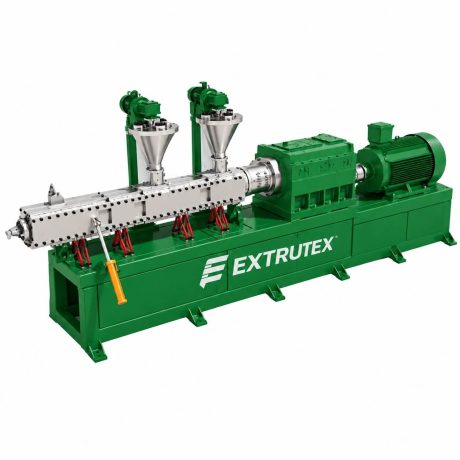
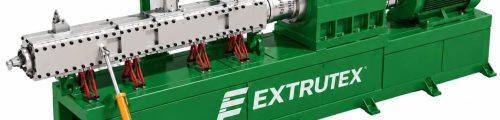
A reciprocating single-screw co-kneader designed for sensitive polymers, high-filler formulations and high-viscosity melts. Built for research, formulation development and small-scale production where gentle yet thorough mixing is essential.
EXTRUTEX – Austrian engineering concept, manufactured in Nanjing and Shanghai, China. Precision laboratory co-kneaders engineered for controlled shear, narrow residence-time distribution and reliable scale-up from R&D to pilot production.
Not every compounding task is best served by a high-speed twin-screw extruder. Certain polymer systems react poorly to intense shear peaks, prolonged thermal exposure or abrupt pressure changes. In these cases a reciprocating co-kneader offers a fundamentally different mixing mechanism that combines moderate shear with excellent distributive mixing and precise temperature management.
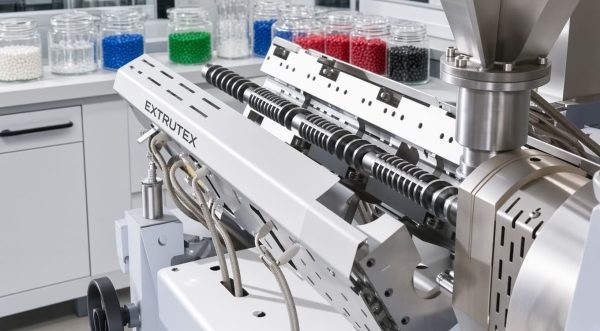
The EXC-45 was developed specifically for laboratory and pilot-scale environments where material quantities are limited, product sensitivity is high, and the ability to observe and adjust process parameters quickly is critical. Its oscillating screw and interrupted flight geometry generate a continuous sequence of folding and shearing actions that homogenise the melt without creating the localised hot spots often associated with co-rotating twin-screw machines.
This gentle yet effective action makes the co-kneader particularly valuable when working with heat-sensitive polymers, materials that tend to degrade under high shear, formulations that must accept very high filler loadings, or highly viscous compounds that are difficult to process on conventional equipment.
In a co-kneader the screw simultaneously rotates and oscillates axially. As the screw turns, its interrupted flights interact with fixed kneading pins mounted in the barrel wall. The combination of rotation and axial reciprocation produces a three-dimensional mixing pattern: material is repeatedly split, folded and recombined while being transported forward.
Because the shear is applied in short, controlled pulses rather than continuously, the specific energy input remains moderate and the temperature rise is more predictable. Residence time distribution is notably narrow; almost every particle experiences a similar thermal and mechanical history. This uniformity is essential when developing formulations that will later be transferred to larger production co-kneaders or when reproducibility between laboratory batches is required.
The EXC-45 uses a 45 mm screw with an oscillating stroke of 6.75 mm. Barrel length can be configured between 12 L/D and 20 L/D, giving operators the flexibility to match residence time to the specific polymer or reactive system under investigation.
Laboratory teams typically select a co-kneader when the product falls into one or more of the following categories:
Typical application areas include PVC dry-blend compounding, highly filled polyolefin masterbatches, thermoplastic elastomers, reactive systems that require controlled residence time, and experimental formulations where sample size is limited and product quality must be assessed quickly.
The design of the EXC-45 focuses on process control, cleanability and the practical needs of a research laboratory.
The interaction between the oscillating screw flights and the stationary kneading pins generates shear in a series of discrete, evenly spaced events. Peak shear rates remain moderate, while the cumulative mixing intensity is high. This combination reduces the risk of local overheating and polymer chain scission.
Material is repeatedly divided and recombined as it travels along the barrel. The result is excellent distribution of additives, pigments and fillers even at relatively low screw speeds. Homogeneity is typically achieved with shorter residence times than would be required on many continuous mixers.
The open geometry of the interrupted flights and the axial oscillation create additional free volume that accommodates large volumes of solid fillers. Progressive wetting of the filler surface occurs as the material moves forward, reducing the risk of agglomerates and allowing loadings that would otherwise require multiple passes or specialised twin-screw designs.
The barrel is divided into five independently controlled heating and cooling zones. Electric heating is combined with water cooling channels, giving the operator precise command over the thermal profile. Melt temperature can be kept within a narrow window even when processing materials with a small processing window.
Because the transport mechanism is positive and the axial oscillation is continuous, almost all material experiences a similar residence time. This narrow distribution is particularly valuable for reactive extrusion, where over- or under-reaction of a portion of the melt would compromise product quality.
Liquid additives, plasticisers or reactive monomers can be introduced through dedicated injection ports. The intensive surface renewal caused by the oscillating motion rapidly incorporates liquids into the melt without the formation of large domains or the need for excessive back-pressure.
The table below summarises the principal mechanical and process data for the standard laboratory configuration. Custom barrel lengths, specialised screw geometries and alternative drive packages can be supplied on request.
| Parameter | Specification |
|---|---|
| Model | EXC-45 Laboratory Co-Kneader |
| Screw diameter | 45 mm |
| Oscillating stroke | 6.75 mm |
| Length / diameter ratio (L/D) | 12 – 20 |
| Maximum screw speed | 500 rpm |
| Main motor power | 22 kW |
| Heating method | Electric |
| Cooling method | Water |
| Number of heating & cooling zones | 5 |
| Overall dimensions (L × W × H) | 3220 × 1500 × 1700 mm |
| Approximate weight | 2000 kg |
Each numbered stage can be adjusted by screw configuration, zone temperatures and the addition of side feeders or liquid injection points.
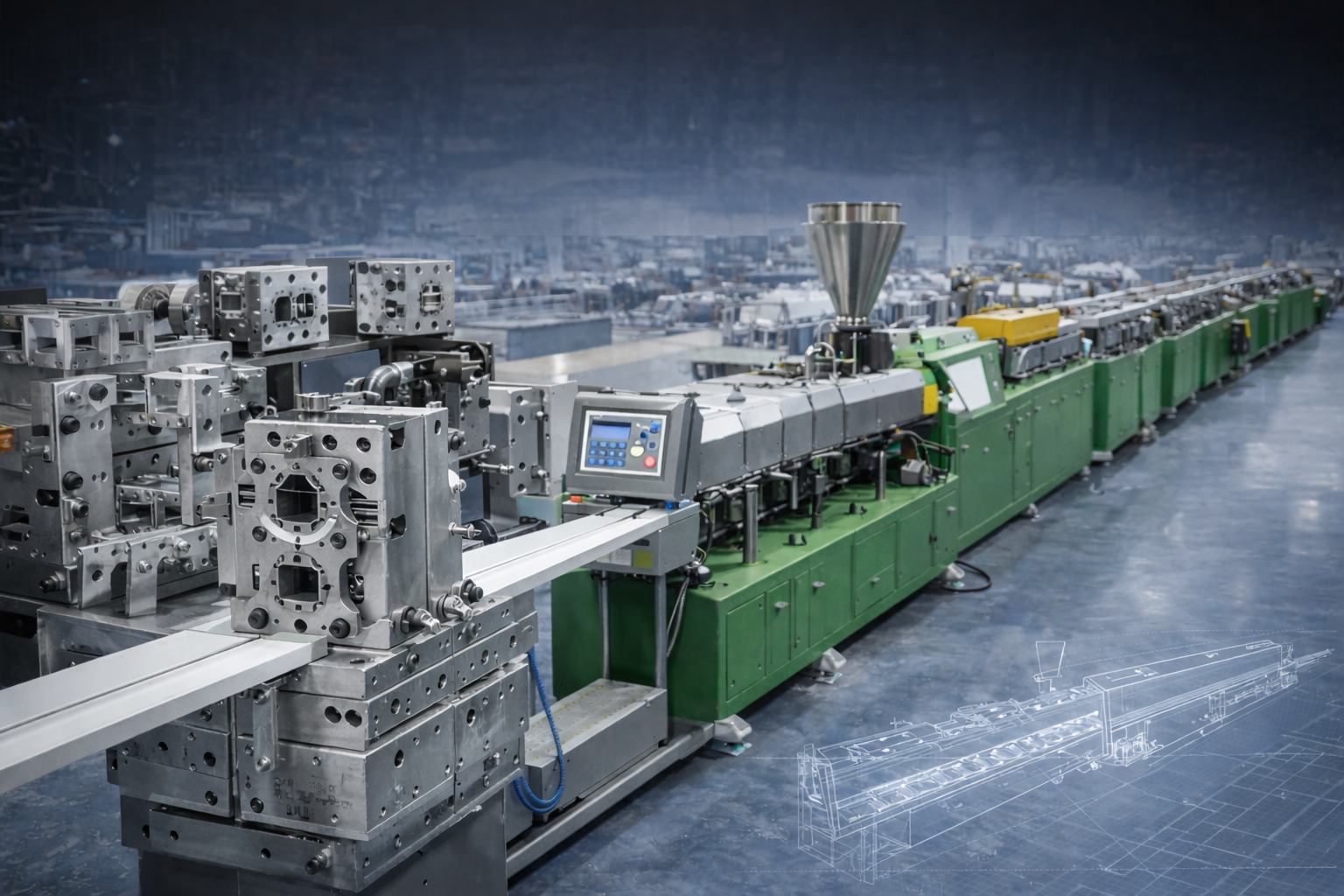
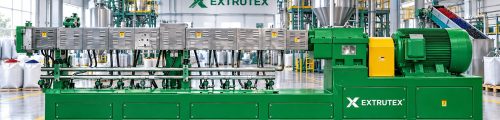
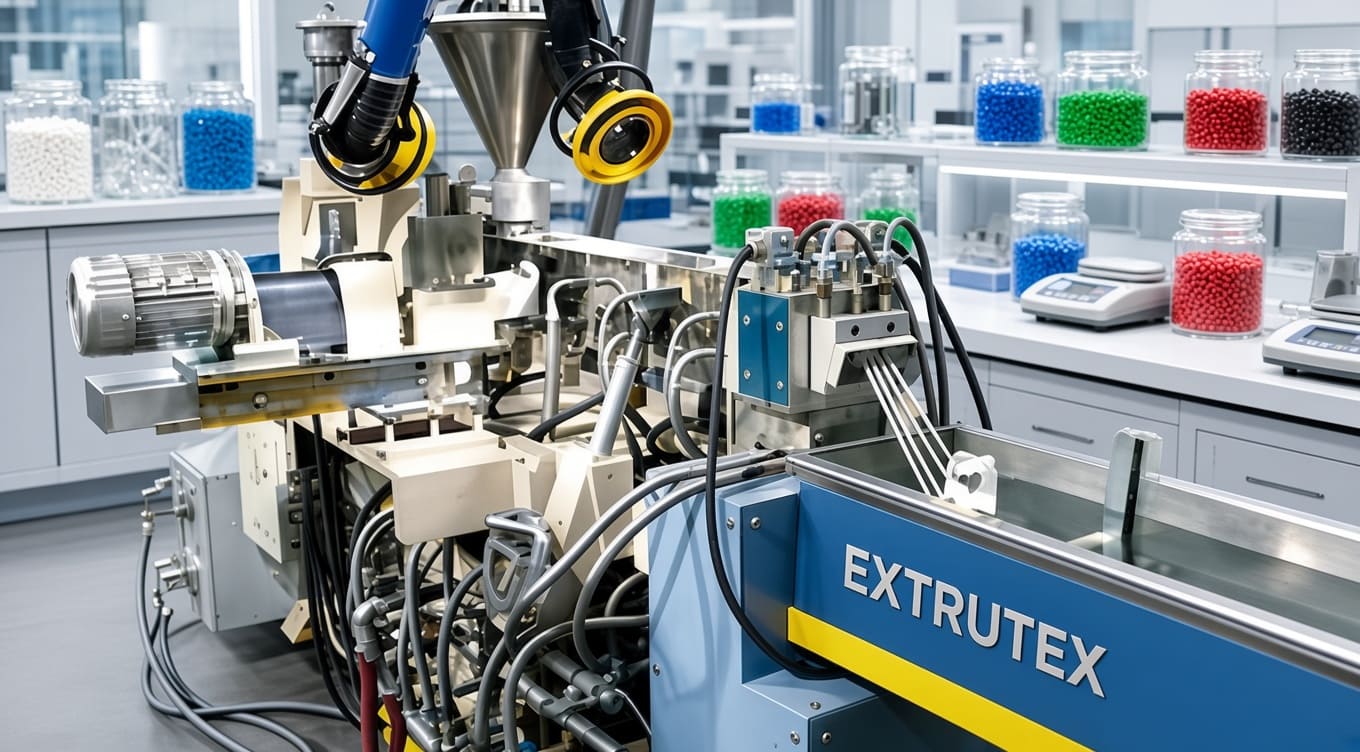
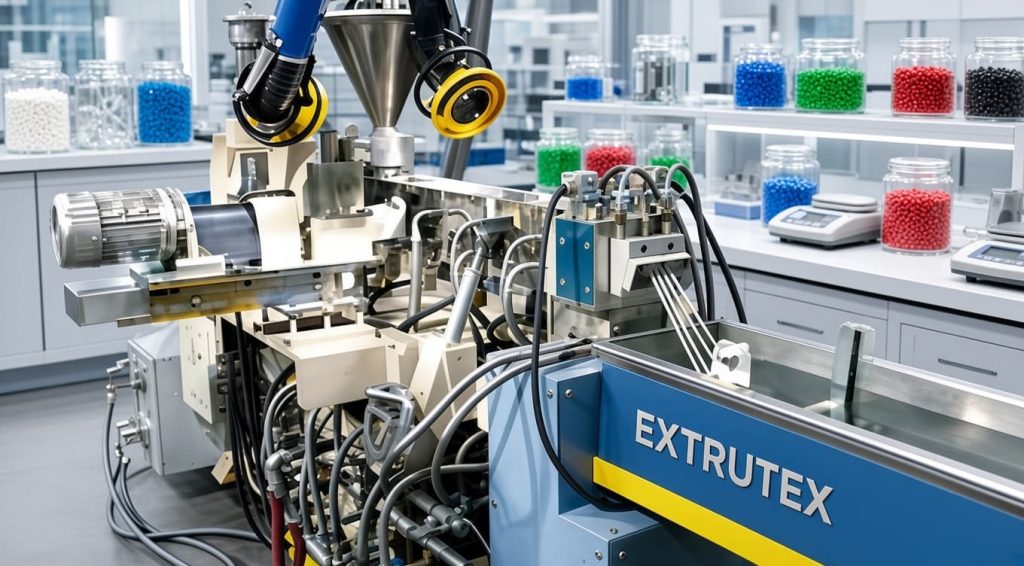
A complete laboratory line is more than the co-kneader itself. The EXC-45 is designed to integrate seamlessly with a range of auxiliary units that extend its capability:
All interfaces follow standard laboratory practice, so existing feeders or pelletisers can often be retained when upgrading to an EXTRUTEX co-kneader. The control system can be expanded to include coordinated start-up and shut-down sequences for the entire line.
Moderate, evenly distributed shear protects sensitive polymers and long-chain structures while still delivering thorough homogenisation.
Open geometry and progressive wetting allow filler loadings that would overload many conventional laboratory extruders.
Narrow residence-time distribution supports reactive systems and ensures consistent thermal history from batch to batch.
Five independently controlled zones with combined electric heating and water cooling keep melt temperature within tight limits.
A typical experimental sequence begins with selection of the appropriate barrel length and screw configuration. The operator sets the temperature profile across the five zones, starts the main drive at low speed and activates the volumetric feeder. Once a stable melt stream is established, screw speed and feed rate are increased to the target values while torque and melt temperature are monitored.
If liquid additives are required, they are introduced through the injection ports once the polymer is fully molten. Side feeders can be started at any moment to incorporate additional solid components. Vacuum is applied in the degassing zone as needed. At the end of the trial the line is purged, the die is cleaned, and samples are collected for offline analysis—rheology, mechanical testing, thermal analysis or microscopy.
Because the machine is relatively compact and the process is continuous, several formulation variants can be evaluated in a single working day with minimal material consumption. This productivity is especially valuable when screening new additives or when only small quantities of experimental polymer are available.
One of the practical strengths of the co-kneader concept is the relative ease of scale-up. The fundamental mixing mechanism—rotation combined with axial oscillation—remains the same from laboratory to production machines. When a successful formulation and process window have been established on the EXC-45, the same specific energy input, temperature profile and residence time can be targeted on larger EXTRUTEX co-kneaders with a high probability of success.
This continuity reduces the number of intermediate pilot trials and shortens the time from laboratory discovery to commercial production. Process data logged on the EXC-45 (screw speed, torque, zone temperatures, melt pressure) provide a clear reference for the larger machine.
EXTRUTEX combines Austrian design principles with manufacturing capability located in Nanjing and Shanghai. Critical components—the oscillating screw, barrel sections, kneading pins and gearbox—are produced to tight dimensional tolerances. Each machine undergoes a multi-hour load test before shipment; temperature uniformity, oscillation stability, torque response and mechanical run-out are verified and recorded.
Wear parts and spare screws are stocked to minimise downtime. The modular construction of the barrel and the straightforward screw design simplify maintenance and reduce the cost of ownership over the lifetime of the equipment.
Whether the task is protecting a heat-sensitive polymer, incorporating extreme filler levels, or developing a reactive formulation that demands precise residence-time control, the EXC-45 laboratory co-kneader provides a stable, transparent and productive platform. It is a practical tool for any R&D team that needs reliable data from limited material quantities and a clear path toward industrial scale-up.
EXTRUTEX – Austrian design, manufactured in Nanjing and Shanghai, China. Technical specifications are subject to continuous improvement; please contact EXTRUTEX for the latest data sheets, custom configurations and complete laboratory line proposals.
There are no reviews yet.
By submitting your email, you agree to our company’s terms and conditions.
We are not looking to sell; we are here to provide you with the best support and service.
Contact available 24/7
Please do not contact us for advertising or sales inquiries
All rights of this website are reserved for EXTRUTEX Austria and its partner companies, © 2026
-
(0 customer reviews)