No products in the cart.



All rights of this website are reserved for EXTRUTEX Austria and its partner companies, © 2026


Multiple Payment Methods

Discount for advance payments over 50%

Free Shipping Coordination Services
Payment methods:


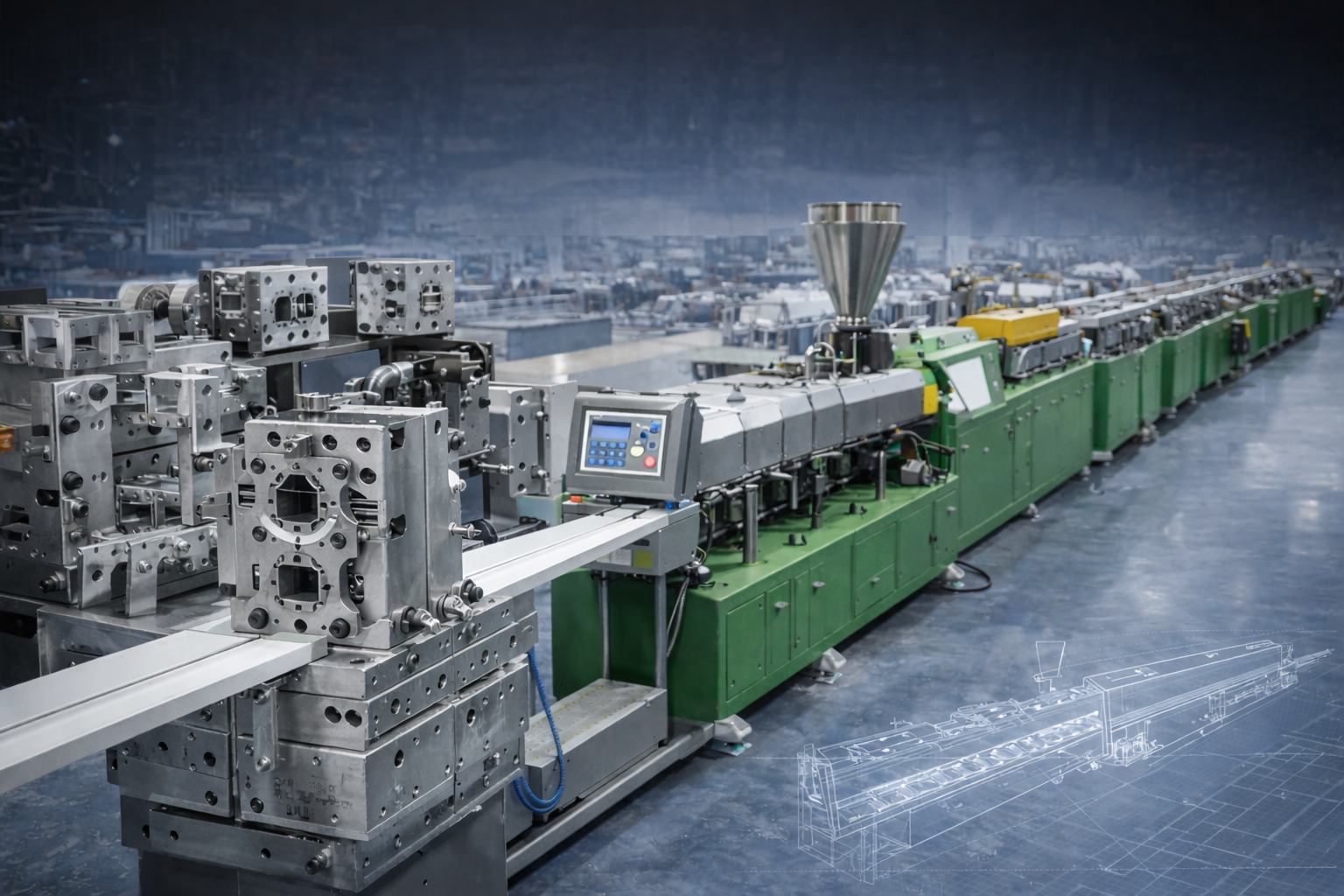
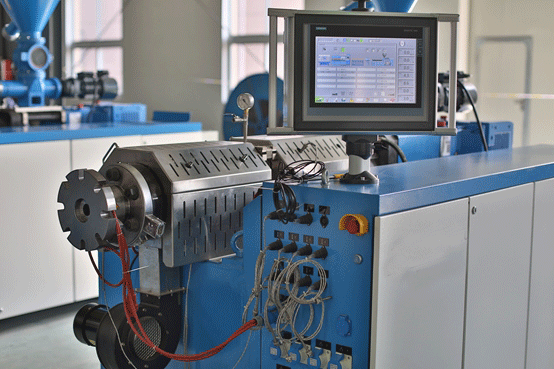
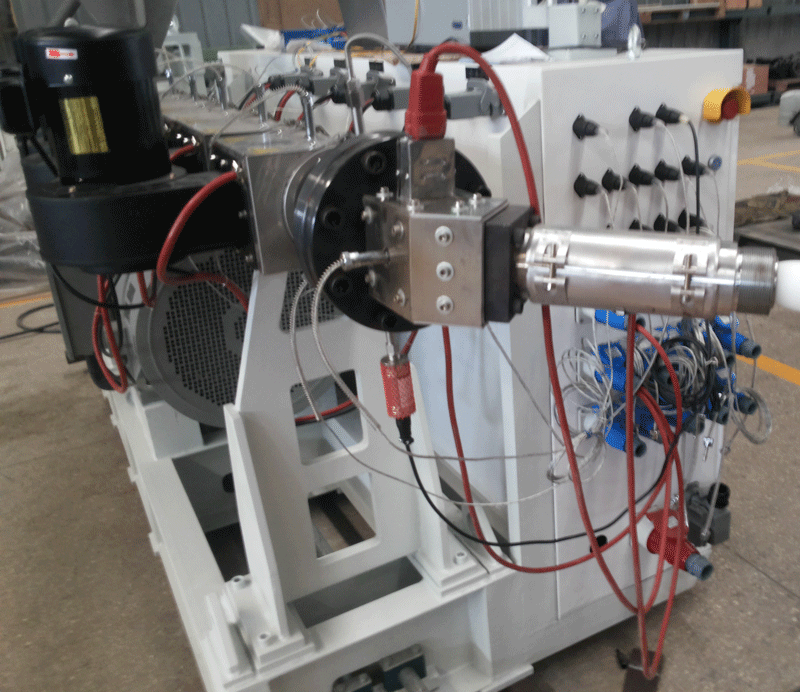
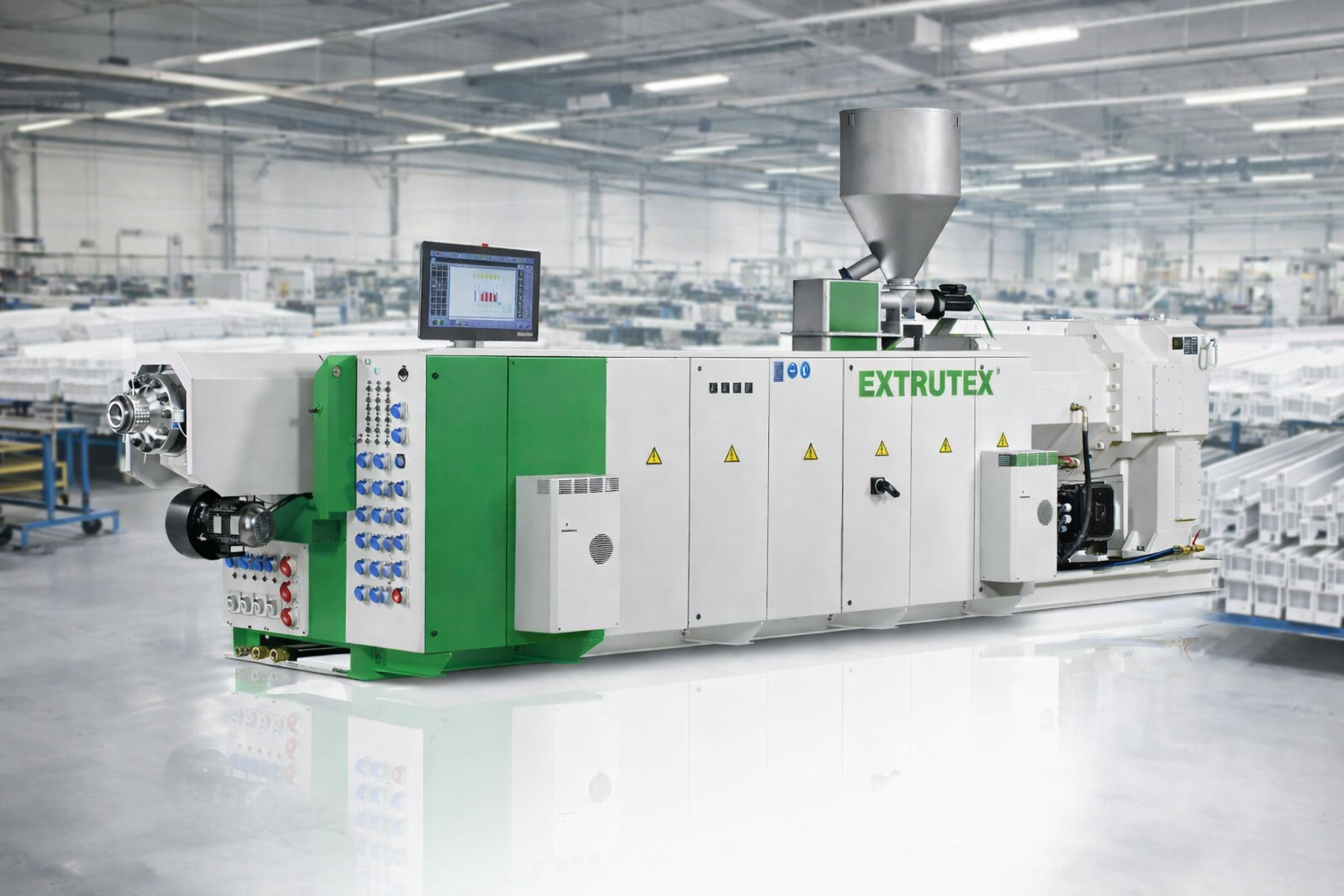
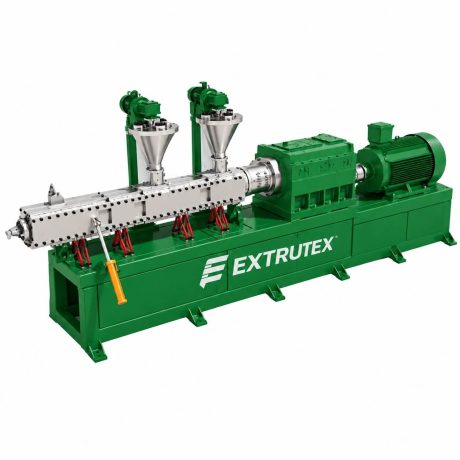
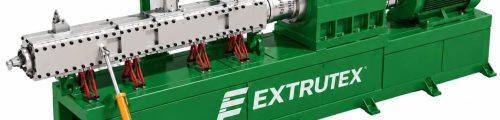
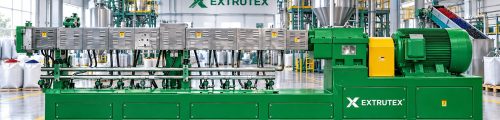
Parallel co-rotating design with fully segmented screws and a true clam-shell barrel. Built for research, formulation development and small-scale production of polymers, compounds and reactive systems.
EXTRUTEX – Austrian engineering concept, manufactured in Nanjing and Shanghai, China. Precision laboratory extruders engineered for reproducibility, rapid reconfiguration and clean operation in R&D environments.
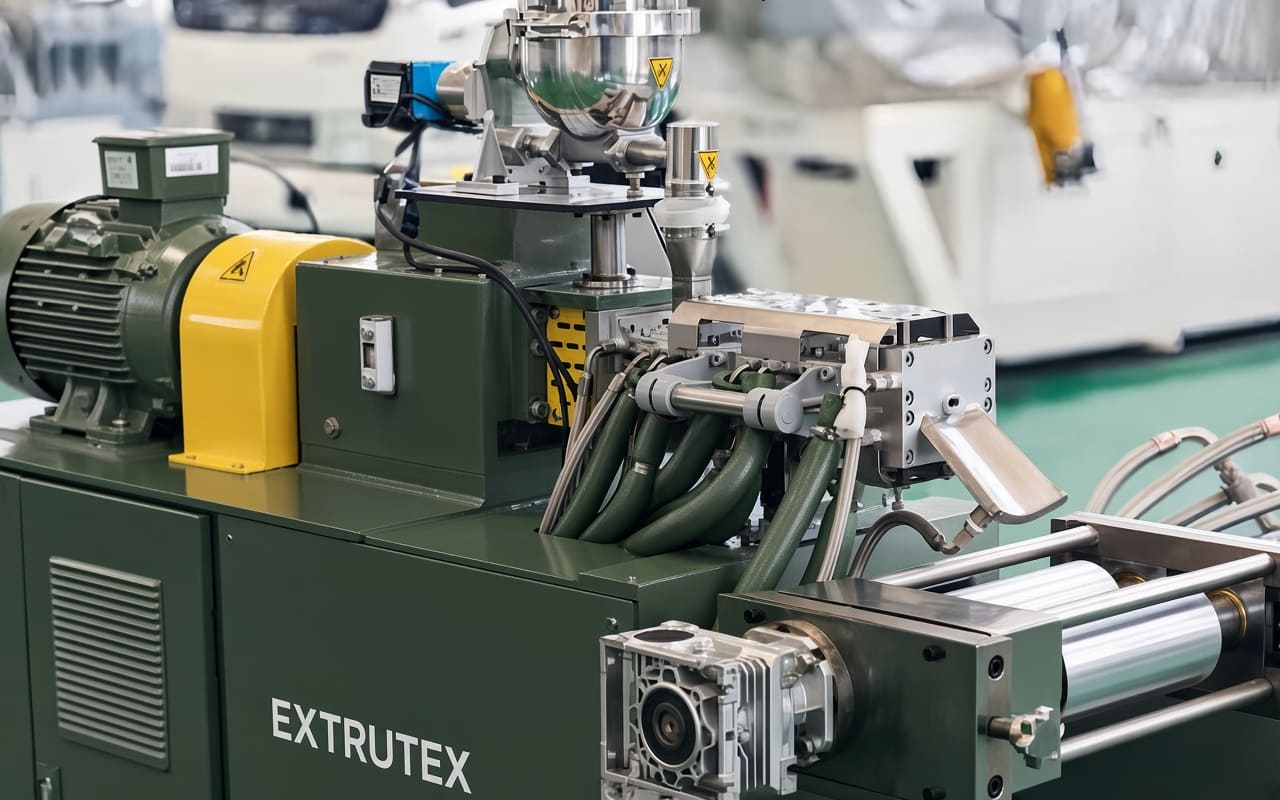
The EXLT series was conceived from the ground up as a laboratory and pilot-scale platform rather than a scaled-down production machine. Every mechanical and thermal decision prioritises accessibility, modularity and process transparency. The parallel co-rotating screw arrangement delivers the high shear rates and intensive mixing that modern polymer research demands, while the horizontally split clam-shell barrel removes the traditional barriers to observation and cleaning.
In practice this means an operator can open the barrel in minutes, inspect every processing zone, change screw elements or simply verify that a new formulation has fully melted and dispersed. The same machine can move from a high-intensity compounding trial in the morning to a gentle reactive extrusion run in the afternoon simply by rearranging the screw configuration and adjusting the barrel temperature profile.
Barrel lengths between 28 L/D and 52 L/D are available as standard. Shorter configurations suit sensitive materials that degrade under prolonged residence time; longer barrels allow multi-stage operations—feeding, plasticising, dispersing, reacting, venting and pressure build-up—within a single continuous process. The modular barrel sections themselves are water- or oil-cooled and electrically heated, giving independent temperature control in each zone.
At the heart of every EXLT extruder is a fully segmented screw system. Conveying elements, kneading blocks, mixing discs and reverse-flight sections are mounted on a hexagonal or spline shaft and secured by a single lock nut. Changing the screw layout is a matter of minutes rather than hours. This flexibility is essential when the same laboratory must handle filled compounds one day, reactive copolymers the next, and thermally sensitive biopolymers the day after.
Because the geometry of each element is precisely defined, process engineers can document and reproduce any configuration. Once a successful screw design has been identified, it can be transferred directly to larger EXTRUTEX production lines with high confidence that the scale-up factors will remain predictable.
The maximum screw speeds of the smaller models reach 1000 rpm, providing the specific energy input needed for intensive dispersion of nano-fillers or pigments. Larger machines operate at up to 600 rpm, balancing throughput with residence-time control. Torque density is matched to the motor power of each model so that even highly viscous or highly filled melts can be processed without torque overload.
The horizontally split barrel is the feature that most clearly distinguishes the EXLT series from conventional laboratory extruders. When the upper half is raised, the entire screw flight path becomes visible. Researchers can observe melting, mixing and degassing zones in real time—information that is simply unavailable when working with a closed barrel. After a trial, residual polymer can be removed quickly; the open design also simplifies the switch from one polymer family to another without cross-contamination.
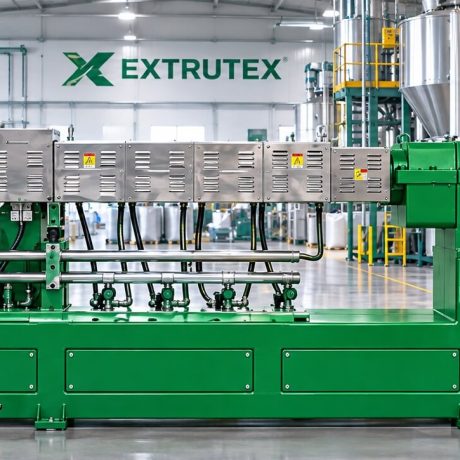
Barrel sections are manufactured from high-grade nitrided steel or, when abrasive fillers are expected, from wear-resistant alloys. Heating and cooling channels are integrated into each segment, and temperature sensors are positioned close to the melt channel for accurate feedback control. The result is a thermal environment that remains stable even when feed rates or screw speeds change abruptly—an everyday occurrence in experimental work.
The following table summarises the principal mechanical and performance data for the four standard laboratory models. All machines share the same modular design language and can be equipped with the same range of downstream accessories (strand dies, film dies, underwater pelletisers, side feeders, liquid injection ports, vacuum vents).
| EXTRUTEX Model | EXLT-11 | EXLT-16 | EXLT-20 | EXLT-35 |
|---|---|---|---|---|
| Screw diameter (mm) | 10.7 | 16 | 21.7 | 35.6 |
| Length / diameter ratio (L/D) | 28–52 | 28–52 | 28–52 | 28–52 |
| Main motor power (kW) | 1.5 | 3 | 4 | 15 |
| Maximum screw speed (rpm) | 1000 | 600 | 600 | 600 |
| Reference output (kg/h) | 0.5–1.0 | 0.5–2 | 2–5 | 20–30 |
Reference outputs are indicative values measured with commodity polyolefins under typical laboratory conditions. Actual throughput depends on formulation, screw design, temperature profile and die resistance. The EXLT-11 is particularly suited to very small sample sizes and high-value additives; the EXLT-35 bridges the gap between laboratory and pilot-plant production.
Each numbered zone can be independently configured by selection of screw elements and barrel temperature set-points.
Because the screw and barrel geometry can be reconfigured so readily, a single EXLT machine covers a surprisingly wide spectrum of polymer-processing tasks:
Side feeders, liquid injection nozzles and vacuum vents can be attached at any barrel section, allowing multi-component formulations to be introduced at the thermally and mechanically most appropriate location. This modularity is especially valuable when developing processes that will later be transferred to industrial-scale EXTRUTEX lines.
Modern laboratory work requires more than a reliable mechanical platform; it also requires transparent, exportable process data. Every EXLT extruder is equipped with a PLC-based control system that records screw speed, torque, melt pressure, melt temperature and individual barrel zone temperatures at user-selectable intervals. Data can be exported in standard formats for later analysis or for direct comparison with larger production machines.
Recipe management allows complete process recipes—temperature profiles, screw speeds, feed rates and even the screw configuration itself—to be stored and recalled. When a successful laboratory trial is ready for scale-up, the same recipe can serve as the starting point on a production extruder, reducing the number of costly intermediate trials.
Clam-shell opening and segmented screws reduce the time between different formulations from hours to minutes. Cleaning is thorough and visual confirmation is immediate.
Open-barrel observation lets researchers see melting, mixing and degassing in real time—information that closed-barrel machines simply cannot provide.
Identical modular design language from the EXLT-11 to larger production lines means laboratory results translate predictably to industrial equipment.
The EXLT-11 can produce meaningful data from less than one kilogram of material—an important consideration when working with expensive additives or experimental polymers.
EXTRUTEX combines Austrian design principles with manufacturing capability located in Nanjing and Shanghai. Critical components—screw shafts, barrel liners, gearboxes—are produced to tight dimensional tolerances and undergo rigorous incoming inspection. Each completed machine is run under load for an extended period before shipment; temperature uniformity, torque response and mechanical run-out are verified and documented.
Wear parts are stocked both in China and at selected European service points, ensuring that laboratories rarely face long downtime. The modular architecture further simplifies maintenance: a damaged barrel section or a worn screw element can be replaced without dismantling the entire machine.
A typical experimental day on an EXLT extruder begins with selection of the appropriate screw configuration. The operator opens the clam-shell barrel, arranges the required conveying, kneading and mixing elements, closes the barrel and performs a short dry run to confirm free rotation. Barrel temperatures are then set according to the polymer’s melting and degradation characteristics. Once thermal equilibrium is reached, the main drive is started at low speed and the feeders are activated.
During the run the operator monitors torque, melt pressure and melt temperature. Samples can be taken at the die for offline analysis (rheology, mechanical testing, microscopy). If the formulation needs adjustment, feed rates or temperature set-points can be changed on the fly. At the end of the trial the screws are stopped, the barrel is opened while still warm, residual polymer is removed, and the machine is ready for the next experiment—often within thirty minutes.
This cycle of rapid configuration, controlled processing and immediate visual inspection is what makes the EXLT series particularly productive in an R&D environment where the number of trials per day directly influences project timelines.
Although the extruder itself is the core of the system, EXTRUTEX supplies a complete range of laboratory-scale downstream equipment: strand dies with multiple holes, flat-film dies, capillary dies for online rheometry, water baths, air knives, haul-off units and laboratory pelletisers. All interfaces are designed so that the extruder and downstream units form a single, coherent process line under common control.
For reactive extrusion or multi-component compounding, liquid and solid side feeders can be positioned at any barrel section. Vacuum vents with controlled vacuum levels allow efficient removal of volatiles without interrupting the continuous process. The result is a laboratory platform that can simulate almost any industrial compounding or reactive extrusion scenario at a fraction of the material consumption.
Laboratories evaluating twin-screw equipment often focus first on price and maximum throughput. Experience shows that the true cost of ownership is dominated by change-over time, cleaning effort, reproducibility of results and the ease with which laboratory data can be scaled. The EXLT series addresses each of these factors directly:
In short, the EXLT series is engineered for the realities of modern polymer research: frequent product changes, limited sample quantities, the need for visual process insight, and the eventual transfer of successful formulations to industrial production.
Whether the task is early-stage formulation screening, process-window mapping or small-batch production of specialty compounds, the EXLT laboratory twin-screw extruders provide a precise, flexible and transparent platform that accelerates development while keeping material consumption and change-over times to a minimum.
EXTRUTEX – Austrian design, manufactured in Nanjing and Shanghai, China. Technical specifications are subject to continuous improvement; please contact EXTRUTEX for the latest data sheets and custom configuration options.
There are no reviews yet.
By submitting your email, you agree to our company’s terms and conditions.
We are not looking to sell; we are here to provide you with the best support and service.
Contact available 24/7
Please do not contact us for advertising or sales inquiries
All rights of this website are reserved for EXTRUTEX Austria and its partner companies, © 2026
-
(0 customer reviews)