EXTRUTEX PEEK 3D Printer Filament
EXTRUTEX PEEK is an unreinforced, high-performance thermoplastic filament developed for industrial 3D printing applications that demand exceptional thermal performance, mechanical strength and chemical resistance. Designed for professional high-temperature additive manufacturing systems, PEEK is suitable for producing functional components intended for demanding industrial environments.
Its combination of mechanical durability, dimensional stability, wear resistance and resistance to many chemicals makes PEEK an important engineering polymer for aerospace, automotive, electronics and advanced industrial applications. It is particularly relevant when standard 3D printing materials cannot meet the required operating conditions.
Available in natural color or customized colors, subject to material grade and production requirements.
What Is PEEK 3D Printer Filament?
PEEK stands for polyether ether ketone. It is a high-performance semi-crystalline thermoplastic belonging to the polyaryletherketone (PAEK) polymer family. PEEK is widely used in demanding engineering applications because it combines high mechanical performance with thermal stability, chemical resistance and good wear characteristics.
Unreinforced PEEK contains no intentionally added reinforcing fibers such as carbon fiber or glass fiber. This gives it a different property profile from reinforced PEEK grades. It offers a useful balance of toughness, strength and design flexibility without the additional fiber reinforcement found in composite filaments.
PEEK filament is designed for specialized industrial 3D printers capable of maintaining the high nozzle and build temperatures required for processing this polymer. Correct thermal management during printing is essential for layer bonding, crystallization control, dimensional accuracy and reliable part performance.
Key Highlights of EXTRUTEX PEEK Filament
High-Temperature Performance
Designed for technical components exposed to demanding thermal environments. The supplied product information identifies operating applications in the 150–170°C temperature range, subject to load and application conditions.
Mechanical Strength
PEEK offers high mechanical strength and durability, making it suitable for functional components that must withstand mechanical loads and repeated use.
Excellent Chemical Resistance
Provides resistance to many industrial chemicals, oils and solvents. Actual compatibility depends on the chemical, concentration, temperature and exposure duration.
Wear Resistance
Suitable for evaluating in components exposed to friction, movement and mechanical contact, including selected industrial tooling and machine parts.
Natural Flame Retardancy
PEEK has inherently favorable flame-retardant characteristics. Specific flame classifications must be verified for the exact filament grade and test thickness.
Stable Material Feeding
Consistent filament diameter and roundness support reliable feeding and extrusion when used with a properly configured high-temperature 3D printer.
Why Choose Unreinforced PEEK?
Unreinforced PEEK is selected when a component needs a combination of high mechanical performance, thermal resistance and chemical durability without fiber reinforcement. Its mechanical properties make it suitable for a wide range of demanding functional applications.
Compared with reinforced grades, unreinforced PEEK offers a different balance of toughness, stiffness, surface characteristics and processing behavior. It can be useful where a more uniform polymer structure, complex geometry or reduced fiber-related abrasion is preferred.
PEEK is also known for its resistance to many forms of chemical exposure and its ability to retain useful mechanical properties at elevated temperatures. These characteristics make it an important candidate for carefully engineered industrial parts.
Important engineering consideration: PEEK's material properties do not guarantee that every printed component will withstand a particular load or temperature. Part geometry, crystallinity, print orientation, layer adhesion, internal defects and post-processing can significantly affect final performance. Validate the finished component under its actual operating conditions.
High-Temperature 3D Printing Requirements
PEEK requires specialized processing equipment. It cannot be treated like ordinary PLA, PETG or ABS filament. A suitable industrial printer must be designed to maintain high extrusion temperatures and provide a controlled thermal environment around the printed component.
- High-temperature hotend capable of maintaining the specified PEEK extrusion temperature.
- Heated build platform capable of reaching the required bed temperature.
- Controlled build chamber to manage thermal gradients and reduce warping.
- Suitable high-temperature components in the filament path and printer enclosure.
- Stable temperature control throughout the printing process.
- Printer configuration suitable for the selected PEEK grade and component geometry.
For demanding components, the printer's chamber temperature, build-plate temperature and cooling strategy should be selected as a coordinated process. Incorrect thermal management can lead to warping, poor layer bonding, residual stress and inconsistent crystallization.
PEEK Filament Printing Guide
The following settings are the preliminary processing ranges supplied for this product. They should be treated as starting specifications and verified against the exact PEEK grade and printer configuration.
| Printing Parameter | Supplied Recommendation | Technical Notes |
|---|
| Nozzle temperature | 400–450°C | Requires a high-temperature hotend specifically designed for PEEK processing. |
| Build plate temperature | 110–220°C | Use the temperature recommended for the exact grade, build surface and printer. |
| Chamber temperature | 40–60°C or 90–200°C | Two different ranges were supplied. Confirm the correct chamber range with the filament manufacturer before printing. |
| Print speed | 30–60 mm/s | Adjust according to nozzle size, layer height, extrusion flow and component geometry. |
| Cooling fan | 0–100% | Adjust according to application, geometry and the required thermal conditions. |
Temperature Control
Maintaining a stable thermal environment is essential when printing PEEK. Temperature differences between the nozzle, build plate, chamber and printed component can influence crystallization, residual stress and dimensional stability. A printer designed for high-temperature polymers is strongly recommended.
Layer Adhesion and Warping Control
PEEK components can experience warping and internal stress if thermal conditions are not properly controlled. A suitable heated chamber, stable build-plate temperature and optimized printing strategy help improve layer bonding and dimensional consistency.
Cooling Strategy
The supplied cooling recommendation ranges from 0% to 100%, depending on the application and geometry. This is a broad adjustment range rather than a single universal setting. Cooling should be optimized carefully because excessive cooling may increase thermal gradients, while insufficient cooling may affect details and dimensional accuracy.
Before production printing: Confirm the chamber-temperature range, bed-temperature range and recommended cooling strategy with the exact filament technical data sheet. The supplied chamber recommendations of 40–60°C and 90–200°C are substantially different and should not be treated as interchangeable.
Applications of PEEK 3D Printer Filament
Aerospace Components
Selected brackets, housings, clips, fixtures and functional prototypes for aerospace development where high-performance polymer materials are required.
Automotive Engineering
Functional prototypes, under-hood development parts, brackets, connectors and technical components exposed to mechanical or thermal stress.
Electronics and Electrical Enclosures
Technical housings, insulation-related components and precision parts for demanding electronic and electrical applications, subject to relevant electrical testing.
Industrial Machinery
Machine components, wear-related parts, guides, fixtures and tooling used in demanding industrial environments.
Jigs, Fixtures and Tooling
Custom production aids, assembly fixtures, inspection tools and manufacturing components requiring thermal and mechanical performance.
Functional End-Use Parts
Selected low-volume production components and custom parts where PEEK's material properties justify the use of high-temperature additive manufacturing.
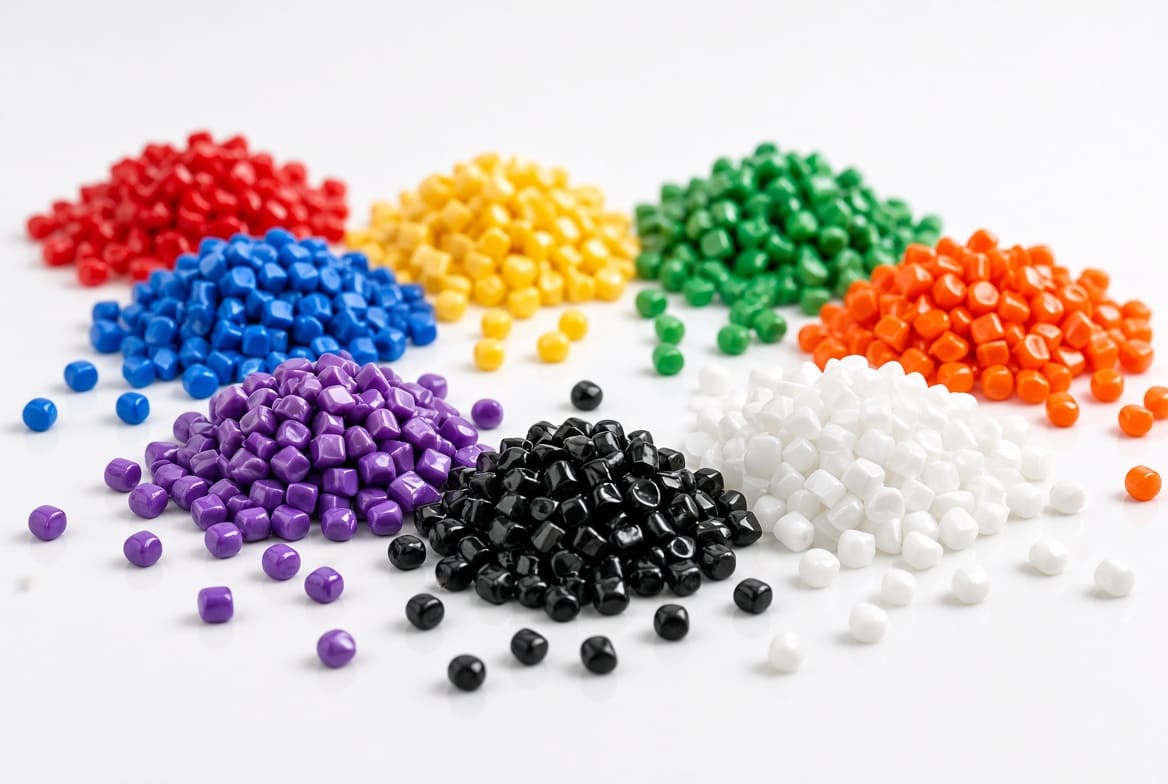
Natural and Customized Colors
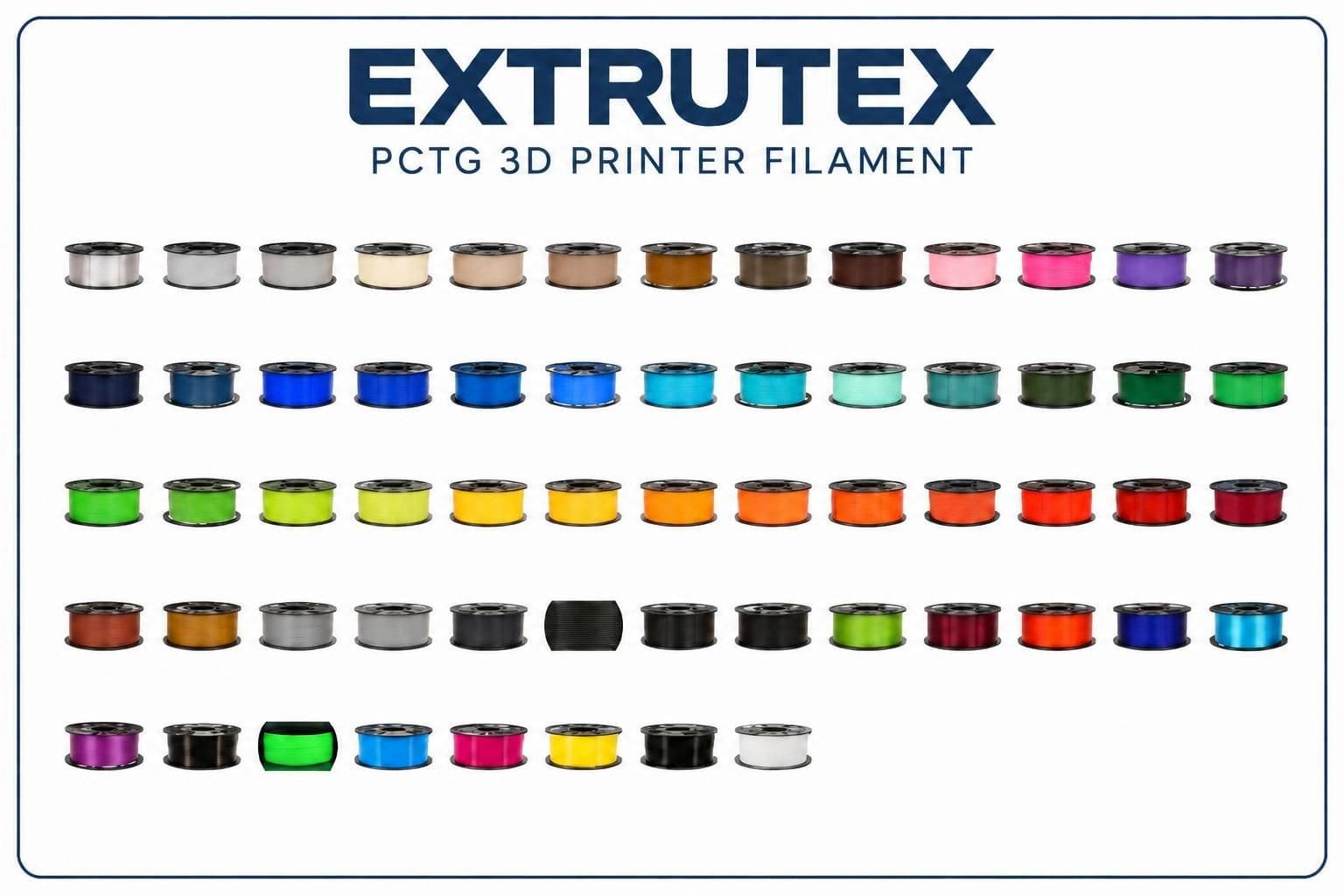
EXTRUTEX PEEK filament is available in natural color, with customized color options subject to grade availability and technical requirements. Natural PEEK is commonly selected for engineering applications where the original material appearance is preferred.
For customized colors, the color formulation must be suitable for the high processing temperatures required by PEEK. Colorants and additives can influence material performance, so customized formulations should be evaluated before being used in critical applications.
Unreinforced PEEK Compared with Reinforced PEEK
PEEK filament is available in unreinforced and reinforced formulations. The correct choice depends on the required balance of strength, stiffness, toughness, dimensional stability, wear behavior and processing requirements.
| Consideration | Unreinforced PEEK | Reinforced PEEK |
|---|
| Composition | PEEK polymer without added reinforcing fibers | PEEK polymer containing reinforcement such as carbon or glass fiber |
| Mechanical profile | Balanced strength and toughness | Generally higher stiffness, depending on reinforcement and formulation |
| Surface characteristics | Polymer-based surface finish | Surface appearance may be influenced by fiber content |
| Nozzle wear | Generally less abrasive than fiber-reinforced grades | May require wear-resistant nozzle components |
| Typical selection | Applications requiring unreinforced polymer properties and toughness | Applications prioritizing increased stiffness or dimensional stability |
Material Handling and Storage
Consistent filament handling is important for reliable industrial 3D printing. Store PEEK filament in clean, dry conditions and protect it from dust, moisture and contamination. Keep the filament in suitable sealed packaging when it is not being used.
Follow the supplier's recommendations for drying, storage and material conditioning. The exact drying temperature and duration should be obtained from the technical data sheet for the specific PEEK grade rather than assumed from general PEEK processing practices.
Technical Information and Quality Considerations
PEEK is a specialized engineering polymer, and its final performance depends on more than the raw material itself. Filament diameter consistency, roundness, material quality, moisture control, extrusion stability and printing conditions all contribute to the quality of the finished component.
For critical applications, buyers should evaluate the material using appropriate technical documentation and finished-part testing. Relevant properties may include tensile strength, flexural strength, impact resistance, heat deflection temperature, glass transition temperature, melting temperature, chemical compatibility and flame performance.
EXTRUTEX can support customers in discussing material requirements and identifying suitable polymer solutions for industrial applications.
Why Choose EXTRUTEX?
EXTRUTEX works across plastics machinery, polymer materials, compounding, recycling and industrial extrusion technology. Our experience in polymer processing supports a practical approach to material selection and application development.
- Manufacturing in China.
- Design, laboratory and research and development activities in Austria.
- Technical support for polymer material and processing requirements.
- Solutions for industrial plastics applications and specialized materials.
- Cooperation on customized material requirements, subject to technical feasibility.
Frequently Asked Questions About PEEK Filament
1. What is PEEK 3D printer filament?
PEEK filament is a high-performance thermoplastic material used in industrial FDM and FFF 3D printing. PEEK stands for polyether ether ketone and belongs to the PAEK family of polymers. It is valued for its combination of mechanical strength, high-temperature performance, chemical resistance and wear resistance. Because it requires very high processing temperatures, it must be printed using equipment specifically designed for high-performance engineering polymers.
2. Is PEEK suitable for industrial 3D printing?
Yes. PEEK is one of the established high-performance polymers used in industrial additive manufacturing. It can be used to produce functional prototypes, tooling, fixtures, housings and selected end-use components. Its processing requirements are considerably more demanding than those of common desktop filaments. A suitable high-temperature printer, controlled chamber and validated processing parameters are essential for achieving consistent part quality.
3. What makes unreinforced PEEK different from carbon-fiber PEEK?
Unreinforced PEEK contains no intentionally added reinforcing fibers, while carbon-fiber PEEK contains carbon fibers to modify the mechanical properties of the polymer. Reinforced grades generally offer higher stiffness and may provide improved dimensional stability, depending on the formulation. Unreinforced PEEK offers a different balance of toughness, surface characteristics and mechanical behavior. The appropriate choice depends on the actual loads, geometry and performance requirements of the component.
4. What temperature can PEEK withstand?
PEEK is known for high-temperature performance. The supplied product description identifies applications in the 150–170°C range. However, the temperature a printed component can withstand depends on mechanical loading, exposure duration, geometry, crystallinity and print quality. A material's heat deflection temperature, glass transition temperature and continuous-use temperature are different measurements. Obtain grade-specific data before specifying PEEK for a component operating under sustained heat and load.
5. What nozzle temperature is required for PEEK?
The supplied printing guide recommends a nozzle temperature between 400°C and 450°C. This requires a hotend specifically engineered for high-temperature polymer processing. The printer must maintain stable extrusion temperature and provide compatible components throughout the filament path. Actual settings should be validated for the exact PEEK grade, nozzle size, extrusion flow and printing speed. Ordinary desktop printer hotends are generally unsuitable for this temperature range.
6. What bed temperature is recommended for PEEK?
The supplied guide lists a build-plate temperature range of 110°C to 220°C. This is a broad range and should not be interpreted as a setting that applies equally to every printer or PEEK formulation. The correct temperature depends on the grade, build surface, part geometry and chamber conditions. Use the supplier's grade-specific recommendations and verify first-layer adhesion and dimensional stability with controlled test prints.
7. Does PEEK require a heated chamber?
A controlled heated chamber is strongly recommended for PEEK printing, particularly for larger or more demanding components. Chamber heating helps reduce temperature differences between printed layers and the surrounding environment. This can help limit warping and residual stress while supporting consistent layer bonding. The supplied information contains two chamber-temperature ranges, 40–60°C and 90–200°C. Confirm the correct range with the material supplier before printing.
8. Can PEEK be printed on a normal desktop 3D printer?
Most standard desktop 3D printers are not designed for PEEK. The material requires a high-temperature nozzle, heated build platform and controlled chamber, along with suitable temperature-resistant printer components. A standard printer may not be able to reach or maintain the required temperatures safely or consistently. Use a professional high-temperature 3D printer specifically designed for PEEK and follow the printer manufacturer's operating instructions.
9. Is PEEK chemically resistant?
PEEK has excellent resistance to many chemicals, including a range of industrial fluids, oils and solvents. Its actual compatibility depends on the chemical identity, concentration, temperature, exposure duration and mechanical stress applied to the component. Chemical resistance should always be checked against the specific substances encountered in service. For critical applications, perform immersion or exposure testing using the actual printed material and component design.
10. Is PEEK naturally flame retardant?
PEEK has inherently favorable flame-retardant characteristics compared with many conventional thermoplastics. However, a general statement about natural flame retardancy is not the same as a formal classification. If a project requires a specific UL 94 rating or another fire-performance standard, request the relevant test documentation for the exact filament grade, specimen thickness and test conditions.
11. Is PEEK suitable for aerospace applications?
PEEK is used in demanding aerospace engineering applications because of its combination of mechanical performance, thermal resistance and chemical durability. 3D printing can support the production of selected prototypes, fixtures, housings and specialized components. However, aerospace use may require extensive qualification, traceability, process validation and component testing. A filament's general material properties do not automatically qualify a printed part for flight-critical use.
12. Can PEEK be used in automotive applications?
PEEK can be considered for selected automotive components exposed to heat, mechanical loads, friction or chemical contact. Potential applications include functional prototypes, brackets, connectors, housings and specialized tooling. The final selection must account for operating temperature, vibration, load, chemical exposure and service life. Printed components should be tested under realistic automotive conditions before being used in production vehicles.
13. Is PEEK suitable for electrical and electronic components?
PEEK's thermal and chemical performance can make it a candidate for selected electronic and electrical engineering components. Possible applications include housings, connectors, insulating structures and technical fixtures. However, electrical properties such as dielectric strength, volume resistivity and tracking resistance should be confirmed for the exact grade. The finished printed part must also meet the relevant electrical and safety requirements of its application.
14. Can PEEK be used for jigs and fixtures?
Yes. PEEK can be evaluated for specialized jigs, fixtures, tooling and manufacturing aids where conventional polymers may not provide sufficient thermal or chemical performance. Its mechanical durability and wear resistance can be useful in selected production environments. The design should consider clamping forces, repeated contact, dimensional tolerances and exposure to heat or chemicals. Test the printed fixture under actual manufacturing conditions before deployment.
15. Is PEEK wear resistant?
PEEK is known for useful wear and friction properties, making it relevant to selected moving parts, guides and mechanical components. Actual wear performance depends on the contact material, surface finish, lubrication, load, speed and operating temperature. Printed surface quality and layer orientation can also influence performance. For components with continuous sliding contact, conduct application-specific wear testing rather than relying solely on general polymer properties.
16. Does PEEK warp during 3D printing?
PEEK can warp if the printing environment is not properly controlled. Its high processing temperatures and semi-crystalline nature make thermal management important. Uneven cooling, insufficient chamber control, poor bed adhesion and unsuitable part geometry can contribute to dimensional changes and internal stress. A suitable heated chamber, optimized build-plate conditions and validated printing parameters help reduce these risks.
17. Why is chamber temperature important when printing PEEK?
Chamber temperature helps control the thermal environment around the part during printing. Large temperature differences between the deposited material and surrounding air can cause uneven cooling, shrinkage and internal stress. A controlled chamber can improve dimensional consistency and support better bonding between printed layers. The required chamber temperature depends on the exact PEEK formulation, printer design and component geometry.
18. What print speed should be used for PEEK?
The supplied guide recommends a print speed of 30–60 mm/s. This should be treated as a preliminary range rather than a universal setting. Actual speed depends on the hotend's extrusion capacity, nozzle diameter, layer height, material temperature and part geometry. Printing too quickly can cause insufficient melting or inconsistent extrusion, while excessively slow printing may affect thermal history. Validate the speed with test parts.
19. Should the cooling fan be used when printing PEEK?
The supplied guide lists a cooling-fan range of 0–100%, adjusted according to application and geometry. This broad range reflects the fact that cooling requirements vary. Excessive cooling can increase thermal gradients and contribute to warping or weak layer bonding. Insufficient cooling may affect small details and dimensional definition. Begin with the supplier's recommended settings and optimize cooling through controlled test prints.
20. Does PEEK need to be dried before printing?
Filament conditioning should follow the technical data sheet for the exact PEEK grade. Moisture can affect extrusion stability and printed surface quality in many engineering polymers. Do not assume that every PEEK formulation requires the same drying temperature or duration. Use a suitable drying system, observe the supplier's instructions and store conditioned filament in a controlled environment to reduce moisture exposure before printing.
21. What colors are available for EXTRUTEX PEEK filament?
The supplied product information lists natural color and customized colors. Natural PEEK is often selected for engineering applications where the original polymer appearance is suitable. Customized colors may be possible depending on the formulation, production requirements and availability. Because PEEK is processed at high temperatures, colorants must be compatible with its thermal processing conditions and should not compromise the required material properties.
22. Is unreinforced PEEK stronger than reinforced PEEK?
Not in every mechanical property. Reinforced PEEK grades often provide higher stiffness and may offer improved dimensional stability, while unreinforced PEEK provides a different balance of toughness and deformation behavior. The result depends on fiber type, fiber content, orientation and formulation. Compare measured tensile, flexural, impact and thermal properties from the relevant technical data sheets before choosing a grade.
23. Does PEEK have good dimensional stability?
PEEK is valued for its dimensional stability in demanding engineering environments, but printed-part accuracy depends on processing conditions. Shrinkage, crystallization, cooling rate, chamber temperature, print orientation and internal stress can all affect the final dimensions. For precision components, use validated printer profiles, suitable dimensional compensation and post-print inspection. Critical tolerances should be confirmed through measurement of representative production parts.
24. Can PEEK be used for functional end-use parts?
Yes, PEEK can be considered for selected functional end-use components where its properties justify the cost and processing complexity. Examples may include specialized housings, fixtures, machine parts and technical components. The suitability of a printed part depends on its design, print quality, material condition and operating environment. Validate mechanical, thermal, chemical and dimensional performance before moving from prototype to end-use production.
25. Does PEEK have a high melting temperature?
PEEK is a semi-crystalline polymer with a high melting temperature compared with common 3D printing thermoplastics. This is one reason it requires specialized high-temperature extrusion equipment. The exact melting temperature should be confirmed from the technical data sheet for the supplied grade. Do not confuse melting temperature with glass transition temperature, heat deflection temperature or recommended continuous operating temperature.
26. Is PEEK suitable for parts exposed to oils and industrial fluids?
PEEK is resistant to many oils and industrial fluids, which makes it a candidate for selected machine components and technical housings. Compatibility is not universal, however. Fluid composition, additives, concentration, temperature and exposure duration can influence the material. If the part will be exposed to a specific lubricant, fuel, cleaning agent or process chemical, confirm compatibility using supplier data or application testing.
27. Can PEEK be machined after 3D printing?
PEEK components can be considered for secondary machining when tighter tolerances or specific surface finishes are required. Machining parameters should account for the material's mechanical and thermal behavior, part geometry and residual stress. Printed parts may have anisotropic properties and internal defects, so machining allowances and inspection methods should be planned carefully. Test the process on representative parts before production.
28. Can PEEK be used for medical applications?
PEEK is used in certain medical and healthcare-related applications, but a general PEEK filament description does not establish medical suitability. Medical applications can require specific grades, biocompatibility testing, traceability, sterilization validation and regulatory documentation. A printed component must be assessed as a finished device or part under the applicable requirements. Confirm the exact grade and documentation before considering any medical use.
29. How should PEEK filament be stored?
Store PEEK filament in a clean, dry and controlled environment. Keep it protected from dust, moisture, direct sunlight and unnecessary temperature fluctuations. Use suitable sealed packaging or a dry storage system when the filament is not in use. Follow the supplier's instructions for drying and conditioning before printing. Good storage practices help reduce contamination and support consistent material feeding.
30. What information should I check before buying PEEK filament?
Before purchasing PEEK filament, confirm the filament diameter, diameter tolerance, spool weight, color, nozzle-temperature range, bed-temperature range and chamber requirements. Also request mechanical, thermal and chemical-resistance data for the exact grade. For regulated or critical applications, ask for relevant test reports and compliance documentation. Finally, verify that your printer is designed to process PEEK safely and consistently.
Request EXTRUTEX PEEK Filament Information
Looking for high-performance PEEK filament for industrial 3D printing? Contact EXTRUTEX to discuss material availability, customized color requirements, technical documentation and application suitability.
Contact EXTRUTEX | Explore EXTRUTEX







-
(0 customer reviews)