No products in the cart.

All rights of this website are reserved for EXTRUTEX Austria and its partner companies, © 2026

Multiple Payment Methods

Discount for advance payments over 50%

Free Shipping Coordination Services
Payment methods:


Turn suitable plastic waste, rejected 3D prints and leftover filament into reusable 3D printing filament with a compact extrusion solution designed for laboratories, universities, schools, maker spaces and home workshops.
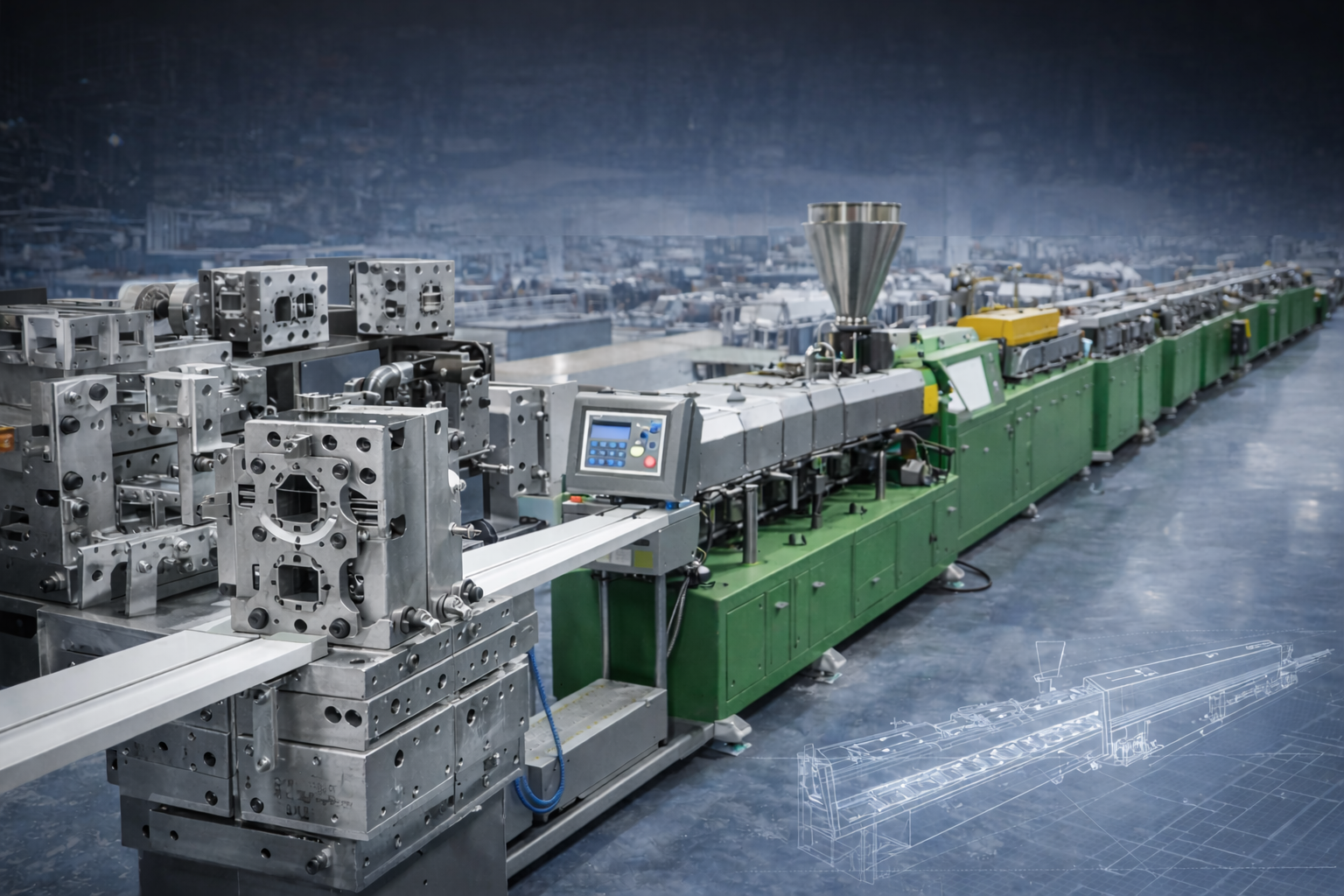
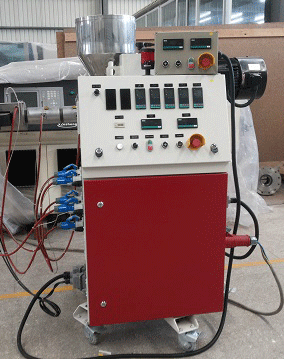
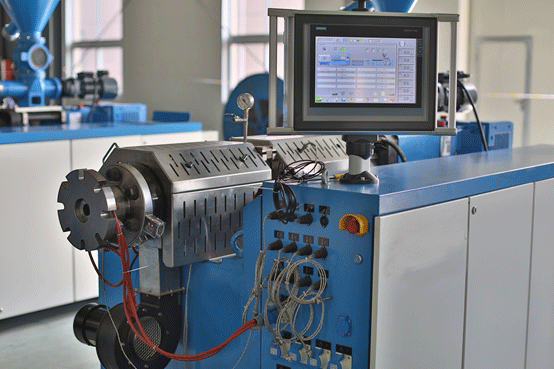
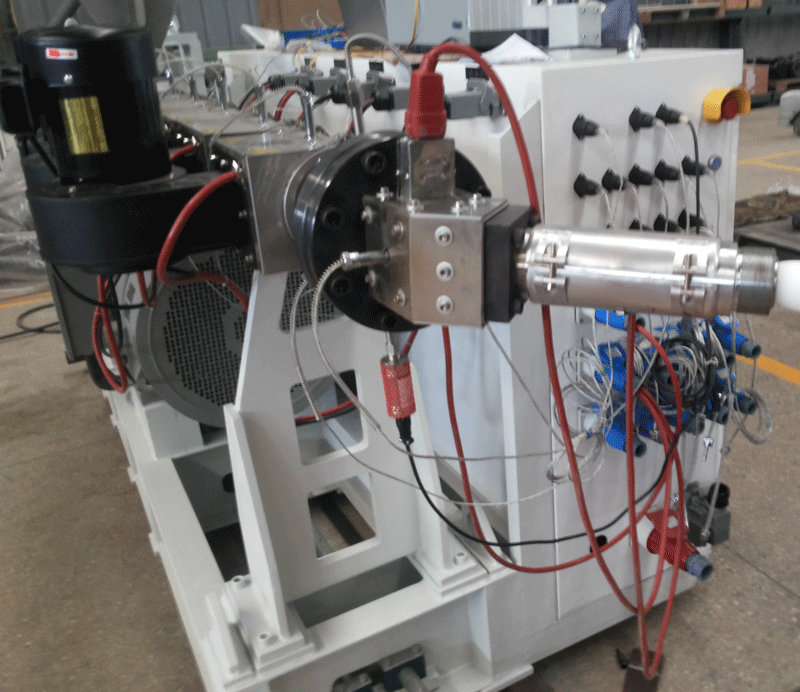
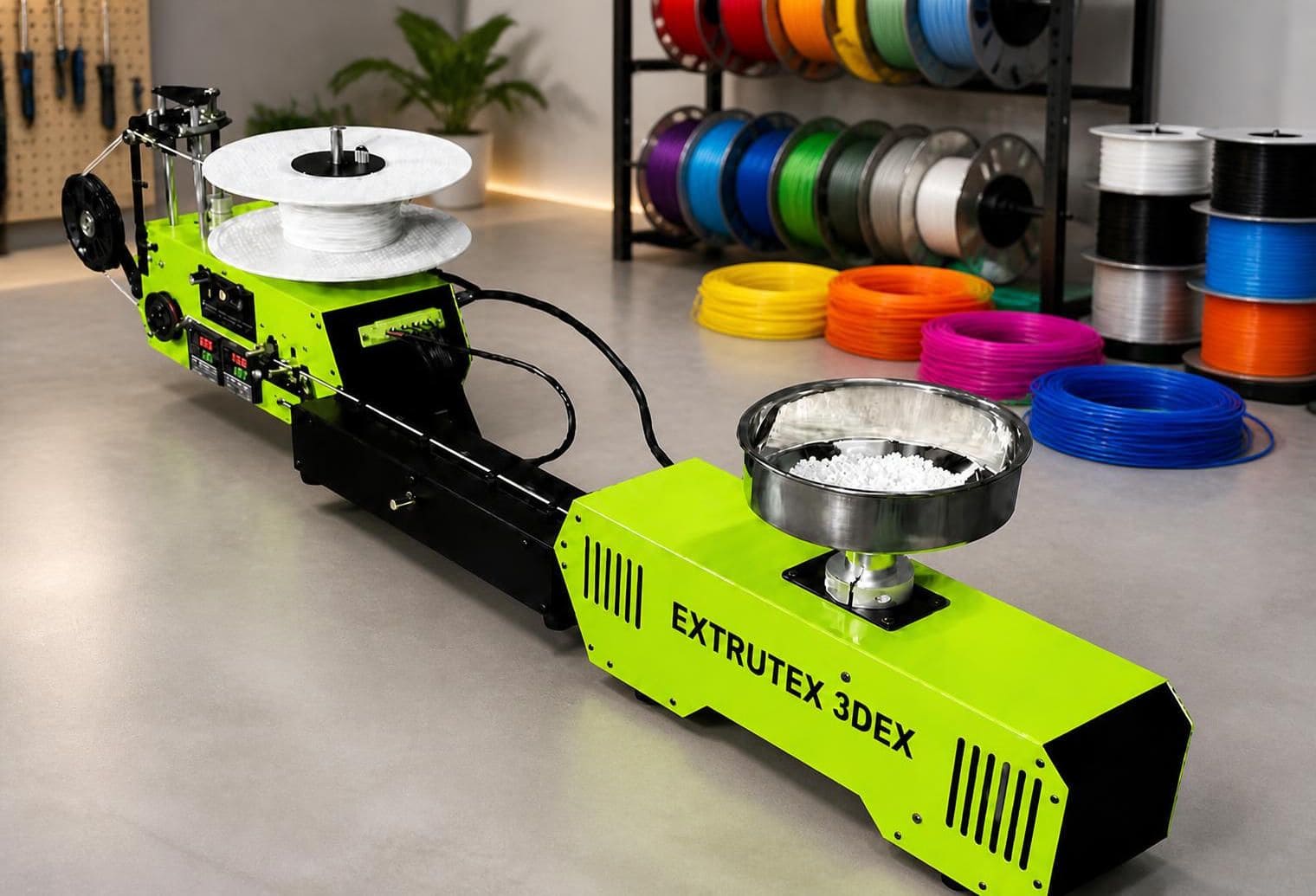
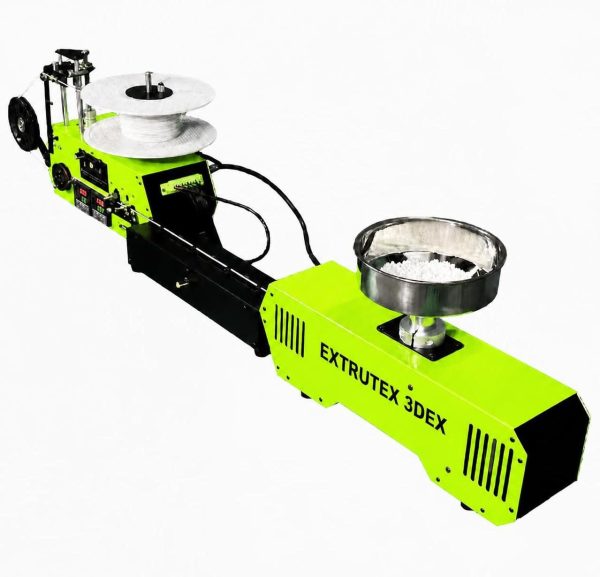
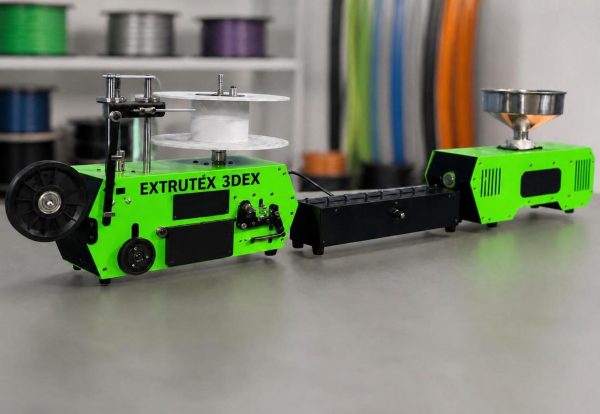
EXTRUTEX 3DEX combines material preparation, controlled plastic extrusion, temperature regulation, vacuum-assisted sizing and automatic filament winding in a practical desktop-scale system. It helps users explore circular material use, experiment with polymers and develop their own filament-processing workflow.
Request Technical Information Contact EXTRUTEXThree-dimensional printing creates opportunities for product development, education, prototyping and small-scale manufacturing. However, failed prints, calibration samples, support structures, test pieces and leftover filament can generate considerable plastic waste. EXTRUTEX 3DEX is designed to help users investigate how suitable plastic waste can be prepared and reprocessed into filament for further experimentation and printing.
Instead of treating every rejected print as disposable material, users can establish a small-scale recycling workflow: sort compatible plastics, prepare the feedstock, extrude the material, control the filament diameter and wind the finished filament for evaluation. This process supports material awareness and encourages a more circular approach to desktop manufacturing.
The system is intended for controlled, small-scale use rather than high-volume industrial production. Its 500 g/h nominal output and 300 W motor make it relevant to users who want a dedicated machine for practical experimentation, material development and filament recycling in a compact working environment.
Prepare compatible rejected prints, clean production scraps and leftover filament for controlled reprocessing. Correct sorting and feedstock preparation are essential to achieving consistent results.
Explore filament production without relying exclusively on commercially manufactured filament. Test material preparation, extrusion settings, cooling and winding procedures.
Demonstrate polymer processing, temperature management, dimensional measurement and recycling principles in a hands-on learning environment.
Use controlled trials to compare suitable polymers, recycled feedstocks and processing conditions. Record the results to improve repeatability.
The objective is to establish a manageable process from suitable plastic waste to a wound filament spool. The exact preparation and operating conditions depend on the polymer, the feedstock form and the intended filament application.
Separate materials by polymer type. Keep PLA, ABS, PETG, TPU and other plastics in distinct batches unless a specific blend has been deliberately developed and validated.
Remove foreign materials and prepare the plastic to a suitable size for feeding. Use the mini granulator where appropriate. Dry hygroscopic or moisture-sensitive polymers as required.
The extrusion screw conveys and melts the prepared material. Controlled temperature settings support stable processing when matched to the selected polymer and feedstock.
The downstream sizing and cooling arrangement helps establish the filament's shape and dimensional consistency. Vacuum-assisted sizing is included in the proposed configuration.
The automatic winder collects the extruded filament onto a spool. Appropriate winding speed and tension help reduce tangles and avoid unnecessary stretching or deformation.
Check filament diameter, surface appearance, spool consistency and printing behavior. Record processing conditions and results for subsequent batches.
The following table presents the main specifications of the EXTRUTEX 3DEX desktop recycled filament extrusion line.
| Specification | EXTRUTEX 3DEX |
|---|---|
| Equipment Type | Desktop recycled 3D printing filament extrusion line |
| Nominal Output Capacity | 500 g/h |
| Motor Power | 300 W |
| Primary Application | Reprocessing suitable plastic waste into 3D printing filament |
| Intended Users | Home users, laboratories, universities, schools, research groups and maker spaces |
| Feedstock Preparation | Mini granulator for suitable plastic scrap and rejected prints |
| Extrusion System | Specially designed screw geometry for desktop filament processing |
| Temperature Management | Temperature control system for controlled polymer processing |
| Filament Sizing | Vacuum-assisted sizing configuration |
| Winding System | Automatic filament winder |
| Material Scope | Compatible thermoplastics, subject to polymer identification and process suitability |
| Operating Environment | Desktop workspace, laboratory or home workshop with appropriate ventilation and safety measures |
| Typical Workflow | Material sorting, preparation, extrusion, sizing, cooling, winding and quality checks |
The machine is designed for users who need filament recycling and extrusion capabilities in a laboratory, educational facility or home workshop. It supports practical trials without requiring a full-scale industrial filament production line.
The extrusion system uses a 300 W motor. The motor drives the material processing operation in a compact equipment configuration intended for desktop-scale filament extrusion.
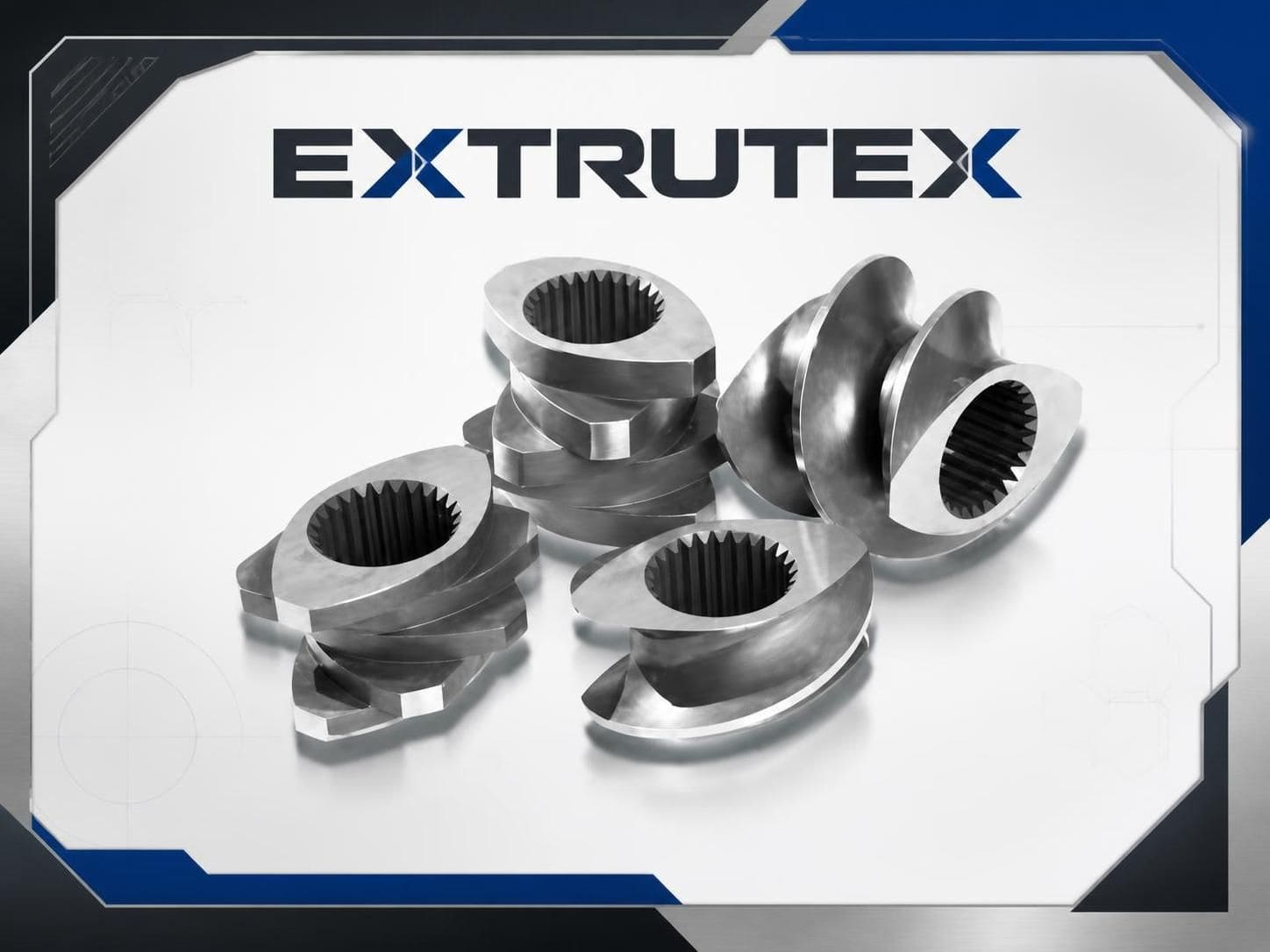
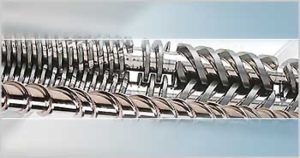
Screw geometry is an important factor in conveying, melting and homogenizing thermoplastic materials. The EXTRUTEX 3DEX uses a specially designed screw geometry intended to support consistent material processing for filament production.
Thermoplastic materials require appropriate processing temperatures. Temperature control helps operators establish and repeat suitable settings for the selected polymer and its condition.
Filament diameter and roundness are important for reliable 3D printer feeding. Vacuum-assisted sizing can help control filament geometry when the material, cooling conditions and line settings are properly matched.
The automatic winder collects the finished filament for storage, measurement and testing. Suitable winding control helps keep the filament organized and makes the output easier to handle.
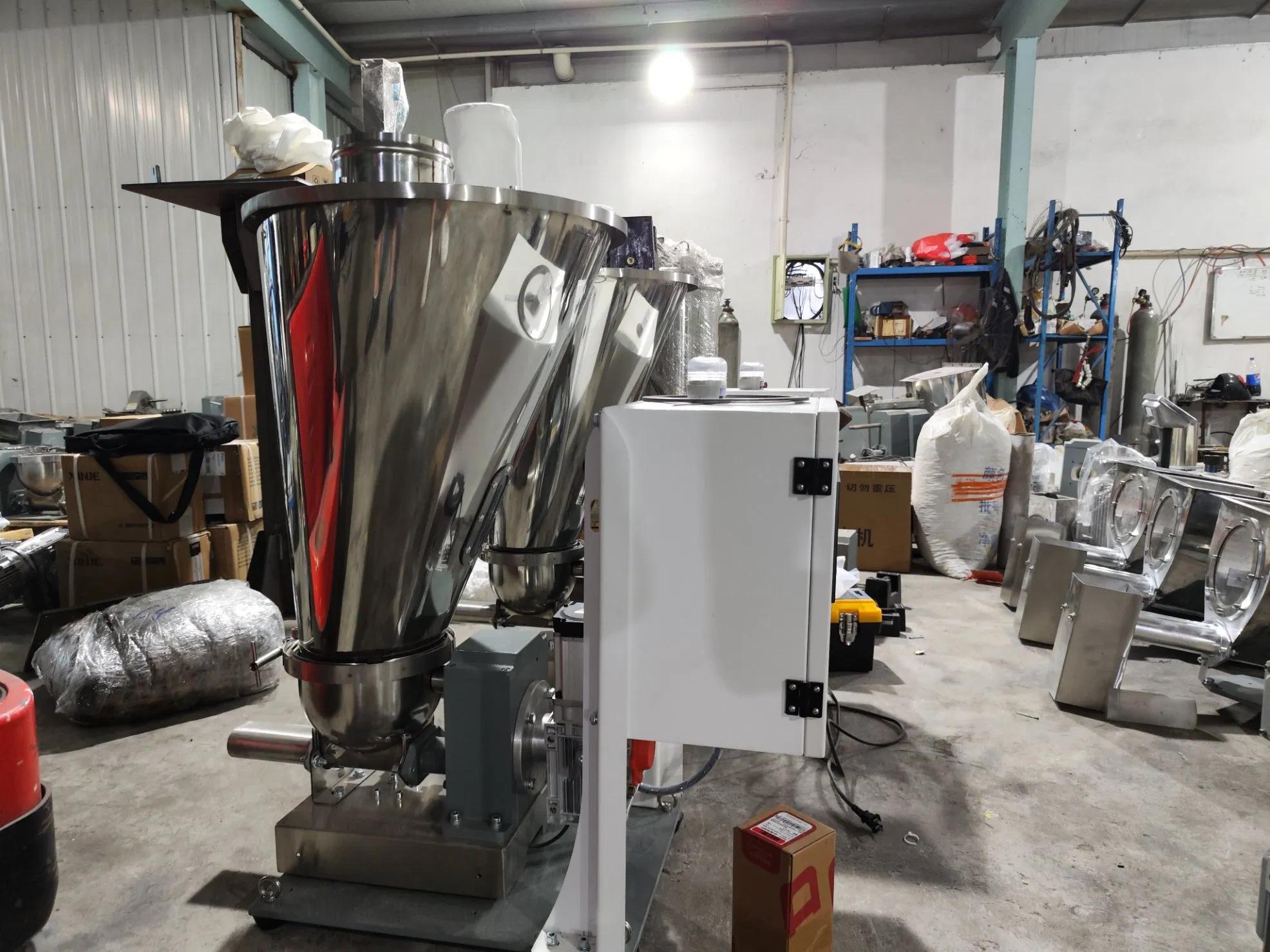
Suitable rejected prints, support structures and plastic scraps can be reduced to a manageable size before extrusion. The preparation method should match the feed opening and requirements of the machine.
Successful filament production requires more than extrusion alone. Feedstock cleanliness, drying, stable temperatures, sizing, cooling and winding all contribute to the final filament quality.
The EXTRUTEX 3DEX is intended for the study and reprocessing of compatible thermoplastic materials commonly associated with 3D printing. Before processing any material, identify the polymer and verify that it is suitable for the machine's processing window and feed system.
| Material | Potential Feedstock | Important Considerations |
|---|---|---|
| PLA | Rejected prints, support material and clean leftover PLA filament | Control moisture and thermal history. Repeated processing can affect material properties. |
| ABS | Compatible ABS prints, test pieces and clean production scrap | Provide appropriate ventilation and control processing temperature. |
| PETG | Identified PETG prints and clean PETG filament waste | Drying and suitable processing temperatures are important. |
| TPU / TPE | Compatible flexible filament scraps and rejected parts | Feeding, screw behavior, sizing and winding require particular attention. |
| ASA | Identified ASA waste and compatible rejected parts | Confirm processing suitability and provide appropriate ventilation. |
| PA6 / PA12 | Identified nylon feedstock and compatible nylon printing waste | Moisture control is particularly important for nylon materials. |
| PC | Compatible, identified polycarbonate feedstock | Requires suitable thermal processing conditions and material preparation. |
| Other Thermoplastics | Materials approved for the specific machine configuration | Confirm polymer identity, melting behavior, processing temperature and feed suitability. |
For 3D printing applications, producing a strand of plastic is only the first step. The filament must also feed reliably through the printer and provide consistent results. A quality-focused recycling process considers the entire workflow, from the incoming waste material to the finished spool.
Measure filament at multiple points along the strand. Variations in diameter can affect feeding, extrusion rate and dimensional accuracy during printing.
Some polymers absorb moisture and can develop bubbles, surface defects or unstable processing behavior. Appropriate drying is important where required by the material.
Dust, labels, foreign polymers, adhesives and other contamination can affect processing stability and the properties of the finished filament.
Repeated heating can change the properties of some polymers. Monitor the number of processing cycles and evaluate the mechanical and printing performance of recycled material.
Consistent cooling and appropriate sizing help establish the final filament geometry. These settings should be optimized for each material and production condition.
Suitable winding speed and tension help prevent tangles, crossed loops and unnecessary deformation during spool collection.
Convert suitable plastic waste into a potential secondary resource. Reprocess clean rejected prints, leftover filament and compatible thermoplastic scraps after sorting and preparation.
This workflow can help users reduce the amount of suitable material sent for disposal and investigate practical recycling methods within a small working environment.
Investigate polymer behavior, recycled material performance and filament production parameters. Researchers can compare feedstock preparation methods, temperature settings, cooling conditions and resulting filament characteristics.
The system can support controlled experiments and student research involving polymer processing and circular manufacturing.
Introduce students to plastic identification, polymer processing, temperature control, material recycling and 3D printing. Practical demonstrations can connect classroom science with manufacturing and environmental engineering.
Suitable supervision, ventilation and operating procedures should be established before educational use.
Provide members with a way to investigate the reuse of compatible 3D printing waste. Maker spaces can develop sorting rules, material preparation procedures and filament testing activities.
The system is particularly relevant to shared workshops interested in experimentation, repair, prototyping and resource efficiency.
Explore small-scale filament recycling from suitable failed prints and leftover filament. Users can learn about material preparation, extrusion behavior and the importance of dimensional consistency.
The machine should be operated in a suitable workspace with adequate ventilation, electrical protection and safe handling procedures.
Support internal trials, prototype development and evaluation of recycled filament. Small businesses can investigate whether clean manufacturing scrap can be recovered for suitable non-critical applications.
Finished material should be tested against the intended application before being used in customer-facing products.
Investigate the recovery of suitable support structures, rejected prints and leftover filament generated during prototyping and short-run printing operations.
Separate collection containers for different polymers help improve feedstock consistency and simplify subsequent material preparation.
Study recycled thermoplastics and selected formulations through controlled trials. The system can be part of a wider workflow involving material characterization, filament measurement and 3D printing evaluation.
Experimental formulations should be documented and assessed before they are used beyond the research environment.
The EXTRUTEX 3DEX supports the concept of recovering value from suitable thermoplastic waste. A successful workflow begins by selecting clean, identifiable material and continues through preparation, extrusion and quality evaluation.
Suitable rejected prints and leftover filament can become feedstock for another processing cycle. The aim is to make material reuse more accessible to laboratories, schools, maker spaces and individual users.
500 g/h nominal output | 300 W motor | Desktop filament recycling
Recycled filament does not automatically have the same properties as virgin filament. The final results depend on the original material, contamination, moisture, additives, degradation and the number of previous processing cycles. Material evaluation is therefore an important part of the recycling process.
A desktop-scale solution for users who want to investigate filament production without installing a large industrial extrusion line.
A fixed nominal capacity of 500 g/h provides a clear product specification for laboratories, home workshops and educational users.
The specified 300 W motor is part of the machine's desktop-scale configuration.
Material preparation, extrusion, temperature control, sizing and winding can be organized into a connected workflow.
Suitable for hands-on work involving polymer processing, recycling, material properties and 3D printing.
Helps users investigate the reuse of suitable plastic scraps and reduce avoidable material waste through controlled recycling trials.
Desktop equipment still requires appropriate operating procedures. Before using the EXTRUTEX 3DEX, users should establish a safe workspace, understand the selected polymer's processing requirements and follow the machine's operating instructions.
The EXTRUTEX 3DEX has a nominal output capacity of 500 g/h. Actual usable filament output depends on the material, preparation, processing settings and required filament dimensions.
The EXTRUTEX 3DEX uses a 300 W motor as specified for this model.
Yes. It is intended for desktop-scale applications, including home workshops, individual makers, laboratories, schools, universities and maker spaces. Users must provide suitable ventilation and follow operating and safety instructions.
Suitable failed prints may be used after the polymer is identified, separated from incompatible materials and prepared correctly. Coatings, adhesives, contamination and unknown additives can affect the recycling process and the quality of the resulting filament.
Different polymer types should generally be kept separate. Mixing incompatible materials can cause processing problems and unpredictable filament properties. Deliberate blends require a defined formulation and appropriate testing.
PLA and ABS are among the materials commonly investigated in desktop filament recycling. Suitability depends on the machine configuration, feedstock condition and appropriate processing settings. Process each polymer as a separate, identified batch.
Polymer materials have different processing requirements. Appropriate temperature control helps support stable melting and extrusion while reducing the risk of poor processing caused by unsuitable temperatures.
Filament diameter influences how material feeds into a 3D printer. Significant variations can affect extrusion consistency and print quality. Measure the finished filament at multiple points and test it in the intended printer.
Not necessarily. Repeated heating, contamination, moisture and material degradation can change polymer properties. The finished filament should be evaluated for its intended use rather than assumed to match virgin material.
Yes. The desktop extrusion workflow can support teaching and research involving polymer processing, material recycling, filament measurement, process optimization and 3D printing.
Such applications require appropriate material qualification, testing, traceability and regulatory assessment. The use of recycled material does not automatically establish suitability for medical, aerospace or other safety-critical applications.
Automatic filament winding is part of the described EXTRUTEX 3DEX configuration. Correct winding settings remain important for obtaining a neat spool and avoiding tangles or filament deformation.
Explore a practical way to process suitable plastic waste, study polymer behavior and develop recycled 3D printing filament. EXTRUTEX 3DEX combines a 500 g/h nominal output capacity, a 300 W motor and a desktop-oriented extrusion workflow for laboratory, educational and home workshop use.
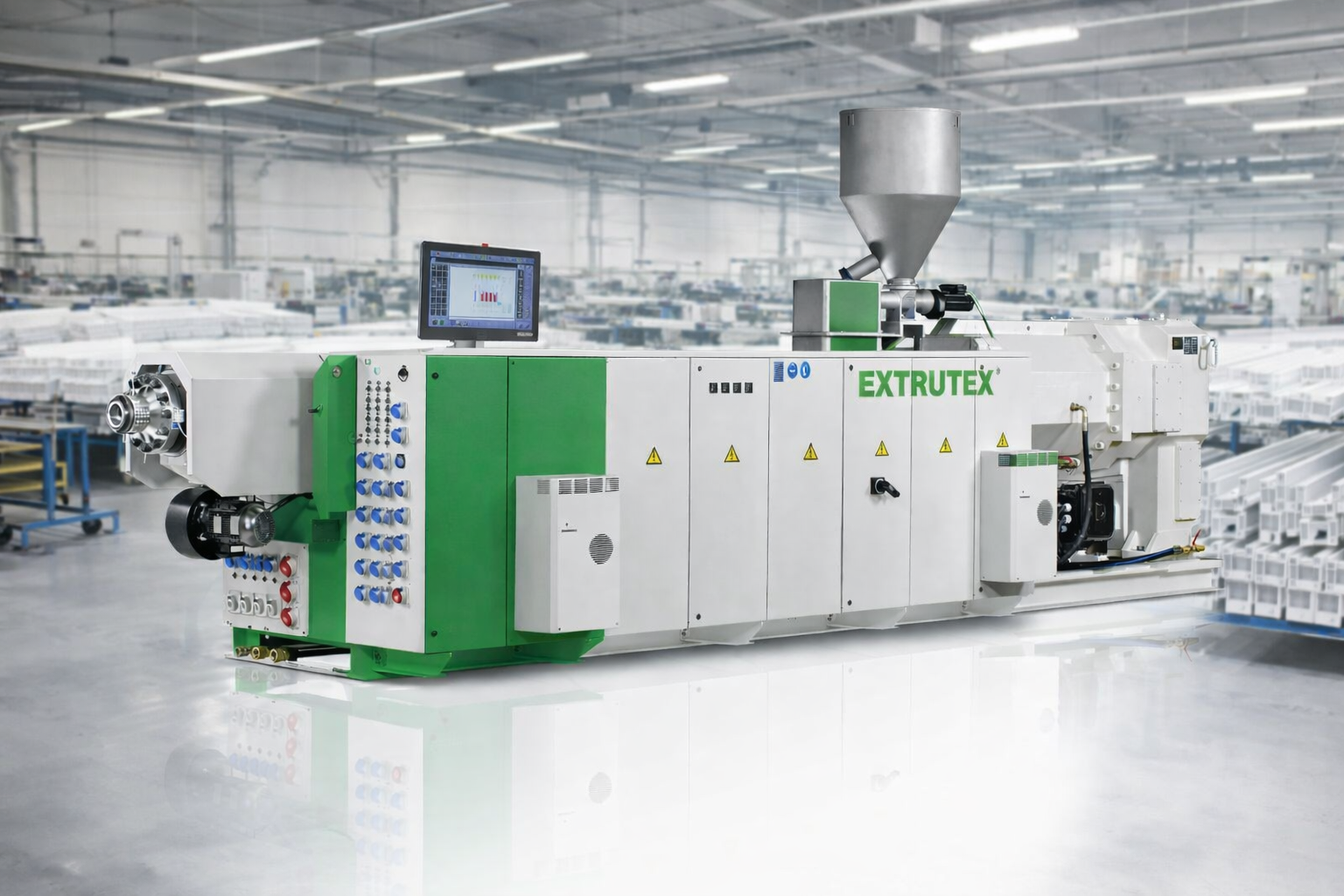
Contact EXTRUTEX Email Our TeamThe EXTRUTEX 3DEX desktop recycled 3D printing filament extrusion line is designed for users who want to explore plastic recycling and filament production on a smaller scale. With a nominal output capacity of 500 g/h and a 300 W motor, the system is intended for laboratories, home workshops, universities, schools, maker spaces and small-scale material development projects.
A practical filament recycling system must do more than melt plastic. Material identification, granulation, drying where required, temperature control, extrusion, sizing, cooling and winding all influence the final product. The EXTRUTEX 3DEX workflow brings these considerations together in a desktop-scale equipment concept for controlled experimentation and material reuse.
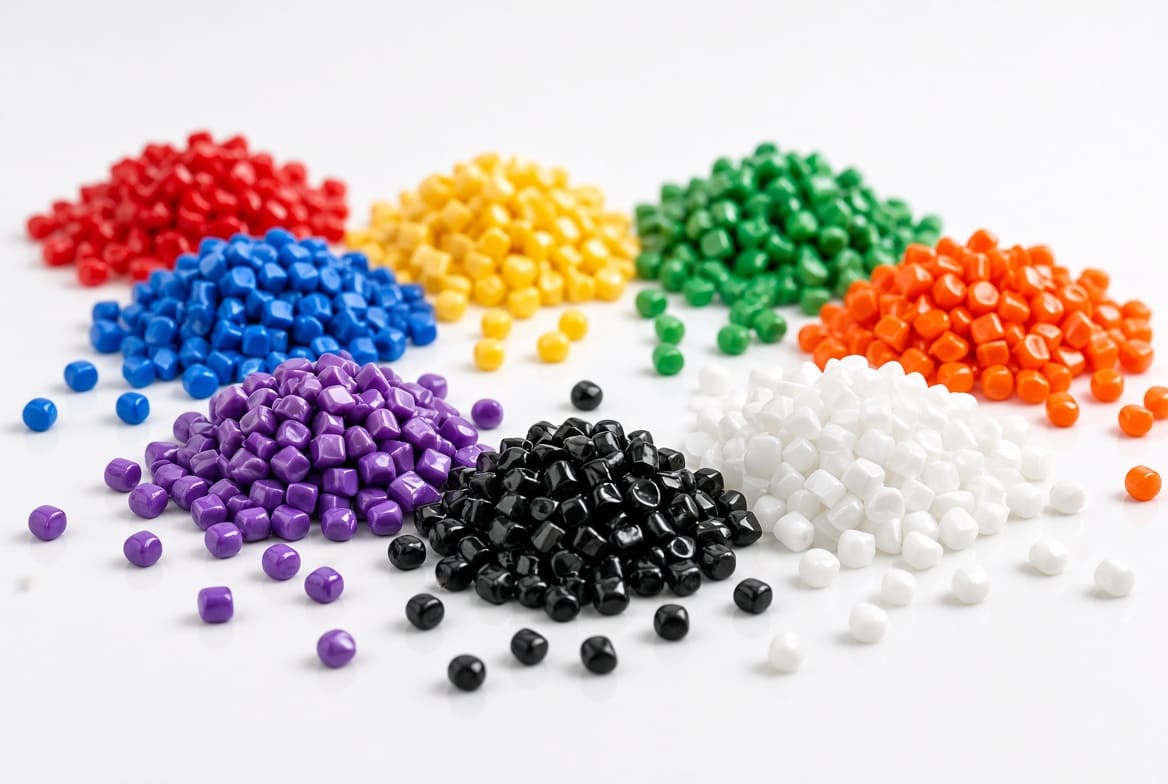
Users can investigate suitable PLA, ABS, PETG and other compatible thermoplastics, subject to machine suitability and correct material preparation. Recycled filament should be measured and tested before use, particularly when dimensional consistency, mechanical performance or application-specific requirements are important.
For education and research, the machine can help demonstrate how polymer processing parameters influence the quality of extruded filament. For home makers and workshops, it provides an opportunity to investigate whether clean, compatible plastic waste can be recovered as feedstock for another 3D printing cycle.
EXTRUTEX focuses on practical plastics-processing equipment and material solutions. Contact our team to discuss the EXTRUTEX 3DEX desktop recycled filament extrusion line and its intended application in your workshop, educational facility or laboratory.
Related search terms: EXTRUTEX 3DEX, desktop recycled 3D printing filament extrusion line, recycled filament extruder, desktop filament extruder, 3D printing waste recycling machine, plastic filament recycling, home filament extrusion machine, laboratory filament extruder, 500 g/h filament extrusion line, 300 W desktop filament extruder, recycled PLA filament, recycled ABS filament, 3D printing filament recycling equipment, mini plastic granulator, automatic filament winder, vacuum-assisted filament sizing, educational plastic recycling equipment, maker space filament extruder, polymer research extrusion equipment, desktop plastic recycling technology.
There are no reviews yet.
By submitting your email, you agree to our company’s terms and conditions.
We are not looking to sell; we are here to provide you with the best support and service.
Contact available 24/7
Please do not contact us for advertising or sales inquiries
All rights of this website are reserved for EXTRUTEX Austria and its partner companies, © 2026
-
(0 customer reviews)