No products in the cart.

All rights of this website are reserved for EXTRUTEX Austria and its partner companies, © 2026

Multiple Payment Methods

Discount for advance payments over 50%

Free Shipping Coordination Services
Payment methods:


Automated Hole Drilling and Slot Cutting Equipment for Plastic Pipes Ø50–630 mm
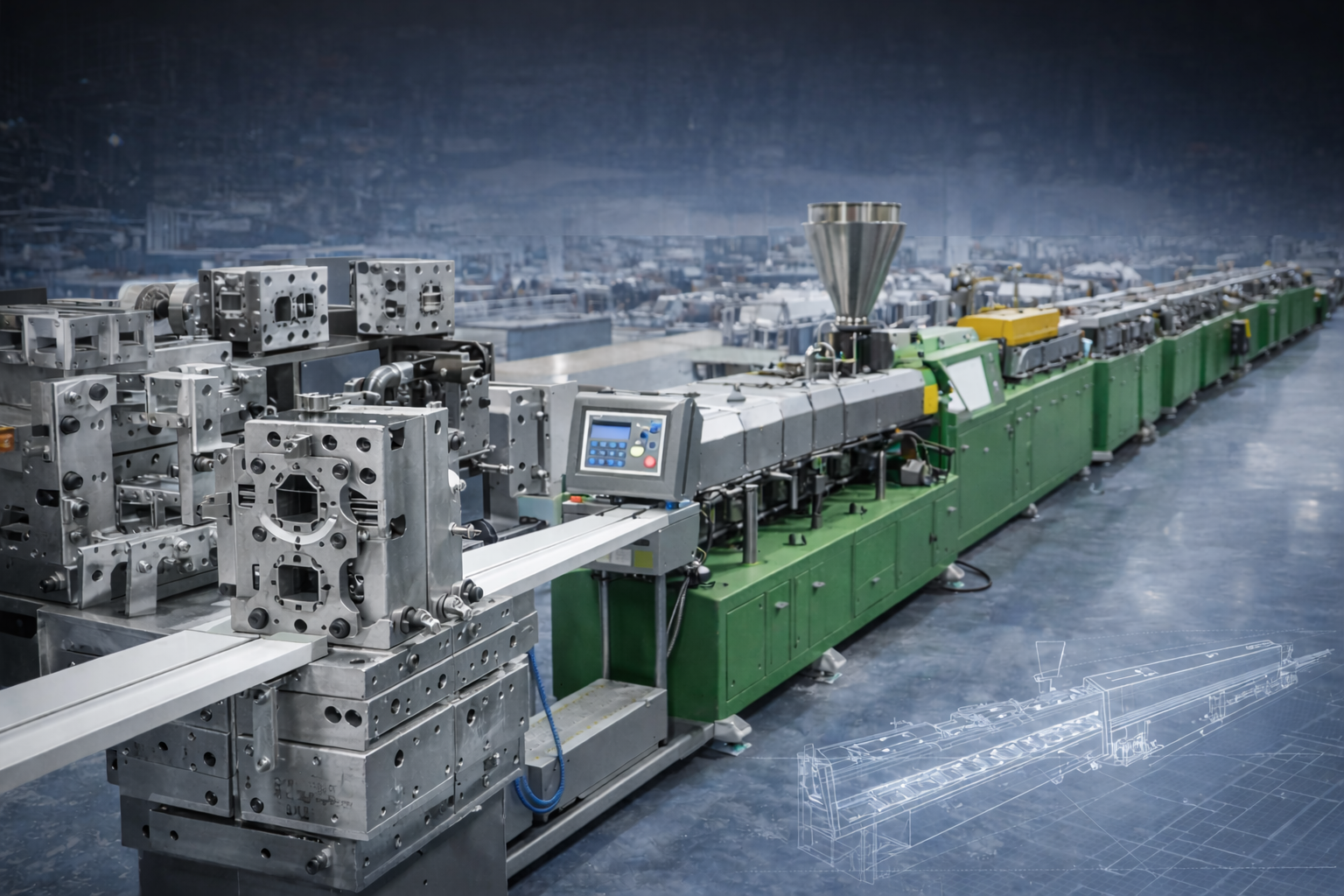
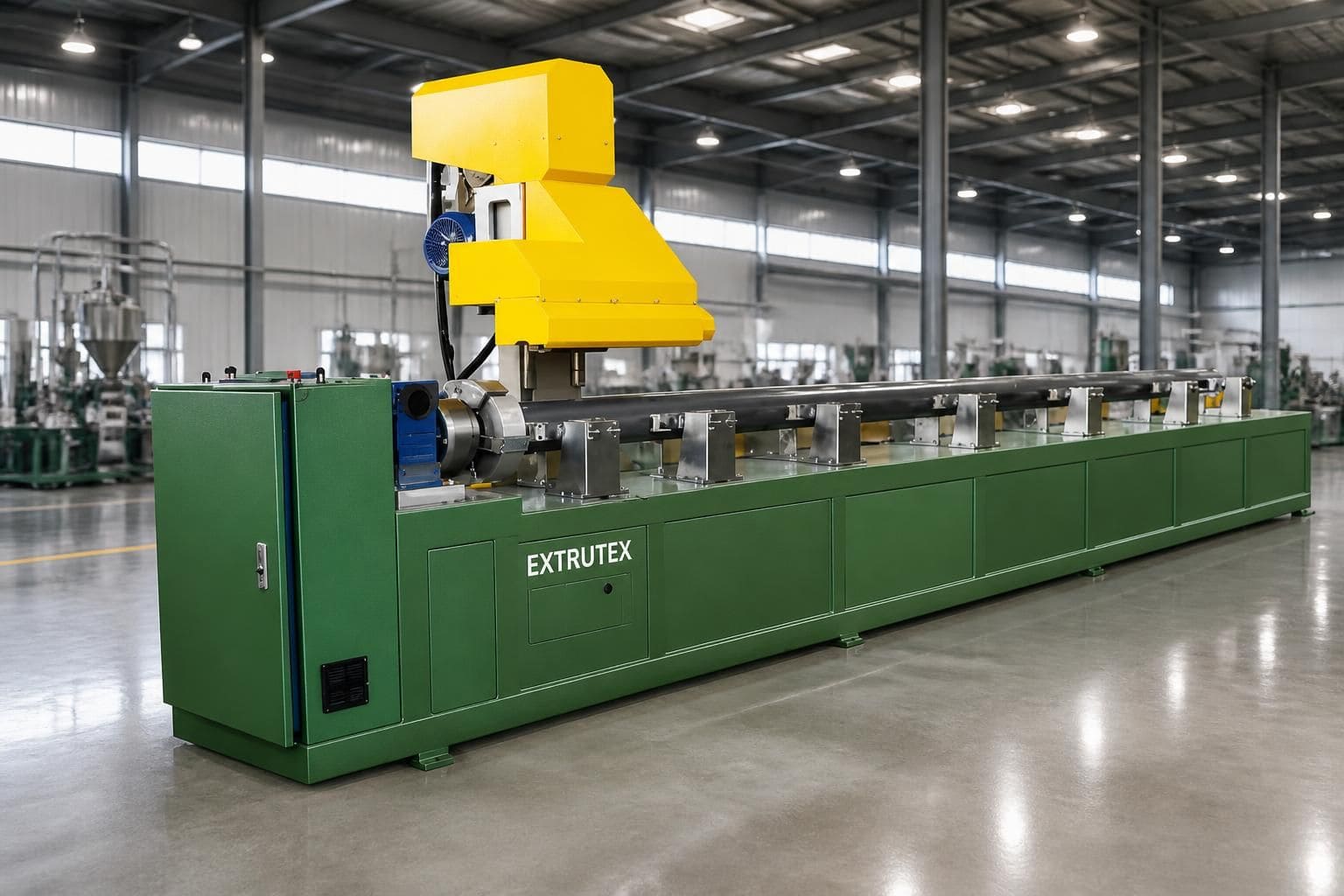
EXTRUTEX manufactures automatic pipe drilling and slotting machines designed to process plastic pipes for water wells, groundwater collection, drainage, filtration and environmental water-management applications.
The XRJ series combines programmable logic controller (PLC) automation, servo-controlled operation and configurable cutting tools to produce holes and horizontal or vertical grooves in pipes of different diameters and customizable lengths.
Plastic pipes used in water wells, groundwater collection and filtration systems frequently require accurately positioned openings. These openings allow water to enter the pipe or permit fluid to pass through a designated filtration section while helping retain the surrounding filter material, depending on the system design.
Depending on the application, the required opening may take the form of a round hole, a horizontal slot or a vertical groove. Opening dimensions, spacing, distribution and orientation are selected according to the pipe design, filtration requirements and mechanical properties of the finished product.
Manual drilling and cutting can require substantial labor and repeated measurements, particularly when processing long pipes or manufacturing products with a large number of openings. An automatic drilling and slotting machine helps coordinate pipe positioning, tool movement and cutting sequences to improve repeatability and production efficiency.
The EXTRUTEX XRJ series is designed for processing pipes from Ø50 mm to Ø630 mm. The machine uses programmable operating parameters and an automated working sequence to reduce repetitive manual intervention. Its configuration can be adapted to different pipe diameters, lengths and opening patterns.
The appropriate machine configuration depends on the pipe material, diameter, wall thickness, length, required opening geometry, tool quantity and production target. These details should be confirmed before equipment selection.
Automatic pipe drilling and slotting equipment is used where plastic pipes require regularly distributed openings for water entry, drainage, filtration or other specialized functions. The final opening pattern depends on the product design and the operating conditions of the completed pipe system.
Slotted and perforated plastic pipes can be used as components of well-screen systems. Their openings are designed to permit water inflow while helping control the entry of surrounding sand or gravel when combined with an appropriate screen and filter design.
Pipes with distributed openings can be used in selected groundwater collection systems. Opening size, spacing and distribution must be matched to the required water flow, surrounding soil conditions and filtration arrangement.
Perforated plastic pipes are used in drainage and water-management applications where water must enter or leave the pipe through designated openings. Machine configuration depends on the pipe dimensions and required perforation pattern.
Perforated and slotted pipes may be incorporated into selected filtration, collection and environmental water-control systems. Their suitability depends on the required hydraulic performance, chemical exposure and mechanical requirements.
Suitable perforated pipes can be used in agricultural drainage, groundwater management and related water-control installations. Opening geometry and spacing should be designed for the intended soil and operating conditions.
Manufacturers can configure drilling and slotting operations for other industrial pipe products requiring repeated holes, horizontal grooves or vertical grooves, subject to the machine's tooling and processing capabilities.
EXTRUTEX can evaluate the required processing pattern and machine arrangement according to the intended application. The finished pipe's structural integrity and suitability for its service conditions must be verified separately.
The machine uses a programmable logic controller to coordinate the working sequence and manage configured operating parameters. The control system is designed to reduce repetitive manual actions and support consistent execution of the selected drilling or slotting program.
Operators enter the required parameters through the touchscreen interface. Once the pipe is correctly positioned and the operating conditions are confirmed, the machine executes the programmed sequence according to its installed configuration.
Centralized control can help coordinate pipe positioning, tool movement, cutting operations and the relevant safety interlocks. Available functions depend on the final machine configuration.
The touchscreen interface allows operators to enter production parameters without manually repeating every positioning and cutting action. Depending on the configured control program, these parameters may include the required opening arrangement, processing positions and other supported operating settings.
A clearly organized control interface can help simplify routine operation and product changeovers. Operators should verify the selected program against the production drawing before starting a new batch.
The machine incorporates dual cutting stations to increase processing efficiency compared with arrangements that rely on a single cutting position. The actual productivity improvement depends on the work sequence, tool configuration, pipe dimensions and the number of operations required for each product.
Coordinated cutting operations can reduce unnecessary waiting between processing steps. The appropriate station arrangement should be selected according to the required opening pattern and the mechanical layout of the machine.
Servo control supports accurate, repeatable positioning during automated operations. In pipe drilling and slotting, controlled positioning is important because opening locations and spacing affect the final product geometry.
The configured servo system can coordinate the relevant movement axes according to the programmed operating sequence. Positioning accuracy and repeatability should be confirmed against the machine's technical specification and the customer's actual pipe-processing requirements.
The XRJ series covers different nominal pipe-diameter ranges through four models. Suitable support arrangements, positioning components and cutting tools allow the equipment to be configured for the intended pipe dimensions.
Quick and straightforward changeover between compatible pipe diameters helps reduce setup effort when manufacturers process different product sizes. The available diameter range depends on the selected model and its tooling configuration.
Cutting tools must be selected according to the material, wall thickness and required opening geometry. The machine supports changes to compatible cutting blades and tooling arrangements to accommodate different product specifications.
Tool selection influences the quality of the opening edges, cutting stability, tool life and maintenance requirements. Correct alignment and appropriate tool condition are important for maintaining consistent results.
The number and arrangement of tools can be configured according to the required processing pattern. Products requiring many openings or multiple cutting positions may need a different tooling arrangement from products with fewer openings.
Custom tool quantities allow manufacturers to align the machine configuration with their production requirements. The achievable pattern, number of simultaneous operations and resulting production rate must be confirmed during technical engineering.
Cutting and slotting operations generate plastic chips, particles or swarf. The machine directs cutting debris toward a collection box, while the configured swarf-extraction arrangement supports debris removal from the processing area.
Effective debris management helps keep the cutting area organized and reduces the accumulation of waste around moving components. The extraction system should be maintained according to the material being processed and the equipment manufacturer's operating instructions.
Pipe length can be customized according to the product and production requirements. The handling and support arrangement must accommodate the intended workpiece length while maintaining stable positioning during drilling or slotting.
Before ordering, manufacturers should confirm the minimum and maximum pipe lengths, workpiece support requirements, loading and unloading arrangements, and the intended distribution of openings along the pipe.
The following table lists the principal model specifications for the EXTRUTEX XRJ automatic pipe drilling and slotting machine series.
| Technical Parameter | XRJ160 | XRJ250 | XRJ400 | XRJ630 |
|---|---|---|---|---|
| Pipe Diameter Range | Ø50–160 mm | Ø75–250 mm | Ø160–400 mm | Ø250–630 mm |
| Pipe Length | Customizable | Customizable | Customizable | Customizable |
| Hole Drilling | Configurable | Configurable | Configurable | Configurable |
| Horizontal Grooves | Configurable | Configurable | Configurable | Configurable |
| Vertical Grooves | Configurable | Configurable | Configurable | Configurable |
| Tool Quantity | Customizable according to the required processing pattern | |||
| Control System | PLC-based automatic control with touchscreen parameter input | |||
| Positioning Control | Servo-controlled operation, according to machine configuration | |||
| Cutting Arrangement | Dual cutting stations | |||
| Debris Handling | Collection box and swarf-extraction arrangement | |||
| Tool Changeover | Compatible cutting blades and tools can be changed according to the required process | |||
| Machine Configuration | Selected according to pipe dimensions, material and opening requirements | |||
The EXTRUTEX XRJ160 is designed for pipes with diameters from Ø50 mm to Ø160 mm. It is suitable for manufacturers whose product range includes smaller-diameter perforated and slotted pipes. Tool quantities and the drilling or slotting arrangement can be configured according to the required opening pattern.
The EXTRUTEX XRJ250 covers pipe diameters from Ø75 mm to Ø250 mm. It provides a solution for manufacturers requiring automated opening operations across a broader diameter range. The appropriate tooling arrangement depends on pipe material, wall thickness and product geometry.
The EXTRUTEX XRJ400 is intended for pipe diameters from Ø160 mm to Ø400 mm. Its configuration can be adapted to larger pipe workpieces and the associated support, positioning and cutting requirements.
The EXTRUTEX XRJ630 covers the largest nominal pipe range in the series, from Ø250 mm to Ø630 mm. It is designed for manufacturers processing large-diameter perforated and slotted pipes. Workpiece support, tool layout, loading arrangements and cutting parameters should be engineered for the specific product.
Different pipe applications require different opening geometries. The machine's tooling and control configuration should match the technical drawing of the finished pipe.
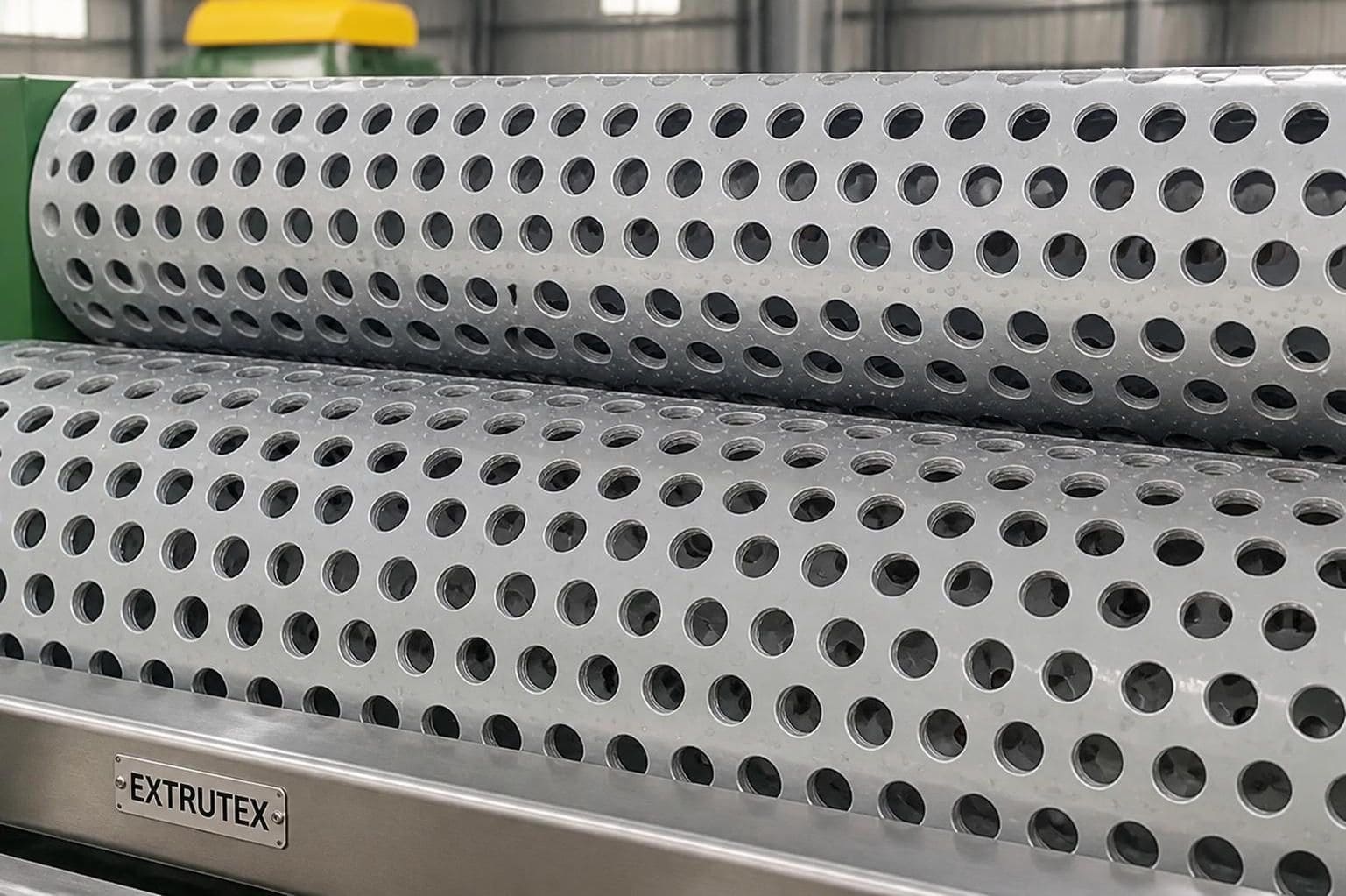
Round holes are used in pipe designs that require discrete openings distributed across selected surface areas. Hole diameter, spacing, row arrangement and distance from the pipe ends depend on the product specification.
The drilling process must maintain the required opening geometry without introducing excessive deformation, cracking or damage to the surrounding pipe wall.
Horizontal grooves or slots provide elongated openings in a designated direction relative to the pipe axis. The slot dimensions and spacing must be selected according to the required hydraulic performance and the structural properties of the pipe.
Cutting tools should be selected to produce the required slot geometry while maintaining stable cutting conditions and acceptable edge quality.
Vertical grooves or slots provide an alternative opening orientation for specific product designs. Their arrangement depends on the required flow characteristics, opening distribution and structural requirements.
The machine configuration should establish the intended orientation and positioning method before production begins.
Some products require repeated rows, staggered patterns or a defined number of openings along the pipe. The required pattern should be supplied as a technical drawing or a clearly defined list of processing parameters.
EXTRUTEX can evaluate the required tooling quantity and machine arrangement according to the requested pattern and production target. Not every pattern is necessarily achievable with every standard configuration, so feasibility should be confirmed before ordering.
The operating sequence depends on the installed control program, tooling arrangement and selected product. A typical automated processing cycle includes the following steps.
The actual cycle sequence, degree of automatic loading and unloading, and number of simultaneous cutting operations depend on the final machine configuration.
Consistent drilling and slotting quality depends on correct machine setup, stable pipe positioning, suitable cutting tools and repeatable control of the working sequence.
Hole diameters and slot dimensions should be checked against the approved product drawing. Suitable measuring instruments and inspection methods should be selected according to the required tolerances.
The location of each opening can affect the functional performance and structural strength of the finished pipe. Inspection should verify the specified spacing, orientation, distribution and distance from the pipe ends.
Cutting tools should be maintained in suitable condition to help prevent excessive burrs, cracks, deformation and irregular edges. The acceptable edge condition depends on the pipe material and intended application.
Correct support and clamping are important, especially when processing long or large-diameter pipes. The workpiece must remain stable during cutting without being damaged by excessive clamping force.
Using verified operating parameters for each product helps reduce setup variation between production batches. Operators should confirm the selected program, tooling and workpiece dimensions before starting production.
Automation can reduce repetitive manual positioning and improve the consistency of recurring drilling and slotting operations. The overall production benefit depends on the product design, machine setup and required number of openings.
Actual cycle time and output depend on pipe length, hole quantity, slot geometry, material properties, tool arrangement and loading requirements. Production capacity should be established through a technical review and, where appropriate, a representative production trial.
Pipe material affects cutting behavior, tool selection, opening-edge quality and tool wear. The machine should be configured for the materials that the customer intends to process.
Polyethylene pipes are used in a range of water-management and industrial applications. Drilling and slotting parameters must account for material flexibility, wall thickness and the tendency of the material to deform under clamping or cutting forces.
PVC pipes are used in drainage, water-management and other applications. Cutting tools and processing conditions should be selected to produce the required opening geometry while controlling cracking, edge damage and debris.
Additional thermoplastic materials may be considered depending on the machine's tooling, cutting arrangement and material-handling capabilities. Compatibility should be confirmed with EXTRUTEX before ordering.
The materials listed above are potential application materials, not a claim that every XRJ machine configuration has been qualified for every thermoplastic grade. The approved material range should be confirmed in the final technical specification.
EXTRUTEX can evaluate the appropriate XRJ model and tooling arrangement according to the customer's product range and manufacturing requirements.
To prepare an accurate equipment proposal, manufacturers should provide the following information:
Drawings or sample pipes are particularly useful when the opening pattern is complex. They allow the machine layout and tooling concept to be evaluated against the actual product requirements.
The final configuration should define the supported diameter and length ranges, tooling specifications, positioning functions, control-system functions, production expectations and required auxiliary equipment.
The installation area should provide sufficient room for the machine, pipe loading, finished-product unloading and routine maintenance. Long pipes may require suitable support equipment to prevent sagging or instability during handling.
Electrical connections, grounding, compressed air where required, extraction equipment and other utilities should be installed according to the final machine documentation and applicable local regulations.
Operators should be trained in parameter entry, program selection, tool changeover, pipe positioning, safe operation, fault handling and routine inspection. Before production begins, the selected program and tooling should be checked against the approved product drawing.
Maintenance intervals should be based on the supplied operating instructions, production intensity, material processed and actual machine configuration.
Automatic drilling and slotting involves rotating tools, cutting mechanisms, moving components and potentially sharp plastic debris. The machine must be operated by trained personnel using the prescribed safety procedures.
Appropriate guarding, interlocks, emergency-stop functions and safe workpiece-handling arrangements should be provided according to the final machine design and applicable regulations. Operators should never reach into the cutting area while hazardous movement is possible.
Tool changes, cleaning, adjustments and maintenance must be performed using the required isolation and safety procedures. The swarf-extraction system should be maintained to prevent debris accumulation and support a clean working environment.
The applicable machine-safety requirements depend on the destination market and final equipment configuration. Compliance documentation and safety provisions should be confirmed during equipment procurement.
The XRJ series covers Ø50–160 mm with the XRJ160, Ø75–250 mm with the XRJ250, Ø160–400 mm with the XRJ400, and Ø250–630 mm with the XRJ630.
Yes. The machine can be configured for holes, horizontal grooves and vertical grooves. The available patterns depend on the selected tooling and machine configuration.
Pipe length is customizable. The required length range and handling arrangement should be confirmed when specifying the equipment.
Operators enter the supported processing parameters through the touchscreen interface. The PLC then coordinates the programmed working sequence according to the installed configuration.
Dual cutting stations can increase processing efficiency by coordinating cutting operations. The actual productivity benefit depends on the required opening pattern and the configured working sequence.
Yes. Tool quantity can be customized according to the required opening arrangement and machine design. The achievable configuration should be confirmed during technical evaluation.
The machine directs cutting debris toward a collection box, with a swarf-extraction arrangement used to remove debris from the processing area.
Typical applications include water well screen pipes, groundwater collection systems, drainage, filtration, environmental water management and other industrial plastic pipe products requiring holes or slots.
Select the model according to the pipe diameter range, pipe length, material, opening pattern, required tool arrangement and production target. EXTRUTEX can assess these details to recommend a suitable configuration.
Yes. Customers can provide pipe drawings, opening dimensions, hole spacing, slot orientation and other production requirements for technical evaluation. Final customization depends on tooling and machine-design feasibility.
EXTRUTEX manufactures automatic pipe drilling and slotting machines for plastic pipe manufacturers requiring repeatable opening patterns and flexible processing capabilities. The XRJ160, XRJ250, XRJ400 and XRJ630 models cover nominal pipe diameters from Ø50 mm to Ø630 mm.
PLC automation, touchscreen parameter input, servo-controlled positioning, dual cutting stations and debris collection support efficient production and consistent processing. Customizable tool quantities and pipe lengths allow the machine configuration to be adapted to different product requirements.
For water well screens, groundwater collection, drainage, filtration and other compatible applications, the correct combination of pipe dimensions, tooling and opening geometry is essential. EXTRUTEX can evaluate the required machine configuration based on the customer's technical drawings and manufacturing objectives.
Looking for an automatic solution for drilling or slotting plastic pipes from Ø50 mm to Ø630 mm?
Contact EXTRUTEX with your pipe diameters, pipe lengths, material specifications, hole dimensions, slot patterns and target production requirements.
Our team can evaluate the appropriate XRJ model, tooling configuration and auxiliary equipment for your application.
Contact EXTRUTEX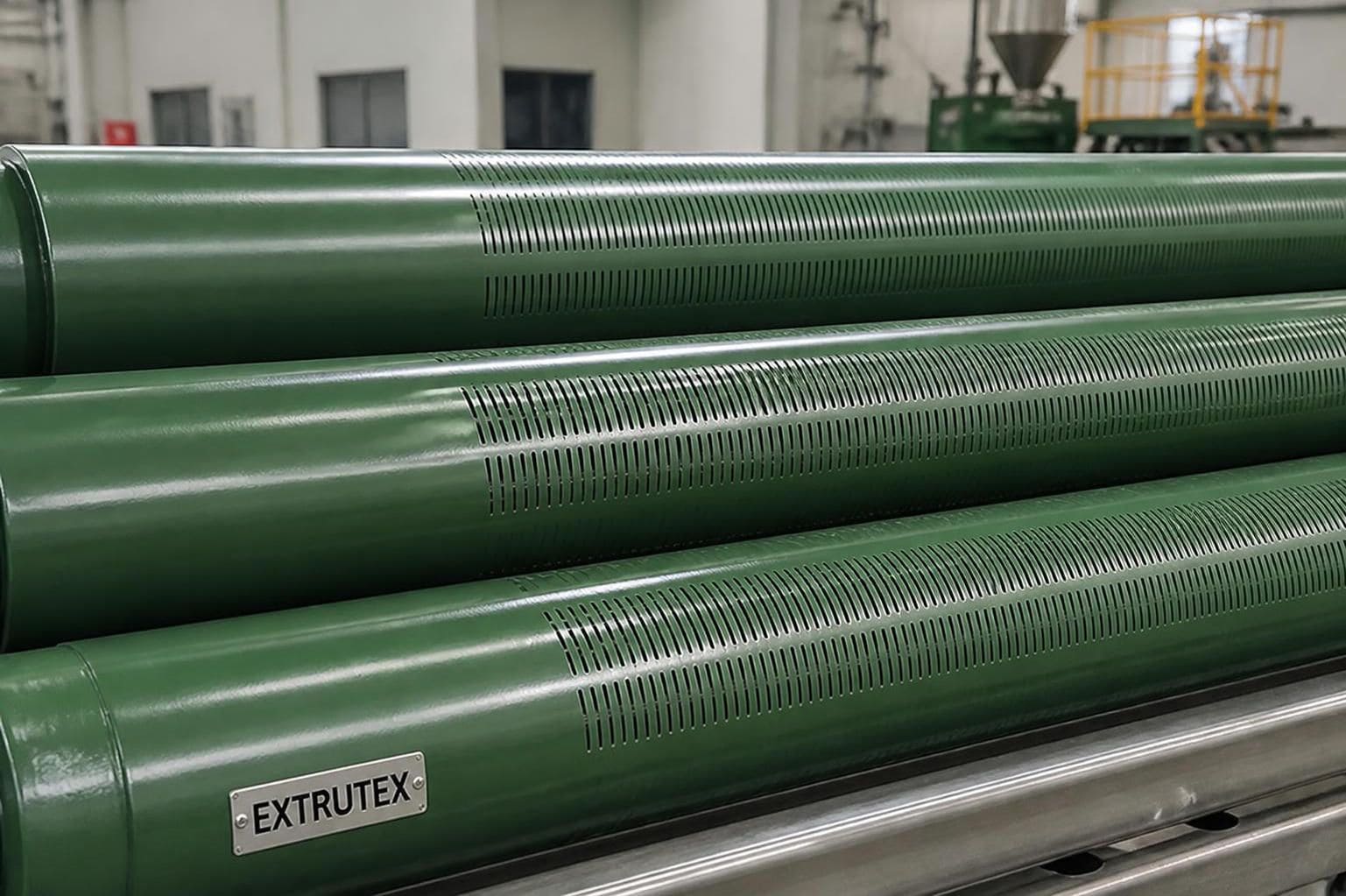
There are no reviews yet.
By submitting your email, you agree to our company’s terms and conditions.
We are not looking to sell; we are here to provide you with the best support and service.
Contact available 24/7
Please do not contact us for advertising or sales inquiries
All rights of this website are reserved for EXTRUTEX Austria and its partner companies, © 2026
-
(0 customer reviews)