No products in the cart.



All rights of this website are reserved for EXTRUTEX Austria and its partner companies, © 2026

Multiple Payment Methods

Discount for advance payments over 50%

Free Shipping Coordination Services
Payment methods:


High-throughput polymer pelletizing with direct die-face cutting, rapid water cooling and flexible extrusion technology.
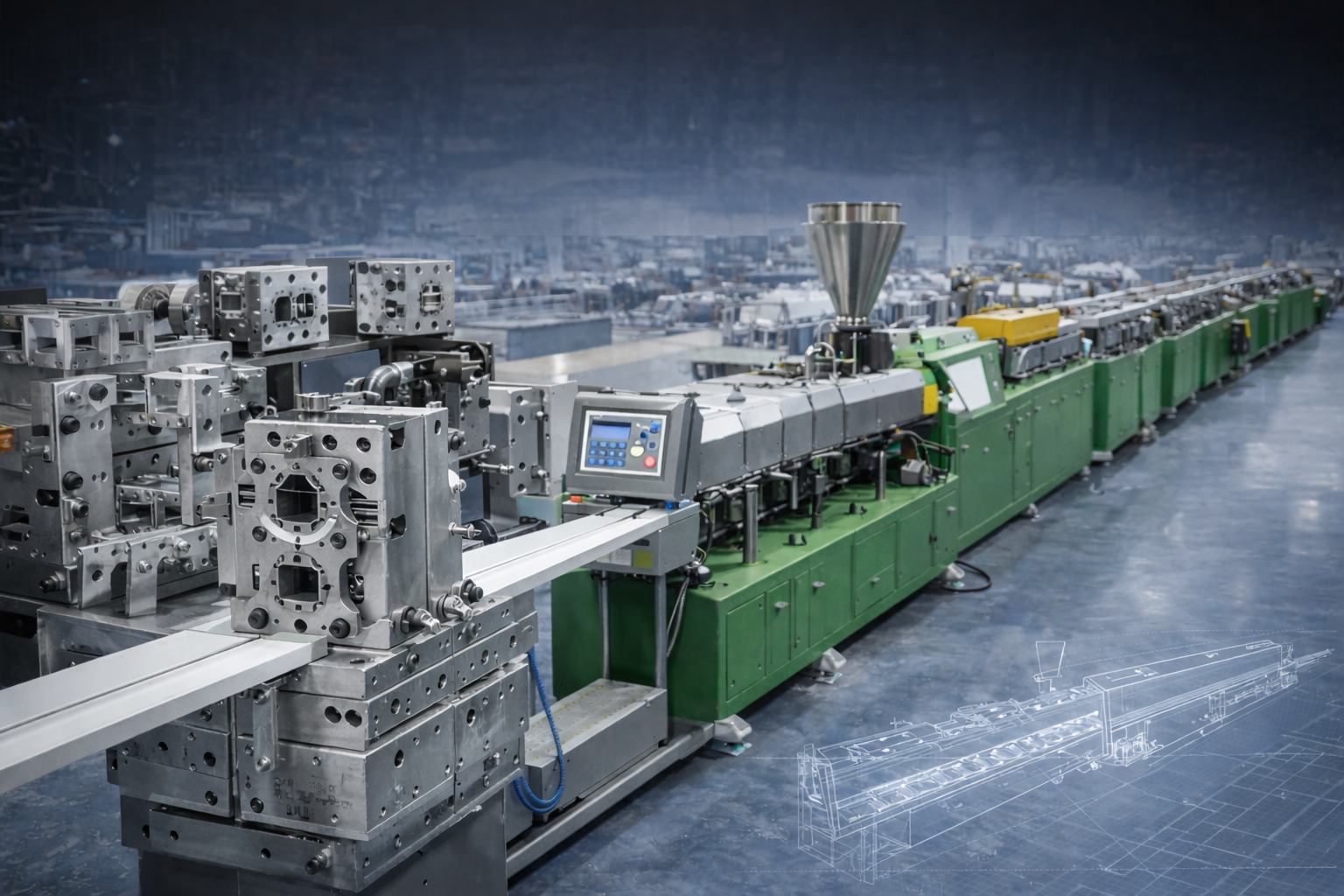
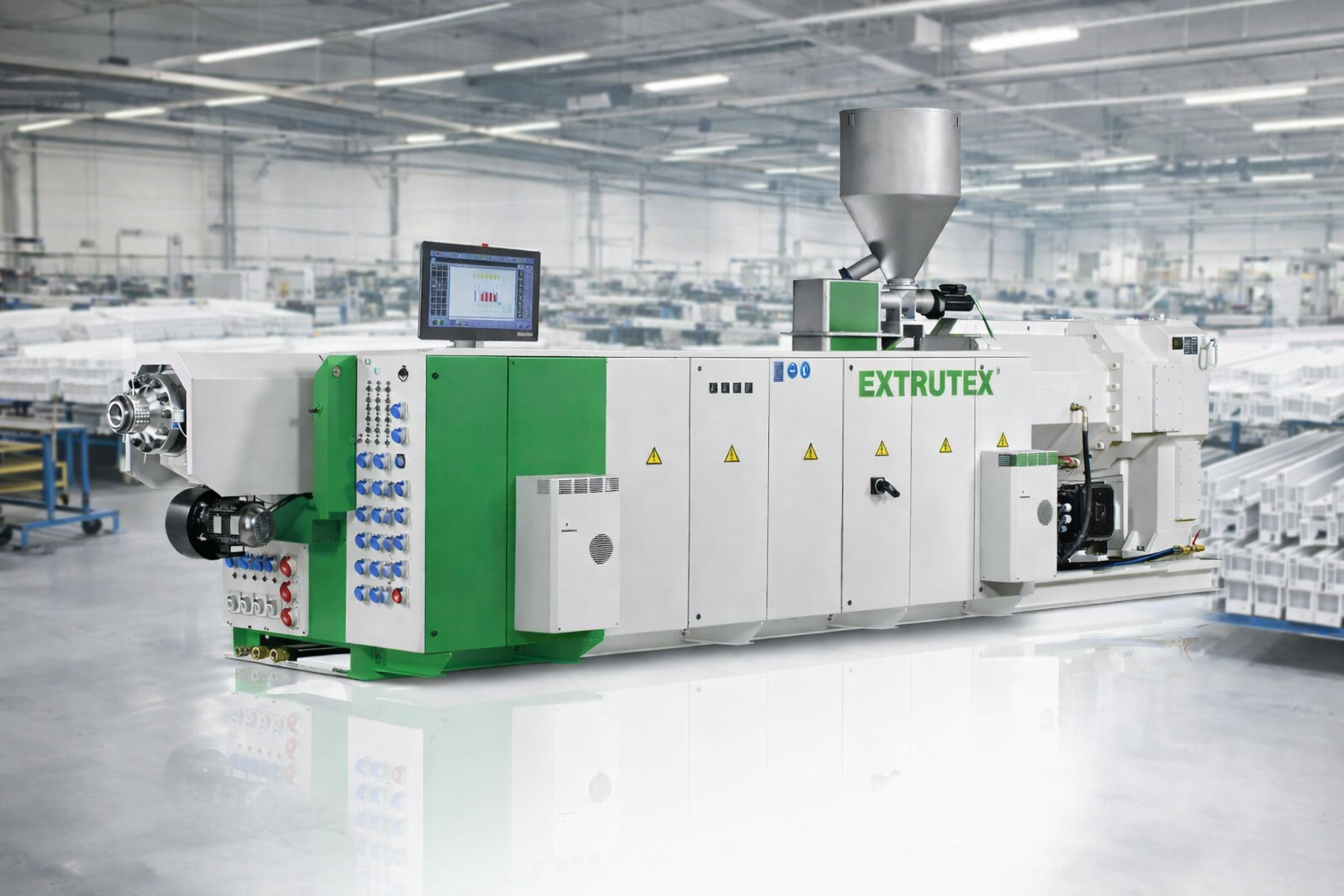
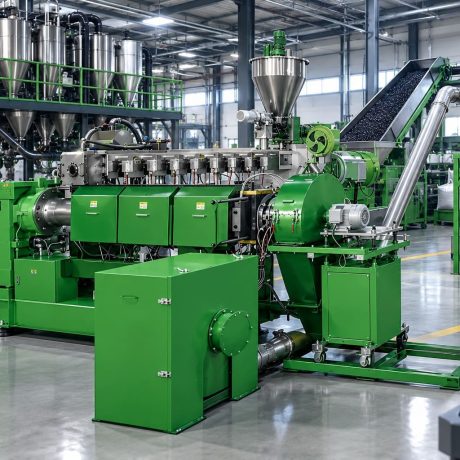
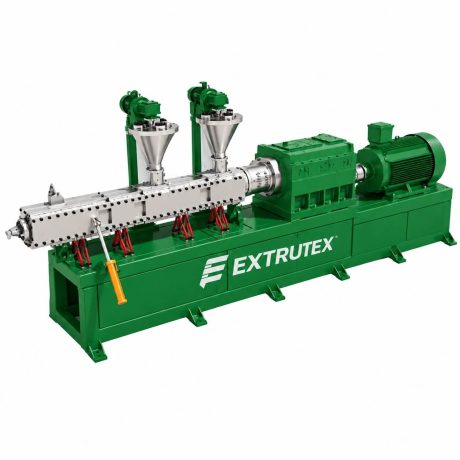
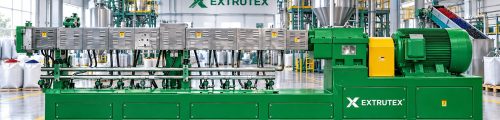
EXTRUTEX develops complete polymer processing systems around the actual formulation and production requirement. The Water-Ring Die-Face Pelletizing Machine is engineered for continuous production of controlled, uniform pellets from thermoplastic compounds, masterbatch, recycled polymers and filled formulations.
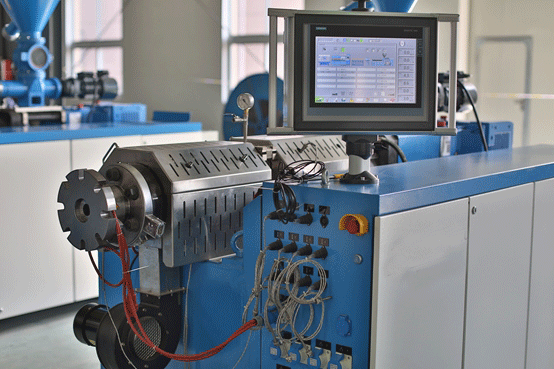
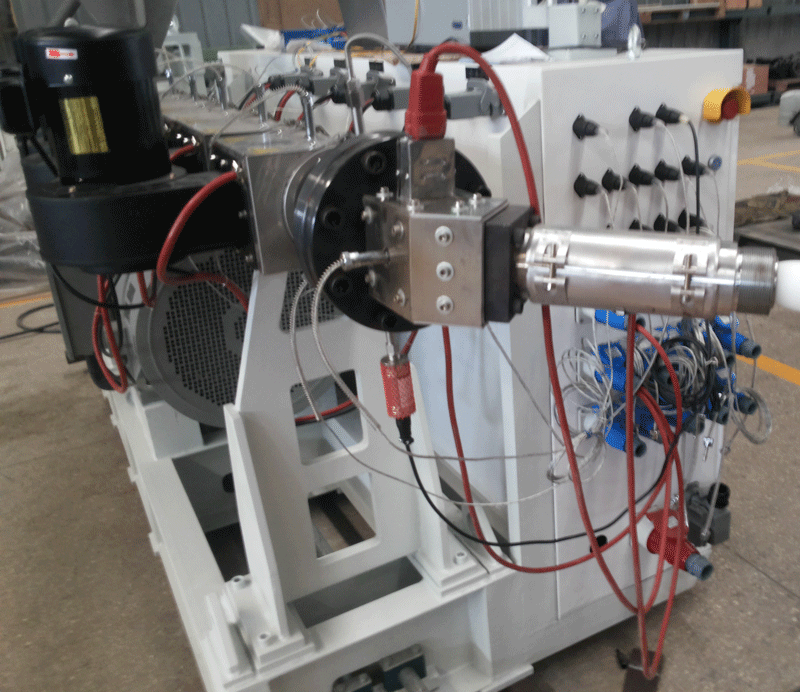
The EXTRUTEX Water-Ring Die-Face Pelletizing Machine combines melt extrusion, die-face cutting and rapid water cooling in one compact process section. Molten polymer is delivered through a precision die plate and is cut directly at the die face by a rotating cutter. A controlled water ring immediately surrounds the cutting area and removes heat from the newly formed pellets.
This arrangement eliminates the long strand-cooling path used by conventional strand pelletizing. Instead of extruding strands, pulling them through a water bath and then feeding them into a separate cutter, the material is transformed into pellets directly at the die. The result is a compact and highly integrated pelletizing process that can be adapted to a wide range of polymer formulations.
The system is particularly valuable where production speed, thermal control and consistent pellet geometry are important. By controlling melt temperature, die pressure, cutter speed, water temperature and water circulation, the process can be tuned to the rheological behavior of the polymer. EXTRUTEX can engineer the complete line around the customer's material, required capacity, pellet size and downstream handling requirements.
Prepared polymer enters the feeding system and is conveyed into the selected extrusion unit. The melt is progressively heated and homogenized while pressure is developed ahead of the die. Where the formulation requires intensive dispersion, the upstream machine can be equipped with an appropriate screw configuration, feeding system and mixing section. For gentler materials, the process can be designed around lower shear and controlled temperature development.
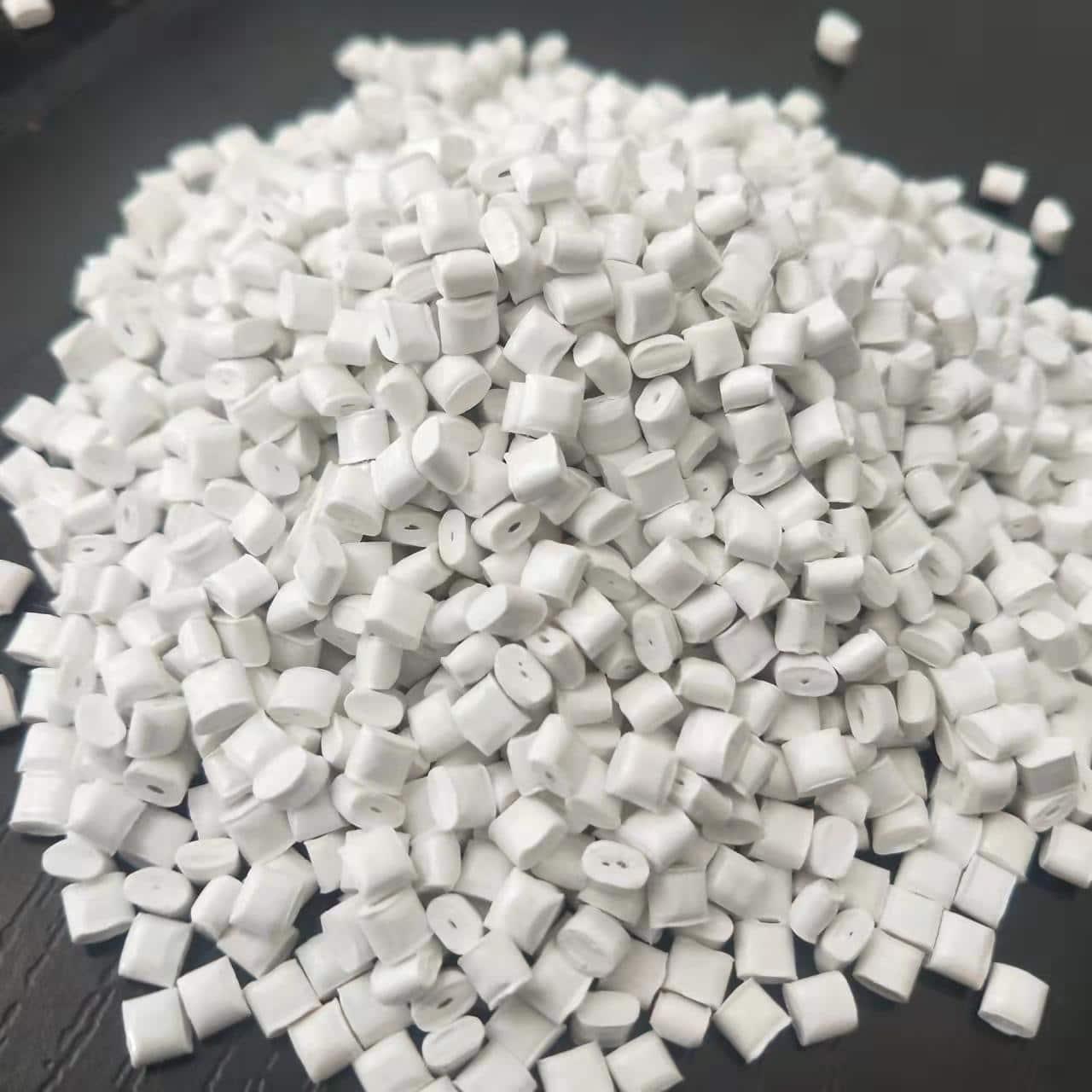
After filtration and pressure stabilization, the homogeneous melt enters the die plate. Multiple die holes create a continuous melt output across the die face. A rotating cutter positioned immediately in front of the die divides the melt into individual pellets. The cutter and die geometry are selected according to material viscosity, output and desired pellet characteristics.
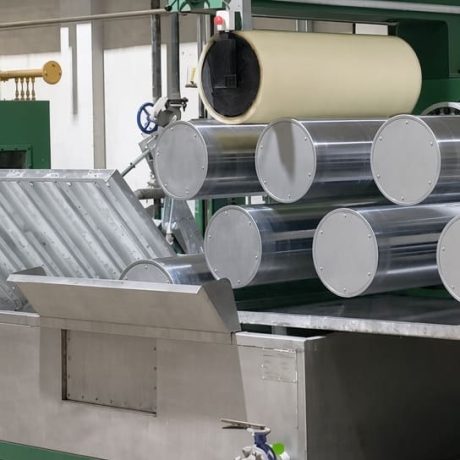
Water is circulated around the cutter and die-face area. The newly cut pellets are cooled rapidly and carried away from the cutting zone with the circulating water. The mixture then enters the separation and drying section, where water is removed and the finished pellets are prepared for conveying, packaging or further processing.
Pellet formation takes place immediately at the die outlet. The short path between extrusion and cutting helps create a compact process and avoids the mechanical strand-handling stages of conventional strand pelletizing.
The circulating water ring contacts the freshly cut pellets immediately, providing efficient heat transfer and supporting rapid solidification of the polymer.
The system is designed for industrial continuous production and can be engineered for capacities ranging from several hundred kilograms per hour to more than one tonne per hour.
Because cutting and primary cooling are integrated at the die face, the pelletizing section can occupy less floor space than a conventional long strand-cooling arrangement.
The EXTRUTEX system can be designed for virgin polymers, recycled feedstock and formulated compounds. The correct upstream extrusion technology is selected according to melt viscosity, filler loading, thermal sensitivity, dispersion requirements and production target.
PE, EVA and related formulations containing calcium carbonate, talc, titanium dioxide, carbon black and other additives can be processed when the feeding and mixing system is matched to the formulation. Intensive mixing may be provided by a co-rotating twin-screw extruder, while more temperature-sensitive materials can be considered for a co-kneader configuration.
The pelletizing line is suitable for compound production used in PPR and PE-X pipe applications. Stable melt temperature and reliable filtration are important because formulation consistency directly affects the quality of the final pipe. EXTRUTEX can integrate dosing, extrusion, filtration and pelletizing into one production line.
Flexible thermoplastics can require careful thermal management. The water-ring system provides rapid cooling directly after cutting, while the upstream extrusion section can be designed for the required shear level and residence time.
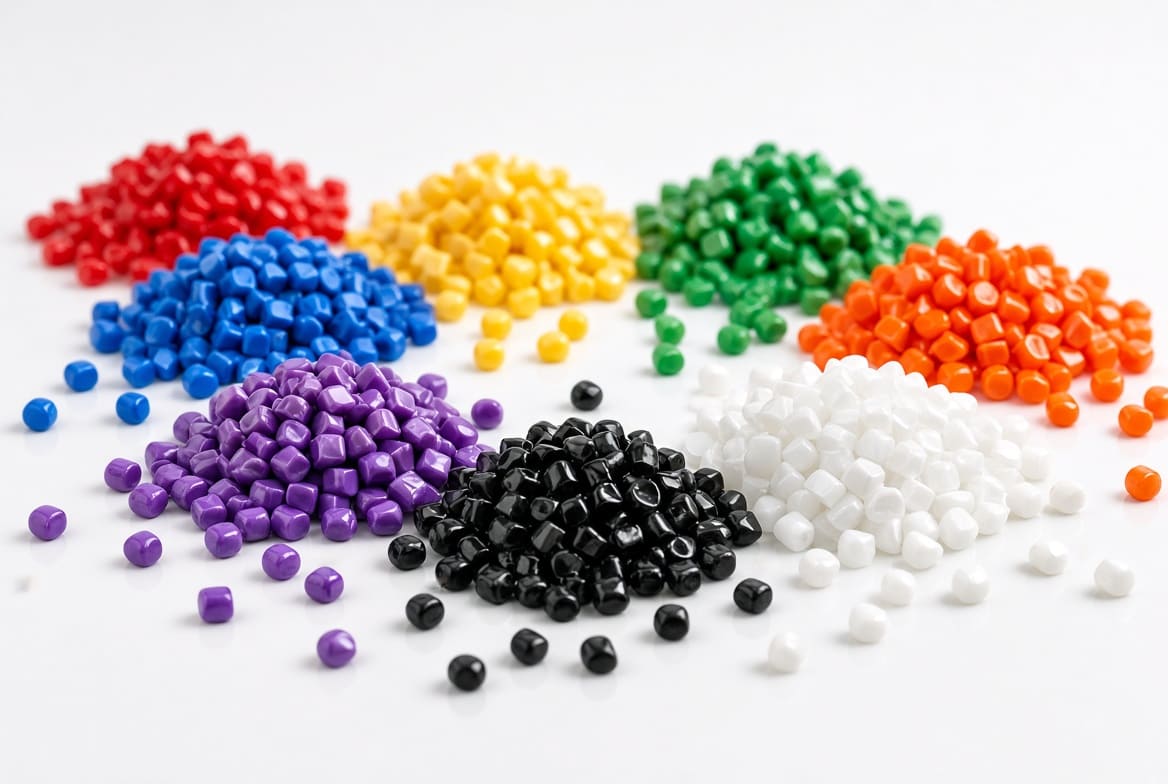
PE, PP, ABS, PS and EVA carrier systems can be processed for color and additive masterbatch production. For high pigment concentration or demanding dispersion, a co-rotating twin-screw extruder can provide the required mixing intensity before the melt reaches the die-face pelletizer.
Functional compounds based on ABS, PE, PP and EVA may contain additives that require accurate dosing and dispersion. EXTRUTEX can integrate gravimetric feeding and a modular twin-screw configuration where the formulation requires stronger mixing control.
Suitable for prepared film recycling streams after shredding, washing where necessary, drying and densification or agglomeration. Filtration is selected according to contamination level.
Recycled PP from raffia and woven bag production can be processed into reusable pellets following appropriate preparation and melt filtration.
Rigid flakes can be converted into uniform pellets after size reduction and contamination control. Feeding equipment is selected according to bulk density and flake geometry.
Densified or squeezed film provides a more stable feed condition for extrusion. The pelletizing line can be configured around the actual bulk density and melt flow characteristics.
The following EXTRUTEX configurations represent the supplied single-stage capacity range. The values are engineering reference figures; actual output depends on polymer grade, bulk density, formulation, moisture, filler percentage, feed preparation and operating conditions.
| EX Model | Main Motor Power | Agglomerator Power | Capacity | L/D |
|---|---|---|---|---|
| EX100 | 90 / 110 kW | 55 kW | 300–380 kg/h | 36:1 |
| EX125 | 160 / 185 kW | 90 / 110 kW | 500–650 kg/h | 36:1 |
| EX150 | 185 / 220 kW | 90 / 110 kW | 550–700 kg/h | 36:1 |
| EX160 | 250 / 280 kW | 132 / 160 kW | 850–1,000 kg/h | 36:1 |
| EX180 | 280 / 315 kW | 160 / 200 kW | 1,000–1,300 kg/h | 36:1 |
For more demanding feedstocks, EXTRUTEX can supply a two-stage arrangement. Separating the main melting and processing stage from the final melt-conditioning stage can improve process flexibility, particularly when recycled material, variable feedstock or demanding formulations require additional control before die-face pelletizing.
| Configuration | Stage Configuration / Motor | Agglomerator Power | Capacity | L/D |
|---|---|---|---|---|
| EX100 + EX120 | 90 / 110 kW + 30 kW | 55 kW | 300–380 kg/h | 36:1 / 10:1 |
| EX125 + EX150 | 160 / 185 kW + 37 kW | 90 / 110 kW | 500–650 kg/h | 36:1 / 10:1 |
| EX150 + EX180 | 185 / 220 kW + 55 kW | 90 / 110 kW | 550–700 kg/h | 36:1 / 10:1 |
| EX160 + EX200 | 250 / 280 kW + 90 kW | 132 / 160 kW | 850–1,000 kg/h | 36:1 / 10:1 |
| EX180 + EX200 | 280 / 315 kW + 110 kW | 160 / 200 kW | 1,000–1,300 kg/h | 36:1 / 10:1 |
A major advantage of the EXTRUTEX platform is that the pelletizing section can be matched to different extrusion technologies. The customer does not need to use a single-screw machine for every application. EXTRUTEX engineers can select the upstream machine according to the formulation and required processing behavior.
A single-screw extruder is a practical choice when the primary requirements are stable feeding, melting, conveying and pressure generation. It is particularly suitable for many recycled polymer streams and formulations that do not require intensive dispersive mixing.
An EXTRUTEX co-kneader can be selected when gentle processing and controlled temperature development are important. The combination of reciprocating screw movement and rotary shear provides an alternative processing route for heat-sensitive compounds and materials where excessive shear should be minimized.
An EXTRUTEX co-rotating twin-screw extruder is the preferred architecture for many demanding compounding operations. Modular screw elements allow the process to be configured for conveying, melting, distributive mixing, dispersive mixing, devolatilization and pressure build-up. This makes it especially useful for filled compounds, masterbatch and functional formulations.
Consistent pellet quality is determined by the complete process rather than the cutter alone. Melt temperature, die pressure, polymer viscosity, die-hole diameter, cutter speed, cutter condition, water temperature, water flow and residence time all influence pellet geometry and cooling behavior.
EXTRUTEX therefore approaches the pelletizer as part of a complete process line. For a new project, the engineering team can evaluate the polymer grade, MFI or viscosity, filler and pigment loading, moisture, contamination level, feedstock form, target capacity and desired pellet dimensions. These parameters are used to determine the appropriate extrusion system, screw configuration, die design, cutter arrangement and water-handling equipment.
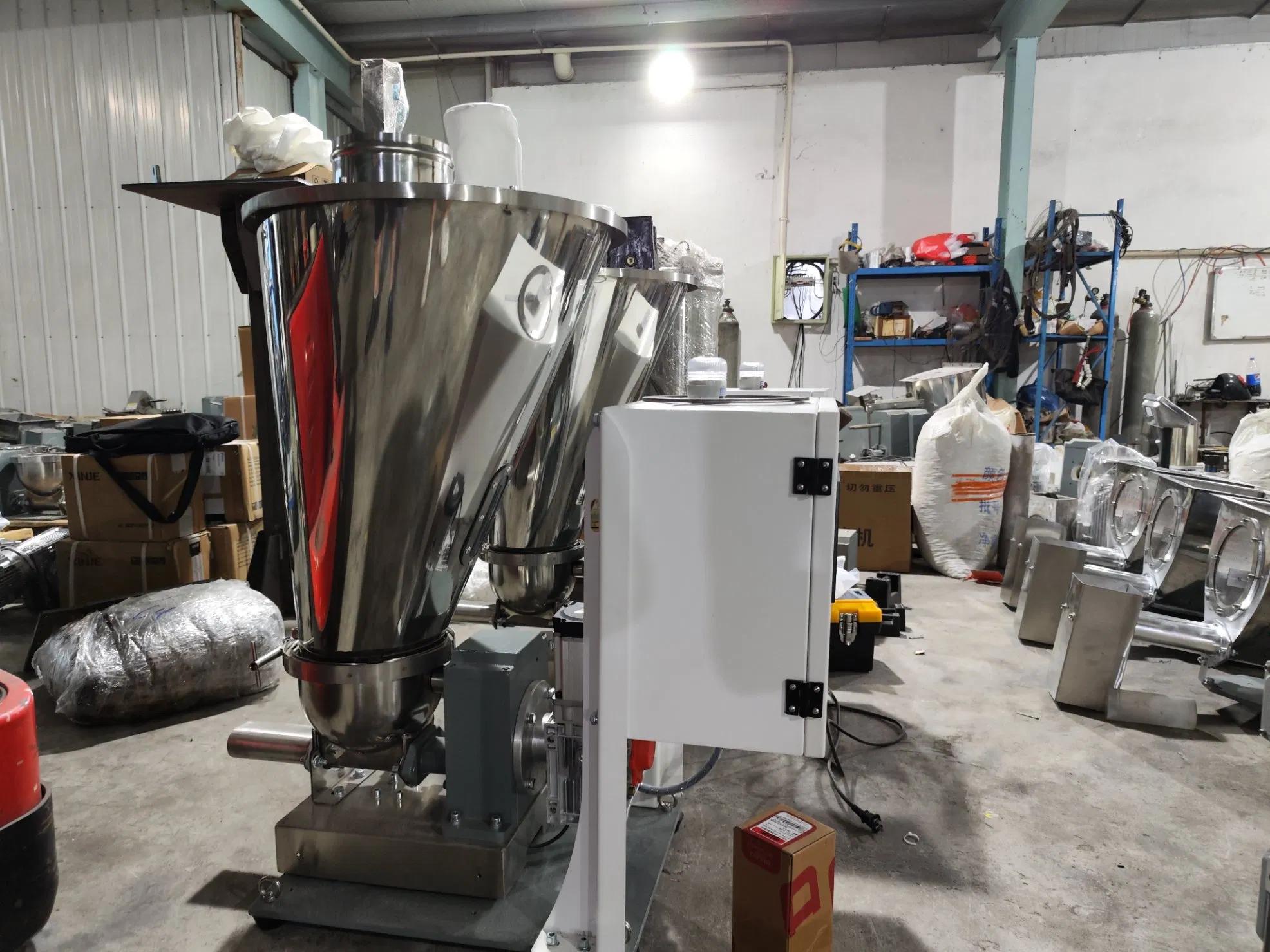
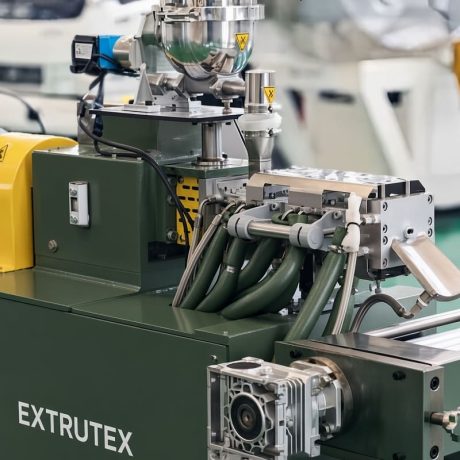
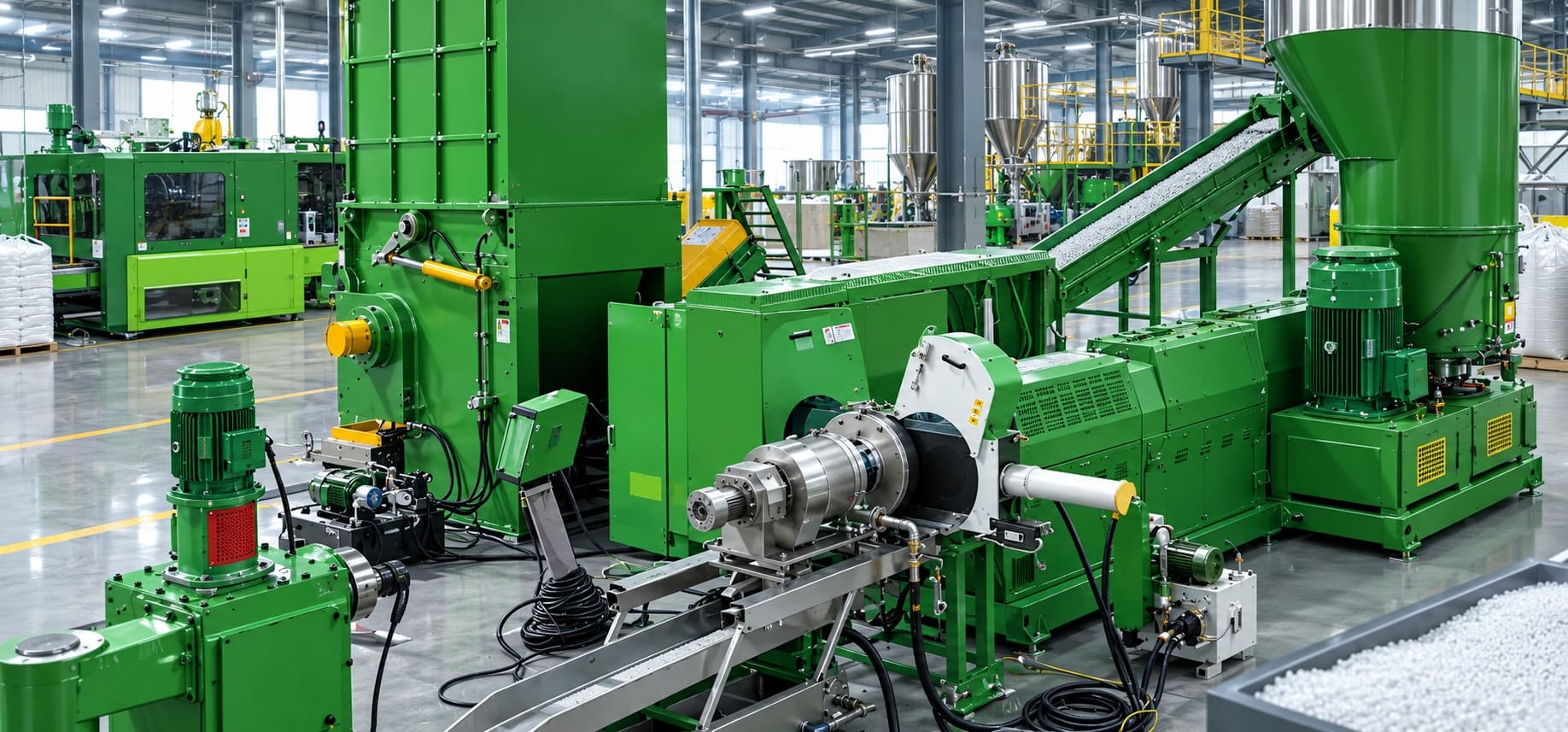
A complete EXTRUTEX pelletizing line may include material feeding, dosing, agglomeration, extrusion, melt filtration, pressure measurement, die head, die-face cutter, water circulation, pellet separation, drying, conveying and finished-pellet collection. Depending on the application, gravimetric feeders and automated process controls can be incorporated.
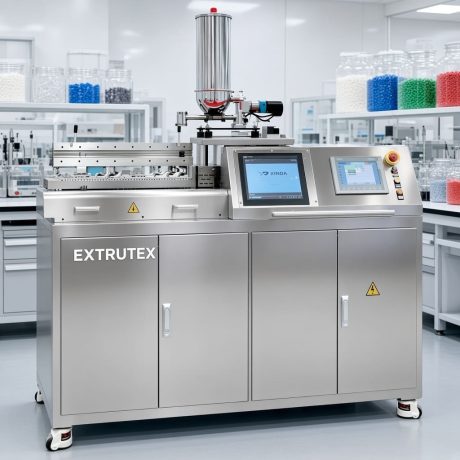
Temperature zones, melt pressure, motor load, extrusion speed, cutter speed and water conditions can be monitored from the central control system. The objective is simple: maintain a stable operating window so that changes in feed rate or material behavior do not immediately translate into unstable pellet size or excessive process variation.
EXTRUTEX equipment follows an Austrian design approach focused on practical engineering, maintainability and industrial reliability. Manufacturing is carried out in China, including production facilities in Nanjing and Shanghai. This combination gives customers access to European-oriented engineering development together with modern Chinese manufacturing capacity.
EXTRUTEX can supply individual machines or complete processing lines. The engineering scope can be adapted from a basic pelletizing unit to a fully integrated compounding and recycling system with automatic feeding, filtration, pelletizing, drying and conveying.
The EXTRUTEX Water-Ring Die-Face Pelletizing Machine is designed as a flexible production platform rather than a one-material machine. Whether the project involves recycled LDPE film, LLDPE film, PP raffia, woven bags, PE or PP rigid flakes, squeezed film, filled compounds, pipe compounds, flexible thermoplastics or masterbatch, the process can be configured around the material.
For straightforward melting and conveying, the system can use a single-screw extruder. Where low-shear processing and thermal control are more important, an EXTRUTEX co-kneader can be selected. Where intensive mixing, filler dispersion or demanding masterbatch production is required, the line can be built around an EXTRUTEX co-rotating twin-screw extruder. The water-ring die-face section then provides the final direct cutting and rapid cooling stage.
EXTRUTEX — Austrian design, manufacturing in Nanjing and Shanghai, China, and complete polymer processing solutions engineered around the material and the production target.
Water-Ring Die-Face Pelletizing • Compounding • Recycling • Masterbatch • Polymer Processing
Austrian Design | Manufacturing in Nanjing & Shanghai, China
There are no reviews yet.
By submitting your email, you agree to our company’s terms and conditions.
We are not looking to sell; we are here to provide you with the best support and service.
Contact available 24/7
Please do not contact us for advertising or sales inquiries
All rights of this website are reserved for EXTRUTEX Austria and its partner companies, © 2026
-
(0 customer reviews)