No products in the cart.




All rights of this website are reserved for EXTRUTEX Austria and its partner companies, © 2026

Multiple Payment Methods

Discount for advance payments over 50%

Free Shipping Coordination Services
Payment methods:


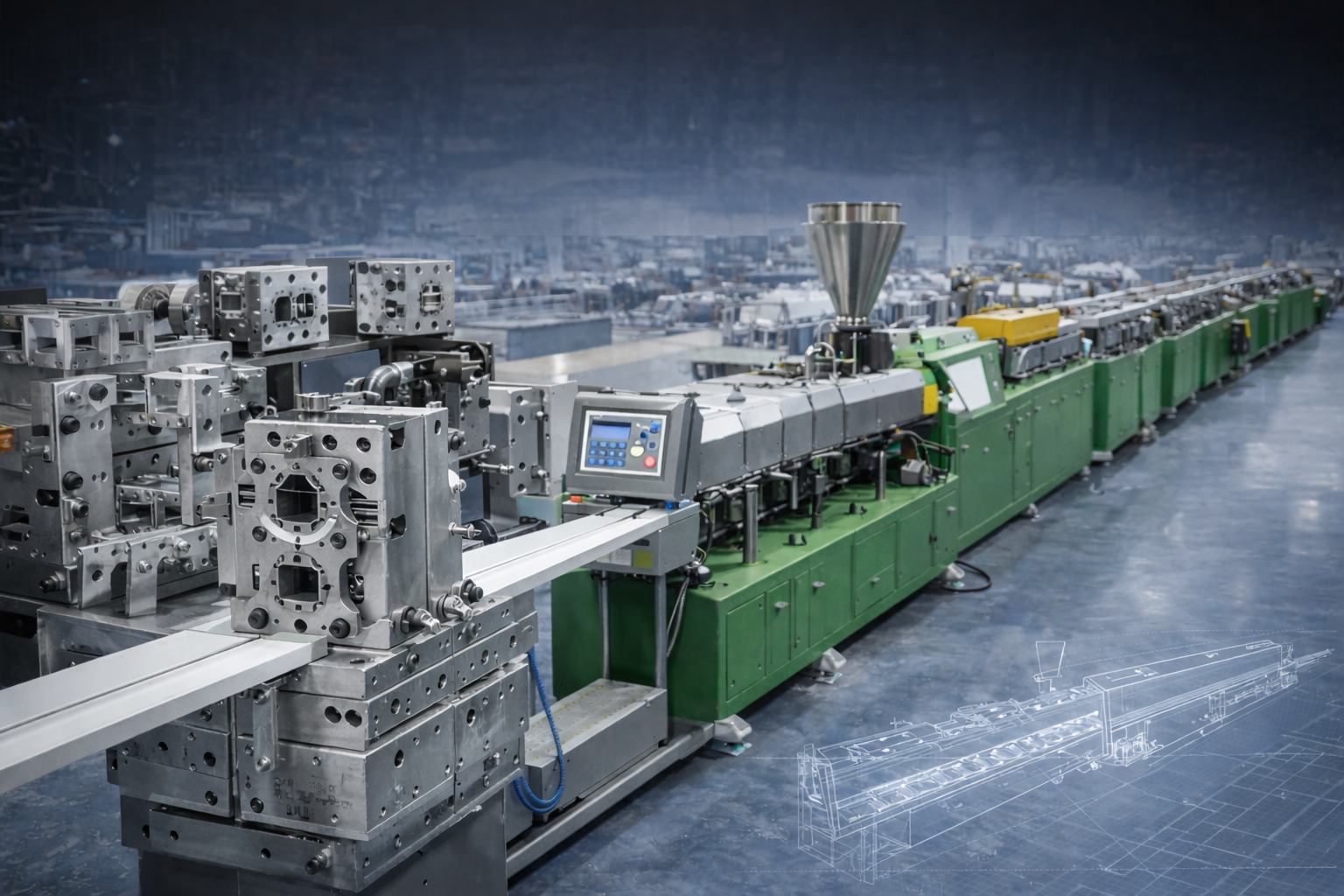
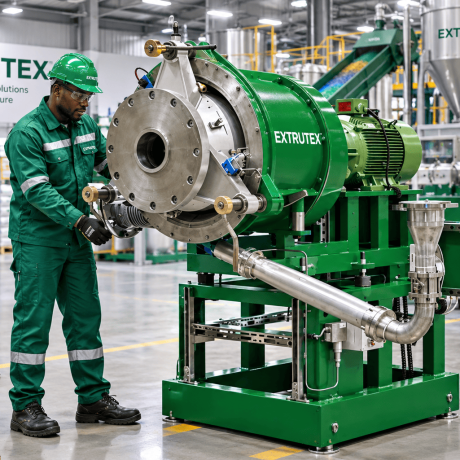
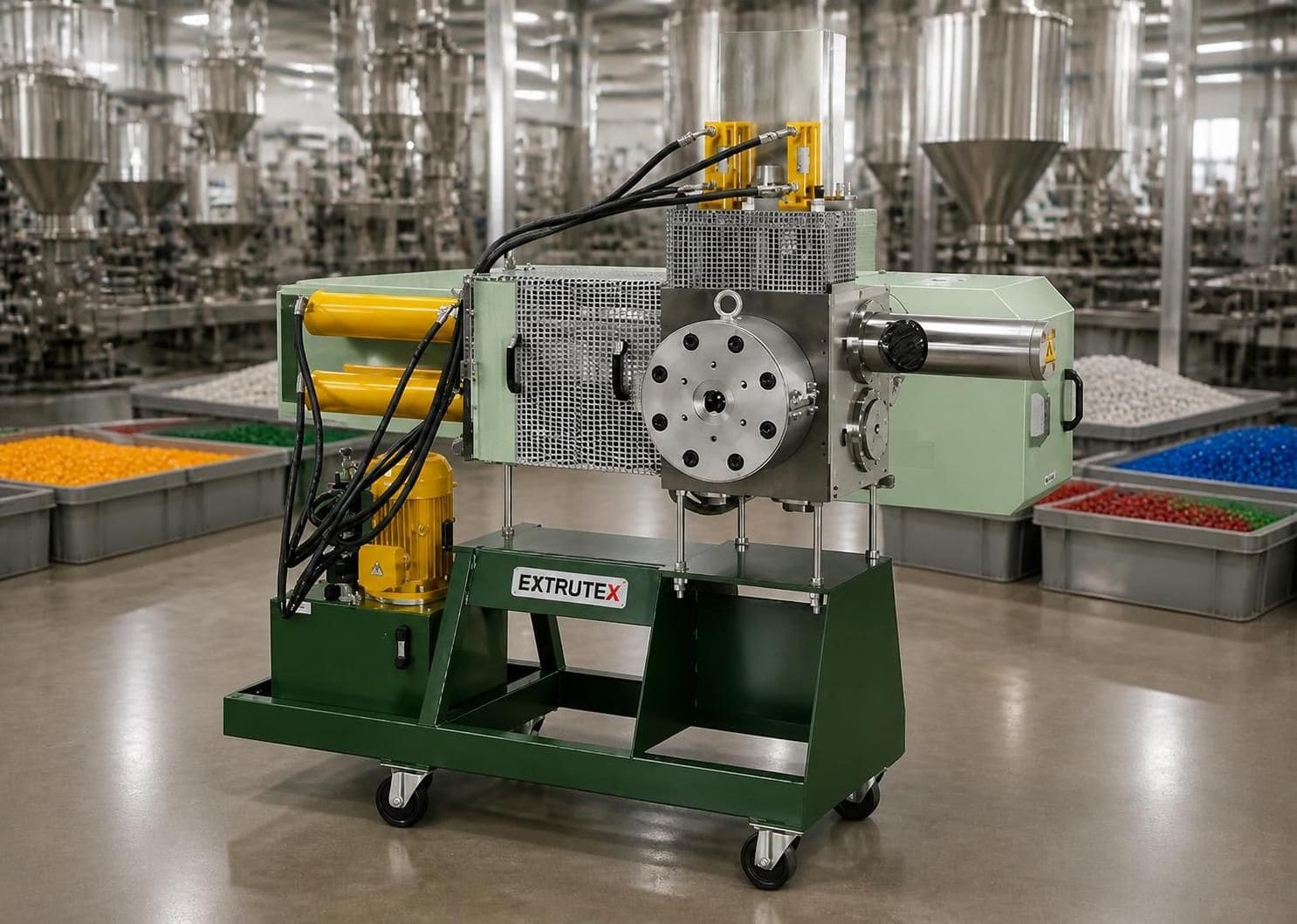
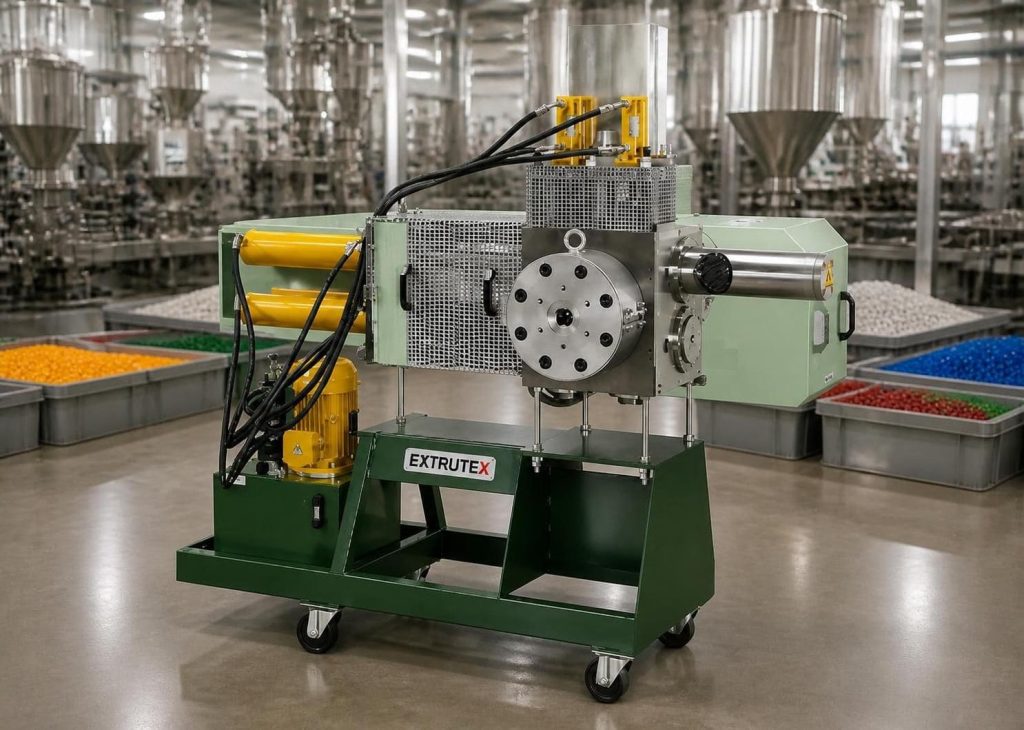
The EXTRUTEX EXCB Continuous Screen Changer with Backflush System is designed for plastic extrusion, polymer compounding, and recycling applications that require continuous melt filtration with automatic screen cleaning. Combining a double-piston arrangement with a backflushing mechanism, the EXCB helps remove accumulated contaminants from filter screens while minimizing the need for manual screen replacement.
During polymer processing, impurities in raw materials, recycled plastics, and compounded formulations can accumulate on filtration screens. As contamination increases, melt flow resistance and pressure drop may rise, potentially affecting output stability and finished-product quality. The EXCB addresses this challenge by alternating between filtration sections and using a controlled reverse-flow cleaning process to remove contaminants from the inactive screen.
EXTRUTEX manufactures the EXCB for industrial polymer processing systems where reduced screen replacement labor, extended production periods, and efficient use of filtration screens are important. The equipment combines hydraulic piston movement, controlled melt routing, and a backflush system to support continuous filtration.
With an effective screen area of approximately 75% and an indicative maximum throughput of up to 3,750 kg/h, the EXCB series can be considered for a wide range of suitable thermoplastic processing applications. Actual performance depends on the selected model, polymer properties, filtration requirements, contamination level, and operating conditions.
The EXTRUTEX EXCB is a continuous double-piston screen changer with an integrated backflush function. Its two screen-carrying pistons operate alternately, allowing one screen pack to filter the production melt while the other is cleaned by reversing the flow through its filtration surface.
When the operating pressure reaches a defined threshold, the system changes the melt-flow route. One filtration section remains responsible for processing the polymer melt, while the backflush mechanism directs a controlled reverse flow through the other screen pack. This helps dislodge accumulated contaminants and carry them away through the designated backflush path.
After the cleaning cycle, the operating arrangement can be switched so that the other screen pack is cleaned in turn. The automatic sequence is designed to support continuous operation and reduce the frequency of manual screen replacement. The exact control sequence, cleaning settings, and operating limits depend on the selected EXCB configuration.
The extruder delivers molten polymer into the EXCB. The melt is directed through the active filtration section, where the screen pack retains solid contaminants according to the selected mesh specification.
During the backflush cycle, one screen-carrying piston remains in the active production position. The polymer melt passes through this screen and continues toward the downstream equipment. The active filtration section therefore maintains the required melt path while the second screen is cleaned.
As impurities collect on a screen, the resistance to melt flow can increase. The EXCB is designed to initiate the backflush sequence when the defined operating pressure condition is reached. The pressure threshold must be established according to the selected machine, polymer, screen specification, and process requirements.
The backflush mechanism changes the flow arrangement so that only one screen pack is used for normal production filtration during the cleaning stage. The other screen pack is isolated from the main filtration duty according to the system's operating sequence.
A controlled portion of polymer melt is directed backward through the inactive screen. This reverse flow helps loosen and remove accumulated contaminants from the screen surface. The removed material and the associated small amount of melt are carried away through the designated backflush outlet.
The effectiveness of this process depends on contaminant type, particle size, screen structure, polymer viscosity, backflush conditions, and the characteristics of the feedstock. Not every contaminant can be removed equally well by backflushing.
Once the cleaning sequence is completed, the EXCB can repeat the process with the other screen pack. The alternating operation allows both filtration sections to be used in turn, helping extend screen service intervals and reduce the need for routine manual screen changes.
The key feature of the EXCB is its integrated reverse-flow cleaning function. Instead of requiring an operator to remove and replace the screen whenever contamination accumulates, the system uses a controlled melt-flow reversal to clean the inactive screen.
Automatic backflushing can reduce manual maintenance requirements and help extend production campaigns. The actual interval between maintenance operations depends on the material being processed, the contaminant load, the filtration grade, and the performance of the cleaning cycle.
Two screen-carrying pistons provide alternating filtration and cleaning functions. While one screen is used for the production melt, the other can undergo backflushing. The system then repeats the process with the opposite screen pack.
This arrangement is intended to maintain the melt filtration path during cleaning. It is particularly relevant for operations where stopping production to change screens would create avoidable downtime, material waste, or interruptions to downstream equipment.
The EXCB design provides an effective filtration area of approximately 75%, depending on the model and the relevant screen geometry. A suitable filtration area helps distribute the polymer melt across the screen and supports the required throughput.
Effective area alone does not determine filtration performance. Screen mesh, screen-pack construction, polymer viscosity, temperature, contamination level, and allowable pressure drop must also be considered when selecting the equipment.
The internal melt channels are designed with attention to flow distribution and resistance. Efficient melt routing helps limit unnecessary pressure losses and supports stable delivery of polymer to the downstream process.
The flow path is also important for limiting unnecessary material retention. A well-matched design can help reduce residual material during formulation or color changes, although the result depends on the entire extrusion system rather than the screen changer alone.
Some polymers and formulations can degrade if they remain at elevated temperatures for too long. The EXCB design considers reducing unnecessary melt residence time within the filtration section.
Actual residence time is influenced by the internal volume of the equipment, polymer throughput, flow characteristics, and operating conditions. For heat-sensitive polymers, the complete melt path and processing temperature profile should be assessed during line design.
Excessive pressure drop across a filtration unit can increase the load on the extruder and affect process stability. The EXCB is designed to manage melt flow through its filtration sections and backflush arrangement while limiting unnecessary pressure build-up.
Pressure must still be monitored during operation. The correct switching threshold and backflush settings depend on the selected model and the material being processed. Operators should follow the manufacturer's operating limits and maintenance recommendations.
Material trapped inside extrusion equipment can complicate color changes and transitions between formulations. The EXCB design emphasizes streamlined melt passages and reduced retention areas to support cleaning and material changeover procedures.
Changeover performance varies with the previous and new materials, pigment concentration, temperature, degradation sensitivity, and cleaning method. The extruder, adapter, die, and downstream components must also be considered when aiming for rapid material changes.
The EXTRUTEX EXCB is intended for a broad range of thermoplastic melt filtration applications. Each application must be checked for compatibility with the polymer grade, processing temperature, melt viscosity, contamination level, and required filtration fineness.
PE is used in pipe, film, sheet, profile, and recycling applications. The EXCB can be considered for suitable PE processes where melt filtration and automatic screen cleaning are beneficial. Screen specifications should match the feedstock quality and finished-product requirements.
PP extrusion, recycling, and compounding lines may require filtration to remove solid contaminants before the polymer reaches the die or pelletizing system. The appropriate configuration depends on the melt flow rate, formulation, and contamination profile.
Selected PVC processes may use melt filtration where the machine configuration and material formulation are suitable. PVC requires careful thermal management, so the screen changer's temperature, residence-time, and process compatibility should be verified before selection.
PET processing and recycling applications can require effective removal of solid contaminants from the polymer melt. The equipment must be selected according to the material grade, melt viscosity, moisture-control requirements, temperature, and pressure conditions.
Polyamide processing may involve specific moisture, temperature, and viscosity requirements. EXTRUTEX should evaluate the intended PA grade and filtration conditions to determine whether the EXCB configuration is appropriate.
Other thermoplastics and formulated compounds can be considered where the process conditions are compatible with the selected equipment. Filled or reinforced materials, highly viscous melts, and formulations with unusual contamination characteristics may require a specific engineering assessment.
The EXCB is particularly worth evaluating when screen contamination occurs regularly and production interruptions for screen replacement are undesirable. The suitability of backflushing depends on the contaminant type and whether the screen can be cleaned effectively using the available reverse-flow process.
Screen changers can use different mechanisms to handle screen contamination. A discontinuous unit requires the extrusion process to stop for screen replacement. A conventional continuous screen changer can maintain melt flow by alternating filtration sections. A backflush-equipped system adds a cleaning cycle that attempts to remove contaminants from the inactive screen.
| Feature | EXTRUTEX EXCB | Conventional Continuous Screen Changer | Discontinuous Screen Changer |
|---|---|---|---|
| Filtration arrangement | Double piston with backflush function | Continuous filtration arrangement, depending on design | Screen-carrying piston or other discontinuous arrangement |
| Screen cleaning | Automatic reverse-flow cleaning of the inactive screen | Depends on the specific design; manual replacement may be required | Screen is replaced after stopping the extrusion process |
| Production continuity | Designed for continuous filtration during backflushing | Designed to maintain melt flow during screen replacement | Production interruption is required for screen replacement |
| Manual screen replacement | May be reduced when backflushing cleans the screen effectively | Frequency depends on screen life and system design | Required when the screen is changed |
| Key selection consideration | Contaminant type, cleaning effectiveness, and output requirements | Production continuity and screen-changing method | Production schedule and acceptable downtime |
Backflushing is not a universal substitute for screen replacement. Certain contaminants may adhere strongly to the screen, melt into the mesh, or accumulate beyond the cleaning capability of the system. A suitable maintenance plan should allow for inspection and replacement when cleaning no longer restores the required filtration performance.
The EXTRUTEX EXCB series is designed for a range of industrial throughput requirements, with stated capacities reaching up to approximately 3,750 kg/h. This is an indicative upper limit for the product family and should not be interpreted as the guaranteed output of every model.
Actual throughput depends on the selected screen changer, polymer viscosity, melt temperature, screen mesh, contamination load, allowable pressure drop, and backflush operating conditions. The production capacity of the extruder and downstream equipment must also be considered.
| Parameter | EXTRUTEX EXCB |
|---|---|
| Equipment type | Continuous screen changer with backflush system |
| Filtration arrangement | Double-piston system |
| Screen cleaning | Automatic reverse-flow backflushing |
| Effective screen area | Approximately 75%, depending on model design |
| Indicative maximum throughput | Up to approximately 3,750 kg/h |
| Material compatibility | Suitable thermoplastics, subject to application verification |
| Screen specification | Selected according to material and filtration requirements |
| Backflush settings | Configured according to material and operating conditions |
| Dimensions and connections | Confirmed for the selected model |
| Operating pressure and temperature | Confirmed in the model-specific technical documentation |
Technical note: The information above is a general product overview. Exact model dimensions, hydraulic requirements, pressure limits, temperature limits, screen specifications, and model-by-model throughput should be confirmed with EXTRUTEX before ordering.
The EXCB is installed in the polymer melt path, typically between the extruder and downstream equipment. Integration requires careful consideration of connection dimensions, flow direction, melt pressure, operating temperature, available installation space, and maintenance access.
For recycling lines, feedstock quality and contamination levels are particularly important. The type of contamination determines whether the backflush function can clean the screen effectively and how frequently inspection or replacement may still be needed.
For compounding and masterbatch production, the filtration configuration should match the carrier polymer, additives, fillers, colorants, and required product quality. Material changeover requirements should also be considered when selecting the complete melt path.
EXTRUTEX can assess the EXCB for integration with suitable extruders, adapters, dies, pelletizing systems, and other downstream equipment. Coordinating these components helps ensure that filtration capacity, melt pressure, and output requirements are aligned across the production line.
All maintenance should follow the manufacturer's instructions. Before any service work, the equipment must be placed in a safe condition in accordance with the applicable isolation, pressure-relief, and hot-melt handling procedures.
The EXTRUTEX EXCB is a continuous melt filtration system that combines two screen-carrying pistons with an automatic backflush function to clean the inactive screen while the other screen filters the production melt.
The system redirects a controlled portion of melt backward through the inactive screen. This reverse flow helps dislodge contaminants and carries them away through the designated backflush outlet.
The stated product range reaches up to approximately 3,750 kg/h. Actual capacity depends on the selected model, polymer properties, filtration grade, contamination level, and operating conditions.
The EXCB is intended for a broad range of thermoplastic applications. The final configuration must be checked for the specific polymer grade, melt temperature, viscosity, pressure requirements, and material compatibility.
Not necessarily. Backflushing can extend screen service life when contaminants can be removed effectively. Screens may still require inspection, maintenance, or replacement if contamination cannot be removed adequately.
Yes, it can be evaluated for suitable plastic recycling lines. The effectiveness of backflushing depends on the feedstock contamination, contaminant characteristics, polymer melt behavior, and selected screen specification.
Its continuous double-piston design and automatic screen cleaning can reduce interruptions associated with routine screen replacement. Actual downtime savings depend on the application, screen life, and cleaning effectiveness.
Provide EXTRUTEX with the polymer type, required throughput, melt temperature, operating pressure, contamination level, desired filtration grade, extruder model, and downstream connection details. For recycling applications, information about the feedstock and contaminants is also valuable.
EXTRUTEX manufactures extrusion and polymer processing equipment for industrial production. The EXCB continuous screen changer with backflush system is designed for operations seeking continuous melt filtration and automated cleaning of suitable filter screens.
To receive a configuration recommendation, share your polymer type, production capacity, operating conditions, required filtration level, and extrusion-line layout. For recycling and compounding processes, please also describe the incoming material quality and the types of contaminants expected.
Contact EXTRUTEX to discuss the EXCB continuous screen changer with backflush system for your plastic extrusion, compounding, recycling, or pelletizing line.
There are no reviews yet.
By submitting your email, you agree to our company’s terms and conditions.
We are not looking to sell; we are here to provide you with the best support and service.
Contact available 24/7
Please do not contact us for advertising or sales inquiries
All rights of this website are reserved for EXTRUTEX Austria and its partner companies, © 2026
-
(0 customer reviews)