Petrochemical Extruder Parts: Large-Diameter Screw Elements, Barrels and Shafts
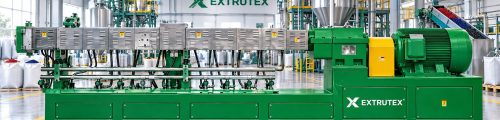
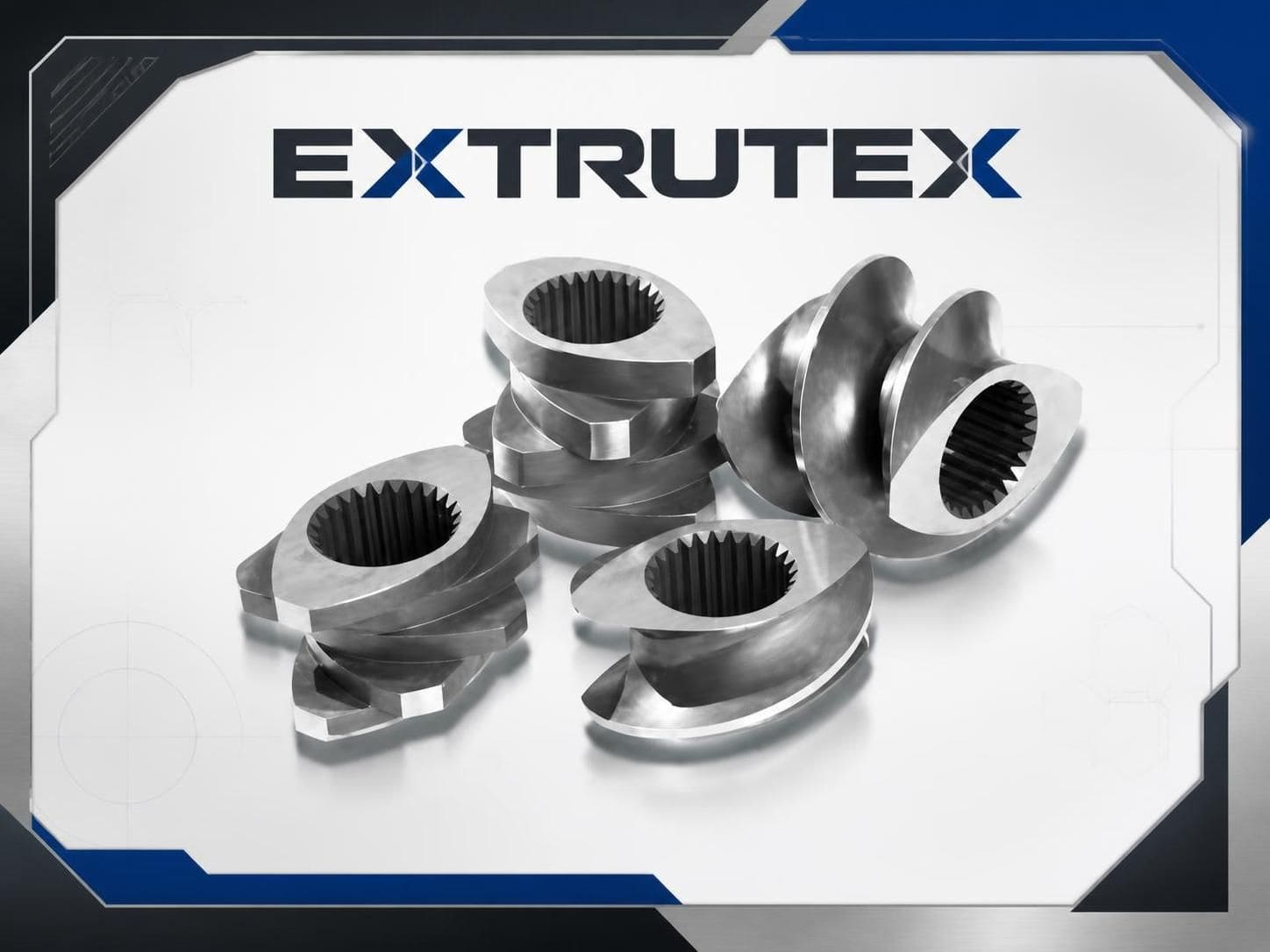
EXTRUTEX manufactures large-diameter replacement screw elements, kneading blocks, screw shafts, barrel sections and wear liners for continuous polymer-production and petrochemical extrusion lines. We have already manufactured parts for Coperion ZSK 320, ZSK 350 and ZSK 380 machines, as well as the JSW CMP series.
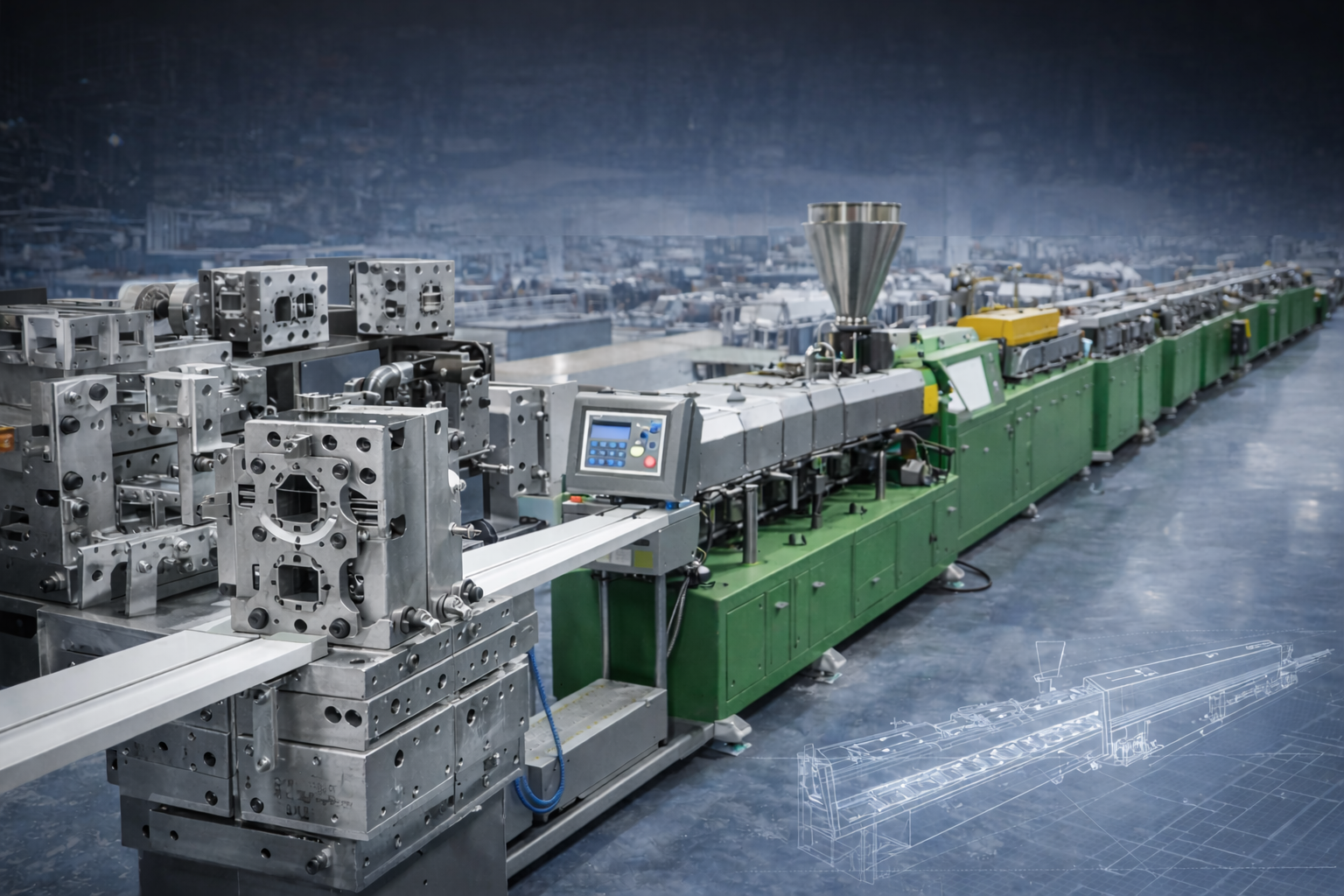
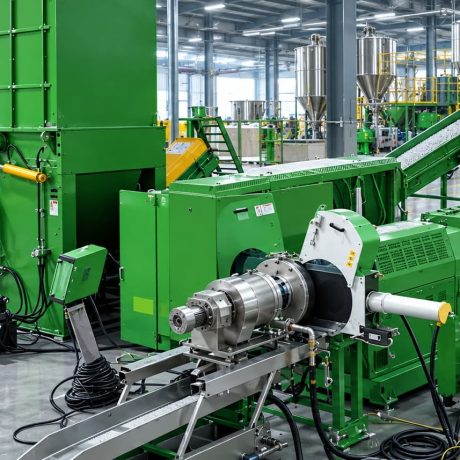
Petrochemical extrusion is not simply conventional compounding at a larger scale. Large polymer-production extruders operate with substantial torque, continuous production requirements and screw diameters that can exceed 300 mm. At this scale, component weight, machining stability, heat treatment, dimensional inspection and barrel-bore protection become major engineering considerations.
The barrel bore is particularly important. Depending on the barrel construction and operating duty, the wear surface may use a HIP powder-metallurgy liner or tungsten-carbide laser cladding applied directly to the barrel body in a linerless construction.
Large-diameter manufacturing experience
EXTRUTEX has supplied large-diameter parts for Coperion ZSK 320, ZSK 350 and ZSK 380 extruders and JSW CMP series machines. We manufacture according to verified drawings, original components and measured dimensions. Compatibility is confirmed before machining begins.
Large-Diameter Extruder Platforms We Have Supplied
Model designations, screw configurations and component dimensions vary between equipment manufacturers and machine generations. A model name alone is not sufficient to establish interchangeability. We therefore work from the original drawing, machine configuration and measured component.
| Machine |
Screw Diameter Class |
Parts Supplied |
| Coperion ZSK 320 |
320 mm class |
Conveying elements, kneading blocks, screw shafts, barrel sections and liners |
| Coperion ZSK 350 |
350 mm class |
Conveying elements, kneading blocks, screw shafts, barrel sections and liners |
| Coperion ZSK 380 |
380 mm class |
Conveying elements, kneading blocks, screw shafts, barrel sections and liners |
| JSW CMP Series |
Large-diameter continuous compounding |
Screw elements, kneading blocks, barrels and screw shafts |
| Other polymer-production extruders |
300–486 mm |
Manufactured to drawings or reverse-engineered from measured components |
This is not a complete compatibility list. We can assess other large-diameter polymer-production extruders when drawings, machine information or original parts are available. For unfamiliar models, we review the component geometry before confirming whether manufacturing is possible.
Technical Manufacturing Range
| Component types |
Screw elements, kneading blocks, screw shafts, barrel sections and wear liners |
| Maximum screw element diameter |
Up to 486 mm outer diameter |
| General screw element material |
Nitrided 38CrMoAlA, approximately 950–1100 HV as specified |
| High-wear screw element material |
PM-HIP tool steel, approximately 58–62 HRC as specified |
| Screw shaft materials |
40CrNiMo, H13 or WR15E, quenched and tempered |
| Barrel bore protection |
HIP powder-metallurgy liner or tungsten-carbide laser cladding in linerless construction |
| Kneading block stagger |
30° to 90°, subject to original design |
| Manufacturing basis |
Approved drawings, original components or verified measurements |
| Lead time |
Typically 30–45 days after material availability and drawing confirmation, plus transit |
Material grades, hardness values, dimensions and surface treatments are confirmed against the approved component specification. Actual achievable values depend on the selected grade, section size and heat-treatment process.
What EXTRUTEX Manufactures for Petrochemical Extruders
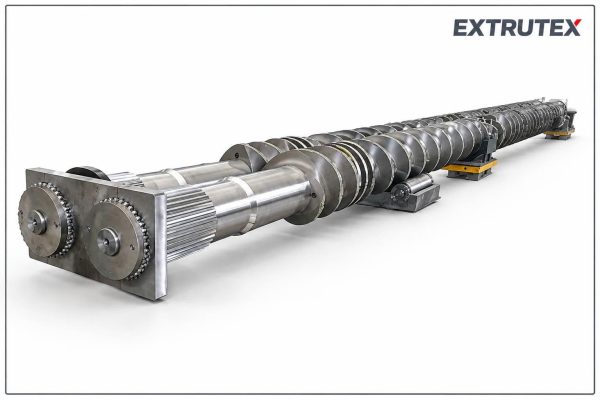
Large-Diameter Screw Elements
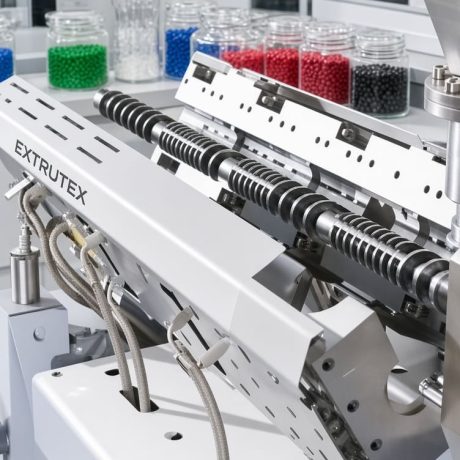
Conveying elements and screw segments up to 486 mm outer diameter. Components are machined and ground according to the approved original profile and dimensional requirements.
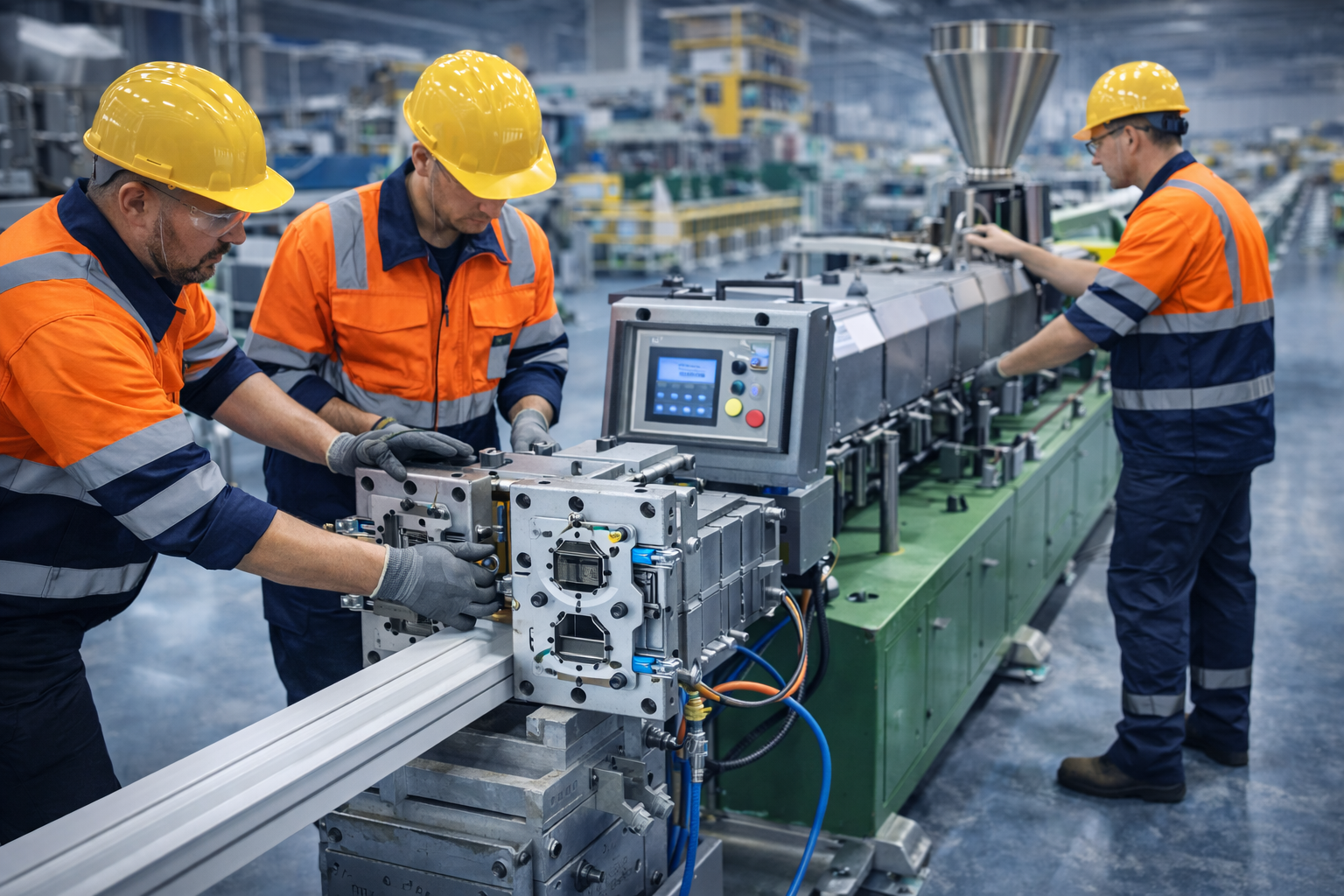
At this size, individual component handling, fixturing and inspection are important parts of the manufacturing process. Critical dimensions are checked on the actual component rather than relying only on sample measurements.
Kneading Blocks and Mixing Elements
Kneading blocks and mixing elements with stagger angles from 30° to 90°, manufactured according to the required screw configuration and process position.
Material selection may include nitrided steel or PM-HIP steel, depending on the filler, catalyst loading, operating conditions and wear requirements.
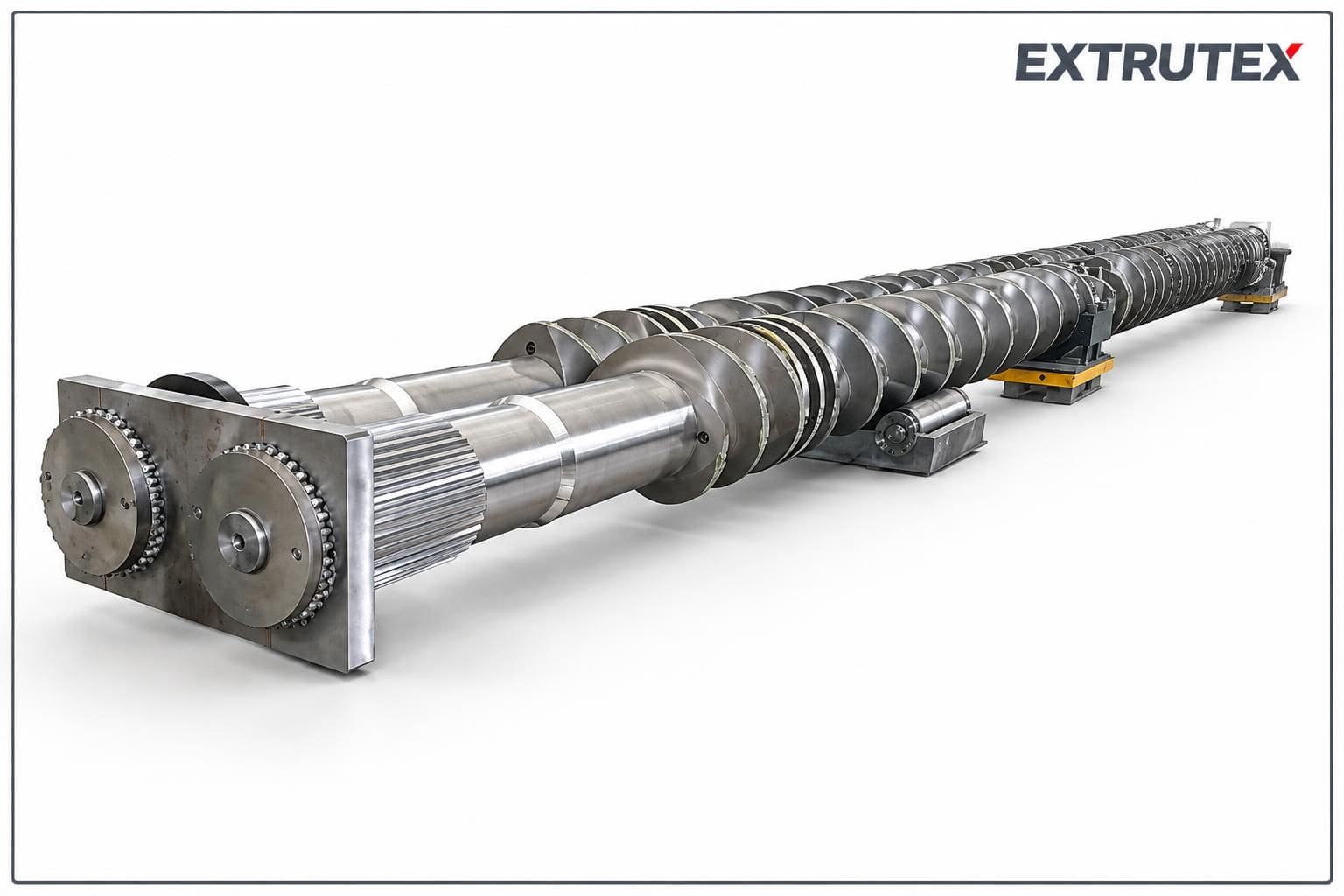
Large Screw Shafts
Screw shafts manufactured from 40CrNiMo, H13 or WR15E, with splined or keyed connections according to the original interface.
Coupling ends, bearing seats and other critical interfaces are machined to the approved drawing. Long shafts are checked for straightness and runout before dispatch.
Barrels and Wear Liners
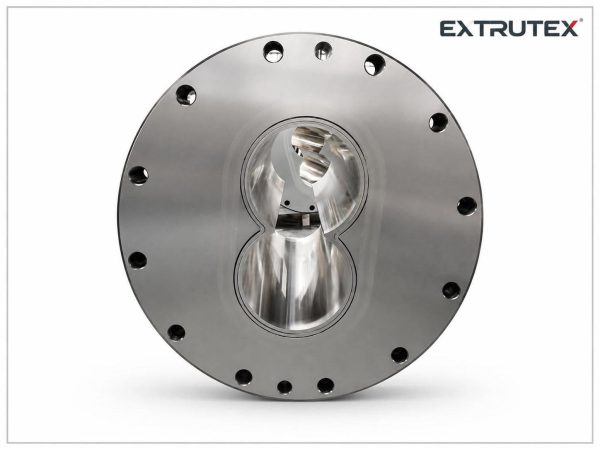
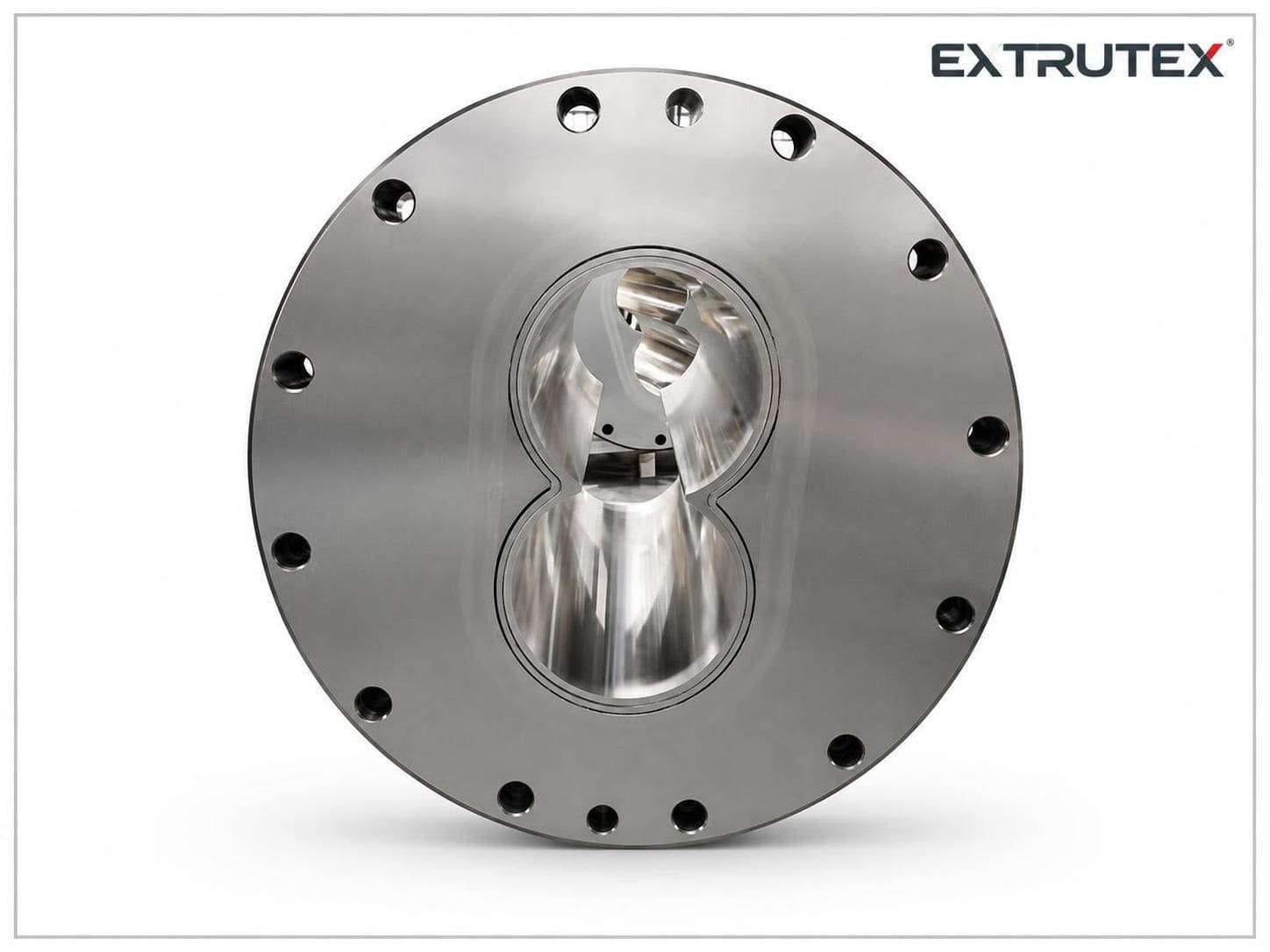
Figure-8 barrel sections with heavy flanges, process ports and the required heating or cooling arrangements.
Depending on the design, barrel-bore protection may use HIP powder-metallurgy liners or tungsten-carbide laser cladding applied directly to the barrel body.
Why Large-Diameter Petrochemical Extrusion Requires Different Engineering
A large-diameter screw element is not simply a scaled-up version of a smaller compounding element. The increase in size changes the practical requirements for machining, handling, heat treatment, grinding and dimensional verification.
1. Component size changes manufacturing requirements
Large screw elements and shafts require suitable lifting, handling and fixturing arrangements. Machining equipment must support the component without introducing unacceptable deflection. Grinding operations must maintain dimensional stability across the working length.
Heat treatment must also be planned around the component's material, section size and geometry. The required soak, cooling and tempering procedures depend on the selected grade and approved process specification.
2. Dimensional inspection must cover the actual component
At large diameters, small dimensional deviations can affect the working relationship between the screw elements, the two screw axes and the barrel bore. Measurements must therefore be taken at the relevant locations on the manufactured part.
Depending on the component, inspection may include outside diameter, pitch, flight profile, element length, shaft interface, runout, bore geometry and critical flange dimensions.
3. The barrel wear surface determines service life
In continuous polymer-production duty, the barrel bore is exposed to the process material throughout operation. Fillers, abrasive additives and other formulation ingredients can gradually wear the working surface.
The wear protection system must be selected according to the barrel construction, operating conditions and expected service requirements. For large-diameter applications, EXTRUTEX works with HIP powder-metallurgy liners and tungsten-carbide laser-clad bore solutions.
4. Planned replacement protects production schedules
Continuous polymer-production lines can operate for extended periods. A damaged screw or barrel section can therefore create substantial production disruption. Customers may choose to keep spare screw sets or barrel sections available for planned maintenance.
EXTRUTEX can quote individual components or matched sets, depending on the maintenance plan and the condition of the existing equipment.
Barrel Construction: HIP PM Liners and Laser Cladding
The barrel bore is one of the most important wear surfaces in a large-diameter twin-screw extruder. The correct construction depends on the barrel design, wear conditions and required maintenance strategy.
HIP Powder-Metallurgy Liners
HIP powder-metallurgy liners are used where a replaceable internal wear-resistant layer is part of the barrel construction. The liner material is selected for the expected abrasion, corrosion and operating conditions.
Liner dimensions, fit, interface and replacement method must follow the barrel design. The liner must be assessed together with the barrel body rather than as an independent component.
Tungsten-Carbide Laser Cladding
In a linerless barrel construction, tungsten-carbide laser cladding can be applied directly to the barrel body to provide a wear-resistant bore surface.
The cladding process and finished bore geometry must be controlled according to the component specification. The finished surface must meet the required dimensional and inspection criteria.
Why a conventional nitrided case may not be enough
For the large-diameter, continuous-duty applications described here, the required bore wear protection is normally specified as a HIP powder-metallurgy liner or a tungsten-carbide laser-clad surface. A conventional nitrided case may not provide the required wear-layer depth for the intended duty.
The final choice should be based on the actual polymer formulation, filler content, process conditions, barrel construction and maintenance requirements.
Figure-8 Barrel Sections and Bore Intersection Inspection
Twin-screw extruder barrels use a figure-8 internal bore formed by two intersecting circular sections. The geometry at the bore intersection is a critical part of the barrel structure and must be inspected during manufacturing and refurbishment.
Continuous thermal cycling and mechanical loading can place stress on the barrel. Wear may be addressed through an appropriate refurbishment process when sufficient material and structural integrity remain. A crack at the bore intersection is a serious structural defect and, under the supplied repair criteria, means the affected barrel section must be replaced.
Barrel inspection considerations
- Measure bore diameter at the specified positions.
- Check bore roundness and the condition of the figure-8 intersection.
- Inspect the liner or cladding surface for wear and damage.
- Check flange dimensions and mating surfaces.
- Inspect process ports and their surrounding material.
- Check the barrel body for visible cracks or structural damage.
Important refurbishment limit: Bore wear may be recoverable through an approved re-boring, honing and re-lining or surface-restoration process. A crack at the figure-8 bore intersection is not treated as a normal wear defect and requires replacement of the affected barrel section.
Barrel Refurbishment and Replacement
Not every worn barrel needs to be replaced. If the wear can be removed within the permitted refurbishment dimensions and the barrel body remains structurally sound, refurbishment may be considered.
Possible refurbishment operations
- Inspection and measurement: Establish the actual bore dimensions, wear pattern and structural condition.
- Re-boring: Remove worn material where the remaining barrel geometry permits.
- Honing: Restore the required internal bore finish and geometry within the approved limits.
- Re-lining: Fit a replacement liner where the barrel construction is designed for a replaceable liner.
- Surface restoration: An approved weld-overlay or cladding process may be considered for suitable barrel constructions.
- Final dimensional inspection: Verify the finished bore and relevant interfaces before dispatch.
The refurbishment route depends on the original construction, available material allowance, wear depth and structural condition. A barrel with a crack at the bore intersection is not suitable for the refurbishment route described above and should be replaced.
Where the existing barrel cannot be restored within acceptable dimensional or structural limits, EXTRUTEX can assess the manufacture of a replacement section from the original drawing or measured reference.
Material Selection for Large-Diameter Extruder Parts
Material selection depends on the component's mechanical function, process position, wear exposure and manufacturing requirements. Screw elements, shafts and barrel bores do not necessarily use the same material because each component performs a different role.
| Component and Duty |
Material |
Reference Property |
| Barrel bore, abrasive and corrosive duty |
HIP powder-metallurgy liner |
Wear-resistant liner construction |
| Barrel bore, linerless construction |
Tungsten-carbide laser cladding |
Wear-resistant cladded bore surface |
| Screw elements, general duty |
Nitrided 38CrMoAlA |
Approximately 950–1100 HV as specified |
| Screw elements, high-wear duty |
PM-HIP tool steel |
Approximately 58–62 HRC as specified |
| Screw shafts |
40CrNiMo, H13 or WR15E |
Quenched and tempered |
Nitrided 38CrMoAlA
Nitrided 38CrMoAlA is used for screw elements where the required design and process conditions support this material and treatment. The specified surface hardness is approximately 950–1100 HV, subject to the approved heat-treatment specification.
PM-HIP tool steel
PM-HIP tool steel is an option for high-wear screw element applications. The specified hardness range is approximately 58–62 HRC, depending on the selected grade and heat treatment.
Screw shaft materials
Screw shafts can be manufactured from 40CrNiMo, H13 or WR15E according to the required mechanical properties, shaft geometry and machine interface. Heat treatment and machining are specified for the actual shaft design.
Manufacturing Large Screw Shafts
Large screw shafts require careful control of shaft geometry, mechanical interfaces and straightness. The shaft must support the screw elements and transmit the required torque while maintaining the alignment and clearances of the assembled system.
EXTRUTEX manufactures shafts with splined or keyed connections, according to the original machine configuration. The coupling end, bearing seats and other critical interfaces are machined to the approved dimensions.
Key shaft inspection points
- Overall shaft length and stepped dimensions.
- Spline or keyway profile and fit.
- Coupling-end dimensions.
- Bearing-seat dimensions and alignment.
- Straightness and runout along the shaft.
- Material and heat-treatment requirements.
Long shafts are straightened where required and checked for runout before dispatch. The final acceptance criteria must be based on the approved drawing and machine requirements.
Large-Diameter Manufacturing and Dimensional Quality Control
Large components require suitable machining capacity, handling equipment and inspection methods. The manufacturing process must account for component weight, length, material condition and the risk of distortion during machining or heat treatment.
Manufacturing and inspection focus
- Individual component inspection: Large screw elements are handled and measured individually.
- Machining stability: Fixturing and machine support are selected to limit deflection during machining and grinding.
- Heat-treatment control: Treatment procedures are selected according to material grade and component section size.
- Dimensional verification: Critical dimensions are checked on the manufactured component.
- Shaft runout inspection: Long shafts are checked for straightness and runout.
- Barrel inspection: Bore geometry, flanges, process ports and relevant interfaces are checked.
Inspection requirements and acceptance tolerances are agreed against the approved drawing or technical specification before production.
Manufacturing from Drawings or Existing Parts
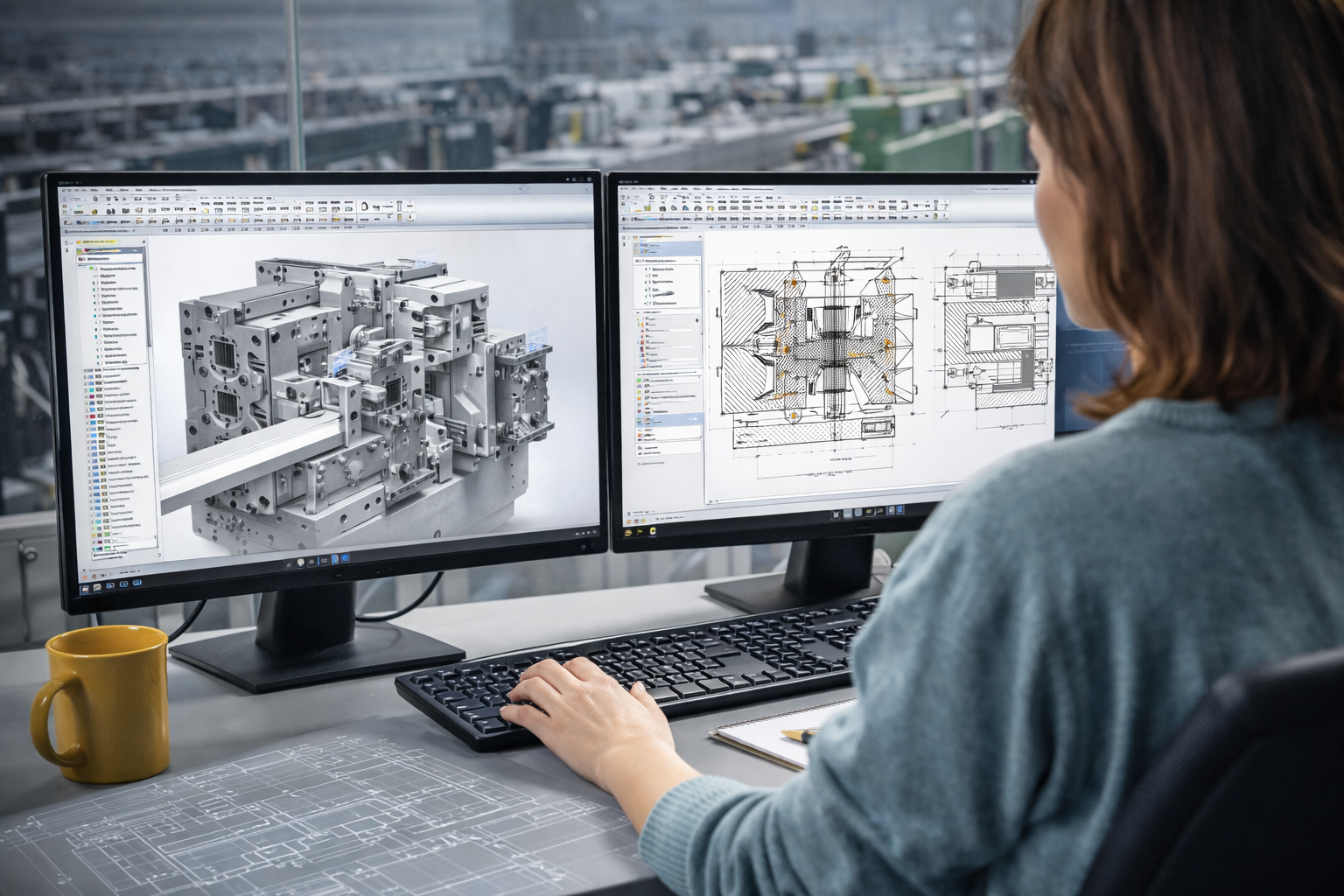
Large-diameter replacement components are often manufactured against original drawings. Where drawings are unavailable, EXTRUTEX can assess original or worn components and reconstruct the required manufacturing information through measurement and reverse engineering.
When original drawings are available
We review the component profile, dimensions, tolerances, material, heat treatment, shaft interface and assembly position. Any missing or unclear information is identified before the manufacturing specification is approved.
When only a worn component is available
The original dimensions may not be recoverable from a severely worn part alone. We measure the available geometry and assess whether additional references are needed, such as an unworn section, a matching component, an assembly drawing or measurements from the machine.
For a barrel, the assessment may require bore dimensions, centre distance, flange geometry, port locations and heating arrangement details. For a screw shaft, overall length, connection details, bearing seats and runout requirements are important.
What Information to Send for a Quotation
To assess a large-diameter replacement component, please provide the machine information and as much dimensional detail as possible.
-
Machine manufacturer and model
Identify the equipment, such as Coperion ZSK 320, ZSK 350, ZSK 380 or the relevant JSW CMP series model.
-
Component position
Tell us where the screw element, kneading block, shaft or barrel section is installed.
-
Original drawing or measured component
Provide the drawing or available measurements, including outside diameter, flight lead, component length, bore diameter and centre distance where relevant.
-
Photographs
Send clear photographs of the worn part with a ruler or measuring scale in frame. For shafts, include the overall length and connection details.
-
Barrel construction information
For barrel enquiries, provide flange dimensions, process-port layout, heating arrangement, bolt pattern and available liner or cladding details.
For unfamiliar machines: Send the original or worn component and the available machine information. EXTRUTEX can assess the geometry and determine what additional measurements are needed before confirming the replacement specification.
Lead Time and Spare-Part Planning
For imported-machine replacement parts such as Coperion ZSK 320, ZSK 350, ZSK 380 and JSW CMP series components, allow approximately 30–45 days once the required material is available and the drawings or component geometry have been confirmed. Transit time is additional.
Large barrel sections and heavy components generally require transport planning according to their dimensions, weight and destination. Sea freight may be required for oversized or heavy shipments.
Why planned spare sets matter
Continuous polymer-production lines can make unexpected equipment downtime particularly disruptive. Holding a spare screw set or barrel section can help reduce the time required for a planned overhaul.
EXTRUTEX can quote complete matched screw sets or individual replacement elements. A matched set can be manufactured against one approved specification, while individual elements can be supplied when the existing assembly has been measured and the required compatibility confirmed.
| Order Stage |
Technical Requirement |
| Machine identification |
Manufacturer, model, configuration and component position |
| Drawing review |
Dimensions, tolerances, profile and interfaces |
| Material confirmation |
Steel grade, heat treatment and wear-surface construction |
| Manufacturing |
Machining, grinding and specified surface treatment |
| Inspection |
Dimensional verification and agreed quality checks |
| Dispatch |
Packaging and transport planning for heavy or oversized components |
Why Choose EXTRUTEX for Petrochemical Extruder Parts?
- Large-diameter experience: Manufactured parts for Coperion ZSK 320, ZSK 350, ZSK 380 and JSW CMP series machines.
- Wide manufacturing range: Screw elements up to 486 mm outer diameter.
- Complete component supply: Screw elements, kneading blocks, shafts, barrel sections and wear liners.
- Barrel wear solutions: HIP powder-metallurgy liners and tungsten-carbide laser cladding for suitable constructions.
- Drawing and sample-based manufacturing: Production against verified drawings or measured components.
- Matched replacement sets: Individual components or complete screw sets for planned maintenance.
- Technical inspection: Dimensional checks and verification according to the approved manufacturing specification.
EXTRUTEX combines Austrian design, laboratory and R&D capabilities with manufacturing in China. We supply replacement components for industrial extrusion, compounding and polymer-processing equipment.
EXTRUTEX is an independent replacement-parts manufacturer. Coperion and JSW are third-party equipment manufacturers. Their names and model designations are used only to identify equipment compatibility and do not imply affiliation, authorisation or endorsement.
Frequently Asked Questions
Have you manufactured parts for Coperion ZSK 320, ZSK 350 and ZSK 380 extruders?
Yes. EXTRUTEX has manufactured large-diameter replacement parts for Coperion ZSK 320, ZSK 350 and ZSK 380 machines, as well as the JSW CMP series. Send the model, component position and a drawing or photograph of the worn part so we can confirm the requirements before machining.
Do you manufacture replacement parts for the JSW CMP series?
Yes. We manufacture screw elements, kneading blocks, barrels and screw shafts for the JSW CMP series. We work from the relevant drawings or measured component dimensions because part numbering and configurations must be checked against the actual machine.
What is the largest screw element diameter EXTRUTEX can manufacture?
Our stated manufacturing range reaches 486 mm outer diameter. The available manufacturing specification depends on component geometry, material, length, drawing requirements and the inspection criteria.
Can you manufacture a complete large-diameter screw set?
Yes. We supply complete matched screw sets as well as individual elements. A matched set can be manufactured against one approved dimensional specification for a planned overhaul. Individual components can also be supplied when their compatibility with the existing assembly has been verified.
Which materials do you use for large-diameter screw elements?
Material options include nitrided 38CrMoAlA for general duty and PM-HIP tool steel for selected high-wear applications. The specified hardness values are approximately 950–1100 HV and 58–62 HRC respectively, subject to the selected material and approved heat-treatment specification.
What barrel-bore protection options are available?
Depending on the barrel construction, options include HIP powder-metallurgy liners and tungsten-carbide laser cladding applied directly to the barrel body in a linerless construction. The correct option must be checked against the original barrel design and operating requirements.
Can a worn large-diameter barrel be refurbished instead of replaced?
Often, if the wear can be removed within the permitted refurbishment dimensions and the barrel remains structurally sound. Depending on its construction, refurbishment may involve re-boring, honing, fitting a new liner or an approved surface-restoration process. A crack at the figure-8 bore intersection is a critical defect and requires replacement of the affected section.
Can you manufacture large parts without the original drawings?
We can assess original or worn components and use measurements for reverse engineering. Additional information may be required where wear has changed the original geometry or where critical interfaces cannot be measured from the available sample.
How long does a large-diameter replacement part take?
Allow approximately 30–45 days once material is available and drawings or component geometry have been confirmed, plus transit. Heavy or oversized barrel sections may require additional transport planning. Special materials or complex manufacturing requirements can affect the schedule.
Do you supply individual screw elements or only complete sets?
Both options are available. EXTRUTEX can manufacture individual screw elements, kneading blocks, shafts and barrel components, or quote a complete matched replacement set for a planned maintenance shutdown.
What information is needed for a quotation?
Provide the machine make and model, component position, original drawing or measured part, photographs with a scale and the relevant dimensions. For barrel sections, include flange dimensions, process-port layout, heating arrangement and bolt pattern.
Request a Quotation for Large-Diameter Petrochemical Extruder Parts
Contact EXTRUTEX for replacement screw elements, kneading blocks, large screw shafts, barrel sections and wear liners for Coperion ZSK 320, ZSK 350, ZSK 380, JSW CMP and other large-diameter polymer-production extruders.
Send your machine model, component position, drawings or measured samples. For barrel enquiries, include bore measurements, flange dimensions and port layout. Our team can review the technical requirements and confirm the manufacturing specification before production.
EXTRUTEX - Large-Diameter Screw Elements, Barrels, Shafts and Wear Protection for Petrochemical Extrusion.





-
(0 customer reviews)