No products in the cart.



All rights of this website are reserved for EXTRUTEX Austria and its partner companies, © 2026

Multiple Payment Methods

Discount for advance payments over 50%

Free Shipping Coordination Services
Payment methods:

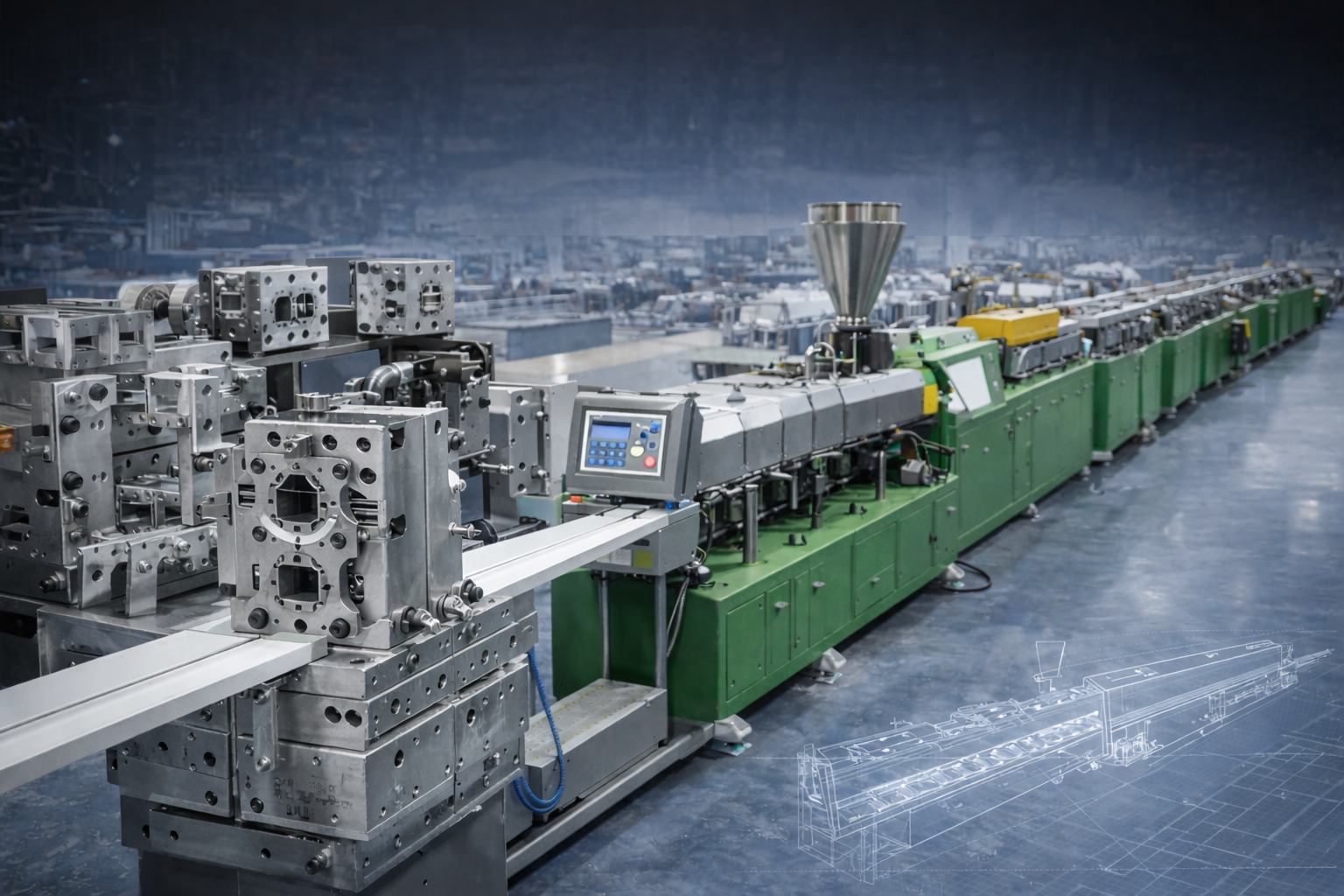
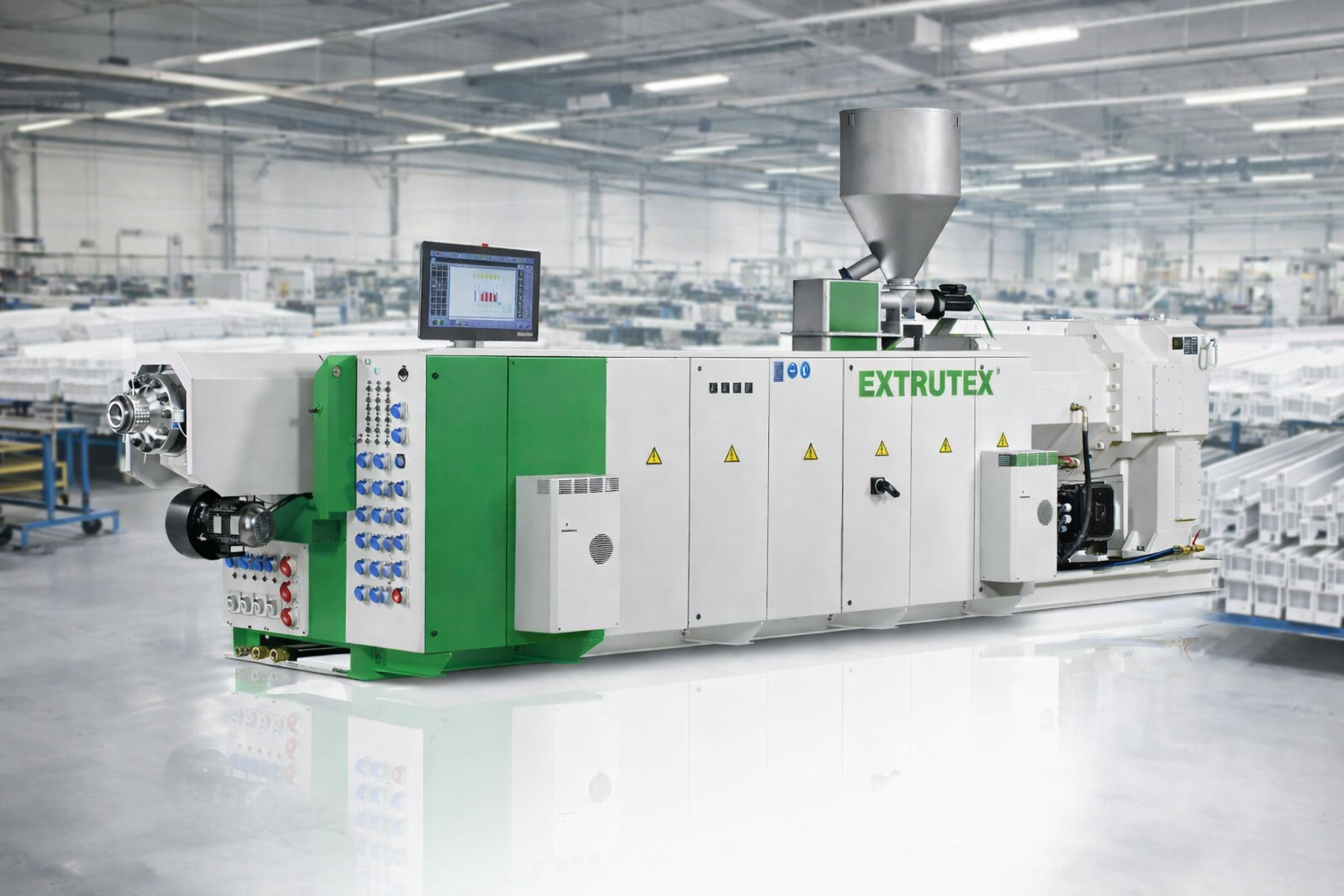
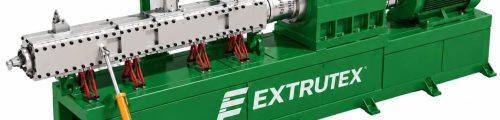
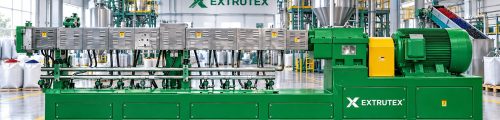
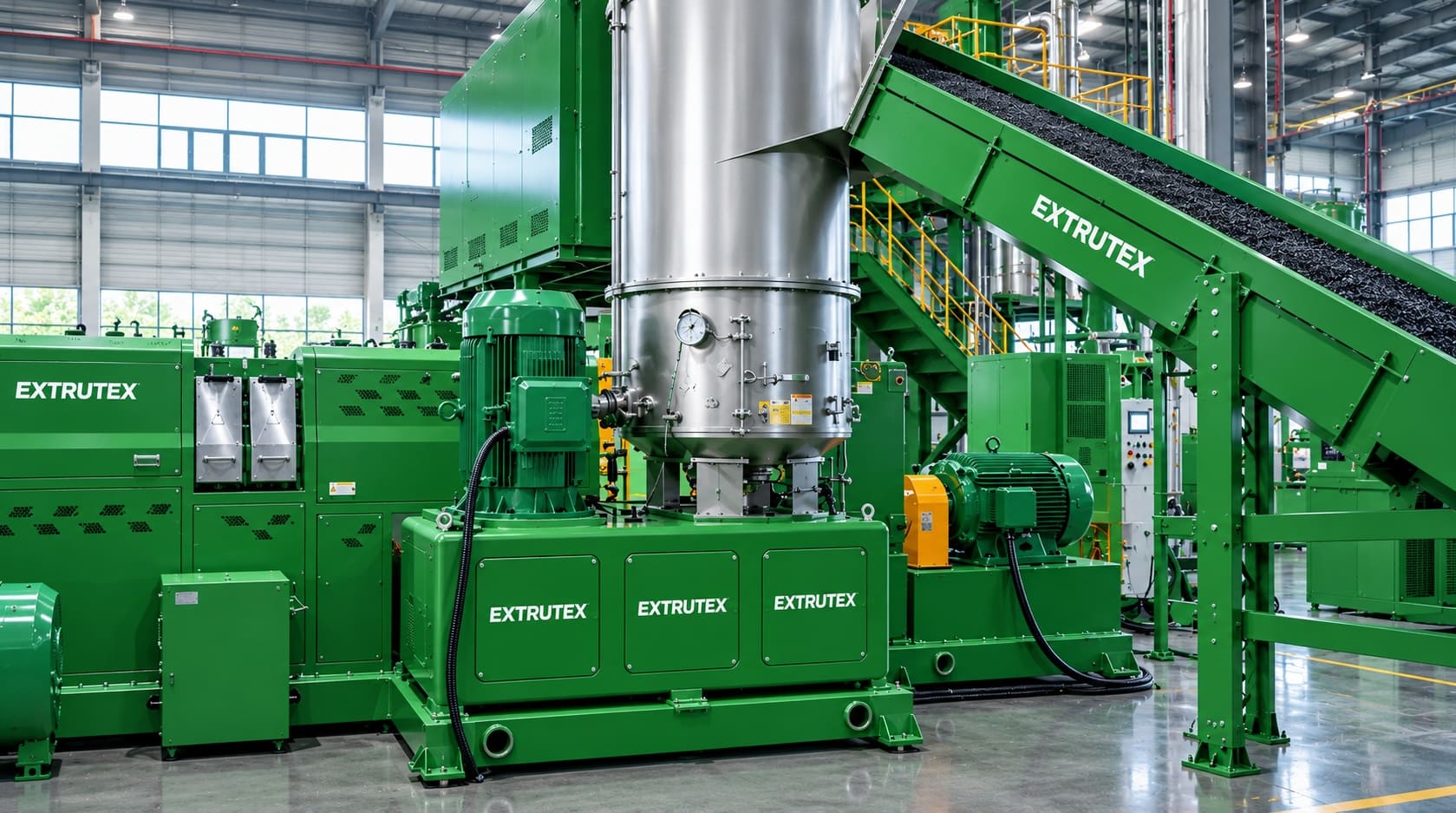
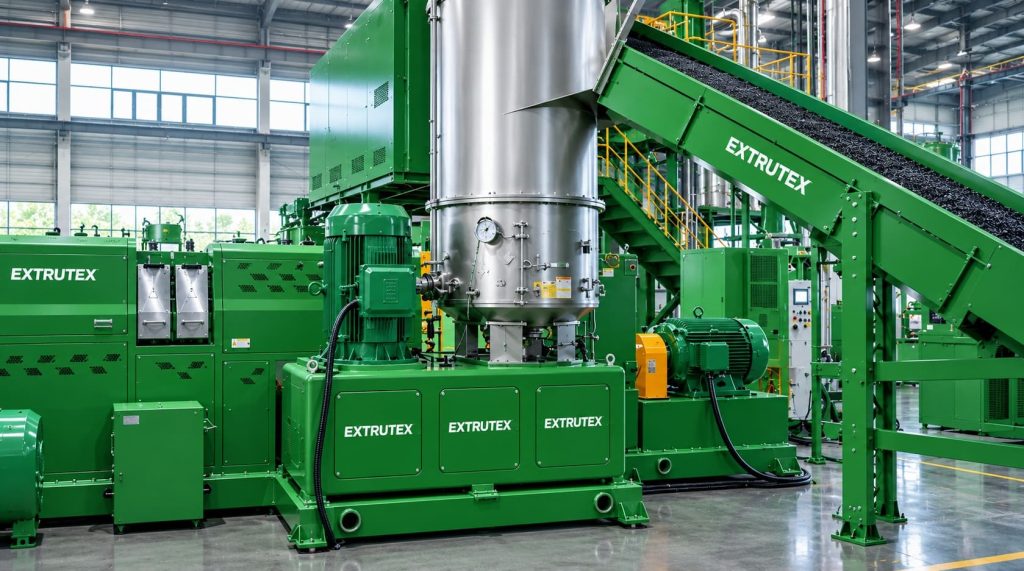
The EXTRUTEX Agglomeration Pelletizing Machine is an advanced recycling solution developed for converting lightweight, difficult-to-feed plastic waste into consistent, process-ready recycled pellets. The system is particularly suitable for polyethylene (PE) and polypropylene (PP) films, woven sacks, non-woven materials, fibers and other low-bulk-density plastic waste that can be challenging to process with conventional extrusion equipment.
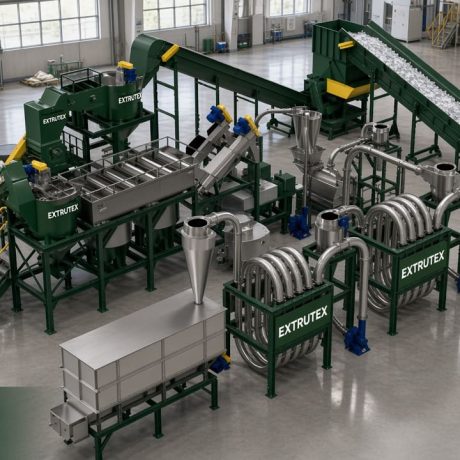
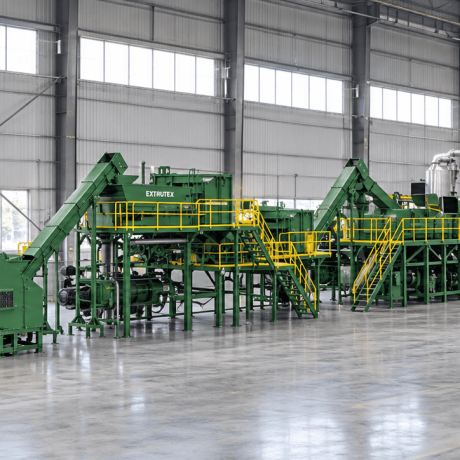
Designed by EXTRUTEX engineering teams in Austria and manufactured in Nanjing and Shanghai, China, the system combines material preparation, densification, controlled feeding, melting, extrusion, filtration and pelletizing into one integrated recycling process. The result is a stable and highly productive recycling line capable of transforming loose plastic waste into uniform pellets suitable for subsequent extrusion, injection molding, blow molding and other plastic processing applications.
Unlike conventional recycling systems that rely heavily on separate shredding and drying equipment, the EXTRUTEX agglomeration concept uses controlled mechanical energy inside the compaction chamber. High-speed rotating knives reduce the material size while friction generates heat, helping remove residual moisture and increasing the apparent bulk density of the feedstock. This creates a more consistent material stream for the extrusion stage and improves overall line stability.
Flexible plastic waste presents a particular challenge in recycling applications. Films and woven materials occupy a large volume while carrying relatively little weight. Their irregular shape can make continuous feeding difficult, and conventional extruders may struggle to maintain a stable feed rate when the incoming material has a very low bulk density.
The EXTRUTEX agglomeration system addresses this problem by conditioning the material before it reaches the melting zone. Inside the agglomerator, rotating knives interact with fixed blades to cut, mix and compact the plastic. Mechanical friction raises the material temperature while controlled airflow and cooling management prevent excessive heating.
As the material becomes warmer, the film begins to soften and shrink. Its volume is reduced while its apparent density increases. This transformation makes lightweight film much easier to transport and continuously feed into the extruder.
The result is a controlled feedstock with improved feeding characteristics, better extrusion stability and reduced dependence on separate pre-treatment equipment.
The EXTRUTEX system can be configured for a wide range of flexible and lightweight plastic waste streams. Typical applications include:
Actual throughput and processing configuration depend on polymer type, contamination level, moisture content, material thickness, bulk density and the required quality of the recycled pellets. EXTRUTEX can engineer the complete line around the characteristics of the customer's feedstock rather than relying on a one-size-fits-all configuration.
The central advantage of the EXTRUTEX design is the close integration between material densification and extrusion. Loose film enters the agglomeration chamber, where mechanical action reduces its volume and improves its feeding characteristics. The conditioned material is then transferred toward the extrusion section for controlled melting, homogenization, filtration and pelletizing.
This arrangement can significantly simplify the recycling process. By improving the bulk density before extrusion, the system can achieve a more stable material supply and reduce fluctuations caused by lightweight film bridging, inconsistent feeding or uncontrolled material accumulation.
Depending on the application, EXTRUTEX can engineer the system as a single-stage extrusion line or as a two-stage configuration. The two-stage arrangement provides additional flexibility for applications where stronger devolatilization, filtration, homogenization or melt stabilization is required.
One of the important advantages of the EXTRUTEX platform is that the main extrusion technology does not have to be limited to a conventional single-screw extruder. Depending on the polymer, contamination level, required mixing performance and final pellet quality, the extrusion section can be configured with different processing technologies.
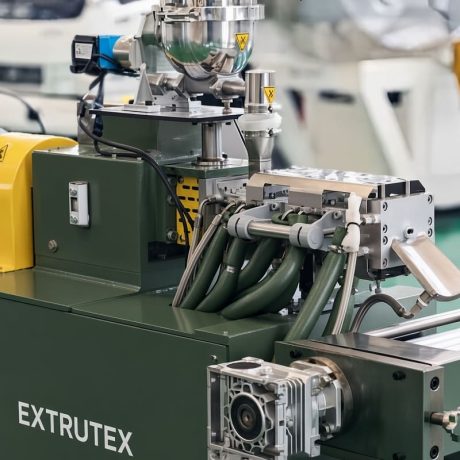
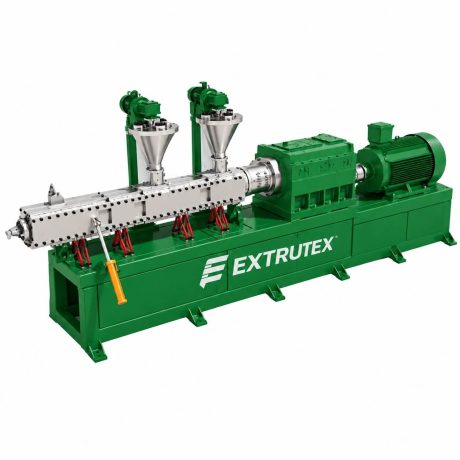
The standard configuration uses an EXTRUTEX single-screw extruder for reliable melting and continuous conveying. It is a practical solution for many PE and PP film recycling applications where the incoming material has already been properly sorted and the process does not require intensive compounding.
The single-screw design offers a relatively straightforward process layout, robust operation and efficient continuous conveying. Different screw geometries can be selected according to polymer type, melt temperature and required output.
For materials requiring gentler processing, improved dispersion or controlled shear, the single-screw extruder can be replaced with an EXTRUTEX co-kneader.
The co-kneader combines reciprocating screw movement with rotary shear to provide intensive yet controllable mixing. This configuration can be particularly useful for recycling applications involving sensitive formulations, additives, fillers or materials where temperature and shear management are important.
The co-kneader option also provides greater flexibility when the recycling process is combined with compounding, additive incorporation or material upgrading.
For demanding recycling and compounding applications, the extrusion stage can alternatively be equipped with an EXTRUTEX co-rotating twin-screw extruder.
The twin-screw platform provides excellent mixing, dispersion and process flexibility. Its modular screw configuration allows the processing section to be adapted for different materials and formulations. It is especially advantageous when recycled polymers need to be combined with additives, fillers, colorants, compatibilizers or other polymers.
Therefore, the EXTRUTEX agglomeration platform can be configured around the actual production objective: economical film recycling with a single screw, controlled processing with a co-kneader, or advanced recycling and compounding with a co-rotating twin screw.
The single-stage configuration is intended for applications where the pre-treated material can be efficiently melted, filtered and pelletized within one main extrusion stage. It provides a compact production arrangement while maintaining continuous material preparation and extrusion.
EXTRUTEX offers several output classes ranging from approximately 300 kg/h to 1,300 kg/h. The exact production rate depends on the material and operating conditions.
| EXTRUTEX Model | Main Extruder Power | Agglomerator Power | Approx. Capacity | Extruder L/D |
|---|---|---|---|---|
| EX100 | 90 / 110 kW | 55 kW | 300–380 kg/h | 36:1 |
| EX125 | 160 / 185 kW | 90 / 110 kW | 500–650 kg/h | 36:1 |
| EX150 | 185 / 220 kW | 90 / 110 kW | 550–700 kg/h | 36:1 |
| EX160 | 250 / 280 kW | 132 / 160 kW | 850–1,000 kg/h | 36:1 |
| EX180 | 280 / 315 kW | 160 / 200 kW | 1,000–1,300 kg/h | 36:1 |
When the recycling application requires greater control over melting, homogenization, filtration and melt quality, EXTRUTEX can supply a two-stage extrusion configuration.
In this arrangement, the first extrusion stage performs the primary melting and conveying process while the second stage provides additional melt handling and stabilization. This configuration can be beneficial for challenging recycled feedstocks where volatile components, contamination or inconsistent material properties require additional processing control.
| EXTRUTEX Configuration | Stage 1 Power | Stage 2 Power | Agglomerator Power | Approx. Capacity | L/D |
|---|---|---|---|---|---|
| EX100 + EX120 | 90 / 110 kW | 30 kW | 55 kW | 300–380 kg/h | 36:1 / 10:1 |
| EX125 + EX150 | 160 / 185 kW | 37 kW | 90 / 110 kW | 500–650 kg/h | 36:1 / 10:1 |
| EX150 + EX180 | 185 / 220 kW | 55 kW | 90 / 110 kW | 550–700 kg/h | 36:1 / 10:1 |
| EX160 + EX200 | 250 / 280 kW | 90 kW | 132 / 160 kW | 850–1,000 kg/h | 36:1 / 10:1 |
| EX180 + EX200 | 280 / 315 kW | 110 kW | 160 / 200 kW | 1,000–1,300 kg/h | 36:1 / 10:1 |
The values above represent standard configuration ranges. EXTRUTEX can modify the system according to the customer's material analysis, desired capacity and pellet quality requirements.
The agglomerator is one of the most important components of the line. Lightweight film and fiber materials enter the chamber in a loose condition. A high-speed rotor equipped with cutting knives works against stationary knives mounted inside the chamber.
This mechanical interaction rapidly reduces the material size while creating controlled frictional energy. The resulting heat softens and shrinks the plastic film, increasing the bulk density of the material and preparing it for stable extrusion.
The process simultaneously performs several functions:
Because the material is conditioned before extrusion, the main extruder receives a more uniform feed. This can improve throughput stability and reduce interruptions associated with lightweight film feeding.
Temperature management is essential when processing flexible plastics. Excessive frictional heating can cause premature melting inside the agglomerator, while insufficient heat generation may result in poor densification.
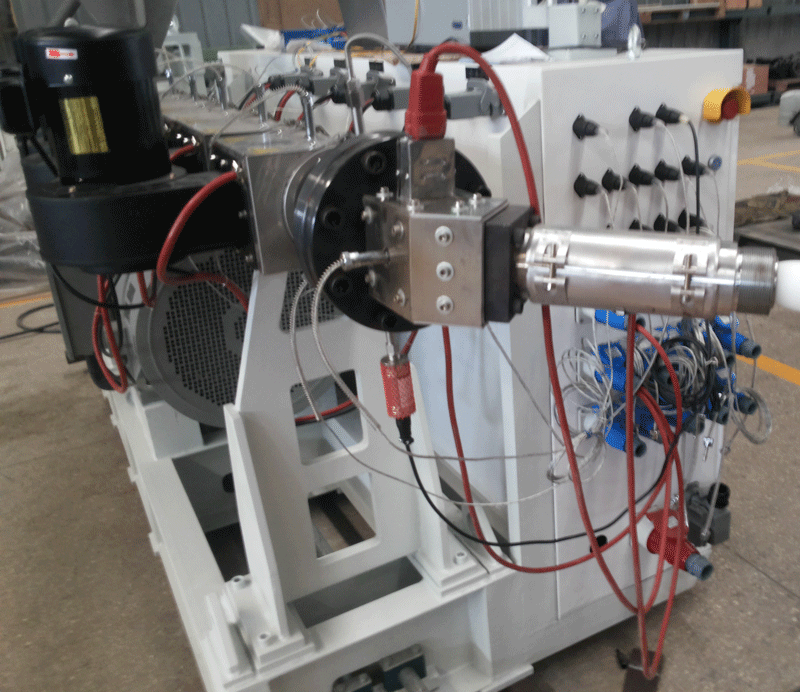
EXTRUTEX agglomeration systems therefore incorporate controlled temperature monitoring and cooling. Individual process control allows the operating temperature to be adjusted according to the polymer and material condition.
Cooling fans can remove excess heat from the chamber when necessary, helping maintain a stable operating window. The combination of mechanical energy, temperature measurement and controlled cooling provides repeatable material conditioning.
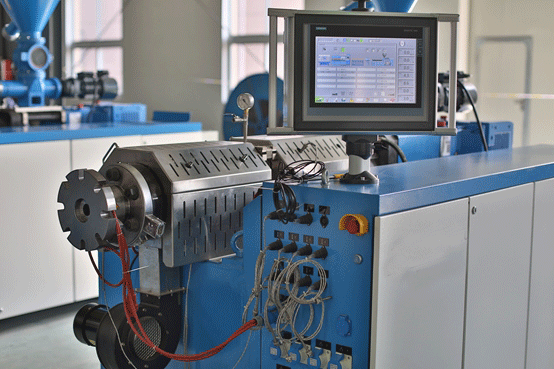
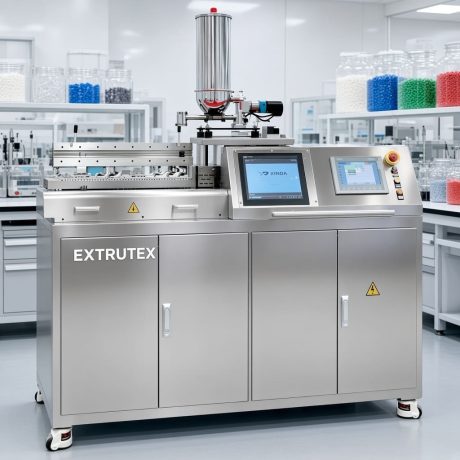
The EXTRUTEX recycling line is equipped with an integrated PLC control architecture for coordinated operation of the material feeding, agglomeration, extrusion and pelletizing sections.
Automatic control helps maintain stable material flow and allows important operating parameters to be monitored from a centralized interface. Depending on the selected configuration, the control system can manage temperature zones, motor loading, feeding speed, agglomerator operation, cooling and other critical process functions.
This reduces unnecessary manual intervention and makes the line easier to operate for both experienced recycling specialists and production teams working with standardized recipes.
Plastic waste often contains paper, dust, aluminum fragments, labels, organic residues and other contaminants. The filtration system therefore plays an important role in determining the final pellet quality.
EXTRUTEX can configure the pelletizing line with filtration technologies selected according to the contamination level and polymer characteristics. Screen changers, melt filtration systems and degassing arrangements can be incorporated where required.
For heavily contaminated post-consumer material, a more advanced filtration arrangement may be recommended. For clean post-industrial film scrap, a simpler filtration configuration can provide an economical solution.
After filtration and melt stabilization, the polymer is transformed into pellets using a pelletizing system selected according to the polymer and production requirements.
EXTRUTEX can engineer the downstream pelletizing section to produce uniform recycled pellets suitable for storage, transportation and further processing. Pellet dimensions and cooling arrangements can be adapted to the material and end-use requirements.
The EXTRUTEX agglomeration pelletizing platform is suitable for recycling operations serving a wide variety of industries.
EXTRUTEX combines European engineering principles with cost-effective manufacturing capabilities in China. The machines are designed with attention to mechanical reliability, process stability, serviceability and long-term industrial operation.
The engineering concept is developed under EXTRUTEX Austria design standards, while manufacturing and assembly are carried out through production facilities in Nanjing and Shanghai, China.
This combination allows EXTRUTEX to offer industrial recycling equipment with a balance between engineering quality, customization, production capacity and investment cost.
| Item | EXTRUTEX Configuration |
|---|---|
| Machine Type | Agglomeration Pelletizing Machine |
| Primary Materials | PE, PP, BOPP, selected PET, PA66 and flexible plastic waste |
| Feed Materials | Films, woven bags, non-woven fabrics, fibers and production scrap |
| Extrusion Technology | Single Screw / Co-Kneader / Co-Rotating Twin Screw |
| Configuration | Single Stage or Double Stage |
| Extruder L/D | 36:1 standard single-stage / 36:1 + 10:1 double-stage configuration |
| Capacity Range | Approximately 300–1,300 kg/h |
| Agglomeration | High-speed rotary knife and stationary knife system |
| Pre-Treatment | Cutting, mixing, heating, drying assistance and densification |
| Temperature Control | Controlled monitoring with cooling fan system |
| Control System | Automatic PLC control with centralized operation |
| Filtration | Configured according to contamination level and application |
| Pelletizing | Configured according to polymer and final pellet requirements |
| Design Origin | EXTRUTEX Austria engineering design |
| Manufacturing | Nanjing and Shanghai, China |
No two plastic recycling streams are exactly the same. Film thickness, moisture, contamination, polymer grade, printing ink, additives and bulk density can all influence the correct machine configuration.
For this reason, EXTRUTEX approaches agglomeration pelletizing as an engineered process rather than simply supplying a standard machine. The agglomerator size, extrusion technology, screw design, filtration system, degassing arrangement, pelletizing technology and control strategy can be selected according to the actual feedstock.
Customers can choose between the economical single-screw configuration, the controlled processing characteristics of a co-kneader, or the advanced mixing and compounding capabilities of a co-rotating twin-screw extruder.
The objective is simple: convert difficult low-density plastic waste into a stable, uniform and commercially useful recycled pellet while maintaining reliable industrial production.
From lightweight PE film and PP woven bags to demanding flexible plastic waste streams, the EXTRUTEX agglomeration pelletizing system provides a complete route from loose waste material to reusable polymer pellets.
The combination of mechanical agglomeration, controlled pre-heating, densification, automatic feeding, efficient extrusion, melt filtration and pelletizing creates a compact and highly adaptable recycling platform.
With Austria-designed engineering and manufacturing in Nanjing and Shanghai, China, EXTRUTEX provides recycling machinery engineered for today's demanding plastics industry—with the flexibility to configure the extrusion section around the material, capacity and final product requirements.
There are no reviews yet.
By submitting your email, you agree to our company’s terms and conditions.
We are not looking to sell; we are here to provide you with the best support and service.
Contact available 24/7
Please do not contact us for advertising or sales inquiries
All rights of this website are reserved for EXTRUTEX Austria and its partner companies, © 2026
-
(0 customer reviews)