No products in the cart.


All rights of this website are reserved for EXTRUTEX Austria and its partner companies, © 2026

Multiple Payment Methods

Discount for advance payments over 50%

Free Shipping Coordination Services
Payment methods:
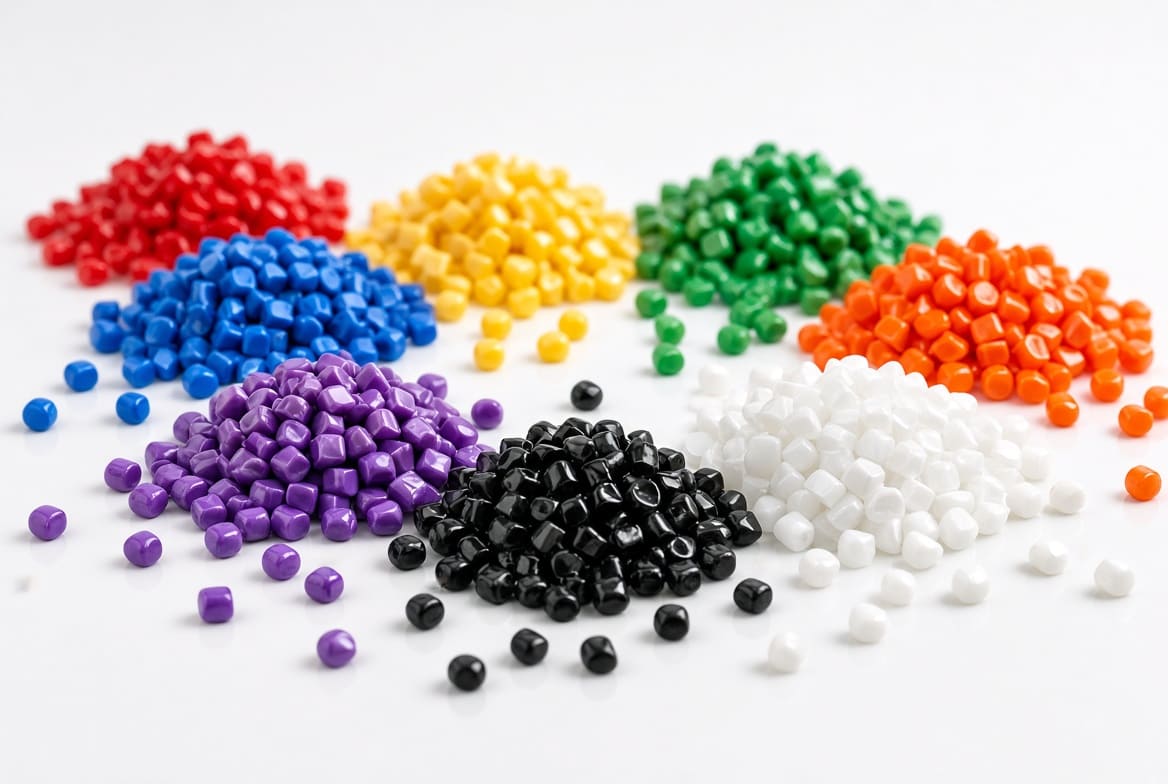
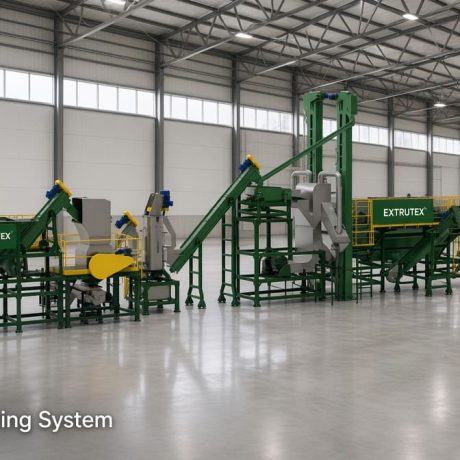
The EXTRUTEX PO Rigid Plastic Recycling & Washing Line is an advanced recycling system designed for the recovery and cleaning of post-consumer rigid polyolefin plastics. The system is engineered to transform contaminated plastic waste into clean, low-odor recycled flakes or pellets suitable for a wide range of industrial applications.
Post-consumer rigid plastics are valuable secondary raw materials, but they often arrive with significant contamination. Milk tea cups, ice cream cups, oil bottles, chemical drums, detergent bottles, flower pots, pallets, pipes, crates and basins can contain paper labels, printing ink, grease, food residues, dust and other contaminants. A successful recycling process therefore requires more than simple crushing and rinsing.
EXTRUTEX combines controlled size reduction, intensive washing, specially developed hot-washing technology, friction cleaning, vertical dewatering and intelligent water and chemical circulation. The result is a compact and efficient recycling solution focused on high cleaning performance, reduced resource consumption and stable downstream pelletizing.
The system is available in multiple production capacities from 500 kg/h to 4,500 kg/h, allowing the technology to be configured for different recycling plant sizes and feedstock volumes.
```Rigid polyolefin waste represents one of the most important streams in modern plastic recycling. HDPE and PP products are widely used in household packaging, industrial containers, logistics products and consumer goods. After use, however, these products can become heavily contaminated and require intensive preparation before they can be returned to manufacturing.
The EXTRUTEX recycling concept is designed around this challenge. Instead of relying on a single washing stage, the system combines mechanical cleaning, thermal cleaning, friction washing and efficient dewatering. Each stage has a defined purpose and contributes to the final quality of the recycled material.
The system is particularly suitable for post-consumer rigid plastics where appearance, cleanliness, odor and melt filtration performance are important. Depending on the feedstock and target application, the finished material can be supplied as washed flakes or transferred directly to a pelletizing system.
The PO Rigid Plastic Recycling & Washing Line can process a broad range of post-consumer rigid polyolefin materials. Typical feedstocks include:
The exact equipment configuration depends on the polymer composition, contamination level, product dimensions, moisture content and required output quality. Feedstock testing is recommended when the input contains multiple plastic types or unusually high levels of contamination.
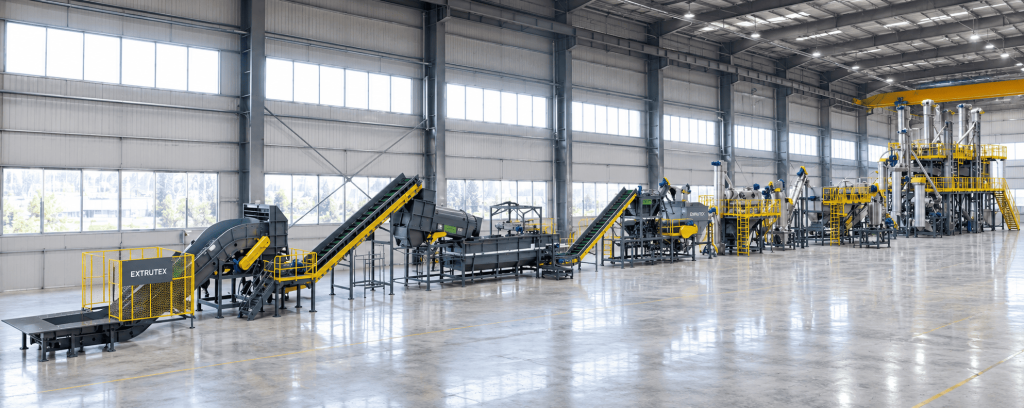
The above process represents a typical configuration. EXTRUTEX can modify the equipment arrangement according to the customer's material and final product requirements. Additional sorting, metal separation, drying or pelletizing equipment can be integrated when required.
The recycling process begins with a controlled feeding system designed to provide a stable flow of post-consumer rigid plastics into the line. Incoming materials may contain containers, caps, labels, food residues, dust, paper and other foreign materials.
Consistent feeding is important because excessive fluctuations can overload the shredder or washing equipment. The feeding section therefore helps maintain stable production while allowing operators to monitor the incoming material.
Before intensive mechanical processing, large foreign objects and unsuitable materials can be removed. This preliminary stage protects the downstream equipment and prevents unnecessary contamination from entering the washing system.
Depending on the feedstock, manual sorting, magnetic separation or additional mechanical sorting can be integrated into the line. The objective is to deliver a more consistent stream of target rigid polyolefin material to the size-reduction section.
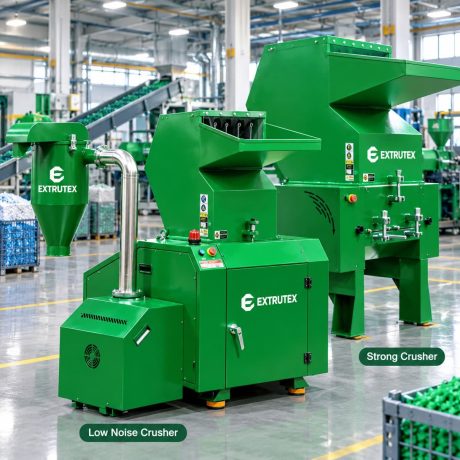
Rigid plastic products are reduced in size before washing. Shredding or crushing increases the surface area available for cleaning and creates particles that can move more effectively through the washing equipment.
Proper size reduction is especially important for containers and bulky products such as drums, bottles, crates and pallets. The particle size can be selected according to the downstream washing requirements and desired recycled-flake dimensions.
The shredding system is designed for continuous industrial operation, with robust cutting components and a configuration selected according to material hardness, thickness and production capacity.
Pre-washing removes loose dirt, dust and easily detachable contamination before the material enters the more intensive cleaning stages. This reduces the contamination load carried into the hot-washing system.
By removing part of the dirt at an early stage, the washing process can operate more efficiently and the circulating water can be managed more effectively. This contributes to lower operating costs and improved overall washing stability.
Hot washing is one of the most important technologies in the EXTRUTEX PO rigid plastic recycling system. Some post-consumer contaminants are difficult to remove with cold water alone. Printing ink, adhesive residues, grease, oil and stubborn labels can remain attached to the plastic surface.
The hot-wash module uses controlled temperature, water movement and mechanical action to soften and detach difficult contaminants. The process is engineered to achieve intensive cleaning while avoiding unnecessary damage to the plastic material.
Improved washing quality has a direct benefit for downstream pelletizing. Cleaner flakes generally reduce the contamination load entering the extruder and filtration system, helping to reduce the frequency of screen changes and supporting more stable pellet production.
Friction washing provides intensive mechanical cleaning after the main washing stage. The plastic particles are subjected to controlled mechanical friction while water carries away detached contaminants.
This process is effective for removing fine dirt, paper fragments, residual labels and other surface contamination. It complements the hot-washing process and helps improve the visual cleanliness of the final recycled flakes.
EXTRUTEX can configure the friction-washing section according to the material. For many rigid polyolefin applications, an optimized friction-washing configuration provides a more compact alternative to traditional large sink-float washing arrangements.
After intensive washing, the material is rinsed to remove residual dirt and remaining washing chemicals. Clean rinsing water helps improve the surface quality of the recycled plastic and prepares it for efficient dewatering.
The water management system can be designed with recirculation so that suitable process water is reused rather than continuously discharged. This reduces freshwater consumption and improves overall resource efficiency.
Effective water removal is essential in a modern plastic recycling line. Excessive moisture increases drying requirements and can make material transportation more difficult.
EXTRUTEX uses specially developed vertical dewatering technology to remove water efficiently while reducing material loss. The vertical configuration helps separate water from the plastic flakes while maintaining a controlled material flow.
Reduced material loss means that more valuable recycled plastic remains in the product stream instead of being discharged with process water. This can improve overall material recovery and contribute to better plant economics.
After dewatering, additional separation equipment can be included where required to remove lightweight contaminants, fines or other unwanted particles. This stage is particularly useful when the incoming post-consumer material contains a high percentage of labels or mixed foreign material.
The final separation configuration is selected according to the customer's feedstock and the required quality of the finished flakes.
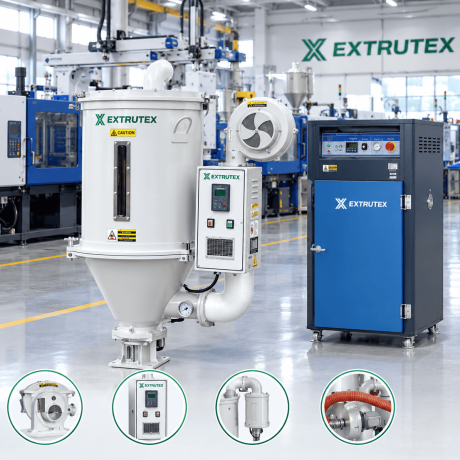
After mechanical dewatering, the recycled material can pass through a final drying section where necessary. The objective is to achieve suitable moisture levels for storage, transportation or direct feeding into a pelletizing line.
Stable moisture control is particularly important when the recycled flakes are transferred directly to extrusion. Proper preparation helps maintain consistent feeding and supports stable plasticization and filtration.
The final washed material is collected as clean recycled polyolefin flakes. Depending on the feedstock and process configuration, the material can be packed and sold as recycled raw material or transferred directly to a downstream extrusion pelletizing system.
For customers requiring higher-value recycled pellets, EXTRUTEX can integrate the washing line with a suitable recycling extruder, melt filtration system and pelletizing unit.
Water consumption is a major operating consideration in plastic washing. The EXTRUTEX system therefore incorporates water circulation and process-water management to reduce unnecessary freshwater consumption.
The integrated chemical dosing system allows cleaning chemicals to be introduced in a controlled manner. Rather than relying on uncontrolled manual dosing, the system can regulate the chemical concentration according to process requirements.
Suitable process water can also be recirculated through the washing system. This improves water utilization and reduces the amount of wastewater generated by the plant.
The combination of controlled chemical dosing and water circulation provides a practical route to lower operating costs while maintaining stable washing performance.
Traditional rigid-plastic washing systems often depend heavily on large sink-float tanks. While sink-float technology can be useful for specific separation tasks, it can also require significant floor space, water volume and infrastructure.
The EXTRUTEX approach uses specially designed low-speed friction washing where appropriate. This can provide advantages in plant layout, investment cost and operating requirements while maintaining effective mechanical cleaning.
A more compact washing configuration can simplify factory planning and reduce the amount of water required in the washing section. It can also reduce the amount of equipment that needs to be maintained and operated.
| Parameter | Specification |
|---|---|
| Product | PO Rigid Plastic Recycling & Washing Line |
| Target Materials | Post-consumer rigid PP, HDPE and other suitable polyolefin plastics |
| Typical Applications | Bottles, cups, drums, detergent containers, pallets, crates, flower pots, pipes and rigid household products |
| Available Capacities | 500 / 1,000 / 1,500 / 3,000 / 4,500 kg/h |
| Cleaning Technology | Pre-washing, hot washing, friction washing and rinsing |
| Dewatering | Vertical dewatering technology |
| Water Management | Process-water circulation and recycling |
| Chemical Management | Integrated controlled chemical dosing and circulation |
| Output | Clean, low-odor recycled flakes or downstream recycled pellets |
| Downstream Options | Pelletizing, melt filtration and recycled-material production |
| Equipment Design | Industrial mechanical, platform and electrical engineering with CE-oriented design requirements |
| Research & Laboratory | EXTRUTEX Austria |
| Manufacturing | China |
Clean recycled polyolefin flakes or pellets can be used for selected non-food-contact packaging applications. Potential products include chemical drums, lubricant oil bottles, detergent containers and other industrial packaging where recycled material specifications are appropriate.
Recycled PP and HDPE are widely used for industrial products that require strength, durability and cost-effective material performance. Potential applications include logistics pallets, crates, industrial containers and selected molded components.
Depending on the polymer composition and final material properties, recycled polyolefin can also be used in selected construction-related products such as pipes, profiles and other extruded components.
The final application should always be selected according to the composition and quality of the recycled material, as well as the mechanical, chemical and regulatory requirements of the finished product.
Water recycling allows a significant portion of suitable process water to remain within the washing system. This improves water utilization and reduces the need for continuous freshwater supply.
Controlled chemical dosing and recirculation reduce unnecessary chemical consumption. The system can maintain a more consistent washing environment without excessive manual intervention.
The combination of hot washing and friction washing provides a stronger cleaning process for difficult contaminants such as ink, paper labels and grease. This improves the appearance and cleanliness of the finished recycled material.
Better washing performance reduces the amount of contamination entering the downstream recycling extruder. As a result, the melt filtration system can operate more efficiently, potentially reducing the frequency of screen changes and associated downtime.
The use of optimized low-speed friction washing can reduce the reliance on large traditional sink-float systems. This can provide advantages in floor-space requirements, initial investment and ongoing operating costs.
EXTRUTEX designs the recycling system for continuous industrial operation. Mechanical structures, service platforms and electrical systems are engineered with attention to operator safety, equipment accessibility and long-term reliability.
The compact equipment arrangement can simplify factory installation and maintenance. Safety systems, emergency stops, electrical interlocks and centralized control can be incorporated according to the project requirements.
Mechanical, platform and electrical design follows applicable CE-oriented engineering and safety requirements. The final machine configuration is engineered according to the regulations and standards applicable to the destination market.
EXTRUTEX develops plastic recycling solutions with research and laboratory activities in Austria and industrial manufacturing in China. The Austrian research and laboratory operation supports process development, material evaluation and recycling technology optimization.
Manufacturing in China provides scalable industrial production and competitive equipment manufacturing for international recycling projects. The combination of Austrian research capabilities and Chinese manufacturing allows EXTRUTEX to develop practical recycling systems while maintaining strong cost-performance ratios.
The EXTRUTEX PO Rigid Plastic Recycling & Washing Line is designed to turn difficult post-consumer rigid polyolefin waste into a valuable recycled raw material. Its combination of intensive washing, hot cleaning, friction washing, vertical dewatering, water recycling and controlled chemical dosing provides a balanced solution for modern recycling plants.
From 500 kg/h compact systems to large 4,500 kg/h industrial configurations, the line can be engineered around the customer's available feedstock, production target and final product requirements.
For recycling companies processing milk containers, ice cream cups, oil bottles, chemical drums, detergent bottles, flower pots, pallets, crates, pipes and similar rigid plastic products, EXTRUTEX provides a complete technology platform focused on efficient processing, reduced operating costs and higher recycled-material value.
EXTRUTEX can engineer a complete PO rigid plastic recycling and washing solution according to your material, required capacity and target recycled-product quality.
Send your material information, estimated contamination level, required production capacity and intended application to the EXTRUTEX engineering team for process evaluation and equipment configuration.
```
There are no reviews yet.
By submitting your email, you agree to our company’s terms and conditions.
We are not looking to sell; we are here to provide you with the best support and service.
Contact available 24/7
Please do not contact us for advertising or sales inquiries
All rights of this website are reserved for EXTRUTEX Austria and its partner companies, © 2026
-
(0 customer reviews)