No products in the cart.


All rights of this website are reserved for EXTRUTEX Austria and its partner companies, © 2026


Multiple Payment Methods

Discount for advance payments over 50%

Free Shipping Coordination Services
Payment methods:


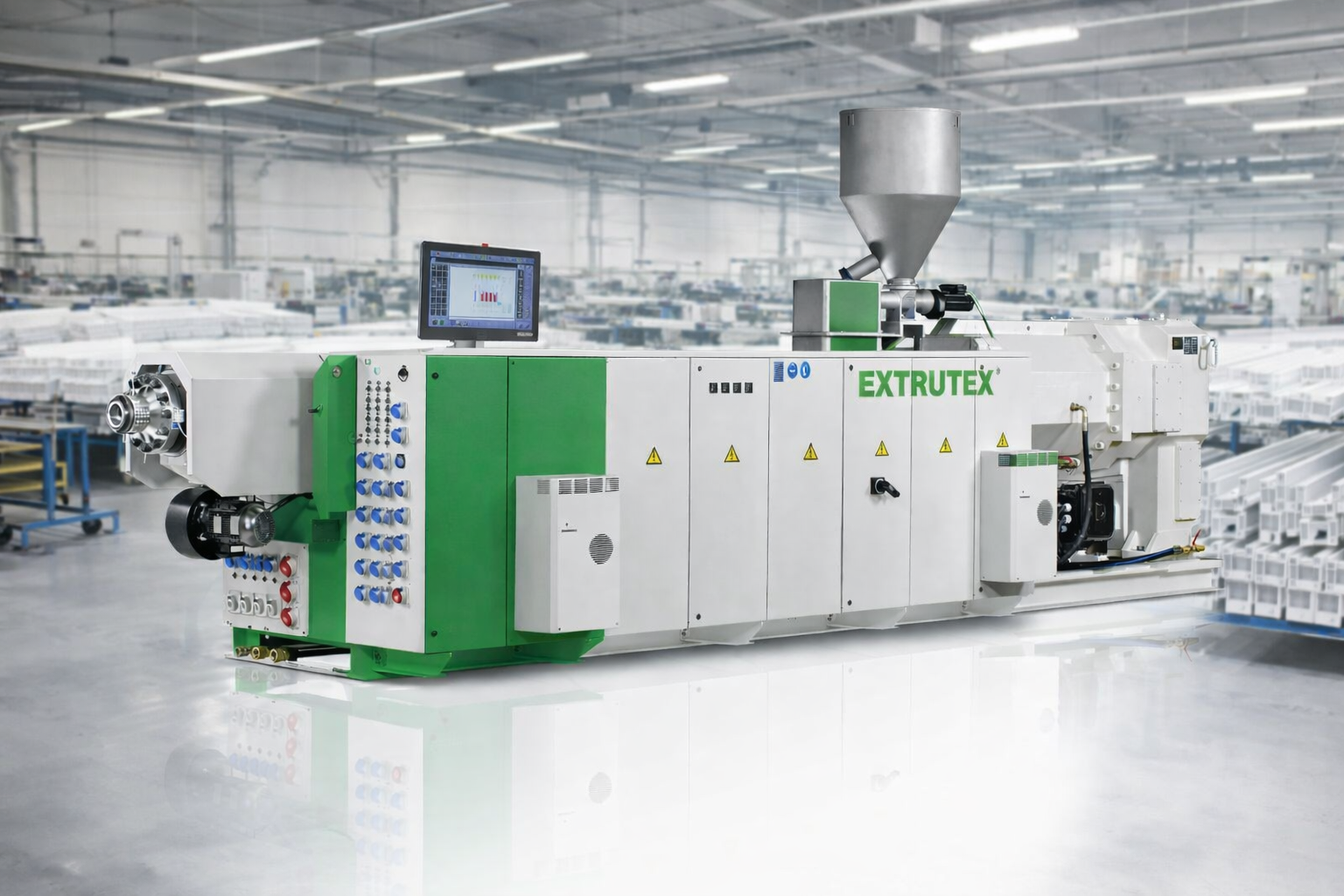
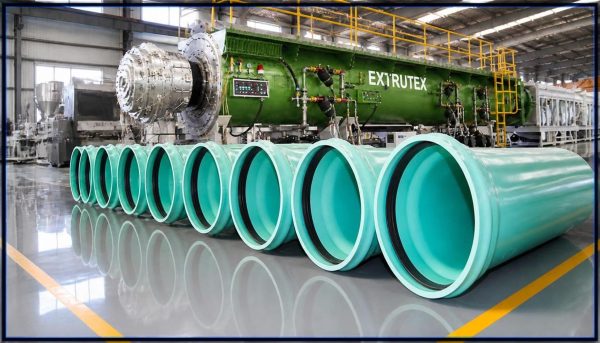
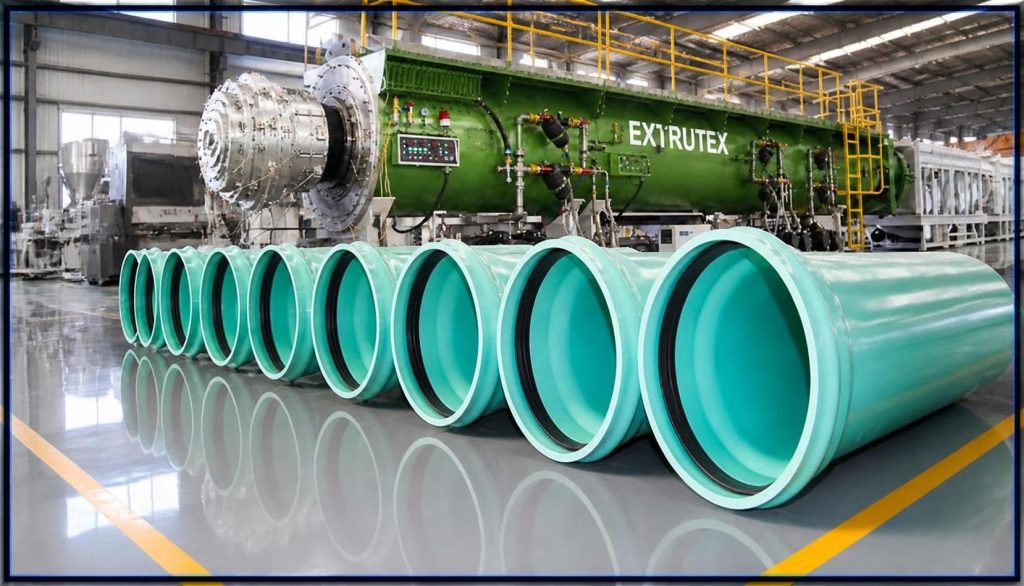
EXTRUTEX PVC Pipe Extrusion Lines are designed for the continuous production of high-quality rigid PVC pipes for water supply, drainage, sewerage, electrical conduit, building services, industrial applications and infrastructure projects. Using specialized conical or parallel twin-screw extrusion technology, integrated pipe tooling and coordinated downstream equipment, EXTRUTEX provides production solutions for pipe diameters from 16 mm to 1500 mm, with customized configurations available according to project requirements.
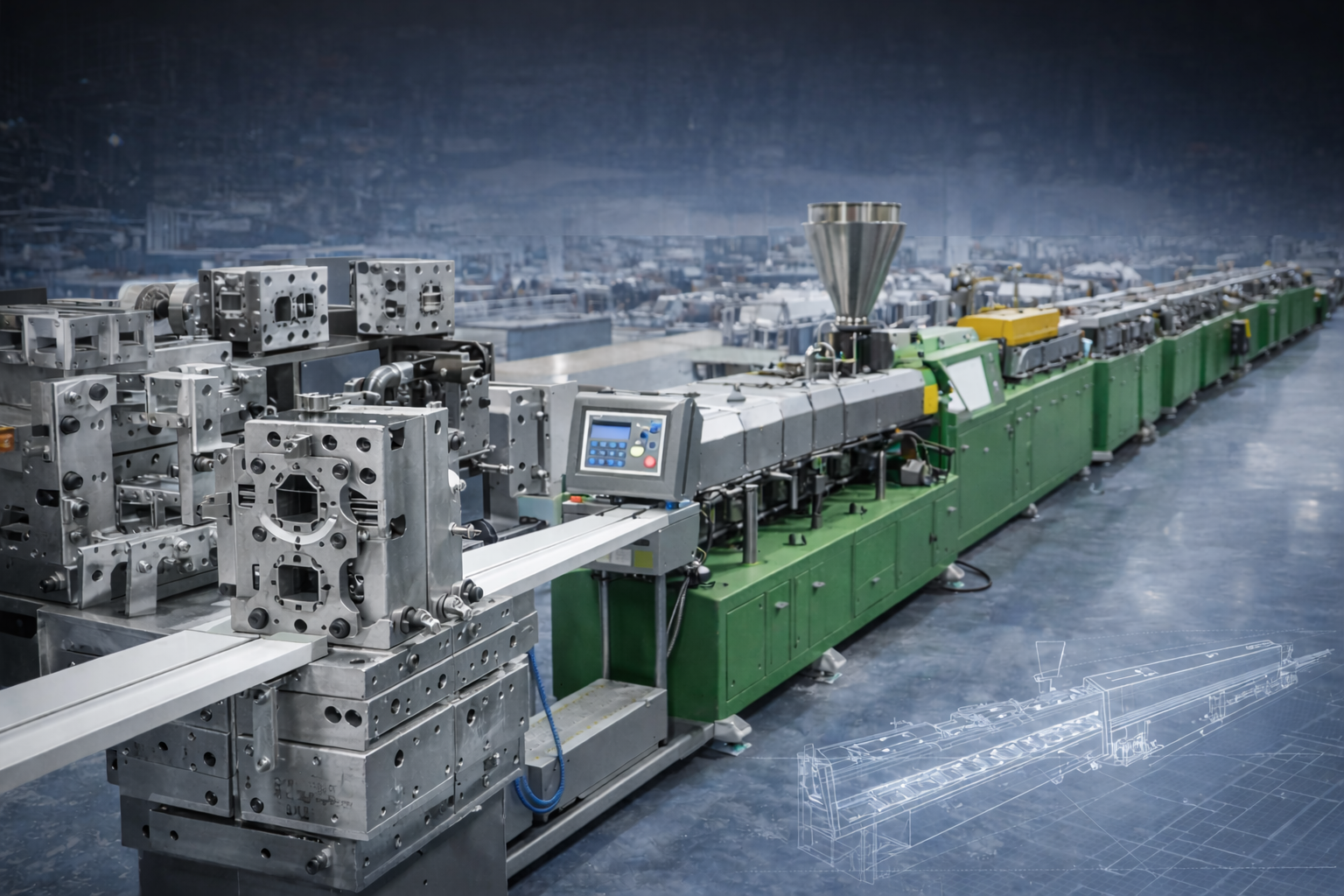
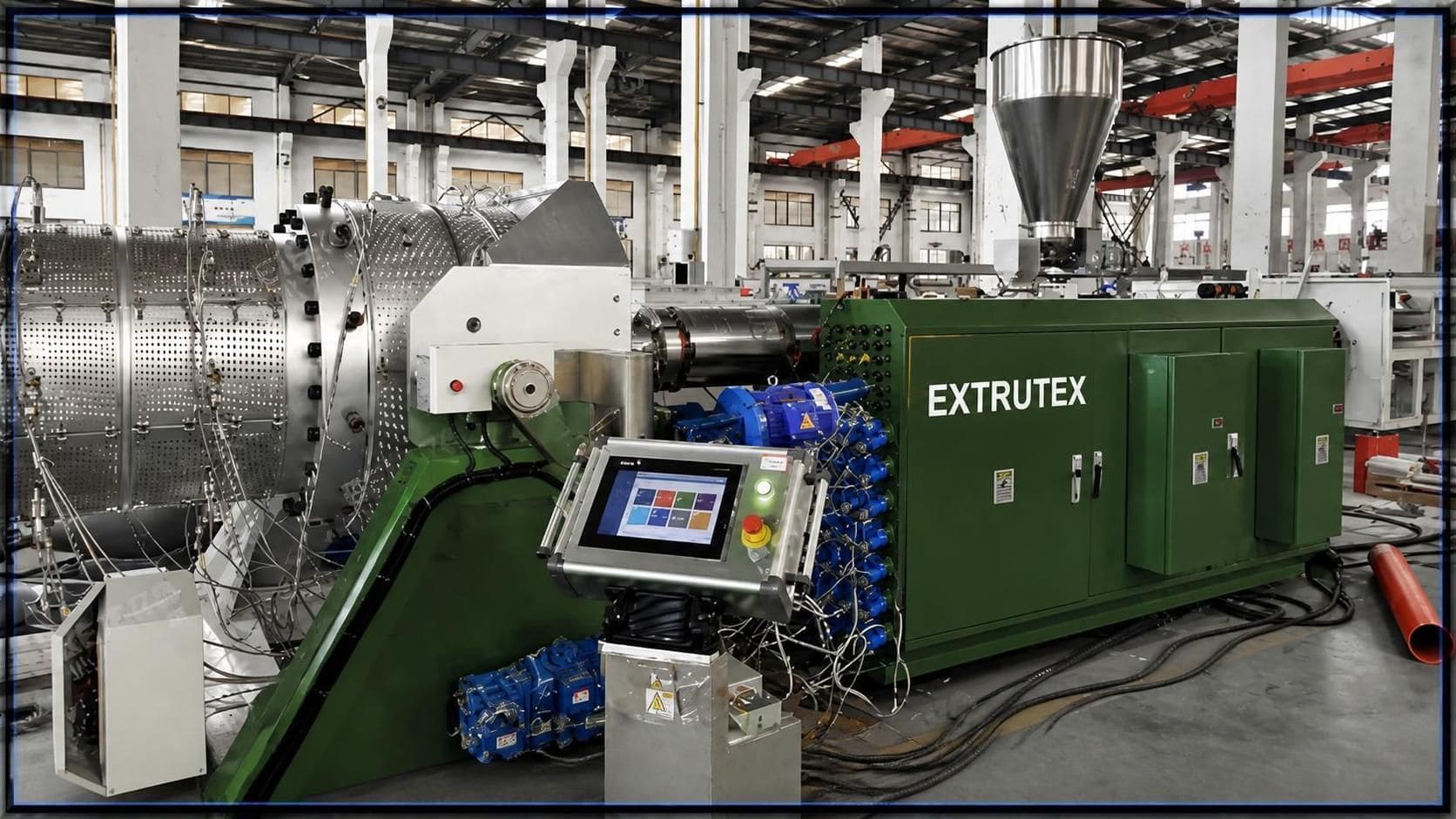
Our complete PVC pipe extrusion systems can include a twin-screw extruder, automatic feeding system, PVC pipe die head, vacuum calibration tank, spray cooling tank, haul-off unit, planetary cutting saw, pipe collection table and optional automatic pipe belling machine. Every component is selected according to the pipe diameter, wall thickness, PVC compound formulation, production capacity and finished-pipe requirements.
EXTRUTEX offers equipment configurations for UPVC (unplasticized polyvinyl chloride), CPVC (chlorinated polyvinyl chloride) and other suitable rigid PVC formulations. Our engineering approach considers the different processing characteristics of these materials, helping customers select the appropriate screw and barrel, extrusion tooling, temperature control, cooling arrangement and downstream equipment.
With Austrian design, laboratory and R&D capabilities and manufacturing in China, EXTRUTEX develops extrusion solutions for pipe manufacturers serving different markets. From compact electrical conduit lines to high-output pressure pipe systems and customized large-diameter installations, our objective is to provide a coordinated production line suited to the customer's actual manufacturing requirements.
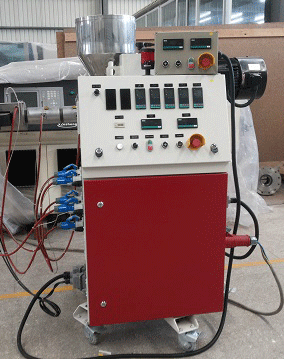
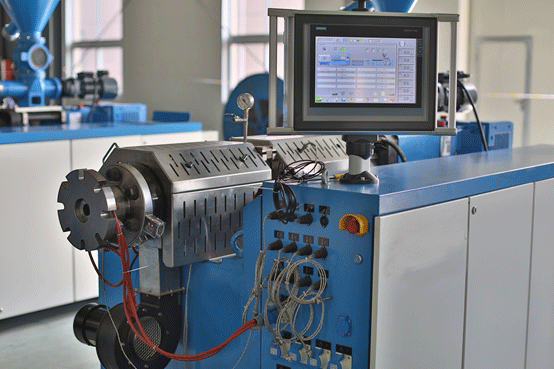
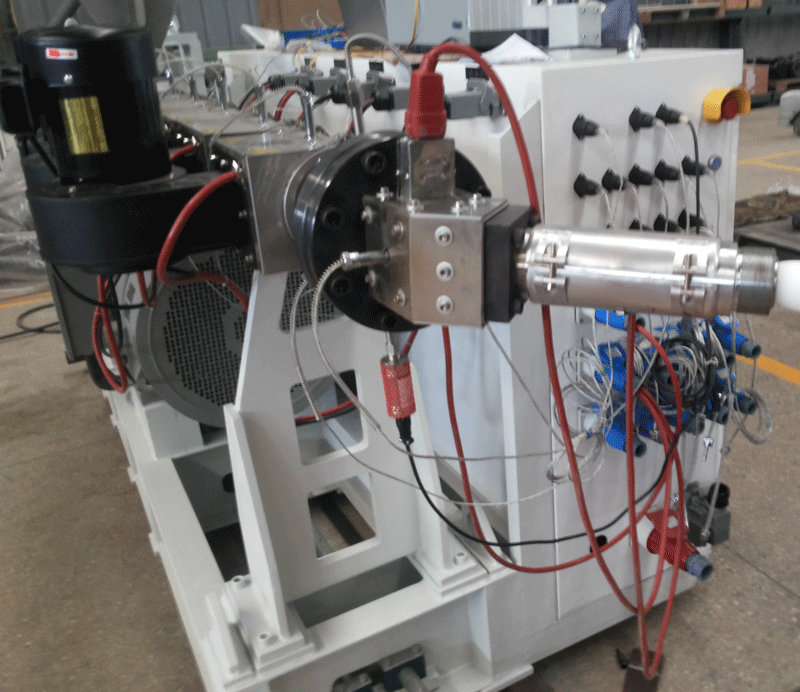
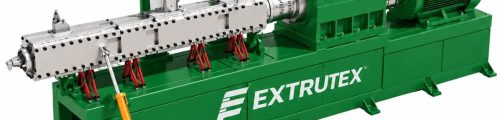
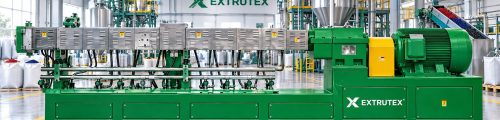
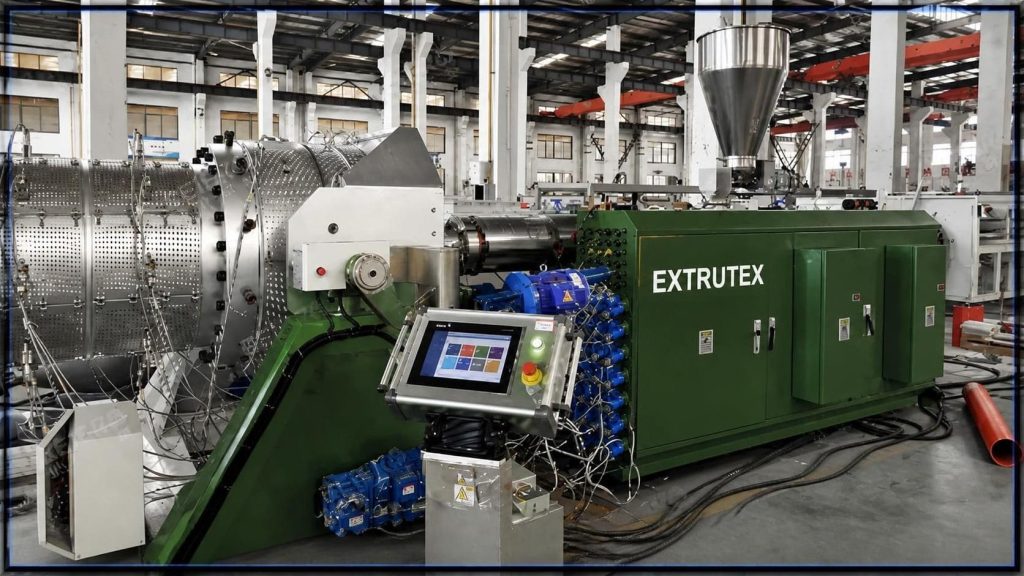
The twin-screw extruder is the central processing unit of a rigid PVC pipe production line. PVC compounds have different processing characteristics from polyethylene, so the extrusion system must provide controlled melting, effective homogenization and stable melt delivery while limiting excessive thermal and mechanical degradation.
EXTRUTEX uses specialized twin-screw extrusion configurations for PVC pipe production. The established machine range includes the 75/26R, 90/26R, 114/36R and 130/26R configurations, selected according to the required throughput, pipe dimensions and application.
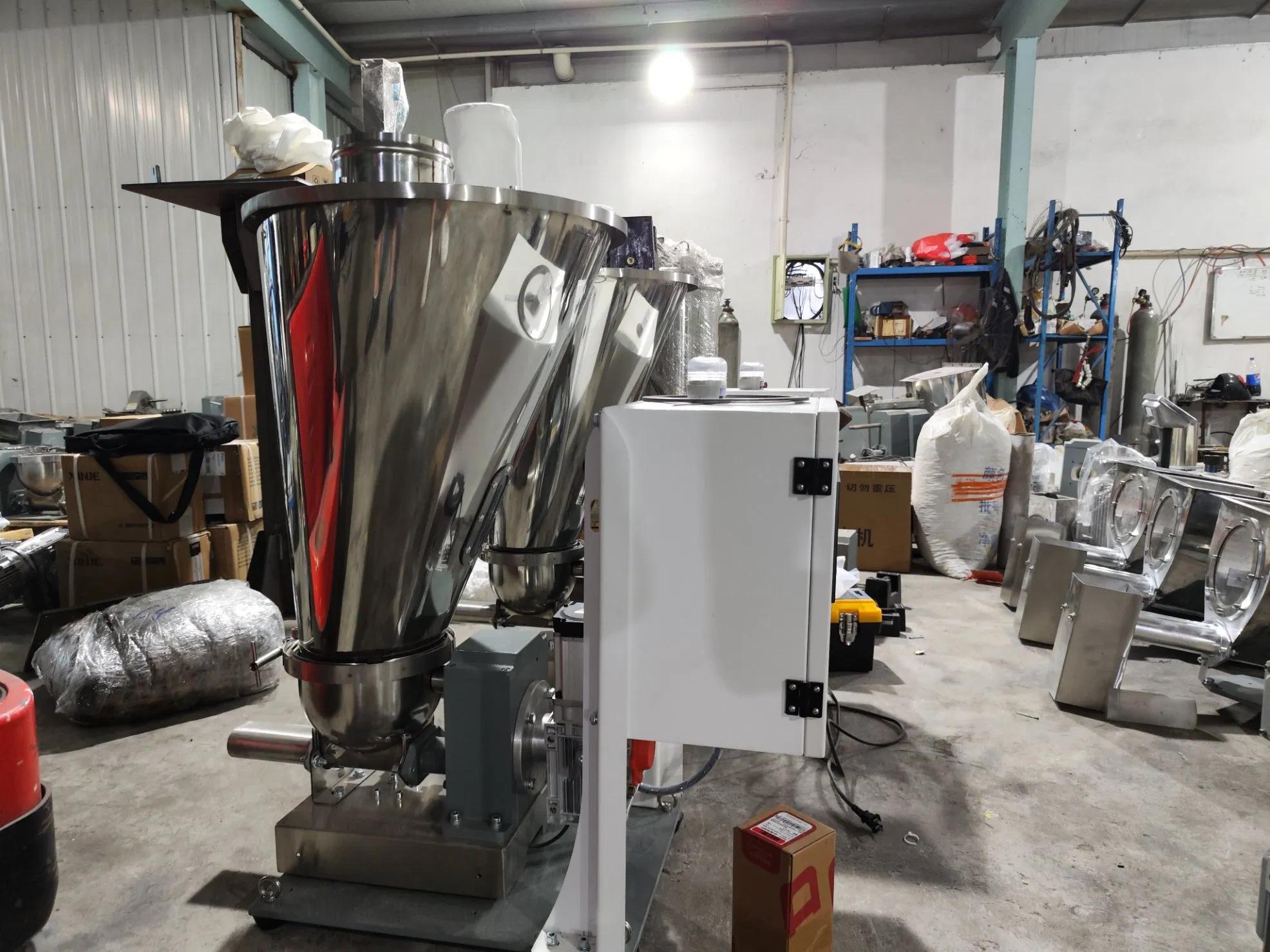
The screw and barrel design, screw geometry, processing temperature, drive capacity and feeding arrangement must match the selected PVC formulation. Depending on the project, the extruder can be configured with controlled barrel heating and cooling, variable-speed drive, temperature monitoring, a vacuum or gravimetric feeding arrangement where appropriate, and integrated line control.
For small-diameter pipes, the focus is on stable extrusion, accurate dimensions and efficient production across different pipe sizes. For medium- and large-diameter pipes, the system must provide sufficient material throughput and consistent melt distribution to maintain uniform pipe walls and stable downstream operation.
CPVC compounds generally require particular attention to thermal stability, processing temperature and residence time. A CPVC line should therefore be engineered and validated for the selected compound rather than assumed to use identical processing settings to a standard UPVC line.
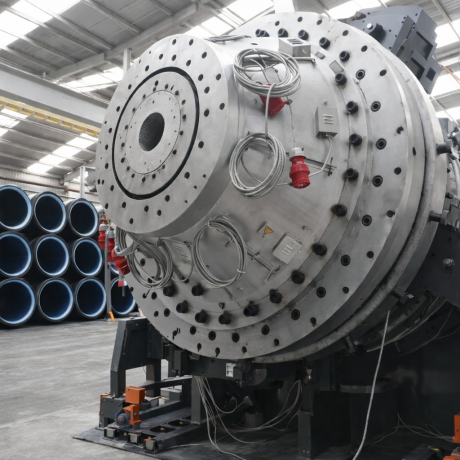
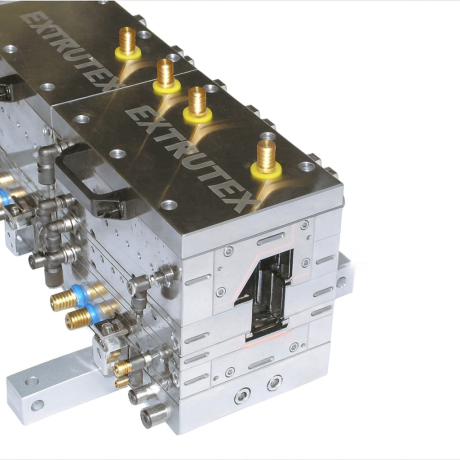
The pipe die head shapes the molten PVC compound into a continuous tubular profile. Its internal flow channels, mandrel, die opening and distribution geometry are designed according to the pipe diameter, wall thickness, formulation and target output.
EXTRUTEX can configure pipe die heads and interchangeable tooling for different rigid PVC pipe specifications. Correct die design helps maintain circumferential wall thickness uniformity, stable melt flow and consistent pipe geometry.
Pressure pipes, drainage pipes, electrical conduits and industrial pipes may require different die configurations. Tooling must also account for the different rheological and thermal characteristics of UPVC and CPVC compounds.
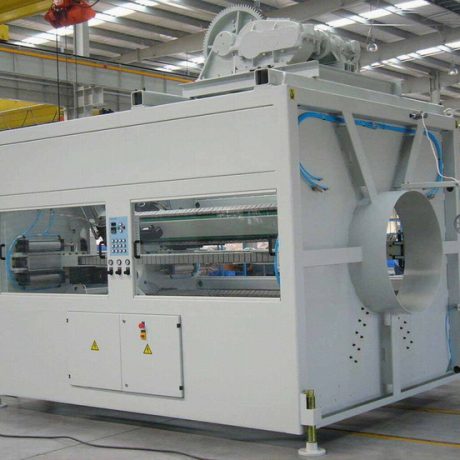
The vacuum calibration tank establishes the outside diameter of the newly extruded pipe. During the initial cooling stage, a controlled vacuum and appropriately designed sizing sleeve help the pipe achieve the required dimensions and roundness.
The calibration system is selected according to the pipe diameter, wall thickness and extrusion speed. Small-diameter pipes generally require precise sizing and stable high-speed operation, while large-diameter pipes need appropriately engineered calibration components, tank structures, vacuum capacity and mechanical support.
EXTRUTEX can configure vacuum calibration tanks with suitable sizing sleeves, vacuum controls, water circulation and dimensional adjustment mechanisms according to the line specification.
After initial calibration, the PVC pipe passes through one or more cooling sections. Spray cooling removes heat from the pipe wall and helps the product reach sufficient dimensional stability before haul-off and cutting.
The required cooling length, water circulation, spray arrangement and number of tanks depend on pipe dimensions, wall thickness, compound formulation and production speed. Large-diameter and thick-wall pipes typically require greater cooling capacity and carefully coordinated temperature management.
For CPVC production, the cooling configuration must be evaluated against the compound supplier's processing recommendations and the finished pipe's dimensional requirements.
The haul-off pulls the pipe through the downstream equipment at a controlled speed. Its traction force and drive arrangement must be matched to the pipe diameter, extrusion output and cooling conditions.
EXTRUTEX can configure suitable caterpillar haul-off units for small-, medium- and large-diameter rigid PVC pipes. The number of tracks, contact arrangement and pulling capacity are selected according to the pipe dimensions and operating loads.
Synchronization between the extruder and haul-off helps maintain stable production speed and consistent pipe dimensions. Appropriate traction also minimizes the risk of pipe deformation during downstream processing.
The cutting saw divides the continuous extruded pipe into specified lengths. Depending on the pipe diameter, wall thickness and required cutting quality, the line can use a suitable automatic cutting system or planetary saw.
Planetary cutting equipment is particularly useful for larger pipes where the cutting tool must travel around the pipe circumference. The final selection depends on the pipe material, dimensions, cutting method and production requirements.
Automatic length control, coordinated pipe positioning and suitable clamping help improve cutting repeatability and support efficient downstream handling.
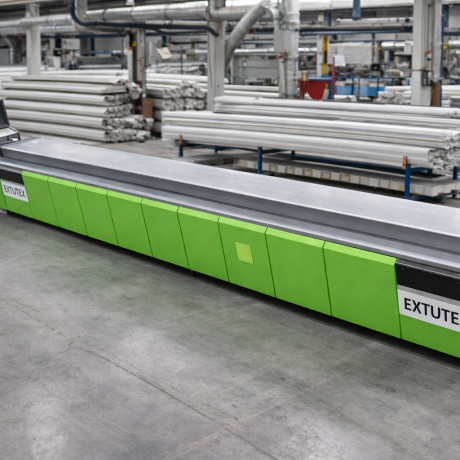
After cutting, finished pipes are transferred to a collection table, stacker or customized handling system. The equipment is selected according to pipe diameter, finished length, weight and factory layout.
Small pipes may use compact collection equipment, while larger pipes require stronger support structures and carefully designed transfer arrangements. Automated stacking and additional pipe handling can be offered where production volume and plant requirements justify the investment.
This compact line is suitable for small-diameter UPVC and other compatible rigid PVC pipes used for electrical conduit, building services, water distribution and selected industrial applications. CPVC configurations are available subject to compound-specific engineering.
| Parameter | Technical specification |
|---|---|
| Pipe diameter | 16–63 mm |
| Main extruder | EXTRUTEX twin-screw extruder, 75/26R configuration |
| Reference extruder output | Approximately 190–450 kg/h, subject to formulation and operating conditions |
| Reference motor power | 50 kW for the established 75/26R configuration |
| Pipe die | Rigid PVC pipe die head with size-specific tooling |
| Calibration | Vacuum calibration tank |
| Cooling | Spray cooling tank |
| Haul-off | Small-pipe caterpillar haul-off |
| Cutting | Automatic cutting saw, selected for pipe dimensions |
| Collection | Pipe collection table or stacker |
| Optional equipment | Automatic pipe belling machine, online measurement and auxiliary feeding equipment |
| Typical applications | Electrical conduit, building services, small water pipes and compatible rigid PVC products |
The final extruder selection depends on the customer's required output and production speed. The stated output is a reference capacity for the extruder configuration, not a guaranteed output for every pipe diameter or formulation.
This medium-diameter line is designed for rigid PVC pipes used in water distribution, drainage, sewerage, building installations and selected industrial applications. It provides flexibility for manufacturers producing different pipe diameters and wall thicknesses.
| Parameter | Technical specification |
|---|---|
| Pipe diameter | 50–160 mm |
| Main extruder | EXTRUTEX 75/26R or 90/26R twin-screw extruder, subject to output requirements |
| 75/26R reference output | Approximately 190–450 kg/h |
| 75/26R reference motor power | 50 kW |
| 90/26R reference output | Approximately 280–650 kg/h |
| 90/26R reference motor power | 67 kW |
| Pipe die | Rigid PVC die head and interchangeable tooling |
| Calibration | Vacuum calibration tank with suitable sizing sleeves |
| Cooling | Spray cooling tank or multiple cooling sections |
| Haul-off | Multi-track caterpillar haul-off, selected according to pipe size |
| Cutting | Automatic cutting saw or suitable planetary saw |
| Collection | Collection table or automatic stacker |
| Optional equipment | Automatic belling machine, diameter measurement and auxiliary systems |
| Typical applications | Water pipes, drainage pipes, sewerage pipes and building services |
For production across the full 50–160 mm range, tooling and downstream adjustments may be required when changing between pipe dimensions. The appropriate extruder is selected according to wall thickness, compound formulation and target throughput.
This line targets medium- and large-diameter UPVC and compatible CPVC pipe applications, including drainage networks, infrastructure, industrial fluid transportation and selected pressure pipe systems.
| Parameter | Technical specification |
|---|---|
| Pipe diameter | 110–400 mm |
| Main extruder | EXTRUTEX 90/26R or 114/36R twin-screw extruder, selected according to output requirements |
| 90/26R reference output | Approximately 280–650 kg/h |
| 90/26R reference motor power | 67 kW |
| 114/36R reference output | Approximately 480–1,050 kg/h |
| 114/36R reference motor power | 110 kW |
| Pipe die | Large-bore rigid PVC die head with matched mandrel and die tooling |
| Calibration | Vacuum calibration tank engineered for the selected pipe diameter |
| Cooling | Extended spray cooling system, with additional sections where required |
| Haul-off | Heavy-duty caterpillar haul-off |
| Cutting | Automatic cutting saw or planetary cutting system |
| Collection | Reinforced collection table or automated pipe stacker |
| Optional equipment | Automatic pipe belling machine, inline measurement and auxiliary handling systems |
| Typical applications | Drainage, sewerage, industrial pipes and selected water distribution applications |
The 114/36R configuration provides a higher reference throughput than the smaller established models. The actual line configuration must be checked against pipe wall thickness, die design, compound processing requirements and downstream cooling capacity.
This large-diameter line is intended for infrastructure and industrial applications requiring rigid PVC pipes with substantial cross-sectional dimensions. The extrusion system, die head, vacuum calibration equipment and cutting machinery must be engineered as a coordinated package.
| Parameter | Technical specification |
|---|---|
| Pipe diameter | 250–630 mm |
| Main extruder | EXTRUTEX 114/36R or 130/26R twin-screw configuration, subject to project engineering |
| 114/36R reference output | Approximately 480–1,050 kg/h |
| 114/36R reference motor power | 110 kW |
| 130/26R reference motor power | 150 kW; output to be confirmed for the selected configuration |
| Pipe die | Large-diameter rigid PVC die head |
| Calibration | Heavy-duty vacuum calibration tank and matched sizing components |
| Cooling | Extended spray cooling tanks or multiple coordinated cooling sections |
| Haul-off | Heavy-duty multi-track haul-off |
| Cutting | Large-diameter planetary cutting saw or project-specific cutting system |
| Collection | Heavy-duty pipe support and collection system |
| Optional equipment | Pipe belling system where compatible with the pipe dimensions and socket specification |
| Typical applications | Large drainage pipes, infrastructure, industrial pipe systems and other compatible rigid PVC applications |
Pipe diameters across this range may require different die heads, calibration sleeves and downstream configurations. The selected extruder must be sized according to the required pipe weight per meter, wall thickness and output target.
EXTRUTEX can develop customized large-diameter rigid PVC pipe extrusion systems for specialized infrastructure and industrial applications. At these diameters, equipment selection requires a detailed technical study of material throughput, pipe wall thickness, tooling, cooling, transport and handling.
| Parameter | Technical specification |
|---|---|
| Pipe diameter | 630–1500 mm, subject to project feasibility and material requirements |
| Main extruder | Project-engineered twin-screw extrusion system; 130/26R is an established reference configuration |
| 130/26R reference motor power | 150 kW |
| Extruder output | To be established according to the required pipe dimensions and formulation |
| Pipe die | Customized large-diameter rigid PVC die head |
| Calibration | Engineered calibration and sizing system |
| Cooling | Customized cooling tanks, spray arrangements and water circulation |
| Haul-off | Specially engineered pipe pulling and handling equipment |
| Cutting | Customized cutting system suitable for pipe dimensions and wall thickness |
| Collection | Heavy-duty pipe supports, transfer equipment and collection system |
| Optional equipment | Project-specific belling equipment, subject to socket design and pipe dimensions |
| Typical applications | Specialized large-diameter drainage, infrastructure and industrial pipe projects |
For the largest diameters, production feasibility and capacity must be confirmed for the intended PVC formulation, pipe structure and manufacturing standard. A 150 kW motor rating alone does not establish the maximum pipe diameter or finished-pipe output. The entire extrusion and downstream system requires engineering validation.
EXTRUTEX can offer an automatic pipe belling machine as an optional downstream unit for compatible UPVC and CPVC pipe production lines. Pipe belling forms a socket at one end of a cut pipe, allowing compatible pipes to be joined using the specified sealing arrangement.
The belling machine is positioned downstream of the cutting system or integrated into a coordinated production arrangement. The cut pipe end is heated under controlled conditions, formed using a suitable socket mold and then cooled to maintain the required socket dimensions.
| Parameter | Specification |
|---|---|
| Pipe material | Compatible UPVC, PVC and CPVC formulations, subject to machine configuration |
| Pipe diameter | Selected according to the pipe range and belling machine model |
| Socket type | Specified according to the required joint design and applicable standard |
| Heating method | Selected according to material, wall thickness and process requirements |
| Forming method | Socket mold and forming system configured for the pipe specification |
| Cooling | Controlled cooling to stabilize socket dimensions |
| Operation | Automatic or semi-automatic, according to the selected model |
| Installation | Inline or offline, subject to production layout and pipe handling requirements |
Optional equipment: The belling machine is not automatically included in the standard extrusion line. It can be quoted and configured separately according to the pipe diameter range, socket dimensions, cycle time, material and factory layout.
UPVC is widely used for rigid pipes in water distribution, drainage, sewerage, electrical conduit and building services. Its processing requires appropriate screw design, controlled thermal conditions and consistent material feeding to achieve stable extrusion and the required finished-pipe properties.
EXTRUTEX UPVC pipe lines combine twin-screw extrusion, application-specific dies, vacuum calibration, cooling, haul-off and cutting. Optional belling equipment can be added for socketed pipe production.
CPVC is used in selected hot-water, industrial and chemical-service applications where the specific compound and finished pipe are suitable for the intended operating conditions. Its processing characteristics differ from conventional UPVC, making correct temperature management, residence time, screw configuration and tooling selection particularly important.
EXTRUTEX can evaluate CPVC extrusion configurations according to the compound supplier's processing recommendations and the customer's pipe specification. Die design, cooling, cutting and optional socket forming must be validated for the chosen CPVC material.
Rigid PVC pipe applications cover a broad range of building, infrastructure and industrial products. The production line can be configured according to the pipe dimensions, formulation, required surface quality, wall thickness, output and relevant manufacturing standard.
Finished pipe performance depends on the material formulation and manufacturing process as well as the extrusion machinery. Compliance with potable water, pressure, fire, chemical-resistance or other application requirements must be established through the appropriate material qualification and finished-product testing.
EXTRUTEX PVC pipe extrusion lines can be configured with coordinated control of the extruder, die temperature, vacuum calibration, cooling water, haul-off and cutting system. The control architecture is selected according to the project and the level of automation required.
Where required, additional measuring instruments and production data recording can be included to support process monitoring and quality management. Final instrumentation depends on the customer's inspection procedures and applicable product standards.
EXTRUTEX develops production configurations according to the customer's actual manufacturing objectives rather than treating all PVC pipe products as identical. Small electrical conduit pipes, medium-diameter drainage pipes, pressure pipes and large-diameter industrial pipes require different combinations of extrusion capacity, tooling, calibration, cooling and handling equipment.
Customization may include:
For projects involving multiple pipe diameters, the technical proposal should identify the required production range, tooling changes, expected output and any downstream equipment limitations. This ensures that the selected configuration matches the intended product mix.
The established twin-screw configurations include the 75/26R, 90/26R, 114/36R and 130/26R models. Reference specifications include 50 kW and approximately 190–450 kg/h for the 75/26R, 67 kW and approximately 280–650 kg/h for the 90/26R, and 110 kW and approximately 480–1,050 kg/h for the 114/36R. The 130/26R has an established 150 kW motor reference; its applicable output must be confirmed for the specific configuration.
Potentially, subject to the extruder configuration, screw-and-barrel suitability, tooling, compound processing requirements and temperature-control capability. CPVC production should be evaluated separately and validated for the selected material.
A pipe belling machine can be offered as an option. It may be configured as an inline unit or a separate machine, depending on the pipe diameter, socket specification, production speed and factory layout.
EXTRUTEX can evaluate customized large-diameter systems up to 1500 mm. Feasibility, extruder selection, tooling, output and downstream handling must be confirmed through project-specific engineering.
Production capacity depends on the extruder's usable throughput, pipe diameter, wall thickness, compound formulation, die design, cooling performance and downstream line speed. Reference extruder capacities should not be interpreted as guaranteed finished-pipe output.
Please provide the required pipe diameter range, UPVC or CPVC material, wall thickness or SDR, target output, pipe length, socket requirements, applicable product standards and available factory space. These details allow EXTRUTEX to select the appropriate extruder, tooling and downstream equipment.
Whether you need a compact 16–63 mm conduit line, a medium-diameter UPVC production system, a 250–630 mm infrastructure line or a customized large-diameter solution, EXTRUTEX can help define the appropriate twin-screw extruder and downstream equipment configuration.
Automatic pipe belling machines can be offered as an additional option for compatible UPVC and CPVC socketed pipes. By defining the finished pipe specification and target production capacity at the beginning of the project, manufacturers can select a more appropriate combination of extrusion, calibration, cooling, haul-off, cutting and socket-forming equipment.
EXTRUTEX – PVC, UPVC and CPVC Pipe Extrusion Lines. Integrated twin-screw extrusion technology, customized downstream equipment and optional automatic pipe belling solutions for modern pipe manufacturing.
There are no reviews yet.
By submitting your email, you agree to our company’s terms and conditions.
We are not looking to sell; we are here to provide you with the best support and service.
Contact available 24/7
Please do not contact us for advertising or sales inquiries
All rights of this website are reserved for EXTRUTEX Austria and its partner companies, © 2026
-
(0 customer reviews)