No products in the cart.



All rights of this website are reserved for EXTRUTEX Austria and its partner companies, © 2026

Multiple Payment Methods

Discount for advance payments over 50%

Free Shipping Coordination Services
Payment methods:


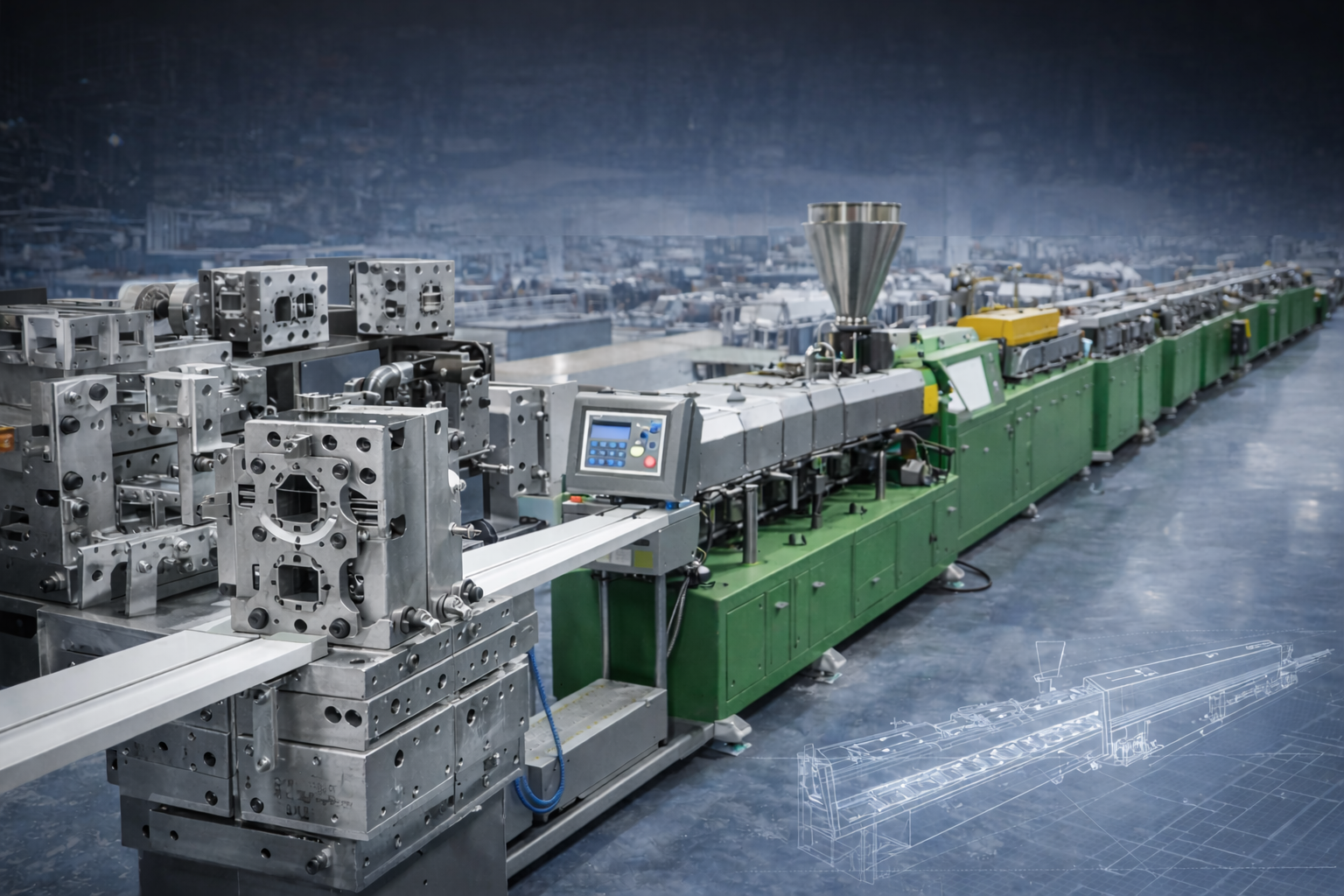
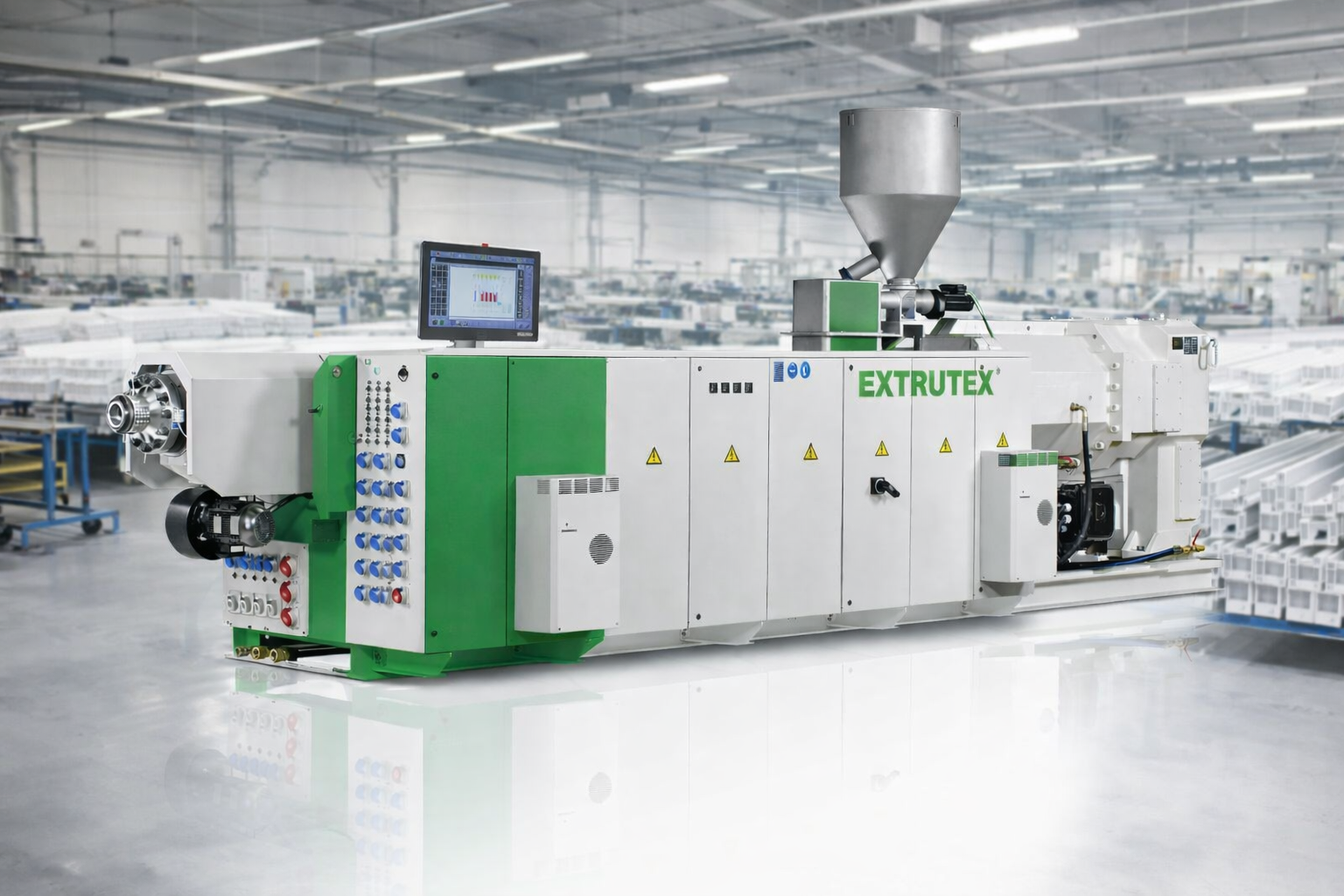
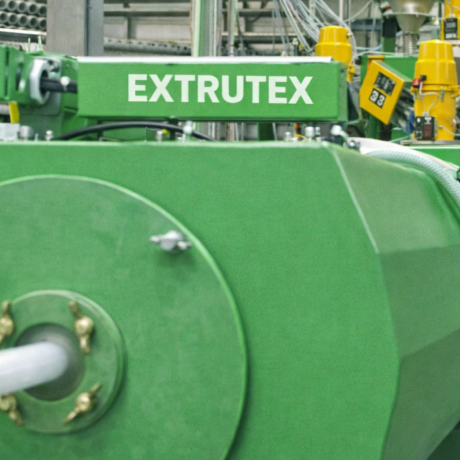
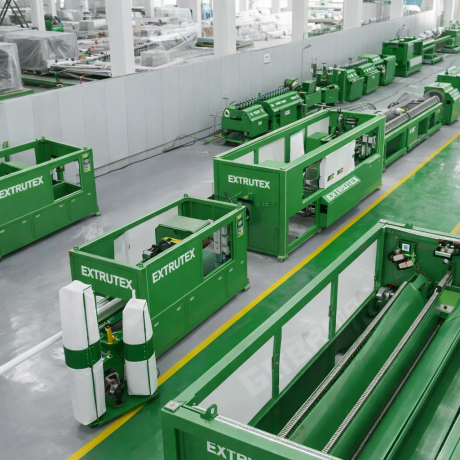
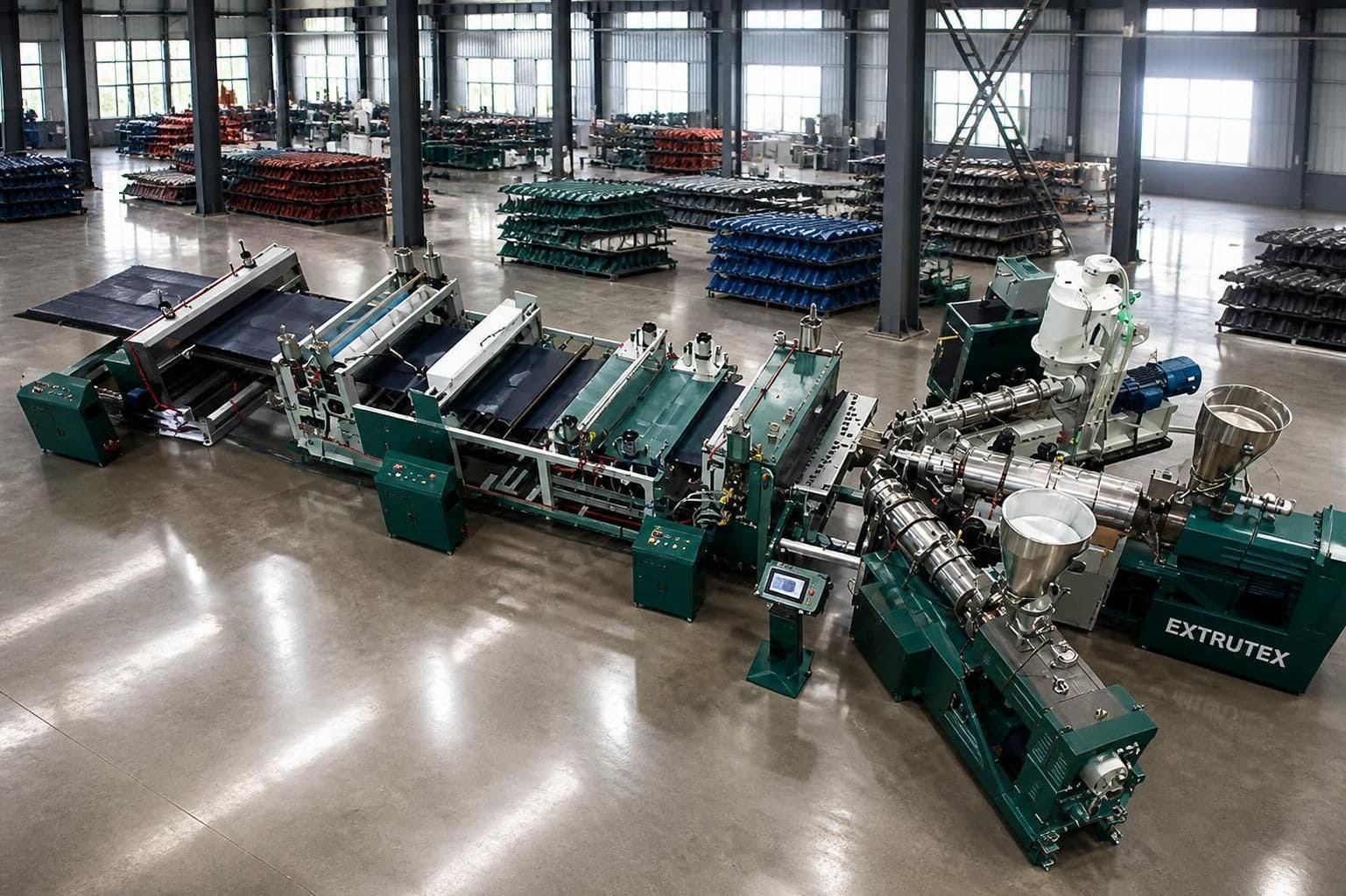
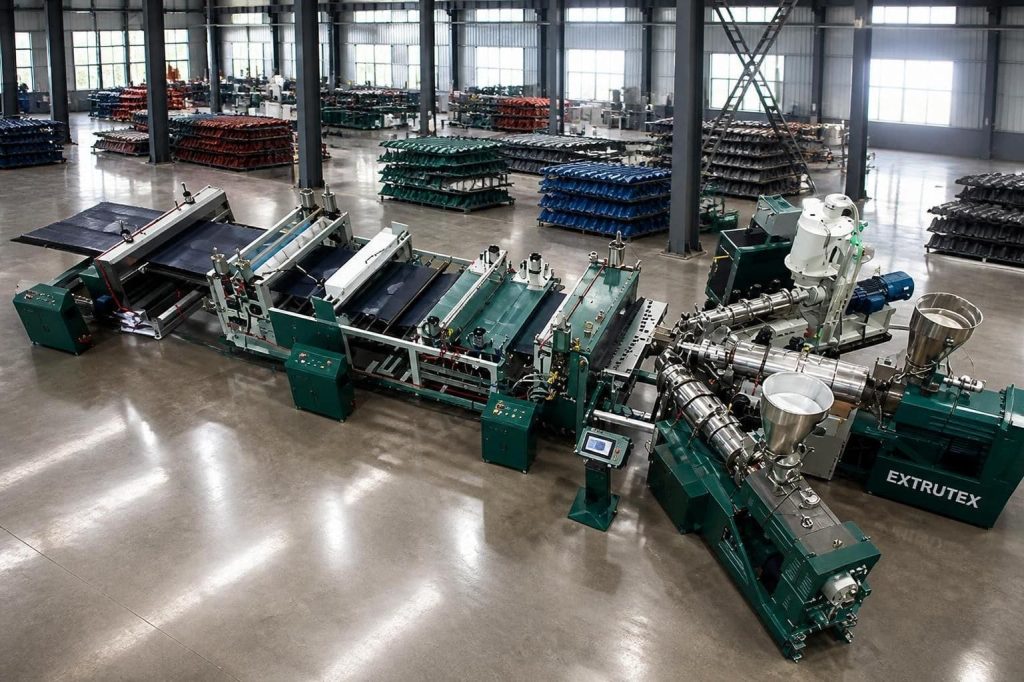
The EXTRUTEX Multilayer PVC/ASA Roof Tile Extrusion Line is designed for the continuous production of high-quality plastic roofing sheets using PVC, ASA, and other compatible formulations. The complete line integrates material feeding, extrusion, melt distribution, sheet forming, corrugation, cooling, cutting, and automatic stacking into a coordinated manufacturing system.
EXTRUTEX provides extrusion solutions for single-layer, double-layer, and three-layer roof tile production. Depending on the selected configuration, manufacturers can produce solid PVC roofing sheets, PVC/ASA co-extruded roofing sheets with a weather-resistant surface layer, or multilayer sheets with a foamed inner core.
With a range of extrusion configurations covering reference outputs from approximately 400 to 700 kg/h, the EXTRUTEX roof tile production platform can be configured for different product widths, thicknesses, surface designs, and production requirements.
Plastic roof tiles are widely used in industrial buildings, agricultural facilities, warehouses, commercial buildings, residential construction, and renovation projects. Compared with conventional roofing materials, polymer-based roofing sheets can offer low weight, corrosion resistance, convenient installation, and flexibility in product design.
The performance of a finished roofing sheet depends on several factors, including raw material formulation, extrusion stability, melt temperature, layer distribution, die design, forming conditions, cooling efficiency, and cutting accuracy. The EXTRUTEX extrusion line brings these processes together to support continuous and repeatable production.
The production system can be designed for different PVC-based formulations, including rigid PVC compounds and PVC/ASA multilayer structures. Material selection and processing conditions should be adapted to the intended application, local climate, roofing design, and applicable building requirements.
EXTRUTEX offers multiple extrusion configurations to suit different output requirements and roofing sheet structures. The following table summarizes the supplied reference configurations.
| Production Configuration | Extruder Model | Product Width | Product Thickness | Reference Output |
|---|---|---|---|---|
| Single-layer roof tile line | EXZ80/156 | 710–1220 mm | 0.8–3.0 mm | 450–550 kg/h |
| Single-layer roof tile line | EXZ92/188 | 710–1220 mm | 0.8–3.0 mm | 600–700 kg/h |
| Double-layer PVC/ASA roof tile line | EXZ80/156 + SJ50 | 710–1220 mm | 2.5–3.0 mm | 450–550 kg/h |
| Double-layer PVC/ASA roof tile line | EXZ92/188 + SJ50 | 710–1220 mm | 2.5–3.0 mm | 600–700 kg/h |
| Three-layer roof tile line with foamed inner layer | EXZ51/105 + EXZ65/132 + EXZ51/105 | 710–1220 mm | 2.5–3.0 mm | 400–500 kg/h |
Technical note: The outputs shown above are reference values supplied for these configurations. Actual production capacity depends on the formulation, product thickness, sheet width, layer ratio, screw configuration, die design, forming conditions, and operating parameters. Final specifications should be confirmed during project engineering.
The EXTRUTEX single-layer roof tile extrusion line is designed for producing corrugated PVC roofing sheets with a consistent cross-section and controlled thickness. The line combines a conical twin-screw extruder, a sheet die, a corrugating forming system, cooling equipment, a cutting unit, and a stacking system.
The EXZ80/156 configuration is listed for a reference output of 450–550 kg/h, while the EXZ92/188 configuration is listed for 600–700 kg/h. The appropriate model depends on the required production capacity, material formulation, product thickness, and factory operating conditions.
During production, the PVC compound is fed into the extrusion system and conveyed, compacted, melted, and homogenized by the screw and barrel. The prepared melt is delivered to the die, where it is distributed across the required sheet width. The sheet then enters the forming section to develop the required corrugated profile.
Forming and cooling conditions are important for maintaining the shape of the roofing sheet. Stable temperature control and suitable calibration conditions help limit dimensional variation, uneven thickness, surface defects, and deformation during cooling.
The EXTRUTEX double-layer configuration is designed to combine a structural PVC layer with an ASA surface layer. This arrangement allows manufacturers to engineer the properties of the roofing sheet according to its intended application.
PVC can provide the main structural body, while ASA can be selected as a weather-resistant exterior layer where improved resistance to outdoor exposure and color retention is required. The final performance depends on the selected grades, layer thickness, formulation compatibility, processing conditions, and product design.
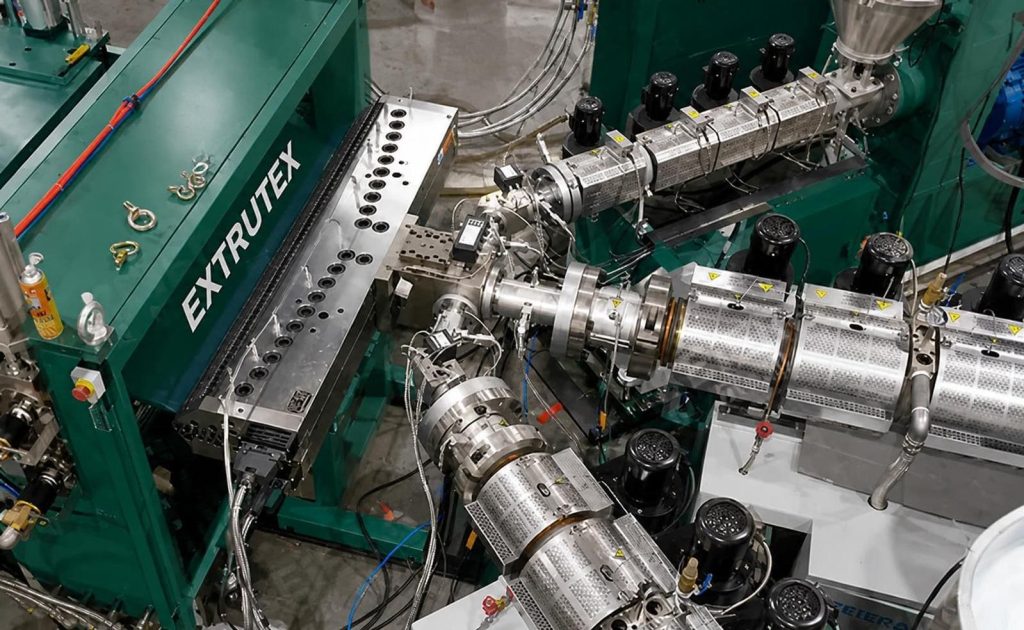
The supplied configurations are EXZ80/156 + SJ50, with a reference output of 450–550 kg/h, and EXZ92/188 + SJ50, with a reference output of 600–700 kg/h. The main extruder and auxiliary extruder supply the respective materials to a compatible co-extrusion die. Inside the die, the melt streams are brought together to form the multilayer sheet.
For reliable co-extrusion, the two material streams must be managed with suitable temperature profiles, stable output, and appropriate melt pressure. The die should be engineered for the viscosity and processing characteristics of the selected PVC and ASA formulations. The layer ratio should be selected according to surface coverage, performance requirements, and material consumption targets.
Layer thickness, bonding quality, surface appearance, and overall sheet performance should be evaluated using the intended formulation and product specifications. The correct operating window must be established through material trials and production validation.
The EXTRUTEX three-layer configuration is designed for roofing sheets that use a foamed inner layer between two outer layers. The supplied configuration is EXZ51/105 + EXZ65/132 + EXZ51/105, with a reference product width of 710–1220 mm, thickness of 2.5–3.0 mm, and output of 400–500 kg/h.
A three-layer system provides additional flexibility in product structure. The outer layers can be formulated to meet surface and functional requirements, while the middle layer can incorporate a suitable foaming formulation to reduce density. Depending on the formulation and finished product design, this structure can help reduce material weight while maintaining the required sheet geometry.
The three extruders feed their respective material streams into a multilayer die. The distribution channels must be designed to provide stable flow and an appropriate layer arrangement across the width of the sheet. The foaming behavior must be controlled through material formulation, melt temperature, pressure, die conditions, and cooling.
Because foamed PVC compounds can behave differently from solid compounds, process settings should be established for the actual formulation. Excessive or insufficient foaming, uneven cell structure, unstable melt pressure, or unsuitable cooling can affect the appearance and mechanical properties of the final roofing sheet.
| Item | Reference Specification |
|---|---|
| Extruder combination | EXZ51/105 + EXZ65/132 + EXZ51/105 |
| Layer structure | Three-layer structure with foamed inner layer |
| Product width | 710–1220 mm |
| Product thickness | 2.5–3.0 mm |
| Reference output | 400–500 kg/h |
The exact allocation of each extruder to the outer and inner layers should be confirmed during engineering. The final configuration depends on the required layer ratio, foam formulation, product density, and performance targets.
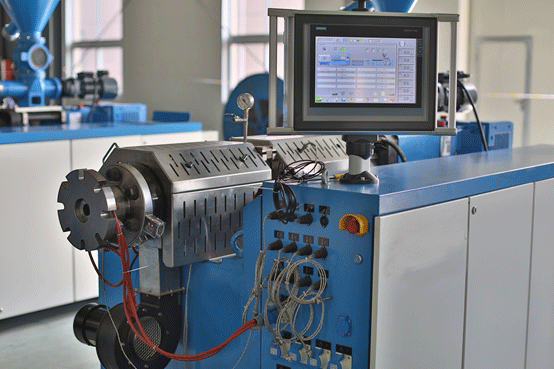
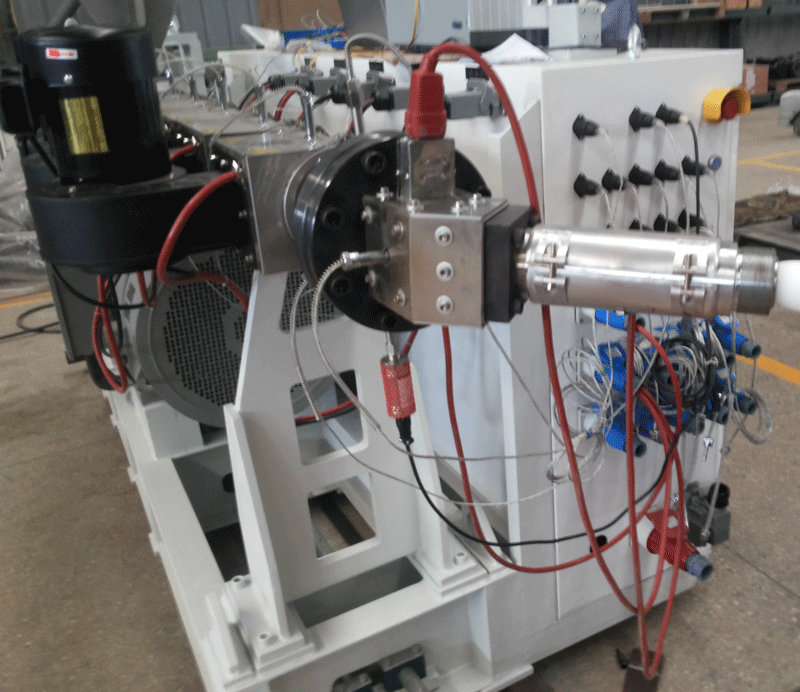
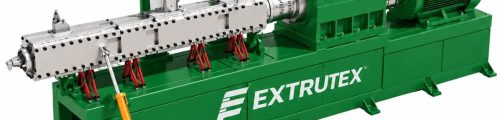
The extruder is the core of the roof tile production line. Its job is to process the compound into a uniform melt and deliver it to the die at a stable output rate. The screw & barrel configuration should be selected according to the material formulation, thermal sensitivity, output target, and required melt quality.
For rigid PVC compounds, processing stability is particularly important because the material is sensitive to excessive heat and residence time. Screw geometry, temperature control, feeding consistency, and appropriate operating parameters help support stable processing.
EXTRUTEX extrusion systems can be configured with suitable feeding, temperature control, drive systems, and control interfaces. The final screw design and operating conditions should be matched to the selected compound rather than determined by extruder model alone.
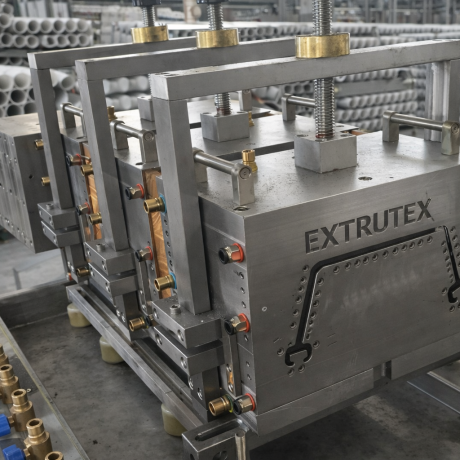
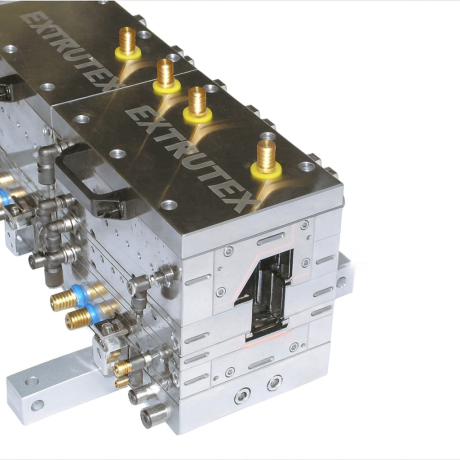
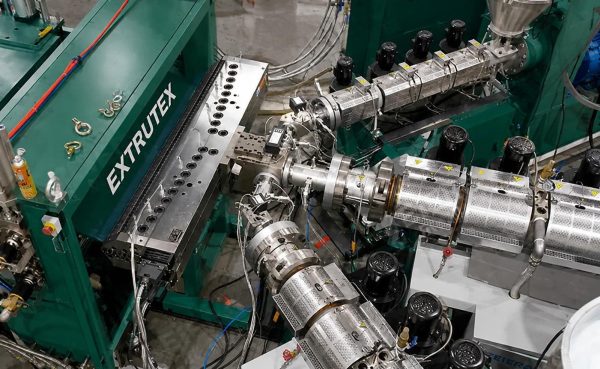
The die is a critical component in the production of wide roofing sheets. It distributes the melt across the required width and establishes the sheet profile before the material enters the corrugating and calibration section.
For single-layer production, the die must provide a consistent flow across the sheet width. For PVC/ASA co-extrusion and three-layer production, the die must also manage the separate melt streams and create the required layer structure.
Material temperature, viscosity, melt pressure, residence time, and flow-channel geometry all influence die performance. PVC and ASA formulations may have different processing characteristics, so the co-extrusion system should be designed around the selected materials and intended layer ratio.
Suitable die design and temperature management can help reduce stagnation areas and limit the risk of material degradation. Cleaning access, temperature uniformity, and appropriate operating procedures are also important for maintaining consistent production.
After leaving the die, the hot sheet is transferred to the forming section, where the required corrugated roofing profile is developed. The forming equipment must be coordinated with the material temperature and line speed to achieve the specified geometry.
Different roofing designs may use different wave shapes, pitches, heights, and overall dimensions. EXTRUTEX can configure forming equipment according to the intended product profile. Where interchangeable forming components are technically suitable, a manufacturer may be able to produce different profiles by changing the corresponding tooling and adjusting the process.
Changing the die or forming table alone does not guarantee compatibility with every roof tile design. Profile dimensions, material behavior, sheet thickness, forming temperature, cooling requirements, and the mechanical arrangement of the equipment must all be considered.
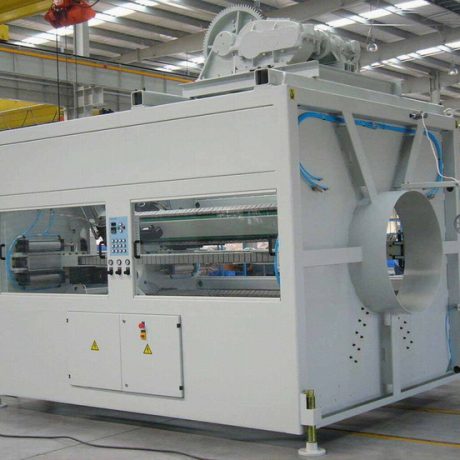
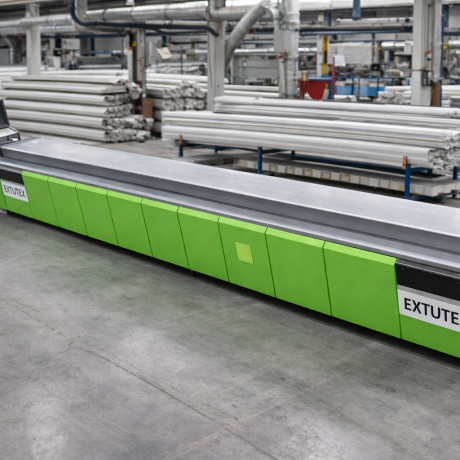
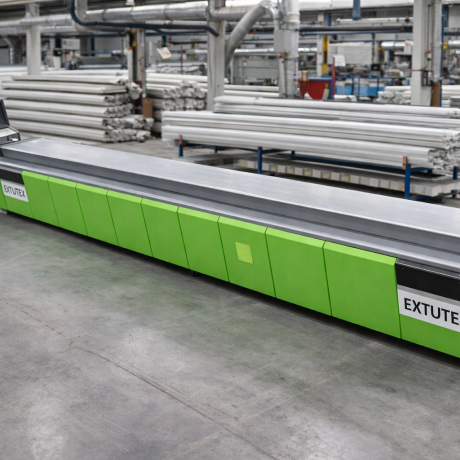
Once the sheet has been formed, controlled cooling helps the roofing profile retain its dimensions. The cooling system and conveying equipment must be matched to the material, sheet thickness, profile geometry, and production speed.
The haul-off or conveying section moves the formed sheet through the downstream process at a controlled speed. Consistent conveying helps maintain coordination between extrusion, forming, cooling, and cutting. Excessive pulling force or unstable speed can affect product dimensions and surface quality.
The cutting system separates the continuous roofing sheet into the required lengths. Depending on the product and production arrangement, cutting may be synchronized with the line speed and configured to support the required length tolerance.
After cutting, the finished sheets can be transferred to a stacking or collection unit. The stacking arrangement should account for sheet dimensions, product weight, surface protection, handling requirements, and packaging procedures.
| Equipment | Primary Function |
|---|---|
| Corrugating and calibration unit | Forms the sheet into the specified roofing profile |
| Cooling section | Helps stabilize the sheet dimensions and profile |
| Haul-off and conveying system | Maintains controlled transport through the downstream process |
| Cutting unit | Cuts the continuous sheet to the required length |
| Stacking and collection unit | Organizes finished sheets for handling and packaging |
The EXTRUTEX roof tile extrusion line can be configured with a centralized electrical control system and PLC-based automation. The control architecture coordinates the main production stages and provides operators with access to relevant operating parameters.
Depending on the final specification, the control system may monitor or manage extruder operation, temperature zones, line speed, downstream synchronization, cutting cycles, and alarms. The available functions depend on the selected electrical configuration, instrumentation, and automation scope.
Coordinated control helps operators manage changes in production conditions and identify deviations that require attention. Recipe settings and documented operating procedures can support repeatability when switching between approved materials or product specifications.
The number of operators required depends on the level of automation, raw material preparation, packaging method, factory layout, and local safety requirements. Some configurations may be operated by a small team, but staffing should be confirmed for the complete production process rather than the extrusion machine alone.
The line can be engineered for suitable PVC-based compounds and, where specified, PVC/ASA multilayer materials. Material formulation should be developed for the intended processing system and final application.
Important formulation factors include resin characteristics, stabilizer system, impact modifier, processing aid, lubricant balance, pigment, filler content, and any foaming agent used in a foamed-core structure. These components affect melt behavior, processing stability, surface finish, color, density, and final product properties.
ASA surface formulations should be selected according to the required outdoor performance and compatibility with the underlying PVC layer. For foamed products, the formulation and process must be designed to produce a suitable cellular structure without compromising the required sheet dimensions.
EXTRUTEX can discuss equipment configuration based on the customer's intended materials, product drawings, target output, finished width, thickness, and roofing profile. Material testing and production trials are recommended before finalizing commercial operating targets.
The supplied configurations cover reference sheet widths from 710 to 1220 mm. Listed thickness ranges are 0.8–3.0 mm for single-layer products and 2.5–3.0 mm for the specified double-layer and three-layer configurations.
These values describe the supplied reference range and should not be interpreted as a guarantee that every width and thickness combination can run at the maximum listed output. Wider sheets, thicker products, multilayer structures, and foamed-core products may require different output settings and forming conditions.
Roofing profile selection also affects forming equipment, cooling behavior, and the overall line arrangement. Before production, the manufacturer should confirm the effective finished width, wave geometry, sheet length, thickness tolerance, layer structure, and required surface finish.
Quality control should cover incoming raw materials, extrusion conditions, sheet dimensions, surface appearance, layer integrity, profile geometry, and finished-product handling. A defined inspection procedure helps manufacturers identify deviations and maintain product consistency.
Typical inspection points include:
Inspection frequency and acceptance limits should be established according to the customer's product specification and applicable standards. Production output and finished-product quality should be verified under representative operating conditions.
Before installing an EXTRUTEX roof tile extrusion line, the factory should be assessed for available floor space, ceiling height, access routes, material storage, electrical supply, ventilation, cooling utilities, and finished-product handling.
The layout should provide sufficient room for raw material feeding, extrusion, die maintenance, forming equipment, downstream access, electrical cabinets, and safe operator movement. Multilayer systems may require additional space for auxiliary extruders and material supply arrangements.
Utility requirements depend on the final machine configuration and operating conditions. Electrical capacity, cooling-water arrangements, compressed air where required, ventilation, and safe material handling should be confirmed before installation.
Installation and commissioning should include mechanical alignment, electrical checks, temperature-control verification, safety-system testing, material trials, and product inspection. The final acceptance criteria should be agreed upon for the actual roofing sheet specification.
EXTRUTEX combines Austrian design, laboratory, and research and development capabilities with manufacturing in China. This approach supports the development of extrusion equipment for different polymer processing applications and customer production requirements.
For PVC/ASA roof tile projects, the equipment configuration should be developed around the intended material formulation, layer structure, product dimensions, production capacity, and factory conditions. The extruder, die, forming system, cooling equipment, cutting unit, and control system must work as an integrated production line.
Rather than selecting equipment based on extruder size alone, project engineering should evaluate the complete process, including melt distribution, profile formation, downstream synchronization, and finished-product quality requirements.
To prepare a suitable EXTRUTEX roof tile extrusion line proposal, customers should provide as much of the following information as possible:
This information helps determine the appropriate extrusion configuration, die design, forming equipment, cooling arrangement, downstream system, and control scope.
The EXTRUTEX Multilayer PVC/ASA Roof Tile Extrusion Line provides a configurable platform for manufacturing single-layer PVC roofing sheets, double-layer PVC/ASA co-extruded sheets, and three-layer roofing sheets with a foamed inner layer.
With reference configurations using EXZ80/156, EXZ92/188, and EXZ51/105 + EXZ65/132 + EXZ51/105 extruder combinations, the line can be engineered around the required product width, thickness, output, layer structure, and corrugated profile.
Integrated feeding, extrusion, melt distribution, forming, cooling, cutting, stacking, and PLC-based control help coordinate the production process. Final performance depends on the selected formulation, machine configuration, tooling, operating conditions, and verified production requirements.
Contact EXTRUTEX with your roofing profile, target output, material structure, and product dimensions to discuss a suitable extrusion line configuration.
There are no reviews yet.
By submitting your email, you agree to our company’s terms and conditions.
We are not looking to sell; we are here to provide you with the best support and service.
Contact available 24/7
Please do not contact us for advertising or sales inquiries
All rights of this website are reserved for EXTRUTEX Austria and its partner companies, © 2026
-
(0 customer reviews)