No products in the cart.



All rights of this website are reserved for EXTRUTEX Austria and its partner companies, © 2026

Multiple Payment Methods

Discount for advance payments over 50%

Free Shipping Coordination Services
Payment methods:

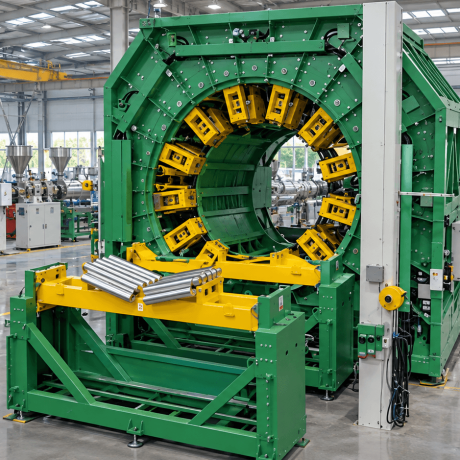
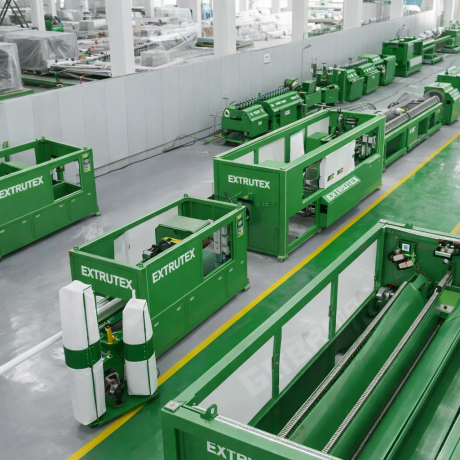
The EXTRUTEX Multilayer PVC/PMMA Roof Tile Extrusion Line is an integrated manufacturing solution designed for producing decorative, durable, and functional plastic roofing sheets. The system can be configured for single-layer PVC roofing tiles, multilayer PVC/PMMA co-extruded sheets, and selected multilayer structures with a foamed inner core.
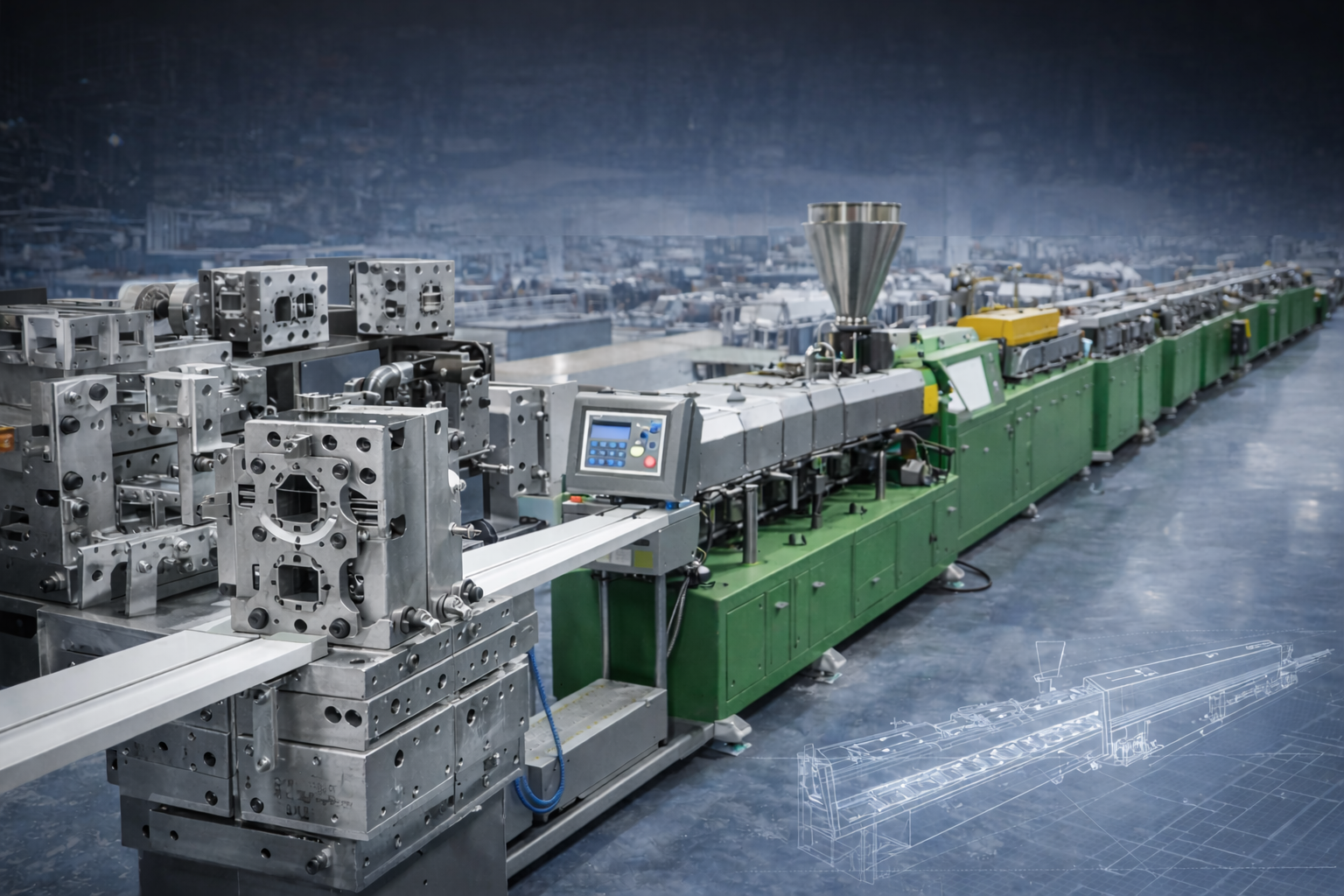
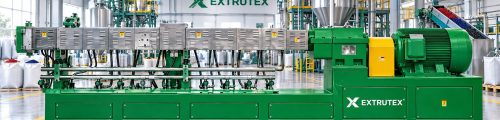
Designed around the requirements of continuous polymer extrusion, the EXTRUTEX production line integrates raw material feeding, extrusion, melt distribution, sheet forming, pattern embossing, cooling, cutting, and finished-product collection. Depending on the required roofing structure, the line can use suitable conical twin-screw or parallel twin-screw extrusion technology, together with a compatible die and downstream system.
Typical product widths are available within the supplied reference range of 710–1220 mm, with product thicknesses depending on the selected configuration. Other product dimensions, including nominal widths of 720 mm, 930 mm, and 1100 mm, can be evaluated during project engineering. The final effective width and tooling design should be confirmed against the customer's product drawings.
PVC roofing sheets are used in industrial buildings, warehouses, agricultural structures, workshops, commercial facilities, and other construction applications. Their low weight, corrosion resistance, and ability to be manufactured in different profiles make them suitable for projects that require practical installation and flexible product design.
PMMA, also known as polymethyl methacrylate or acrylic, can be incorporated into a suitable multilayer roofing structure to provide a specialized exterior surface. The performance of the finished product depends on the selected PMMA grade, PVC formulation, layer thickness, material compatibility, processing conditions, and the intended service environment.
EXTRUTEX can configure the extrusion process according to the desired roofing profile, sheet thickness, surface appearance, layer arrangement, output target, and raw material system. Product development should consider not only extrusion capacity but also forming stability, cooling performance, dimensional consistency, surface quality, and the required mechanical properties of the finished roofing sheet.
The following table reorganizes the supplied reference configurations. Model designations use the EXTRUTEX EXZ prefix in place of the original SJZ designation.
| Technical Parameter | Single Layer | Single Layer | Double Layer | Double Layer | Three Layer with Foamed Inner Layer |
|---|---|---|---|---|---|
| Extruder configuration | EXZ80/156 | EXZ92/188 | EXZ80/156 + SJ50 | EXZ92/188 + SJ50 | EXZ51/105 + EXZ65/132 + EXZ51/105 |
| Layer structure | Single layer | Single layer | Two-layer structure | Two-layer structure | Three-layer structure with foamed core |
| Reference product width | 710–1220 mm | 710–1220 mm | 710–1220 mm | 710–1220 mm | 710–1220 mm |
| Reference product thickness | 0.8–3.0 mm | 0.8–3.0 mm | 2.5–3.0 mm | 2.5–3.0 mm | 2.5–3.0 mm |
| Reference extrusion capacity | 450–550 kg/h | 600–700 kg/h | 450–550 kg/h | 600–700 kg/h | 400–500 kg/h |
Technical clarification: The listed outputs are reference figures supplied for the configurations and are not guaranteed production rates for every material or product dimension. Actual capacity depends on formulation, layer ratio, product thickness, effective width, screw design, die configuration, foaming conditions, and line speed. The exact designation and function of the auxiliary SJ50 extruder should be confirmed before the final machine specification is issued.
The single-layer EXTRUTEX roof tile extrusion line is designed for continuous production of PVC roofing sheets using a suitable extrusion system, sheet die, forming equipment, cooling section, cutting unit, and collection system.
The EXZ80/156 configuration has a supplied reference capacity of 450–550 kg/h, while the EXZ92/188 configuration has a supplied reference capacity of 600–700 kg/h. The appropriate configuration should be selected according to the desired output, PVC compound, sheet thickness, profile design, and operating conditions.
During production, the prepared compound is fed into the extruder. The screw and barrel convey, compact, melt, and homogenize the material before delivering it to the die. The die distributes the melt across the required sheet width, and the downstream forming system creates the roofing profile.
Stable material feeding, temperature control, melt delivery, forming pressure, and cooling conditions all contribute to finished-sheet quality. The process should be adjusted for the actual formulation rather than relying on extruder model designation alone.
Multilayer extrusion allows two or more compatible polymer streams to be combined into a single roofing sheet. In a PVC/PMMA structure, the PVC layer can provide the main body while the PMMA-containing layer is designed to provide specific surface properties.
The extrusion system feeds the selected materials through separate processing units and into a suitable multilayer die. The die brings the melt streams together and distributes them across the sheet width. The resulting structure is then formed into the specified roofing profile.
Successful co-extrusion requires attention to material compatibility, melt viscosity, temperature profiles, pressure balance, layer ratio, and residence time. The PVC and PMMA grades must be selected for the intended co-extrusion process. Processing temperatures and die design should be established according to the technical requirements of the actual materials.
Possible layer arrangements include:
These descriptions represent possible layer architectures rather than a guarantee that every structure can be produced by every machine configuration in the reference table. The required number of extruders, die flow channels, and material-feeding arrangements must be engineered for the selected structure.
PMMA and ASA are different materials and should not be treated as interchangeable. PMMA is an acrylic polymer, while ASA is an acrylonitrile-styrene-acrylate polymer. The appropriate material depends on the intended surface performance, appearance, processing compatibility, and product requirements.
Where a PVC/PMMA co-extruded roofing sheet is required, the PMMA-containing surface layer must be designed around compatible material grades and suitable co-extrusion conditions. Layer thickness, adhesion, surface appearance, and outdoor performance should be evaluated through material testing and production trials.
An alternative for certain roofing products is the use of an optional ASA film coating or lamination process. This approach applies a prepared film to the sheet rather than forming the surface layer through a conventional co-extrusion die. The equipment and process requirements differ from those of PVC/PMMA co-extrusion.
A film coating or lamination process may simplify the management of a separate surface layer in suitable applications, but the overall production capacity and defect rate depend on the complete line design, film quality, bonding method, sheet temperature, surface preparation, and process settings. Performance improvements should be established through trials rather than assumed for every product.
EXTRUTEX can assess whether direct co-extrusion or a separate film coating process is better suited to the customer's roofing sheet structure. The selection should consider material cost, surface requirements, production speed, bonding performance, maintenance, and quality control.
The pattern roller is an important part of the roofing sheet forming system. It helps create the specified surface pattern and corrugated geometry while the extruded sheet is in a suitable forming condition.
Pattern roller design depends on the desired roofing profile, including wave pitch, wave height, sheet width, surface texture, and dimensional tolerances. The roller must be matched to the forming equipment and the temperature and mechanical characteristics of the selected material.
Controlled roller temperature and stable forming conditions help maintain a consistent profile. Temperature control should be coordinated with the sheet temperature, material formulation, line speed, and cooling process. Excessive variation can contribute to uneven forming, dimensional changes, or surface defects.
Where multiple roof tile patterns are required, interchangeable rollers or forming components can be considered if the machine structure and tooling system support the required changes. A new profile may also require corresponding adjustments to the die, guides, calibration components, and downstream settings.
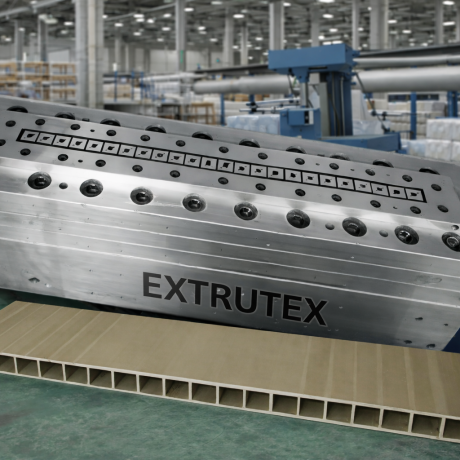
The forming mould and calibration system shape the hot extruded sheet into the final roofing geometry. Their design affects profile accuracy, surface quality, sheet stability, and production consistency.
Cast aluminum can be considered for suitable forming and calibration components where its thermal and mechanical properties meet the design requirements. Tooling material selection should take account of operating temperature, wear, surface finish, structural rigidity, cooling design, and maintenance needs.
Precision machining and surface finishing help produce consistent contact surfaces for forming. The finished tooling should match the intended wave profile, sheet width, and material behavior. Cooling channels and thermal management should be designed to maintain stable operating conditions across the forming width.
An air curtain or directed-air cooling arrangement may be included at a suitable downstream position to assist surface cooling. Its effectiveness depends on air volume, nozzle layout, sheet temperature, production speed, and the overall cooling strategy. It should be considered part of an engineered cooling system rather than a replacement for necessary calibration or cooling capacity.
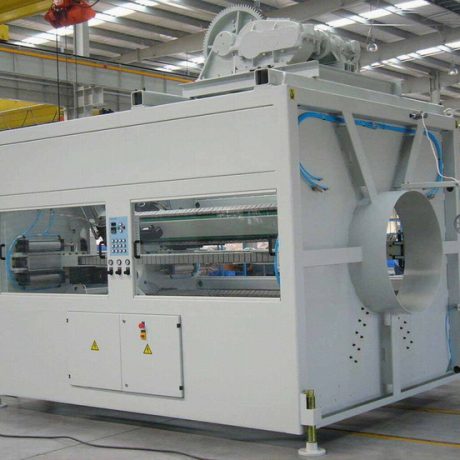
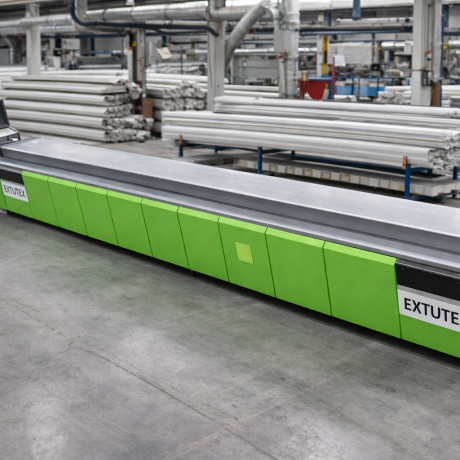
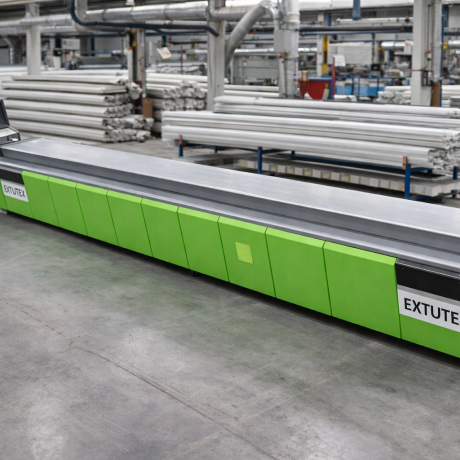
The EXTRUTEX track cutting system is designed to cut continuously produced roofing sheets to the specified length. The cutting method should be selected according to sheet thickness, profile geometry, material behavior, production speed, and the required edge quality.
A synchronized cutting system coordinates the cutting cycle with the movement of the sheet. Suitable control and mechanical design help reduce cutting errors and support repeatable finished lengths.
A blade enclosure or chip collection chamber can be incorporated into the cutting system to help control the spread of PVC particles during cutting. Where appropriate, a suction connection can collect chips and direct them to a suitable collection system.
Cutting performance depends on blade condition, cutting parameters, material formulation, sheet support, and line synchronization. The collection system should be designed to suit the type and quantity of particles generated by the selected material and cutting process.
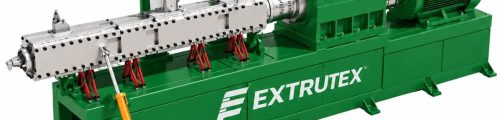
The extrusion system is selected according to the required output, material formulation, processing characteristics, and product structure. Conical twin-screw and parallel twin-screw extruders have different mechanical designs and operating characteristics. The correct choice should be based on the actual process requirements.
For PVC roofing applications, the screw and barrel design must support suitable conveying, melting, mixing, and material discharge while controlling the thermal history of the compound. Screw configuration, temperature management, feeding stability, and drive capacity are all important to the processing window.
EXTRUTEX can evaluate an appropriate extrusion platform based on the required roofing product and the customer's selected compound. The final specification should identify the extruder type, screw configuration, drive system, heating and cooling zones, and the operating range needed for the application.
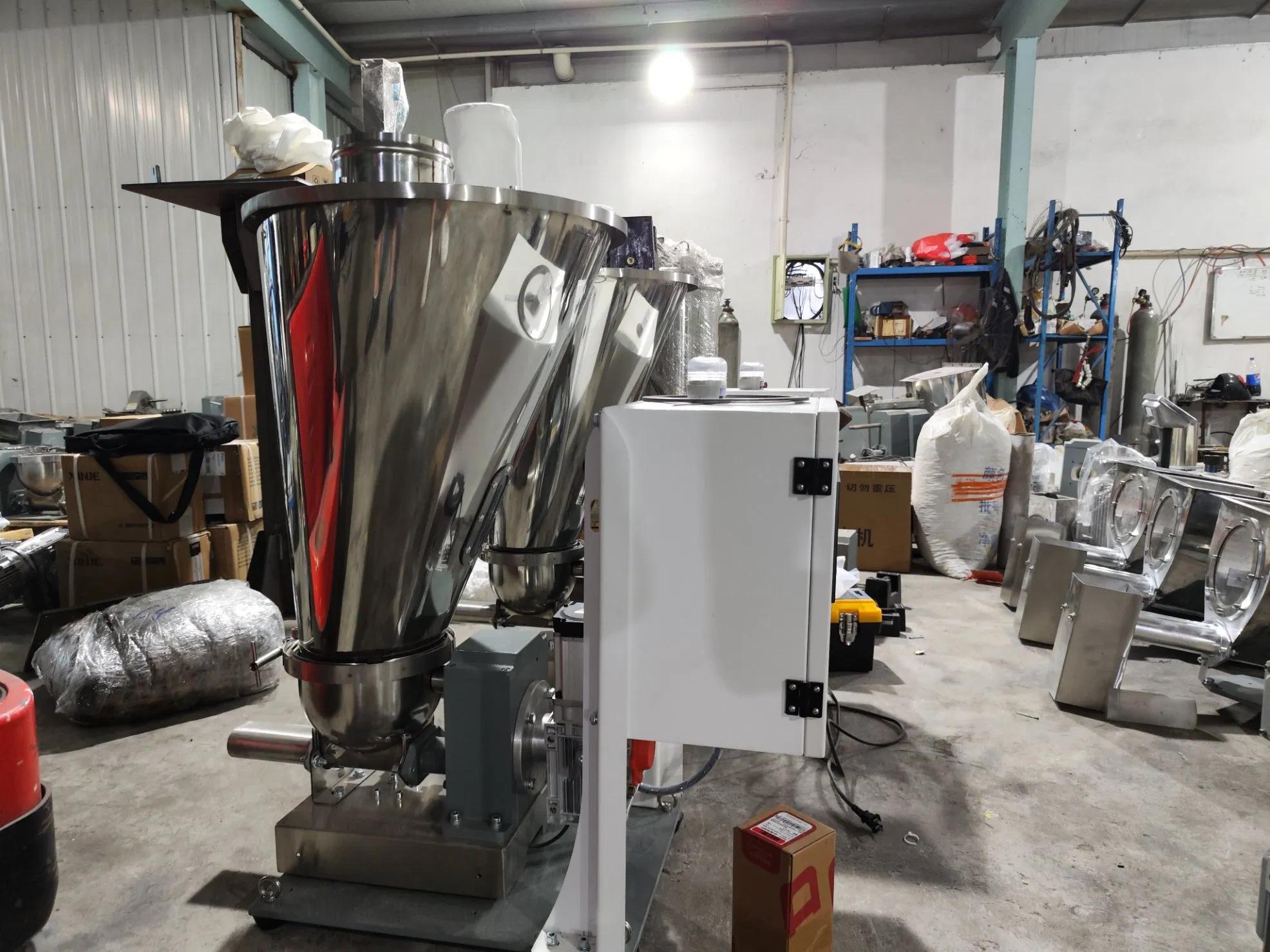
Consistent raw material feeding is essential for maintaining a stable output rate. Depending on the formulation and production requirements, the line may use suitable hoppers, feeders, conveying equipment, and material preparation systems.
Temperature control should be coordinated across the extruder, die, pattern roller, forming mould, and downstream cooling equipment. Different materials and formulations may require different temperature profiles. For multilayer production, the operating windows of the individual material streams must also be considered.
Stable process conditions help reduce fluctuations in sheet thickness, width, profile, surface finish, and layer distribution. Operators should monitor the relevant process parameters and follow documented start-up, production, shutdown, and cleaning procedures.
The EXTRUTEX roof tile extrusion line can be supplied with a centralized electrical control system designed to coordinate extrusion and downstream equipment. Depending on the selected specification, PLC-based controls and an operator interface can support temperature monitoring, line-speed adjustment, equipment status indication, cutting synchronization, and alarm management.
Electrical components should be selected according to the project's technical requirements, local electrical standards, component availability, serviceability, and the customer's preferred brands. Components from established industrial suppliers can be specified where appropriate, subject to the agreed bill of materials.
Specific component brands, models, and country-of-origin requirements should be confirmed in the final quotation and electrical documentation. No particular brand or origin should be assumed unless it is explicitly included in the approved machine specification.
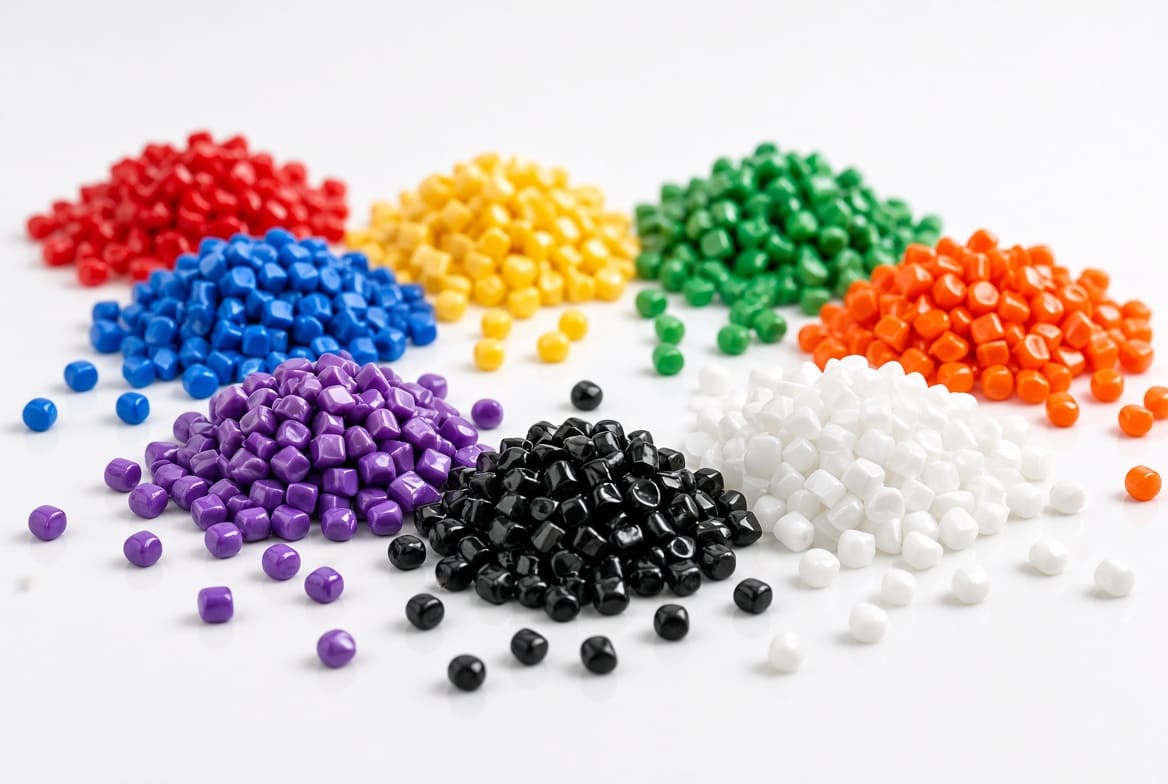
Roof tile quality depends on both equipment design and the formulation used to manufacture the sheet. PVC compounds may contain resin, stabilizers, impact modifiers, processing aids, lubricants, pigments, fillers, and other additives selected for the intended product.
For multilayer products, each layer should be formulated according to its function. The structural layer may prioritize stiffness, impact performance, processing stability, and cost targets, while a surface layer may prioritize appearance and specific weathering characteristics.
For foamed-core products, the formulation and process must be developed to create the intended cellular structure and density. The foam system must be compatible with the extruder, die, forming system, and cooling arrangement.
EXTRUTEX can provide equipment-oriented formulation guidance and discuss raw material sourcing requirements. However, formulation suitability, material availability, and final performance should be confirmed with the relevant material suppliers and validated through testing under the actual production conditions.
The reference configurations cover output figures of approximately 400–700 kg/h, depending on the selected extrusion system. Actual production capacity may vary significantly with product thickness, width, layer ratio, formulation, foaming behavior, die design, and operating speed.
A higher nominal extrusion output does not automatically translate into a higher rate of finished roofing sheets. The forming, cooling, cutting, and stacking systems must be able to handle the material throughput while maintaining the specified product quality.
Before final acceptance, the line should be tested with the intended formulation and roofing profile. Production trials should examine output stability, sheet dimensions, thickness distribution, surface quality, layer integrity where applicable, cut length, and finished-product handling.
Installation planning should consider the complete production line, including material preparation, extruders, dies, forming equipment, cooling systems, cutting equipment, electrical cabinets, maintenance access, and finished-sheet handling.
The customer should confirm factory space, floor loading, electrical capacity, cooling utilities, ventilation, raw material storage, finished-product storage, and safe access for operators and maintenance personnel. Multilayer configurations may require additional space for auxiliary extruders and separate material feeding.
Commissioning should include mechanical alignment, electrical inspection, safety checks, temperature-control verification, test runs, and product quality evaluation. Acceptance criteria should be agreed upon before installation and linked to the final product and machine specifications.
EXTRUTEX combines Austrian design, laboratory, and research and development capabilities with manufacturing in China. The equipment development approach focuses on matching extrusion technology and downstream equipment to the customer's materials, product specifications, and production objectives.
For PVC/PMMA roof tile projects, EXTRUTEX can evaluate the required layer structure, extruder configuration, die arrangement, forming profile, cooling system, cutting method, and automation scope. The aim is to develop a production line that fits the intended product rather than relying on a standard machine configuration for every application.
To help determine the appropriate EXTRUTEX PVC/PMMA roof tile extrusion line, customers should provide the following information where available:
The EXTRUTEX Multilayer PVC/PMMA Roof Tile Extrusion Line is a configurable solution for producing PVC roofing sheets and selected multilayer roofing structures. The equipment can be engineered around single-layer extrusion, two-layer co-extrusion, or three-layer structures, subject to the selected extruders, die design, and material requirements.
Integrated extrusion, melt distribution, pattern forming, cooling, track cutting, and collection equipment provide a coordinated manufacturing process. Optional features such as temperature-controlled pattern rollers, customized forming tooling, chip management, and centralized automation can be specified according to the production requirements.
Contact EXTRUTEX with your product drawings, material structure, target dimensions, and output requirements to discuss a suitable roofing sheet production configuration.
There are no reviews yet.
By submitting your email, you agree to our company’s terms and conditions.
We are not looking to sell; we are here to provide you with the best support and service.
Contact available 24/7
Please do not contact us for advertising or sales inquiries
All rights of this website are reserved for EXTRUTEX Austria and its partner companies, © 2026
-
(0 customer reviews)