No products in the cart.


All rights of this website are reserved for EXTRUTEX Austria and its partner companies, © 2026

Multiple Payment Methods

Discount for advance payments over 50%

Free Shipping Coordination Services
Payment methods:

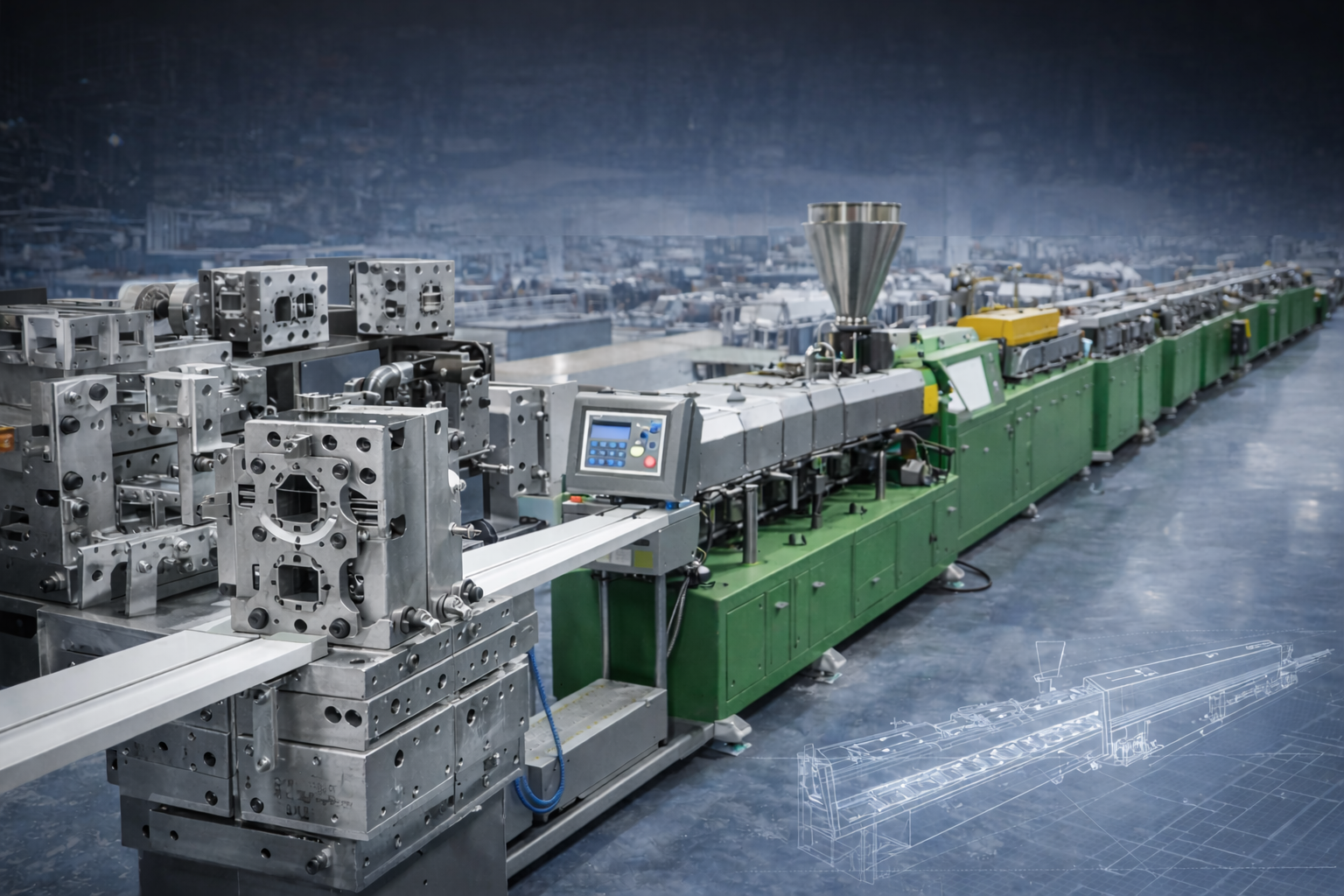
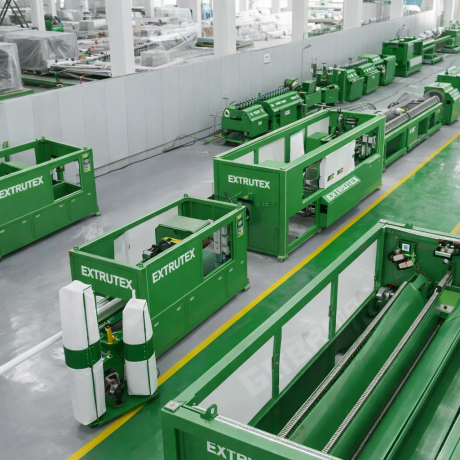
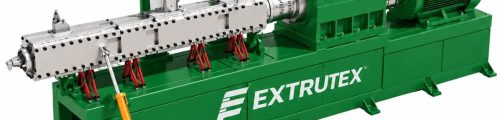
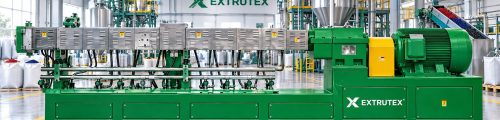
EXTRUTEX PPR/PPRC Pipe Extrusion Line is designed for the continuous production of polypropylene random copolymer pipes used in hot and cold water distribution, plumbing, heating systems, and industrial fluid transportation. The EXTRUTEX line combines a single-screw extruder, PPR pipe die head, vacuum calibration tank, spray cooling tanks, haul-off, cutting machine, and pipe collection system in an integrated production solution.
EXTRUTEX develops extrusion technology with design, laboratory work, and R&D in Austria, with manufacturing in China. The PPR pipe production range includes single-pipe and optional twin-pipe configurations for different pipe diameters, output requirements, factory layouts, and production targets.
The EXTRUTEX PPR series includes PPR63, PPR63S, PPR110, and PPR160. These models cover pipe diameters from Ø16 mm to Ø160 mm, with optional parallel production of two small-diameter pipes using the PPR63S configuration. Each line can be configured according to the required pipe dimensions, pressure rating, wall thickness, resin grade, color, production capacity, and applicable product standards.
PPR and PPRC are commonly used commercial names for polypropylene random copolymer piping systems. The material is widely used in plumbing and hot- and cold-water installations because of its corrosion resistance, low weight, and suitability for thermoplastic pipe joining systems when correctly designed and installed.
| EXTRUTEX Model | Pipe Diameter | Reference Output | Specified Motor Power Range | Production Configuration |
|---|---|---|---|---|
| EXTRUTEX PPR63 | Ø16–63 mm | 150–260 kg/h | 45–75 kW | Single-pipe extrusion line |
| EXTRUTEX PPR63S | (Ø16–63 mm) × 2 | 260–450 kg/h | 75–132 kW | Two-pipe parallel extrusion line |
| EXTRUTEX PPR110 | Ø20–110 mm | 190–320 kg/h | 55–90 kW | Single-pipe extrusion line |
| EXTRUTEX PPR160 | Ø50–160 mm | 260–400 kg/h | 75–110 kW | Single-pipe extrusion line |
Technical specification note: The output and motor power ranges above are the supplied reference specifications. Actual production depends on the selected extruder, screw design, material grade, pipe diameter, wall thickness, die tooling, cooling capacity, and operating conditions. The final motor rating and output should be confirmed in the project-specific equipment configuration.
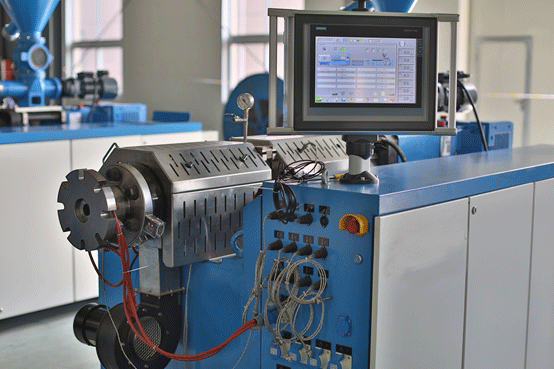
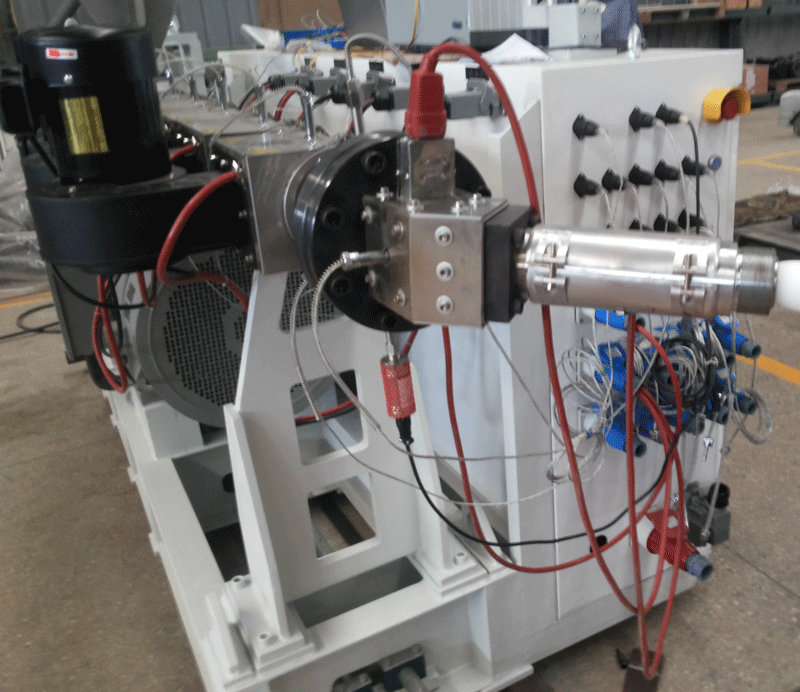
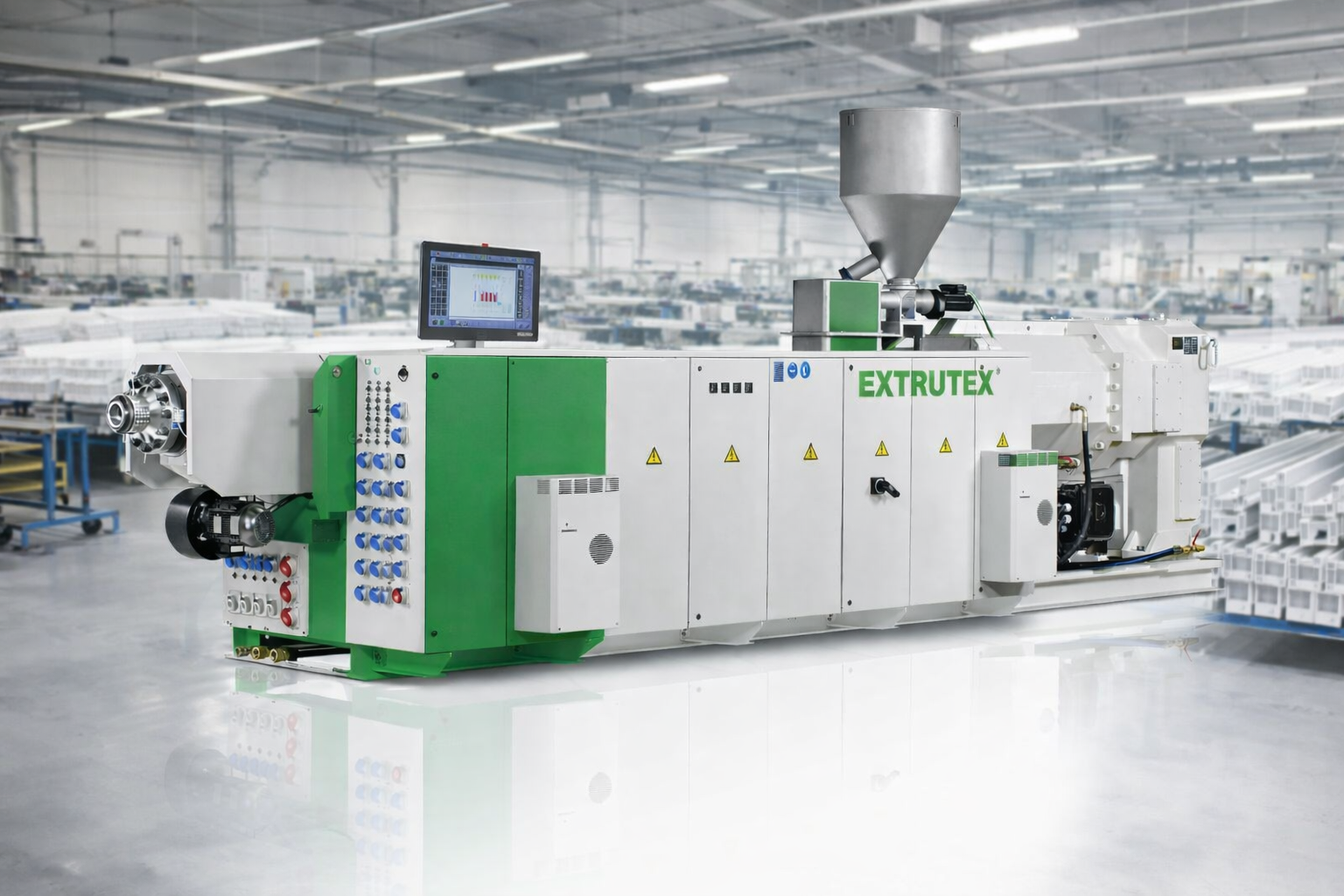
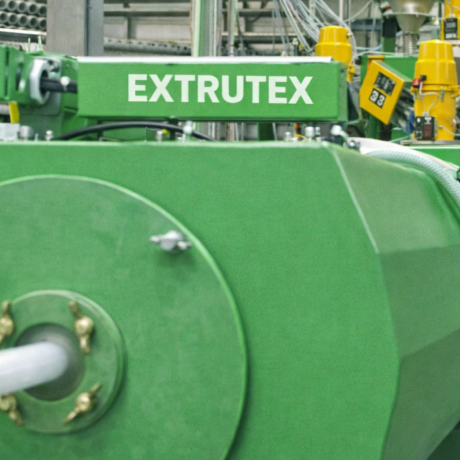
The single-screw extruder is the main processing machine in a conventional PPR pipe extrusion line. It receives polypropylene granules, conveys and melts the material, mixes the melt, and supplies a stable flow to the pipe die head. A properly selected screw and barrel system helps maintain consistent melt temperature, pressure, and output throughout production.
EXTRUTEX uses the HELIFEED single-screw extruder platform as a reference for pipe extrusion equipment. The screw diameter, L/D ratio, drive system, heating zones, cooling system, and screw geometry should be selected specifically for PPR/PPRC resin and the target production capacity. Existing HELIFEED ratings from other pipe applications should not be treated as guaranteed PPR output without a material-specific engineering review.
The following models are reference points from previously discussed EXTRUTEX pipe extruder specifications. They are included for equipment-planning purposes and are not confirmed assignments to the four PPR line models.
| Reference Extruder Model | Screw Diameter | L/D Ratio | Previously Supplied Output Range |
|---|---|---|---|
| EXTRUTEX HELIFEED 45/40 | 45 mm | 40:1 | 160–240 kg/h |
| EXTRUTEX HELIFEED 75/40 | 75 mm | 40:1 | 400–580 kg/h |
| EXTRUTEX HELIFEED 90/40 | 90 mm | 40:1 | 540–770 kg/h |
| EXTRUTEX HELIFEED 125/40 | 125 mm | 40:1 | 770–1,100 kg/h |
| EXTRUTEX HELIFEED 150/40 | 150 mm | 40:1 | 940–1,300 kg/h |
These output figures originate from earlier pipe extrusion equipment references and should not be published as validated PPR/PPRC output ratings. The final single-screw extruder for each PPR line must be selected against the supplied PPR output range, resin grade, pipe dimensions, and actual motor-power requirement. A smaller or specially configured extruder may be appropriate for a given model depending on the intended production duty.
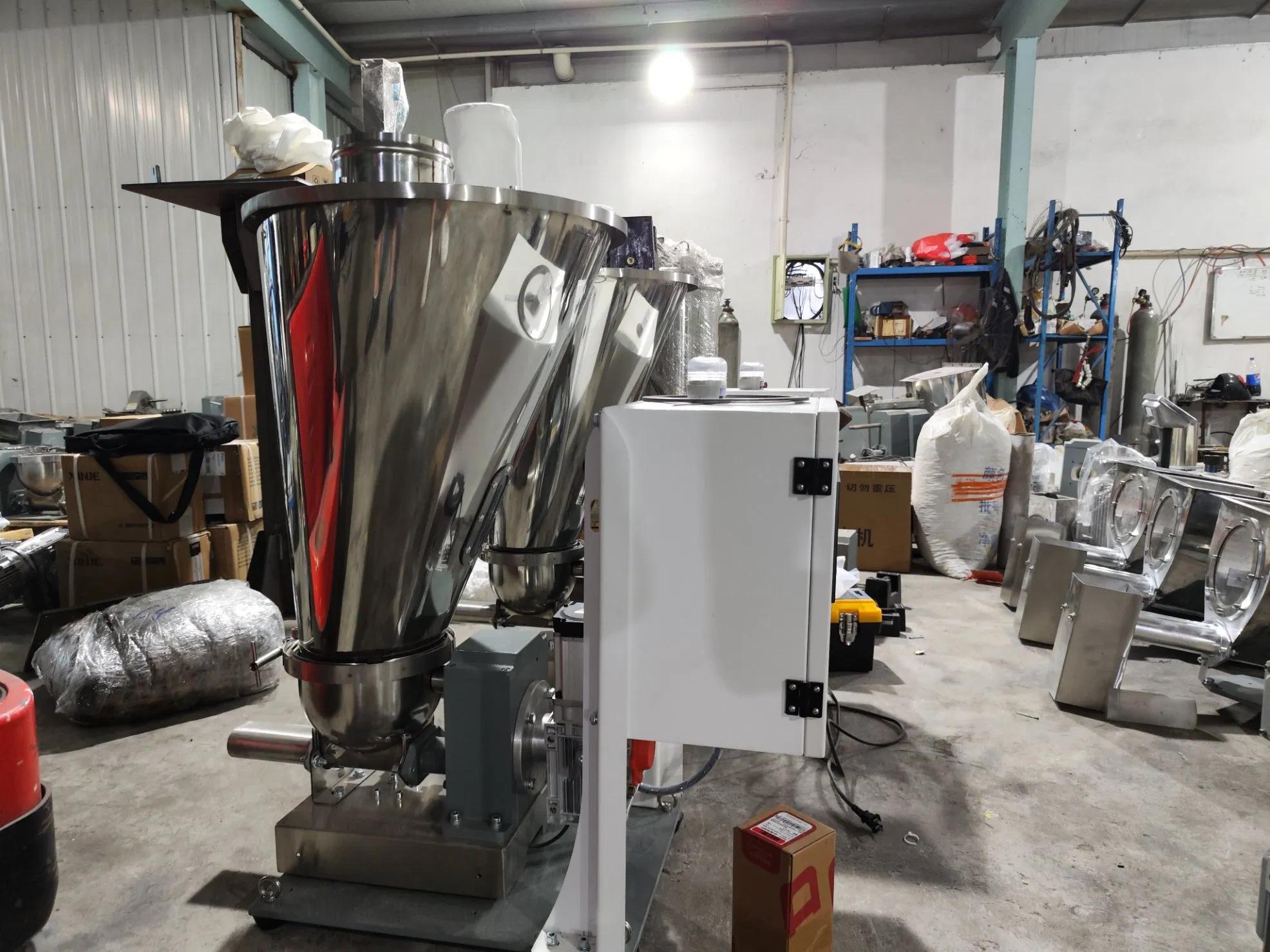
Consistent material feeding is important for maintaining pipe dimensions and production stability. PPR/PPRC resin is commonly supplied in granule form and can be fed through a hopper loader or centralized conveying system. Depending on the plant design, the feeding system may include a material storage hopper, vacuum loader, conveying pipework, hopper-level sensor, and optional dosing equipment.
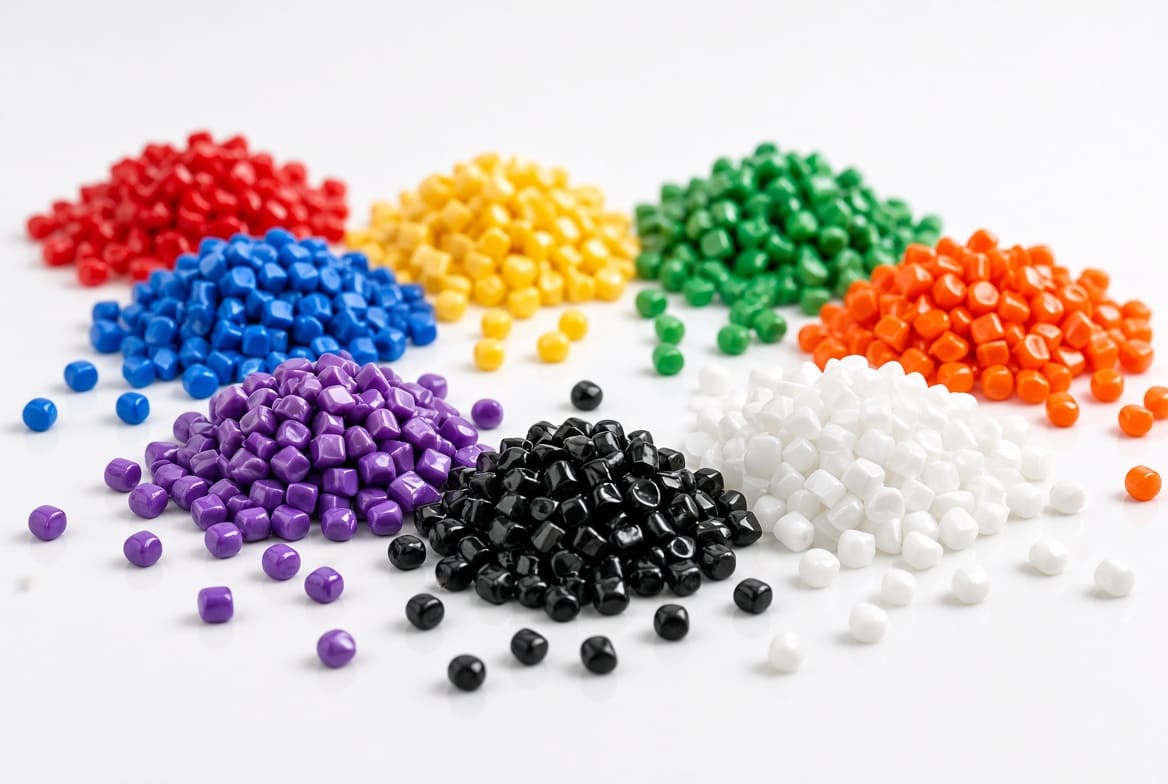
For colored PPR pipes, a suitable dosing system can introduce color masterbatch at a controlled rate. For multilayer or co-extruded products, additional extruders and feeding systems may be required for the individual material streams.
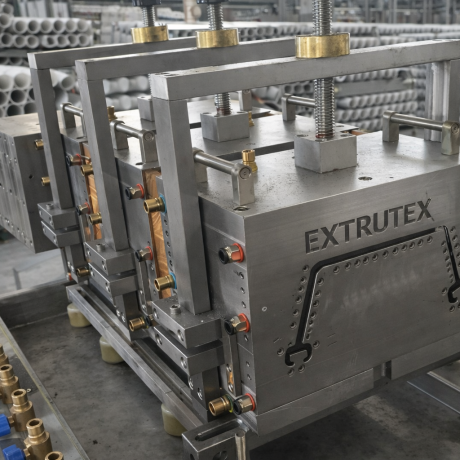
The PPR pipe die head distributes the molten polymer around the mandrel to form the pipe wall. Die design, melt channels, mandrel geometry, temperature control, and tooling dimensions affect wall-thickness consistency, surface quality, and output stability.
EXTRUTEX pipe tooling can be specified for the diameter ranges covered by PPR63, PPR63S, PPR110, and PPR160. Each diameter range requires suitable die tooling and downstream sizing components. The complete tooling package should be selected according to the pipe's outside diameter, wall thickness, pressure class, resin grade, and production target.
Tooling changeover arrangements depend on the product range and line design. Customers should specify the required pipe sizes and wall thicknesses so the necessary die sets, mandrels, calibration sleeves, and related change parts can be determined.
Immediately after the die head, the extruded PPR pipe enters the calibration section. A vacuum calibration tank helps control the initial pipe diameter and maintain dimensional consistency while the polymer cools. The calibration sleeve, vacuum conditions, water temperature, and pipe speed must be coordinated with the extrusion output.
The EXTRUTEX vacuum calibration tank can be configured for the required diameter range, with adjustable pipe supports, vacuum connections, water circulation, and access for cleaning and maintenance. The tank length and calibration arrangement should be determined according to the product dimensions and required cooling performance.
After initial calibration, the pipe passes through one or more spray cooling tanks. Cooling water is distributed around the pipe to remove heat and help stabilize the pipe dimensions before haul-off and cutting. The number and length of tanks depend on the pipe diameter, wall thickness, extrusion output, line speed, and cooling requirements.
EXTRUTEX spray cooling tanks can be designed with water spray nozzles, circulation piping, drainage, pipe supports, and temperature-management provisions. The cooling system should provide sufficient capacity without creating unstable pipe movement or uneven cooling.
Stable cooling is particularly important for small-diameter, high-speed production and for larger pipes with thicker walls. The cooling section must be matched to the required production rate rather than selected by pipe diameter alone.
The EXTRUTEX PPR63S configuration is designed as a parallel two-pipe production line for diameters from Ø16 mm to Ø63 mm, according to the supplied model specification. Producing two pipes simultaneously can increase output per production line when demand, die design, cooling capacity, and downstream handling are appropriately coordinated.
A twin-pipe arrangement typically requires a die head with two pipe outlets, matched calibration tooling, suitable cooling paths, and a haul-off arrangement capable of transporting both pipes consistently. Cutting and collection can be configured to handle the two pipes independently or in a coordinated manner.
The supplied output of 260–450 kg/h applies to the PPR63S reference specification and must be confirmed for the chosen resin, diameter combination, wall thickness, and line configuration. Simultaneous maximum output from both pipe paths should not be assumed for every pipe size.
The haul-off machine pulls the pipe through the cooling and downstream sections at a controlled speed. Stable traction is important for maintaining pipe dimensions, avoiding surface damage, and coordinating the extrusion output with cutting and collection.
Depending on the model and pipe size, EXTRUTEX can configure a belt-type or caterpillar-type haul-off with a suitable number of traction belts or tracks. The drive capacity, contact surface, clamping arrangement, and speed-control range should match the pipe diameter and line output.
For PPR63S twin-pipe production, the haul-off system must accommodate both pipes without creating different traction conditions that could affect their dimensions or lengths. The final design depends on the selected twin-pipe configuration.
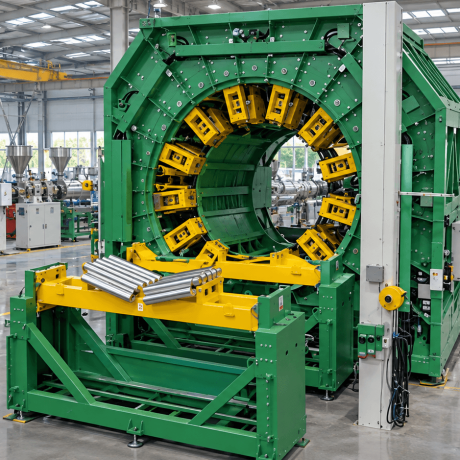
The cutting machine cuts the continuously extruded pipe into preset lengths. Depending on the diameter range, line speed, and product requirements, the system may use a suitable planetary saw or another compatible automatic cutting method. The cutting method must produce clean ends while minimizing deformation and surface damage.
EXTRUTEX cutting equipment can be specified for the PPR63, PPR63S, PPR110, and PPR160 line configurations. Cutting capacity, blade or tool selection, pipe clamping, and control logic must be matched to the product dimensions and production speed.
For the PPR63S twin-pipe line, the cutting section must be configured for two parallel pipes. The final arrangement should be confirmed according to whether both pipes are cut together or handled by separate cutting mechanisms.
After cutting, pipes are transferred to a collection table or stacking station. The collection equipment should support the pipe without damaging its surface and provide a practical arrangement for inspection, bundling, and removal from the production area.
EXTRUTEX can configure a passive tilt table, collection table, or customized handling section according to the pipe length, diameter, factory layout, and required level of automation.
For larger PPR160 pipe sizes, the support arrangement should be selected according to pipe weight, length, and the required transfer method. For smaller pipes, collection equipment can be optimized for high-speed production and convenient bundling.
Depending on the intended product, PPR/PPRC pipes may be manufactured as single-layer or multilayer structures. A multilayer pipe can incorporate additional material layers for specific product-design requirements. A stripe co-extrusion system can also add one or more identification lines to the outside surface of a pipe.
These options require additional process engineering. Multilayer production may require auxiliary extruders, additional feeding systems, a compatible co-extrusion die head, and coordinated control of the material streams. Identification stripes may use a compact co-extruder and a dedicated die-channel arrangement.
The standard PPR63, PPR63S, PPR110, and PPR160 specifications listed above describe the base production configurations. Any additional extruder, co-extrusion system, or multilayer arrangement should be confirmed in the final technical quotation.
Some PPR pipe systems use socket-type connections formed by heating and shaping the pipe end. Where required by the customer's product design, an optional socketing or belling machine can be integrated as a downstream operation or supplied as a separate station.
The socketing method, socket dimensions, heating process, tooling, and cooling procedure must match the pipe design and connection standard. Not every PPR pipe product requires an in-line belling machine, so the need for this equipment should be confirmed when defining the finished product.
The EXTRUTEX PPR/PPRC line can be equipped with a control system for managing extrusion, temperature zones, cooling, haul-off speed, cutting length, and relevant machine alarms. The automation level depends on the model, production requirements, and customer preferences.
The control system can include an operator interface, temperature controllers, variable-frequency drives, motor protection, safety interlocks, and production monitoring. Optional functions may include automatic cutting-length control, production counters, and communication between the extruder and downstream equipment.
The actual functions depend on the selected electrical components and control architecture. Optional automation should be specified before manufacture to ensure compatibility between the extruder, downstream machines, and the customer's factory systems.
Finished pipe quality depends on the resin grade, formulation, screw and die design, temperature control, calibration, cooling, and line stability. Quality-control procedures should be established for the required pipe sizes, wall thicknesses, pressure classes, and target market.
Testing requirements depend on the applicable standard and intended use. Equipment specifications alone do not establish finished-pipe certification or compliance. The final pipe design and production process must be validated against the relevant requirements.
Pipe selection should be based on operating temperature, pressure, fluid compatibility, installation conditions, and the applicable pipe-system standard. The extrusion line must be configured for the intended product specification rather than relying on pipe diameter alone.
The best EXTRUTEX PPR/PPRC line depends on the required diameter range, target output, wall-thickness schedule, number of pipes produced simultaneously, and factory operating conditions.
These output ranges are reference figures, not guaranteed production rates for every pipe size. Final performance depends on the pipe wall thickness, material grade, die design, screw configuration, cooling capacity, haul-off arrangement, and line speed.
Before installation, the customer should confirm the factory floor area, electrical supply, cooling-water availability, compressed-air requirements where applicable, material storage, pipe transfer routes, and finished-product handling space. The line layout should provide access for die changes, cleaning, maintenance, and safe operation.
For a project quotation, specify the required model—PPR63, PPR63S, PPR110, or PPR160—together with the pipe diameter range, wall thickness, pressure rating, resin grade, target production capacity, pipe color, and required finished length.
Please also confirm whether the project requires single-layer pipes, multilayer pipes, identification stripes, or socketed pipe ends. These details help determine the appropriate single-screw extruder, die head, calibration tooling, cooling tanks, haul-off, cutting system, and optional downstream equipment.
EXTRUTEX PPR/PPRC Pipe Extrusion Line: a configurable production solution for polypropylene random copolymer pipes, with single-screw extrusion and coordinated downstream equipment selected for the required product range.
There are no reviews yet.
By submitting your email, you agree to our company’s terms and conditions.
We are not looking to sell; we are here to provide you with the best support and service.
Contact available 24/7
Please do not contact us for advertising or sales inquiries
All rights of this website are reserved for EXTRUTEX Austria and its partner companies, © 2026
-
(0 customer reviews)