No products in the cart.


Window & Door Engineering




Multiple Payment Methods

Discount for advance payments over 50%

Free Shipping Coordination Services
Payment methods:

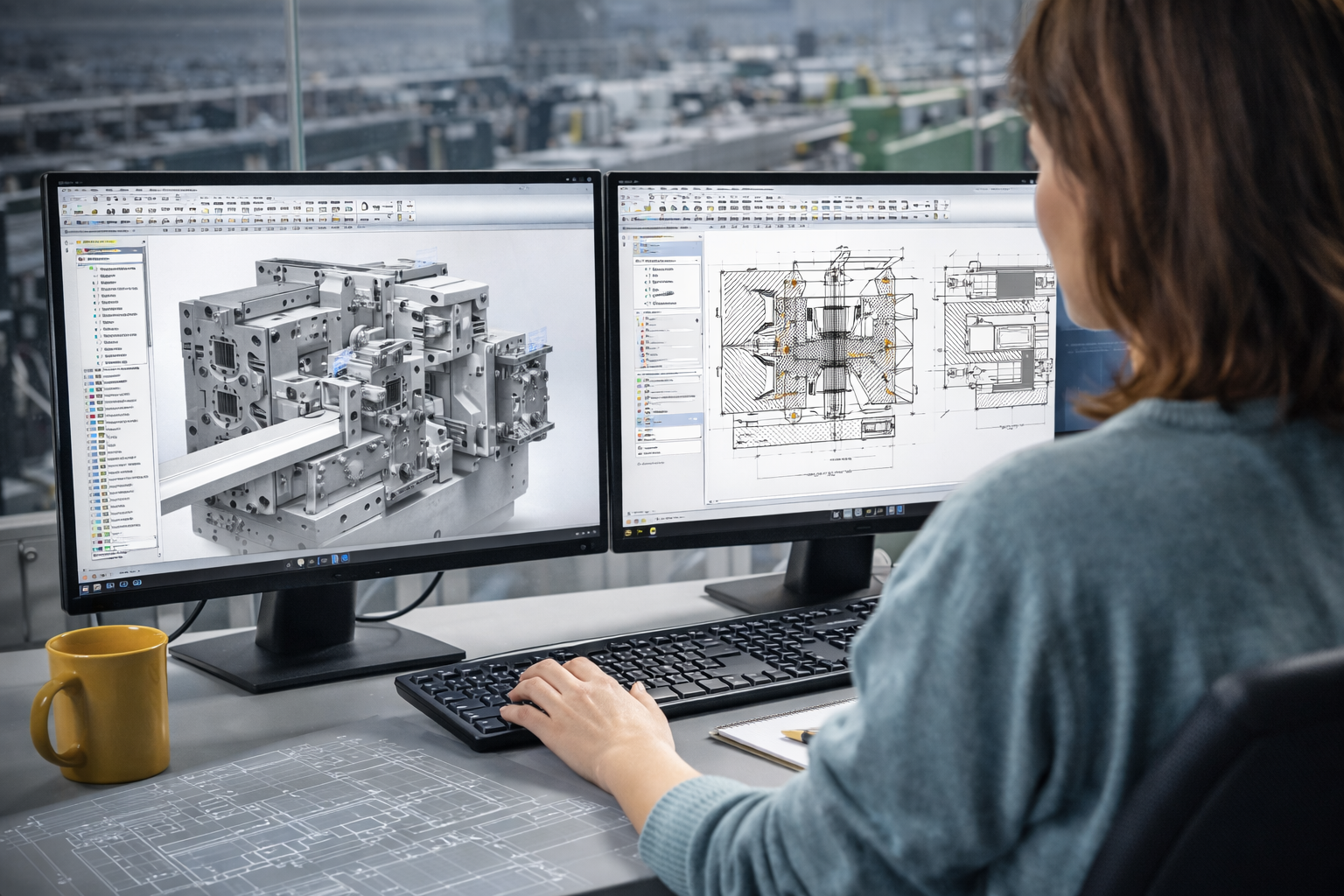
EXTRUTEX provides complete window and door engineering solutions for manufacturers, investors, profile producers, extrusion companies, and building-system developers worldwide. With more than 35 years of engineering experience and the involvement of experienced Austrian engineers, EXTRUTEX can develop and adapt window and door systems according to the technical, climatic, architectural, and market requirements of different countries.
Our engineering approach goes far beyond the design of an individual profile. We can develop a complete system concept covering profiles, chambers, reinforcement, sealing systems, hardware compatibility, drainage, corner connections, glazing, thermal performance, production technology, tooling, and assembly requirements.
Every market has different requirements. A window system designed for Central Europe may not be suitable for a hot climate, a tropical region, a high-rise building, or a market where different glass thicknesses and hardware systems are standard. EXTRUTEX combines European engineering experience with practical extrusion and production knowledge to create systems that are technically optimized for their intended application.
There is no universal window and door system that is ideal for every market.
Climate, construction methods, architectural preferences, energy regulations, building standards, available raw materials, glass specifications, hardware suppliers, installation methods, and manufacturing capabilities can all differ from one country to another.
EXTRUTEX can therefore engineer systems specifically for the target market.
Depending on the project, we can develop solutions for:
European markets
Middle Eastern markets
Asian markets
African markets
CIS and Central Asian markets
North and South American markets
Tropical and high-humidity regions
Hot and desert climates
Cold and continental climates
Coastal environments
High-rise and commercial buildings
Residential construction
Industrial and institutional buildings
The engineering process begins by understanding the target market and the intended application. From there, we determine the appropriate profile geometry, system depth, chambers, reinforcement concept, gasket arrangement, glazing options, drainage configuration, and manufacturing requirements.
EXTRUTEX combines more than 35 years of engineering experience with modern extrusion technology and international manufacturing knowledge.
Our engineering background covers the complete development chain from profile concept to industrial production. This allows us to consider not only how a window or door should perform after installation, but also how it can be extruded, fabricated, assembled, glazed, packed, transported, and installed efficiently.
The involvement of experienced Austrian engineers brings additional European engineering knowledge to system development, particularly in areas such as profile optimization, structural design, thermal performance, sealing concepts, fabrication, and production practicality.
Our objective is simple: to create systems that work in the real world.
A technically attractive profile is not enough. A successful window and door system must also be economical to produce, easy to fabricate, compatible with commercially available components, reliable during long-term use, and suitable for the construction practices of its target market.
EXTRUTEX can work with customers from the earliest design stage and develop a complete window or door platform.
Depending on project requirements, engineering can include:
We can develop the complete profile family required for a window or door system, including:
Frame profiles
Sash profiles
Mullions
Transoms
Reinforcement profiles
Interlock profiles
Beads
Coupling profiles
Extension profiles
Thresholds
Door profiles
Sliding profiles
Cover profiles
Adapter profiles
Corner and connection profiles
Profile geometry can be optimized according to the required system depth, strength, glazing thickness, reinforcement method, thermal requirements, and manufacturing process.
Profile chamber design has an important influence on structural performance, insulation, material consumption, and extrusion behavior.
EXTRUTEX engineers can optimize the internal geometry of profiles to achieve the required balance between:
Strength + thermal performance + material consumption + extrusion stability + production efficiency.
The number and configuration of chambers can be developed according to the target application rather than simply following a standard profile concept.
EXTRUTEX has extensive experience in extrusion technology and can engineer systems for different profile materials and production technologies.
Depending on the project, systems may be developed around:
uPVC
PVC
Reinforced PVC systems
Aluminum-compatible concepts
Hybrid systems
Co-extruded profile solutions
Special polymer profile applications
For PVC and uPVC window and door systems, profile geometry can be developed with consideration for extrusion tooling, material formulation, stabilizer systems, reinforcement, welding, machining, and final assembly.
This connection between system engineering and extrusion engineering gives EXTRUTEX an important advantage: the system can be designed with actual production conditions in mind.
For reinforced PVC windows and doors, reinforcement design is an essential part of the complete system.
EXTRUTEX can engineer reinforcement chambers and steel reinforcement concepts according to the required profile dimensions, sash and frame geometry, wind loading, element size, and application.
The engineering can consider:
Steel reinforcement dimensions
Reinforcement wall thickness
Fixing locations
Screw positioning
Reinforcement accessibility
Large sash requirements
Door reinforcement
Mullion reinforcement
Hardware fixing requirements
The objective is to provide sufficient structural support without unnecessarily increasing material consumption or production complexity.
A window or door system must provide reliable protection against air, water, wind, dust, and environmental conditions.
EXTRUTEX can develop gasket arrangements and sealing concepts appropriate for the target system.
Depending on the design, this may include:
External glazing gaskets
Internal glazing gaskets
Frame seals
Sash seals
Center seals
Compression seals
EPDM gasket systems
TPE-compatible solutions
Co-extruded sealing concepts
The position and geometry of the sealing lines can be optimized together with the profile design to achieve reliable compression and practical fabrication.
Modern windows and doors must accommodate different glazing configurations depending on climate, building type, and energy requirements.
EXTRUTEX can engineer systems for different glass and glazing-unit configurations, including single, double, and triple glazing concepts where applicable.
Engineering considerations may include:
Glass thickness
Insulating glass units
Glazing bead design
Glass support
Glazing clearance
Drainage
Spacer compatibility
Heavy-glass applications
Safety glazing
Large glazing areas
The system can be designed around the glazing specifications commonly available in the target market.
Hardware is one of the most important components of a complete window and door system.
EXTRUTEX can develop profile geometry to accommodate commercially available hardware and selected hardware platforms.
Depending on the project, the engineering can consider:
Tilt & turn hardware
Casement hardware
Sliding hardware
Lift-and-slide systems
Door locks
Multipoint locking systems
Hinges
Handles
Rollers
Hardware reinforcement
Locking points
Where customers already have preferred hardware suppliers, the profile system can be developed around their selected hardware dimensions and installation requirements.
A complete system should provide manufacturers with sufficient flexibility to produce different architectural configurations.
EXTRUTEX can engineer systems for configurations such as:
Fixed windows
Single-opening windows
Double-opening windows
Tilt & turn windows
Casement windows
Top-hung windows
Sliding windows
Lift-and-slide doors
Sliding doors
Hinged doors
French doors
Balcony doors
Large-format doors
Multi-panel configurations
The required profiles and accessories can be organized into a complete system architecture so manufacturers can expand their product range without redesigning the entire platform.
Energy efficiency is becoming increasingly important in window and door engineering.
EXTRUTEX can optimize profile geometry, glazing position, sealing lines, and thermal paths according to the intended performance requirements.
Engineering considerations may include:
Frame depth
Chamber configuration
Glazing position
Thermal bridges
Sealing arrangement
Reinforcement position
Insulating materials
Glass specification
Spacer configuration
For markets with demanding energy-efficiency requirements, the system can be developed with thermal performance as a primary design objective.
For warmer climates, the design approach may focus on solar exposure, ventilation, shading compatibility, durability, and resistance to high ambient temperatures.
Different climates require different engineering priorities.
In cold climates, insulation and air tightness may be major considerations.
In hot climates, thermal gain, ventilation, UV exposure, and material stability can become more important.
In tropical climates, humidity, heavy rainfall, drainage, corrosion resistance of components, and long-term sealing performance require particular attention.
For coastal regions, the selection and protection of hardware and reinforcement components may require additional consideration because of environmental exposure.
EXTRUTEX can adapt the system concept to these environmental conditions instead of simply exporting an existing design without modification.
A window system must ultimately be manufactured efficiently.
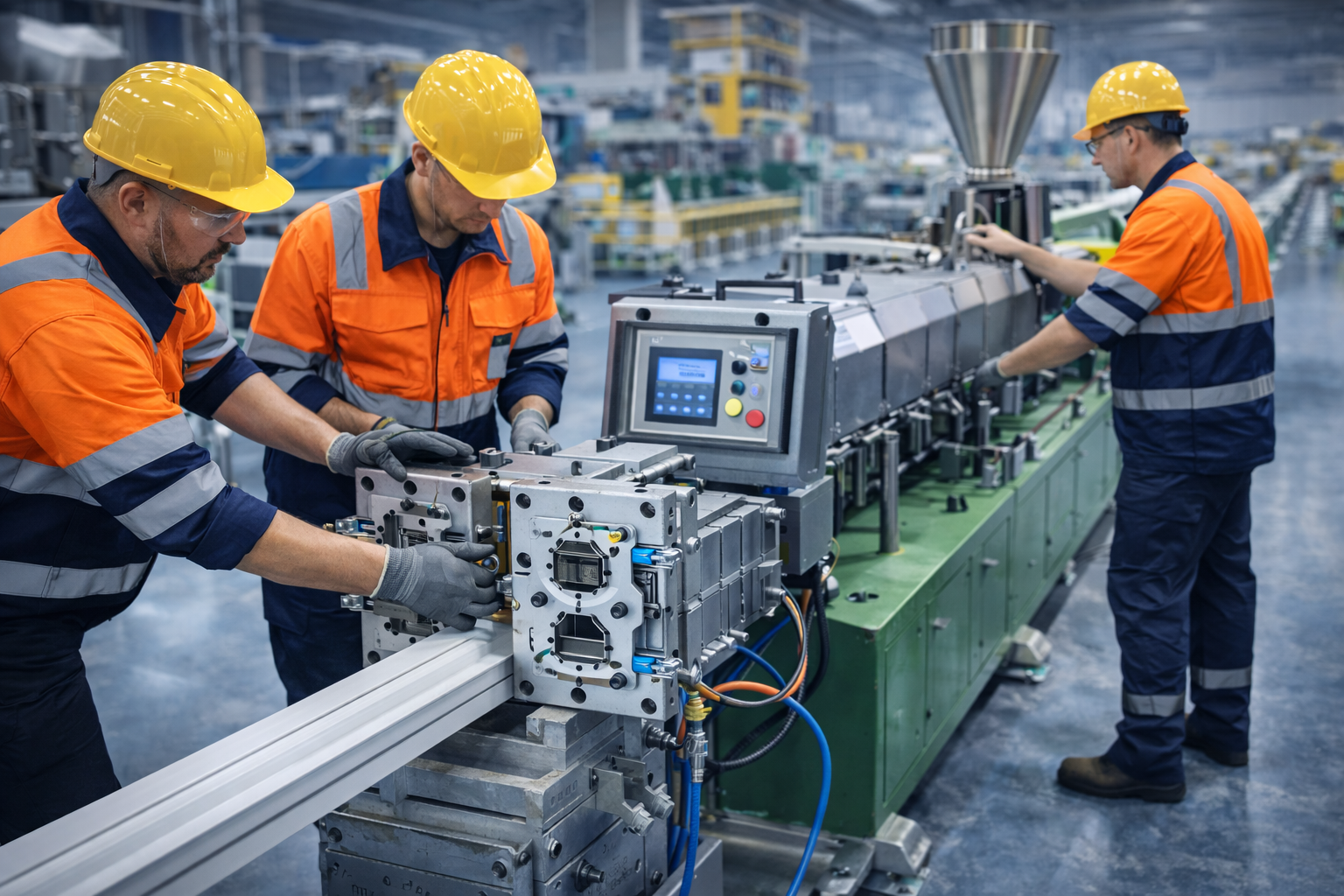
EXTRUTEX can support customers in connecting system design with actual production requirements.
Engineering can cover:
Extrusion die concepts
Calibration considerations
Profile tolerances
Cutting
Steel reinforcement insertion
Screw fixing
Welding
Corner cleaning
CNC machining
Hardware installation
Glazing
Assembly
Quality control
Because EXTRUTEX is active in plastic extrusion machinery and tooling, we understand the relationship between profile geometry and extrusion production.
This allows the system to be engineered not only for performance but also for manufacturability.
Depending on the project scope, EXTRUTEX can prepare technical documentation required for system development and production.
Documentation may include:
Profile drawings
Cross-sectional drawings
Dimension specifications
Profile codes
System catalogues
Reinforcement drawings
Gasket specifications
Glazing details
Hardware installation information
Fabrication drawings
Cutting information
Assembly guidelines
Technical data
Extrusion tooling information
The documentation structure can be adapted to the customer’s production and sales requirements.
EXTRUTEX can support projects through multiple stages:
Market Analysis → System Concept → Profile Engineering → 3D/CAD Development → Prototype → Tooling → Extrusion Trials → Testing → Fabrication Development → Production → Technical Support
This integrated approach reduces the gap between engineering and manufacturing.
Instead of receiving a profile drawing and being left to solve the production problems independently, customers can work with a technical partner familiar with the complete extrusion and window-production process.
Our service is suitable for both established manufacturers and companies developing a new window and door business.
For an existing manufacturer, EXTRUTEX can redesign or upgrade an existing system, improve thermal performance, introduce new profiles, reduce material consumption, or develop new opening configurations.
For a new manufacturer, EXTRUTEX can develop a complete system from the beginning, including the profile family, tooling concept, production requirements, and technical documentation.
We can also work with customers who already have their own profile concepts and require engineering optimization or production support.
EXTRUTEX does not believe that one standard profile system should simply be copied from one country to another.
Every market has its own requirements.
Our engineering team works to understand the customer’s country, climate, construction standards, target customers, architectural preferences, available materials, manufacturing equipment, hardware options, and required performance before developing the system.
With more than 35 years of engineering experience, experienced Austrian engineers, and strong expertise in plastic extrusion machinery, tooling, materials, and production technology, EXTRUTEX can provide a complete technical platform for companies looking to develop or expand their window and door business.
From the first profile concept to extrusion tooling, production, fabrication, and final system development, EXTRUTEX can support the complete engineering process.
EXTRUTEX — Window & Door Engineering for Global Markets.
Your market. Your requirements. Your system. Our engineering experience.
At the heart of every successful extrusion process lies balance: a balance of heat, pressure, and flow. Achieving that balance is not guesswork; it is the direct result of meticulous engineering.
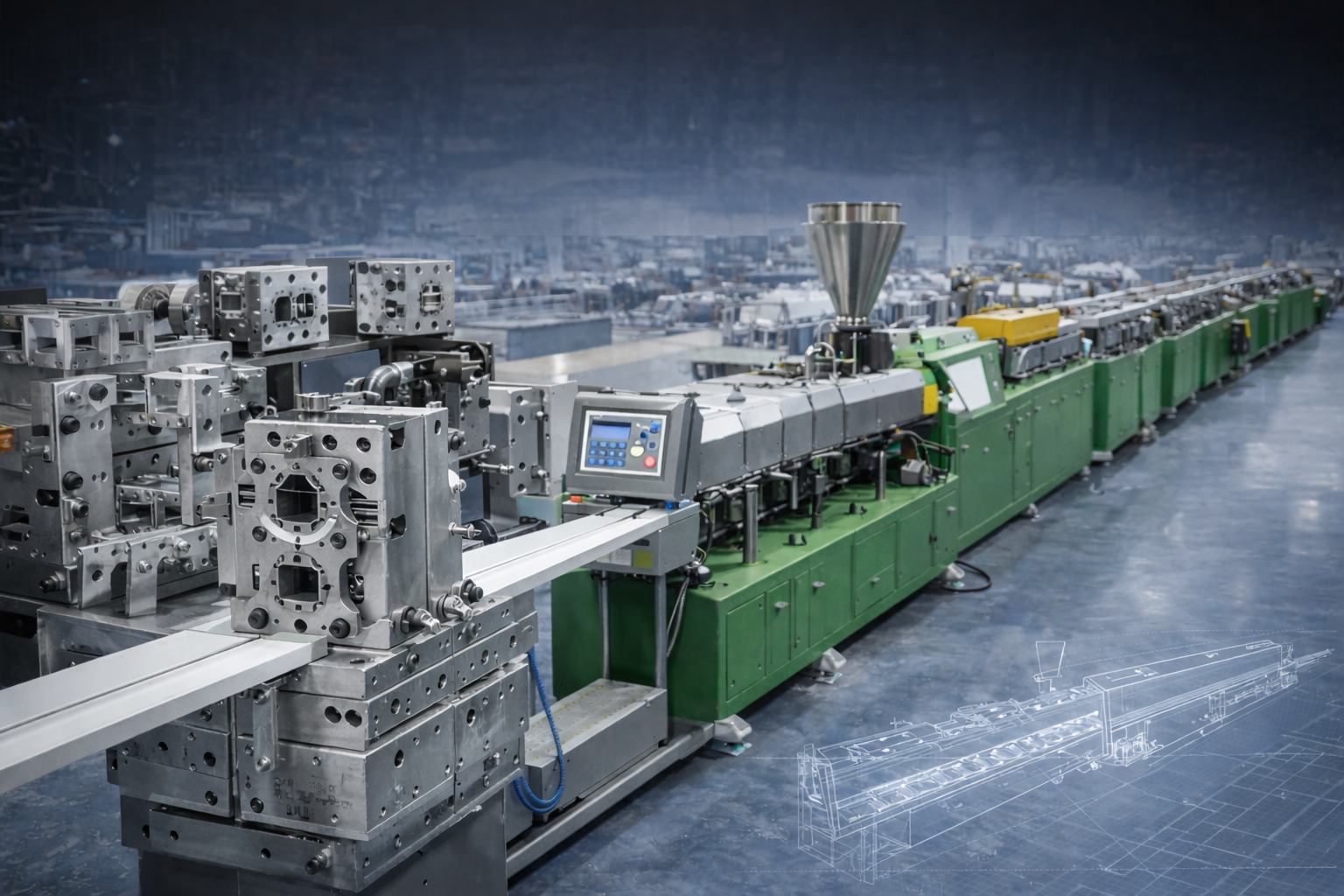
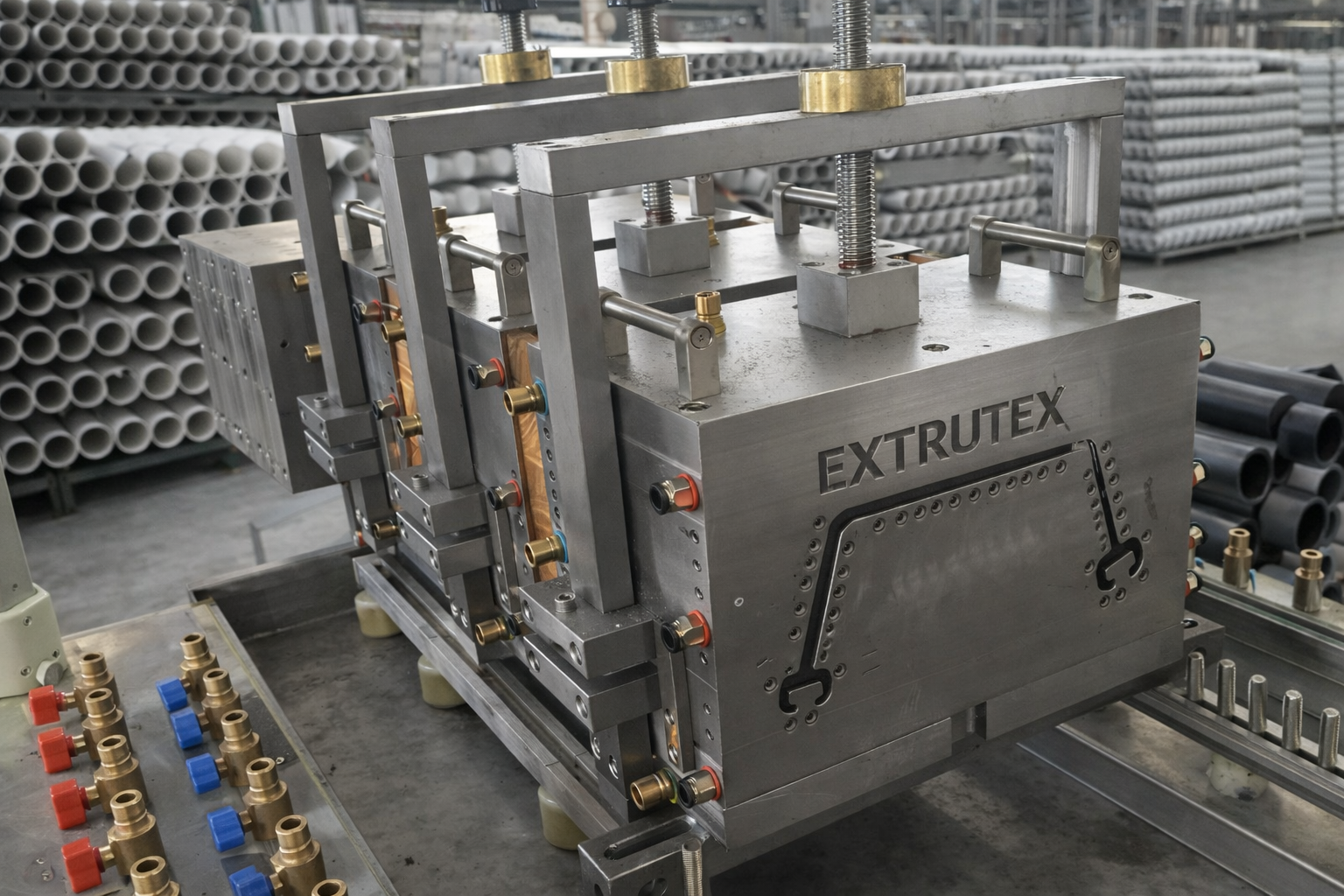
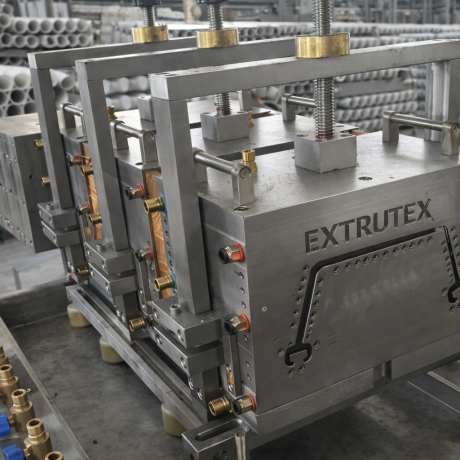
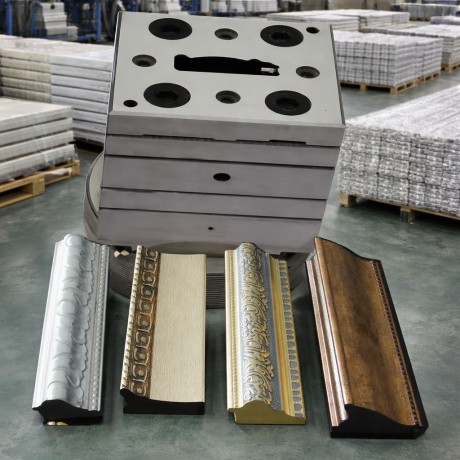
An extrusion die is more than just a tool—it is the conductor of the extrusion orchestra. The extruder may provide the molten polymer, the downstream equipment may handle cooling and cutting, but the die is the decisive element that defines the geometry, surface quality, and structural integrity of the product.
Design Philosophy
Modern dies for cable ducts and rain gutters are conceived in the digital realm. Advanced CAD/CAM systems allow engineers to simulate polymer flow long before steel meets the milling machine. Computational fluid dynamics (CFD) models predict pressure drops, eliminate dead zones, and ensure even melt distribution. This upfront investment in design reduces costly trial-and-error on the production floor.
Tool Steels and Heat Treatment
The choice of material for die construction is critical. High-grade alloy steels, treated through vacuum hardening and nitriding, offer exceptional resistance to wear and corrosion. Since extrusion involves constant friction, high temperatures, and abrasive fillers in polymers (like calcium carbonate or titanium dioxide), the die must maintain dimensional stability under punishing conditions. A well-built die lasts for years, not months.
Polishing and Surface Treatment
The surface finish inside the flow channels is a silent factor in quality. A mirror-polished flow channel reduces friction, prevents polymer hang-ups, and ensures the extrudate exits smoothly. Many leading dies are further treated with hard chrome or advanced PVD coatings to extend life and improve cleanability.
Temperature Control
Extrusion is a dance of heat. Too much heat, and the polymer degrades. Too little, and flow becomes sluggish. Precision-engineered dies incorporate heating cartridges, cooling channels, and thermal insulation to keep every millimeter of the profile within exact tolerances. For complex shapes such as multi-compartment cable ducts or ornate rain gutter profiles, this thermal harmony is essential.
Balanced Flow Distribution
The most delicate achievement of die design is flow balance. The polymer melt must reach every cavity and every corner at exactly the same pressure and temperature. Imagine the melt as a river: if one side flows faster than the other, the product warps, walls become uneven, and snap-fit joints fail. By using advanced manifold designs—spider dies, T-dies, and proprietary distribution geometries—engineers guarantee uniform wall thickness, symmetry, and strength.
Engineering excellence is invisible to the naked eye. Yet it reveals itself in the consistent hum of a production line running 24/7 without stoppages, in the flawless snap of a cable duct lid, in the gutter that holds steady during a storm without cracking.
Cable ducts are the guardians of modern infrastructure. They shelter power cables, network lines, and control wiring, keeping them organized and safe from mechanical damage, dust, or moisture. Whether in an office building, a subway system, or an industrial plant, cable ducts enable order in what would otherwise be chaos.
Profile Diversity
Cable ducts are not one-size-fits-all. They come in countless dimensions: narrow mini-ducts for data cables, wide trunking systems for industrial wiring, ducts with multiple compartments for separating power and signal lines. Some feature snap-fit lids, while others rely on sliding covers. The extrusion die must be adaptable to this diversity, delivering precision regardless of complexity.
Critical Quality Features
Dimensional Accuracy – If a duct is even a fraction of a millimeter off-spec, covers won’t close, or accessories won’t fit.
Snap-fit Reliability – The cover must click into place with just the right force—firm enough to stay closed, gentle enough to open when needed. This delicate balance comes directly from die precision.
Wall Thickness Consistency – Thin walls save material, but if they’re uneven, the duct weakens. Balanced melt flow ensures perfect uniformity.
Surface Finish – Smooth, defect-free surfaces are not just aesthetic; they prevent cable damage during installation.
Materials and Performance
Most cable ducts are extruded from rigid PVC (uPVC). It offers flame retardancy, electrical insulation, and ease of processing. However, the die must accommodate fillers, stabilizers, and color pigments without clogging or degrading flow. Advanced dies handle these challenges effortlessly, allowing manufacturers to produce white, grey, or custom-colored ducts at high speeds with minimal scrap.
Production Efficiency
In the cable management industry, margins can be tight. A well-designed extrusion die can make the difference between profitability and loss. By minimizing pressure drop and balancing the melt, the die reduces power consumption and allows higher throughput. For large trunking ducts, this can mean producing hundreds of meters more per shift, translating directly into revenue.
Customization and Innovation
Leading die manufacturers work hand in hand with customers to design tailor-made solutions. Need a duct with special knock-outs for outlets? Or a duct that integrates seamlessly with modular office furniture? The die is where those ideas take form. With modular die inserts, interchangeable calibration tools, and precise machining, custom designs can be delivered without prohibitive costs.
Cable duct extrusion dies are, in essence, silent enablers of the digital age. They shape the products that channel energy and information through every modern building. Without them, the clean, ordered world of today’s electrified infrastructure would descend into chaos.
If cable ducts are the hidden protectors of infrastructure, rain gutters are its visible shield. They guide torrents of water safely away from roofs, preserving walls, foundations, and landscapes. Though they seem simple, gutters must withstand relentless punishment: ultraviolet radiation, seasonal temperature swings, debris impacts, and the ceaseless force of water.
The extrusion die for rain gutters transforms molten PVC or other thermoplastics into profiles that combine beauty with resilience. Just as with cable ducts, the quality of the die dictates the quality of the gutter.
Profile Variations
Rain gutters are produced in a range of shapes:
K-style gutters with their decorative crown molding profile.
Half-round gutters, classic and efficient.
Box gutters for industrial and commercial buildings.
U-shaped or trapezoidal sections for specialized applications.
Each profile presents its own challenges—thickness transitions, curvature stability, and the need for precision in mating with downspouts and accessories. The extrusion die must ensure uniform wall thickness across curves and corners, preventing weak points that could crack under load.
Durability by Design
Rain gutters live outdoors. They must resist years of sunlight, rain, snow, and dust without discoloration or brittleness. This demands exact control over material flow in the die, ensuring that UV stabilizers and impact modifiers are evenly distributed in the profile. Uneven distribution can create streaks or brittle sections—flaws that shorten service life.
Seamless Surface Quality
A smooth, glossy finish is not just aesthetic. It reduces dirt accumulation and ensures rainwater flows freely without obstructions. A die with precision-polished flow channels delivers this consistently, minimizing post-production defects and scrap.
Integration with Downstream Equipment
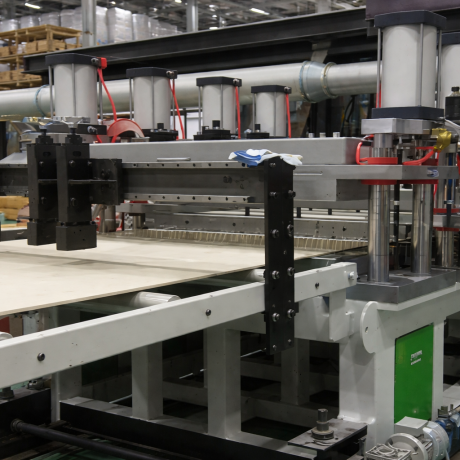
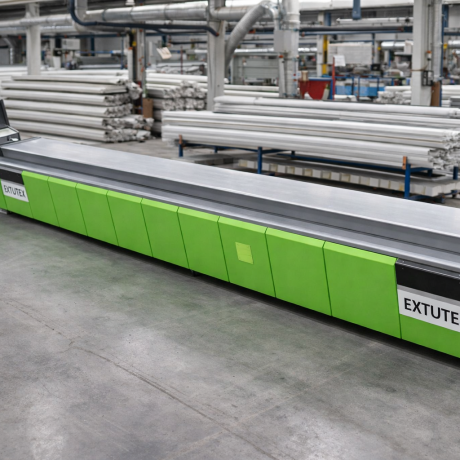
Rain gutter production is often continuous, with co-extruded seals, in-line punching for outlets, and automatic cutting. The die must synchronize perfectly with downstream calibration and cooling systems. A well-engineered die ensures stable profile dimensions, reducing stress on calibration tools and keeping production running smoothly.
Rain gutter extrusion dies are thus more than a tool: they are the foundation of reliability for a product that homeowners and contractors depend on for decades. A cracked or warped gutter is not just an inconvenience—it can mean water damage costing thousands. The integrity of that product begins with the die.
Why should a manufacturer invest in professional, high-precision dies rather than low-cost, generic alternatives? The answer lies in the brutal arithmetic of industrial production.
1. Consistency of Output
A generic die may work for the first thousand meters, but as heat cycles, friction, and pressure wear it down, inconsistencies appear: warping, dimensional errors, poor surface finish. A professional die maintains accuracy over millions of meters, protecting reputation and contracts.
2. Reduced Scrap and Downtime
Every defective meter of duct or gutter is wasted material, wasted energy, and wasted labor. Cheap dies often create excessive scrap due to poor flow balance. Professional dies minimize scrap, directly boosting profitability.
3. Energy Efficiency
An optimized die reduces pressure drop, meaning the extruder motor consumes less energy. Over years of operation, this translates to substantial savings in electricity costs—a hidden benefit often overlooked.
4. Faster Production Speeds
Professional dies allow higher line speeds without compromising quality. A 10–20% increase in throughput can translate to thousands of additional meters per day, drastically improving return on investment.
5. Compatibility and Customization
Generic dies limit creativity. Professional dies, designed in collaboration with customers, support innovative profiles, co-extrusion features, or modular inserts. This adaptability enables manufacturers to respond quickly to market trends.
6. Longevity and Maintenance
A professional die is engineered for endurance. With hardened tool steels, protective coatings, and modular components, maintenance is simple, and lifespan is extended. Instead of replacing dies every year, manufacturers can rely on them for many years of service.
In competitive markets where margins are slim, these advantages are not luxuries—they are survival strategies.
Every manufacturer asks the same questions: How much can I produce, and how quickly will I see a return on my investment?
Capacity and Speed
High-precision dies allow extrusion lines to operate at optimal speeds. For cable ducts, this can mean steady outputs of hundreds of kilograms per hour with minimal supervision. For rain gutters, line speeds can be increased without fear of warping or sagging.
Reduced Changeover Time
Professional dies are often designed with modularity in mind. Inserts can be swapped quickly for different duct widths or gutter shapes, reducing downtime between product runs. This flexibility is invaluable for manufacturers serving diverse markets.
Lower Maintenance Costs
A well-engineered die is not only durable but also easy to maintain. Smooth flow channels resist buildup, reducing the need for frequent cleaning. Calibration tools experience less stress, extending their service life as well.
Return on Investment (ROI)
Though the upfront cost of a professional die may be higher, the payback period is often surprisingly short. Consider:
Reduced scrap rates (saving raw material).
Energy savings through optimized flow.
Increased throughput.
Fewer unplanned shutdowns.
Longer tool life.
Together, these factors often recoup the investment within months. Beyond that, every additional year of reliable performance is pure profit.
Trust and Reputation
ROI is not measured only in money. Delivering consistent quality strengthens relationships with distributors, contractors, and end users. In industries built on trust, a reputation for reliability is priceless—and it starts with the dies that shape the products.
Extrusion technology has evolved dramatically in recent decades. Gone are the days when dies were designed by instinct and refined only through trial and error. Today, the industry stands on the shoulders of advanced science, precision engineering, and relentless innovation.
Digital Simulation and Prototyping
Modern die manufacturers employ powerful simulation tools to predict polymer flow, heat distribution, and potential stress points. These simulations eliminate guesswork and allow engineers to fine-tune designs before steel is ever cut. This not only saves time but ensures first-time-right results on the production line.
CAD/CAM Precision Machining
Computer-aided design (CAD) feeds directly into CNC-controlled milling and EDM machines. With tolerances measured in microns, the resulting dies are works of precision—each contour perfectly aligned, each cavity polished to perfection. The result: extrusion tools that consistently produce profiles within the tightest dimensional tolerances.
Material Science and Coatings
Continuous research into tool steels and coatings has extended die lifespans dramatically. From hardened nitrided steels to advanced ceramic or PVD coatings, today’s dies resist abrasion and corrosion while maintaining smooth flow channels for years of service.
Sustainability and Energy Efficiency
In an era where sustainability is no longer optional, professional extrusion dies contribute to greener manufacturing. By reducing scrap, lowering energy consumption, and supporting the use of recycled polymers, modern dies align with environmental responsibility while protecting profitability.
European Legacy of Precision
Austria and Germany, long recognized for their engineering heritage, have become hubs of extrusion die innovation. Companies from these regions set global benchmarks in quality and performance. Their tools embody not only technological superiority but also a philosophy: that precision, durability, and innovation are non-negotiable. When a manufacturer invests in a European-engineered die, they invest in decades of expertise and a guarantee of excellence.
Case Study 1: Cable Management for a Smart City
A manufacturer supplying ducts for a smart city infrastructure faced challenges with inconsistent snap-fit covers. Their existing dies produced ducts with variable wall thickness, leading to rejection rates of nearly 8%. After investing in professional dies with balanced melt flow and modular calibration, scrap rates dropped below 1%. Line speed increased by 15%, allowing them to meet tight project deadlines while boosting profitability.
Case Study 2: Rain Gutters in a Tropical Climate
In Southeast Asia, a producer of rain gutters struggled with UV degradation and cracking after only a few years of service. Investigation revealed uneven material distribution caused by poorly polished die channels. By switching to a die engineered for optimized flow and thermal control, the new gutters resisted weathering for over a decade, winning the company contracts with major construction firms.
Case Study 3: Multi-compartment Ducts for Data Centers
Data centers demand ducts that separate power and signal lines to prevent interference. A custom-designed die with interchangeable inserts allowed one manufacturer to produce multiple duct variants on the same extrusion line. This flexibility reduced capital costs, sped up product launches, and gave them a competitive edge in a fast-growing market.
These examples show a simple truth: the quality of the die directly shapes the quality of the business. Every investment in better tooling multiplies into reduced waste, faster delivery, stronger customer relationships, and higher profits.
The story of extrusion dies for cable ducts and rain gutters is, in truth, the story of modern infrastructure itself. These tools, often unseen and unsung, give form to the profiles that guide electricity, protect data, and channel the rainwater that would otherwise erode our homes and cities.
A die is not just a block of steel—it is a promise. A promise of consistency, of efficiency, of products that endure and perform. It is the invisible guarantor of trust between manufacturer and customer, between builder and homeowner.
In today’s world, where efficiency is demanded, sustainability is expected, and competition is fierce, there is no room for compromise. A professional extrusion die is not a cost—it is an investment, one that pays for itself many times over in saved material, reduced energy bills, faster production, and enduring reputation.
For manufacturers of cable ducts and rain gutters, the choice is clear: invest in the engineering excellence of precision extrusion dies. Partner with innovators who understand not only steel and polymer but also the demands of your market. Let your dies become the silent drivers of your success.
Because in the end, every perfect snap of a cable duct lid, every steady flow of rainwater through a gutter in a storm, whispers the same truth: quality begins at the die.
There are no reviews yet.
EXTRUTEX provides complete window and door engineering solutions for manufacturers, investors, profile producers, extrusion companies, and building-system developers worldwide. With more than 35 years of engineering experience and the involvement of experienced Austrian engineers, EXTRUTEX can develop and adapt window and door systems according to the technical, climatic, architectural, and market requirements of different countries.
Our engineering approach goes far beyond the design of an individual profile. We can develop a complete system concept covering profiles, chambers, reinforcement, sealing systems, hardware compatibility, drainage, corner connections, glazing, thermal performance, production technology, tooling, and assembly requirements.
Every market has different requirements. A window system designed for Central Europe may not be suitable for a hot climate, a tropical region, a high-rise building, or a market where different glass thicknesses and hardware systems are standard. EXTRUTEX combines European engineering experience with practical extrusion and production knowledge to create systems that are technically optimized for their intended application.
There is no universal window and door system that is ideal for every market.
Climate, construction methods, architectural preferences, energy regulations, building standards, available raw materials, glass specifications, hardware suppliers, installation methods, and manufacturing capabilities can all differ from one country to another.
EXTRUTEX can therefore engineer systems specifically for the target market.
Depending on the project, we can develop solutions for:
European markets
Middle Eastern markets
Asian markets
African markets
CIS and Central Asian markets
North and South American markets
Tropical and high-humidity regions
Hot and desert climates
Cold and continental climates
Coastal environments
High-rise and commercial buildings
Residential construction
Industrial and institutional buildings
The engineering process begins by understanding the target market and the intended application. From there, we determine the appropriate profile geometry, system depth, chambers, reinforcement concept, gasket arrangement, glazing options, drainage configuration, and manufacturing requirements.
EXTRUTEX combines more than 35 years of engineering experience with modern extrusion technology and international manufacturing knowledge.
Our engineering background covers the complete development chain from profile concept to industrial production. This allows us to consider not only how a window or door should perform after installation, but also how it can be extruded, fabricated, assembled, glazed, packed, transported, and installed efficiently.
The involvement of experienced Austrian engineers brings additional European engineering knowledge to system development, particularly in areas such as profile optimization, structural design, thermal performance, sealing concepts, fabrication, and production practicality.
Our objective is simple: to create systems that work in the real world.
A technically attractive profile is not enough. A successful window and door system must also be economical to produce, easy to fabricate, compatible with commercially available components, reliable during long-term use, and suitable for the construction practices of its target market.
EXTRUTEX can work with customers from the earliest design stage and develop a complete window or door platform.
Depending on project requirements, engineering can include:
We can develop the complete profile family required for a window or door system, including:
Frame profiles
Sash profiles
Mullions
Transoms
Reinforcement profiles
Interlock profiles
Beads
Coupling profiles
Extension profiles
Thresholds
Door profiles
Sliding profiles
Cover profiles
Adapter profiles
Corner and connection profiles
Profile geometry can be optimized according to the required system depth, strength, glazing thickness, reinforcement method, thermal requirements, and manufacturing process.
Profile chamber design has an important influence on structural performance, insulation, material consumption, and extrusion behavior.
EXTRUTEX engineers can optimize the internal geometry of profiles to achieve the required balance between:
Strength + thermal performance + material consumption + extrusion stability + production efficiency.
The number and configuration of chambers can be developed according to the target application rather than simply following a standard profile concept.
EXTRUTEX has extensive experience in extrusion technology and can engineer systems for different profile materials and production technologies.
Depending on the project, systems may be developed around:
uPVC
PVC
Reinforced PVC systems
Aluminum-compatible concepts
Hybrid systems
Co-extruded profile solutions
Special polymer profile applications
For PVC and uPVC window and door systems, profile geometry can be developed with consideration for extrusion tooling, material formulation, stabilizer systems, reinforcement, welding, machining, and final assembly.
This connection between system engineering and extrusion engineering gives EXTRUTEX an important advantage: the system can be designed with actual production conditions in mind.
For reinforced PVC windows and doors, reinforcement design is an essential part of the complete system.
EXTRUTEX can engineer reinforcement chambers and steel reinforcement concepts according to the required profile dimensions, sash and frame geometry, wind loading, element size, and application.
The engineering can consider:
Steel reinforcement dimensions
Reinforcement wall thickness
Fixing locations
Screw positioning
Reinforcement accessibility
Large sash requirements
Door reinforcement
Mullion reinforcement
Hardware fixing requirements
The objective is to provide sufficient structural support without unnecessarily increasing material consumption or production complexity.
A window or door system must provide reliable protection against air, water, wind, dust, and environmental conditions.
EXTRUTEX can develop gasket arrangements and sealing concepts appropriate for the target system.
Depending on the design, this may include:
External glazing gaskets
Internal glazing gaskets
Frame seals
Sash seals
Center seals
Compression seals
EPDM gasket systems
TPE-compatible solutions
Co-extruded sealing concepts
The position and geometry of the sealing lines can be optimized together with the profile design to achieve reliable compression and practical fabrication.
Modern windows and doors must accommodate different glazing configurations depending on climate, building type, and energy requirements.
EXTRUTEX can engineer systems for different glass and glazing-unit configurations, including single, double, and triple glazing concepts where applicable.
Engineering considerations may include:
Glass thickness
Insulating glass units
Glazing bead design
Glass support
Glazing clearance
Drainage
Spacer compatibility
Heavy-glass applications
Safety glazing
Large glazing areas
The system can be designed around the glazing specifications commonly available in the target market.
Hardware is one of the most important components of a complete window and door system.
EXTRUTEX can develop profile geometry to accommodate commercially available hardware and selected hardware platforms.
Depending on the project, the engineering can consider:
Tilt & turn hardware
Casement hardware
Sliding hardware
Lift-and-slide systems
Door locks
Multipoint locking systems
Hinges
Handles
Rollers
Hardware reinforcement
Locking points
Where customers already have preferred hardware suppliers, the profile system can be developed around their selected hardware dimensions and installation requirements.
A complete system should provide manufacturers with sufficient flexibility to produce different architectural configurations.
EXTRUTEX can engineer systems for configurations such as:
Fixed windows
Single-opening windows
Double-opening windows
Tilt & turn windows
Casement windows
Top-hung windows
Sliding windows
Lift-and-slide doors
Sliding doors
Hinged doors
French doors
Balcony doors
Large-format doors
Multi-panel configurations
The required profiles and accessories can be organized into a complete system architecture so manufacturers can expand their product range without redesigning the entire platform.
Energy efficiency is becoming increasingly important in window and door engineering.
EXTRUTEX can optimize profile geometry, glazing position, sealing lines, and thermal paths according to the intended performance requirements.
Engineering considerations may include:
Frame depth
Chamber configuration
Glazing position
Thermal bridges
Sealing arrangement
Reinforcement position
Insulating materials
Glass specification
Spacer configuration
For markets with demanding energy-efficiency requirements, the system can be developed with thermal performance as a primary design objective.
For warmer climates, the design approach may focus on solar exposure, ventilation, shading compatibility, durability, and resistance to high ambient temperatures.
Different climates require different engineering priorities.
In cold climates, insulation and air tightness may be major considerations.
In hot climates, thermal gain, ventilation, UV exposure, and material stability can become more important.
In tropical climates, humidity, heavy rainfall, drainage, corrosion resistance of components, and long-term sealing performance require particular attention.
For coastal regions, the selection and protection of hardware and reinforcement components may require additional consideration because of environmental exposure.
EXTRUTEX can adapt the system concept to these environmental conditions instead of simply exporting an existing design without modification.
A window system must ultimately be manufactured efficiently.
EXTRUTEX can support customers in connecting system design with actual production requirements.
Engineering can cover:
Extrusion die concepts
Calibration considerations
Profile tolerances
Cutting
Steel reinforcement insertion
Screw fixing
Welding
Corner cleaning
CNC machining
Hardware installation
Glazing
Assembly
Quality control
Because EXTRUTEX is active in plastic extrusion machinery and tooling, we understand the relationship between profile geometry and extrusion production.
This allows the system to be engineered not only for performance but also for manufacturability.
Depending on the project scope, EXTRUTEX can prepare technical documentation required for system development and production.
Documentation may include:
Profile drawings
Cross-sectional drawings
Dimension specifications
Profile codes
System catalogues
Reinforcement drawings
Gasket specifications
Glazing details
Hardware installation information
Fabrication drawings
Cutting information
Assembly guidelines
Technical data
Extrusion tooling information
The documentation structure can be adapted to the customer’s production and sales requirements.
EXTRUTEX can support projects through multiple stages:
Market Analysis → System Concept → Profile Engineering → 3D/CAD Development → Prototype → Tooling → Extrusion Trials → Testing → Fabrication Development → Production → Technical Support
This integrated approach reduces the gap between engineering and manufacturing.
Instead of receiving a profile drawing and being left to solve the production problems independently, customers can work with a technical partner familiar with the complete extrusion and window-production process.
Our service is suitable for both established manufacturers and companies developing a new window and door business.
For an existing manufacturer, EXTRUTEX can redesign or upgrade an existing system, improve thermal performance, introduce new profiles, reduce material consumption, or develop new opening configurations.
For a new manufacturer, EXTRUTEX can develop a complete system from the beginning, including the profile family, tooling concept, production requirements, and technical documentation.
We can also work with customers who already have their own profile concepts and require engineering optimization or production support.
EXTRUTEX does not believe that one standard profile system should simply be copied from one country to another.
Every market has its own requirements.
Our engineering team works to understand the customer’s country, climate, construction standards, target customers, architectural preferences, available materials, manufacturing equipment, hardware options, and required performance before developing the system.
With more than 35 years of engineering experience, experienced Austrian engineers, and strong expertise in plastic extrusion machinery, tooling, materials, and production technology, EXTRUTEX can provide a complete technical platform for companies looking to develop or expand their window and door business.
From the first profile concept to extrusion tooling, production, fabrication, and final system development, EXTRUTEX can support the complete engineering process.
EXTRUTEX — Window & Door Engineering for Global Markets.
Your market. Your requirements. Your system. Our engineering experience.
At the heart of every successful extrusion process lies balance: a balance of heat, pressure, and flow. Achieving that balance is not guesswork; it is the direct result of meticulous engineering.
An extrusion die is more than just a tool—it is the conductor of the extrusion orchestra. The extruder may provide the molten polymer, the downstream equipment may handle cooling and cutting, but the die is the decisive element that defines the geometry, surface quality, and structural integrity of the product.
Design Philosophy
Modern dies for cable ducts and rain gutters are conceived in the digital realm. Advanced CAD/CAM systems allow engineers to simulate polymer flow long before steel meets the milling machine. Computational fluid dynamics (CFD) models predict pressure drops, eliminate dead zones, and ensure even melt distribution. This upfront investment in design reduces costly trial-and-error on the production floor.
Tool Steels and Heat Treatment
The choice of material for die construction is critical. High-grade alloy steels, treated through vacuum hardening and nitriding, offer exceptional resistance to wear and corrosion. Since extrusion involves constant friction, high temperatures, and abrasive fillers in polymers (like calcium carbonate or titanium dioxide), the die must maintain dimensional stability under punishing conditions. A well-built die lasts for years, not months.
Polishing and Surface Treatment
The surface finish inside the flow channels is a silent factor in quality. A mirror-polished flow channel reduces friction, prevents polymer hang-ups, and ensures the extrudate exits smoothly. Many leading dies are further treated with hard chrome or advanced PVD coatings to extend life and improve cleanability.
Temperature Control
Extrusion is a dance of heat. Too much heat, and the polymer degrades. Too little, and flow becomes sluggish. Precision-engineered dies incorporate heating cartridges, cooling channels, and thermal insulation to keep every millimeter of the profile within exact tolerances. For complex shapes such as multi-compartment cable ducts or ornate rain gutter profiles, this thermal harmony is essential.
Balanced Flow Distribution
The most delicate achievement of die design is flow balance. The polymer melt must reach every cavity and every corner at exactly the same pressure and temperature. Imagine the melt as a river: if one side flows faster than the other, the product warps, walls become uneven, and snap-fit joints fail. By using advanced manifold designs—spider dies, T-dies, and proprietary distribution geometries—engineers guarantee uniform wall thickness, symmetry, and strength.
Engineering excellence is invisible to the naked eye. Yet it reveals itself in the consistent hum of a production line running 24/7 without stoppages, in the flawless snap of a cable duct lid, in the gutter that holds steady during a storm without cracking.
Cable ducts are the guardians of modern infrastructure. They shelter power cables, network lines, and control wiring, keeping them organized and safe from mechanical damage, dust, or moisture. Whether in an office building, a subway system, or an industrial plant, cable ducts enable order in what would otherwise be chaos.
Profile Diversity
Cable ducts are not one-size-fits-all. They come in countless dimensions: narrow mini-ducts for data cables, wide trunking systems for industrial wiring, ducts with multiple compartments for separating power and signal lines. Some feature snap-fit lids, while others rely on sliding covers. The extrusion die must be adaptable to this diversity, delivering precision regardless of complexity.
Critical Quality Features
Dimensional Accuracy – If a duct is even a fraction of a millimeter off-spec, covers won’t close, or accessories won’t fit.
Snap-fit Reliability – The cover must click into place with just the right force—firm enough to stay closed, gentle enough to open when needed. This delicate balance comes directly from die precision.
Wall Thickness Consistency – Thin walls save material, but if they’re uneven, the duct weakens. Balanced melt flow ensures perfect uniformity.
Surface Finish – Smooth, defect-free surfaces are not just aesthetic; they prevent cable damage during installation.
Materials and Performance
Most cable ducts are extruded from rigid PVC (uPVC). It offers flame retardancy, electrical insulation, and ease of processing. However, the die must accommodate fillers, stabilizers, and color pigments without clogging or degrading flow. Advanced dies handle these challenges effortlessly, allowing manufacturers to produce white, grey, or custom-colored ducts at high speeds with minimal scrap.
Production Efficiency
In the cable management industry, margins can be tight. A well-designed extrusion die can make the difference between profitability and loss. By minimizing pressure drop and balancing the melt, the die reduces power consumption and allows higher throughput. For large trunking ducts, this can mean producing hundreds of meters more per shift, translating directly into revenue.
Customization and Innovation
Leading die manufacturers work hand in hand with customers to design tailor-made solutions. Need a duct with special knock-outs for outlets? Or a duct that integrates seamlessly with modular office furniture? The die is where those ideas take form. With modular die inserts, interchangeable calibration tools, and precise machining, custom designs can be delivered without prohibitive costs.
Cable duct extrusion dies are, in essence, silent enablers of the digital age. They shape the products that channel energy and information through every modern building. Without them, the clean, ordered world of today’s electrified infrastructure would descend into chaos.
If cable ducts are the hidden protectors of infrastructure, rain gutters are its visible shield. They guide torrents of water safely away from roofs, preserving walls, foundations, and landscapes. Though they seem simple, gutters must withstand relentless punishment: ultraviolet radiation, seasonal temperature swings, debris impacts, and the ceaseless force of water.
The extrusion die for rain gutters transforms molten PVC or other thermoplastics into profiles that combine beauty with resilience. Just as with cable ducts, the quality of the die dictates the quality of the gutter.
Profile Variations
Rain gutters are produced in a range of shapes:
K-style gutters with their decorative crown molding profile.
Half-round gutters, classic and efficient.
Box gutters for industrial and commercial buildings.
U-shaped or trapezoidal sections for specialized applications.
Each profile presents its own challenges—thickness transitions, curvature stability, and the need for precision in mating with downspouts and accessories. The extrusion die must ensure uniform wall thickness across curves and corners, preventing weak points that could crack under load.
Durability by Design
Rain gutters live outdoors. They must resist years of sunlight, rain, snow, and dust without discoloration or brittleness. This demands exact control over material flow in the die, ensuring that UV stabilizers and impact modifiers are evenly distributed in the profile. Uneven distribution can create streaks or brittle sections—flaws that shorten service life.
Seamless Surface Quality
A smooth, glossy finish is not just aesthetic. It reduces dirt accumulation and ensures rainwater flows freely without obstructions. A die with precision-polished flow channels delivers this consistently, minimizing post-production defects and scrap.
Integration with Downstream Equipment
Rain gutter production is often continuous, with co-extruded seals, in-line punching for outlets, and automatic cutting. The die must synchronize perfectly with downstream calibration and cooling systems. A well-engineered die ensures stable profile dimensions, reducing stress on calibration tools and keeping production running smoothly.
Rain gutter extrusion dies are thus more than a tool: they are the foundation of reliability for a product that homeowners and contractors depend on for decades. A cracked or warped gutter is not just an inconvenience—it can mean water damage costing thousands. The integrity of that product begins with the die.
Why should a manufacturer invest in professional, high-precision dies rather than low-cost, generic alternatives? The answer lies in the brutal arithmetic of industrial production.
1. Consistency of Output
A generic die may work for the first thousand meters, but as heat cycles, friction, and pressure wear it down, inconsistencies appear: warping, dimensional errors, poor surface finish. A professional die maintains accuracy over millions of meters, protecting reputation and contracts.
2. Reduced Scrap and Downtime
Every defective meter of duct or gutter is wasted material, wasted energy, and wasted labor. Cheap dies often create excessive scrap due to poor flow balance. Professional dies minimize scrap, directly boosting profitability.
3. Energy Efficiency
An optimized die reduces pressure drop, meaning the extruder motor consumes less energy. Over years of operation, this translates to substantial savings in electricity costs—a hidden benefit often overlooked.
4. Faster Production Speeds
Professional dies allow higher line speeds without compromising quality. A 10–20% increase in throughput can translate to thousands of additional meters per day, drastically improving return on investment.
5. Compatibility and Customization
Generic dies limit creativity. Professional dies, designed in collaboration with customers, support innovative profiles, co-extrusion features, or modular inserts. This adaptability enables manufacturers to respond quickly to market trends.
6. Longevity and Maintenance
A professional die is engineered for endurance. With hardened tool steels, protective coatings, and modular components, maintenance is simple, and lifespan is extended. Instead of replacing dies every year, manufacturers can rely on them for many years of service.
In competitive markets where margins are slim, these advantages are not luxuries—they are survival strategies.
Every manufacturer asks the same questions: How much can I produce, and how quickly will I see a return on my investment?
Capacity and Speed
High-precision dies allow extrusion lines to operate at optimal speeds. For cable ducts, this can mean steady outputs of hundreds of kilograms per hour with minimal supervision. For rain gutters, line speeds can be increased without fear of warping or sagging.
Reduced Changeover Time
Professional dies are often designed with modularity in mind. Inserts can be swapped quickly for different duct widths or gutter shapes, reducing downtime between product runs. This flexibility is invaluable for manufacturers serving diverse markets.
Lower Maintenance Costs
A well-engineered die is not only durable but also easy to maintain. Smooth flow channels resist buildup, reducing the need for frequent cleaning. Calibration tools experience less stress, extending their service life as well.
Return on Investment (ROI)
Though the upfront cost of a professional die may be higher, the payback period is often surprisingly short. Consider:
Reduced scrap rates (saving raw material).
Energy savings through optimized flow.
Increased throughput.
Fewer unplanned shutdowns.
Longer tool life.
Together, these factors often recoup the investment within months. Beyond that, every additional year of reliable performance is pure profit.
Trust and Reputation
ROI is not measured only in money. Delivering consistent quality strengthens relationships with distributors, contractors, and end users. In industries built on trust, a reputation for reliability is priceless—and it starts with the dies that shape the products.
Extrusion technology has evolved dramatically in recent decades. Gone are the days when dies were designed by instinct and refined only through trial and error. Today, the industry stands on the shoulders of advanced science, precision engineering, and relentless innovation.
Digital Simulation and Prototyping
Modern die manufacturers employ powerful simulation tools to predict polymer flow, heat distribution, and potential stress points. These simulations eliminate guesswork and allow engineers to fine-tune designs before steel is ever cut. This not only saves time but ensures first-time-right results on the production line.
CAD/CAM Precision Machining
Computer-aided design (CAD) feeds directly into CNC-controlled milling and EDM machines. With tolerances measured in microns, the resulting dies are works of precision—each contour perfectly aligned, each cavity polished to perfection. The result: extrusion tools that consistently produce profiles within the tightest dimensional tolerances.
Material Science and Coatings
Continuous research into tool steels and coatings has extended die lifespans dramatically. From hardened nitrided steels to advanced ceramic or PVD coatings, today’s dies resist abrasion and corrosion while maintaining smooth flow channels for years of service.
Sustainability and Energy Efficiency
In an era where sustainability is no longer optional, professional extrusion dies contribute to greener manufacturing. By reducing scrap, lowering energy consumption, and supporting the use of recycled polymers, modern dies align with environmental responsibility while protecting profitability.
European Legacy of Precision
Austria and Germany, long recognized for their engineering heritage, have become hubs of extrusion die innovation. Companies from these regions set global benchmarks in quality and performance. Their tools embody not only technological superiority but also a philosophy: that precision, durability, and innovation are non-negotiable. When a manufacturer invests in a European-engineered die, they invest in decades of expertise and a guarantee of excellence.
Case Study 1: Cable Management for a Smart City
A manufacturer supplying ducts for a smart city infrastructure faced challenges with inconsistent snap-fit covers. Their existing dies produced ducts with variable wall thickness, leading to rejection rates of nearly 8%. After investing in professional dies with balanced melt flow and modular calibration, scrap rates dropped below 1%. Line speed increased by 15%, allowing them to meet tight project deadlines while boosting profitability.
Case Study 2: Rain Gutters in a Tropical Climate
In Southeast Asia, a producer of rain gutters struggled with UV degradation and cracking after only a few years of service. Investigation revealed uneven material distribution caused by poorly polished die channels. By switching to a die engineered for optimized flow and thermal control, the new gutters resisted weathering for over a decade, winning the company contracts with major construction firms.
Case Study 3: Multi-compartment Ducts for Data Centers
Data centers demand ducts that separate power and signal lines to prevent interference. A custom-designed die with interchangeable inserts allowed one manufacturer to produce multiple duct variants on the same extrusion line. This flexibility reduced capital costs, sped up product launches, and gave them a competitive edge in a fast-growing market.
These examples show a simple truth: the quality of the die directly shapes the quality of the business. Every investment in better tooling multiplies into reduced waste, faster delivery, stronger customer relationships, and higher profits.
The story of extrusion dies for cable ducts and rain gutters is, in truth, the story of modern infrastructure itself. These tools, often unseen and unsung, give form to the profiles that guide electricity, protect data, and channel the rainwater that would otherwise erode our homes and cities.
A die is not just a block of steel—it is a promise. A promise of consistency, of efficiency, of products that endure and perform. It is the invisible guarantor of trust between manufacturer and customer, between builder and homeowner.
In today’s world, where efficiency is demanded, sustainability is expected, and competition is fierce, there is no room for compromise. A professional extrusion die is not a cost—it is an investment, one that pays for itself many times over in saved material, reduced energy bills, faster production, and enduring reputation.
For manufacturers of cable ducts and rain gutters, the choice is clear: invest in the engineering excellence of precision extrusion dies. Partner with innovators who understand not only steel and polymer but also the demands of your market. Let your dies become the silent drivers of your success.
Because in the end, every perfect snap of a cable duct lid, every steady flow of rainwater through a gutter in a storm, whispers the same truth: quality begins at the die.
By submitting your email, you agree to our company’s terms and conditions.
We are not looking to sell; we are here to provide you with the best support and service.
Contact available 24/7
Please do not contact us for advertising or sales inquiries
All rights of this website are reserved for EXTRUTEX Austria and its partner companies, © 2026

-
(0 customer reviews)