
No products in the cart.

All rights of this website are reserved for EXTRUTEX Austria and its partner companies, © 2026


Multiple Payment Methods

Discount for advance payments over 50%

Free Shipping Coordination Services
Payment methods:


PP block copolymer, commonly referred to as PPB or impact copolymer polypropylene, is a thermoplastic material developed to provide a useful balance of stiffness, toughness and impact resistance. Compared with many conventional polypropylene homopolymer grades, suitable impact copolymer grades can offer improved resistance to sudden impact, making them valuable for durable moulded products, industrial containers, automotive components, household products and selected technical applications.
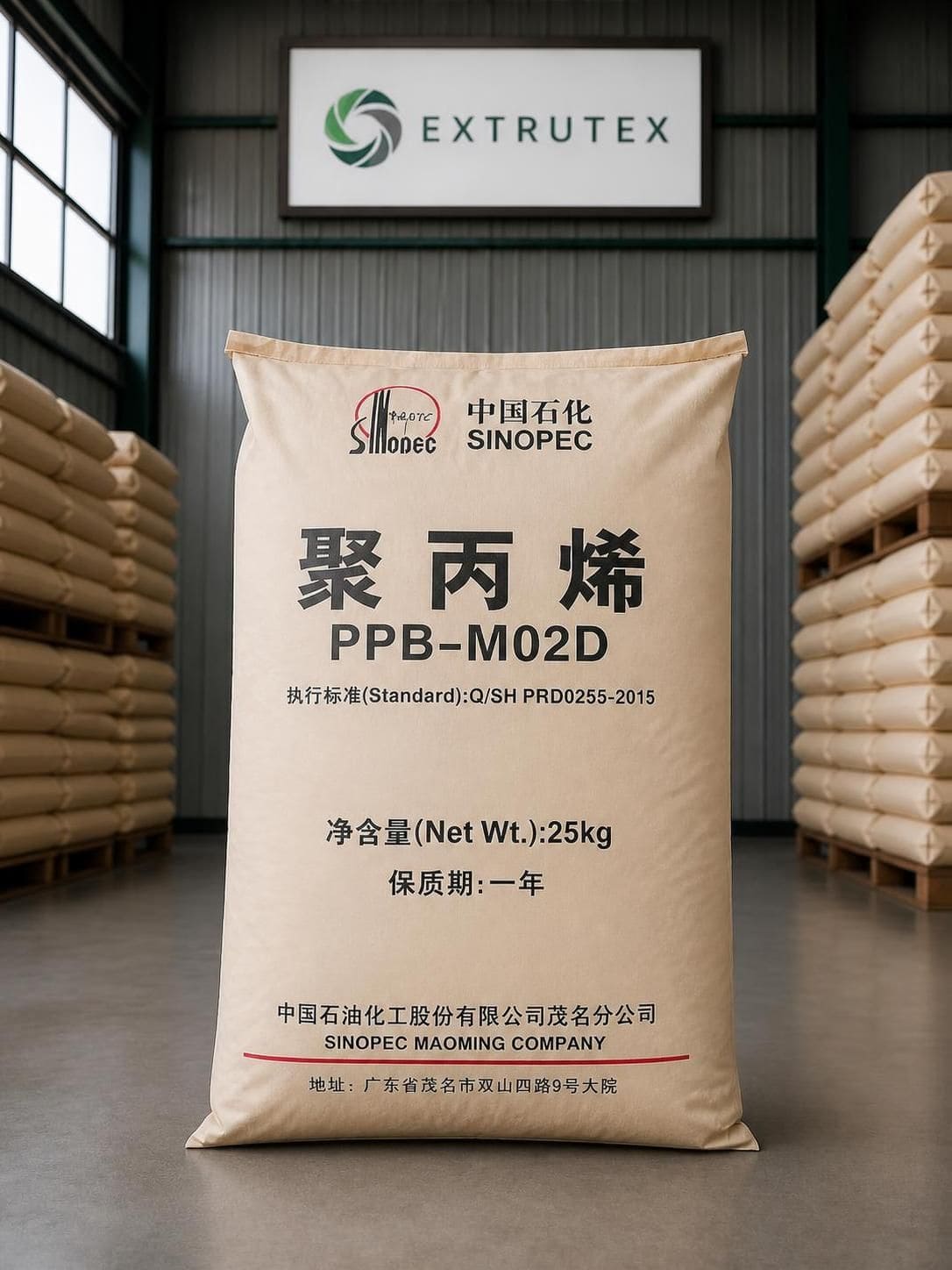
EXTRUTEX supplies polypropylene block copolymer grades through sourcing arrangements with material producers and suppliers. Depending on the required specification and availability, sourcing enquiries may include SABIC, PetroChina and other suitable producers. The exact manufacturer, commercial grade and supply availability are confirmed for each enquiry.
Looking for PPB resin for injection moulding, industrial products, automotive components, containers or other applications? EXTRUTEX can assist with identifying candidate grades based on your processing method, impact requirements, melt flow rate and technical specification.
EXTRUTEX is a supplier and sourcing partner, not the manufacturer of the resin. Producer names, grade designations, technical data and availability must be verified for the specific material being offered.
Polypropylene block copolymer is a type of polypropylene copolymer engineered to improve toughness and impact performance while retaining useful stiffness and processability. In commercial plastics terminology, PP block copolymer is often associated with impact copolymer polypropylene.
These materials commonly contain a polypropylene-rich matrix together with a dispersed rubber-rich phase, often based on ethylene-propylene copolymer. The polypropylene matrix contributes stiffness and structural performance, while the rubber phase helps absorb impact energy and reduce the tendency for brittle failure. The exact morphology depends on the producer's polymerisation process and grade formulation.
This structure differentiates impact copolymer from polypropylene homopolymer, which is primarily based on propylene units, and random copolymer polypropylene, where a comonomer such as ethylene is incorporated along the polymer chains in a more random distribution.
PP block copolymer is not a single universal specification. Grades can vary in melt flow rate, impact strength, stiffness, low-temperature behaviour, colour, additives and suitability for different processing methods. Choosing the right grade requires a review of the finished product's requirements rather than relying only on the generic PPB name.
Many impact copolymer grades are designed to withstand sudden loads and handling impacts better than comparable homopolymer grades. Performance depends on the specific formulation, temperature and product geometry.
The polypropylene matrix helps maintain structural rigidity, allowing many grades to be used for durable moulded products that need both strength and toughness.
Selected grades provide improved impact behaviour at lower temperatures compared with suitable homopolymer alternatives. The actual operating range must be confirmed from grade-specific data.
Depending on grade design, PP impact copolymer can be used in injection moulding and selected extrusion applications where the required processing characteristics are met.
| Feature | PP Homopolymer | PP Random Copolymer | PP Impact / Block Copolymer |
|---|---|---|---|
| Composition | Primarily propylene units. | Comonomer units distributed along the polymer chains. | Commonly a polypropylene matrix with a rubber-rich copolymer phase. |
| Main performance focus | Stiffness and general-purpose structural performance. | Clarity and a balance of stiffness and flexibility for selected applications. | Toughness and impact resistance while retaining useful stiffness. |
| Impact behaviour | Depends on grade; some grades can be more brittle under impact. | Depends on grade and temperature. | Many grades are designed for improved impact performance. |
| Optical appearance | Often opaque or translucent. | Some grades provide good transparency. | Often opaque, depending on the rubber phase and formulation. |
| Common applications | General mouldings, fibres, selected packaging and rigid products. | Transparent containers, film, caps and suitable PP-R piping grades. | Durable containers, automotive parts, housings, crates and impact-resistant products. |
This comparison describes typical material-selection considerations. Individual grades may differ considerably. Confirm properties and intended applications using the producer's current technical datasheet.
Selected PP impact copolymer grades are used in automotive interior and exterior components, trim parts, covers, housings and other moulded parts. The material can provide a balance of weight, stiffness and impact resistance, which can be useful for components exposed to vibration, handling and mechanical loads.
Automotive applications may require additional properties, including heat resistance, dimensional stability, surface finish, odour and emissions performance, weathering resistance and compatibility with colourants or fillers. The grade must meet the vehicle manufacturer's specifications and qualification requirements before it is approved for production.
PP block copolymer can be considered for reusable industrial containers, storage boxes, transport crates, bins and protective housings. These products may experience repeated handling, stacking, drops and contact with other equipment. Impact performance is therefore an important factor when choosing a suitable resin.
Selection should take account of wall thickness, corner geometry, load distribution, temperature, chemical exposure and expected service life. A grade that performs well in a thick-walled container may not provide the same results in a thin-walled design.
Durable household products, organisers, furniture components, appliance housings and general consumer goods may use impact copolymer polypropylene where resistance to cracking and breakage is important. Mouldability and the ability to produce complex shapes can also be valuable in these applications.
Colour, surface appearance, stiffness and resistance to repeated use should be evaluated together. If the product is exposed to cleaning agents, oils or other chemicals, compatibility testing under actual service conditions is recommended.
Selected polypropylene grades are used in crates, material handling boxes, storage bins and other logistics products. Impact copolymer may be considered where products must withstand handling impacts or repeated use. The correct material depends on the product design, expected load, stacking requirements and operating temperature.
For load-bearing products, mechanical performance should be evaluated through suitable finished-product testing. Resin data alone cannot establish the safe working load of a finished crate, pallet or storage system.
Some impact copolymer grades are used for housings, covers, enclosures and components in electrical appliances and general equipment. The required balance of impact resistance, rigidity, appearance and processability depends on the part's design and service environment.
Electrical applications may also require specific flame-retardant performance, electrical properties or compliance testing. Standard PP impact copolymer should not be assumed to meet these requirements unless the exact grade documentation confirms it.
Some polypropylene impact copolymer materials may be used in selected technical components, pipes or fittings where the grade is specifically designed and approved for the intended service. However, not every PP block copolymer is suitable for pressure piping or long-term fluid service.
For pressure pipes, hot-water systems and other demanding applications, buyers must verify the material designation, long-term hydrostatic strength, temperature-pressure rating, relevant standards and system approvals. General-purpose injection-moulding resin should not be substituted for an approved pipe grade without technical validation.
Impact copolymer grades can be used for selected packaging components, reusable containers, lids, closures and durable moulded articles. The grade's melt flow characteristics should match the mould design and manufacturing process. For thin-wall products, flow behaviour and cycle requirements may be especially important.
Where food contact is required, the exact resin grade must have the relevant documentation for the intended conditions of use and destination market. General material descriptions do not establish food-contact compliance.
Melt flow rate, also commonly called melt flow index or MFI, is a useful parameter for comparing thermoplastic resin grades. It measures the mass of polymer that passes through a specified test die under defined temperature and load conditions over a set period, commonly expressed in grams per 10 minutes.
For many polypropylene grades, a common test condition is 230°C with a 2.16 kg load. Always confirm the test method and conditions on the technical datasheet before comparing values from different producers.
MFI is only one part of material selection. Review impact strength at relevant temperatures, tensile and flexural properties, density, thermal data and any application-specific requirements before selecting a grade.
EXTRUTEX can assist with sourcing PP block copolymer grades from available producers and suppliers. Depending on the requested specification, supply enquiries may include SABIC, PetroChina and other suitable resin sources. Specific options depend on the required grade, destination market, quantity, current availability and supplier confirmation.
Not every producer offers the same grade range, and similar product descriptions do not guarantee equivalent performance. The producer and grade must be identified for the actual material offered. EXTRUTEX can help buyers compare available technical information and shortlist candidate materials for evaluation.
Store PP block copolymer in its original packaging under the conditions specified by the resin producer. Protect the material from contamination, moisture exposure, direct sunlight, excessive heat and physical damage. Keep batch identification and traceability information available throughout storage and production.
Processing temperatures, screw speed, back pressure, cooling conditions and mould settings should follow the individual grade's technical recommendations and be adjusted for the specific machine and product design. Do not assume that all impact copolymer grades have the same processing window.
Where regrind or recycled content is considered, evaluate its effects on impact performance, appearance, consistency and compliance with the finished-product specification. Additional validation may be necessary for demanding applications.
We can assist with sourcing enquiries involving SABIC, PetroChina and other available producers, subject to the exact grade and supply availability.
Share your intended application, processing method and target properties to help identify candidate grades for technical review.
Request the relevant producer datasheet and supporting documents to evaluate material properties and suitability before purchase.
EXTRUTEX can assist with sourcing enquiries, grade comparisons and coordination with suppliers, subject to confirmation.
PPB commonly refers to polypropylene block copolymer. In commercial plastics, the term is often associated with impact copolymer polypropylene. The exact structure, properties and applications depend on the individual producer's grade.
PP homopolymer is based primarily on propylene units and is often selected for stiffness and general-purpose performance. PP impact copolymer commonly contains a polypropylene matrix and a rubber-rich phase that helps improve toughness and impact resistance.
Random copolymer generally incorporates comonomer units along the polymer chains, often to improve clarity and change the balance of stiffness and flexibility. Impact or block copolymer is commonly designed with a rubber-rich phase to improve impact resistance and toughness.
EXTRUTEX can assist with sourcing enquiries for available SABIC grades. The specific grade, producer documentation, quantity and current availability must be confirmed for each enquiry.
EXTRUTEX can explore sourcing options involving PetroChina and other available suppliers, subject to the required specification and supplier confirmation. The actual producer and grade will be confirmed for the material offered.
No. EXTRUTEX supplies and sources resin from material producers and suppliers. The actual manufacturer should be identified in the relevant product documentation and commercial details.
The suitable MFI depends on the product geometry, mould design, machine, cycle requirements and target mechanical properties. Compare grade-specific data and validate the material through processing trials rather than selecting by MFI alone.
Some impact copolymer grades are designed to provide improved low-temperature impact resistance compared with suitable homopolymer grades. The actual performance depends on the grade and service temperature and should be confirmed using the producer's test data.
Selected grades are used in automotive components. However, automotive applications may require specific impact, heat, emissions, weathering and other performance criteria. The grade must be qualified against the relevant customer specifications.
Only when the specific grade is designed and approved for the intended piping application. General-purpose impact copolymer should not be assumed to meet pressure-pipe standards or long-term service requirements.
Potentially, but a similar MFI value or general material description does not prove equivalence. Compare the complete datasheets, compliance documentation and production performance, and validate the replacement before approving it.
Provide your application, processing method, target properties, estimated quantity, destination, packaging requirements and any applicable compliance specifications. If you already use a particular grade, include its designation and technical datasheet.
Looking for PP impact copolymer for automotive components, industrial containers, household products or injection moulding? Contact EXTRUTEX with your application and target specifications. We can help explore available sourcing options involving SABIC, PetroChina and other suitable producers.
Contact EXTRUTEX There are no reviews yet.
By submitting your email, you agree to our company’s terms and conditions.
We are not looking to sell; we are here to provide you with the best support and service.
Contact available 24/7
Please do not contact us for advertising or sales inquiries
All rights of this website are reserved for EXTRUTEX Austria and its partner companies, © 2026
-
(0 customer reviews)