EXTRUTEX POM Resin – Polyoxymethylene Acetal Plastic Pellets
EXTRUTEX POM resin sourcing for precision engineering, automotive components, gears, bearings, industrial mechanisms and injection-molded parts.
Polyoxymethylene (POM), also known as polyacetal or acetal resin, is an engineering thermoplastic valued for its stiffness, dimensional stability, low friction, wear resistance and reliable performance in moving mechanical assemblies. EXTRUTEX helps customers identify and source suitable POM grades for different processing methods and end-use requirements.
Whether your project requires general-purpose injection-molding material, high-flow resin for complex components, higher-viscosity grades for selected applications or reinforced POM, we can help evaluate suitable options based on your drawings, production process and required properties.
1. What Is POM Resin?
Polyoxymethylene is a high-performance engineering thermoplastic used to manufacture durable, accurately molded components. It is commonly called POM, polyacetal, acetal resin or polyformaldehyde. The polymer backbone contains repeating oxymethylene units, represented by the general chemical formula (CH₂O)ₙ.
POM is particularly useful when an application requires a combination of rigidity, low friction, abrasion resistance and repeatable dimensions. Compared with many general-purpose plastics, it can provide a practical balance of mechanical performance and manufacturability for small precision components and larger industrial parts.
POM is widely used in gears, rollers, conveyor components, bushings, clips, fasteners, pump components, valve parts, automotive mechanisms, electrical components and consumer products. Grade selection is important because homopolymer and copolymer POM, reinforced grades, lubricated grades and different melt-flow grades do not have identical properties.
2. POM Resin Identification and Basic Properties
Material namePolyoxymethylene (POM)
Common namesPolyacetal, acetal resin, polyformaldehyde
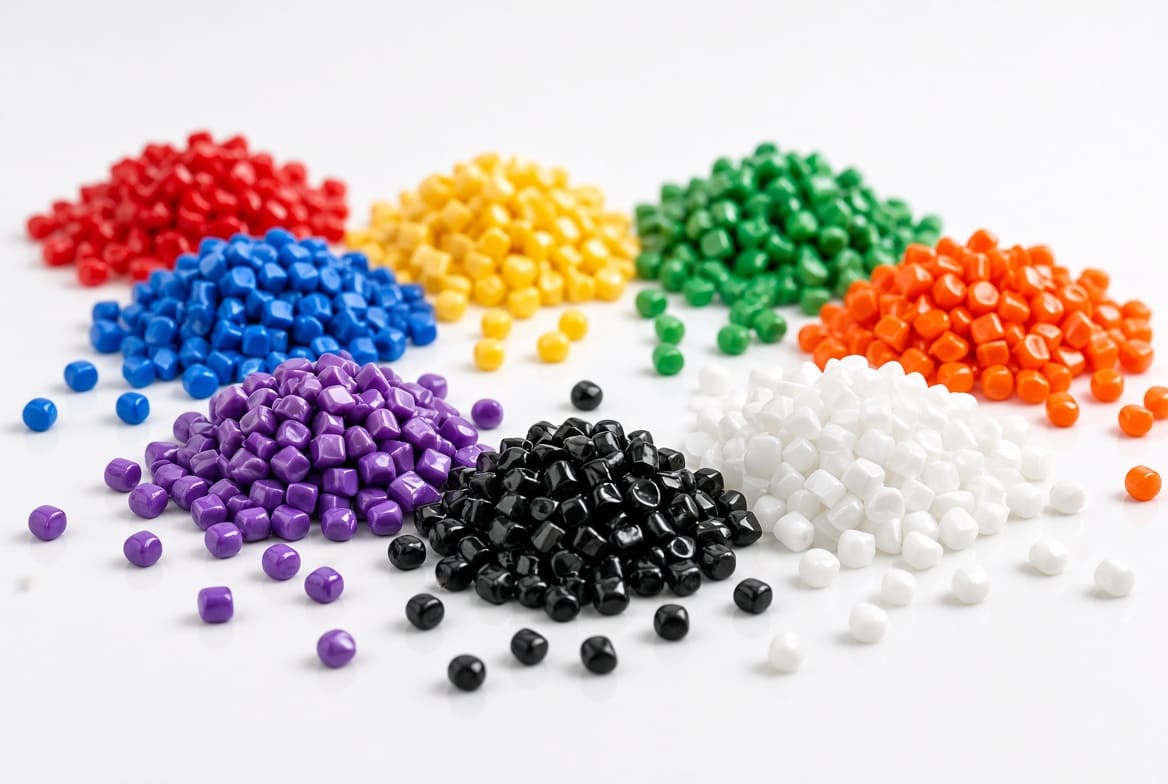
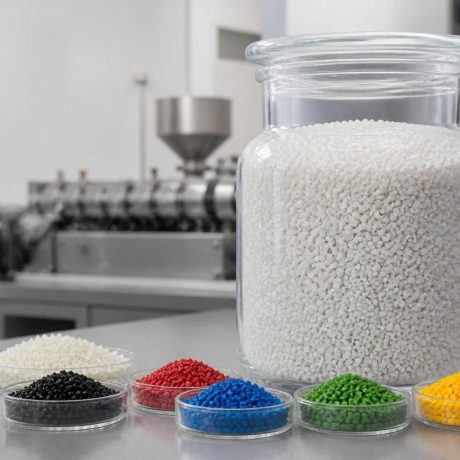
AppearanceTypically opaque white or off-white pellets; colors vary by grade
DensityApproximately 1.41–1.42 g/cm³ for many unfilled grades
Melting rangeApproximately 165–175°C for many commercial grades; grade dependent
General formula(CH₂O)ₙ
CAS number supplied9002-81-7; confirm against the relevant supplier documentation
HS code supplied39071000; verify the correct code with your customs broker
These figures are general identification references, not a substitute for the technical data sheet of a specific grade. Copolymer and homopolymer grades can differ in melting behavior, crystallization, chemical resistance, mechanical properties and processing requirements. Filled, lubricated, impact-modified or otherwise modified grades can have different density and performance.
3. Main Advantages of POM Engineering Plastic
High stiffness and mechanical strength
POM is suitable for parts that must retain their shape under mechanical loading. Its stiffness and strength make it useful for gears, levers, guides, housings, clips and precision mechanisms. Actual performance depends on grade, geometry, temperature, moisture exposure and loading conditions.
Low friction and good wear behavior
POM is commonly selected for sliding and rotating components because it can offer low friction and good wear resistance. It is frequently used for bushings, rollers, bearing cages, conveyor guides and gear systems. Friction and wear performance should be validated under the intended contact pressure, speed, lubrication and operating environment.
Dimensional stability
Well-designed POM components can maintain accurate dimensions and repeatable movement. This is valuable for precision mechanisms, snap-fit features, gears and parts that must fit closely with other components. Mold design, shrinkage, gate position, cooling balance and operating temperature all influence final dimensions.
Good fatigue performance
Selected POM grades perform well in repeatedly flexed or mechanically cycled components. Applications can include clips, buckles, springs and small mechanisms. Designers should evaluate the expected load cycle, strain, temperature and service life rather than relying on a generic material description.
Resistance to many fuels, oils and solvents
POM has useful resistance to many common hydrocarbons, lubricants and industrial chemicals. Compatibility is not universal: strong acids, oxidizing agents and certain other chemicals can attack POM. Chemical compatibility should be confirmed for the actual concentration, temperature, exposure time and grade.
Good processability
Many commercial POM grades are designed for injection molding, including parts with intricate geometry. Melt-flow options allow processors to balance cavity filling, dimensional control and mechanical performance. Some grades are also suitable for extrusion or other specialized processing routes when specified by the manufacturer.
4. POM Homopolymer and Copolymer
Commercial POM is commonly divided into homopolymer and copolymer families. Neither type is automatically best for every application. The correct choice depends on mechanical requirements, processing conditions, chemical exposure, part geometry and operating environment.
| Comparison | POM Homopolymer | POM Copolymer |
|---|
| Structure | Primarily based on repeating oxymethylene units | Contains oxymethylene units with comonomer units incorporated into the polymer structure |
| Typical strengths | Often selected for high stiffness and strength in suitable grades | Often selected for balanced performance and robust processing behavior |
| Thermal behavior | Grade-specific melting and continuous-use limits | Grade-specific melting and continuous-use limits |
| Chemical resistance | Depends on the chemical and exposure conditions | Can offer advantages in certain environments; verify specific compatibility |
| Processing | Requires appropriate melt-temperature and residence-time control | Requires appropriate melt-temperature and residence-time control |
| Typical applications | Precision gears, mechanical components and rigid molded parts | Automotive components, industrial parts, fluid-handling components and general engineering uses |
The comparison above is a general guide. Individual grades may outperform others in specific tests, and modified or reinforced grades can differ significantly from standard unfilled POM. Consult the manufacturer's technical data sheet before making a material substitution.
5. POM Resin Grades Available Through EXTRUTEX
EXTRUTEX can help source POM resin from established engineering-plastics producers, subject to grade availability, regional supply and the customer's technical requirements. The following table consolidates the grade information supplied for initial evaluation. It is not a guarantee of current availability or a replacement for official manufacturer data.
Important grade-data notice: Melt-flow values below are reproduced from the supplied reference list. The test temperature, load, test standard and units must be checked for each grade. Values measured under different conditions are not directly comparable. Confirm all grade spellings, suffixes, manufacturer names, properties and application recommendations with the current technical data sheet before purchase or publication.
| Grade | Manufacturer / Brand in supplied reference | Melt-flow value (g/10 min) | Indicative application from supplied reference |
|---|
| M90-44 | Polyplastics / DURACON | 9 | Automotive and industrial components |
| M90-57 WK2001 | Polyplastics / DURACON | 9 | Industrial conveyor-system parts |
| M25-44 | Polyplastics / DURACON | 2.2 | Applications requiring a higher-viscosity melt |
| M25S | Polyplastics / DURACON | 2.5 | General-purpose molded parts |
| M270-44 | Polyplastics / DURACON | 27 | Thin-wall injection-molded components |
| GB-25 | Polyplastics / DURACON | Not supplied | Glass-fiber-reinforced components; confirm the exact grade designation |
| M25 | Celanese / Celcon | 2.5 | Mechanical parts requiring toughness |
| M90 | Celanese / Celcon | 8 | Springs and precision instrument components |
| M270 | Celanese / Celcon | 23 | Complex injection-molded parts |
| KP20 | Celanese / AMCEL | 8 | Small, complex components |
| KP30 | Celanese / AMCEL | 27 | Thin-wall molded products |
| C 9021 | Celanese / HOSTAFORM | 8 | Automotive and electrical/electronic components |
| C 2521 | Celanese / HOSTAFORM | 2.5 | General-purpose mechanical parts |
| C 27021 | Celanese / HOSTAFORM | 24 | Small consumer-electronics components |
| C 13021 | Celanese / HOSTAFORM | 12 | Industrial components requiring medium strength |
| F20-02 | KEP Americas / KEPITAL | 9 | Confirm application and processing specification |
| F20-03 | KEP Americas / KEPITAL | 9 | General injection-molding applications |
| F30-03 | KEP Americas / KEPITAL | 28 | Thin-wall molded parts |
| F40-03 | KEP Americas / KEPITAL | 52 | Precision thin-wall components |
| K100 | Kolon / KOCETAL | 2.5 | Rods, pipes and sheets; confirm processing suitability |
| K300 | Kolon / KOCETAL | 9 | Industrial parts; verify thermal requirements |
| K500 | Kolon / KOCETAL | 14 | General injection-molded products |
| K700 | Kolon / KOCETAL | 27 | Components for specified long-term thermal service |
| K900 | Kolon / KOCETAL | 42 | Thin-wall and larger molded components |
| N2320 0038 AT | BASF / Ultraform | 7.5 | Injection-molded manufacturing components |
| N2320 003 | BASF / Ultraform | 7.5 | Gear and mechanism components; verify exact grade |
| 4520 | Asahi Kasei / TENAC | 9 | Injection-molded parts |
| 4590 | Asahi Kasei / TENAC | 9 | Potential drinking-water-related components; confirm applicable approvals |
| 3010 | Asahi Kasei / TENAC | 2.8 | Parts requiring high impact performance and elongation |
| 3510 | Asahi Kasei / TENAC | 2.8 | Mechanical parts requiring impact performance |
| 5010 | Asahi Kasei / TENAC | 22 | General-purpose molded parts |
| 5050 | Asahi Kasei / TENAC | 21 | High-productivity molded components |
| 4050 | Asahi Kasei / TENAC | 7 | Automotive and industrial parts |
| 9520 | Asahi Kasei / TENAC | 70 | High-flow molded parts; verify intended use and test conditions |
Grade selection reminder: A grade's melt-flow value alone does not determine suitability. Tensile strength, flexural modulus, impact resistance, shrinkage, creep, friction, wear, chemical compatibility, heat aging and regulatory approvals may be equally important. Request a current technical data sheet and safety data sheet for the exact material being quoted.
6. Typical Applications of POM Pellets
Automotive and transportation
POM is used in selected automotive mechanisms where low friction, dimensional accuracy and wear resistance are useful. Potential components include seat-adjustment mechanisms, window-lift parts, clips, fasteners, gears, fuel-system components and interior mechanisms. The final grade must meet the relevant vehicle manufacturer's specifications for temperature, emissions, chemical exposure and durability.
Industrial machinery and automation
Industrial applications include conveyor-system components, guide rails, rollers, gear wheels, bushings, sliding elements, linkages, actuator parts and precision fixtures. POM can reduce the need for metal in certain components, but load-bearing designs should account for creep, temperature rise, wear and long-term stress.
Electrical and electronic products
POM can be suitable for selected switches, connectors, moving mechanisms, printer parts, instrument components and electronic-device assemblies. Where electrical insulation, flame resistance, tracking resistance or regulatory compliance is critical, verify the specific grade's ratings rather than assuming all POM products meet the same requirements.
Fluid-handling equipment
Some POM grades are used in valve parts, pump components, fittings and precision fluid-control mechanisms. For drinking-water, food-contact or medical-related uses, the material must have the appropriate approvals for the intended market and application. General-purpose POM should not automatically be treated as approved for potable water or food contact.
Consumer goods and household products
POM can be found in zipper components, buckles, fasteners, appliance mechanisms, door hardware, latches, small wheels and other durable molded products. Its combination of stiffness and low friction is useful where components must move smoothly and retain functional dimensions over repeated use.
Precision gears and mechanical assemblies
Gears, ratchets, rollers and other moving parts can benefit from POM's mechanical properties. Gear noise, wear, tooth geometry, lubrication, operating speed and temperature all affect performance. The resin grade should be selected alongside the component design and validated under representative service conditions.
7. Injection Molding and Processing Considerations
Most standard POM pellets used for complex engineering components are processed by injection molding. Successful processing requires control of material condition, barrel temperature, residence time, mold temperature, injection speed, holding pressure and cooling. Always prioritize the manufacturer's processing guide for the selected grade and machine.
Material handling and drying
POM generally absorbs less moisture than some engineering plastics, but the supplied material should still be stored in sealed packaging and handled according to its technical documentation. Follow the supplier's instructions for drying, especially when packaging has been damaged, pellets have been exposed to humid conditions or a specific grade requires pretreatment. Avoid applying generic drying conditions without checking the grade instructions.
Melt temperature and residence time
POM is sensitive to overheating and prolonged residence at elevated temperatures. Excessive temperature or residence time can lead to polymer degradation and the release of formaldehyde-containing decomposition products. Keep the machine within the grade's recommended processing window, minimize unnecessary pauses with material in the barrel, and follow the machine and resin supplier's shutdown and purging procedures.
Mold design and shrinkage
POM is a semicrystalline thermoplastic, so shrinkage and dimensional behavior must be considered during mold design. Gate location, wall thickness, runner design, cooling uniformity and packing conditions can influence warpage and dimensional consistency. Use grade-specific shrinkage data and validate dimensions on molded trial parts.
Ventilation and operator safety
Use suitable local exhaust ventilation around the feed, barrel, nozzle and mold areas where emissions may occur. Do not allow POM to overheat or remain stagnant in a hot barrel. Operators should follow the resin supplier's safety data sheet, site procedures and machine manufacturer's instructions. If decomposition fumes or unusual odors occur, stop and investigate according to established safety procedures rather than continuing production.
8. How to Choose the Right POM Grade
| Requirement | What to evaluate | Information to provide to EXTRUTEX |
|---|
| General injection molding | Flow, stiffness, toughness, shrinkage and cycle time | Part drawing, machine size and annual demand |
| Thin-wall or complex parts | Flow behavior, filling balance, weld lines and dimensional performance | Wall thickness, flow length and mold details |
| High mechanical loading | Tensile and flexural properties, fatigue, creep and temperature | Load, operating speed, service life and working temperature |
| Sliding or rotating components | Friction, wear, contact pressure and lubrication | Counterface material, speed, load and operating environment |
| Chemical exposure | Compatibility with the exact fluid and exposure conditions | Chemical identity, concentration, temperature and duration |
| Reinforced or modified material | Filler content, strength, stiffness, shrinkage and surface quality | Required reinforcement and target performance |
| Regulated application | Relevant food-contact, drinking-water, automotive or electrical approvals | Country or region, applicable standard and documentation needs |
When requesting a quotation, share the application, desired quantity, target market, preferred manufacturer or grade, processing method and any mandatory certification. If you do not know which grade is appropriate, provide a sample part, drawing or performance specification. EXTRUTEX can help narrow the options for technical review.
9. POM Resin Compared with Other Engineering Plastics
POM is one of several engineering thermoplastics used for mechanical and precision components. The best material depends on the full application, not on a single property.
| Material | Common selection reasons | Important considerations |
|---|
| POM | Stiffness, low friction, wear resistance and dimensional precision | Check thermal limits, chemical compatibility and degradation risks |
| PA (Nylon) | Mechanical strength, toughness and broad engineering use | Moisture absorption can influence dimensions and properties |
| PC | Impact resistance and, in suitable grades, transparency | Stress cracking, surface scratching and chemical exposure require evaluation |
| PBT | Dimensional performance and electrical applications | Hydrolysis resistance, reinforcement and processing conditions vary by grade |
| PEEK | High-temperature capability and demanding engineering environments | Higher material cost and specialized processing requirements may apply |
| UHMWPE | Very low friction and abrasion resistance in selected sliding applications | Processing routes and stiffness differ from injection-molding POM |
These comparisons are broad selection guidance, not a ranking. Confirm the exact grade properties, operating environment, manufacturing process and total part cost before replacing one polymer with another.
10. EXTRUTEX POM Resin Supply and Technical Support
EXTRUTEX supports customers seeking engineering plastics for industrial manufacturing, component production and product development. We help assess resin options against technical requirements and source suitable grades subject to supplier availability, market conditions and documentation.
- Grade matching: Compare the application requirements with available POM grade data.
- Manufacturer options: Explore suitable grades from the listed producer families where availability can be confirmed.
- Technical documentation: Request applicable technical data sheets and safety data sheets for the proposed grade.
- Application review: Identify important requirements such as friction, wear, strength, flow, temperature and chemical exposure.
- Supply coordination: Confirm packaging, quantity, lead time, destination and shipment requirements before order placement.
- Alternative evaluation: Review technically suitable alternatives when a preferred grade is unavailable, subject to customer approval and validation.
Brand names and product designations mentioned on this page belong to their respective owners and are used only to identify possible resin options. Listing a manufacturer or grade does not imply authorization, exclusivity, or current stock. Supply and grade availability must be confirmed for each inquiry.
Looking for the Right POM Resin Grade?
Send EXTRUTEX your application, preferred grade, processing method and required quantity. If you are unsure which POM resin is suitable, share your technical requirements so we can help identify options for evaluation.
For an efficient quotation, include: grade or manufacturer preference, quantity, delivery country, end-use application and any required certifications.
Contact EXTRUTEX for POM Resin
11. Frequently Asked Questions About POM Resin
What is POM resin?
POM stands for polyoxymethylene, an engineering thermoplastic also known as polyacetal or acetal resin. It is commonly used for precision molded components, gears, bushings, clips and other parts requiring stiffness, low friction and wear resistance.
What is the difference between POM and acetal?
In commercial plastics terminology, POM and acetal generally refer to the same polymer family. Acetal is a common industry name, while polyoxymethylene is the formal polymer name. Individual products may be homopolymer, copolymer or modified POM grades, so the exact grade still matters.
What does POM plastic look like?
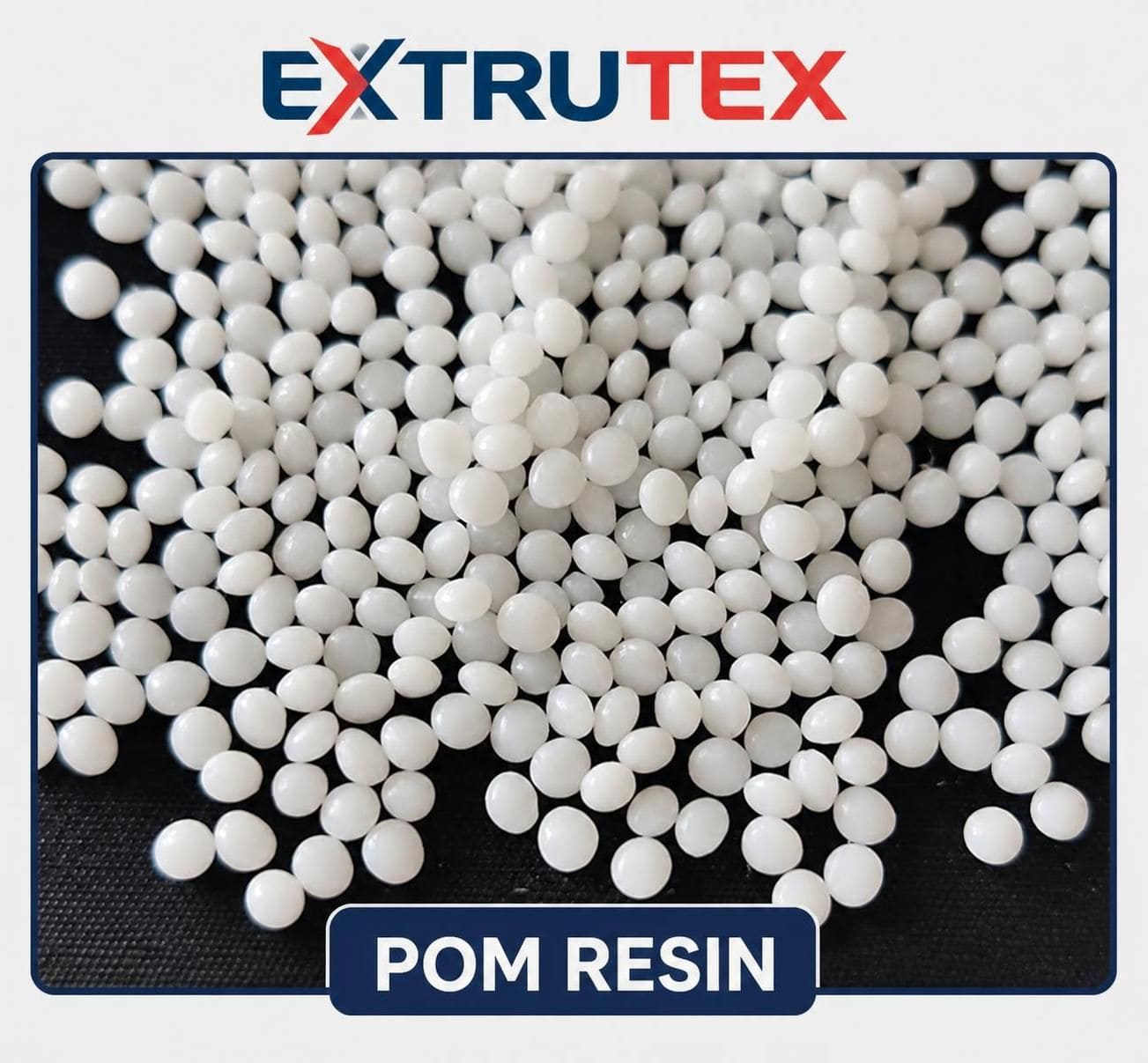
Natural POM pellets are commonly opaque white or off-white granules with a relatively uniform appearance. Commercial grades can also be supplied in black or other colors depending on the manufacturer and formulation.
What is the density of POM?
Many unfilled commercial POM grades have a density of approximately 1.41–1.42 g/cm³. The exact value depends on the grade, polymer type, fillers and formulation. Use the current technical data sheet for engineering calculations.
What is the melting point of POM?
A general reference range is approximately 165–175°C for many commercial POM materials. The melting behavior depends on the specific grade and whether it is a homopolymer or copolymer. This range is not the recommended injection-molding barrel setting.
Can POM be used for injection molding?
Yes. Injection molding is a major processing method for POM pellets. The correct grade should be selected for the part geometry, flow requirements, mechanical properties and cycle-time targets. Processing temperatures, residence time, mold conditions and safety controls must follow the manufacturer's instructions.
Which POM grade is best for gears?
There is no universal best grade. Selection depends on gear geometry, load, speed, lubrication, noise requirements, temperature and expected service life. Compare the manufacturer's wear, friction, fatigue and mechanical data, and validate the finished gear in the intended assembly.
Which POM grade is suitable for thin-wall injection molding?
Higher-flow grades may help fill thin or complex cavities, but flow alone does not determine the best choice. Confirm the grade's melt-flow test conditions, strength, weld-line performance, shrinkage and molding recommendations with the supplier and mold designer.
Is POM resistant to chemicals?
POM resists many common fuels, oils and solvents, but it is not compatible with every chemical. Strong acids, oxidizing agents and some other substances can attack it. Confirm compatibility for the exact chemical, concentration, temperature, exposure time and grade.
Is POM suitable for drinking-water or food-contact applications?
Some grades may have relevant approvals, but approval cannot be assumed for all POM materials. Confirm the exact grade, applicable certification, destination market and intended conditions of use before selecting material for drinking-water or food-contact applications.
Can POM be extruded into rods, pipes or sheets?
Some POM grades and specialized processing systems may be suitable for extrusion into semi-finished products. Do not assume every injection-molding grade is appropriate. Confirm the grade's processing recommendation and the equipment requirements with the manufacturer.
What is the HS code for POM resin?
The reference supplied for this page is HS code 39071000. Customs classification may vary by jurisdiction, current tariff schedule and product description. Confirm the correct code with your customs broker or relevant customs authority before shipping.
What information is needed to request a POM resin quotation?
Provide your preferred grade or manufacturer, required quantity, application, processing method, destination country and any technical or certification requirements. If you do not know the grade, send the component drawing or performance targets so the options can be evaluated.
Does EXTRUTEX manufacture all the POM brands listed?
No. The listed names identify potential manufacturer and grade options for sourcing and comparison. Brand ownership remains with the respective manufacturers, and availability, grade details and supply arrangements must be confirmed for each inquiry.
12. Request POM Resin Information
For POM resin sourcing, send EXTRUTEX the grade you currently use, the properties you need or the application you want to develop. We can help organize the technical requirements and assess available material options for your project.
Contact EXTRUTEX to discuss POM resin pellets, grade selection, technical documentation and supply requirements.









-
(0 customer reviews)