EXTRUTEX PMMA Resin Pellets – Acrylic Polymer for Optical Clarity and Weather Resistance
Polymethyl methacrylate (PMMA), also known as acrylic resin, is a transparent engineering thermoplastic used for lighting, optical components, signage, display products, household appliances, automotive components and precision injection-moulded parts.
EXTRUTEX supplies PMMA resin options for industrial manufacturers seeking clear appearance, high light transmission, surface hardness, gloss and outdoor weatherability. Depending on current availability, options may include general-purpose injection grades, optical grades, extrusion grades, high-flow materials, heat-resistant grades and impact-modified acrylic compounds.
We help buyers identify potential resin grades based on their processing equipment, finished-product design, optical requirements and target application. Grade availability, technical documentation and suitability are confirmed before an order is finalized.
MaterialPolymethyl methacrylate (PMMA)
Common NameAcrylic resin / acrylic plastic
AppearanceTypically transparent and colourless; coloured and specialty grades available
Typical DensityApproximately 1.17–1.20 g/cm³, depending on grade
CAS Number9011-14-7 is commonly used for PMMA polymer; confirm the supplier's SDS
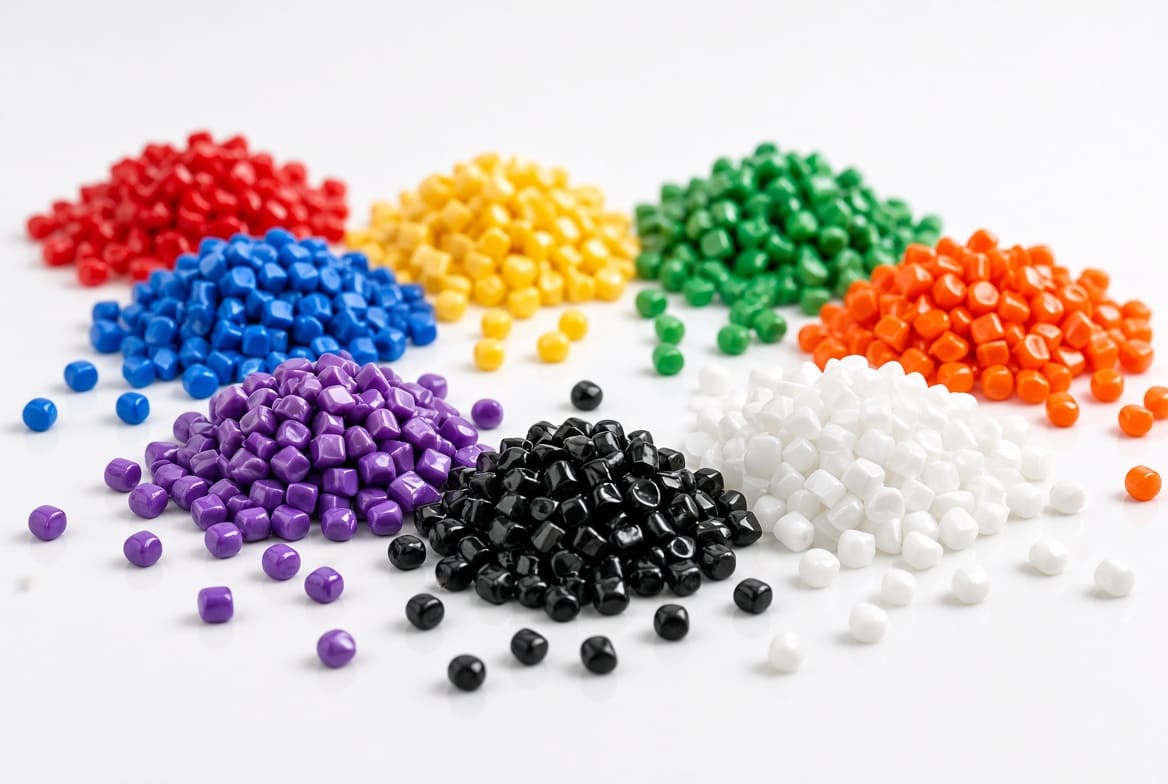
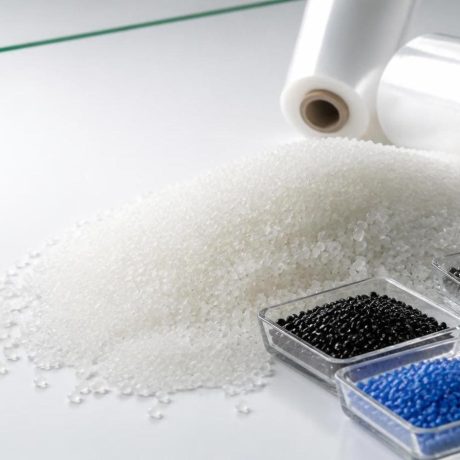
Supply FormThermoplastic resin pellets or granules
1. What Is PMMA Resin?
PMMA stands for polymethyl methacrylate, an amorphous thermoplastic polymer widely recognized for its excellent transparency, attractive surface appearance and resistance to outdoor weathering. It is often called acrylic, acrylic resin or acrylic plastic. In industrial manufacturing, PMMA is available in different molecular-weight distributions and formulations to meet the needs of injection moulding, extrusion and specialty applications.
Natural PMMA can provide very high visible-light transmission when manufactured and processed correctly. It is commonly used where appearance, clarity and surface quality are priorities. Transparent acrylic can be coloured or modified to produce tinted, translucent, diffusing or opaque components.
PMMA is generally harder and more scratch-resistant than many transparent commodity plastics, but standard grades can be brittle under impact. It should not automatically be selected as a direct replacement for polycarbonate where high impact resistance is essential. The right choice depends on the required optical quality, mechanical performance, chemical exposure, operating temperature and cost of the finished component.
PMMA is an amorphous polymer and does not have a single sharp crystalline melting point. Its glass-transition temperature, Vicat softening temperature, heat-deflection performance and recommended processing window are more useful when comparing grades.
2. General Properties of PMMA
| Property | General information |
|---|
| Full name | Polymethyl methacrylate |
| Abbreviation | PMMA |
| Common names | Acrylic, acrylic resin, acrylic polymer |
| Polymer structure | Amorphous thermoplastic |
| Repeat-unit formula | (C₅H₈O₂)ₙ |
| CAS number | 9011-14-7 is commonly associated with PMMA polymer; verify the exact identifier against the supplied SDS |
| Typical density | Approximately 1.17–1.20 g/cm³, subject to grade and test method |
| Optical appearance | Can be highly transparent with low haze when the grade and processing conditions are appropriate |
| Surface characteristics | High surface hardness and attractive gloss in suitable grades |
| Weather resistance | Generally good for outdoor applications; exact UV and weathering performance depends on grade and formulation |
| Common processing methods | Injection moulding, extrusion and other grade-specific thermoplastic processes |
| HS code | Confirm the applicable customs code for the specific product form and destination market |
Technical specification note: The figures above are general material references, not guaranteed values for every PMMA grade. Use the current manufacturer's TDS and SDS for purchasing, engineering calculations, regulatory reviews and production setup.
3. Main Advantages of PMMA Resin
High optical clarity
PMMA is widely selected for transparent parts where visual appearance and light transmission matter. Potential applications include lighting covers, display windows, lenses, light guides and clear consumer products. Optical quality depends on resin purity, grade selection, mould or die design, processing conditions, wall thickness and contamination control.
Outdoor weatherability
Suitable PMMA grades offer good resistance to sunlight and outdoor weathering. This makes acrylic useful for signs, architectural components, outdoor lighting and selected automotive applications. Long-term performance still depends on the formulation, colour, stress level, exposure conditions and required service life.
Surface hardness and gloss
PMMA can produce a hard, glossy surface with a premium appearance. This is useful for visible components, decorative trims, display housings and consumer products. Mould finish, handling, cleaning agents and abrasion exposure affect the appearance of the final part.
Colour flexibility
PMMA is available in clear, transparent coloured, translucent, light-diffusing and opaque formulations. Colour and optical performance should be specified together, particularly for signal lights, lenses, light guides and display components.
Processing versatility
Different PMMA grades support injection moulding or extrusion. High-flow grades can help fill complex moulds, while extrusion grades are designed for stable processing through a die. Special formulations can target higher heat resistance, impact modification, optical performance or specific surface characteristics.
4. Main Types of PMMA Resin
General-purpose injection moulding grades
General-purpose grades are used for transparent housings, cosmetic packaging components, household products, display parts and decorative mouldings. Selection depends on flow, surface quality, optical requirements, dimensions and the operating environment.
Optical and light-guide grades
Optical grades are developed for applications where light transmission, haze, colour consistency and low contamination are important. Potential applications include LED light guides, optical lenses, display components and automotive lighting parts. Optical requirements should be confirmed against grade-specific data and production trials.
Extrusion grades
Extrusion grades are intended for continuous processing into sheet, profiles, rods, tubes or other extruded shapes. Relevant selection factors include melt strength, output stability, optical quality, dimensional control and the intended downstream fabrication method.
High-flow grades
High-flow PMMA grades may be suitable for thin-wall or complex injection-moulded components with longer flow paths. Higher flow does not automatically mean better performance: impact properties, surface finish, residual stress and dimensional stability must also be assessed.
Heat-resistant grades
Specialty grades are available for applications requiring improved heat performance, including selected lighting, automotive and appliance components. Compare the actual heat-deflection or Vicat data and processing recommendations instead of assuming that all PMMA materials have the same temperature limits.
Impact-modified grades
Impact-modified PMMA formulations are designed to improve toughness compared with standard acrylic grades. Depending on the formulation, modification can influence transparency, gloss, hardness and stiffness. Confirm the balance of impact performance and optical quality for the final product.
Light-diffusing and specialty surface grades
Special PMMA compounds can be used to distribute light more evenly, reduce the visibility of individual LED points or create specific visual effects. Other formulations target high-gloss decorative surfaces or selected functional requirements. Availability and properties depend on the exact product family.
5. Chinese PMMA Resin Brands and Grade Examples
China has several recognized sources of PMMA moulding resin, including Chi Mei, Wanhua Chemical and Suzhou Double Elephant (Shuangxiang). The following grade names are examples for sourcing and technical discussion. Application descriptions are indicative selection guidance; they are not a substitute for each manufacturer's grade-specific TDS.
5.1 CHIMEI — ACRYREX / PMMA grade family
| Grade example | Potential selection direction | Application areas to evaluate |
|---|
| CM-205 | General-purpose PMMA grade; confirm exact flow and optical data | General injection-moulded acrylic components, transparent housings and consumer products |
| CM-205M | Variant requiring grade-specific confirmation | Selected moulded components according to the current TDS |
| CM-207 | General-purpose injection grade example | Transparent mouldings, decorative parts and household products |
| CM-211 | PMMA moulding grade example | General injection applications subject to flow and performance verification |
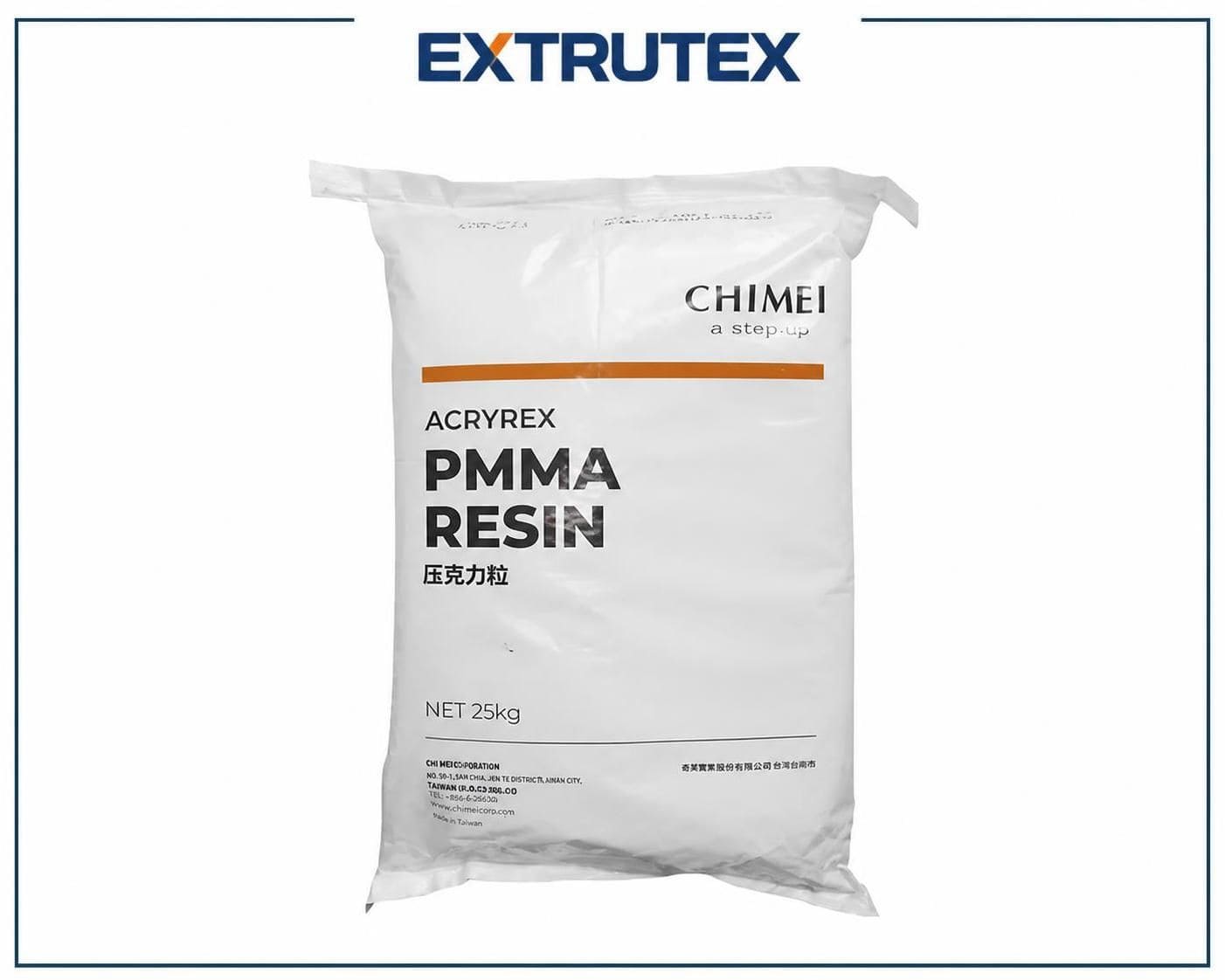
CHIMEI's PMMA portfolio is commonly associated with the ACRYREX name. Buyers should confirm the current grade name, manufacturer, manufacturing location and product status because naming conventions and supply arrangements can vary by market.
5.2 Suzhou Double Elephant / Shuangxiang — SX grades
| Grade example | Potential selection direction | Application areas to evaluate |
|---|
| SX-301 | PMMA injection-moulding grade example | Transparent moulded products, household components and general acrylic applications |
| SX-304 | PMMA grade example; confirm melt flow and processing method | General-purpose mouldings or other applications approved by the manufacturer |
| SX-306 | PMMA grade example; verify current specification | Selected moulded parts where the TDS confirms suitability |
For SX-series materials, request current technical documents covering melt-flow test conditions, optical properties, mechanical performance, drying requirements and recommended processing parameters. Do not infer grade equivalence solely from similar grade numbers.
5.3 Wanhua Chemical — ACRYPLAS PMMA
| Grade example | Selection direction | Potential applications to verify |
|---|
| HD01 | General-purpose PMMA family example | Transparent mouldings, appliance components and industrial parts |
| HD01A | Variant of the HD01 family; confirm detailed formulation | Selected appliance, electronic housing and consumer components |
| HD01B | Variant requiring current TDS verification | Application depends on confirmed grade properties |
| HD01L | Variant requiring current TDS verification | Selected moulded applications subject to documentation |
| HD08L | Special grade example; confirm flow and performance | Applications selected using the current manufacturer data |
| HD03 | PMMA grade example | General moulding applications after processing validation |
| HD04 | PMMA grade example | Selected moulded products based on the grade specification |
| MG01 | PMMA grade example; verify the product family and flow | Applications requiring confirmed grade-specific properties |
| SF01 | Specialty grade example; confirm formulation | Selected high-flow or specialty moulding applications if supported by the TDS |
| OD01 | Specialty grade example; verify the exact suffix and data | Applications determined by current technical documentation |
Wanhua markets PMMA under the ACRYPLAS brand. Grade-specific properties and application suitability must be checked with the current manufacturer documentation. In particular, do not assume that similarly named variants have identical optical, impact or processing characteristics.
5.4 Other China-market sourcing options
Other Chinese-market suppliers and product listings may include PMMA grades from additional domestic producers and trading channels. EXTRUTEX can review a requested grade or specification, but the exact resin producer, product identity, production status and technical documentation should be established before the grade is listed as a confirmed supply option.
For optical-grade PMMA, buyers should request documentation covering light transmission, haze, yellowness, inclusions or foreign-particle control and batch consistency. For general moulding grades, melt flow, impact properties, tensile performance and thermal data may be more important.
6. International PMMA Brands and Grade Examples
6.1 Mitsubishi Chemical — ACRYPET
| Grade | Published or typical grade direction | Application examples |
|---|
| VH | General-purpose grade | Optical lenses and front-grille components |
| VHM | General-purpose grade | Meter covers and selected transparent components |
| VH5 | General-purpose grade | Diffusion-lens applications |
| VHS | General-purpose grade | Thick-lens applications |
| VH4 | General-purpose grade | Selected automotive lighting components |
| TF8 | Light-guide grade | Light-guide panels |
| TF9 | Light-guide grade | Light-guide panels and optical components |
| MD | General-purpose grade | Bottles and selected moulded products |
| MF | General-purpose grade | Display components and selected mouldings |
| TN100 | Heat-resistant grade | Lenses and light guides |
| IRG304 | High-impact grade | Extruded sheet applications |
| VRL40 | High-impact grade | Switches and buttons |
| IRK304 | High-impact grade | Selected covers and appliance components |
| IRH50 | High-impact grade | Display covers and other specified components |
| IRS204 | High-impact grade | Rain-gutter applications |
| IRD50 | High-impact grade | Stationery and selected moulded products |
ACRYPET includes general-purpose, heat-resistant and high-impact PMMA grades. Confirm the grade's exact specifications and availability with the current Mitsubishi Chemical product documentation.
6.2 Röhm — PLEXIGLAS and ACRYLITE
Röhm markets PMMA moulding compounds under PLEXIGLAS in many regions and ACRYLITE in the Americas. Product families include standard grades, heat-resistant grades, impact-resistant grades, light-diffusing compounds and high-gloss formulations.
| Grade / family | General selection direction | Potential applications |
|---|
| PLEXIGLAS 6N | High-flow standard PMMA | Thin-wall mouldings, optical waveguides, lenses and lighting covers |
| PLEXIGLAS 7N | Standard injection-moulding grade | Optical and technical parts, displays and automotive lighting |
| PLEXIGLAS 8N | Grade with strong mechanical and heat-performance characteristics | Optical and technical injection mouldings, lenses and lighting components |
| PLEXIGLAS 7H | Higher molecular-weight variant with improved stress-crack resistance relative to 7N | Extruded profiles, sheets and tubes |
| PLEXIGLAS 8H | Higher molecular-weight variant with high melt strength | Extruded sheet, tubes, profiles and multi-skin sheet applications |
| PLEXIGLAS 8N plus | Modified grade designed for improved ductility and processing | Selected automotive lighting, exterior and household components |
| PLEXIGLAS Softlight | Light-diffusing PMMA family | Diffusing covers and lighting components |
| PLEXIGLAS Edgelight | Light-guide-related family | Edge-lit light-guide applications |
| PLEXIGLAS Hi-Gloss | Specialty high-gloss surface family | Decorative surfaces and selected high-gloss mouldings |
| ACRYLITE 8N | Standard PMMA family | Selected optical and technical components |
| ACRYLITE H15 | Standard PMMA family | Applications selected using the relevant grade TDS |
| ACRYLITE H12 | Standard PMMA family with UV-transmitting options | Selected applications requiring UV transmission |
| ACRYLITE M30 | Standard PMMA family | Selected moulding applications |
| ACRYLITE L40 | High-flow PMMA family | Applications requiring high flow; verify the exact grade specification |
6.3 SABIC — SABIC PMMA
| Grade | Published grade direction | Potential applications |
|---|
| 140HF | Standard, easy-flow injection grade | General injection-moulded acrylic components |
| 17OP | Optical light-guide extrusion grade | Light-guide panels and optical extrusion applications |
| 20HR | Heat-resistant grade for extrusion and injection moulding | Selected applications requiring improved heat performance |
| 23SP | Special extrusion grade with chemical and weather resistance characteristics | Extruded products requiring the documented performance profile |
| IN20HR | Heat-resistant grade for applications not exposed to UV radiation | Selected indoor injection and extrusion applications |
6.4 LG Chem — PMMA injection grades
| Grade | Grade family / selection direction | Application areas to evaluate |
|---|
| IH830 | General PMMA injection grade family | Clear moulded parts, household products and selected automotive or lighting components |
| IH830L | Variant of IH830 family | Confirm exact optical and processing requirements with the TDS |
| IH830C | Variant of IH830 family | Selected moulded applications subject to grade verification |
| IH830HF | High-flow-related grade variant | Complex or thin-wall mouldings if supported by the current TDS |
| IG840 | Injection grade | General clear mouldings and selected technical parts |
| IF850 | Injection grade | Applications requiring the confirmed flow and optical profile |
| IF860 | Injection grade | Selected moulded products subject to technical verification |
| IF870S | Injection grade | Selected applications based on current grade documentation |
LG Chem has published PMMA grade information covering general injection and heat-resistant applications. The table is a grade-identification guide, not a guarantee that each product is currently available in every market.
6.5 Sumitomo Chemical — SUMIPEX
| Grade / family | Selection direction | Potential applications |
|---|
| SUMIPEX | General-purpose acrylic moulding resin family | Automotive interior and exterior components, household products, electronics, lighting and display materials |
| SUMIPEX HT | High-impact acrylic moulding resin family | Selected automotive, lighting, household and display applications |
| SUMIPEX Piano Black | Scratch-resistant piano-black acrylic moulding resin | Decorative black surfaces and selected premium appearance components |
SUMIPEX includes PMMA moulding resin and specialty variants. Confirm the exact grade code and regional product availability when specifying a material for a production programme.
6.6 Arkema — ALTUGLAS
ALTUGLAS is a recognized acrylic materials brand. The portfolio includes PMMA materials for optical, lighting, display, automotive and general moulding or extrusion applications. Buyers should identify the precise ALTUGLAS grade code rather than purchasing solely by the brand name. The relevant TDS should confirm process suitability, melt-flow test conditions, heat performance, optical properties and any required regulatory documentation.
7. Typical Applications of PMMA Resin
- LED lighting: light guides, lenses, covers, diffusers and selected optical components.
- Automotive: tail-lamp components, signal-light parts, instrument-cluster covers, decorative trims and selected lenses.
- Consumer electronics: display windows, transparent covers, decorative housings and selected light-transmitting parts.
- Signage and displays: clear covers, display components, illuminated signs and decorative panels.
- Cosmetic packaging: selected transparent containers, caps and premium packaging components.
- Household appliances: display panels, covers, decorative parts and selected transparent mouldings.
- Construction: selected profiles, sheet-related products, protective screens and architectural components.
- Industrial applications: covers, inspection windows and selected components where the required mechanical, thermal and chemical properties are confirmed.
- Optical products: lenses, light guides and optical components made from grades designed for the relevant optical specifications.
8. PMMA Resin Processing Guide
Injection moulding
PMMA injection moulding requires appropriate control of moisture, melt temperature, mould temperature, injection speed and cooling. Poor processing can create bubbles, silver streaks, flow marks, residual stress or optical defects. The correct settings depend on the grade, part geometry, machine and mould.
Extrusion
Extrusion grades are used for sheet, profiles, tubes and other continuous products. Screw design, melt stability, die design, temperature control, cooling and haul-off settings influence output and dimensions. Optical products require particular attention to cleanliness and surface quality.
Drying and storage
PMMA pellets may require drying before processing, particularly when producing transparent or optical components. Follow the grade manufacturer's recommended drying temperature, duration and moisture limit. Store pellets in clean, sealed packaging and protect dried material from reabsorbing moisture.
Colouring and additives
Colourants, UV stabilizers, impact modifiers and processing aids can affect transparency, colour stability, surface appearance and mechanical performance. Use compatible materials and verify that the resulting compound meets the finished-product requirements.
Scrap and regrind
Regrind may be considered for selected non-critical applications when permitted by the product specification. It should not automatically be introduced into optical, safety-related or regulated products. Reprocessing history, contamination, colour changes and thermal degradation can affect final performance.
9. PMMA vs. Polycarbonate (PC)
| Selection factor | PMMA / Acrylic | Polycarbonate / PC |
|---|
| Optical clarity | Excellent in suitable grades | Excellent in suitable grades |
| Surface hardness | Generally higher than standard PC | Usually requires additional consideration where scratch resistance is critical |
| Impact resistance | Standard grades can be brittle | Generally much higher impact resistance |
| Outdoor weathering | Generally good for suitable grades | Often needs grade-specific UV protection for prolonged outdoor exposure |
| Heat performance | Depends on grade; specialty heat-resistant options exist | Often selected where greater heat performance is required, subject to grade |
| Typical priority | Clarity, surface appearance and weatherability | Impact resistance and engineering performance |
The final choice should be based on the component design, test requirements and operating conditions. Neither material is automatically the best option for every transparent application.
10. How to Select a PMMA Grade
- Specify the manufacturing process: injection moulding or extrusion.
- Define the optical target: transparency, haze, colour, light transmission or diffusion.
- Set the mechanical requirements: impact performance, stiffness, surface hardness and dimensional stability.
- Check heat exposure: review operating temperature and required heat-deflection performance.
- Evaluate weather and chemical exposure: confirm outdoor, UV and chemical-resistance requirements.
- Confirm grade identity: request the current manufacturer's TDS and SDS.
- Compare test methods correctly: do not compare melt-flow values measured under different temperatures or loads as if they were equivalent.
- Validate the final part: run trials where necessary before approving a resin for mass production.
11. Why Source PMMA Resin Through EXTRUTEX?
EXTRUTEX helps industrial buyers identify potential PMMA resin options for their manufacturing processes and finished products. By sharing the application and technical requirements, buyers can narrow down candidate grades instead of relying on brand names alone.
- Support with sourcing Chinese and international PMMA grade options, subject to availability.
- Candidate selection for injection moulding and extrusion applications.
- Comparison of optical, flow, heat and mechanical requirements using available technical documentation.
- Assistance identifying general-purpose, optical, high-flow, heat-resistant and impact-modified grade families.
- Coordination of current grade data, packaging and supply details where available.
EXTRUTEX does not claim that every listed grade is in stock or currently produced. Product identity, availability, manufacturer documentation and suitability must be confirmed before order acceptance.
12. Frequently Asked Questions
What does PMMA stand for?
PMMA stands for polymethyl methacrylate, an amorphous thermoplastic commonly known as acrylic resin or acrylic plastic.
Is PMMA the same as acrylic?
PMMA is the polymer commonly referred to as acrylic plastic. The word acrylic can also describe other materials and formulations, so confirm the exact resin chemistry when purchasing.
Is PMMA suitable for injection moulding?
Yes. Many PMMA grades are specifically designed for injection moulding. Select a grade based on flow, optical performance, heat resistance, mechanical requirements and the mould design.
Can PMMA be extruded?
Yes. Dedicated PMMA extrusion grades are available for sheet, profiles, tubes and other products. Confirm melt strength, optical requirements and processing recommendations for the chosen grade.
Is PMMA better than polycarbonate?
It depends on the application. PMMA is often attractive for clarity, surface hardness and outdoor weatherability, while PC is usually preferred where high impact resistance is a primary requirement.
Can PMMA be used outdoors?
Many PMMA grades offer good weatherability, but the grade must be suitable for the exposure, colour, component stress and required service life. Verify the relevant weathering data before specification.
Are all PMMA grades suitable for optical lenses?
No. Optical applications require appropriate light transmission, haze, colour and quality control. Use a grade designed for the optical application and confirm its data with the manufacturer.
Can PMMA be coloured?
Yes. PMMA can be supplied in transparent colours, translucent colours, light-diffusing formulations and opaque colours, subject to grade and supplier capability.
How do I request a PMMA resin quotation?
Send EXTRUTEX your preferred grade or brand, application, processing method, colour, destination country and expected quantity. If you do not know the grade, describe the product and its performance requirements so suitable options can be reviewed.
Request PMMA Resin from EXTRUTEX
Looking for acrylic resin for optical components, LED lighting, transparent mouldings, signage, household products or extrusion?
Tell us your application, processing method and grade requirements. We can review potential Chinese and international PMMA sourcing options, subject to current availability and technical verification.
Contact EXTRUTEX







-
(0 customer reviews)