
No products in the cart.

All rights of this website are reserved for EXTRUTEX Austria and its partner companies, © 2026


Multiple Payment Methods

Discount for advance payments over 50%

Free Shipping Coordination Services
Payment methods:


EXTRUTEX PP Impact Copolymer is a polypropylene resin sourcing solution for manufacturers seeking a balance of impact resistance, stiffness, durability and processing efficiency. We help customers identify suitable grades from Chinese refineries and other international producers according to their product design, moulding process and performance requirements.
PP impact copolymer is commonly selected for durable injection-moulded products, industrial components, containers, crates, luggage parts, household goods and selected automotive applications. Available grades vary in melt flow rate, stiffness, impact performance, colour and additive package.
Polypropylene impact copolymer is a thermoplastic material developed to improve the toughness of conventional polypropylene homopolymer. It is generally produced by incorporating an ethylene-propylene rubber phase into a polypropylene-rich matrix. This multiphase structure helps the material absorb impact energy and reduces its tendency to fracture under demanding conditions.
The polypropylene matrix contributes stiffness, strength, chemical resistance and heat performance. The dispersed rubber phase improves toughness and can enhance impact performance at lower temperatures, depending on the formulation and grade. The balance between these characteristics is engineered for particular processing methods and end-use requirements.
Impact copolymer grades are not identical. Some prioritise high impact resistance, while others are designed for high-flow injection moulding, fast production cycles, good stacking performance or a balance of stiffness and toughness. Grade selection should therefore be based on the finished product rather than the polymer name alone.
Impact copolymer polypropylene is suitable for products that may experience dropping, knocks, handling damage or mechanical shock. The level of protection depends on the grade, wall thickness, product geometry, moulding conditions and test temperature.
The polypropylene matrix helps moulded components retain their shape under normal service conditions. The appropriate grade can provide a practical combination of rigidity and toughness for containers, storage products, equipment housings and reusable industrial items.
Many PP impact copolymer grades are designed for injection moulding. Their flow characteristics can support complex mould geometries, repeatable filling and efficient production. Higher melt flow grades may be suitable for thin-wall or high-output moulding, while lower-flow grades may be considered for thicker components or applications requiring different mechanical performance.
Polypropylene has a relatively low density compared with many engineering plastics. It can help manufacturers reduce component weight while maintaining the functional properties required for the application.
PP generally offers resistance to many aqueous solutions, acids, alkalis and common chemicals. Actual compatibility depends on the chemical, concentration, temperature, exposure duration, mechanical stress and the specific resin formulation.
Commercial grades may include nucleating agents, antistatic additives, slip agents, colourants or other modifiers. These additions can influence cycle time, surface behaviour, appearance, stiffness and other properties. Confirm the available formulation and compliance documents for the exact grade.
EXTRUTEX can help source polypropylene impact copolymer grades from Chinese refineries, including suitable offerings from major Chinese petrochemical producers, as well as selected international suppliers. Availability, origin, packaging and documentation depend on the requested grade and current supply conditions.
| Grade | Producer | Reported MFI | Indicative Application / Selection Focus |
|---|---|---|---|
| BJ368MO | Borouge | 70 | High-flow moulding and selected daily-use products |
| BD265MO | Borouge | 7 | Impact-resistant moulded products, crates and durable goods |
| BD950MO | Borouge | 7 | Closures, packaging components and containers |
| BH975MO | Borouge | 38 | Thin-wall containers, housewares and appliance components |
| BF970MO | Borouge | 20 | Crates, boxes, appliances and other rigid moulded products |
| JM-350 | LOTTE | 10 | Toys, containers and sporting goods; verify grade-specific suitability |
| BE961MO | Borouge | 12 | Furniture, crates, pails and general-purpose durable products |
| 36MK10 | SABIC | 5.5 | Household products, packaging and impact-resistant mouldings |
| RP2400 | Yuhwa | 0.25 | Potential heavy-duty moulding applications; confirm processing method and datasheet |
Important: The MFI values above are reproduced from the supplied grade list and are not a substitute for the producer's current technical datasheet. Melt flow rate is method- and condition-dependent. Confirm the test temperature, applied load, test standard, mechanical properties and intended processing method before comparing grades.
Chinese petrochemical producers supply polypropylene grades for a wide range of industrial and consumer applications. Depending on the required specification and availability, EXTRUTEX can help customers evaluate China-origin material alongside alternative international grades.
Chinese-origin sourcing may be appropriate for manufacturers looking for a reliable supply route, production-scale volumes or a grade matched to established moulding conditions. However, resin origin alone does not determine quality. The exact grade, production source, batch consistency, documentation and suitability for the finished product should all be assessed.
When requesting a quotation or sourcing review, provide as much of the following information as possible:
If the original grade is unavailable, a technically similar alternative may be evaluated. Similar MFI alone does not prove that two grades are interchangeable. Trials and comparison of mechanical properties are recommended before changing production material.
Selected impact copolymer grades are used for interior trim, housings, covers, storage components and other moulded automotive parts. Automotive applications require confirmation of the relevant mechanical, thermal, odour, emissions, ageing and OEM requirements. Not every commercial grade is suitable for automotive use.
Durable impact copolymer grades can be considered for reusable crates, boxes, storage containers, logistics products and selected pallet components. The appropriate material must balance impact strength, stiffness, creep resistance and repeated-use performance.
Applications may include storage boxes, furniture components, kitchen accessories, tool cases, appliance housings and general-purpose household articles. Surface finish, colour consistency and mould release can be important when selecting a suitable grade.
PP impact copolymer can be used in rigid packaging, pails, closures, protective containers and other moulded packaging components. For food-contact applications, confirm that the specific grade and final article meet the regulations applicable in the destination market.
Some grades are suitable for robust toys, sporting accessories and consumer products that need a combination of stiffness and impact resistance. Final-product safety requirements, colourant suitability and relevant compliance testing should be considered.
Impact copolymer may be considered for selected appliance housings, covers and internal components. Applications requiring flame retardancy, electrical insulation performance or special thermal resistance need grades with the appropriate verified properties and approvals.
Melt flow rate indicates how readily a thermoplastic flows under specified test conditions. It is an important preliminary parameter when choosing a resin for injection moulding and other processing operations.
These are general selection guidelines, not universal rules. Two impact copolymers with the same MFR can have different impact strength, stiffness, shrinkage, heat resistance and processing behaviour. Compare full technical datasheets and perform moulding trials where necessary.
| Material | General Characteristics | Typical Selection Consideration |
|---|---|---|
| PP Homopolymer (PPH) | Often offers good stiffness and strength, with impact performance depending on grade and temperature. | Consider when rigidity and general-purpose PP performance are priorities. |
| PP Random Copolymer (PPRC) | Often selected for improved clarity or a balance of flexibility and toughness, depending on grade. | Consider for applications where transparency or particular sealing and product-performance characteristics matter. |
| PP Impact Copolymer (PPIC) | Designed to improve impact toughness through a rubber-modified, multiphase structure. | Consider for durable moulded parts exposed to impact or handling stress. |
These comparisons describe broad material families. Individual grades can overlap in performance, so the final decision should be based on actual technical data and application testing.
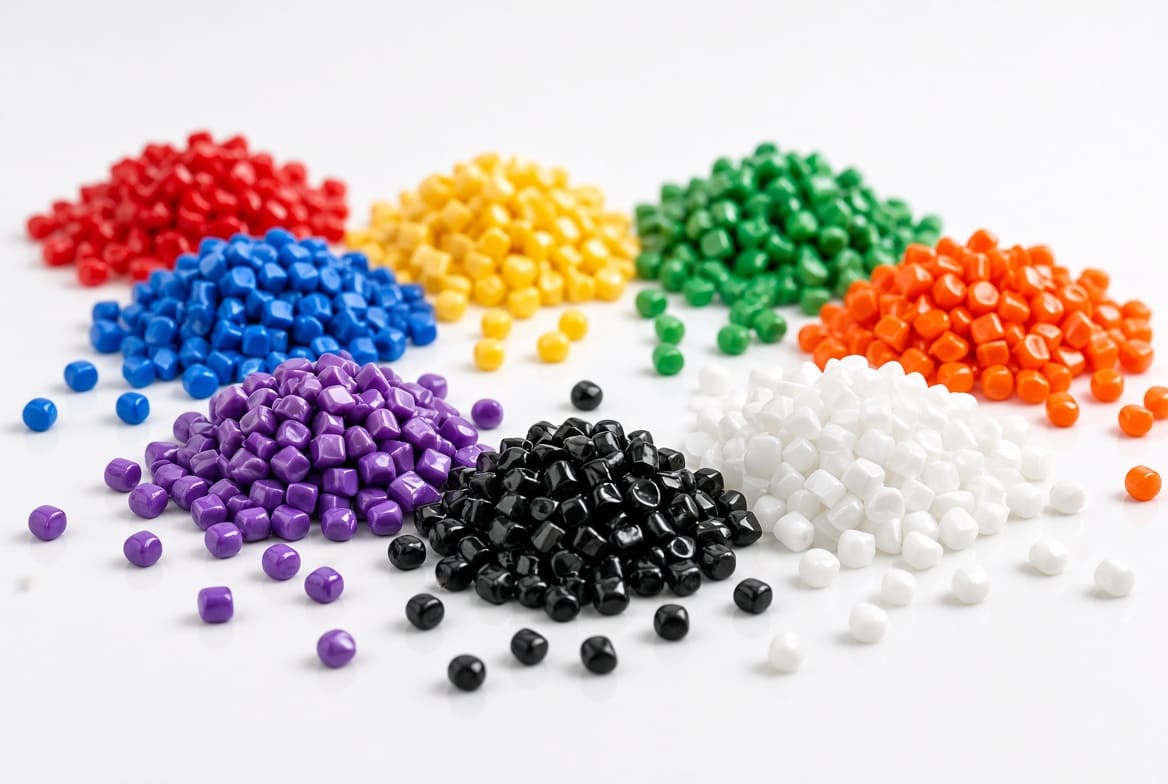
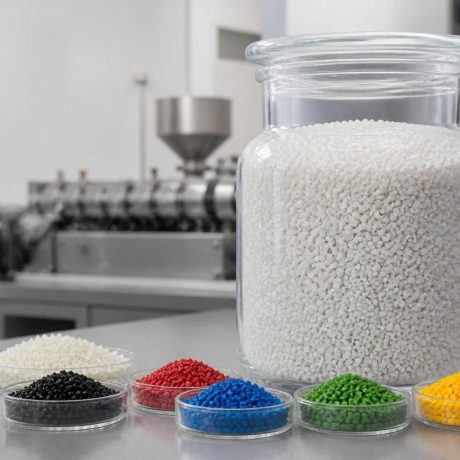
PP impact copolymer is commonly supplied as pellets for thermoplastic processing, especially injection moulding. Processing parameters depend on the grade, machine, mould, part geometry and production requirements. Use the resin producer's processing recommendations as the starting point rather than applying a single temperature or pressure setting to every grade.
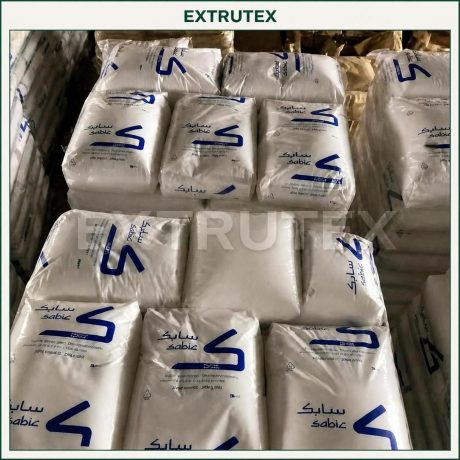
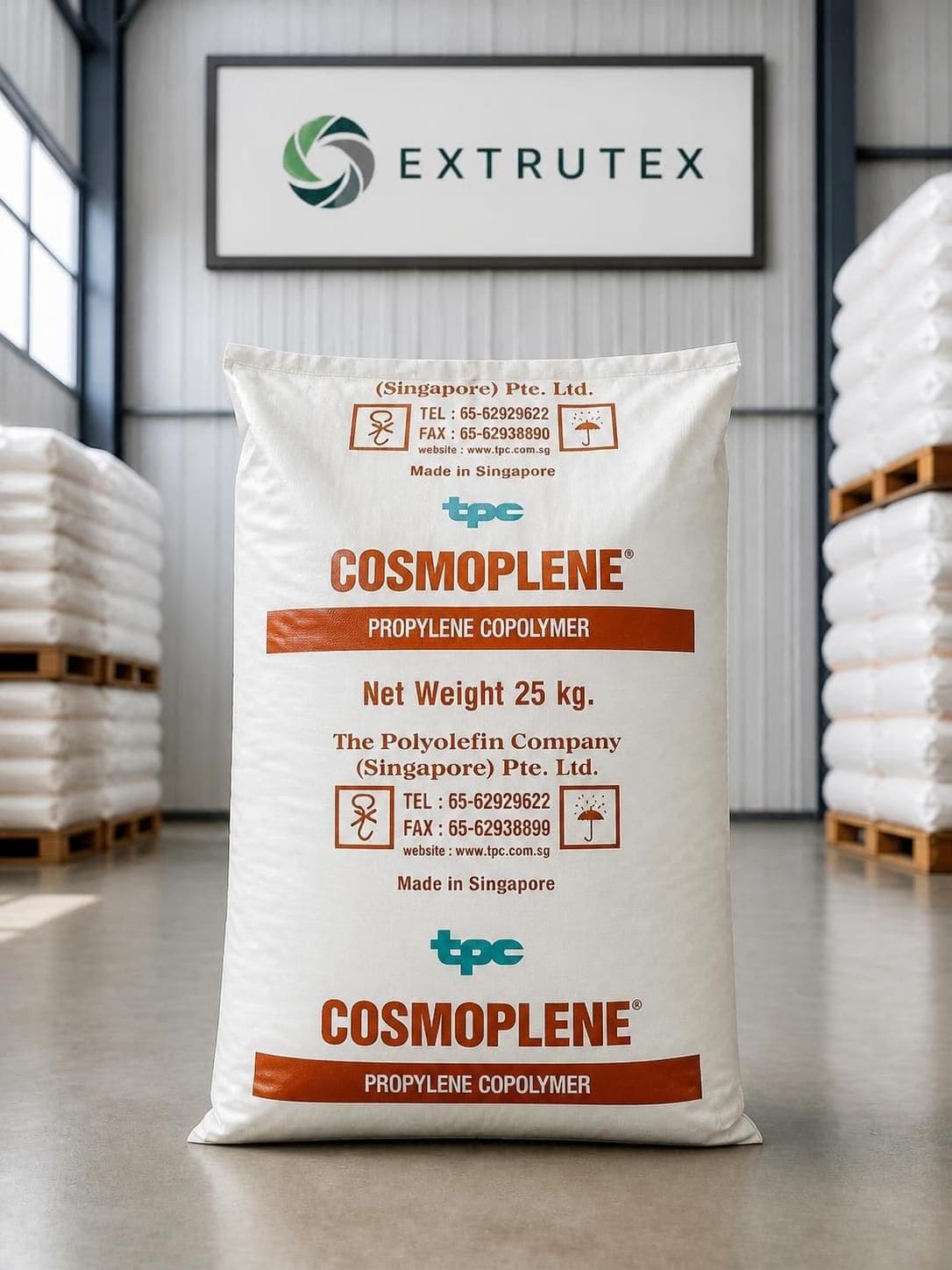
Packaging formats and shipment configurations depend on the producer and supply arrangement. Common resin packaging may include bags or larger bulk packaging options. Confirm the actual net weight, pallet configuration, labelling and shipment details for the offered material.
EXTRUTEX helps manufacturers source polypropylene impact copolymer according to their application, processing method and purchasing requirements. We can review the requested grade, compare available supply options and help identify the documentation needed for a technical evaluation.
Our sourcing process can consider:
Supply is subject to current availability and confirmation from the relevant producer or distributor. EXTRUTEX does not represent indicative grade information as a guarantee of current stock or a substitute for the manufacturer's technical documentation.
It is used for many durable injection-moulded products, including crates, containers, household goods, appliance components, luggage parts and selected automotive parts. The correct application depends on the individual grade and its verified properties.
Yes. EXTRUTEX can help source suitable grades through available Chinese refinery and petrochemical supply channels, subject to grade availability, specification and destination requirements.
It is generally designed to improve impact toughness, but it is not automatically superior in every mechanical property. Homopolymer grades may provide higher stiffness or other advantages in specific applications. Compare the datasheets for the actual grades being considered.
No. MFI is an indicator of melt flow under specified test conditions, not an overall quality ranking. The right MFI depends on processing requirements, while impact strength, stiffness, thermal performance and other characteristics must also be evaluated.
Some grades are designed for food-contact applications, but suitability must be confirmed for the exact resin, additives, intended food type, temperature and applicable regulations. Request current compliance documentation before use.
Possibly, but equivalent MFI does not establish equivalence. Compare the complete technical data, regulatory status and processing characteristics, then validate the alternative with production and product testing.
Provide the current grade if known, application, processing method, target MFI, required impact performance, colour, estimated quantity and destination. This helps narrow the sourcing options.
Looking for PP impact copolymer from Chinese refineries or international suppliers? Contact EXTRUTEX with your target grade, application and technical requirements.
Contact EXTRUTEX There are no reviews yet.
By submitting your email, you agree to our company’s terms and conditions.
We are not looking to sell; we are here to provide you with the best support and service.
Contact available 24/7
Please do not contact us for advertising or sales inquiries
All rights of this website are reserved for EXTRUTEX Austria and its partner companies, © 2026
-
(0 customer reviews)