

No products in the cart.

All rights of this website are reserved for EXTRUTEX Austria and its partner companies, © 2026

Multiple Payment Methods

Discount for advance payments over 50%

Free Shipping Coordination Services
Payment methods:

EXTRUTEX supplies PA66 engineering plastic resin pellets for automotive components, electrical and electronic equipment, industrial machinery, consumer products, and precision injection-moulded parts.
We help customers source suitable virgin and modified polyamide 66 grades from established international manufacturers and qualified Chinese suppliers. Depending on the application, available material options may include unfilled PA66, glass-fibre-reinforced PA66, heat-stabilised grades, impact-modified materials, flame-retardant compounds, and other speciality formulations.
Whether you require a general-purpose nylon resin or a reinforced engineering polymer for demanding operating conditions, EXTRUTEX can help you identify suitable grades based on mechanical performance, heat resistance, processing requirements, colour, and application.
PA66, also known as Polyamide 66 or Nylon 66, is a semi-crystalline engineering thermoplastic valued for its combination of mechanical strength, stiffness, wear resistance, and heat resistance. It is used to manufacture components that must withstand repeated loading, friction, elevated temperatures, and demanding service conditions.
PA66 is produced through a polymerisation process involving hexamethylenediamine and adipic acid. The resulting polymer contains repeating amide linkages, which contribute to its mechanical properties and thermal performance. PA66 can be supplied as a base polymer or compounded with glass fibres, impact modifiers, heat stabilisers, lubricants, pigments, flame retardants, and other additives to meet specific requirements.
Compared with many general-purpose plastics, PA66 offers a useful balance of strength and temperature resistance. It is therefore widely used in automotive systems, industrial machinery, electrical components, connectors, fasteners, gears, bearings, and structural plastic parts.
PA66 is closely related to PA6, or Nylon 6, but the two materials differ in their polymer structures and typical performance. PA66 generally has a higher melting point and often provides good stiffness and heat resistance. PA6 may offer advantages in certain impact and processing situations. Actual performance depends on the exact grade, reinforcement, conditioning, component geometry, and operating environment.
| Property | Typical Information | Notes |
|---|---|---|
| Material name | Polyamide 66 | Also known as Nylon 66 or PA66 |
| Polymer family | Engineering thermoplastic | Semi-crystalline polymer |
| CAS number | 32131-17-2 | Commonly used for PA66 polymer identification; verify documentation for specific formulations |
| Repeat-unit representation | (C₁₂H₂₂N₂O₂)ₙ | Represents the PA66 repeat unit |
| Typical density | Approximately 1.14 g/cm³ | Unfilled PA66; reinforced grades have different densities |
| Typical melting point | Approximately 255–265°C | Grade and test method can affect reported values |
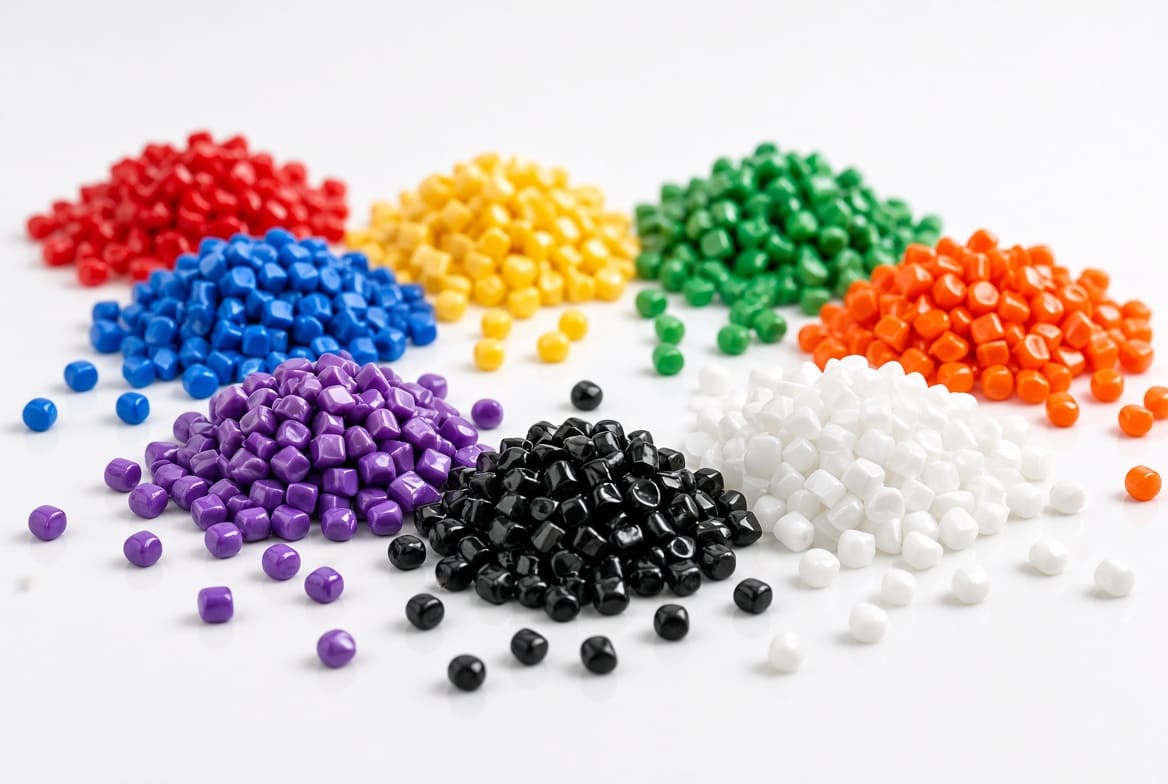
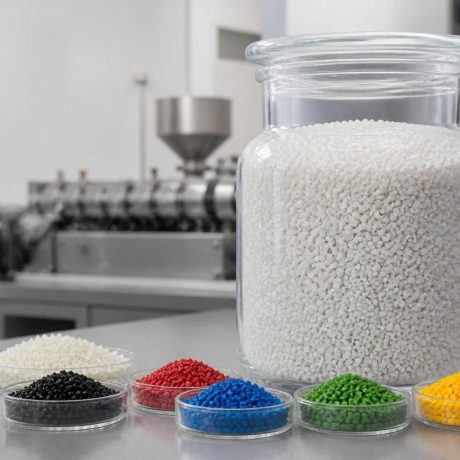
| Appearance | Natural or coloured pellets | Appearance depends on colour and formulation |
| Moisture absorption | Absorbs moisture | Moisture can affect dimensions and mechanical properties |
| Common processing method | Injection moulding | Some grades are suitable for extrusion and other processes |
| HS code | Confirm for the shipment | Classification depends on product form and applicable customs rules |
PA66 provides good tensile strength and stiffness, making it suitable for components exposed to mechanical loads. Glass-fibre-reinforced grades can offer substantially higher stiffness and strength than unfilled grades. The appropriate reinforcement level should be selected according to load, impact requirements, dimensional tolerances, and part design.
PA66 has a relatively high melting point for an engineering thermoplastic. Heat-stabilised grades are available for applications involving prolonged exposure to elevated temperatures. The maximum usable service temperature depends on load, exposure time, environment, and the specific grade rather than melting point alone.
Selected PA66 grades are suitable for moving components such as gears, rollers, guides, and bearing-related parts. Wear performance depends on the mating material, surface finish, lubrication, pressure, speed, temperature, and grade formulation. Special low-friction or wear-modified grades may be preferable for demanding sliding applications.
PA66 generally resists many oils, greases, fuels, and common industrial substances. However, strong acids, certain solvents, oxidising chemicals, and specific high-temperature environments may damage the material. Chemical compatibility should be checked using the exact chemical concentration, temperature, and exposure conditions.
PA66 is available in many formulations, including glass-fibre-reinforced, mineral-filled, impact-modified, heat-stabilised, flame-retardant, and speciality grades. These options allow material selection to be matched more closely to the required strength, stiffness, dimensional stability, colour, electrical properties, and regulatory requirements.
Many PA66 grades can be processed using injection moulding. Certain grades are also designed for extrusion, compounding, and fibre-related applications. Processing recommendations differ by grade, so resin drying, melt temperature, mould temperature, and residence time should follow the supplier's technical documentation.
| Comparison | PA66 / Nylon 66 | PA6 / Nylon 6 |
|---|---|---|
| Polymerisation route | Made from hexamethylenediamine and adipic acid | Made from caprolactam |
| Melting point | Generally higher, around 255–265°C | Generally around 220–225°C |
| Mechanical performance | Often selected for stiffness and heat-resistant applications | Can offer a useful balance of toughness and strength |
| Moisture absorption | Absorbs moisture | Absorbs moisture; behaviour differs by grade and conditions |
| Processing | Requires appropriate drying and grade-specific moulding conditions | Also requires appropriate drying and grade-specific conditions |
| Typical applications | Automotive parts, electrical connectors, gears, structural components | Mechanical parts, housings, consumer goods, industrial components |
Neither material is automatically the best choice for every application. Select PA6 or PA66 based on the required mechanical properties, temperature, moisture exposure, chemical environment, part geometry, cost target, and production process. Compare conditioned as well as dry-as-moulded properties where dimensional stability or impact performance is critical.
EXTRUTEX can help source PA66 resin from established international manufacturers and Chinese suppliers, subject to grade availability and commercial confirmation. The tables below organise the grades supplied for reference. They are intended as a starting point for material selection, not as a substitute for current manufacturer data sheets.
| Grade | Manufacturer | Brand | Supplied Charpy Notched Value at 23°C | General Selection Note |
|---|---|---|---|---|
| A3K | BASF | Ultramid® | 5 | General-purpose PA66; confirm exact grade properties |
| A3W | BASF | Ultramid® | 6 | Grade-specific heat and processing requirements apply |
| A3Z | BASF | Ultramid® | 90 | Check conditioning and impact test details |
| A4H | BASF | Ultramid® | 5.7 | Engineering application grade |
| A3WG3 | BASF | Ultramid® | 8 | Reinforced grade; confirm glass-fibre content |
| A3EG5 | BASF | Ultramid® | 12 | Reinforced engineering grade |
| A3HG5 | BASF | Ultramid® | 8.7 | Confirm heat stabilisation and specification |
| A3WG5 | BASF | Ultramid® | 12 | Reinforced grade |
| A3EG6 | BASF | Ultramid® | 13 | Reinforced engineering grade |
| A3WG6 | BASF | Ultramid® | 13 | Reinforced engineering grade |
| A3HG6 HR | BASF | Ultramid® | 10.4 | Grade-specific heat-resistant formulation |
| A3EG7 | BASF | Ultramid® | 14 | Reinforced engineering grade |
| A3HG7 | BASF | Ultramid® | 11.9 | Confirm stabilisation package |
| A3WG7 | BASF | Ultramid® | 14 | Reinforced engineering grade |
| A3WG7 HRX | BASF | Ultramid® | 12 | Verify exact heat-resistant specification |
| A3WG8 | BASF | Ultramid® | 13 | Reinforced engineering grade |
| A3EG10 | BASF | Ultramid® | 18 | Reinforced engineering grade |
| A3WG10 | BASF | Ultramid® | 18 | Reinforced engineering grade |
| A3WGM53 | BASF | Ultramid® | 8 | Confirm reinforcement and modification |
| A3ZG6 | BASF | Ultramid® | 19 | Confirm exact grade specification |
| A3K R01 | BASF | Ultramid® | 5 | Check colour and formulation suffix |
| A3U32 | BASF | Ultramid® | 3 | Confirm exact formulation |
| A3UG5 | BASF | Ultramid® | 7.5 | Confirm reinforcement and conditioning |
| A3U42G6 | BASF | Ultramid® | 8 | Confirm exact grade specification |
| A3X2G5 | BASF | Ultramid® | 13 | Modified/reinforced grade; verify datasheet |
| A3XZG5 | BASF | Ultramid® | 25 | Confirm impact test and grade suffix |
| A3X2G7 | BASF | Ultramid® | 14 | Confirm reinforcement and formulation |
| A3X2G10 | BASF | Ultramid® | 13 | Confirm reinforcement and formulation |
| Grade | Brand | Supplied Manufacturer Reference | Supplied Charpy Notched Value at 23°C | Selection Note |
|---|---|---|---|---|
| 101L | Zytel® | DuPont listing | 5 | Confirm current manufacturer and exact grade data |
| 103FHS | Zytel® | DuPont listing | 5 | Confirm heat-stabilisation requirements |
| EFE1068 | Zytel® | DuPont listing | 6 | Verify formulation and current availability |
| 114L BK097 | Zytel® | DuPont listing | 11 | Confirm colour code and technical data |
| 408 | Zytel® | DuPont listing | 17 | Confirm full grade designation |
| 450 | Zytel® | DuPont listing | 10 | Confirm full grade designation |
| 490 | Zytel® | DuPont listing | 16 | Confirm full grade designation |
| ST801 | Zytel® | DuPont listing | 80 | Check impact test method and conditioning |
| 70G20HSL | Zytel® | DuPont listing | 9 | Glass-fibre-reinforced grade; verify suffix |
| 70G25HSL | Zytel® | DuPont listing | 10 | Glass-fibre-reinforced grade; verify suffix |
| 70G30HSL | Zytel® | DuPont listing | 15 | Glass-fibre-reinforced grade; verify suffix |
| 70G50HSL | Zytel® | DuPont listing | 16 | Confirm glass content and test conditions |
| 70G33GRA | Zytel® | DuPont listing | 13 | Confirm full formulation |
| 70G35HSLX | Zytel® | DuPont listing | 17 | Confirm full formulation |
| 70GB40HSL | Zytel® | DuPont listing | 12 | Confirm reinforcement and suffix |
| 74G33EHSL | Zytel® | DuPont listing | 10 | Confirm full grade data |
| 74G33EL | Zytel® | DuPont listing | 11 | Confirm full grade data |
| 79G13L | Zytel® | DuPont listing | 8 | Confirm full grade data |
| FR72G25V0 | Zytel® | DuPont listing | 14 | Flame-retardant grade; verify rating and certification |
| FR70G25GW | Zytel® | DuPont listing | 6.5 | Flame-retardant grade; verify formulation |
| FR70G25V0 | Zytel® | DuPont listing | 10 | Confirm UL 94 rating and test thickness |
| FR70M40GW | Zytel® | DuPont listing | 2.7 | Confirm full formulation |
| E40 | Zytel® | DuPont listing | 5 | Confirm full grade designation |
| E42A | Zytel® | DuPont listing | 5 | Confirm full grade designation |
| 101F | Zytel® | Celanese listing | 5 | Verify current brand ownership and datasheet |
| 103HSL | Zytel® | Celanese listing | 5 | Verify current brand ownership and datasheet |
| 105F | Zytel® | Celanese listing | 6 | Verify current brand ownership and datasheet |
| 135F | Zytel® | Celanese listing | 4 | Verify current brand ownership and datasheet |
| FN718 | Zytel® | Celanese listing | 9 | Verify current brand ownership and datasheet |
| 70G43HSLA | Zytel® | Celanese listing | 11 | Reinforced grade; confirm formulation |
| 70G35HSL | Zytel® | Celanese listing | 17 | Reinforced grade; confirm formulation |
| 70G35HSLRA4 | Zytel® | Celanese listing | 15 | Confirm full suffix and formulation |
| 80G14A | Zytel® | Celanese listing | 14 | Confirm full grade data |
| 80G25HS | Zytel® | Celanese listing | 13 | Confirm heat-stabilisation data |
| 80G33HS1L | Zytel® | Celanese listing | 18 | Confirm full grade data |
| FR7026V0F | Zytel® | Celanese listing | 9 | Flame-retardant grade; verify certification |
| FR70M30V0 | Zytel® | Celanese listing | 2.5 | Flame-retardant grade; verify certification |
| E51HSB | Zytel® | Celanese listing | 7 | Confirm full grade data |
| Grade | Brand | Supplied Charpy Notched Value at 23°C | Potential Application Area |
|---|---|---|---|
| A FR 100 NT | Radiflam | 0.45 J/cm² | Electrical enclosure parts |
| A RV250 | Radiflam | 1.3 J/cm² | Automotive interior parts |
| ARV300 AF 830 BR | Radiflam | Not supplied | Electrical connector components |
| A ESL128 100 NT | Radilon | 6.5 J/cm² | Impact-resistant tool components |
| A HS 164 NT | Radilon | 0.5 J/cm² | Fasteners and connectors |
| A HSX 100 NT | Radilon | 1.5 J/cm² | Shock-resistant instrument parts |
| Grade | Brand | Supplied Charpy Notched Value at 23°C | Potential Application Area |
|---|---|---|---|
| M-1016 | Akulon | 1.2 J/cm² | Automotive engine parts |
| S223-D | Akulon | 0.6 J/cm² | Electronic component housings |
| S223-G2U | Akulon | 0.4 J/cm² | General-purpose machine parts |
| S223-G4U | Akulon | 0.6 J/cm² | Precision instrument components |
| S223-HG6 | Akulon | 1.2 J/cm² | Heat-resistant brackets |
| S223-PG8 | Akulon | 2 J/cm² | Impact-resistant tool handles |
| S245-C | Akulon | Not supplied | Textile machinery components |
| AKV 15 FN000 | Durethan | Not supplied | Electrical appliance insulators |
| AKV 25 F30 | Durethan | Not supplied | Flame-retardant electrical connectors |
| AKV 30 H2.0 | Durethan | ≤ 1.00 J/cm² | Heat-resistant automotive gears |
| AKV 30 H3.0 | Durethan | 1 J/cm² | Industrial structural parts |
| AKV 35 H3.0 | Durethan | 1.2 J/cm² | High-strength automotive brackets |
| AKV 50 H2.0 | Durethan | 1.5 J/cm² | Precision and structural components |
| AKV 50 H3.0 | Durethan | 1.7 J/cm² | High-load machinery parts |
In addition to international engineering plastic brands, EXTRUTEX can help customers source Chinese-origin PA66 resin and compounds. Chinese supply options can be considered for general injection moulding, reinforced engineering components, electrical products, industrial machinery, and other applications, subject to the required specification and availability.
For buyers comparing Chinese and international materials, the important factors are not country of origin alone. Confirm the polymer type, viscosity or flow characteristics, reinforcement percentage, impact strength, tensile properties, heat performance, colour, moisture content, and relevant regulatory requirements. A grade should be approved based on technical suitability and documented quality rather than a generic PA66 designation.
Sinochem International has publicly described its PA66 production and polymerisation capabilities. However, a verified public commercial grade catalogue with specific Sinochem PA66 injection-moulding grade codes was not available for confirmation when this page was prepared.
EXTRUTEX can therefore discuss Sinochem-origin PA66 as a potential sourcing route, subject to confirmation of the actual producing entity, commercial grade designation, intended application, export availability, and technical documentation. We will not assign invented grade codes or claim that an unverified grade is available.
| Chinese Supply Option | Material Type | Potential Use | Information Required for Quotation |
|---|---|---|---|
| Sinochem PA66 | PA66 resin; exact commercial grade to be confirmed | Engineering plastics and industrial applications, depending on grade | Official grade code, TDS, COA, viscosity or flow data, packaging, and availability |
| Chinese-origin virgin PA66 | Unfilled PA66 | General injection moulding and engineering components | Viscosity, moulding requirements, colour, and mechanical properties |
| Chinese glass-fibre-reinforced PA66 | PA66 + glass fibre | Structural parts, brackets, housings, and machinery components | Glass-fibre percentage, tensile strength, flexural modulus, impact strength, and heat data |
| Chinese impact-modified PA66 | Toughened PA66 | Parts requiring improved impact performance | Notched impact values, conditioning, low-temperature performance, and flow data |
| Chinese flame-retardant PA66 | Flame-retardant PA66 compound | Electrical and electronic components | Flame-retardant system, UL 94 rating, test thickness, electrical data, and compliance documents |
| Chinese heat-stabilised PA66 | Heat-stabilised PA66 | Automotive and industrial parts exposed to heat | Long-term heat performance, ageing data, mechanical retention, and service conditions |
The following examples illustrate the types of modified PA66 grades that are available from Chinese suppliers. They are not Sinochem grades and are listed separately so that their origin is not misrepresented.
| Supplier Reference | Grade Code | Material Description | Potential Application Direction |
|---|---|---|---|
| Sinowin | A531 | Natural toughened PA66 | Impact-modified engineering components |
| Sinowin | A531B02 | Black toughened PA66 | Black, impact-modified components |
| Sinowin | A52G10 | Natural PA66 + GF10 | Lightly reinforced components |
| Sinowin | A52G20 | Natural PA66 + GF20 | Reinforced engineering parts |
| Sinowin | A52G30 | Natural PA66 + GF30 | Structural and dimensionally stable components |
| Sinowin | A52G50NC | Natural PA66 + GF50 | High-reinforcement engineering applications |
| Sinowin | A51G15 | Toughened PA66 + GF15 | Reinforced parts requiring impact performance |
| Sinowin | A51G30B01 | Black toughened PA66 + GF30 | Heat- and ageing-resistant reinforced parts, subject to grade data |
| Sinowin | A51G30NC010 | Natural toughened PA66 + GF30 | Reinforced impact-resistant components |
| Sinowin | A51G30NC015 | Natural toughened PA66 + GF30 | Reinforced impact-resistant components |
| Sinowin | A51G30NC011 | Natural toughened PA66 + GF30 | Reinforced impact-resistant components |
| Sinowin | A51G3311 | Natural toughened PA66 + GF33 | Reinforced engineering components |
| Sinowin | A52NHNC08 | Natural nitrogen-based flame-retardant PA66 | Electrical applications; verify flame rating |
| Sinowin | A52NHB05 | Black red-phosphorus flame-retardant PA66 | Electrical applications; verify flame rating |
| Sinowin | A52G25NHB03 | Black reinforced flame-retardant PA66 + GF25 | Reinforced electrical components |
| Sinowin | A52G30NH | Natural reinforced flame-retardant PA66 + GF30 | Reinforced electrical and industrial components |
| Sinowin | A52G25NGY16 | Grey bromine-based flame-retardant PA66 + GF25 | Electrical components; verify regulatory requirements |
| Sinowin | A52O15 | Orange PA66 | Colour-specific components |
| Sinowin | A52B01HR | Black heat- and ageing-resistant PA66 | Heat-exposed industrial components |
| Sinoplast / POLYKING® | 221-ST | PA66 strength-toughness-enhanced grade | Impact-resistant engineering parts |
| Sinoplast / POLYKING® | 227-FR | PA66 flame-retardant grade | Electrical applications; confirm flame classification |
| Sinoplast / POLYKING® | 227-G15 | Reinforced flame-retardant PA66 + GF15 | Electrical and structural components |
| Sinoplast / POLYKING® | 227-G30 | Reinforced flame-retardant PA66 + GF30 | Reinforced electrical and industrial parts |
Important: The Chinese supplier examples above are reference options, not a guarantee of current inventory or commercial availability through EXTRUTEX. Confirm the producer, official grade designation, technical data sheet, certificate of analysis, material origin, and quotation before specifying a grade for production.
PA66 is widely used for automotive engineering components because suitable grades can combine strength, stiffness, heat resistance, and resistance to oils and greases. Potential applications include brackets, clips, housings, connector bodies, under-the-hood components, fan-related parts, cable-management components, and structural supports. Under-the-hood applications require careful evaluation of heat ageing, fluid exposure, vibration, and long-term mechanical performance.
PA66 grades are used in connectors, terminal blocks, electrical housings, switch components, cable-management parts, and other electrical products. Flame-retardant grades may be appropriate where fire performance is required. The correct UL 94 classification, test thickness, electrical properties, tracking performance, and regulatory documentation must be checked for the specific grade.
Gears, rollers, guides, bushings, machine components, and other parts can be manufactured from suitable PA66 grades. Glass-fibre reinforcement may improve stiffness and load-bearing performance, while wear-modified formulations may help in selected sliding applications. Designers should consider friction, lubrication, moisture, thermal expansion, and contact pressure.
PA66 can be used in durable housings, tool components, fasteners, sports equipment, household appliances, and other products that need mechanical strength. Grade selection depends on the balance between appearance, toughness, dimensional stability, cost, and moulding performance.
Depending on the formulation, PA66 may also be suitable for precision moulded parts, structural components, fluid-handling equipment, and specialised industrial applications. Confirm chemical compatibility, operating temperature, pressure, and any applicable food-contact, drinking-water, electrical, or industry-specific approvals before use.
| Application Requirement | Grade Type to Consider | Important Checks |
|---|---|---|
| General-purpose moulded components | Unfilled PA66 | Flow, impact strength, shrinkage, moisture conditioning |
| High stiffness and strength | Glass-fibre-reinforced PA66 | Glass content, tensile strength, flexural modulus, anisotropic shrinkage |
| Impact resistance | Toughened PA66 | Notched impact data, low-temperature performance, stiffness trade-off |
| Long-term heat exposure | Heat-stabilised PA66 | Heat ageing, retention of mechanical properties, actual service temperature |
| Electrical safety | Appropriately certified flame-retardant PA66 | UL 94 rating, specimen thickness, electrical performance, compliance |
| Wear and sliding applications | Wear-modified or lubricated PA66 | Friction coefficient, wear rate, counterface, lubrication and pressure |
| Dimensional stability | Suitable reinforced or specially modified grade | Moisture uptake, mould shrinkage, conditioning, fibre orientation |
| Custom-colour products | Colour-matched PA66 grade | Colour consistency, heat stability, pigment compatibility and MOQ |
PA66 is hygroscopic, meaning it can absorb moisture from its surroundings. Excess moisture in the resin during processing may cause surface defects, reduced properties, or other moulding problems. Proper storage and drying are therefore important.
The exact drying and moulding settings must come from the current technical data sheet and be validated on the production machine. The supplier's recommendations should take priority over general processing advice.
When sourcing PA66 resin, EXTRUTEX recommends confirming the technical and commercial documentation before ordering. This is especially important when comparing grades from different producers or switching from an international brand to a Chinese-origin material.
EXTRUTEX helps customers identify and source engineering plastic materials for different manufacturing requirements. We can discuss international brands, Chinese-origin PA66, and modified grades based on the customer's intended application and technical specification.
Brand names and trademarks mentioned on this page belong to their respective owners. Their inclusion identifies material families or grade references and does not, by itself, indicate an authorised distributorship or endorsement.
PA66 is polyamide 66, commonly known as Nylon 66. It is a semi-crystalline engineering thermoplastic used for durable moulded components requiring strength, stiffness, wear resistance, and heat performance.
PA6 and PA66 are related nylon materials but have different polymer structures. PA66 generally has a higher melting point, while PA6 can offer advantages in certain impact and processing applications. The best choice depends on the exact grade and end-use requirements.
Conventional PA66 commonly has a melting point around 255–265°C. The relevant value should be confirmed from the technical data sheet for the selected grade.
Yes. PA66 absorbs moisture from the environment. Moisture can change its dimensions, stiffness, and impact behaviour. Dry-as-moulded and conditioned data may differ significantly, so use the data appropriate to the application.
Yes. Suitable PA66 grades are used for automotive connectors, brackets, housings, clips, and selected under-the-hood components. Confirm the temperature, chemical exposure, mechanical load, ageing requirements, and relevant automotive approvals for the specific part.
Glass-fibre reinforcement usually increases stiffness and can increase strength, but the actual improvement depends on fibre content, orientation, grade formulation, and test conditions. Reinforcement can also change impact performance, shrinkage, surface finish, and density.
EXTRUTEX can help source flame-retardant PA66 options subject to grade availability. Specify the required flame rating, specimen thickness, colour, electrical properties, and compliance requirements so the correct documentation can be checked.
Yes. EXTRUTEX can help source Chinese-origin PA66 materials, subject to supplier and grade availability. The exact producer, grade designation, technical data sheet, certificate of analysis, and country of origin should be confirmed for each offer.
Sinochem has publicly described PA66 production capabilities. Specific commercial grade codes and availability must be confirmed before an order is placed. Contact EXTRUTEX with your application, target properties, and required quantity so a suitable sourcing option can be investigated.
Provide the preferred manufacturer and grade, or describe the application if the grade is not yet selected. Include the required quantity, colour, reinforcement percentage, flame rating if applicable, processing method, delivery destination, and any technical or compliance requirements.
No. Values should only be compared when the test method, specimen dimensions, notch, conditioning, temperature, and units are equivalent. Always consult the current manufacturer's technical data sheet.
Compare the actual technical data, batch consistency, documentation, application approvals, supply continuity, and total delivered cost. Run production trials and validate part performance before replacing an established grade with an alternative material.
Looking for PA66 pellets for injection moulding, glass-fibre-reinforced components, automotive applications, electrical parts, or industrial machinery?
Send EXTRUTEX your grade requirements, application details, estimated quantity, and delivery destination. We will review the requirements and respond with the available sourcing options.
Contact EXTRUTEX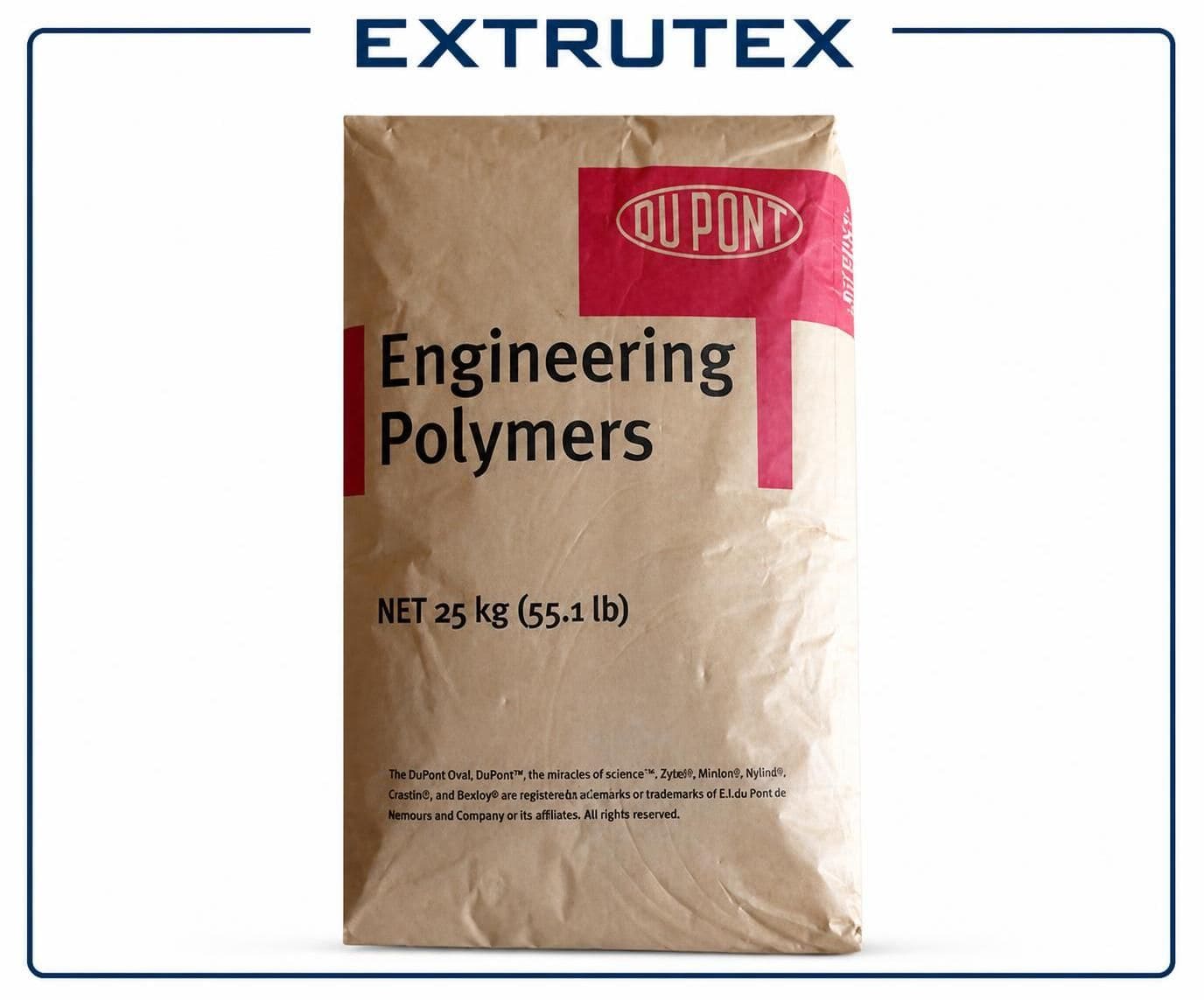
There are no reviews yet.
By submitting your email, you agree to our company’s terms and conditions.
We are not looking to sell; we are here to provide you with the best support and service.
Contact available 24/7
Please do not contact us for advertising or sales inquiries
All rights of this website are reserved for EXTRUTEX Austria and its partner companies, © 2026
-
(0 customer reviews)