GPPS Resin – General Purpose Polystyrene for Injection Molding and Extrusion
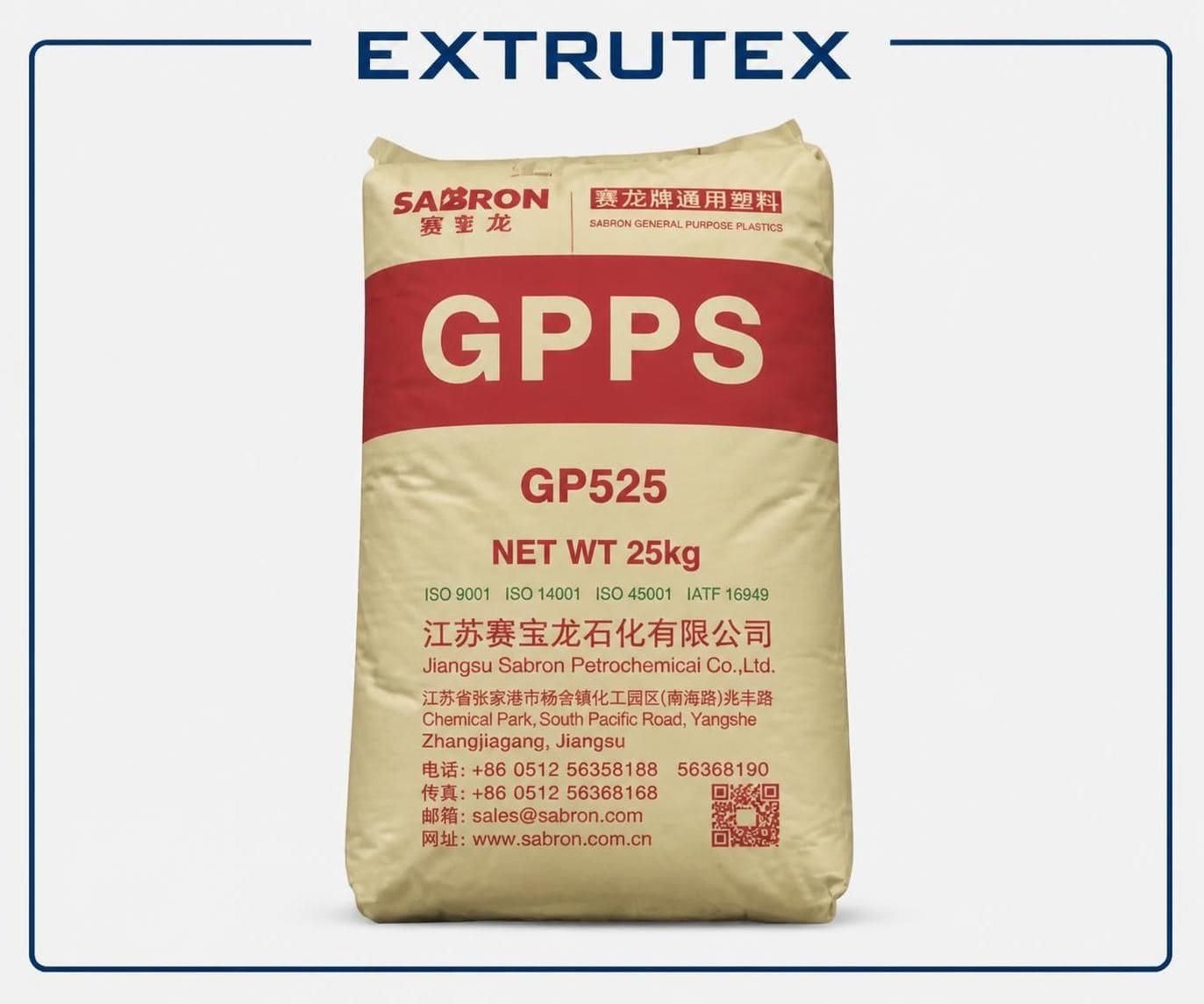
EXTRUTEX GPPS (General Purpose Polystyrene) is a versatile thermoplastic resin valued for its transparency, rigidity, smooth surface finish and efficient processing. We help manufacturers source GPPS grades for clear packaging, household products, stationery, display components, refrigerator parts, lighting applications and extruded plastic sheets.
Depending on the required specification and current availability, sourcing options may include Formosa Plastics, INEOS Styrolution, BASF-related product lines, SECCO and other qualified suppliers. EXTRUTEX can help evaluate suitable grades according to melt flow, clarity, heat performance, processing method and final application.
General Purpose Polystyrene, commonly known as GPPS, is a styrene-based thermoplastic used in a wide range of molded and extruded products. Its natural clarity and stiffness make it suitable for products where appearance and dimensional rigidity are important. GPPS is relatively easy to process using appropriate injection molding and extrusion equipment, making it a common choice for high-volume manufacturing.
Unlike High Impact Polystyrene (HIPS), GPPS is not rubber-modified for enhanced impact strength. It is therefore generally more brittle and is best suited to products where transparency, rigidity, surface quality and processing efficiency are more important than resistance to heavy impact.
EXTRUTEX supports buyers seeking standard GPPS grades, application-specific grades and potential alternatives to existing material specifications. Final grade selection should be based on the current technical data sheet and the requirements of the finished product.
High Transparency
Natural GPPS can provide a clear, glass-like appearance for suitable display, packaging and consumer-product applications.
Good Rigidity
Its stiffness makes GPPS suitable for many thin-walled molded parts, rigid containers and formed sheet products.
Efficient Processing
Suitable grades can be processed by injection molding, extrusion and sheet forming with properly configured equipment.
Grade Selection
Different melt-flow characteristics support different molding, extrusion, sheet and application requirements.
1. What Is GPPS?
GPPS stands for General Purpose Polystyrene. It is a thermoplastic polymer produced by polymerizing styrene monomer. The resulting material is generally amorphous, rigid and naturally transparent when manufactured and processed appropriately.
GPPS is widely used because it combines a good surface finish, dimensional rigidity and practical processability. It is available in grades designed for different flow requirements and end uses. Some grades are selected for general injection molding, while others are intended for transparent containers, stationery, sheet extrusion, refrigerator components or lighting-related products.
GPPS is an amorphous polymer, so it does not have a single, well-defined crystalline melting point. It softens around its glass-transition region, commonly near 90–105°C for many standard grades. Actual thermal behavior and processing limits depend on the resin grade and its technical specifications.
GPPS Identification
| Property | General Information |
|---|
| Full name | General Purpose Polystyrene |
| Abbreviation | GPPS |
| Polymer family | Styrenic thermoplastic |
| CAS number | 9003-53-6 |
| Repeating-unit formula | (C8H8)n |
| Typical appearance | Natural transparent or translucent pellets; colored grades may also be available |
| Typical solid density | Approximately 1.04–1.06 g/cm³ for many conventional grades |
| Thermal behavior | Amorphous; softens around its glass-transition region |
| Processing methods | Injection molding, extrusion, sheet extrusion and thermoforming of suitable sheet |
| Common applications | Clear packaging, containers, stationery, household products, sheets and display components |
| HS classification reference | Confirm the applicable code with your customs broker based on product form and destination rules |
The values above are general reference information rather than guaranteed specifications. Always confirm density, melt flow, thermal properties, optical performance and other requirements using the technical data sheet for the exact grade being purchased.
2. Main Benefits of GPPS Resin
Transparency and Appearance
One of the main reasons manufacturers choose GPPS is its natural transparency. Properly selected resin and controlled processing can produce clear components with a smooth surface finish. This makes GPPS useful where customers need to see the contents of a container or where the appearance of the finished product is an important design feature.
Transparency is affected by the resin grade, additives, pigments, mold or die condition, processing temperature, cooling and product thickness. A clear resin does not guarantee optical clarity in every finished part.
Rigidity and Dimensional Stability
GPPS provides useful stiffness for many rigid molded products. It can be suitable for housings, stationery items, organizers and containers where the part needs to retain its shape under normal service conditions.
Product design remains important. Wall thickness, ribs, corners, gate location and cooling conditions influence shrinkage, warpage and finished-part performance.
Good Processability
Suitable GPPS grades can be processed using established injection molding and extrusion technologies. Melt-flow selection helps manufacturers match the material to part geometry, machine capability, filling requirements and production rate.
A higher melt flow rate may be useful for certain thin-wall or complex-flow applications, while a lower-flow grade may be selected for other processing needs. Melt flow must always be compared at the same test temperature and load; values reported under different test conditions are not directly comparable.
Surface Finish and Color Options
GPPS can deliver a glossy, smooth finish when the grade, tooling and process are suitable. Natural transparent grades are common, and colored products may be produced using appropriate pre-colored compounds or compatible color concentrates. Colorants can influence transparency, flow and other properties, so trials may be required.
Material Selection for High-Volume Production
GPPS is used in many high-volume applications because its processing behavior and performance profile suit a variety of standard plastic products. The actual commercial value depends on the grade, order quantity, production efficiency, scrap rate, product requirements and supply conditions.
3. GPPS Grade Supply and Selection
EXTRUTEX can assist with sourcing GPPS grades from selected international and regional supply channels. The table below consolidates the grade information supplied for this page. Grade descriptions and melt-flow values are preliminary references and must be checked against the latest manufacturer documentation before selection or substitution.
| Grade |
Manufacturer / Product Family |
Melt Flow (g/10 min) |
Typical Application or Selection Note |
| 1540 | INEOS Styrolution | 12 | General-purpose molding, packaging and disposable items |
| 168N | INEOS Styrolution | 1.2–1.5 | High-clarity applications, packaging, containers and cups |
| 158K | INEOS Styrolution | 3 | Selected laboratory and specialty molded products; confirm relevant approvals |
| 1441 | INEOS Styrolution | 8 | Verify the exact grade identity and application before use; do not assume GPPS is a high-impact grade |
| 1050 | INEOS Styrolution | 2.8 | Refrigerator drawer and selected appliance applications |
| 147F | INEOS Styrolution | 6.5 | Stationery, appliance components and containers |
| 143E | BASF-related / Bycolene listing supplied | 6 | Confirm the current producer, product family and heat-performance specification |
| 165H | BASF-related / Bycolene listing supplied | 2.7 | Selected household or industrial components; verify heat-resistance data |
| GP5250 | Formosa Plastics / TAIRIREX | 9 | Food-container applications where the specific grade is approved, stationery and cosmetic cases |
| GP535N | Formosa Plastics / TAIRIREX | 3.5 | Lampshades, decorative plates and refrigerator components |
| GP535H | Formosa Plastics / TAIRIREX | 2.6 | Refrigerator drawer applications |
| GP550N | Formosa Plastics / TAIRIREX | 1.9 | Selected light-diffusion and light-guide applications; confirm optical suitability |
| GP560N | Formosa Plastics / TAIRIREX | 1.9 | Selected display and illumination components; verify optical specifications |
| GP5000 | Formosa Plastics / TAIRIREX | 10 | Selected blending and thin-sheet molding applications |
| GP525N | Formosa Plastics / TAIRIREX | 6.7 | Stationery, clothing hangers, lamp decoration and selected molded items |
| GP5350 | Formosa Plastics / TAIRIREX | 4.3 | PS sheet, OPS and selected container applications; confirm processing suitability |
| GP535A | Formosa Plastics / TAIRIREX | 2.6 | PS sheet, OPS and selected container applications; confirm grade specification |
| GP5500 | Formosa Plastics / TAIRIREX | 2.6 | PS sheet, OPS and selected container applications; confirm grade specification |
| 123 | SECCO | 8 | Verify exact grade and heat-performance data before application selection |
| 123P | SECCO | 8 | Food containers and stationery, subject to grade approval |
| 152 | SECCO | 3.8 | Selected molded products and refrigerator liner applications |
Important grade-verification note: The grade codes, producer descriptions, melt-flow values and applications above were provided as preliminary sourcing information. Product ownership, current commercial availability, grade designation, test conditions and application suitability can change. Confirm the exact manufacturer, current technical data sheet and required approvals before ordering. Food-contact and medical applications require specific evidence of suitability; they must not be inferred from a general application description.
4. Formosa GPPS Grade Options
Formosa Plastics' TAIRIREX product family is represented in the supplied grade list by several GPPS codes. These codes may be useful starting points when reviewing materials for injection molding, sheet production, packaging and optical or decorative components.
Examples in the supplied list include GP5250, GP535N, GP535H, GP550N, GP560N, GP5000, GP525N, GP5350, GP535A and GP5500. The grades have different reported melt-flow values and application descriptions, so they should not be treated as interchangeable.
For a reliable selection, compare:
- Melt flow rate and its test temperature and load.
- Transparency, haze and optical requirements where relevant.
- Rigidity, impact performance and thermal behavior.
- Injection molding or extrusion process requirements.
- Color, surface finish and product thickness.
- Any food-contact, medical, electrical or other regulatory requirements.
5. Applications of GPPS
Transparent Containers and Packaging
GPPS can be used in selected clear containers, packaging components and display packaging where visibility and rigidity are desirable. For food-contact packaging, the selected grade and final product must meet applicable regulatory requirements. Not every GPPS grade is approved for food contact.
Stationery and Office Products
GPPS is suitable for various stationery items, desk organizers, cases, rulers and decorative office products. Its rigidity and surface finish can help manufacturers create clean, consistent parts with a polished appearance.
Household Products
Selected GPPS grades are used in organizers, trays, storage accessories and other household products. Applications should be evaluated for impact loads, temperature exposure and the likelihood of drops or repeated handling, because GPPS can be brittle.
Refrigerator and Appliance Components
Some grades are used in selected refrigerator drawers, internal components and appliance-related parts. The grade should be selected based on temperature exposure, load, forming or molding method, dimensional requirements and any impact demands.
Lighting and Display Components
GPPS grades may be considered for selected decorative lighting parts, covers and display components. Light-diffusion or light-guide applications need specific optical performance data. A standard transparent grade should not automatically be assumed to provide the required optical characteristics.
PS Sheet and OPS Processing
GPPS can be used to manufacture sheets for downstream forming and conversion. OPS refers to oriented polystyrene sheet, which undergoes a stretching process to change its properties. The resin grade, extrusion conditions and orientation process must be matched to the intended sheet product.
6. GPPS Compared with HIPS and EPS
| Material | Main Characteristic | Common Processing Routes | Typical Applications |
|---|
| GPPS | Transparency and rigidity | Injection molding, extrusion, sheet production | Clear packaging, stationery, rigid containers and display products |
| HIPS | Improved impact resistance compared with GPPS | Injection molding, extrusion, thermoforming | Appliance liners, housings, trays and impact-resistant consumer products |
| EPS | Lightweight cellular foam after expansion | Pre-expansion and bead molding | Protective packaging and insulation products |
Choose GPPS when clarity and stiffness are primary requirements. Consider HIPS when the product needs better impact resistance. Select EPS when the application requires a molded foam structure. These materials have different formulations and processing requirements, so they are not direct substitutes for every application.
7. GPPS Processing Guidance
Injection Molding
Injection molding is used to produce GPPS components with repeatable geometry and surface quality. Processing settings depend on the grade, machine, mold design, wall thickness and cycle-time target. Follow the resin supplier's recommended melt and mold temperature ranges rather than using a generic setting for all GPPS materials.
Potential defects such as short shots, flow marks, sink, warpage, haze or brittle parts can result from material selection, tooling, cooling or process settings. A controlled trial is recommended before full-scale production.
Extrusion
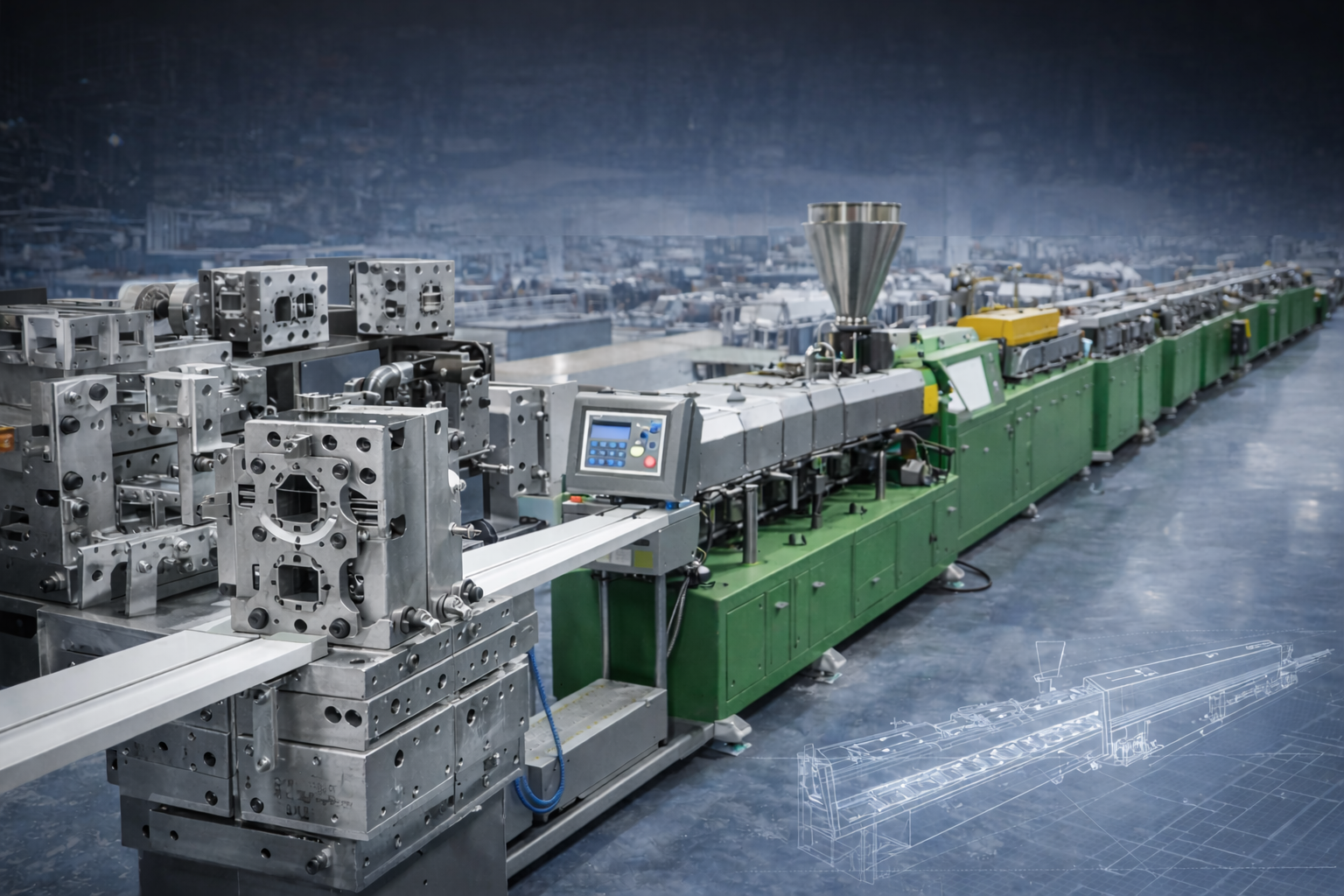
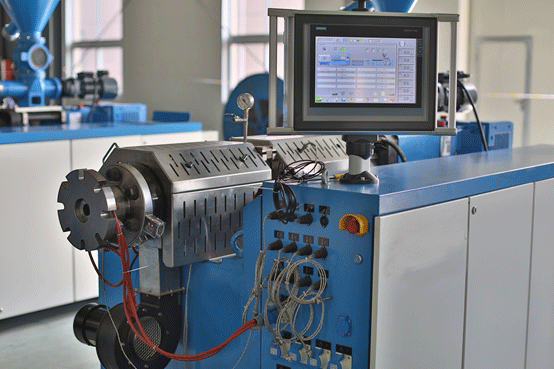
Extrusion is used for continuous PS sheet and other suitable products. The selected resin should match the extruder, screw design, die, output requirement, cooling arrangement and downstream process. Sheet products may need additional forming, cutting, printing or orientation steps.
Thermoforming
Extruded GPPS sheet can be thermoformed into selected shapes using appropriate heating and forming equipment. Material thickness, heating uniformity, draw ratio, cooling and tool design influence the final appearance and dimensions.
Storage and Handling
Keep resin in its original packaging in a clean, dry location away from contamination, excessive heat and direct sunlight. Follow the manufacturer's recommendations for storage, handling and processing. Consult the current safety data sheet for specific precautions.
8. How to Choose a GPPS Grade
Before ordering, define the finished product and the process that will manufacture it. The best grade is not necessarily the one with the highest melt flow or the clearest appearance; it is the grade that meets the complete set of performance, processing and compliance requirements.
- For injection molding: confirm flow, filling behavior, cycle time, surface finish and dimensional needs.
- For transparent products: confirm optical clarity, haze, color and thickness-related appearance.
- For sheet extrusion: confirm melt-flow suitability, sheet uniformity and downstream forming requirements.
- For appliance parts: review thermal exposure, stiffness, impact requirements and product design.
- For food-contact products: request grade-specific documentation for the intended market and application.
- For optical components: request relevant optical data and validate the finished part.
- For grade substitution: compare the current technical data sheets and perform trials before changing production material.
9. GPPS Supply Through EXTRUTEX
EXTRUTEX assists manufacturers, processors and distributors with sourcing GPPS resin for different industrial applications. We can review target grade codes, intended applications, processing methods and technical requirements to identify potential supply options.
Depending on current availability and the specific grade, potential sourcing channels may include Formosa Plastics, INEOS Styrolution, SECCO, other qualified producers and regional distributors. The exact producer, grade code, country of origin and documentation should be confirmed for the individual offer.
For efficient sourcing, please provide the grade code you currently use, or describe the application if you need help selecting a suitable grade. Where a requested grade is unavailable, possible alternatives can be evaluated against its key technical requirements rather than assumed equivalent based on the polymer name alone.
Documents to Request
- Current Technical Data Sheet (TDS).
- Safety Data Sheet (SDS).
- Certificate of Analysis (COA), where available.
- Manufacturer and grade identification.
- Batch and packaging information.
- Origin documents where required.
- Application-specific compliance declarations or test reports, when applicable.
10. Frequently Asked Questions About GPPS
What does GPPS stand for?
GPPS stands for General Purpose Polystyrene, a styrene-based thermoplastic commonly used for rigid, transparent or colored molded and extruded products.
Is GPPS transparent?
Natural GPPS can be highly transparent. Actual clarity depends on the grade, additives, processing conditions, thickness and mold or die quality.
Is GPPS suitable for injection molding?
Yes. Many GPPS grades are designed for injection molding. The grade should be selected according to melt flow, part geometry, surface finish and mechanical requirements.
Can GPPS be used for extrusion?
Yes. Suitable grades can be used for sheet and other extrusion applications. The resin must be matched to the equipment and intended downstream process.
What is the difference between GPPS and HIPS?
GPPS generally emphasizes transparency and rigidity, while HIPS is modified to improve impact resistance. HIPS is usually less transparent than GPPS.
Which GPPS grade has the highest melt flow?
The supplied preliminary table lists different melt-flow values, but values must be verified against current technical data sheets and compared under the same test conditions. The highest melt flow is not automatically the best choice for a given product.
Can EXTRUTEX source Formosa GPPS grades?
EXTRUTEX can review sourcing requests for Formosa GPPS grades, subject to current availability, supply channel and confirmation of the exact grade specification.
Are all GPPS grades suitable for food packaging?
No. Food-contact suitability depends on the specific resin grade, additives, final article and destination-market regulations. Request grade-specific compliance documents before use.
Does GPPS have a melting point of 240°C?
GPPS is an amorphous thermoplastic and does not have a single, well-defined crystalline melting point. It softens around its glass-transition region and can degrade if overheated.
Can GPPS be replaced with another grade?
Potentially, but substitution requires comparison of melt flow, clarity, stiffness, thermal behavior, processing performance and compliance requirements. Validate any alternative through testing before full production.
What should I include in a GPPS inquiry?
Provide the target grade, application, processing method, required melt flow, optical or mechanical requirements, quantity, destination and any required certifications or documents.
Request GPPS Resin Information
Tell EXTRUTEX your target grade, application, processing method and quantity. We will review the sourcing requirements and confirm suitable available options.
Contact EXTRUTEX










-
(0 customer reviews)