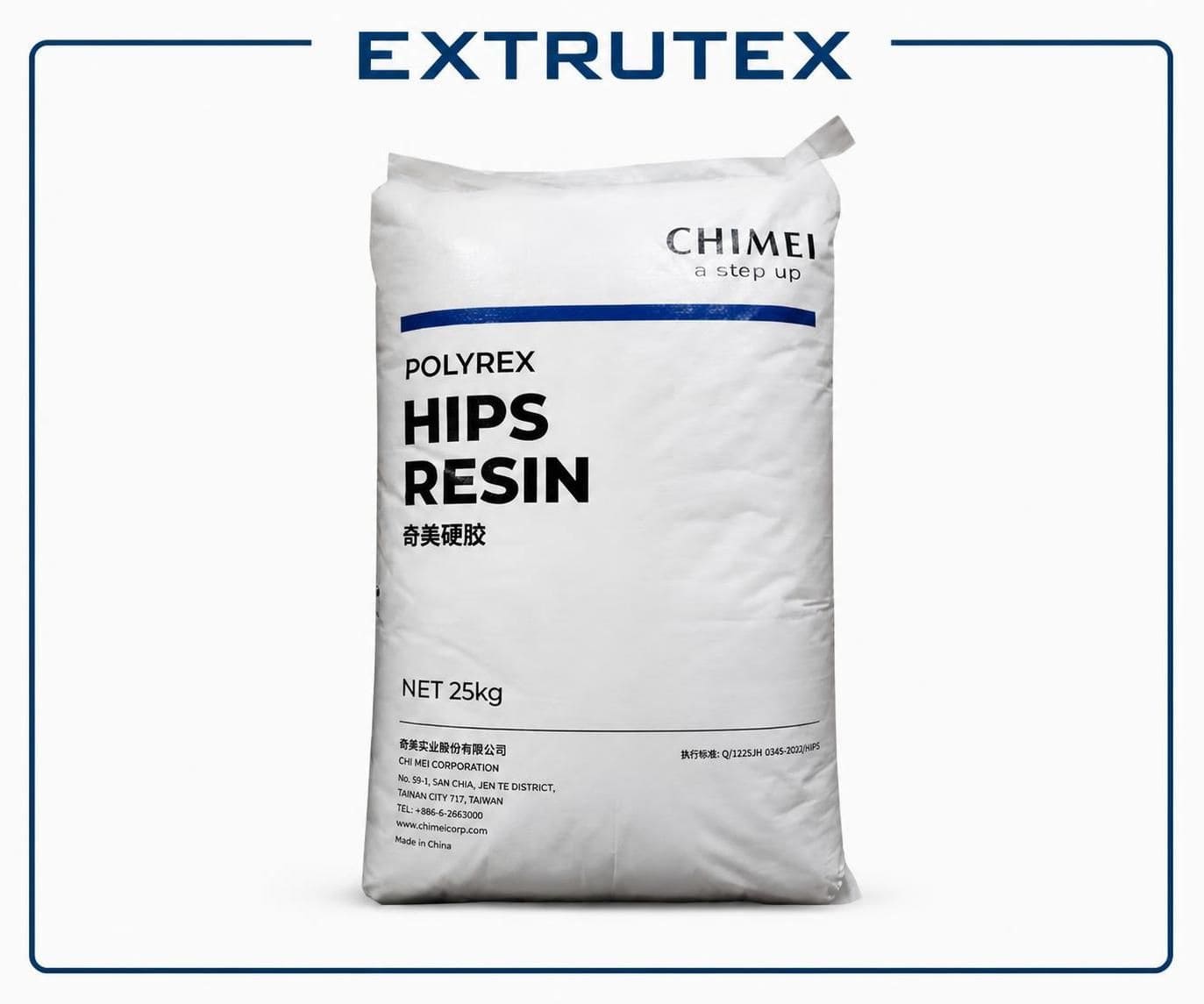
HIPS Resin – High Impact Polystyrene for Injection Molding and Extrusion
EXTRUTEX HIPS (High Impact Polystyrene) is a rubber-modified thermoplastic designed to provide improved toughness compared with general purpose polystyrene. It combines practical processing characteristics with a balance of stiffness, impact performance and surface finish for a wide range of molded and extruded plastic products.
EXTRUTEX helps manufacturers source HIPS grades for refrigerator liners, appliance housings, electrical and electronic components, thermoformed sheets, consumer goods, stationery, toys and industrial applications. Grade selection is based on the required melt flow, impact strength, forming behavior, color and final-product specification.
High Impact Polystyrene, commonly abbreviated as HIPS, is produced by modifying polystyrene with a rubber phase, commonly based on polybutadiene. This modification improves toughness and resistance to impact compared with standard GPPS, although the exact performance depends on the rubber content, morphology, polymer structure and grade formulation.
HIPS is commonly available in natural or colored formulations and can be processed by injection molding, extrusion and thermoforming. Its combination of practical processing, useful stiffness and improved toughness makes it suitable for many high-volume consumer and industrial products.
EXTRUTEX supports buyers seeking standard HIPS resin, application-specific grades and potential alternatives to an existing material. We can review technical requirements and help identify sourcing options, subject to grade availability and confirmation of current manufacturer documentation.
Improved Toughness
Rubber modification helps HIPS resist impact better than conventional unmodified GPPS in many applications.
Injection Molding
Suitable grades can produce housings, appliance parts, consumer products and other molded components.
Sheet Extrusion
Extrusion grades can be selected for sheet production and downstream thermoforming into liners, trays and panels.
Color Flexibility
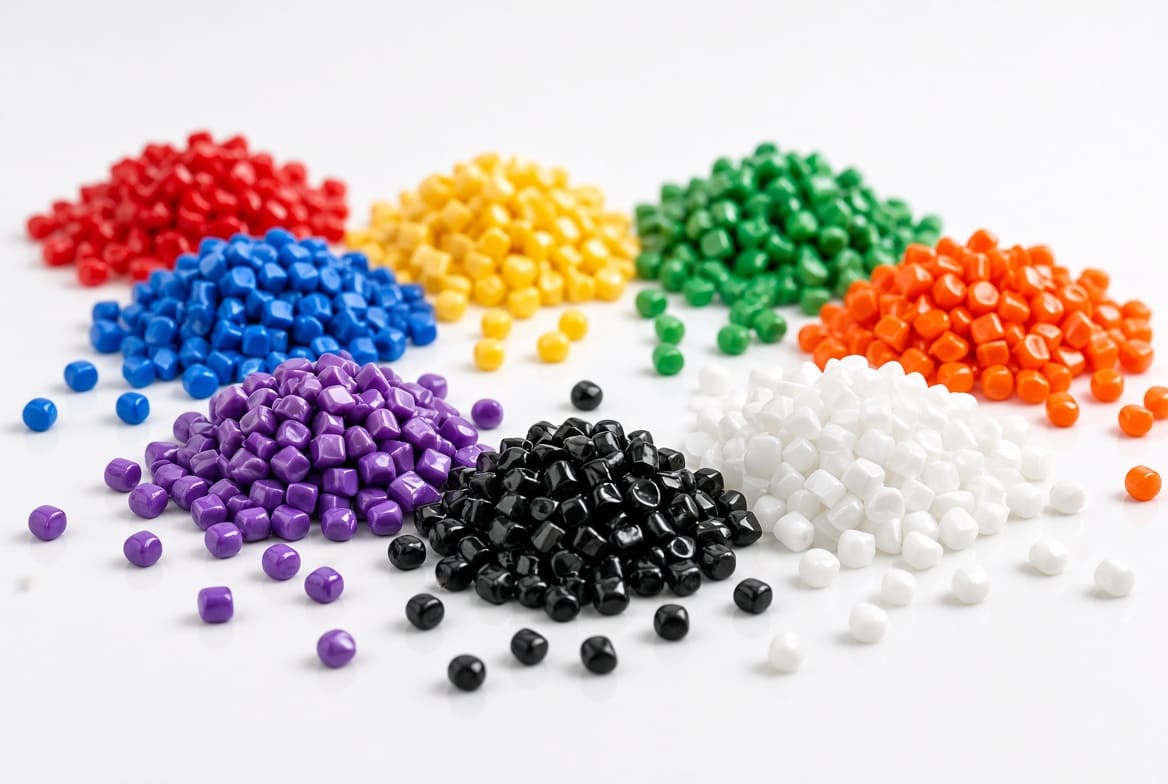
HIPS can be supplied in different colors or processed with compatible color systems, subject to grade requirements.
1. What Is HIPS?
HIPS stands for High Impact Polystyrene. It is a modified styrenic thermoplastic designed to improve the impact performance of standard polystyrene. Rubber modification helps absorb impact energy and reduce the brittleness typically associated with GPPS.
The final properties of HIPS are determined by several factors, including the type and amount of rubber modifier, polymer structure, additives, molecular characteristics and manufacturing conditions. As a result, HIPS grades can differ significantly in impact resistance, stiffness, melt flow, gloss, color and thermoforming behavior.
HIPS is generally opaque rather than crystal-clear. When transparency is essential, GPPS may be a more suitable starting point. When toughness is more important than optical clarity, HIPS can provide a practical material option.
HIPS Identification and General Characteristics
| Property | General Information |
|---|
| Full name | High Impact Polystyrene |
| Abbreviation | HIPS |
| Polymer family | Rubber-modified styrenic thermoplastic |
| Base polymer | Polystyrene modified to improve impact performance |
| Appearance | Usually opaque; natural, white or colored grades may be available |
| Typical solid density | Often approximately 1.03–1.06 g/cm³, depending on formulation |
| Mechanical behavior | Balance of stiffness and impact resistance; varies by grade |
| Processing methods | Injection molding, extrusion, sheet extrusion and thermoforming of suitable sheet |
| Common applications | Appliance housings, refrigerator liners, electronic components, toys, sheet and consumer products |
| Thermal behavior | Amorphous thermoplastic; softens around its glass-transition region |
These are general material descriptions, not guaranteed grade specifications. Check the current technical data sheet for density, melt flow, impact strength, tensile properties, thermal performance and processing recommendations. HIPS is amorphous and should not be assigned a single crystalline melting point.
2. How HIPS Is Classified
HIPS is not one universal formulation. Grades are developed for different processing methods and performance requirements. A suitable classification therefore considers a combination of material properties and the intended application rather than relying on one measurement alone.
Rubber Content and Modification
The rubber phase is a key factor in the impact performance of HIPS. The type, amount and distribution of rubber modifier influence how the material responds to sudden loading. Higher impact performance can sometimes be associated with changes in stiffness, gloss, flow or other properties, so the balance must be evaluated for the finished product.
Melt Flow Rate
Melt flow rate, often reported in grams per 10 minutes, is used as an indicator of how a thermoplastic flows under specified test conditions. It helps processors compare grades intended for different molding or extrusion requirements.
A higher melt flow value may help with filling certain complex or thin-walled molded parts. Other applications may require a different flow profile for sheet uniformity, forming performance or process stability. Melt flow values must be compared using the same test temperature and load.
Impact Strength
Impact resistance is important for parts that may be dropped, knocked or subjected to handling loads. Izod and Charpy tests are different methods, and notched and unnotched results are not interchangeable. Results are also affected by specimen preparation, conditioning, temperature and test standards.
When comparing HIPS grades, use the same test method and unit. The impact values in the grade table below are reproduced from the supplied preliminary data and should be verified against current manufacturer technical documents before making a purchasing decision.
Stiffness, Surface Finish and Color
Some applications require a balance between rigidity, toughness, gloss and appearance. Refrigerator liners and thermoformed sheets may prioritize forming behavior and impact performance, while housings and consumer products may place more emphasis on stiffness, surface finish and dimensional stability.
3. HIPS Grade Supply and Comparison
The following table organizes the grade information supplied for EXTRUTEX HIPS sourcing. It is intended as a preliminary selection guide rather than a guarantee of current availability or a replacement for the official technical data sheet.
| Grade |
Manufacturer / Brand as Supplied |
Melt Flow (g/10 min) |
Reported Izod Impact at 23°C (kJ/m²) |
Typical Application or Selection Note |
| 476L | BASF / Bycolene | 5 | Not supplied | Electrical housings, refrigerator components and drawers |
| 2710 | BASF / Bycolene | 4.5 | Not supplied | Refrigerator liners and sheet applications |
| HP835G | Formosa / TAIRILAC listing supplied | 3.7 | Not supplied | Electrical and appliance components; verify exact product identity |
| HP825G | Formosa / TAIRIREX listing supplied | 4 | 0.09 | Appliance components, including selected air-conditioning housings |
| HP825N | Formosa / TAIRIREX | 3 | 0.15 | Electrical panels and household appliance housings |
| HP8250 | Formosa / TAIRIREX | 5.5 | 0.12 | TV housings, cable-jacketing components and prototyping applications |
| HP9450 | Formosa / TAIRIREX | 3 | 0.15 | Bobbins, extruded sheets and selected flotation products |
| HP825S | Formosa / TAIRIREX | 2.7 | 0.10 | Automotive door liners and refrigerator inner liners |
| HP825T | Formosa / TAIRIREX | Not supplied | 0.11 | Refrigerator inner liners and door liners |
| MP6500 | Formosa / TAIRIREX | 6.7 | 0.08 | Appliance components, stationery and clock housings |
| HP825F | Formosa / TAIRIREX | 9 | 0.115 | Electrical appliance housings and selected molded components |
| 825 | Huajin Chemical | 6–10 | Not supplied | Injection molding and extrusion molding applications |
| 4241 | INEOS Styrolution | 3.5 | 11.5 | Packaging, housewares and extrusion; confirm exact grade requirements |
| 6351 | INEOS Styrolution | 3.5 | 10 | Electrical and electronic products and toys, subject to application requirements |
| 8265 | INEOS Styrolution | 3.5 | 13 | Refrigerator inner liners and thermoforming sheet |
| 495F | INEOS Styrolution | 9.5 | Not supplied | Consumer electronics and appliance parts |
| HIPS622 | SECCO | 4.5 | 12 | Toys, housewares and appliance components |
Technical verification required: The supplied table reports melt flow at 200°C/5 kg, but the impact-test method, specimen type and unit basis should be checked against the relevant original TDS. Several reported impact values are much lower than others in the same table, so do not compare them until the test methods and units are confirmed. Manufacturer, brand, grade code and availability must also be verified for the requested supply.
4. HIPS from Formosa and Other Potential Sources
EXTRUTEX can review sourcing requests for HIPS grades from selected international and regional supply channels. Depending on the exact grade and current availability, potential options may include Formosa Plastics, INEOS Styrolution, SECCO, Huajin Chemical and other qualified producers or distributors.
The supplied Formosa grade list includes HP825G, HP825N, HP8250, HP9450, HP825S, HP825T, MP6500 and HP825F. These grades have different reported flow values and application descriptions. Their suitability must be confirmed against current technical documentation rather than assumed from the grade family alone.
The supplied list also includes grades identified as BASF / Bycolene 476L and 2710. Because product naming and commercial availability can change, EXTRUTEX recommends confirming the current producer, grade code and TDS before an order is finalized.
Information to Confirm Before Purchase
- Exact manufacturer and grade designation.
- Current TDS and SDS.
- Melt flow test conditions.
- Impact test method, specimen condition and units.
- Density, tensile properties and stiffness where relevant.
- Color, gloss and surface-finish requirements.
- Processing method and recommended operating window.
- Batch traceability, country of origin and required compliance documents.
5. Main Applications of HIPS
Refrigerator Liners and Appliance Components
HIPS is widely used in selected appliance applications because it can combine practical formability with useful impact performance. Refrigerator inner liners and door liners may be produced from appropriate sheet grades, while other appliance components can be injection molded.
Grade selection should consider forming depth, wall-thickness distribution, impact requirements, temperature exposure, surface appearance and dimensional stability. A grade suitable for sheet extrusion is not necessarily the best choice for injection molding.
Electrical and Electronic Housings
HIPS grades can be used for housings, covers, panels and internal components in selected electrical and electronic products. The material should be chosen according to the component's mechanical loading, heat exposure, appearance and applicable safety standards.
Where flame retardancy is required, use a specifically qualified grade with supporting test documentation. Standard HIPS should not be assumed to meet a particular flammability classification.
Thermoforming Sheet
Extruded HIPS sheet is used in selected trays, liners, panels and formed packaging products. A suitable grade should provide consistent extrusion behavior and an appropriate forming window. The final sheet's performance depends on resin properties, extrusion settings, sheet thickness, heating uniformity, forming ratio and cooling.
Consumer Goods and Housewares
HIPS can be used for a variety of organizers, household accessories, storage products and molded consumer goods. Its color flexibility and balance of toughness and stiffness make it useful where the product does not require the optical clarity of GPPS.
Toys and Recreational Products
Selected HIPS grades are used in toys and consumer products. The resin must be evaluated against the finished product's mechanical demands and applicable safety requirements. Where children may handle or mouth a product, compliance must be confirmed for the entire finished article, including colorants and additives.
Industrial Components
HIPS may be suitable for selected covers, brackets, panels and general-purpose molded parts. Applications involving sustained high temperature, heavy structural loads, outdoor weathering or exposure to solvents may require a different material or a specially qualified formulation.
6. HIPS Compared with GPPS and ABS
| Feature | HIPS | GPPS | ABS |
|---|
| Impact resistance | Improved over standard GPPS in many grades | Generally more brittle | Often offers a strong balance of impact and mechanical performance, depending on grade |
| Transparency | Usually opaque | Can be highly transparent | Usually opaque |
| Rigidity | Good, grade dependent | Often high for its material family | Grade dependent |
| Processing | Injection molding, extrusion and thermoforming of suitable sheet | Injection molding and extrusion | Injection molding and selected extrusion applications |
| Common uses | Appliance liners, housings, trays and consumer products | Clear packaging, stationery and display products | Housings, equipment components and consumer products |
This comparison is general. Individual grades may differ significantly, and material selection should be based on the finished product's technical requirements, compliance needs and total processing performance.
7. Processing HIPS Resin
Injection Molding
Injection molding is used to manufacture HIPS housings, panels, consumer products and other components. Select a grade with suitable melt flow and mechanical performance for the part geometry, gate design, wall thickness and production cycle.
Potential defects include short shots, sink marks, warpage, surface blemishes and inconsistent dimensions. These may arise from the material grade, mold design, cooling conditions or process settings. Follow the resin supplier's processing recommendations and validate the production window before full-scale manufacture.
Extrusion
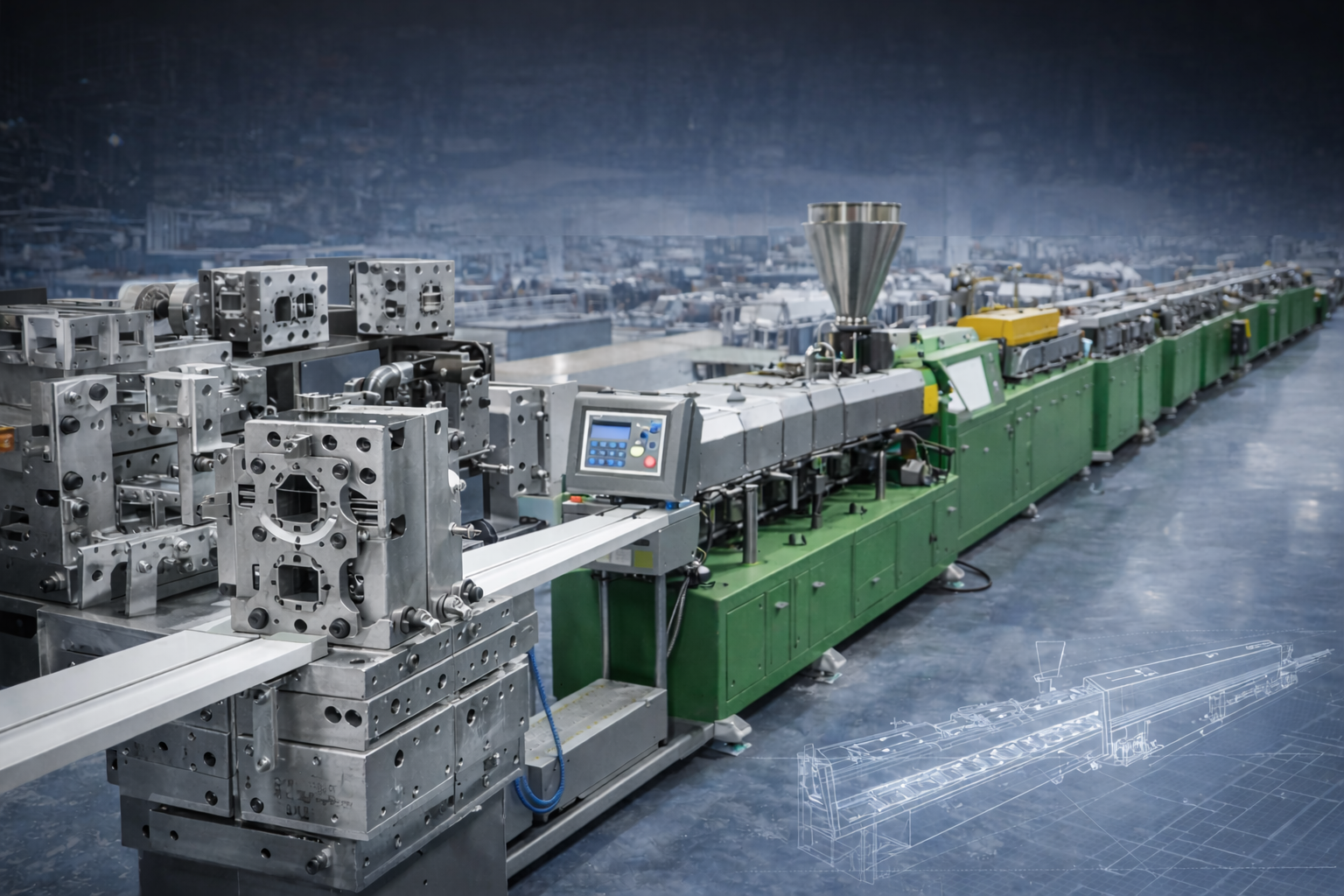
HIPS extrusion is used for sheet and other suitable continuous products. The grade must match the required output, screw and die configuration, cooling arrangement and downstream process. Consistent melt behavior and sheet thickness are especially important for thermoforming applications.
Thermoforming
Thermoforming converts extruded plastic sheet into shaped products using controlled heating and forming. HIPS sheet grades are selected according to forming depth, impact performance, surface quality and dimensional requirements. The final product depends on resin selection, sheet quality, heating uniformity, mold design and cooling.
Coloring and Surface Finish
HIPS is available in a variety of colors, depending on supplier and formulation. Color concentrates or pre-colored grades should be compatible with the base resin and processing method. Confirm color consistency, gloss, opacity and mechanical performance when changing colorants or suppliers.
8. How to Select the Right HIPS Grade
The correct HIPS grade depends on the intended product, the processing method and the performance needed in service. Before selecting a material, consider the following factors:
- Processing method: distinguish between injection molding, sheet extrusion and thermoforming grades.
- Melt flow: confirm the test conditions and select a flow profile suitable for the machine and part.
- Impact strength: compare data from the same test method and specimen condition.
- Stiffness: review the mechanical properties needed to maintain product shape.
- Forming behavior: consider draw ratio, sheet thickness and wall distribution for thermoformed parts.
- Appearance: specify color, gloss, texture and surface-quality expectations.
- Temperature exposure: check the expected operating and processing temperatures.
- Compliance: request supporting documentation for food-contact, electrical, toy or other regulated applications.
- Supply requirements: identify the required manufacturer, approved alternatives, quantity and destination.
9. Quality Control and Documentation
For industrial purchasing, grade identification and technical documentation are essential. Two HIPS resins may differ in flow, impact resistance, stiffness, color, thermal performance and intended processing method. The polymer name alone is not enough to establish equivalence.
Depending on the product and supplier, buyers may request:
- Technical Data Sheet (TDS).
- Safety Data Sheet (SDS).
- Certificate of Analysis (COA), where available.
- Manufacturer, grade and batch identification.
- Country-of-origin documentation where applicable.
- Application-specific compliance declarations or test reports.
EXTRUTEX recommends comparing the current TDS with the original material specification before changing grades. Where a substitute is proposed, production trials should verify processing stability, dimensions, appearance and mechanical performance.
10. Storage, Handling and Recycling
Store HIPS resin in its original packaging in a clean, dry environment away from excessive heat, direct sunlight and contamination. Keep packaging closed when the material is not being used, and follow the supplier's handling and storage recommendations.
During processing, follow the equipment manufacturer's instructions and the resin supplier's safety guidance. Avoid excessive temperatures and unnecessary residence time. Consult the current SDS for material-specific precautions and ventilation requirements.
HIPS is technically recyclable, and suitable clean production scrap may be recoverable through appropriate processes. Practical recyclability depends on collection systems, contamination, additives, color, product design and local recycling infrastructure. Recycled content and recycled material should be evaluated against the quality and compliance requirements of the intended application.
11. Frequently Asked Questions About HIPS
What does HIPS stand for?
HIPS stands for High Impact Polystyrene. It is a rubber-modified polystyrene material developed to improve impact resistance compared with standard GPPS.
What is the main difference between HIPS and GPPS?
HIPS is modified for improved toughness and is generally opaque. GPPS is usually more transparent and rigid but more brittle. The right choice depends on the product's appearance and mechanical requirements.
Can HIPS be injection molded?
Yes. Many HIPS grades are designed for injection molding. Choose the grade according to melt flow, part design, surface finish and required impact performance.
Can HIPS be used for extrusion and thermoforming?
Yes. Suitable grades can be extruded into sheet and then thermoformed into products such as appliance liners, trays and panels. Sheet extrusion grades should be chosen for the intended forming process.
What does the melt flow value tell me?
Melt flow is an indicator of how a polymer flows under specified test conditions. It can help compare grades, but values must be compared at the same temperature and load. It is not a complete measure of processing performance.
Can EXTRUTEX supply Formosa HIPS grades?
EXTRUTEX can review requests for Formosa HIPS grades, subject to current availability and confirmation of the exact grade, product documentation and supply channel.
Are all HIPS grades suitable for electrical housings?
No. Electrical applications may require particular thermal, mechanical or flame-retardant performance. The exact grade and supporting certifications must be reviewed against the relevant standards.
Is HIPS recyclable?
HIPS can be recycled where appropriate collection and processing facilities exist. Practical recyclability depends on material condition, contamination, additives and local infrastructure.
How do I compare HIPS impact values?
Use the same impact-test method, specimen type, conditioning, temperature and unit. Izod and Charpy results are not directly interchangeable. Check the official TDS before comparing the figures in a grade list.
Can HIPS replace ABS?
It may be suitable for some applications, but HIPS and ABS are not universally interchangeable. Compare impact resistance, stiffness, thermal performance, surface requirements, chemical exposure and cost-in-use before substitution.
What information should I provide when requesting HIPS resin?
Provide the target grade, application, processing method, melt-flow requirement, impact requirements, color, quantity, destination and any necessary compliance documents. This helps identify appropriate available options.
Looking for HIPS Resin?
Contact EXTRUTEX with your grade code, application, processing method and quantity. We will review your requirements and confirm suitable sourcing options.
Contact EXTRUTEX









-
(0 customer reviews)