High-Performance Polycarbonate Reinforced with Carbon Fiber
EXTRUTEX PC-CF Carbon Fiber Reinforced Polycarbonate Filament combines the engineering performance of polycarbonate (PC) with the reinforcement of carbon fiber. Developed for demanding 3D printing applications, PC-CF is designed to deliver high rigidity, mechanical strength, dimensional stability and a professional matte black appearance.
By combining a high-performance thermoplastic matrix with carbon fiber reinforcement, PC-CF provides an advanced material option for functional prototypes, mechanical components, industrial fixtures and end-use parts. Its rigid structure and reduced tendency to warp make it attractive for applications where dimensional accuracy and structural performance are important.
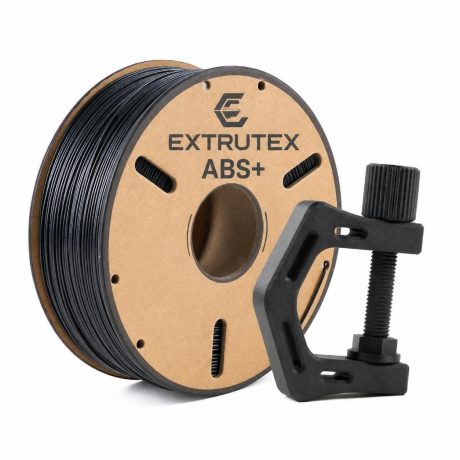
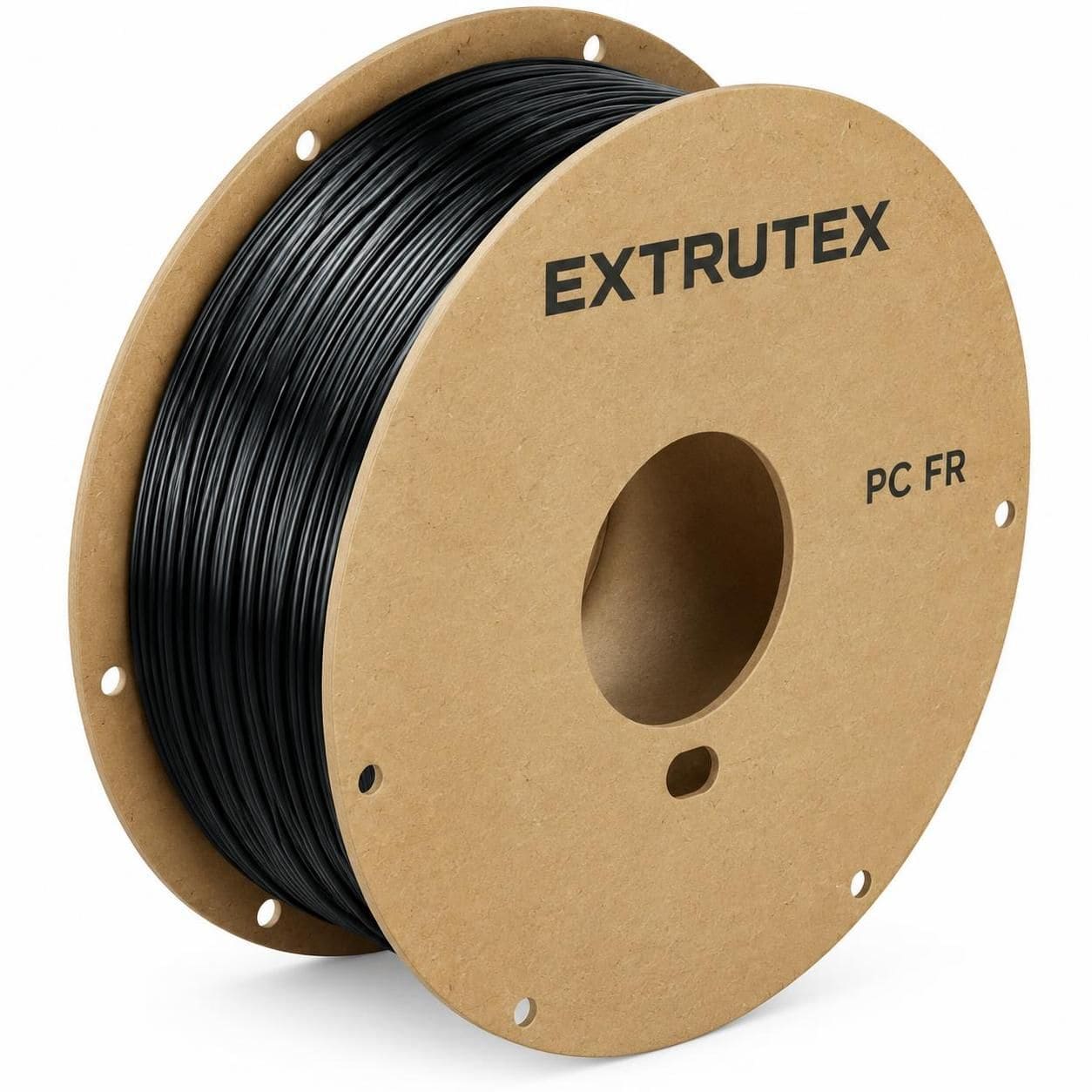
With a 1.75 mm filament diameter and 1 kg spool, EXTRUTEX PC-CF is suitable for advanced desktop and professional 3D printing systems equipped to process engineering-grade materials.
Key Features of EXTRUTEX PC-CF Filament
Carbon Fiber Reinforced PolycarbonateCombines the properties of PC with carbon fiber reinforcement for demanding engineering applications.
High Rigidity and StrengthDesigned for rigid functional parts that require dependable structural performance.
Excellent Layer AdhesionFormulated to support good interlayer bonding when printed under suitable conditions.
Dimensional StabilityCarbon fiber reinforcement helps reduce deformation and warping during printing.
High Temperature PerformanceUses a polycarbonate-based matrix designed for applications where thermal resistance is important.
Professional Matte Black FinishCreates a refined technical appearance while helping make visible layer lines less prominent.
Lightweight ReinforcementCarbon fiber reinforcement improves stiffness without requiring unnecessarily bulky component designs.
Engineering ApplicationsSuitable for functional prototypes, fixtures, mechanical parts and selected industrial components.
What Is PC-CF Carbon Fiber Filament?
PC-CF is a composite 3D printing material made from polycarbonate and carbon fiber reinforcement. Polycarbonate is an engineering thermoplastic recognized for its toughness, mechanical performance and heat resistance. Carbon fibers are added to improve the stiffness and rigidity of the composite material.
The resulting filament is designed for applications that require a combination of mechanical performance, dimensional stability and a professional surface appearance. Compared with unreinforced PC, carbon fiber reinforced formulations can offer increased rigidity and reduced deformation, depending on the formulation and fiber loading.
PC-CF is particularly useful when a printed component must maintain its shape and structural characteristics under demanding conditions. It is an option for engineers and advanced users who need more specialized performance than standard PLA, PETG or general-purpose printing materials can provide.
High Rigidity and Mechanical Strength
Rigidity is one of the most important characteristics of carbon fiber reinforced polycarbonate. The carbon fibers reinforce the polymer matrix and help the printed material resist deformation under mechanical loading.
This makes PC-CF suitable for components that require a rigid structure, including mounting brackets, support components, mechanical housings, tooling accessories and functional prototypes.
For engineering projects, rigidity can be just as important as tensile strength. A component that maintains its geometry under load can help improve assembly accuracy and functional reliability. PC-CF is therefore a useful material to evaluate when designing precision parts and structural components.
Actual mechanical performance depends on the carbon fiber content, fiber orientation, material formulation, print settings, layer bonding and component geometry. For critical applications, request grade-specific mechanical data and validate the finished part under its intended operating conditions.
Carbon Fiber Reinforcement and Lightweight Design
Carbon fiber is widely used in advanced composite materials because of its high stiffness-to-weight potential. In PC-CF filament, the fibers reinforce the polycarbonate matrix and help produce rigid printed components without relying solely on additional material thickness.
This can be useful when designing lightweight brackets, equipment supports, structural prototypes and other components where stiffness and weight both matter.
Carbon fiber reinforcement also affects the visual appearance of the printed part. PC-CF typically produces a technical matte surface that is suitable for professional prototypes and functional components.
Excellent Dimensional Stability and Reduced Warping
Dimensional accuracy is important when manufacturing parts that must fit together, connect to other components or maintain precise geometry. Warping and deformation can affect assembly, functional performance and repeatability.
Carbon fiber reinforcement can help reduce thermal deformation and improve dimensional stability compared with some unreinforced polymer formulations. This makes PC-CF a useful candidate for larger or more geometrically demanding components.
Successful printing still depends on temperature control, first-layer adhesion, printer calibration, material condition and part design. A stable printing environment and appropriate build surface are recommended for consistent results.
Excellent Layer Adhesion
Interlayer adhesion is a key factor in the strength of FDM and FFF printed components. Each layer must bond effectively with the previous layer to create a stable three-dimensional structure.
EXTRUTEX PC-CF is designed to support good layer adhesion when processed under suitable conditions. Correct nozzle temperature, extrusion consistency, print speed and cooling management all contribute to the quality of the final part.
For parts exposed to mechanical stress, users should consider print orientation and loading direction during design. The strength of a printed component can vary depending on how forces act relative to the deposited layers.
High Temperature Performance
Polycarbonate is an engineering thermoplastic selected for applications where heat resistance is important. Its use in PC-CF provides a material platform for functional components that may experience elevated temperatures.
Potential applications include industrial equipment parts, mechanical fixtures, protective housings and engineering prototypes operating in environments where ordinary-purpose filaments may not provide sufficient thermal performance.
The actual heat resistance of PC-CF depends on the specific formulation and testing conditions. The maximum operating temperature of a printed component also depends on mechanical loading, exposure duration, print quality and geometry. Do not treat the general heat-resistant characteristics of polycarbonate as a guaranteed continuous service temperature.
Professional Matte Black Surface Finish
EXTRUTEX PC-CF is supplied in black with a professional matte appearance. The carbon fiber reinforced surface creates a technical finish suitable for engineering prototypes, mechanical parts and industrial-looking components.
The matte appearance can help make layer lines less visually prominent than on some glossy materials. This is useful for functional prototypes and product-development components where a clean, understated finish is preferred.
Surface quality is influenced by layer height, nozzle condition, extrusion consistency, print speed and cooling. Properly calibrated printing conditions help achieve a more uniform result.
Recommended Printer Equipment and Nozzle
Carbon fiber reinforced filaments are abrasive compared with unfilled polymer materials. Using a standard brass nozzle for extended printing can result in nozzle wear, changes in extrusion behavior and reduced dimensional consistency.
Hardened Steel Nozzle
A hardened steel or another suitable wear-resistant nozzle is recommended for PC-CF. A hardened nozzle helps resist abrasion caused by carbon fiber reinforcement and supports more consistent long-term printing.
Recommended Nozzle Diameter
A nozzle diameter of 0.6–0.8 mm is recommended for this material. A larger nozzle can help reduce the risk of flow restrictions associated with fiber-reinforced filaments and may support more reliable extrusion.
Confirm the recommended nozzle configuration with the printer manufacturer and the material's processing instructions before printing.
Printer Temperature Capability
Use a 3D printer with a hotend and heated build plate capable of supporting the processing requirements of the selected PC-CF grade. Stable temperature control is important for extrusion quality and layer adhesion.
Build Surface and Adhesion
Polycarbonate-based materials can be challenging to adhere to some build surfaces. A suitable PC-compatible adhesion solution, such as Magigoo PC where compatible with the printer and build surface, may help improve first-layer adhesion. Always follow the adhesive manufacturer's application and removal instructions.
Technical Specifications
| Parameter | Specification |
|---|
| Product Name | EXTRUTEX PC-CF Carbon Fiber Reinforced Filament |
| Base Material | PC – Polycarbonate |
| Reinforcement | Carbon Fiber |
| Printing Technology | FDM / FFF |
| Filament Diameter | 1.75 mm |
| Spool Weight | 1 kg |
| Color | Black |
| Surface Appearance | Professional matte finish |
| Mechanical Characteristics | High rigidity and strength |
| Layer Adhesion | Excellent adhesion when correctly processed |
| Dimensional Stability | Designed for reduced warping and deformation |
| Thermal Performance | High temperature resistance; grade-specific data required |
| Recommended Nozzle Type | Hardened steel or suitable wear-resistant nozzle |
| Recommended Nozzle Diameter | 0.6–0.8 mm |
| Carbon Fiber Content | To be confirmed for the selected grade |
| Diameter Tolerance | To be confirmed |
| Nozzle Temperature | Refer to the grade-specific technical data sheet |
| Bed Temperature | Refer to the grade-specific technical data sheet |
Technical note: Carbon fiber percentage, diameter tolerance, tensile strength, flexural strength, heat-deflection temperature and exact printing temperatures have not been specified. Contact EXTRUTEX for the technical data sheet and confirmed processing recommendations for the supplied grade.
Applications of PC-CF 3D Printing Filament
Automotive Components
PC-CF can be considered for automotive prototypes, mounting brackets, interior development components, equipment fixtures and selected mechanical parts. Its rigidity and dimensional stability make it useful for evaluating functional designs. Components used in vehicles should be tested for their specific mechanical, thermal and environmental requirements.
Aerospace Prototyping
Lightweight and rigid materials are important in aerospace design and development. PC-CF can be evaluated for non-flight-critical prototypes, fixtures, housings and development components. Any flight-critical or safety-related use requires appropriate material qualification, testing and regulatory approval.
Electronics and Electrical Equipment
PC-CF can be used to develop rigid housings, mounting structures, equipment covers and electronic-device prototypes. The matte black appearance is also suitable for technical product designs. Electrical insulation, flammability and thermal requirements must be evaluated separately for each application.
Industrial Machinery and Equipment
Industrial users can evaluate PC-CF for machine brackets, protective covers, equipment supports, positioning fixtures and mechanical accessories. Its rigidity can help maintain component geometry in applications where dimensional stability is important.
Functional Prototypes
Product developers can use PC-CF to create functional prototypes that need to withstand handling and mechanical loading during evaluation. The material can help bridge the gap between visual models and more demanding engineering prototypes.
Jigs, Fixtures and Tooling
Rigid printed tooling components, assembly aids, positioning fixtures and inspection accessories are potential applications. Designers should consider the actual loads, contact surfaces, temperature and expected service life when selecting the material.
Advanced DIY Projects
Experienced 3D printing users can use PC-CF for custom brackets, mechanical structures, equipment accessories and specialized functional parts. Its performance characteristics make it suitable for projects where standard filaments may not provide sufficient rigidity or thermal performance.
PC-CF Compared with Standard PC Filament
| Property | Standard PC | PC-CF |
|---|
| Base Polymer | Polycarbonate | Carbon fiber reinforced polycarbonate |
| Rigidity | Depends on PC grade | Designed for increased rigidity |
| Dimensional Stability | Depends on formulation and print conditions | Carbon fiber reinforcement can improve dimensional stability |
| Surface Appearance | Can be glossy, transparent or opaque depending on grade | Professional matte black appearance |
| Nozzle Wear | Generally lower with unfilled PC | Higher abrasion risk due to carbon fiber |
| Nozzle Recommendation | Depends on grade | Hardened or wear-resistant nozzle recommended |
| Typical Applications | Strong and tough functional components | Rigid engineering parts and dimensional prototypes |
PC-CF and standard PC serve related but different purposes. Carbon fiber reinforcement can improve rigidity and dimensional stability, while the exact impact strength, tensile performance and thermal properties depend on the formulation. A direct comparison should be based on technical data for the two specific grades.
Printing Preparation and Best Practices
PC-CF is an advanced engineering filament and should be processed using suitable equipment and carefully controlled conditions. The following recommendations help users prepare their printing workflow.
- Check printer capability: Confirm that the hotend and heated build plate support the required temperatures for the material.
- Use a hardened nozzle: Carbon fiber can wear standard brass nozzles. Use hardened steel or another suitable wear-resistant nozzle.
- Choose an appropriate nozzle diameter: A 0.6–0.8 mm nozzle is recommended for this product.
- Prepare the build surface: Use a PC-compatible build surface and suitable adhesion solution where necessary.
- Control the printing environment: Avoid drafts and sudden temperature changes that may affect dimensional stability.
- Check filament condition: Keep the spool dry and follow the grade-specific drying instructions when needed.
- Optimize layer bonding: Adjust extrusion temperature, speed and cooling according to the technical recommendations.
- Inspect the finished part: Check for surface defects, dimensional deviations and layer separation before functional use.
Storage and Material Handling
Correct storage helps protect filament quality and maintain consistent printing performance. Polycarbonate-based materials should be protected from unnecessary moisture exposure.
- Keep the filament in its original sealed packaging when not in use.
- Store opened spools in an airtight container or suitable dry-storage system.
- Use desiccants where appropriate to help control humidity.
- Follow the manufacturer's drying instructions for the specific PC-CF grade.
- Protect the filament from dust, dirt and other contaminants.
- Inspect the spool and filament before printing if it has been stored for an extended period.
Why Choose EXTRUTEX PC-CF Filament?
EXTRUTEX focuses on advanced polymer materials, engineering plastics and industrial extrusion technologies. Our experience in polymer development and processing supports our work in supplying materials for demanding industrial and technical applications.
Our business combines design, laboratory and R&D capabilities in Austria with manufacturing in China. This structure supports material development, technical evaluation and customized solutions for customers in different markets.
For PC-CF filament, customers can discuss technical specifications, material requirements, packaging and potential customization with the EXTRUTEX team.
Frequently Asked Questions About PC-CF Filament
1. What is PC-CF 3D printer filament?
PC-CF is a carbon fiber reinforced polycarbonate filament used in FDM and FFF 3D printing. It combines a polycarbonate polymer matrix with carbon fiber reinforcement to create a material designed for high rigidity, strength and dimensional stability. It is commonly considered for engineering prototypes, mechanical components and functional parts.
2. What does PC-CF stand for?
PC-CF stands for Polycarbonate Carbon Fiber. PC identifies the polycarbonate base polymer, while CF indicates carbon fiber reinforcement. The combination creates a composite material with characteristics that differ from standard unfilled polycarbonate.
3. What are the main advantages of PC-CF filament?
The main advantages include high rigidity, mechanical strength, dimensional stability, reduced warping potential and a professional matte finish. Carbon fiber reinforcement helps create rigid parts, while the polycarbonate matrix provides an engineering thermoplastic base with useful toughness and thermal performance.
4. Is PC-CF stronger than standard PC?
Carbon fiber reinforcement is generally used to increase stiffness and rigidity compared with unfilled PC. However, the exact tensile strength, impact performance and other mechanical properties depend on the carbon fiber content and formulation. A grade-specific technical data sheet is necessary for a precise comparison.
5. Is PC-CF suitable for industrial applications?
PC-CF can be considered for industrial prototypes, fixtures, machine accessories, equipment housings and selected mechanical components. Its rigidity and dimensional stability make it useful for demanding designs. Industrial components should be validated against their actual operating loads, temperatures and environmental conditions.
6. What is the recommended nozzle for PC-CF?
A hardened steel or another suitable wear-resistant nozzle is recommended because carbon fiber reinforcement is abrasive. Standard brass nozzles may wear more quickly, potentially affecting extrusion consistency and dimensional accuracy.
7. What nozzle diameter is recommended?
A nozzle diameter of 0.6–0.8 mm is recommended for this PC-CF filament. The larger opening can help reduce the risk of restrictions when printing fiber-reinforced materials. Always confirm compatibility with the printer and hotend.
8. What filament diameter does EXTRUTEX PC-CF use?
EXTRUTEX PC-CF is supplied in a 1.75 mm filament diameter. Confirm the printer's supported filament diameter before loading the spool.
9. What is the spool weight?
The standard spool weight specified for this product is 1 kg. This format is suitable for a range of engineering prototypes and functional printing projects.
10. What color is available?
The specified product color is black. Its professional matte appearance is suitable for technical prototypes, industrial components and functional parts where a clean engineering finish is preferred.
11. Does PC-CF have good layer adhesion?
PC-CF is designed to provide excellent layer adhesion when printed under suitable conditions. Correct temperature control, extrusion consistency and cooling management are important. Print orientation and layer direction should also be considered when designing mechanically loaded parts.
12. Does PC-CF reduce warping?
Carbon fiber reinforcement can improve dimensional stability and reduce deformation compared with some unreinforced polymer formulations. However, warping can still occur if printing temperatures, bed adhesion or environmental conditions are unsuitable. Printer calibration and controlled printing conditions remain important.
13. Is PC-CF heat resistant?
The polycarbonate matrix provides a high-performance thermoplastic base with heat-resistant characteristics. The actual heat-deflection temperature and continuous service temperature depend on the exact formulation and test conditions. Consult the product technical data sheet before using printed parts in elevated-temperature environments.
14. Is PC-CF suitable for automotive applications?
PC-CF can be evaluated for automotive prototypes, brackets, mounting components, equipment fixtures and selected interior development parts. Suitability for actual vehicle use depends on temperature, vibration, mechanical loading, chemical exposure and applicable safety requirements.
15. Can PC-CF be used in aerospace projects?
PC-CF may be useful for non-flight-critical aerospace prototypes, fixtures, housings and development components. It should not be assumed to be approved for flight-critical applications. Such uses require material qualification, traceability and application-specific testing.
16. Is PC-CF suitable for electronic housings?
It can be considered for rigid electronic-device housings, mounting structures and equipment covers. However, electrical insulation, flammability, thermal management and other relevant safety requirements must be assessed independently for the selected application.
17. Why is a hardened nozzle important?
Carbon fiber can cause abrasive wear inside a standard brass nozzle. As the nozzle opening wears, extrusion behavior and dimensional accuracy may change. A hardened or otherwise wear-resistant nozzle helps extend nozzle service life when processing abrasive composite filaments.
18. Does PC-CF require a special build surface?
PC-based materials can require careful build-surface selection to achieve reliable first-layer adhesion. Use a surface and adhesion product compatible with polycarbonate and the printer manufacturer's recommendations. A suitable PC-specific adhesive, such as Magigoo PC where compatible, may help.
19. Does PC-CF need drying before printing?
Polycarbonate-based filaments can absorb moisture, which may affect extrusion and surface quality. Keep the spool dry and follow the grade-specific drying instructions supplied by the manufacturer. Do not assume that drying temperatures or times for other PC products are automatically suitable for this grade.
20. Is PC-CF suitable for functional prototypes?
Yes. PC-CF is designed for advanced functional printing applications. It can be used to evaluate rigid components, mounting structures, fixtures, housings and mechanical designs before selecting a final production process.
21. Does the matte black finish hide layer lines?
The matte surface can make visible layer lines less prominent than on some glossy materials. The final appearance still depends on layer height, print speed, extrusion quality, nozzle condition and part geometry.
22. Is PC-CF suitable for lightweight components?
Carbon fiber reinforcement can improve stiffness without requiring a component to rely entirely on additional wall thickness or bulk. This makes PC-CF worth evaluating for lightweight structural prototypes and rigid mechanical parts. Actual component weight depends on geometry, infill and material density.
23. Can PC-CF replace metal components?
PC-CF may replace certain metal parts in low-load applications or prototypes where reduced weight and easier manufacturing are beneficial. It is not a universal replacement for metal. Strength, stiffness, fatigue behavior, heat exposure and safety requirements must be evaluated before substitution.
24. What is the difference between PC-CF and PA-CF?
PC-CF uses polycarbonate as its base polymer, while PA-CF uses polyamide or nylon. Both can be reinforced with carbon fiber, but their moisture behavior, thermal properties, chemical resistance, toughness and printing requirements differ. Material selection should be based on the exact grade and application.
25. How should PC-CF filament be stored?
Store PC-CF in a sealed package or airtight container in a dry environment. Desiccants can help control moisture. Protect the filament from dust and contamination, and follow the manufacturer's recommendations for drying before printing when necessary.
26. Can beginners print with PC-CF?
PC-CF is better suited to users with experience in engineering filaments and access to a capable 3D printer. It requires attention to nozzle wear, temperature control, build-surface adhesion and material storage. Beginners should first confirm that their printer supports the requirements of the selected grade.
27. Is PC-CF suitable for jigs and fixtures?
Yes. Its rigidity and dimensional stability make it a candidate for positioning fixtures, assembly aids, inspection supports and other industrial tooling prototypes. The final design should be checked for expected loads, wear, temperature and service life.
28. Can EXTRUTEX provide technical data for PC-CF?
Contact EXTRUTEX to request available technical information for the selected grade, including confirmed processing recommendations and material specifications. For projects requiring numerical mechanical or thermal properties, request the relevant technical data sheet and supporting test information.
Discover EXTRUTEX PC-CF Engineering Filament
Looking for a rigid carbon fiber reinforced polycarbonate filament for advanced 3D printing? EXTRUTEX PC-CF combines a PC polymer matrix, carbon fiber reinforcement and a professional matte black finish for demanding functional applications.
Contact our team to discuss technical specifications, material requirements and supply options for your next engineering project.
EXTRUTEX – Advanced Polymer Materials and 3D Printing Solutions.
Visit EXTRUTEX to explore our engineering polymers and 3D printing materials.




-
(0 customer reviews)