PC/ABS FR Flame-Retardant 3D Printer Filament
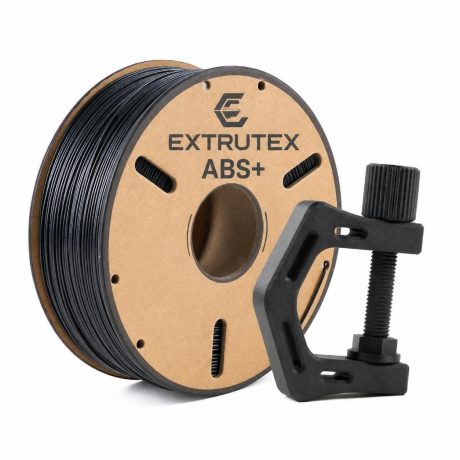
EXTRUTEX PC/ABS FR is a flame-retardant engineering filament combining polycarbonate (PC) and acrylonitrile butadiene styrene (ABS). Developed for technical, electrical and industrial applications, this material brings together the mechanical characteristics of polycarbonate and the processing advantages associated with ABS, supported by a halogen-free flame-retardant formulation.
Designed for functional 3D printed components, PC/ABS FR offers strong mechanical performance, impact resistance, attractive surface quality and reliable layer adhesion. Its flame-retardant formulation is specified to meet UL 94 V-0 requirements at test thicknesses of 1.5 mm and 3.0 mm, subject to confirmation of the applicable material certification and test conditions.
Flame-retardant engineering material for demanding applications
PC/ABS FR combines a polycarbonate-ABS polymer blend with a halogen-free flame-retardant system. It is designed for electrical housings, equipment enclosures, industrial components and functional prototypes where flame-retardant material performance is an important selection requirement.
Key Features of EXTRUTEX PC/ABS FR
Flame-Retardant FormulationSpecified to fulfill UL 94 V-0 requirements at 1.5 mm and 3.0 mm test thicknesses.
Halogen-FreeUses a halogen-free flame-retardant system for applications with material composition requirements.
PC/ABS Polymer BlendCombines characteristics of polycarbonate and ABS for engineering applications.
Strong Layer AdhesionDesigned to provide reliable bonding between printed layers.
Mechanical PerformanceOffers tensile strength, flexural properties and impact resistance for functional components.
Attractive Surface QualityProvides excellent aesthetics for visible technical components and enclosures.
Flexible Printing SpeedSupports a range of printing speeds when printer conditions and part geometry are properly optimized.
Customized ColorsAvailable in black and customized colors, subject to production confirmation.
PC/ABS FR: Combining Polycarbonate and ABS
Polycarbonate and ABS are widely used thermoplastics in engineering, electrical and industrial applications. Each material contributes different characteristics to the final polymer blend.
Polycarbonate is valued for its mechanical strength, toughness and thermal performance. ABS is widely used for its processing characteristics, surface quality and practical mechanical properties. By combining these polymer families, PC/ABS FR is designed to deliver a balanced material solution for functional 3D printed parts.
The flame-retardant formulation adds another important performance characteristic. It is intended for applications where the ability of a material to meet a defined flame-retardancy classification is part of the product specification.
Halogen-Free Flame Retardancy and UL 94 V-0
Flame retardancy is an important consideration in the design of electrical equipment, electronic housings and industrial components. EXTRUTEX PC/ABS FR uses a halogen-free flame-retardant formulation and is specified to fulfill the UL 94 V-0 classification at material test thicknesses of 1.5 mm and 3.0 mm.
UL 94 is a plastics flammability standard used to evaluate the burning behavior of materials under specified laboratory conditions. The V-0 classification represents a defined vertical-burning performance level under the test procedure. It is not a declaration that a material or finished component is fireproof.
For applications requiring formal compliance, customers should verify the applicable UL 94 test report, material grade, color, specimen thickness and certification status. Printed parts may behave differently from standardized test specimens because of print orientation, layer bonding, wall thickness, infill and manufacturing conditions.
Important compliance consideration
The stated V-0 performance applies to the specified 1.5 mm and 3.0 mm test thicknesses. Do not automatically assume that every printed geometry, wall thickness, color or finished assembly carries the same classification. Confirm the relevant certification and test documentation before specifying the material for regulated equipment.
Mechanical Strength and Impact Resistance
PC/ABS FR is designed for functional parts that require a combination of mechanical strength, stiffness and impact performance. Its polycarbonate-ABS composition makes it suitable for a range of engineering components, including equipment housings, protective covers, mounting elements and technical prototypes.
Mechanical performance in FDM and FFF printing depends strongly on build orientation. The strength of a printed component in the XY plane can differ significantly from its strength in the vertical Z direction because the component is constructed from individual layers.
The supplied material data includes tensile, flexural and Izod impact measurements in different orientations. These values can help engineers compare performance, but they should be interpreted using the original test method and specimen orientation.
Strong Layer Adhesion
Layer adhesion is essential when manufacturing functional parts through FDM or FFF printing. Weak bonding between layers can create failure points, especially in components exposed to impact, bending or repeated mechanical loads.
EXTRUTEX PC/ABS FR is designed to provide strong interlayer adhesion. Combined with suitable printing temperatures and a stable build environment, this helps produce more consistent parts with improved structural integrity.
For functional components, users should consider print orientation, wall thickness, infill strategy and the direction of applied forces. These factors can have a substantial effect on the final part's mechanical performance.
Surface Quality and Printing Productivity
In addition to mechanical and flame-retardant properties, PC/ABS FR is designed to deliver attractive surface quality. This is useful for technical products where the printed component remains visible in the final assembly, including electrical enclosures, equipment covers and industrial housings.
The material supports a range of printing speeds, depending on printer capability, nozzle configuration, extrusion temperature, cooling and component geometry. The supplied recommendations include a speed range of 30–90 mm/s, while another source setting lists 25 mm/s as a print-speed recommendation. Users should validate the appropriate speed for their printer and application rather than treating these figures as a single universal setting.
Typical Applications
- Electrical enclosures: Housings and covers for electrical equipment where flame-retardant material performance is required.
- Electronic equipment: Protective cases, mounting components and technical housings.
- Industrial machinery: Selected covers, brackets, guards and equipment accessories.
- Control-system components: Prototype housings and supporting components for control equipment.
- Functional prototypes: Engineering prototypes requiring mechanical strength and flame-retardant material characteristics.
- Industrial fixtures: Custom positioning tools, holders and selected assembly aids.
- Technical product development: Design validation and functional testing of electrical and mechanical components.
- Equipment accessories: Custom parts for industrial devices and technical installations.
Technical Specifications
| Specification | Details |
|---|
| Product Name | EXTRUTEX PC/ABS FR 3D Printer Filament |
| Material | Polycarbonate / Acrylonitrile Butadiene Styrene blend |
| Flame-Retardant System | Halogen-free formulation |
| Flammability Classification | UL 94 V-0 specified at 1.5 mm and 3.0 mm test thicknesses; verify certification documentation |
| Filament Diameter | 1.75 mm |
| Spool Weight | 750 g |
| Available Colors | Black and customized colors |
| Tensile Strength | 17.3 MPa (ZX), 50.1 MPa (XY) |
| Flexural Modulus | 1810 MPa (ZX), 2200 MPa (XZ), 2550 MPa (XY) |
| Elongation at Break | 0.8% (ZX), 10.7% (XY) |
| Izod Notched Impact Strength | 1.8 kJ/m² (ZX), 30.3 kJ/m² (XZ), 16.8 kJ/m² (XY) |
| Izod Unnotched Impact Strength | 3.0 kJ/m² (ZX), 87.9 kJ/m² (XZ), 57.0 kJ/m² (XY) |
| HDT at 0.45 MPa | 86°C |
| Printing Technology | FDM / FFF |
Mechanical property values are reproduced from the supplied product data. Confirm specimen preparation, test standards and orientation definitions with the technical data sheet before using these values for engineering calculations. HDT is a laboratory measurement under a specified load; it is not the same as continuous-use temperature.
Recommended 3D Printing Settings
PC/ABS FR is an engineering filament that benefits from controlled printing conditions. The following settings are the supplied starting recommendations. Actual results can vary according to printer design, nozzle condition, build surface, part geometry and environmental conditions.
| Printing Parameter | Recommended Setting |
|---|
| Nozzle Temperature | 230–280°C |
| Nozzle Diameter | 0.4 mm or larger |
| Print Speed | 30–90 mm/s; an additional source recommendation lists 25 mm/s |
| Bed Temperature | 80–100°C |
| Build Surface | Glass plate with a suitable adhesive |
| Build Chamber | Passively heated, closed chamber |
| Filament Drying | 60°C for at least 4 hours |
| Drying Equipment | Vacuum oven preferred over a hot-air dryer |
| Storage During Printing | Keep filament dry, for example in a dry box |
Nozzle Temperature
The recommended nozzle temperature range is 230–280°C. Begin with a suitable setting within this range and adjust according to extrusion quality, layer adhesion and the printer manufacturer's guidance.
Nozzle Diameter
A nozzle diameter of at least 0.4 mm is recommended. Check that the nozzle is clean and in good condition before printing. The appropriate nozzle size may depend on the desired surface quality, extrusion rate and part geometry.
Print Speed
The supplied recommendations include a range of 30–90 mm/s and a separate 25 mm/s recommendation. These should be treated as different starting references rather than combined into one fixed setting. Start conservatively, then increase speed only after confirming stable extrusion and adequate layer bonding.
Build Plate and Adhesion
A glass build plate with a suitable adhesive is recommended. Ensure that the build surface is clean and level, and check first-layer adhesion before starting long prints.
Enclosure Conditions
A passively heated, closed chamber is recommended. A more stable printing environment can help reduce temperature fluctuations and improve consistency, particularly for larger parts.
Filament Drying and Moisture Control
PC/ABS FR filament is supplied in a printable condition. However, drying before printing is recommended to help achieve the best possible print quality.
Supplied drying recommendation
- Drying temperature: 60°C
- Minimum drying duration: 4 hours
- Preferred equipment: vacuum oven
- Alternative: suitable hot-air filament dryer
- After drying: keep the filament in a dry box or sealed moisture-resistant container
Moisture in engineering filament can contribute to inconsistent extrusion, surface defects and reduced print quality. Keep the spool protected from humid air during storage and printing. If the material has been exposed to moisture for an extended period, follow the supplier's drying recommendations before use.
Material Properties and Printed-Part Performance
The supplied PC/ABS FR material data includes measurements for tensile strength, flexural modulus, elongation at break and Izod impact strength. The values differ according to specimen orientation, highlighting the importance of build direction in FDM and FFF manufacturing.
For example, the supplied tensile strength is 50.1 MPa in the XY orientation and 17.3 MPa in the ZX orientation. This difference illustrates why engineers should consider the direction of applied forces when positioning a component on the build plate.
The heat-deflection temperature is specified as 86°C at 0.45 MPa. HDT indicates the temperature at which a standardized specimen reaches a defined deflection under a specified load. It should not be interpreted as a guaranteed maximum operating temperature or as a replacement for thermal validation of the finished component.
Quality Control and Material Traceability
Consistent filament quality is essential for repeatable 3D printing. Variations in raw materials, extrusion conditions and color formulations can affect diameter consistency, extrusion behavior and finished-part performance.
According to the supplied product information, PC/ABS FR uses selected raw materials from established suppliers and is produced on computer-controlled manufacturing equipment. Production controls are intended to support consistent material performance across colors and batches.
Product traceability is also an important part of quality management. The supplied product information states that products are traceable to their source. Customers with specific documentation requirements should confirm the available batch records, material declarations and relevant test reports when ordering.
Why Choose EXTRUTEX PC/ABS FR?
EXTRUTEX supplies polymer materials and engineering solutions for industrial manufacturing, technical development and advanced 3D printing. Our approach combines Austrian design, laboratory and R&D capabilities with manufacturing in China.
PC/ABS FR is intended for users who need a flame-retardant engineering filament with a practical balance of mechanical properties, printability and surface quality. Its PC/ABS composition and halogen-free flame-retardant formulation make it a candidate for electrical housings, technical enclosures, industrial prototypes and selected functional components.
EXTRUTEX supports customers in selecting polymer materials according to application requirements, processing conditions and production objectives.
Frequently Asked Questions
1. What is PC/ABS FR 3D printer filament?
PC/ABS FR is a flame-retardant 3D printing filament made from a blend of polycarbonate and acrylonitrile butadiene styrene. It is designed for engineering, electrical and industrial applications where mechanical performance and flame-retardant characteristics are important. The FR designation refers to its flame-retardant formulation.
2. What does PC/ABS FR stand for?
PC stands for polycarbonate, ABS stands for acrylonitrile butadiene styrene, and FR stands for flame retardant. The material combines two widely used engineering thermoplastics with a flame-retardant system to create a filament intended for demanding technical applications.
3. Is PC/ABS FR flame retardant?
Yes. The supplied product specification identifies PC/ABS FR as a flame-retardant material with UL 94 V-0 performance at 1.5 mm and 3.0 mm test thicknesses. For regulated applications, customers should request the relevant test report or certification and confirm that the exact grade and color are covered.
4. What does UL 94 V-0 mean?
UL 94 V-0 is a vertical-burning classification under a defined laboratory test procedure. It indicates that the tested plastic specimen meets specific requirements for burning behavior and afterflame time. It does not mean that the material is fireproof or that every printed component automatically receives the same classification.
5. Is PC/ABS FR halogen-free?
Yes. According to the supplied product description, PC/ABS FR uses a halogen-free flame-retardant system. Customers requiring formal confirmation should request the relevant material declaration and supporting documentation for the supplied grade.
6. What is the difference between PC/ABS FR and standard PC/ABS?
Standard PC/ABS is a polymer blend combining polycarbonate and ABS characteristics. PC/ABS FR includes a flame-retardant formulation intended to meet additional flammability requirements. The flame-retardant formulation may influence certain processing and mechanical properties, so users should compare the technical data sheets of the specific grades.
7. What is the difference between PC/ABS FR and ABS filament?
ABS is a widely used engineering thermoplastic, while PC/ABS FR combines polycarbonate and ABS with a flame-retardant system. The blend is designed to offer a different balance of mechanical and thermal characteristics, together with flame-retardant performance. Material selection should be based on the requirements of the finished component.
8. What is the filament diameter?
The specified filament diameter is 1.75 mm. Confirm that your 3D printer and filament feeding system support this diameter before use.
9. What is the spool weight?
The supplied spool weight is 750 g. This is the stated filament package weight for this product specification.
10. What colors are available?
Black is the stated standard color. Customized colors may also be available according to production feasibility and order requirements. For flame-retardant applications, confirm whether the requested color is covered by the relevant material test documentation.
11. What nozzle temperature is recommended?
The supplied nozzle temperature range is 230–280°C. The best setting depends on the printer, nozzle, extrusion speed and part geometry. Begin with a suitable value within the recommended range and check for consistent extrusion and strong layer bonding.
12. What bed temperature should I use?
The recommended bed temperature is 80–100°C. A glass build surface with a suitable adhesive is also specified. Ensure that the bed is level and that the first layer adheres consistently before starting a long print.
13. What nozzle diameter is recommended?
The supplied recommendation is a nozzle diameter of at least 0.4 mm. This provides a practical starting point for printing PC/ABS FR. Larger nozzles may be considered depending on the desired extrusion rate, layer thickness and component geometry.
14. What is the recommended print speed?
The product information provides a general speed range of 30–90 mm/s and also lists 25 mm/s as a separate recommendation. Because these settings differ, users should begin conservatively and optimize speed through test prints. Stable extrusion and layer bonding are more important than maximum speed.
15. Does PC/ABS FR require an enclosed printer?
A passively heated, closed chamber is recommended. An enclosure helps create a more stable printing environment and can reduce temperature fluctuations around the printed component. This is particularly useful for larger parts and geometries that are sensitive to warping.
16. Should PC/ABS FR be dried before printing?
The filament is supplied in a printable condition, but drying is recommended for the best results. The supplied drying instruction is 60°C for at least four hours. A vacuum oven is preferred over a hot-air dryer, and the material should be kept dry after the drying process.
17. How should PC/ABS FR filament be stored?
Store the filament in a sealed moisture-resistant bag or dry box. Desiccant can help control humidity during storage. Avoid leaving the spool exposed to humid air for long periods, especially after drying, because moisture can affect extrusion quality.
18. What is the HDT of PC/ABS FR?
The supplied heat-deflection temperature is 86°C at 0.45 MPa. HDT is a standardized test measurement under a specified load. It is not the same as continuous-use temperature and should not be treated as a guaranteed maximum operating temperature for every printed part.
19. Is PC/ABS FR suitable for electrical enclosures?
It is designed for engineering and electrical applications and can be considered for electrical enclosures and protective housings. Before use in regulated equipment, verify the relevant flame-retardancy documentation, wall thickness, material grade, color and applicable electrical safety requirements.
20. Can PC/ABS FR be used for electronic housings?
Yes. Electronic housings are a relevant application area for flame-retardant engineering plastics. PC/ABS FR can be considered for prototype and production-development housings, subject to validation of the finished part's mechanical, thermal, electrical and flammability requirements.
21. Is PC/ABS FR suitable for industrial applications?
Yes. The material is intended for industrial and engineering applications that require a combination of mechanical performance and flame-retardant characteristics. Potential applications include equipment covers, electrical housings, technical fixtures and functional prototypes.
22. Does PC/ABS FR have good impact resistance?
The supplied material data includes Izod notched and unnotched impact strength measurements in different specimen orientations. These results indicate that impact performance varies with orientation. For a specific application, evaluate the printed part using its actual geometry, build orientation and expected impact conditions.
23. Does PC/ABS FR have strong layer adhesion?
Strong layer adhesion is one of the stated product characteristics. Proper nozzle temperature, controlled chamber conditions and suitable print speed are important for achieving good bonding. The strength of the final component also depends on orientation, wall thickness and infill strategy.
24. Can PC/ABS FR be printed at high speeds?
The product description states that high printing speeds are possible, with a supplied range of 30–90 mm/s. However, achievable speed depends on printer extrusion capacity, hotend performance, nozzle size and part geometry. Test the material at a conservative speed before increasing production settings.
25. Is PC/ABS FR suitable for functional prototypes?
Yes. Its mechanical properties and flame-retardant formulation make it relevant for functional prototypes in electrical, industrial and technical product development. Printed prototypes should still be tested under realistic loads and operating conditions before being used as final components.
26. Can PC/ABS FR be used for machine parts?
It can be considered for selected machine covers, brackets, holders and equipment accessories. Before selecting it for a functional machine component, evaluate the expected temperature, mechanical loads, wear, impact exposure and required flame-retardant classification.
27. Does UL 94 V-0 apply to every printed part?
No. The stated V-0 classification refers to standardized test specimens at specified thicknesses. A printed component can have different wall thicknesses, layer orientations, infill patterns and manufacturing conditions. Do not assume that every printed part automatically meets the same classification without appropriate testing and documentation.
28. Are customized colors available without changing flame-retardant performance?
Customized colors are listed as an available option, but color formulations can affect material composition and certification coverage. If a specific UL 94 V-0 requirement applies, confirm that the requested color and grade are covered by the relevant test documentation before ordering.
29. What quality-control measures are used for PC/ABS FR?
The supplied product information describes the use of selected raw materials from established suppliers and computer-controlled manufacturing equipment. These production controls are intended to support consistency across batches and colors. Customers with specific quality requirements should request available inspection records and batch documentation.
30. Is PC/ABS FR suitable for safety-critical components?
It may be considered during the development of components with defined flame-retardant requirements, but suitability for safety-critical use must be established through formal engineering validation. Confirm the exact material certification, printed-part test results, component design, applicable regulations and operating conditions before approval.
Request EXTRUTEX PC/ABS FR Filament Information
Looking for a halogen-free flame-retardant filament for electrical housings, industrial equipment or engineering prototypes? Contact EXTRUTEX for PC/ABS FR availability, customized color options, technical data and application support.
Visit EXTRUTEX to explore our engineering filaments and polymer material solutions.




-
(0 customer reviews)