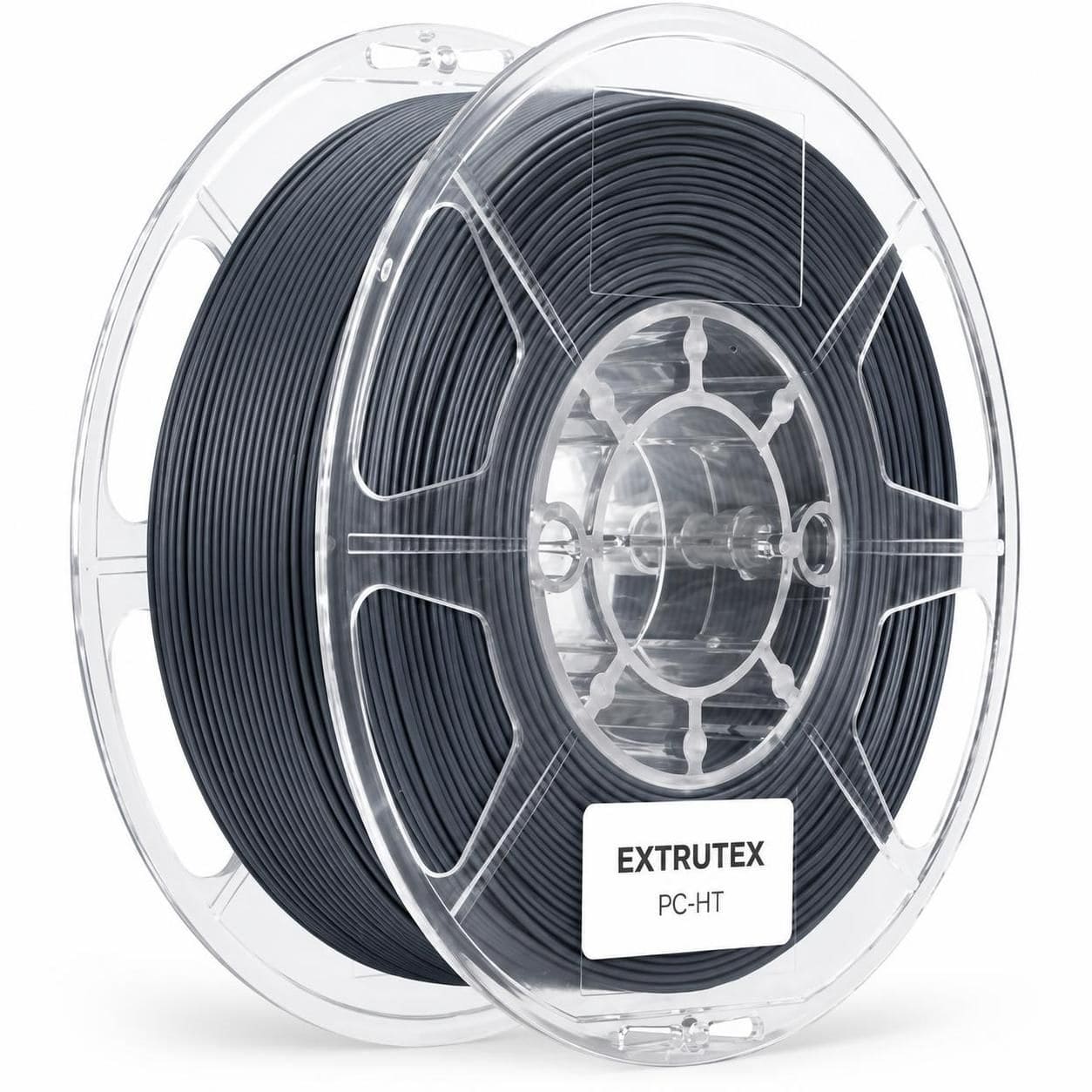
PC-HT High-Temperature Polycarbonate 3D Printer Filament
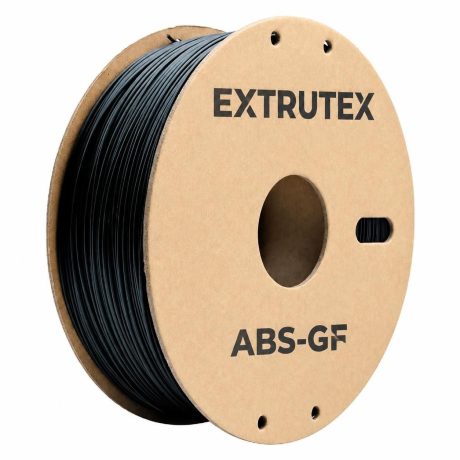
EXTRUTEX PC-HT is a high-performance polycarbonate-based 3D printing filament developed for engineering components that require a combination of heat resistance, mechanical strength, toughness and reliable layer adhesion. Designed for demanding functional applications, PC-HT offers improved thermal performance compared with conventional PC filament while maintaining the mechanical characteristics expected from polycarbonate materials.
With resistance suitable for environments above 100°C, PC-HT is a practical material option for functional prototypes, industrial fixtures, electronic housings and machine components exposed to elevated temperatures. Its improved printing stability and reduced warping help users produce accurate, durable parts for technical applications.
Designed for demanding engineering applications
PC-HT combines high-temperature performance, impact resistance, strong interlayer bonding and dimensional stability. It is suitable for functional 3D printed parts where ordinary-purpose filaments may not provide the required combination of thermal and mechanical properties.
Key Features of EXTRUTEX PC-HT
High-Temperature ResistanceSuitable for applications in environments above 100°C, subject to part design and operating conditions.
Excellent Mechanical StrengthCombines polycarbonate strength and toughness for demanding functional components.
Impact ResistanceDesigned to withstand mechanical stress and impact during practical use.
Strong Layer AdhesionImproved interlayer bonding supports durable printed structures and helps reduce delamination.
Reduced WarpingOptimized material formulation helps improve printing stability and dimensional consistency.
Dimensional AccuracySupports the production of accurate parts with a clean surface finish.
Engineering ApplicationsSuitable for industrial fixtures, machine parts, housings and functional prototypes.
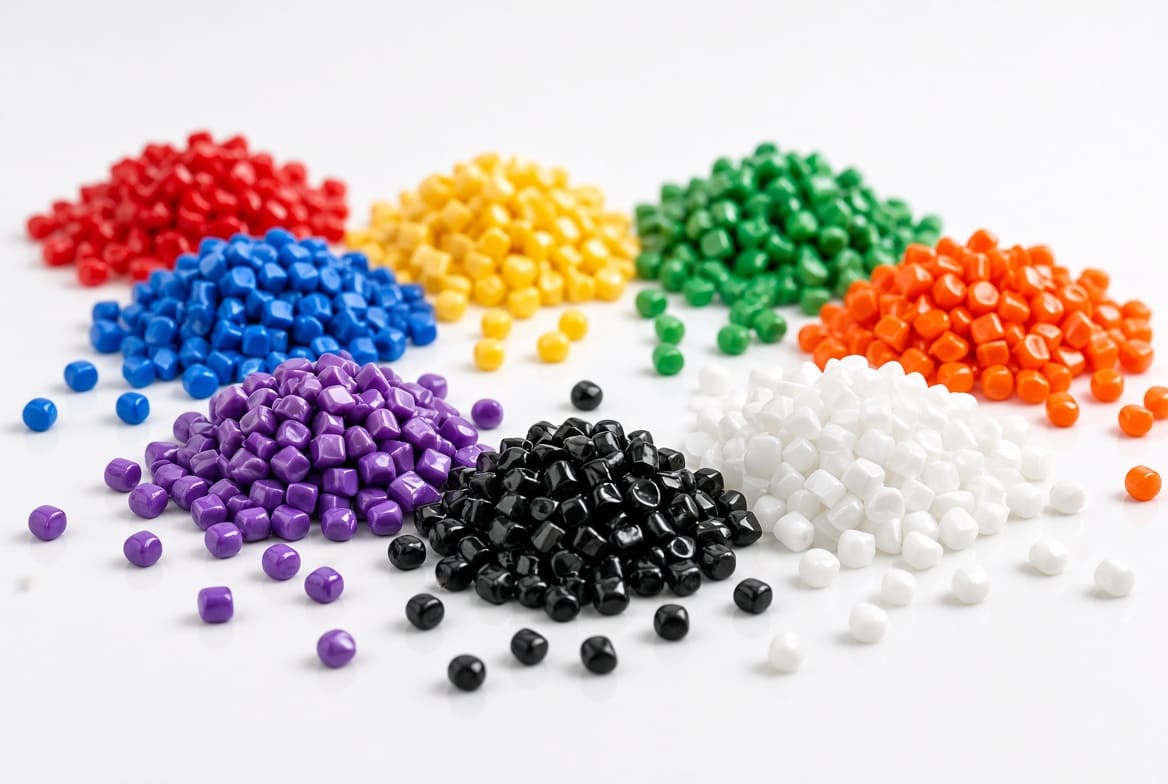
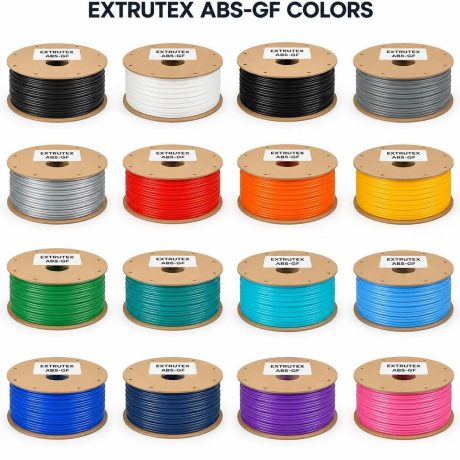
Multiple Color OptionsAvailable in grey, black and customized colors, subject to production confirmation.
Built for High-Temperature Applications
Temperature resistance is an important consideration when selecting a material for functional 3D printed components. Standard-purpose filaments may soften or lose dimensional stability when exposed to elevated temperatures, limiting their suitability for certain industrial environments.
EXTRUTEX PC-HT is a polycarbonate-based engineering filament designed to provide improved heat resistance compared with conventional PC filament. Its performance makes it suitable for applications involving temperatures above 100°C, depending on the actual operating temperature, exposure duration, mechanical loading, part geometry and printing conditions.
This thermal capability makes PC-HT a candidate material for electronic enclosures, machine components, technical fixtures and other parts that must maintain useful mechanical performance in warmer operating environments.
The stated temperature suitability should not be interpreted as a guaranteed continuous service temperature for every printed part. Confirm the material's heat-deflection temperature, test method and operating limits before using it in critical applications.
Strength, Toughness and Impact Resistance
Polycarbonate is widely used in engineering applications because of its combination of strength and toughness. PC-HT builds on this material family, providing mechanical performance intended for functional components that may experience repeated stress, impact or demanding operating conditions.
These characteristics are important when producing parts that must do more than demonstrate a shape or concept. Functional prototypes, machine accessories, brackets, covers and industrial fixtures can require resistance to handling, vibration and mechanical loading.
PC-HT is designed to support these requirements through a combination of polycarbonate-based mechanical properties and improved interlayer bonding. Actual component performance will depend on print orientation, infill, wall thickness, layer height, printing conditions and the applied load.
Improved Interlayer Bonding
Layer adhesion is a critical factor in FDM and FFF 3D printing. A printed component is built from individual deposited layers, and the quality of the connection between those layers can influence the strength and durability of the finished part.
EXTRUTEX PC-HT is formulated to provide strong interlayer bonding. Improved bonding helps reduce the risk of separation between printed layers and supports the production of more durable functional components.
For demanding applications, users should also optimize print temperature, cooling, chamber conditions, part orientation and layer settings. Good material handling and suitable printer configuration remain essential to achieving consistent results.
Reliable Printing and Dimensional Stability
High-performance engineering filaments can present printing challenges, particularly when producing large parts or complex geometries. Warping, uneven cooling and poor layer bonding can affect dimensional accuracy and component reliability.
PC-HT is designed to provide improved printing stability and reduced warping compared with conventional PC formulations. This helps users produce complex technical components with more consistent dimensions and a clean surface finish.
For best results, use a properly calibrated printer and a stable build surface. Avoid sudden temperature changes and excessive cooling, especially when printing larger parts. Enclosed printing conditions may help improve consistency, depending on the printer and part geometry.
Typical Applications
- Electronic housings: Enclosures and protective components for electronic equipment operating in warmer environments.
- Industrial fixtures: Assembly fixtures, positioning tools, brackets and production aids.
- Machine components: Functional covers, holders, guides and selected mechanical accessories.
- Engineering prototypes: Prototypes designed to evaluate mechanical performance and thermal suitability.
- Automotive development: Non-safety-critical prototype components and selected under-hood development parts, subject to validation.
- Technical equipment: Durable housings, mounting components and equipment accessories.
- Functional end-use parts: Custom components requiring a combination of toughness, strength and heat resistance.
- Industrial tooling: Custom jigs, fixtures and manufacturing support components.
PC-HT Compared with Standard PC Filament
Both PC and PC-HT are polycarbonate-based materials intended for demanding 3D printing applications. PC-HT is positioned for applications where improved heat resistance and layer bonding are important selection criteria.
| Property | Standard PC | PC-HT |
|---|
| Material family | Polycarbonate | High-performance polycarbonate-based formulation |
| Mechanical strength | High | High |
| Toughness | High | High |
| Heat resistance | Depends on grade | Improved; suitable for environments above 100°C according to the supplied product description |
| Layer bonding | Depends on grade and printing conditions | Designed for strong interlayer bonding |
| Warping behavior | Can require careful control | Formulated for reduced warping and improved stability |
| Typical use | Engineering parts and functional prototypes | Applications requiring improved thermal performance and durable layer bonding |
This is a general material-positioning comparison, not a laboratory test report. Actual performance depends on the specific PC grade, printing process and final part design.
Technical Specifications
| Specification | Details |
|---|
| Product Name | EXTRUTEX PC-HT 3D Printer Filament |
| Material | High-performance polycarbonate-based filament |
| Filament Diameter | 1.75 mm |
| Spool Weight | 1 kg |
| Available Colors | Grey, black and customized colors |
| Heat Resistance | Suitable for environments above 100°C; confirm grade-specific test data for critical applications |
| Mechanical Properties | High strength, toughness and impact resistance |
| Layer Adhesion | Strong interlayer bonding |
| Dimensional Stability | Improved printing stability and reduced warping |
| Printing Technology | FDM / FFF 3D printing |
Printing Recommendations
PC-HT is an engineering-grade material. Printer configuration and environmental conditions can influence the quality and performance of the finished component. Follow the grade-specific technical data sheet for exact printing temperatures and drying conditions.
- Printer compatibility: Use a 3D printer designed to process polycarbonate-based engineering filaments.
- Build environment: A stable, enclosed printing environment may help reduce temperature fluctuations and warping.
- Build surface: Use a suitable build plate or compatible adhesion solution for PC materials.
- Cooling: Avoid excessive cooling unless the material supplier's printing instructions specify otherwise.
- Filament condition: Keep the filament dry and protected from moisture before and during printing.
- Part orientation: Select an orientation that places the strongest printed direction along the expected load path.
- Printer calibration: Check extrusion, first-layer adhesion and temperature stability before producing critical components.
Exact nozzle temperature, bed temperature, drying temperature, drying duration and maximum printing speed have not been specified for this grade. Obtain the current PC-HT technical data sheet before setting production parameters.
Filament Storage and Handling
Polycarbonate-based filaments should be stored in dry conditions to help maintain consistent extrusion quality. Moisture absorption can contribute to printing defects, surface imperfections and inconsistent material flow.
- Store the spool in a sealed moisture-resistant bag or container.
- Use an appropriate desiccant to help control humidity during storage.
- Keep the material away from direct sunlight, dust and excessive heat.
- Dry the filament according to the grade-specific supplier instructions when necessary.
- Return unused filament to sealed storage after printing.
Why Choose EXTRUTEX PC-HT?
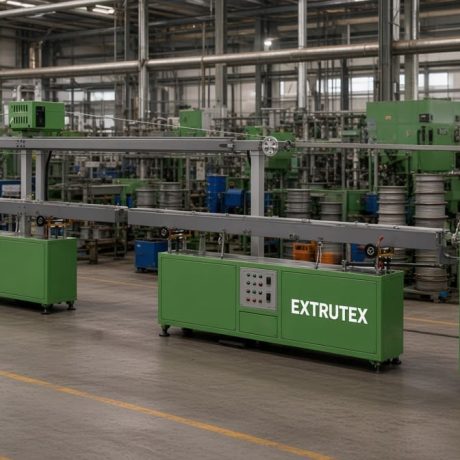
EXTRUTEX supplies engineering materials and polymer solutions for industrial production, technical development and advanced manufacturing. Our approach combines Austrian design, laboratory and R&D capabilities with manufacturing in China.
Our PC-HT filament is intended for users who need more than a general-purpose printing material. Its combination of polycarbonate-based strength, toughness, improved heat resistance and interlayer bonding makes it a material option for demanding functional parts and engineering prototypes.
EXTRUTEX works with customers to support material selection and application development, helping identify suitable polymer solutions for different technical requirements.
Frequently Asked Questions
1. What is PC-HT 3D printer filament?
PC-HT is a high-performance polycarbonate-based filament developed for engineering applications. It combines mechanical strength and toughness with improved heat resistance and strong interlayer bonding. It is designed for functional components that may experience mechanical stress and elevated temperatures.
2. What does PC-HT stand for?
PC refers to polycarbonate, while HT commonly indicates high-temperature performance. PC-HT describes a polycarbonate-based filament formulated for applications where improved thermal resistance is an important requirement.
3. How heat resistant is PC-HT?
The supplied product description identifies PC-HT as suitable for environments above 100°C. The actual temperature capability of a printed part depends on the material grade, exposure duration, applied load, geometry and printing quality. For critical applications, request the manufacturer's heat-deflection and thermal test data.
4. Is PC-HT stronger than standard PC?
PC-HT is designed to retain the strength and toughness associated with polycarbonate while improving heat resistance and layer bonding. Whether it is mechanically stronger than a particular standard PC filament depends on the specific grades and test conditions.
5. Is PC-HT suitable for industrial applications?
Yes. Its combination of heat resistance, strength, impact resistance and dimensional stability makes it suitable for many industrial development applications, including fixtures, equipment housings, machine accessories and functional prototypes.
6. Does PC-HT have good impact resistance?
PC-HT is designed to provide the toughness and impact resistance associated with polycarbonate materials. Actual impact performance depends on print orientation, wall thickness, infill, layer bonding and the conditions under which the part is used.
7. Does PC-HT have strong layer adhesion?
Yes. Strong interlayer bonding is one of the key characteristics of this filament. Good layer adhesion helps improve the structural integrity of printed parts and reduces the risk of delamination.
8. Does PC-HT warp during printing?
PC-HT is formulated for reduced warping and improved printing stability. However, large or thin-walled parts can still experience dimensional changes if cooling, bed adhesion or environmental temperature is not properly controlled.
9. What is the filament diameter?
The supplied PC-HT filament specification is 1.75 mm in diameter. Confirm printer compatibility before ordering.
10. What is the spool weight?
The standard supplied spool weight is 1 kg.
11. What colors are available?
PC-HT is available in grey and black, with customized colors also offered subject to production feasibility and order requirements.
12. What printing technology is compatible with PC-HT?
PC-HT is intended for FDM and FFF 3D printing systems. The printer should be capable of processing polycarbonate-based engineering materials and maintaining stable printing conditions.
13. Can PC-HT be used for electronic housings?
Yes. It can be considered for electronic housings and protective components where mechanical durability and elevated-temperature performance are required. The final design should be tested under the actual operating temperature and electrical requirements.
14. Is PC-HT suitable for machine components?
PC-HT can be used to produce selected machine components, covers, holders, guides and accessories. The suitability of each component depends on mechanical loads, operating temperature, wear conditions and the printed part's design.
15. Can PC-HT be used for functional prototypes?
Yes. PC-HT is suitable for functional prototypes that need to represent the mechanical and thermal behavior of a more demanding engineering component. It can help evaluate part geometry, assembly and selected operating conditions before further production development.
16. Does PC-HT absorb moisture?
Polycarbonate-based materials require appropriate moisture control. Store the filament in a sealed container with desiccant and follow the grade-specific drying recommendations when necessary. Dry filament generally supports more consistent extrusion and surface quality.
17. What nozzle temperature should be used?
The exact nozzle temperature for this PC-HT grade has not been provided. Use the manufacturer's technical data sheet rather than relying on a generic polycarbonate temperature range.
18. What bed temperature is recommended?
The recommended bed temperature has not been specified for this grade. It should be selected according to the manufacturer's printing instructions, printer design and build-surface material.
19. Does PC-HT require an enclosed 3D printer?
An enclosed printer is generally helpful when processing demanding polycarbonate-based filaments because it can reduce temperature fluctuations around the printed part. Confirm the recommended chamber conditions with the filament supplier.
20. Is PC-HT suitable for automotive prototypes?
It can be considered for non-safety-critical automotive development parts and functional prototypes. Any component intended for use in a vehicle must be validated for its actual thermal, mechanical, environmental and regulatory requirements.
21. Can PC-HT be used for jigs and fixtures?
Yes. Its strength, toughness and heat-resistance positioning make it a candidate for custom jigs, assembly fixtures, positioning tools and manufacturing aids. The part should be tested under its expected loads and working temperatures.
22. Is PC-HT suitable for load-bearing components?
It may be suitable for selected load-bearing prototypes and functional components, but suitability cannot be determined from the material name alone. Load direction, print orientation, infill, wall thickness, fatigue conditions and safety factors must all be considered.
23. Can PC-HT replace metal components?
PC-HT can replace some metal components in applications where lower weight, design flexibility and suitable polymer performance are more important than the stiffness, strength or temperature capability of metal. It is not a universal metal replacement. Each application requires engineering validation.
24. Is PC-HT suitable for outdoor use?
Outdoor suitability depends on UV exposure, moisture, temperature cycling and the specific formulation. Confirm weathering and UV-resistance data before using PC-HT for long-term outdoor components.
25. How should PC-HT filament be stored?
Keep the spool in a sealed moisture-resistant bag or container with desiccant. Avoid prolonged exposure to humid air and store the material away from direct sunlight, dust and excessive heat.
26. Is PC-HT suitable for large 3D printed parts?
It can be used for larger parts when the printer provides adequate build volume and stable temperature control. Large components require particular attention to bed adhesion, cooling, chamber conditions and geometry to minimize warping.
27. What surface finish does PC-HT provide?
The supplied product description identifies a clean surface finish and good dimensional accuracy as product characteristics. Final appearance depends on nozzle condition, layer height, extrusion calibration, printing speed and part geometry.
28. Can PC-HT be supplied in customized colors?
Yes. Grey and black are the stated color options, and customized colors may be available according to production feasibility, order quantity and color requirements. Contact EXTRUTEX to confirm a specific color request.
29. Is PC-HT suitable for high-temperature tooling?
It may be suitable for selected tooling and manufacturing aids exposed to elevated temperatures. The actual operating temperature, contact conditions and mechanical loading should be checked against grade-specific thermal and mechanical test data.
30. How can I select the right PC-HT filament for my application?
Start by identifying the required operating temperature, mechanical loads, impact conditions, dimensional tolerances and printer capabilities. EXTRUTEX can help review these requirements and identify whether PC-HT is an appropriate material option. For critical components, request the technical data sheet and validate printed samples under real operating conditions.
Request EXTRUTEX PC-HT Filament Information
Looking for a polycarbonate-based filament for high-temperature engineering applications? Contact EXTRUTEX for PC-HT availability, customized color options, technical information and application support.
Visit EXTRUTEX to explore our 3D printing materials and engineering polymer solutions.




-
(0 customer reviews)