Geosynthetic Manufacturing Technology
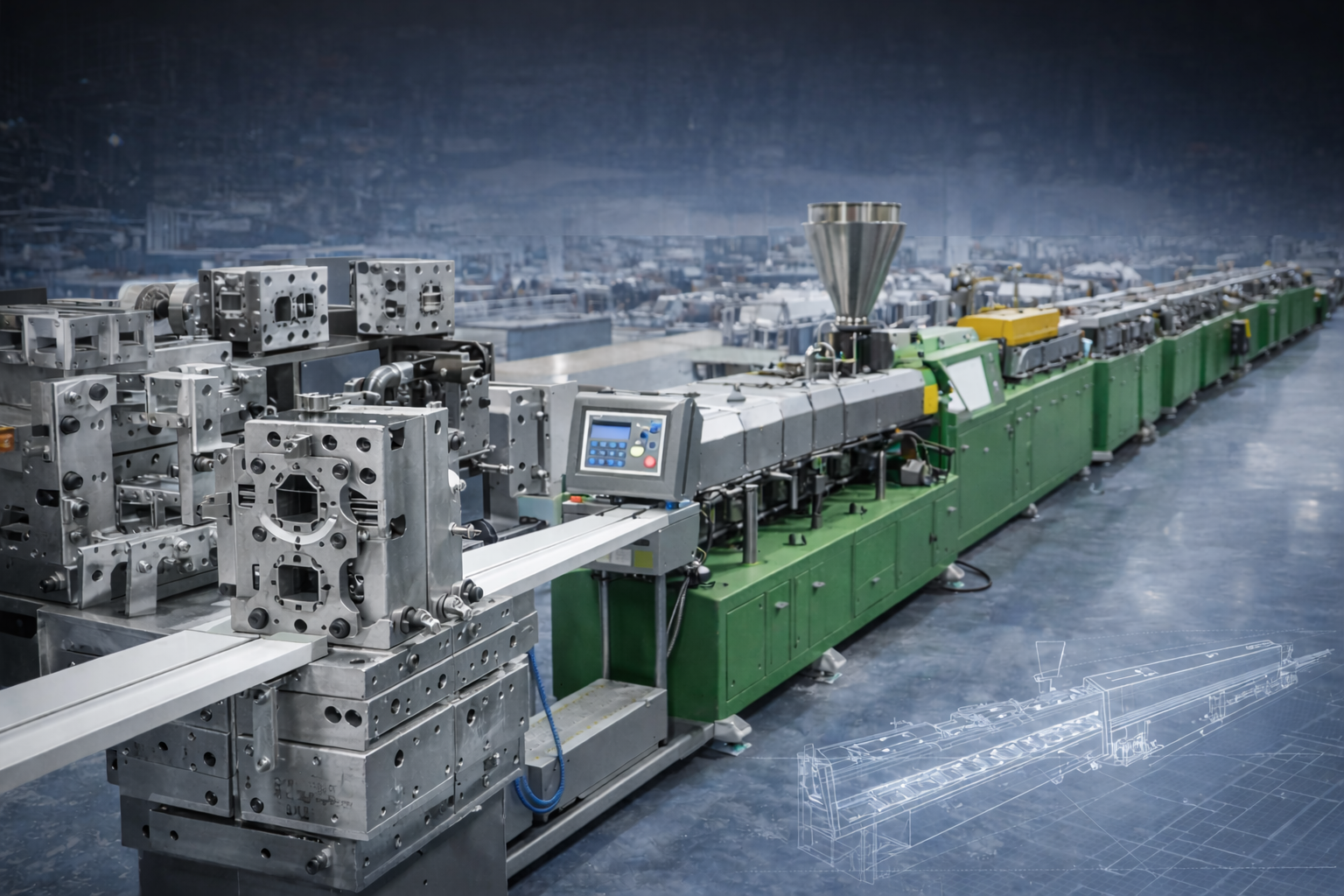
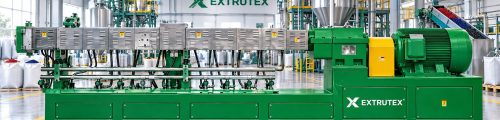
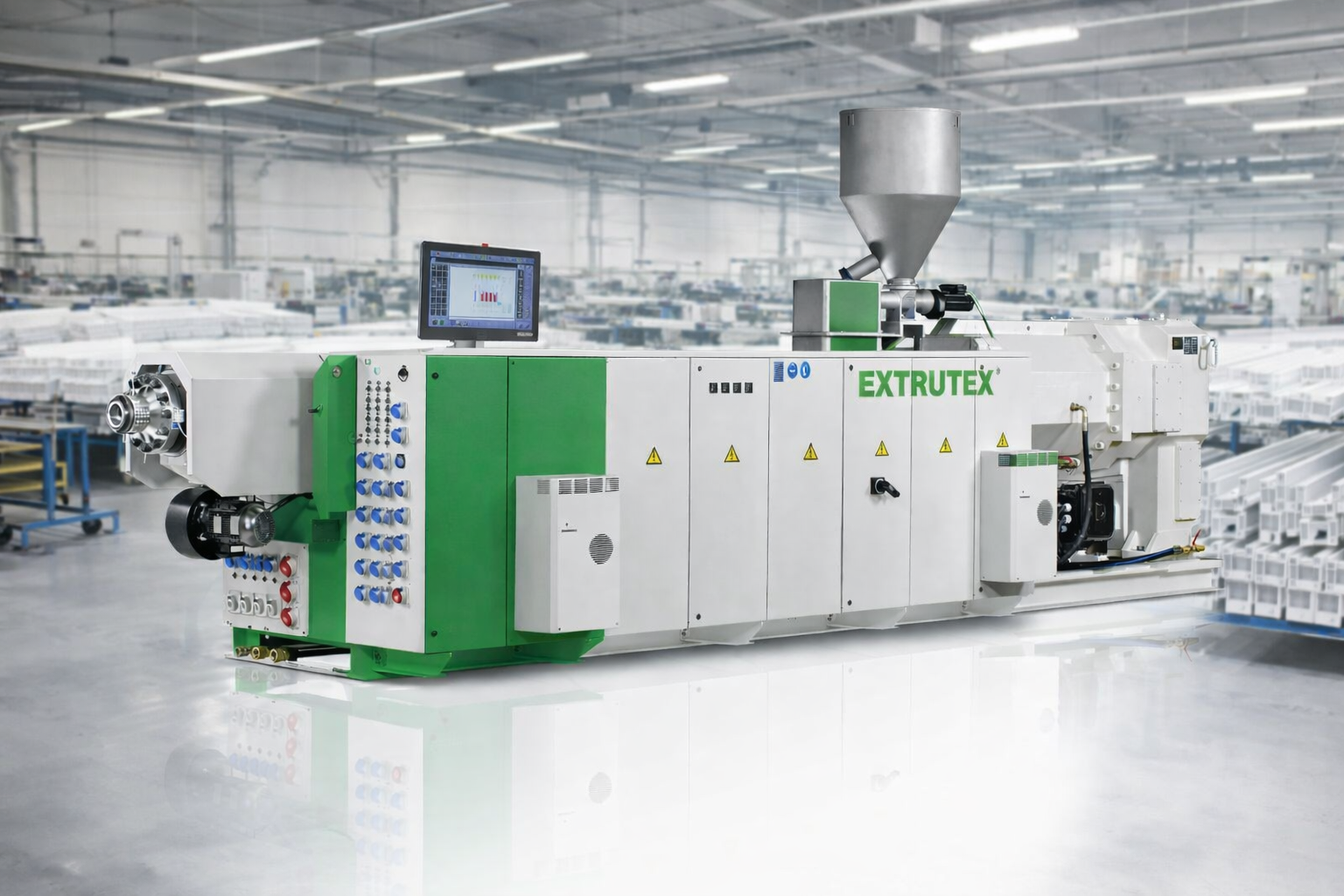
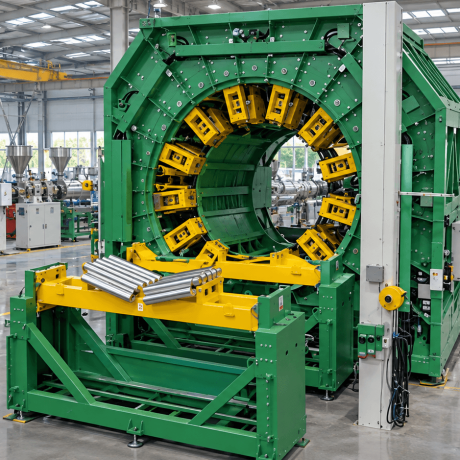
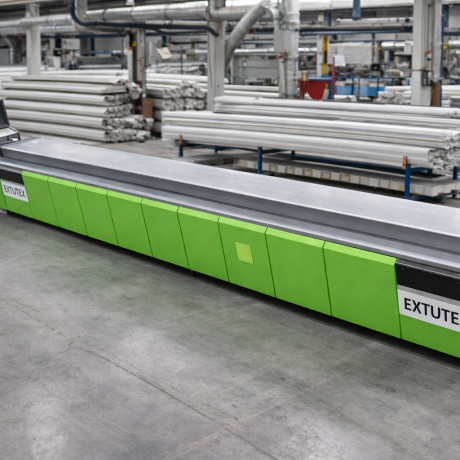
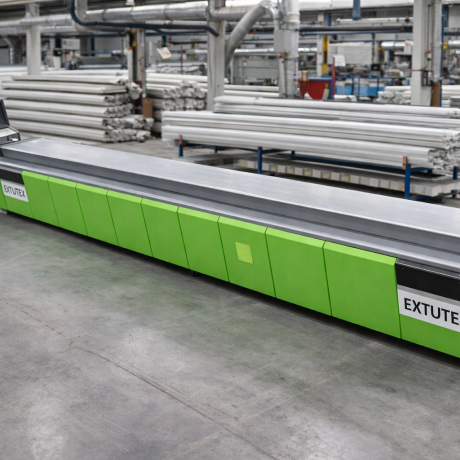
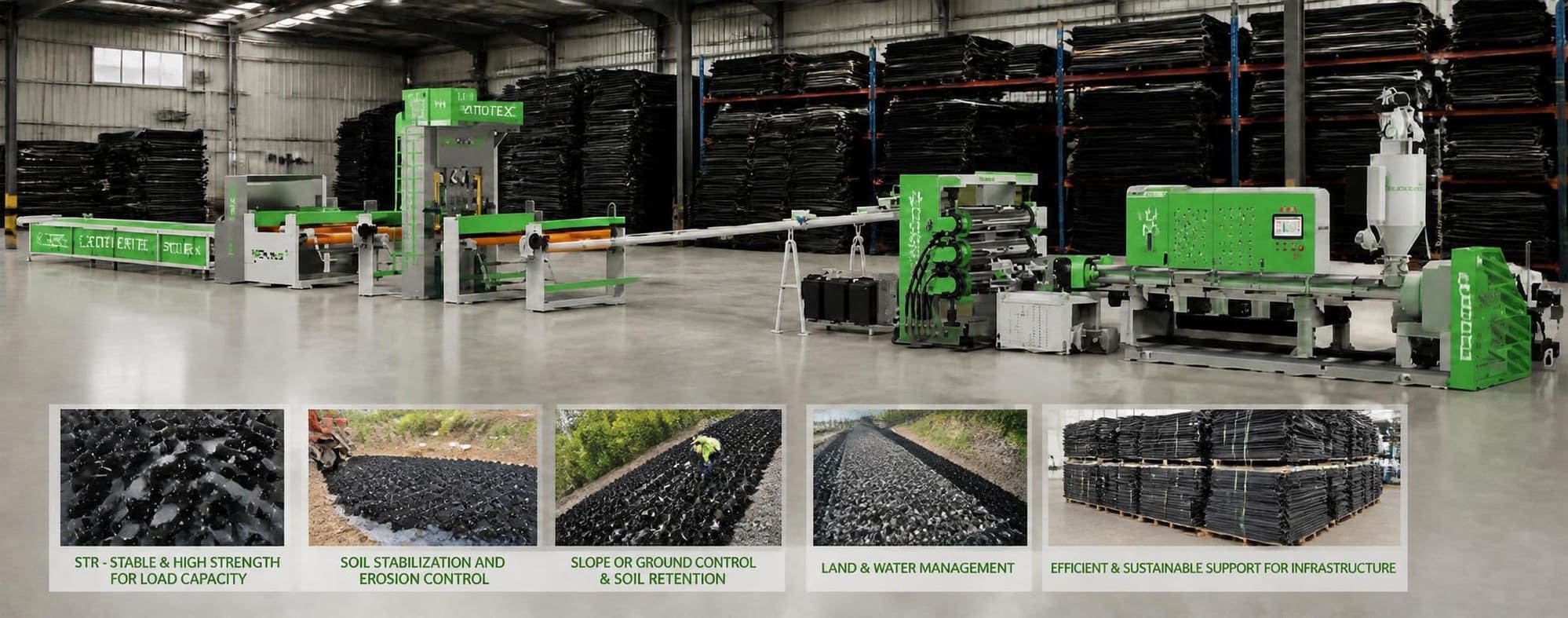
EXTRUTEX HDPE Geocell Sheet Extrusion Line
Industrial sheet extrusion solutions for manufacturing
thermoplastic sheets used in three-dimensional geocell
production for soil stabilization, load distribution,
erosion control and civil infrastructure.
EXTRUTEX HDPE Geocell Sheet Extrusion Lines are designed
for processing suitable polyethylene (PE) and polypropylene
(PP) materials into sheets used in geocell manufacturing.
The sheets are subsequently processed through operations
such as slitting, punching and ultrasonic or thermal welding,
according to the required geocell design.
With multiple equipment models and nominal output ranges,
the EXTRUTEX range supports different production requirements
for geosynthetic manufacturers serving road construction,
railway engineering, slope protection, embankment reinforcement
and other civil engineering applications.
Request Technical Information
Contact EXTRUTEX
Product Highlights
- Designed for PP and PE sheet processing
- Sheet thickness: 1.2–2 mm
- Multiple geocell height options
- Automatic sheet slitting options
- Automatic punching options
- Ultrasonic or thermal welding processes
- Three models for different output requirements
- Designed for continuous industrial sheet extrusion
300–700 kg/h
Model-dependent nominal output range
1.2–2 mm
Specified sheet thickness
50–300 mm
Available geocell heights, depending on model
Advanced Geocell Sheet Extrusion Technology
Geocells are three-dimensional cellular confinement systems
manufactured from thermoplastic sheet material. During installation,
the connected cellular panels are expanded to form a honeycomb-like
structure. When filled with soil, sand, aggregate or another
specified infill material, the expanded system helps confine
the fill and distribute loads across the treated area.
Geocell systems are used in civil engineering to improve the
performance of selected soil and aggregate structures. Their
effectiveness depends on the material properties, cell geometry,
connection strength, installation method, infill and site conditions.
Manufacturing consistency is therefore an important part of
producing reliable geosynthetic products.
The EXTRUTEX HDPE Geocell Sheet Extrusion Line produces the
thermoplastic sheet used in the subsequent manufacturing process.
The sheet must meet the required thickness, width, surface quality
and material specifications before it is converted into cellular
panels.
Depending on the production design, downstream operations can
include cutting sheets to width, punching perforations, arranging
the sheets, welding selected connection points and inspecting
the finished panels. Ultrasonic welding or thermal bonding may
be used where suitable for the material and product design.
01
Stable Sheet Extrusion
Process suitable PP and PE materials into continuous
thermoplastic sheets with a specified thickness range
of 1.2–2 mm.
02
Downstream Sheet Preparation
Prepare extruded sheets for subsequent cutting, slitting,
punching and cellular panel assembly according to
the required product design.
03
Geocell Panel Manufacturing
Combine prepared thermoplastic sheets through specified
joining operations to create expandable cellular
structures.
04
Infrastructure Applications
Support the manufacture of geocell products intended
for soil confinement, roadbed stabilization, erosion
control and selected civil engineering projects.
How Geocell Sheet Extrusion Supports Geocell Manufacturing
Geocell manufacturing begins with the preparation of a suitable
thermoplastic material and the extrusion of a sheet. The sheet
then passes through downstream processing stages that determine
the geometry and connection pattern of the finished cellular
panel.
1. Material Preparation
Select the appropriate polymer grade and formulation
according to the intended geocell application, required
mechanical properties, environmental exposure and
processing conditions.
2. Sheet Extrusion
Melt and process the selected thermoplastic through
the extrusion system to produce a continuous sheet
within the required thickness and dimensional range.
3. Cooling and Stabilization
Cool and stabilize the sheet so that it can be handled
and transferred to downstream processing without
unacceptable deformation.
4. Slitting and Cutting
Cut the sheet into the required widths or lengths.
Accurate slitting supports repeatable dimensions
and efficient downstream production.
5. Punching and Perforation
Where required by the product design, create holes
or perforations in the sheet using a suitable
punching system.
6. Welding and Panel Assembly
Join the prepared sheets at specified intervals
through a suitable ultrasonic or thermal welding
process to create the expandable cellular structure.
Process clarification: Sheet extrusion is the
upstream operation. Slitting, punching and welding are downstream
operations that may require separate equipment or integrated
production modules, depending on the selected line configuration.
EXTRUTEX HDPE Geocell Extrusion Line Models
EXTRUTEX offers three model specifications for different
sheet extrusion capacity requirements. Model selection
should be based on the required production output, sheet
width, target material, geocell design and downstream
manufacturing requirements.
| Model |
Material |
Sheet Thickness |
Available Geocell Heights |
Welding Distance |
Output |
| EXL-120/1000 |
PP / PE |
1.2–2 mm |
50, 75, 100, 150, 200, 300 mm |
340–800 mm |
300–350 kg/h |
| EXL-120/1400 |
PP / PE |
1.2–2 mm |
50, 75, 100, 150, 200, 300 mm |
340–800 mm |
400–500 kg/h |
| EXL-150/1600 |
PP / PE |
1.2–2 mm |
75, 100, 150, 200, 300 mm |
340–800 mm |
600–700 kg/h |
Technical data note: The specifications above
reproduce the supplied model data. Output is nominal and can
depend on the selected polymer, formulation, sheet thickness
and operating conditions. Confirm the definition and measurement
points of the listed welding distance with the manufacturer
when finalizing the equipment configuration.
Key Technical Features
PP and PE Sheet Processing
The specified line range is designed for processing
suitable polypropylene and polyethylene materials.
Material grade selection should consider extrusion
behavior, mechanical requirements and the intended
operating environment of the finished geocell.
Controlled Sheet Thickness
The specified sheet thickness range is 1.2–2 mm.
Consistent thickness is important for downstream
cutting, joining and finished product performance.
Actual tolerances should be agreed in the technical
specification.
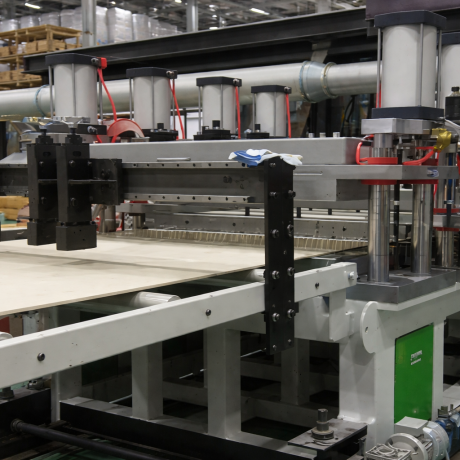
Automatic Sheet Slitting
A sheet slitting system can cut the extruded sheet
to the required width for subsequent processing.
Accurate slitting supports repeatable dimensions
and efficient material utilization.
Automatic Punching
A punching unit can produce holes or perforations
according to the selected sheet design. Hole size,
spacing and pattern should be specified according
to the intended geocell product.
Ultrasonic Welding Options
Ultrasonic welding can be used in suitable geocell
manufacturing processes to join thermoplastic sheets
at defined connection points. The welding system
must be matched to the material and joint design.
Thermal Joining Options
Thermal welding or bonding may be appropriate for
selected material and product configurations.
The joining method should be selected based on
joint strength requirements and production conditions.
Configurable Geocell Dimensions
The listed models support several geocell height
options. Final cell geometry, sheet dimensions,
connection spacing and finished panel size must
be established according to the product design.
Integrated Production Planning
Extrusion, slitting, punching, welding and inspection
can be planned as a coordinated manufacturing workflow.
The exact level of automation depends on the selected
equipment package.
Geocell Performance and Structural Benefits
Geocells provide three-dimensional confinement for suitable
infill materials. When correctly selected and installed,
the cellular structure can help distribute applied loads,
restrain lateral movement of fill and improve the stability
of selected soil and aggregate systems.
Load Distribution
The expanded cellular structure confines infill and helps
distribute loads over a wider area. This can be useful in
selected roadbed, working platform and load-support
applications, subject to engineering design.
Soil Confinement
Cell walls restrict the lateral movement of the confined
material. The effectiveness of confinement depends on
cell geometry, material properties, infill characteristics,
connections and site conditions.
Slope and Erosion Control
Geocells can be used in designed slope protection and
erosion-control systems. Their performance depends on
slope geometry, drainage, anchoring, infill and the
environmental conditions at the installation site.
Dimensional Consistency
Sheet thickness, cell height and connection spacing
influence the finished product geometry. Consistent
extrusion and downstream processing help manufacturers
maintain repeatable production parameters.
Long-Term Performance
The service life of a geocell installation depends on
polymer formulation, environmental exposure, installation
quality, loading conditions and applicable engineering
requirements. Finished products should be tested against
the relevant specifications and intended use.
Applications of HDPE Geocell Systems
Roadbed Stabilization
Geocells can be incorporated into engineered road
structures to confine aggregate and help distribute
loads under suitable design conditions.
Railway Subgrade
Selected geocell systems may be used in railway
earthworks and supporting layers where specified
by the project design.
Slope Protection
Cellular confinement systems can support selected
slope stabilization and erosion-control designs,
subject to suitable anchoring and drainage.
Embankment Reinforcement
Geocells can help confine suitable fill materials
in engineered embankment and earthwork applications.
Retaining Structures
Geocell products may be used in selected retaining
and reinforced soil systems designed by qualified
engineering professionals.
Erosion Control
Geocell systems can confine soil or aggregate on
suitable surfaces and help reduce material movement
when correctly designed and installed.
Working Platforms
Suitable geocell products can be considered for
temporary or permanent working platforms where
the engineering design requires cellular confinement.
Infrastructure Projects
Geocell products are used in selected civil
engineering projects involving soil reinforcement,
aggregate confinement and ground improvement.
Geosynthetic Manufacturing
The extrusion line provides sheet material for
manufacturers producing geocell panels for
infrastructure and ground engineering markets.
How to Select the Right Geocell Sheet Extrusion Line
Selecting a geocell extrusion line requires consideration
of both the sheet extrusion process and the downstream
manufacturing system. A higher nominal output does not
automatically mean that a particular line is the best
choice for every product.
1. Required Production Capacity
Evaluate the target production volume and the required
operating schedule. The EXL-120/1000 has a listed output
of 300–350 kg/h, the EXL-120/1400 has 400–500 kg/h,
and the EXL-150/1600 has 600–700 kg/h.
2. Sheet Thickness and Width
The listed sheet thickness range is 1.2–2 mm.
Confirm the required sheet width, thickness tolerance
and dimensional requirements for the intended product.
3. Required Geocell Height
The first two models list geocell heights of 50, 75,
100, 150, 200 and 300 mm. The EXL-150/1600 lists
75, 100, 150, 200 and 300 mm. Confirm the required
product range before selecting a model.
4. Welding and Connection Requirements
The required connection spacing, joint strength,
welding method and production speed should be
considered when planning the complete geocell
manufacturing line.
5. Automation and Factory Layout
Review material handling, sheet cooling, slitting,
punching, welding, panel handling and quality inspection.
The layout should provide safe access for operation,
maintenance and material movement.
Quality Control in Geocell Sheet Production
Quality control begins with the incoming material and
continues through extrusion, sheet preparation, joining
and final product inspection. Consistent process control
helps manufacturers produce sheets and panels that meet
the required product specifications.
- Material verification: Confirm polymer grade, formulation and incoming material quality.
- Thickness measurement: Check sheet thickness at multiple positions across the sheet and along the production run.
- Width and edge inspection: Verify sheet dimensions and inspect for defects after slitting.
- Surface inspection: Check for visible defects, contamination, bubbles and irregularities.
- Punching inspection: Verify hole position, size, spacing and edge quality where perforations are required.
- Weld inspection: Evaluate connection consistency and joint strength using suitable test methods.
- Panel dimension checks: Confirm cell height, connection spacing and expanded geometry.
- Finished product testing: Apply relevant material, mechanical and durability tests for the intended application.
Test methods and acceptance limits should be established
according to the finished geocell specification, customer
requirements and applicable standards. Equipment output
alone does not establish the performance of the finished
geosynthetic product.
Frequently Asked Questions
What is an HDPE geocell sheet extrusion line?
It is an extrusion system that processes suitable
thermoplastic materials into sheets used to manufacture
three-dimensional cellular confinement products.
The sheets are subsequently slit, punched and joined
according to the selected geocell design.
Which materials can the EXTRUTEX line process?
The supplied model specifications list PP and PE.
The exact polymer grade and formulation should be
selected according to the extrusion system and
finished geocell product requirements.
What sheet thickness can the listed models produce?
All three listed models specify a sheet thickness
range of 1.2–2 mm. Confirm the required tolerance
and operating conditions with EXTRUTEX.
What is the output capacity of the EXTRUTEX models?
The EXL-120/1000 is listed at 300–350 kg/h,
the EXL-120/1400 at 400–500 kg/h, and the
EXL-150/1600 at 600–700 kg/h. Actual output
depends on material and operating conditions.
What geocell heights are available?
The EXL-120/1000 and EXL-120/1400 list heights
of 50, 75, 100, 150, 200 and 300 mm. The
EXL-150/1600 lists 75, 100, 150, 200 and
300 mm.
Does sheet extrusion produce the finished geocell?
Sheet extrusion produces the thermoplastic sheet
used in geocell manufacturing. Slitting, punching
and joining operations are then used to form the
cellular panels. The exact equipment configuration
determines which downstream operations are integrated.
What is the specified welding distance?
The supplied specifications list a welding distance
of 340–800 for all three models. The measurement
unit and exact definition should be confirmed
with the manufacturer before finalizing the design.
Can the line be used for road construction geocells?
The line is intended to manufacture sheets for
geocell products used in applications such as
roadbed stabilization, soil confinement and
infrastructure projects. The finished product
must meet the applicable engineering and
project specifications.
Why is sheet thickness important?
Sheet thickness influences the dimensions and
mechanical characteristics of the finished
geocell. Consistency is important for downstream
processing and meeting the product specification.
Can ultrasonic welding be used for geocell production?
Ultrasonic welding is one joining method used
in suitable thermoplastic geocell manufacturing
processes. The appropriate welding method depends
on the material, sheet design, joint geometry
and production requirements.
How do I choose between the three models?
Compare the listed output capacity, sheet width
requirements, geocell heights, material formulation
and downstream processing needs. EXTRUTEX can
help evaluate the appropriate model based on
your planned product range.
Build Your Geocell Manufacturing Production Line
EXTRUTEX provides geocell sheet extrusion solutions
for manufacturers serving geosynthetics, soil
stabilization and civil infrastructure markets.
Select the appropriate model according to your
material, sheet dimensions, required output and
downstream production requirements.
Contact our team to discuss the EXL-120/1000,
EXL-120/1400 and EXL-150/1600 model specifications.
Contact EXTRUTEX
Request Technical Details
HDPE Geocell Sheet Extrusion Equipment for Geosynthetic Manufacturing
The EXTRUTEX HDPE Geocell Sheet Extrusion Line is
designed for producing thermoplastic sheets used
in the manufacture of geocell products. The listed
models process suitable PP and PE materials and
support a sheet thickness range of 1.2–2 mm.
Model-dependent output ranges extend from 300 to
700 kg/h according to the supplied specifications.
Geocells are expandable cellular confinement systems
used in selected civil engineering applications,
including roadbed stabilization, soil reinforcement,
slope protection, embankment construction and erosion
control. The manufacturing process typically includes
sheet extrusion followed by downstream slitting,
punching and welding operations.
Selecting the appropriate extrusion model requires
consideration of the required sheet dimensions,
polymer formulation, target production capacity,
geocell height and connection spacing. Downstream
processing equipment must also be matched to the
intended finished product and manufacturing workflow.
EXTRUTEX offers the EXL-120/1000, EXL-120/1400
and EXL-150/1600 model specifications for different
production requirements. Contact EXTRUTEX to discuss
your geocell manufacturing project and determine
the appropriate equipment configuration.
Related search terms:
EXTRUTEX geocell sheet extrusion line, HDPE geocell
extrusion machine, geocell sheet production line,
geocell manufacturing equipment, PP geocell sheet
extrusion, PE geocell sheet extrusion, geosynthetic
extrusion equipment, geocell production machine,
geocell sheet slitting machine, geocell punching
equipment, ultrasonic geocell welding, thermoplastic
sheet extrusion line, EXL-120/1000, EXL-120/1400,
EXL-150/1600, geocell extrusion machinery, soil
stabilization geocell production, roadbed reinforcement
geocell, geosynthetic manufacturing machinery,
HDPE geosynthetic equipment.





-
(0 customer reviews)