No products in the cart.




All rights of this website are reserved for EXTRUTEX Austria and its partner companies, © 2026

Multiple Payment Methods

Discount for advance payments over 50%

Free Shipping Coordination Services
Payment methods:


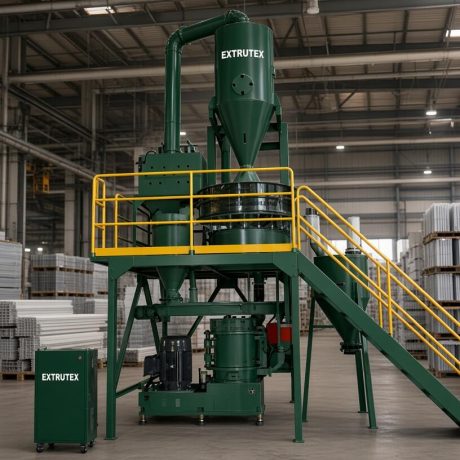
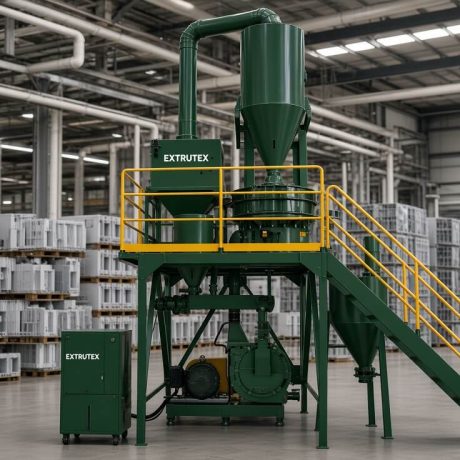
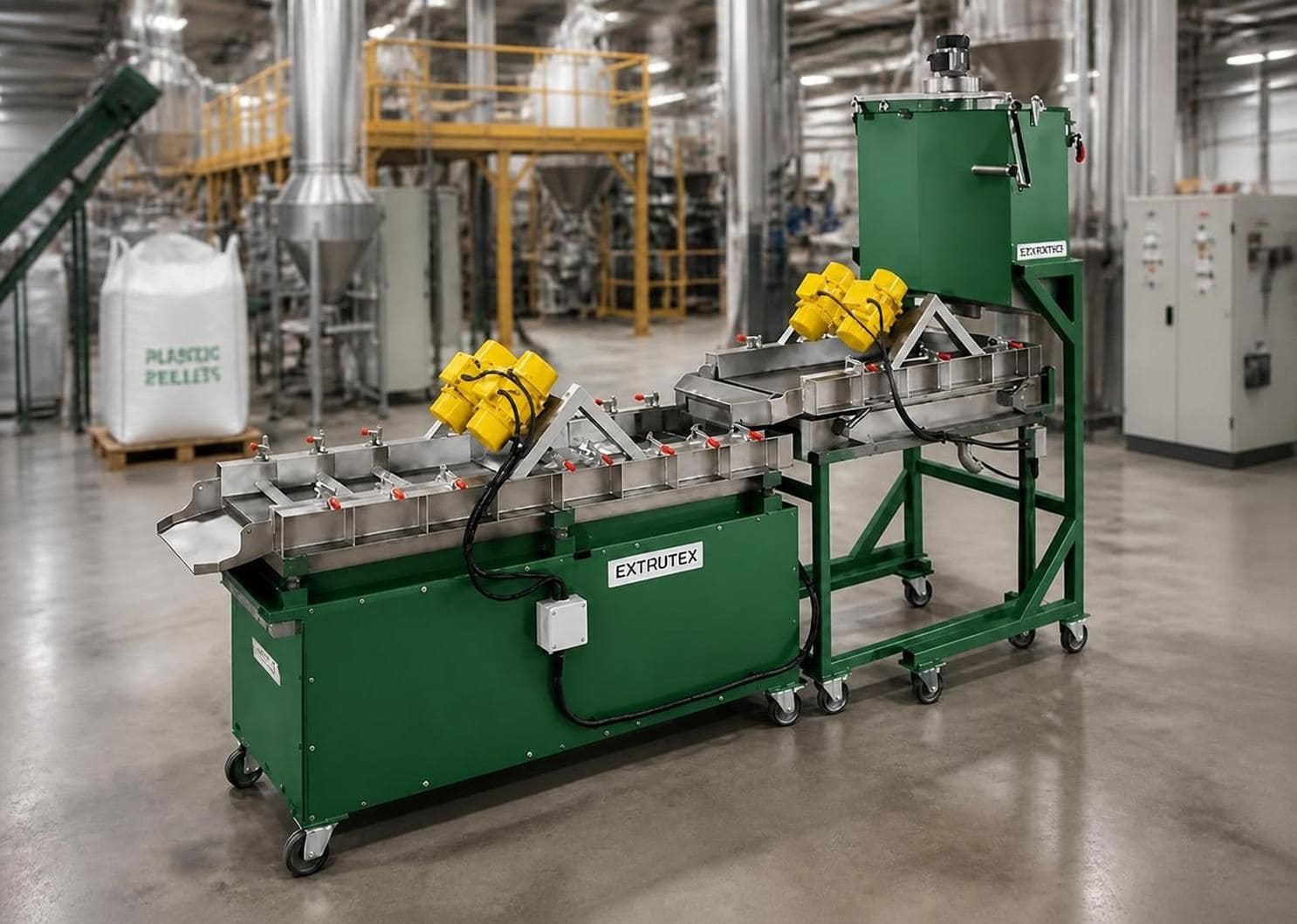
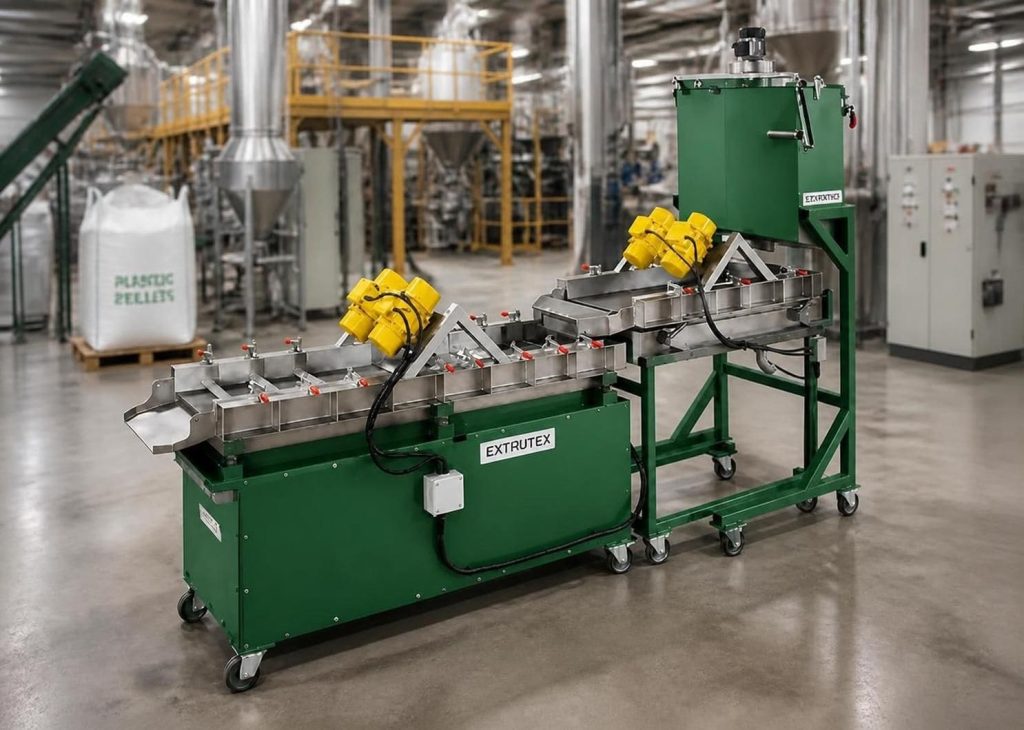
The EXTRUTEX Vibration Drying System is an industrial pellet dewatering and drying solution developed for plastic compounding, polymer processing, and extrusion production lines. It is particularly suitable for compounds containing substantial quantities of glass fibers, mineral powders, and other reinforcing or functional fillers. By combining mechanical water separation with controlled thermal drying, the system helps reduce surface moisture while protecting pellet quality during downstream handling.
In modern plastics manufacturing, drying performance affects much more than the appearance of the finished granules. Excess water can interfere with material conveying, packaging, storage, and subsequent processing. At the same time, aggressive mechanical treatment can damage fragile pellets, generate unwanted fines, and increase wear on equipment. A properly configured vibration drying system addresses these concerns through controlled material movement, efficient drainage, and carefully managed airflow.
EXTRUTEX provides drying equipment for manufacturers seeking reliable integration with compounding lines, underwater pelletizing systems, recycling processes, and other polymer production applications. The system can be configured with multiple processing stages to meet different throughput requirements and final moisture specifications. Depending on the material and operating conditions, residual moisture levels down to approximately 0.05% may be achievable.
Plastic pellets leaving a water-based pelletizing or cooling process typically carry water on their surfaces and between individual granules. This water must be removed before the pellets enter storage, packaging, or the next manufacturing operation. Materials containing glass fibers or mineral fillers can present additional challenges because their composition, density, surface characteristics, and mechanical properties differ from those of unfilled polymers.
The EXTRUTEX vibration drying system uses controlled oscillation to transport and distribute pellets across a series of screening surfaces. During this movement, water drains away through the screens, while a heated airflow supports further moisture removal. The combination of mechanical separation and thermal treatment provides a practical alternative to conventional high-speed centrifugal drying for applications that benefit from gentler pellet handling.
The number of treatment stages can be selected according to the required drying performance. A typical configuration incorporates two sequential stages, while a third stage can be added when materials require more intensive moisture reduction. The final equipment arrangement depends on the polymer type, filler loading, pellet geometry, incoming water content, production capacity, and required outlet moisture.
Glass-fiber-reinforced thermoplastics are widely used in automotive components, electrical housings, industrial products, household appliances, and engineering applications. These compounds can place demanding requirements on pellet handling because the composition and surface structure of the granules differ from those of conventional unfilled polymers.
Vibration-based drying can help reduce unnecessary mechanical impact during water removal. Appropriate equipment selection and operating conditions support the handling of reinforced pellets while limiting the formation of fines. The actual results depend on pellet formulation, geometry, and the characteristics of the production process.
Mineral fillers such as calcium carbonate, talc, and other compatible inorganic materials are used to adjust stiffness, dimensional behavior, density, cost, and other properties of polymer compounds. High filler concentrations can change pellet weight, surface characteristics, and handling behavior.
The EXTRUTEX system is suitable for drying compatible mineral-filled compounds following water-based processing. Screen selection, vibration intensity, residence time, and airflow should be matched to the specific pellet characteristics to support stable operation.
Engineering thermoplastics are processed into pellets for applications that require specific mechanical, thermal, or chemical properties. Depending on the material, the production line may require controlled moisture removal after cooling or underwater pelletizing.
For moisture-sensitive polymers, the distinction between surface-water removal and moisture absorbed within the polymer is important. A vibration drying system primarily supports dewatering and drying of the pellet stream; it does not automatically replace a dedicated desiccant dryer or another validated drying process when internal polymer moisture must be reduced.
Compounding operations combine polymers with fillers, pigments, reinforcing agents, stabilizers, and functional additives. The resulting pellets must be handled consistently to support efficient downstream processing and packaging.
Where the process uses water for pellet cooling or separation, a vibration drying system can form part of the downstream treatment section. It can be integrated into an appropriately designed production layout to maintain a continuous flow from pellet discharge through water removal and final drying.
Some polymer recycling processes generate wet granules after washing, cooling, or underwater pelletizing. The EXTRUTEX drying system can be evaluated for compatible recycling applications where the incoming material and contamination level are suitable for screen-based separation and thermal drying.
Recycled materials can vary considerably in size, shape, composition, and incoming moisture. Testing representative material is recommended before selecting the final configuration, particularly when the process contains irregular particles or significant quantities of residual contaminants.
The system combines water separation, vibrating-screen transport, and controlled heated airflow. Each stage contributes to reducing the amount of liquid carried by the pellets before they move to the next operation.
Wet pellets enter the drying section after leaving the upstream cooling or pelletizing equipment. A dedicated dewatering unit separates the bulk of the surrounding process water from the solid granules before they reach the vibrating screens.
Removing free water early in the process reduces the load on the subsequent drying stages. The dewatering section must be designed around the actual pellet size, water flow, and required throughput to maintain consistent material transfer.
The pellets are distributed across the first vibrating screen. Controlled oscillation advances the material while allowing water to pass through the screening surface. The movement helps prevent excessive accumulation in one area and supports a more uniform distribution across the available drying surface.
Screen opening size and construction must be appropriate for the pellet dimensions and material properties. Correct selection helps retain the product while allowing water to drain away efficiently.
After the main water-removal operation, the pellets continue through a drying section where warm air passes through the screen and the moving material bed. Heating supports the evaporation of remaining surface moisture, while vibration exposes different pellet surfaces to the drying environment.
Electrical heating elements and suitable airflow control can be used to establish the required drying conditions. Air temperature, air volume, residence time, and material loading should be adjusted according to the polymer's thermal characteristics and the desired outlet moisture.
For applications with tighter residual-moisture requirements, an additional treatment stage can provide more time for moisture removal. This configuration may be useful for selected hygroscopic materials or production processes where downstream operations require a particularly low level of surface moisture.
Material selection is essential. If water has diffused into the polymer itself, extended exposure to warm air on a vibrating screen may not achieve the same result as a dedicated dehumidifying drying process. The appropriate solution should therefore be determined through material testing and a clearly defined moisture measurement method.
Water separated from the pellets is collected and directed through a filtration arrangement before returning to the process-water circuit. An automatic belt-filter configuration can be used to capture suspended solids and other suitable contaminants from the water stream.
Filtering and recirculating process water can reduce water consumption and help maintain a more stable operating environment. Filtration performance depends on the type and quantity of contaminants, filter media, maintenance schedule, and water-treatment requirements of the facility.
The initial dewatering device removes a large portion of free water before the pellets enter the main drying section. Its design is selected according to the upstream process and required material flow. Effective preliminary separation helps improve the overall efficiency of the drying line.
The vibrating screens provide the material transport surface for water drainage and drying. Their mechanical movement helps spread the pellets and move them through successive treatment zones. Screen construction, vibration parameters, and available surface area influence drainage efficiency and residence time.
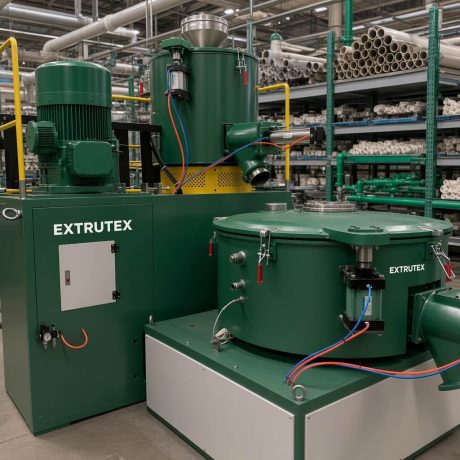
The vibration mechanism generates the controlled movement required for material transport. Suitable damping components help manage the mechanical interaction between the vibrating assembly and its supporting structure.
Correct installation and maintenance are important for minimizing unwanted vibration transmission, reducing component fatigue, and maintaining consistent operation. Drive settings must remain within the equipment's approved operating range.
The heating section raises the temperature of the drying air to support the removal of residual surface moisture. Heater capacity and temperature control must be matched to the required production rate, incoming water load, and thermal limitations of the processed material.
The airflow arrangement delivers heated air through the screen area and the pellet bed. Uniform air distribution helps prevent localized under-drying and excessive heating. Depending on the installation, the system can incorporate fans, air ducts, flow-control components, and appropriate ventilation provisions.
A belt filter or compatible filtration device removes suitable suspended solids from the separated process water. The filtration system helps protect the water circuit and supports recirculation when water quality and process requirements permit.
The electrical control system coordinates vibration, heating, and associated equipment functions. Depending on the specified configuration, operators may be able to adjust drying temperature, monitor operating conditions, and coordinate the dryer with upstream pelletizing and downstream conveying equipment.
The following table presents the main technical characteristics of the EXTRUTEX vibration drying system. Final specifications should be established according to the selected equipment configuration and the customer's production requirements.
| Technical Parameter | Specification |
|---|---|
| Equipment name | EXTRUTEX Vibration Drying System |
| Equipment category | Plastic pellet dewatering and drying equipment |
| Primary function | Mechanical water separation and thermal surface drying |
| Maximum stated throughput | Up to 3,000 kg/h |
| Typical screen configuration | Two sequential vibrating-screen stages |
| Optional screen configuration | Three stages for additional drying treatment |
| Initial dewatering | Separate pellet dewatering unit |
| Drying method | Vibration-assisted heated-air drying |
| Heating source | Electrical heating |
| Airflow arrangement | Warm air distributed through the screen and pellet bed |
| Water treatment | Automatic belt filtration can be incorporated |
| Process-water handling | Filtration and recirculation, subject to process requirements |
| Indicative residual moisture capability | Down to approximately 0.05% under suitable conditions |
| Suitable material types | Compatible filled polymers, reinforced compounds, and selected plastic pellets |
| Glass-fiber-filled compounds | Suitable subject to material and process evaluation |
| Mineral-filled compounds | Suitable subject to material and process evaluation |
| Number of drying stages | Selected according to moisture requirements |
| Temperature control | Specified according to the material and machine configuration |
| Vibration parameters | Specified according to the equipment design |
| Screen mesh and opening size | Selected according to pellet dimensions |
| Installed electrical power | To be confirmed for the selected configuration |
| Compressed-air requirement | To be confirmed if required by the selected configuration |
| Cooling-water requirement | Depends on the upstream process and installation |
| Overall dimensions | To be confirmed according to the selected model and layout |
| Automation and integration | Configurable according to the production line |
Important: The 3,000 kg/h figure is the stated upper throughput capability, not a guaranteed output for every polymer or filler formulation. The approximately 0.05% residual-moisture figure is also application-dependent. Actual results require verification against the material, inlet moisture, operating conditions, sampling method, and measurement basis.
The system transports pellets through controlled vibration rather than relying exclusively on high-speed centrifugal action. This can be advantageous for selected reinforced and highly filled compounds that benefit from reduced mechanical stress during water removal.
Unnecessary pellet breakage can create dust and fine particles that affect material handling, packaging, and product consistency. Appropriate vibration settings and screen design help limit avoidable mechanical damage. The actual amount of fines depends on pellet toughness, formulation, geometry, and operating conditions.
Separating bulk water before thermal treatment reduces the amount of moisture that must be evaporated. This staged approach supports efficient processing and helps maintain a continuous material flow.
The option to use multiple vibrating-screen stages makes it possible to tailor the drying arrangement to different process requirements. Applications with modest surface-water removal needs may use a simpler arrangement, while more demanding duties can be evaluated for additional drying capacity.
When a suitable filtration circuit is installed, separated process water can be cleaned and returned to the production system. This can help reduce fresh-water demand and improve resource utilization, subject to the plant's water-quality requirements.
The dryer can be evaluated as part of an underwater pelletizing installation or another compatible water-based pellet production process. Coordinated operation between the pelletizer, dewatering unit, vibration dryer, and downstream conveying system helps support steady production.
Different polymers and compounds respond differently to drying temperature, airflow, and residence time. A drying system should therefore be selected according to the actual material rather than relying solely on the nominal capacity of the equipment.
Reinforced and mineral-filled compounds can have different bulk densities, pellet surface properties, and mechanical responses. Screen selection and vibration settings should accommodate these characteristics while providing adequate water drainage.
Some polymers absorb moisture into their molecular structure. For these materials, surface drying and internal moisture reduction are separate tasks. A vibration drying system can remove external water, but it should not be assumed to achieve the required internal moisture specification without appropriate testing.
Moisture specifications must define how the result is measured and reported. Sample handling, test temperature, measurement equipment, and the distinction between surface water and absorbed moisture can all influence the result.
For demanding applications, EXTRUTEX recommends evaluating representative production samples and confirming the required measurement procedure before finalizing the equipment configuration.
The EXTRUTEX vibration drying system can be incorporated into a production layout where pellets require water separation and subsequent drying. A typical arrangement begins at the discharge of the pelletizing or cooling equipment and continues through initial dewatering, vibrating-screen treatment, optional additional drying, and downstream conveying.
Where process water is reused, the drainage system can be connected to suitable filtration and recirculation equipment. The complete layout should account for water flow, solids loading, drainage capacity, cleaning access, and safe maintenance access.
When integrated with a compounding or pelletizing line, the dryer should be coordinated with the upstream output rate. Excessive material feed can reduce residence time and lead to uneven drying, while insufficient feed may affect the efficiency of the equipment under certain operating conditions.
Before installation, manufacturers should review the available floor space, equipment access, structural support, electrical supply, ventilation, water drainage, and process-water connections. The installation should allow operators to inspect and clean screens, service vibration components, and access the heating and airflow assemblies safely.
Electrical supply requirements depend on the installed heater capacity, vibration drive, fans, and auxiliary components. The final power specification should be confirmed in the approved equipment documentation.
For dusty materials or compounds that generate fine particles during handling, suitable housekeeping and dust-control measures should be established. Electrical enclosures, moving parts, hot surfaces, and maintenance activities should comply with the applicable site safety requirements.
Routine inspection helps preserve drying performance and equipment reliability. Operators should regularly check the screen surfaces, vibration mechanism, support and damping components, heater assemblies, airflow passages, drainage channels, and process-water filtration equipment.
Screen blockage can reduce drainage performance and cause uneven material distribution. Cleaning intervals should reflect the processed compound, contamination level, and operating hours. Damaged screens should be replaced promptly to prevent product loss or inconsistent separation.
Heating and airflow settings should remain within the approved operating range for the polymer. Excessive temperatures can damage heat-sensitive materials, while inadequate airflow or insufficient residence time may leave too much residual moisture.
The vibration drive and associated mechanical components should be inspected according to the manufacturer's maintenance schedule. Before cleaning, inspection, or repair, equipment should be isolated from its energy sources and secured against unexpected movement or startup.
Correct equipment selection begins with the required production rate. Although the system can be designed for throughput up to 3,000 kg/h, the suitable configuration depends on the actual pellet type, bulk density, inlet water content, and required final condition.
The next consideration is the compound formulation. Glass-fiber-filled polymers, mineral-filled materials, unfilled resins, and moisture-sensitive engineering plastics can require different operating conditions. Information about pellet size, filler concentration, temperature sensitivity, and the upstream cooling process helps determine the appropriate screen design and drying arrangement.
The required outlet moisture is equally important. A specification based on surface water may be achievable using mechanical dewatering and heated-air treatment, while a requirement for low internal moisture may call for an additional dedicated polymer drying process.
Finally, the factory layout and water-handling system should be reviewed. Available space, process-water quality, filtration needs, electrical capacity, and downstream conveying arrangements all influence the final equipment design.
EXTRUTEX develops equipment solutions for plastics processing, compounding, pelletizing, and downstream material handling. Our approach focuses on matching the equipment configuration to the material and the production process.
It is used to remove water from plastic pellets through mechanical dewatering and vibration-assisted heated-air treatment. It is particularly useful for compatible filled and reinforced compounds.
The stated upper throughput capability is up to 3,000 kg/h. Actual capacity depends on the polymer, filler content, pellet characteristics, incoming water load, and required outlet moisture.
Yes, it can be evaluated for glass-fiber-reinforced compounds. The appropriate configuration depends on pellet properties and the requirements of the production process.
Yes, compatible mineral-filled compounds are among the intended application areas. Screen selection, vibration parameters, and drying conditions should be matched to the formulation.
A residual-moisture level of approximately 0.05% may be achievable under suitable operating conditions. This is not a universal guarantee for all polymers, and the measurement method and moisture basis must be agreed upon.
The system can use two sequential stages, with a third stage available for applications requiring additional moisture removal.
An automatic belt-filter arrangement can be incorporated to remove suitable suspended solids and support process-water recirculation. The final arrangement depends on the plant's water-management requirements.
Not in every application. The vibration drying system is primarily designed for water separation and surface drying. Hygroscopic polymers that require low internal moisture may need a dedicated desiccant or other suitable polymer drying system.
Whether you are processing glass-fiber-reinforced engineering plastics, mineral-filled compounds, or other compatible plastic pellets, EXTRUTEX can help evaluate a suitable vibration drying configuration for your production line.
To prepare a technical proposal, please provide your target throughput, material type, filler concentration, pellet dimensions, incoming moisture condition, required residual moisture, and details of the upstream pelletizing process.
Contact EXTRUTEX to discuss vibration drying equipment for your plastic pellet production, compounding, or recycling application.
There are no reviews yet.
By submitting your email, you agree to our company’s terms and conditions.
We are not looking to sell; we are here to provide you with the best support and service.
Contact available 24/7
Please do not contact us for advertising or sales inquiries
All rights of this website are reserved for EXTRUTEX Austria and its partner companies, © 2026
-
(0 customer reviews)