No products in the cart.



All rights of this website are reserved for EXTRUTEX Austria and its partner companies, © 2026

Multiple Payment Methods

Discount for advance payments over 50%

Free Shipping Coordination Services
Payment methods:


Two-stage compounding systems that unite high-speed intensive mixing with gentle low-shear finishing — engineered for heat-sensitive and shear-sensitive polymers.
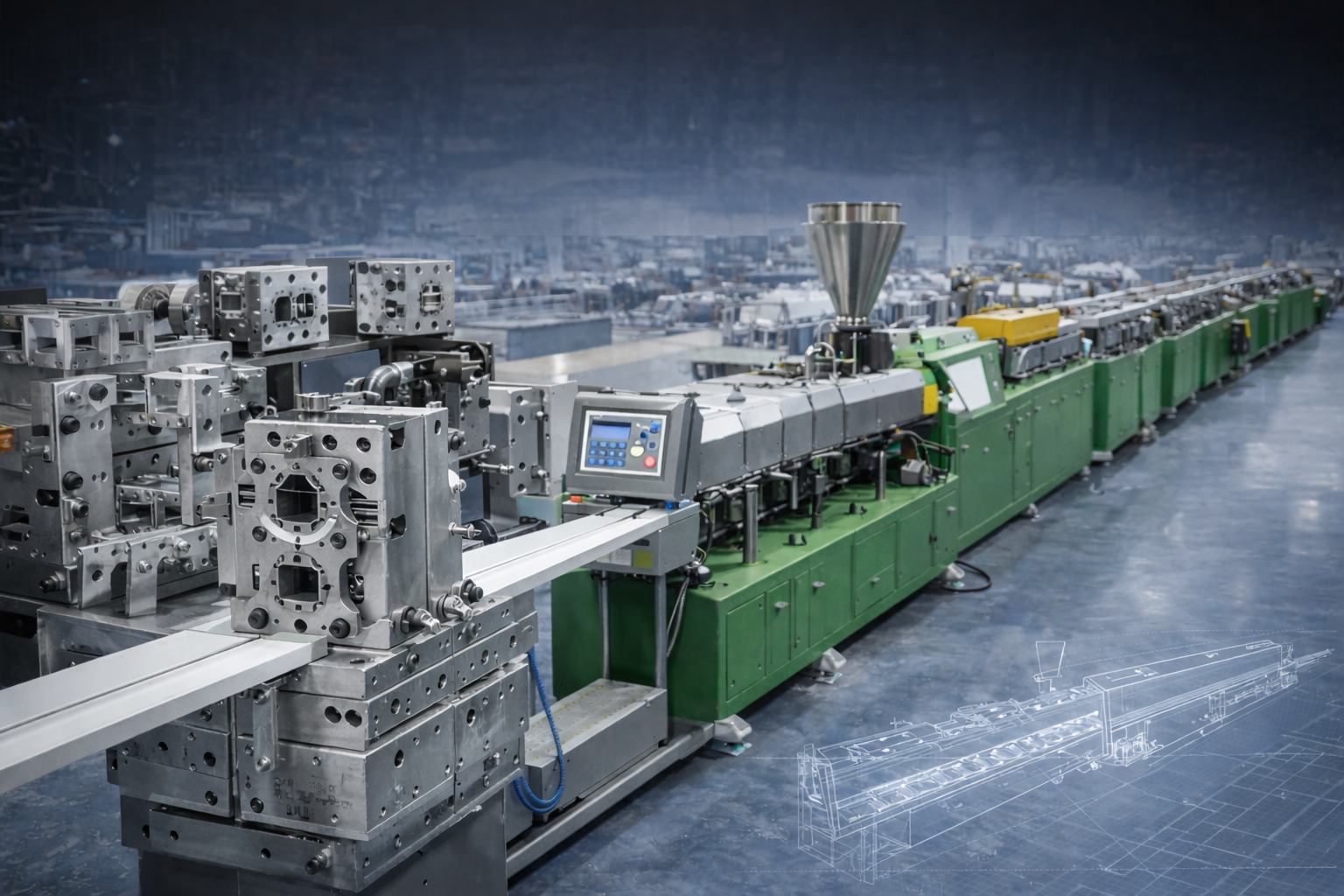
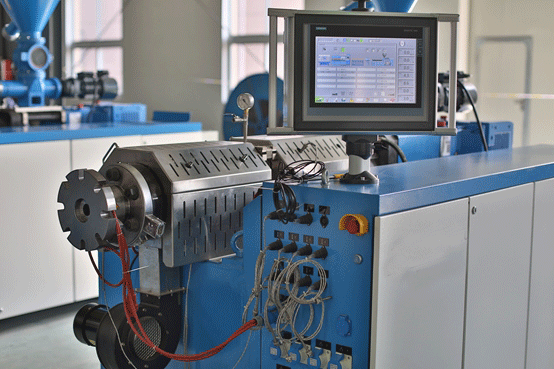
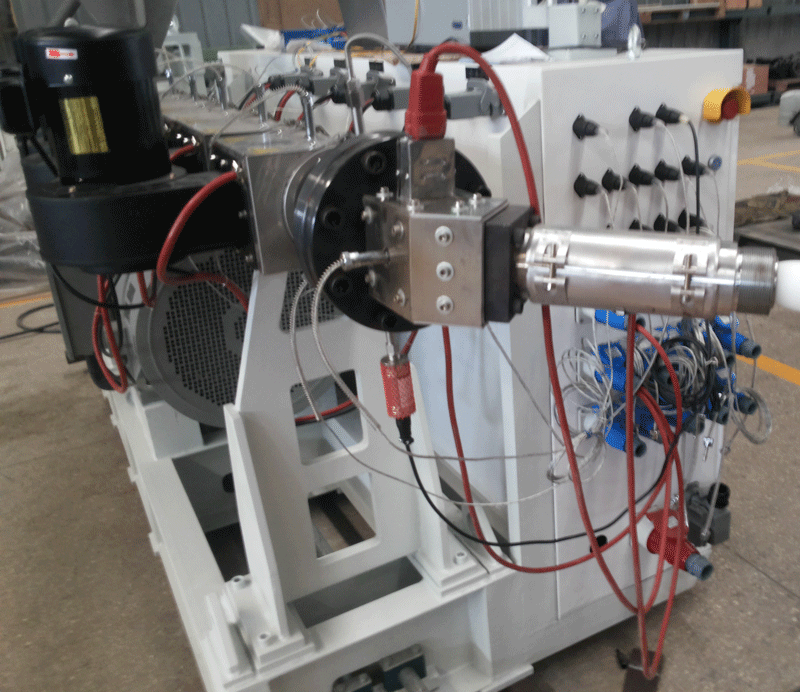
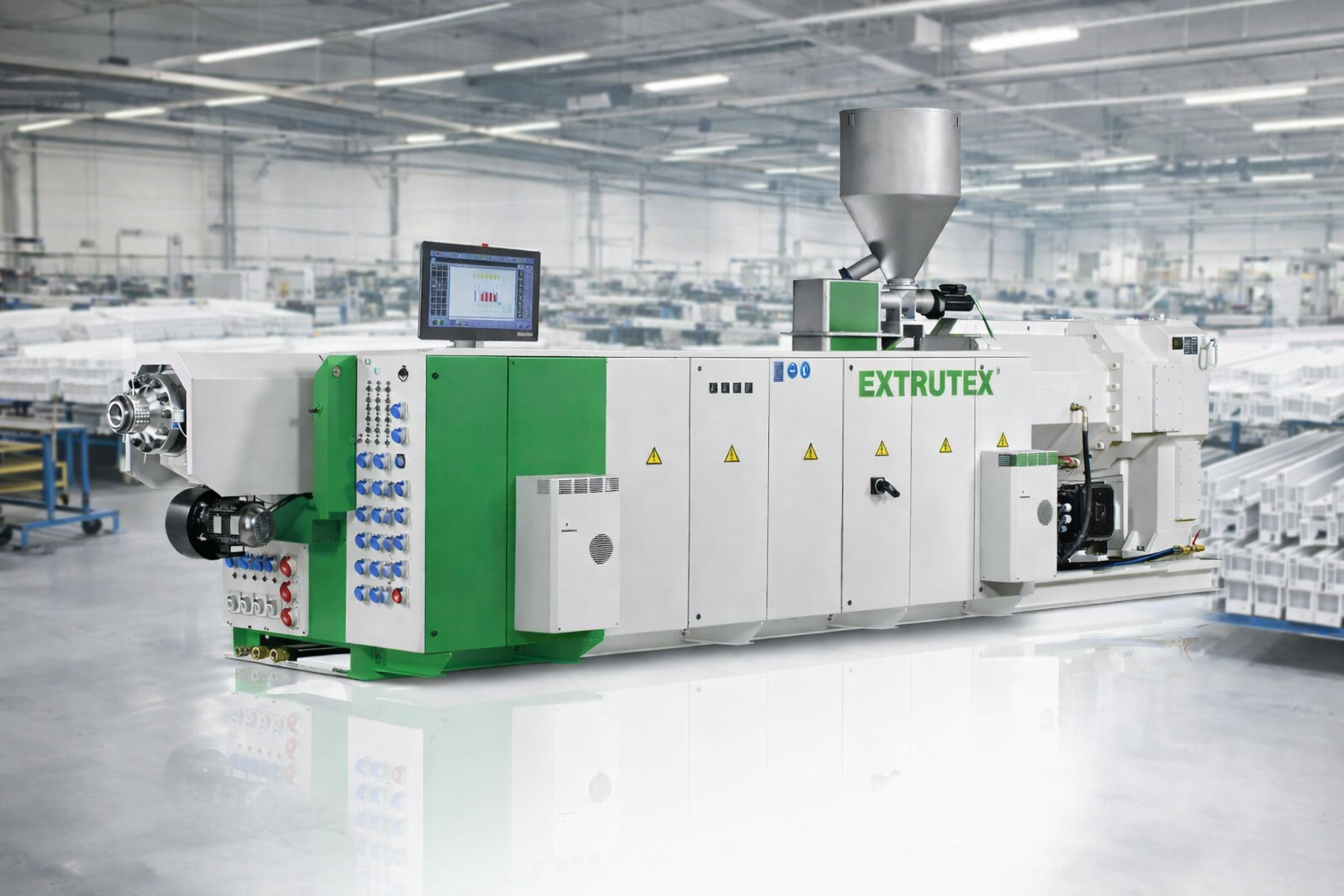
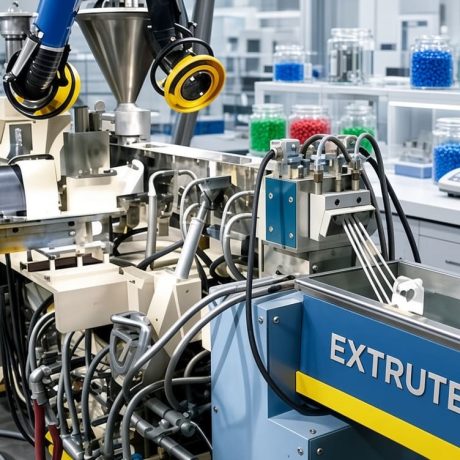
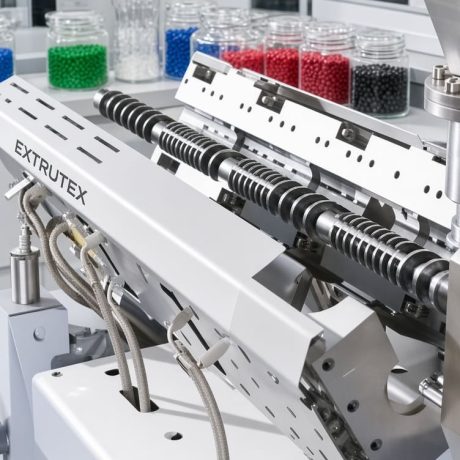
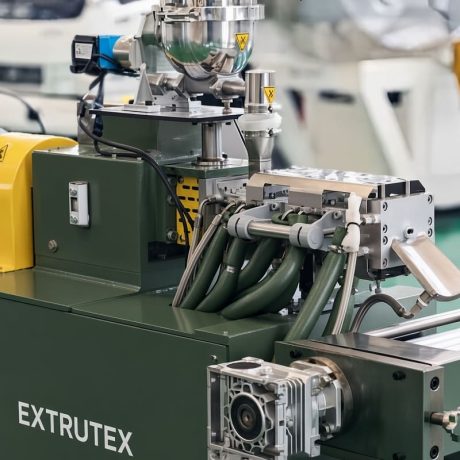
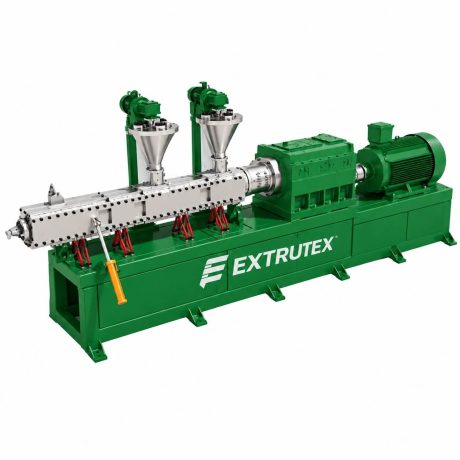
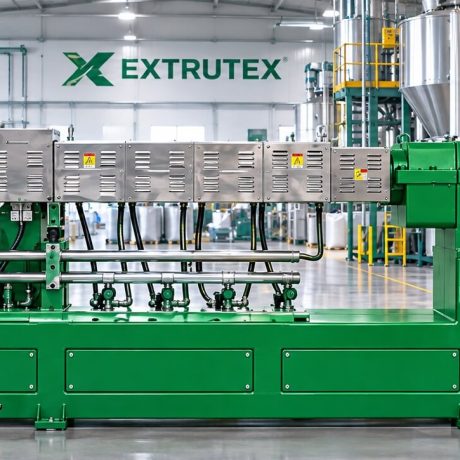
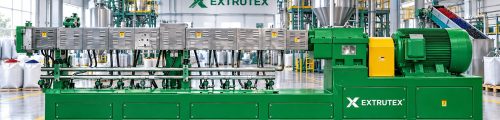
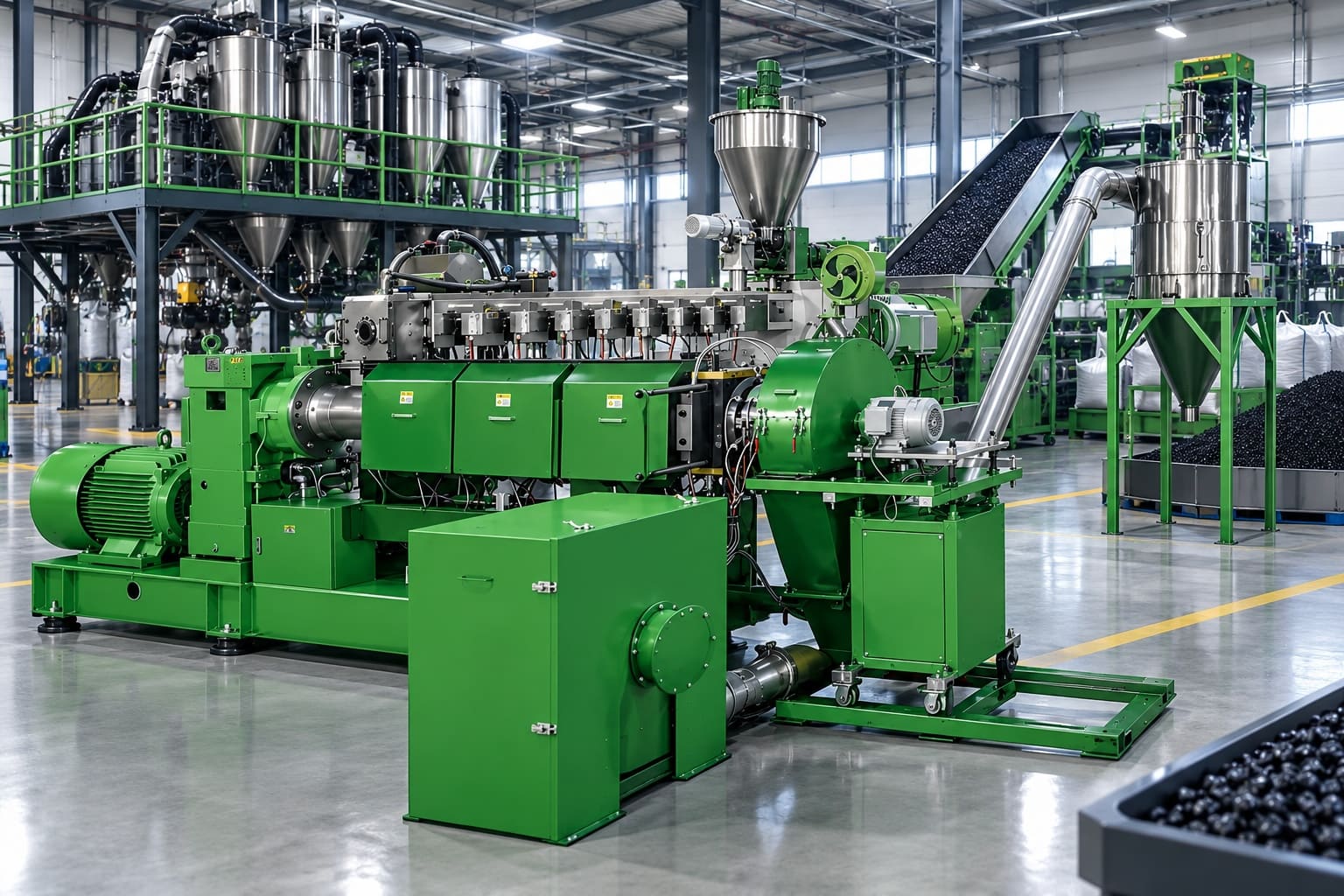
The EXTRUTEX Cascade Extruder line represents a carefully balanced two-stage processing concept developed by our Austrian engineering team and realized in our manufacturing facilities in Nanjing and Shanghai. At its core, the system pairs an EXTRUTEX co-rotating twin-screw extruder (model series EXT) with a downstream single-screw extruder (model series EXS). This combination delivers the intensive dispersive and distributive mixing that only a high-speed twin-screw unit can provide, while the second stage operates at low speed, low melt temperature and low shear to cool, degas and build pressure gently.
Many polymer compounds simply cannot tolerate prolonged exposure to high shear or elevated temperatures. PVC formulations for cable sheathing, transparent medical tubing, shoe-sole compounds, EVA shielding materials and high-loading carbon-black masterbatches all fall into this category. Conventional single-screw lines lack the mixing intensity required for uniform dispersion, while a standalone twin-screw extruder often generates more shear heat than these materials can withstand. The cascade architecture solves both problems at once.
In practical terms, the first stage (EXT co-rotating twin screw) performs feeding, melting, intensive mixing and dispersion under free-discharge conditions — meaning the melt is not forced against a die or screen pack at this point. The open discharge eliminates back-pressure that would otherwise raise melt temperature. The still-hot, well-mixed melt then drops by gravity into the feed zone of the second-stage EXS single-screw extruder. There the material is cooled, residual volatiles are removed if required, and pressure is built gradually for pelletizing or profile extrusion. The result is a product that combines excellent dispersion quality with minimal thermal and mechanical degradation.
EXTRUTEX has refined this concept over many years of application engineering. Every cascade line is configured according to the specific rheology, filler loading and thermal sensitivity of the customer’s formulation. Screw geometry, barrel temperature profiles, venting positions and downstream equipment are selected together so that the process window remains wide and stable under production conditions.
The operating principle is straightforward yet highly effective. Material enters the first stage, undergoes intensive processing, and is transferred without intermediate handling into the second stage for gentle finishing. The diagram below illustrates the sequence using only English labels and numerical stage identifiers.
Gravity transfer between Stage 1 and Stage 2 eliminates intermediate conveying equipment and reduces residence time at elevated temperature.
The decision to adopt a cascade extruder is driven by the need to protect product quality while still achieving the dispersion levels demanded by modern formulations. Below are the principal engineering advantages that customers consistently report after switching from single-stage equipment.
Heat-sensitive materials such as rigid and flexible PVC, certain EVA grades and peroxide-crosslinkable polyethylene experience rapid molecular weight reduction or premature crosslinking when held at high temperature under shear. By separating intensive mixing from pressure generation, the cascade system shortens the time the polymer spends in the high-shear environment. The second stage can be run with barrel temperatures well below those required for melting, effectively quenching the melt and freezing the desired morphology.
Carbon-black masterbatches, wood-plastic composites and highly filled cable compounds require both intensive dispersive work and subsequent gentle conveying. The twin-screw stage supplies the necessary shear peaks for agglomerate breakdown, while the single-screw stage transports the mixture without re-agglomeration or excessive frictional heat. The free-discharge design of the first stage further improves specific energy input control because the operator is not forced to balance mixing intensity against die pressure.
Because the twin-screw unit is not constrained by the pressure requirements of a pelletizing die, it can be operated at its optimum speed and fill level for mixing. Throughput is therefore limited primarily by the cooling and pressure-building capacity of the second stage, which is sized independently. In practice this often yields 20–40 % higher output than a comparably powered single-stage twin-screw line running the same formulation.
Screw configurations, venting positions and downstream equipment can be changed with relatively little downtime. Customers who begin with PVC cable compounds frequently expand into transparent medical grades or wood-plastic blends on the same cascade platform simply by exchanging screw elements and adjusting temperature profiles. The modular nature of both the EXT and EXS units makes such transitions economical.
The EXTRUTEX cascade platform has proven itself across a wide spectrum of heat- and shear-sensitive compounds. The following list highlights the most frequent industrial uses; many additional specialty applications are possible after laboratory trials.
High-loading (up to 45–50 %) carbon black dispersions in PE, EVA and other polyolefins. The intensive twin-screw mixing breaks down primary agglomerates, while the low-shear second stage prevents re-agglomeration and maintains a low final melt temperature for clean pelletizing.
Both sheathing and insulation grades benefit from the cascade approach. Plasticizer incorporation, filler dispersion and thermal stability are all improved compared with conventional single-screw or conical twin-screw lines.
Clarity and gel-free appearance demand excellent dispersion of stabilizers and the absence of thermal degradation. The short high-shear residence time of the cascade system is particularly advantageous for these optical and medical grades.
Medical-grade flexible PVC compounds require the highest level of process cleanliness and thermal control. Cascade lines with polished product-contact surfaces and validated cleaning procedures are routinely supplied for this application.
Moisture-cure and peroxide-cure polyethylene compounds are extremely sensitive to premature crosslinking. The low melt temperature delivered by the second stage keeps the crosslinking agents inactive until the final cable extrusion step.
High wood-flour loadings generate significant frictional heat. The cascade configuration allows intensive mixing of the wood and polymer matrix followed by gentle pressure build-up, reducing the risk of wood degradation and odor formation.
The table below summarizes the principal mechanical and performance data for the standard EXC cascade models. Screw diameters, speed ranges, installed power and expected output are given for both the first-stage twin-screw (EXT) and the second-stage single-screw (EXS) units. Actual throughput depends on formulation, bulk density and downstream equipment; the ranges shown reflect typical production results with common heat-sensitive compounds.
| Model | Stage | Screw Diameter (mm) | Screw Speed (rpm) | Motor Power (kW) | Typical Output (kg/h) |
|---|---|---|---|---|---|
| EXC52-120 | EXT Twin Screw | 51.4 | 400 / 600 | 55 – 110 | 200 – 400 |
| EXS Single Screw | 120 | 70 / 90 | 22 – 37 | ||
| EXC65-150 | EXT Twin Screw | 62.4 | 400 / 600 | 90 – 160 | 350 – 600 |
| EXS Single Screw | 150 | 70 / 90 | 45 – 75 | ||
| EXC75-180 | EXT Twin Screw | 71 | 400 / 600 | 132 – 250 | 700 – 1500 |
| EXS Single Screw | 180 | 70 / 90 | 75 – 110 | ||
| EXC95-250 | EXT Twin Screw | 93 | 400 / 600 | 315 – 550 | 800 – 2000 |
| EXS Single Screw | 250 | 70 / 90 | 90 – 132 |
Output figures are indicative and depend on material bulk density, filler content, residual moisture and the specific downstream configuration. Laboratory trials on our pilot cascade line are recommended for precise capacity estimation.
Beyond the basic two-stage layout, every EXTRUTEX cascade extruder incorporates a series of practical design choices that improve reliability, ease of operation and long-term cost of ownership.
Both the EXT twin-screw and EXS single-screw sections use segmented barrels and modular screw elements. This allows rapid reconfiguration when a new formulation is introduced and simplifies replacement of individual wear parts. Barrel sections are available with different liner materials (nitrided steel, bimetallic, tungsten-carbide coated) according to the abrasiveness of the compound.
Each stage is driven by its own AC motor and frequency inverter. Torque and speed can therefore be optimized independently. The twin-screw drive is typically sized for high torque at elevated speed, while the single-screw drive is selected for high torque at low speed — exactly the opposite of a conventional single-stage machine.
The open connection between the two stages is designed for unobstructed melt flow and easy visual inspection. Optional level sensors and a small intermediate hopper can be fitted when continuous operation with fluctuating feed rates is required.
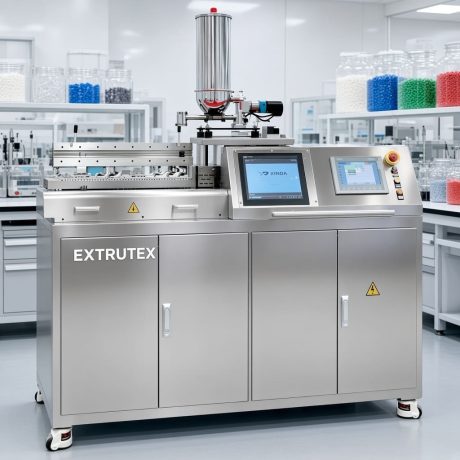
Modern EXTRUTEX lines are supplied with a PLC-based control system and a color HMI. All critical parameters — screw speeds, barrel temperatures, melt pressure, motor load and vacuum levels — are displayed and logged. Recipe management, trend recording and remote diagnostic access are standard features. During commissioning or later process optimization our engineers can connect securely to the machine from Europe or Asia to assist the local team.
Gearboxes, thrust bearings and shaft couplings are selected from proven European and Japanese suppliers. The entire line is assembled and dry-run tested in our Nanjing or Shanghai workshops before shipment, reducing the time required for installation and start-up at the customer site.
Our strength lies in the combination of Austrian process engineering experience and efficient manufacturing in Nanjing and Shanghai. The team has accumulated decades of hands-on knowledge across a wide range of polymer applications. We do not simply sell a machine; we develop a complete process solution that includes laboratory validation, screw design, downstream equipment selection and operator training. Customized features that solve specific product-quality problems are routinely incorporated. In short, we create measurable value by making the customer’s final product more competitive.
Different applications and different investment budgets require different levels of specific torque. We therefore maintain three distinct twin-screw platforms so that each customer can select the torque density that matches both the technical demand of the formulation and the economic constraints of the project. This approach avoids over-engineering for simple compounds while still providing high-torque capability when it is genuinely needed.
Every cascade extruder is covered by a 12-month warranty that begins after successful commissioning at the customer’s plant. If the start-up is delayed for reasons outside our control, the warranty period can be extended to 18 months from the date of shipment. All critical components are inspected and documented before assembly. Complete mechanical drawings, electrical schematics and process parameters are archived so that any future spare-part or service request can be handled with full technical context. Detailed operation and maintenance manuals in English accompany every machine. In addition, English-speaking service engineers are available online to guide troubleshooting or to advise on process adjustments for new products.
Lead time depends on the degree of customization and current workshop load. Standard models with common options can be completed relatively quickly because many core components are held in stock. Fully customized lines require a joint engineering review before manufacturing begins; the resulting schedule is agreed with the customer. Shipment is normally by sea freight in seaworthy wooden cases, although rail or air freight can be arranged when time is critical. All precision parts are protected with anti-corrosion oil and plastic film to ensure the machine arrives in as-new condition.
We follow a two-step process. First we ask for the basic process data: the polymer and additive recipe (or at least the main components), the target throughput, and the intended end-use of the compound. With this information we prepare an initial technical proposal. In the second step we refine the design together with the customer, adding details such as side-feeder requirements, venting needs, pelletizing method and any special material-contact surfaces. Laboratory trials on our pilot cascade line are often performed at this stage to confirm process feasibility and to generate sample material for the customer’s own evaluation.
Standard wear parts and consumables are kept in stock and can normally be dispatched by express courier within a few days. Non-standard components are manufactured on a priority basis. When a new line is ordered we also provide a recommended spare-parts list so that the customer can decide which items to keep on site.
Every machine is fully tested in our workshop and a test video is supplied before shipment. Electrical connections use industrial multi-pin plugs wherever practical, so that on-site wiring is reduced to a minimum. The control system includes remote-access capability; our engineers can log in (with the customer’s permission) to diagnose issues, adjust parameters or walk the local team through a procedure. This combination of thorough pre-shipment testing and remote support has proven especially valuable when travel restrictions apply.
EXTRUTEX is an extruder manufacturer that combines Austrian design philosophy with efficient production in two modern facilities located in Nanjing and Shanghai, China. Our engineering team focuses on the practical challenges of polymer compounding — especially the processing of heat-sensitive and highly filled materials. The cascade extruder concept is one of the clearest expressions of this focus: it delivers the mixing performance of a high-speed twin-screw extruder while protecting the polymer from unnecessary thermal and mechanical stress.
We supply complete turn-key systems that include material handling, the cascade extruder itself, pelletizing or profile dies, and downstream auxiliaries. Every project begins with a clear understanding of the customer’s product requirements and ends with a stable, documented process that can be operated confidently by the local production team. Whether the application is a standard PVC cable compound or a highly specialized medical-grade formulation, the goal remains the same: reliable production of high-quality material at the lowest total cost of ownership.
Share your formulation targets and capacity requirements with us. We will prepare a tailored cascade solution and, if needed, run confirmatory trials on our laboratory line.
Request a Technical Proposal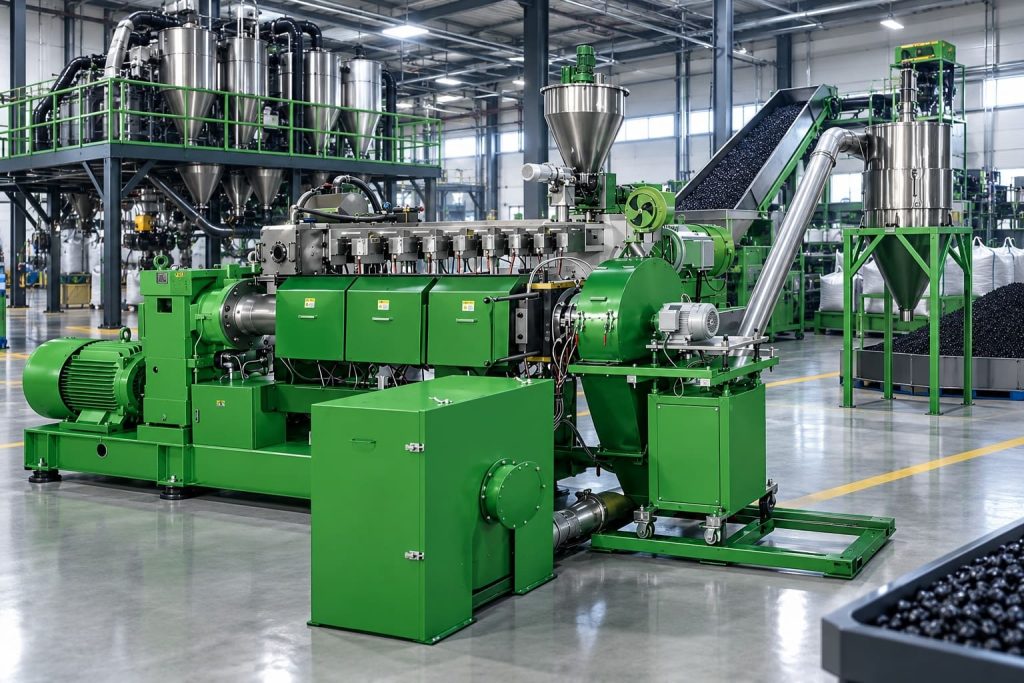
There are no reviews yet.
By submitting your email, you agree to our company’s terms and conditions.
We are not looking to sell; we are here to provide you with the best support and service.
Contact available 24/7
Please do not contact us for advertising or sales inquiries
All rights of this website are reserved for EXTRUTEX Austria and its partner companies, © 2026
-
(0 customer reviews)