No products in the cart.



All rights of this website are reserved for EXTRUTEX Austria and its partner companies, © 2026


Multiple Payment Methods

Discount for advance payments over 50%

Free Shipping Coordination Services
Payment methods:


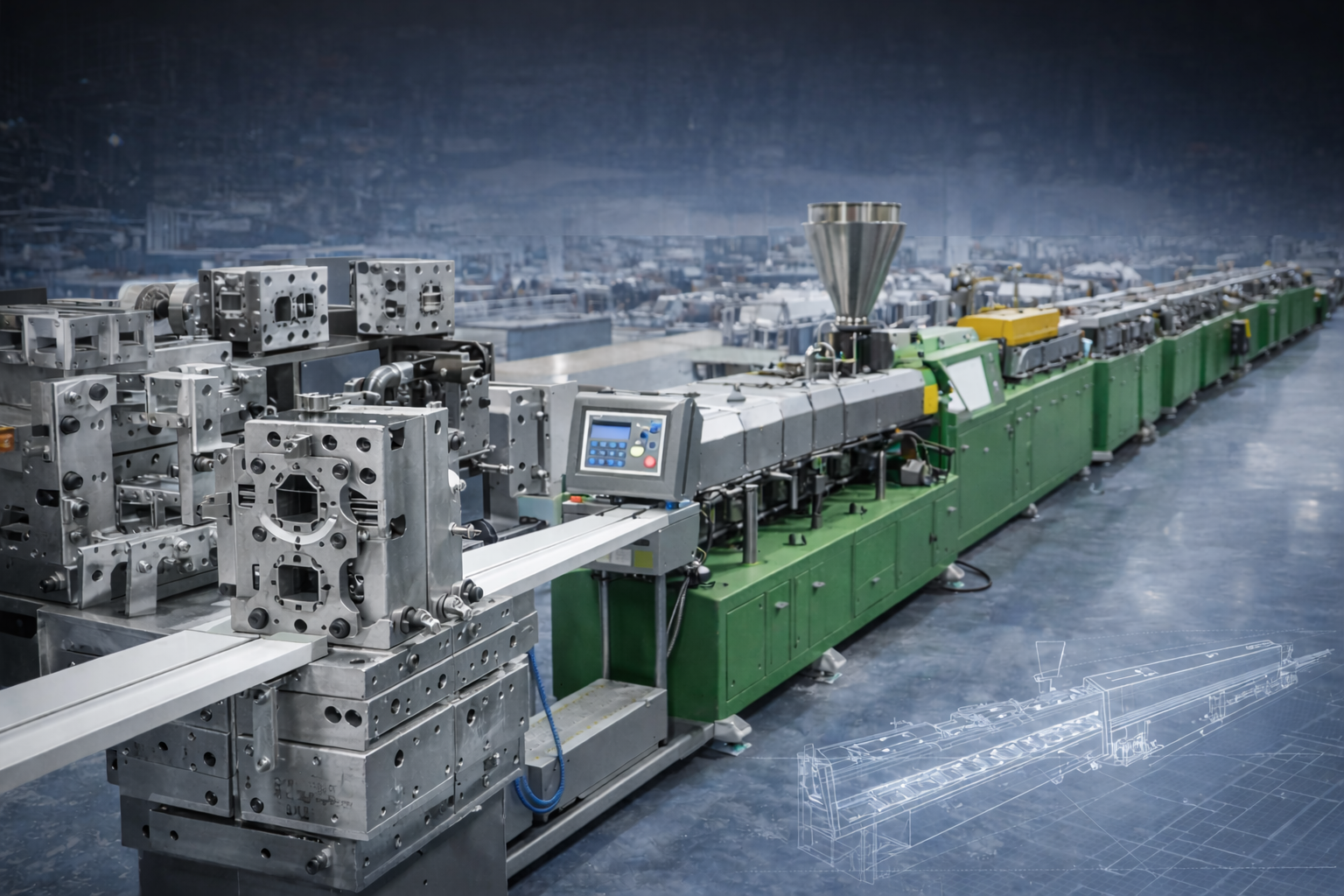
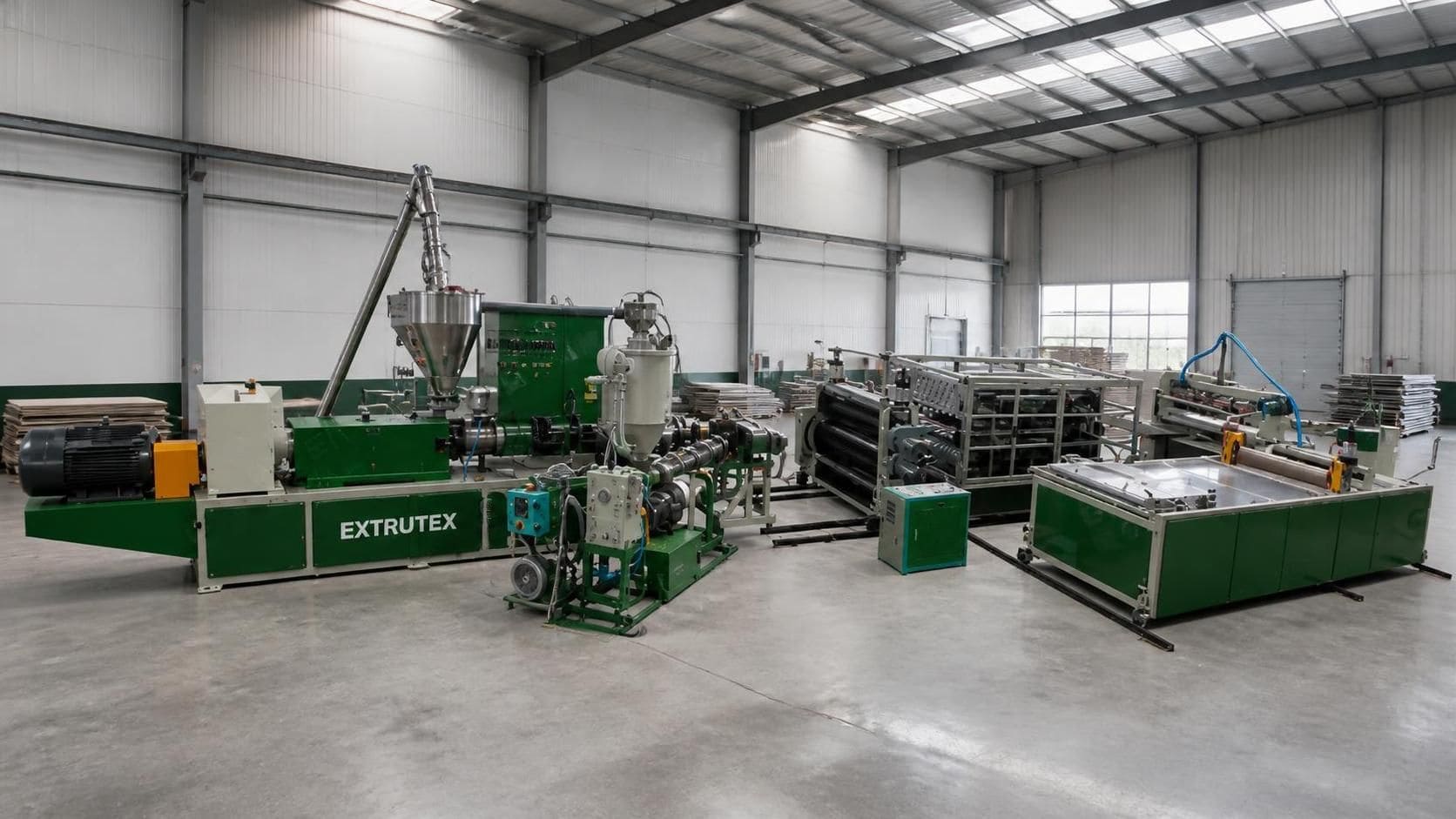
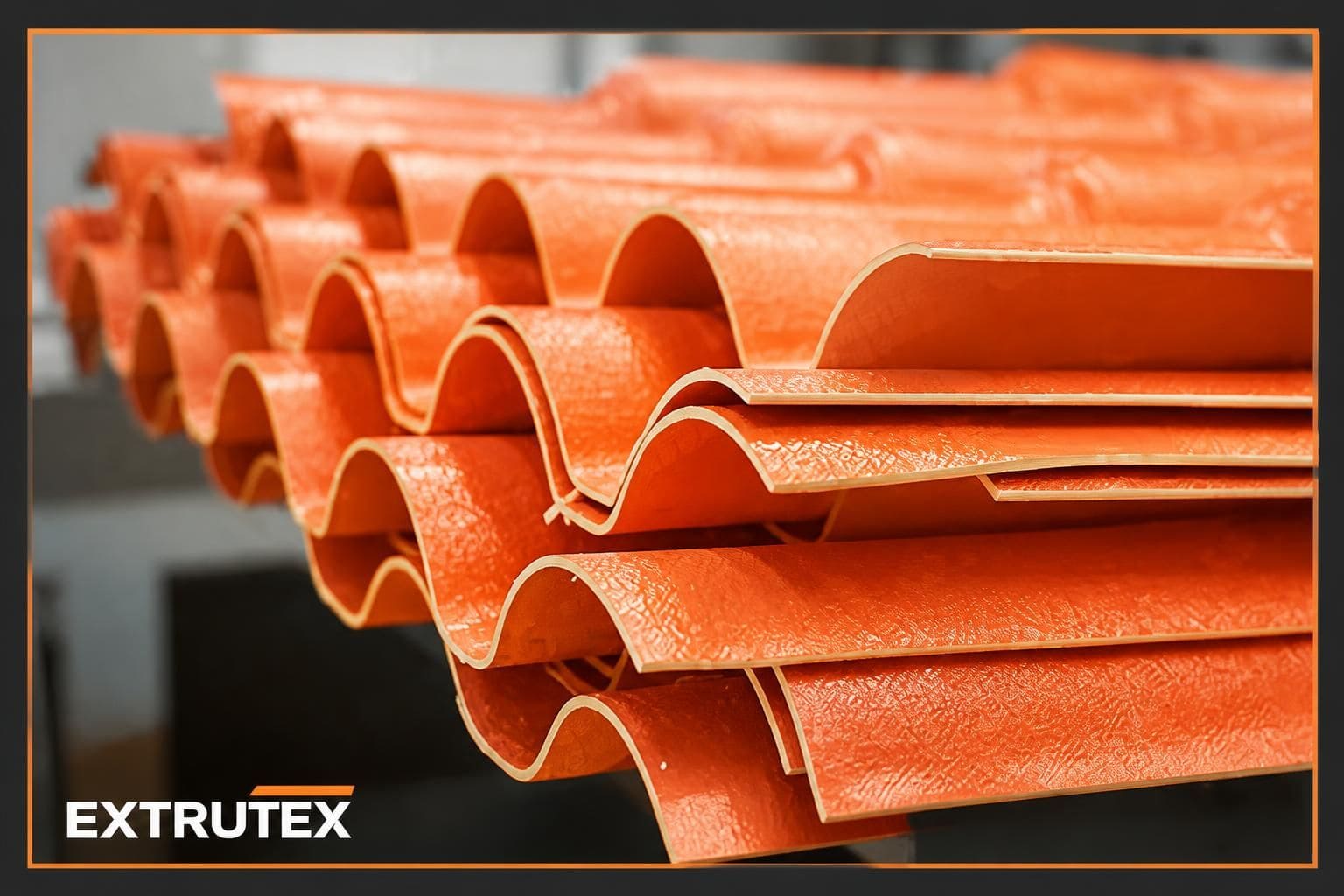
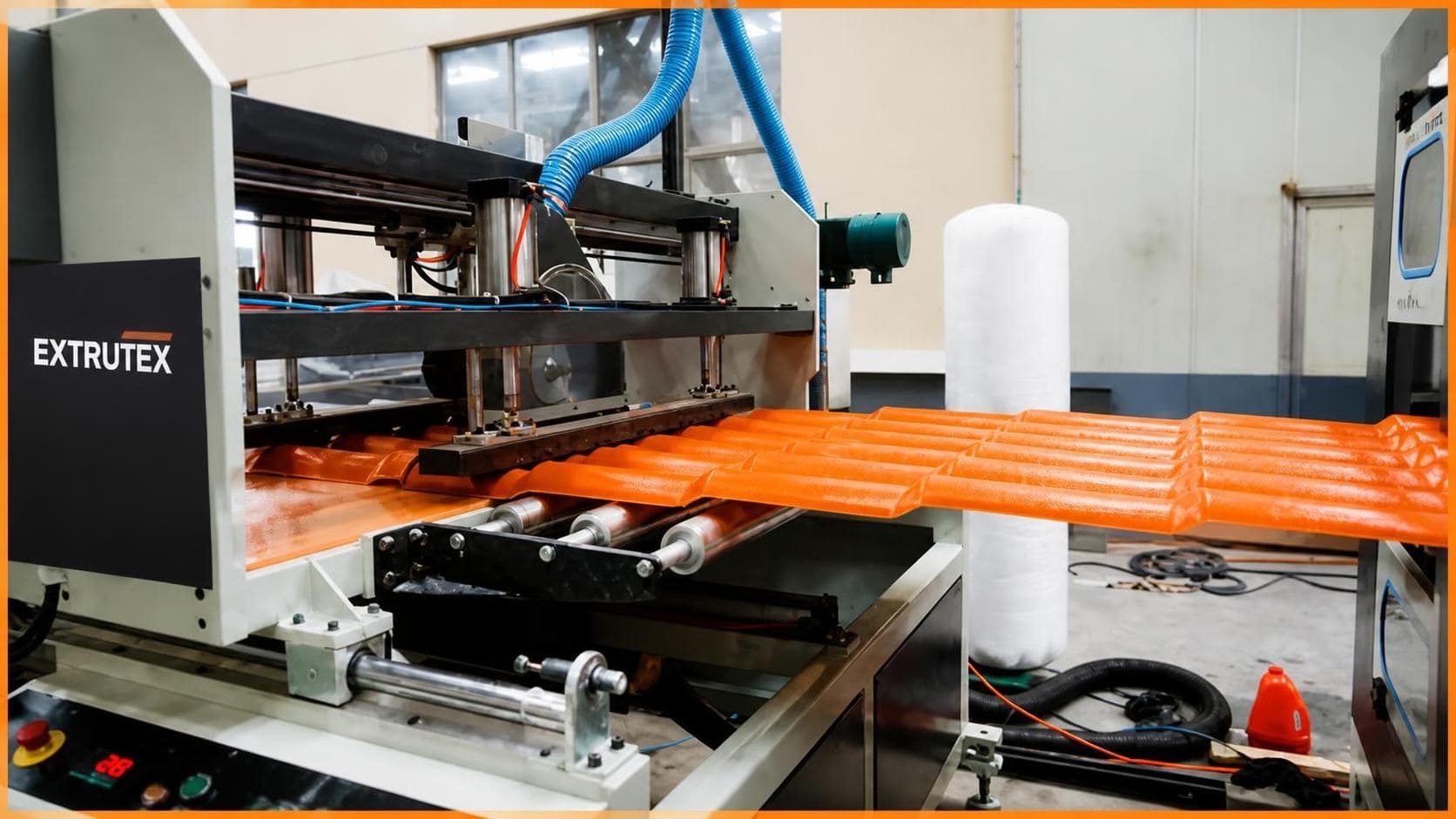
The EXTRUTEX PVC Spanish Colonial Roof Tile Production Line is an integrated extrusion and forming system designed to manufacture decorative plastic roofing tiles with a traditional Spanish or Mediterranean-style profile. The line combines PVC compounding and extrusion, profile forming, controlled cooling, automatic cutting, and product handling to support consistent production of colonial roof tiles for residential buildings, commercial properties, garden structures, and architectural projects.
Compared with conventional flat plastic roofing sheets, Spanish-style PVC colonial tiles feature a distinctive curved profile that creates a traditional roof appearance. Depending on the formulation, layer structure, surface design, and production process, finished tiles can offer a combination of weather resistance, corrosion resistance, low maintenance requirements, color stability, and resistance to moisture. Fire performance, impact resistance, UV resistance, and low-temperature performance depend on the selected formulation, additives, tile thickness, and applicable testing standards.
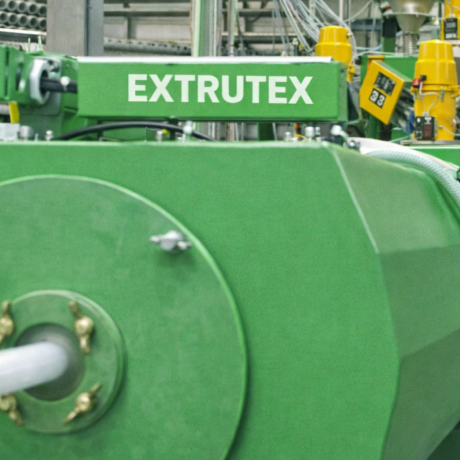
EXTRUTEX develops extrusion equipment with design, laboratory, and R&D capabilities in Austria and manufacturing in China. Each PVC colonial roof tile project can be configured according to the required tile profile, product dimensions, target output, formulation, surface finish, and factory conditions.
PVC Spanish colonial roof tiles are designed for applications where decorative appearance and practical roofing performance are both important. The characteristic curved profile can provide a traditional architectural appearance while allowing the use of lightweight polymer-based roofing products.
The finished product specification should be established before equipment configuration. Roof slope, fixing points, overlap, wind loading, support spacing, drainage, and local building regulations must be considered separately from the extrusion machine's production capacity.
The production line transforms a prepared PVC formulation into continuously extruded sheets or profiles that are shaped into Spanish colonial roof tiles. Depending on the selected configuration, the system can manufacture single-layer tiles, double-layer tiles, or three-layer tiles with a foamed inner core.
Actual line layout and the order of forming, cooling, and haul-off operations depend on the selected machine design. EXTRUTEX can review the complete process arrangement according to the tile profile and the intended production conditions.
The following table presents the reference configurations and performance ranges supplied for this equipment category. Final specifications should be confirmed during project engineering, particularly where tile width, wall thickness, layer structure, formulation, and target output interact.
| Parameter | Single-Layer Tile | Single-Layer Tile | Double-Layer Tile | Double-Layer Tile | Three-Layer Tile with Foamed Core |
|---|---|---|---|---|---|
| Extruder Configuration | EXZ80/156 | EXZ92/188 | EXZ80/156 + SJ50 | EXZ92/188 + SJ50 | EXZ51/105 + EXZ65/132 + EXZ51/105 |
| Layer Structure | Single layer | Single layer | Double layer | Double layer | Three layers, foamed inner core |
| Reference Tile Width | 710–1220 mm | 710–1220 mm | 710–1220 mm | 710–1220 mm | 710–1220 mm |
| Reference Tile Thickness | 0.8–3.0 mm | 0.8–3.0 mm | 2.5–3.0 mm | 2.5–3.0 mm | 2.5–3.0 mm |
| Reference Extrusion Capacity | 450–550 kg/h | 600–700 kg/h | 450–550 kg/h | 600–700 kg/h | 400–500 kg/h |
Important technical note: These capacities are reference values, not guaranteed production rates. Actual output depends on the PVC formulation, screw and barrel design, product thickness, tile profile, layer structure, foaming process, die configuration, forming speed, cooling conditions, and downstream limitations. The reference thickness ranges should also be confirmed against the selected colonial tile geometry and final product specification.
The designation SJ50 is retained for the auxiliary extruder because a replacement EXTRUTEX model designation was not provided. The final equipment list can be standardized after the selected auxiliary extruder configuration is confirmed.
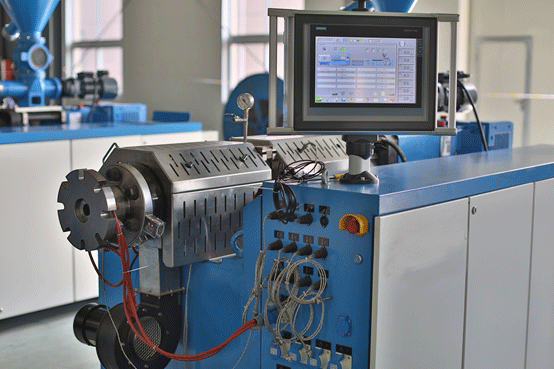
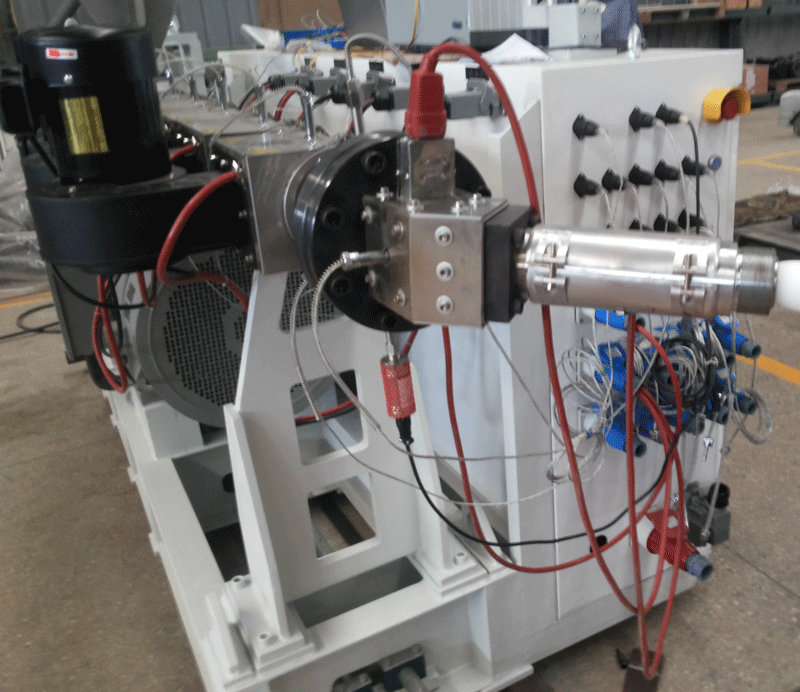
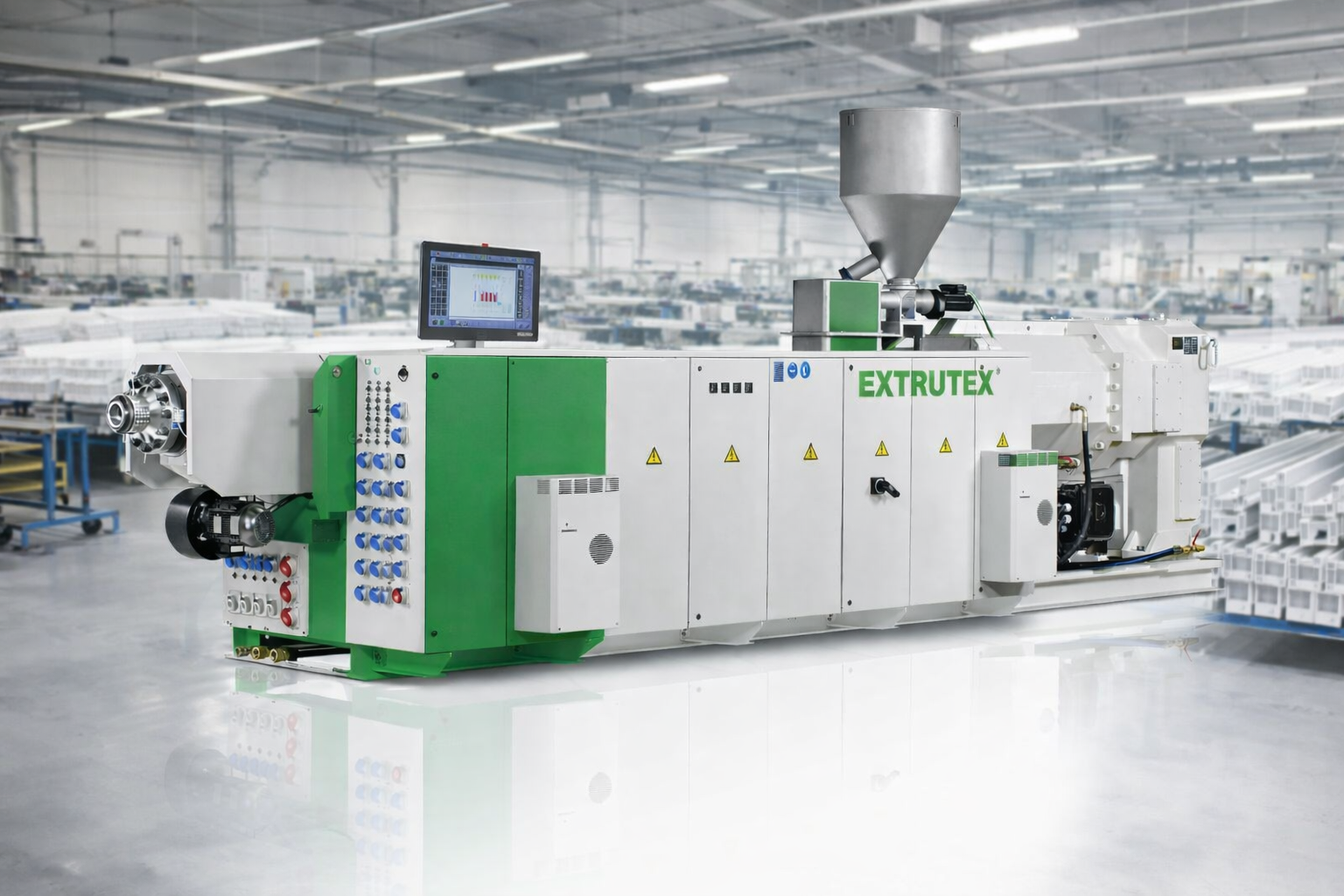
The single-layer configuration is intended for manufacturers producing PVC colonial tiles from a single primary material formulation. The extrusion system uses a conical twin-screw extruder to process the PVC compound and deliver the melt to the die and forming equipment.
This configuration can be considered for projects where the tile's color, surface appearance, thickness, stiffness, and performance can be achieved through one formulation. It may also simplify material handling and production control compared with a multilayer system.
Final material selection should balance processability, impact performance, stiffness, surface quality, weather resistance, and cost. A formulation developed for one tile design may not be suitable for another design without process or recipe adjustments.
The double-layer configuration combines a primary PVC extrusion system with an auxiliary extruder. It is intended for projects requiring two distinct material layers or a differentiated surface and base structure.
Depending on the approved product design, the layers may be used to create different colors, surface appearances, or material functions. Any two-layer arrangement must be designed around material compatibility, melt temperature, rheology, bonding behavior, and the requirements of the forming process.
Layer thickness, material distribution, and bonding quality should be evaluated during commissioning. The auxiliary extruder, melt channel, die design, and temperature-control system must be matched to the selected materials. A double-layer configuration should not be assumed to produce an ASA or PMMA weatherable cap layer unless that material and its processing arrangement are specifically engineered for the project.
The three-layer configuration is designed for a multilayer tile structure with a foamed inner core. The reference arrangement uses three extrusion streams, with the inner layer formulated for foaming and the outer layers selected to provide the required surface and structural characteristics.
Foamed-core products can offer a different balance of weight, material consumption, stiffness, and thermal behavior compared with solid-wall tiles. These results depend on the formulation, foam structure, cell distribution, skin thickness, tile geometry, and process stability. A foamed product is not automatically stronger or more durable than a solid product; the final performance must be established through product testing.
Foaming conditions must be developed for the specific compound and machine configuration. Temperature, pressure, screw speed, output, and cooling conditions can affect cell structure, surface appearance, density, and dimensional consistency.
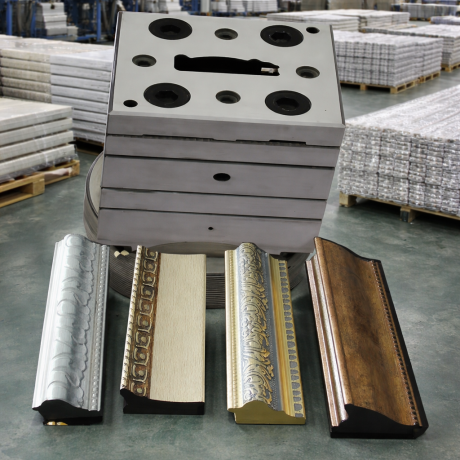
The extrusion die is a critical component of the PVC colonial roof tile production line. It distributes the molten compound across the required width and establishes the initial geometry before the forming stage. For multilayer systems, the die and distributor must also manage the intended layer arrangement and material flow.
EXTRUTEX die engineering can be based on the target tile profile, width, thickness, layer structure, PVC formulation, and downstream forming method.
Optimized flow channels and suitable temperature management can help reduce the risk of localized overheating and material degradation. However, preventing PVC degradation also requires proper formulation, controlled operating conditions, appropriate shutdown procedures, and regular maintenance.
One of the most important elements of a colonial roof tile project is the finished profile. The profile determines the visual appearance of the roof and affects material distribution, forming requirements, stacking, installation, and the way tiles overlap.
EXTRUTEX can evaluate customized tile geometries according to the customer's product drawings, physical samples, dimensional requirements, and target market. Customization can help manufacturers develop a recognizable product range rather than relying entirely on standardized shapes.
Profile customization should be supported by a complete dimensional drawing. The effective roof coverage width may be smaller than the physical tile width because of overlaps. These dimensions should be specified separately to avoid confusion during product development.
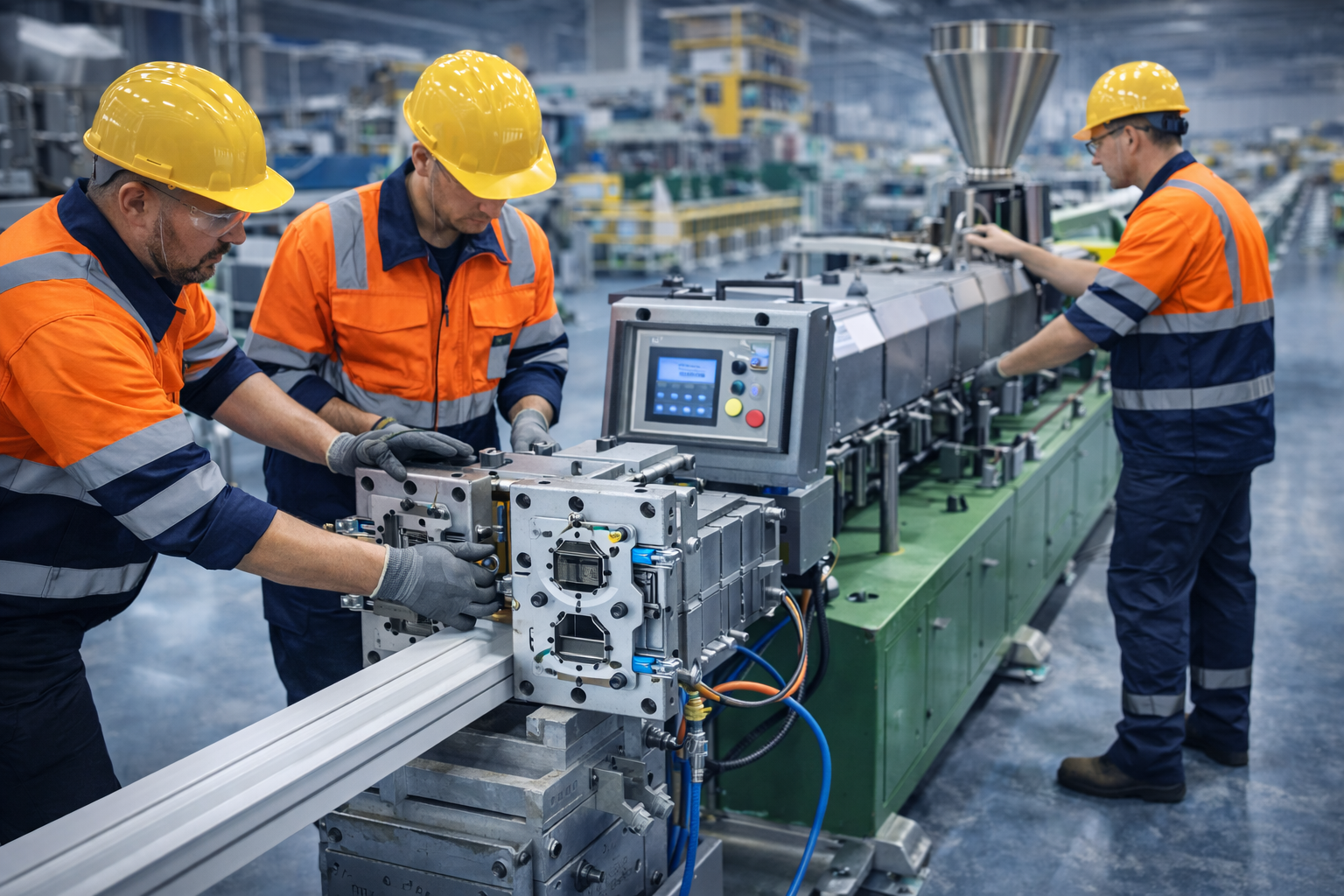
The forming mould shapes the extruded material into the intended Spanish colonial profile. The reference equipment concept uses a forming mould manufactured from cast aluminum and finished through machining and polishing. The final mould structure and cooling arrangement depend on the product geometry and machine design.
Suitable mould design and finishing can support surface quality and profile consistency. The forming system must be engineered together with the die, material formulation, cooling arrangement, and production speed.
An air curtain or directed-air cooling arrangement may be included where suitable for the equipment design. Its function and effectiveness should be evaluated against the actual profile, temperature, and line speed. It does not replace the need for an appropriately designed cooling system.
A complete Spanish colonial roofing product range may require both the main tile and matching ridge components. These products often have different geometries and forming requirements, so their tooling and production arrangements must be evaluated individually.
The main tile forming system establishes the repeated curved profile along the tile width. It must support the intended dimensions while accommodating the material's temperature and forming behavior. The forming equipment should be designed for the selected tile profile rather than assumed to be universal across all colonial designs.
Ridge tiles are used to finish roof ridges and, depending on the roof design, hips or other junctions. Their dimensions and connection geometry should match the main tile system and intended installation method. Dedicated ridge tile tooling or a separate forming arrangement may be required.
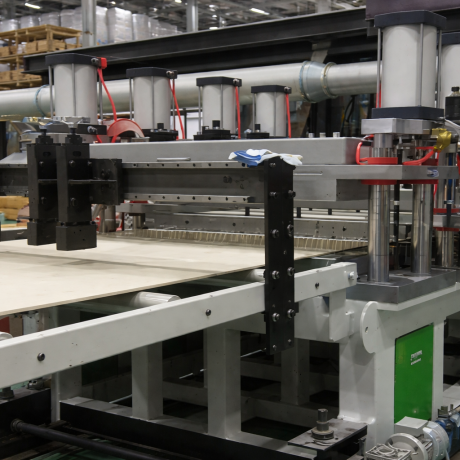
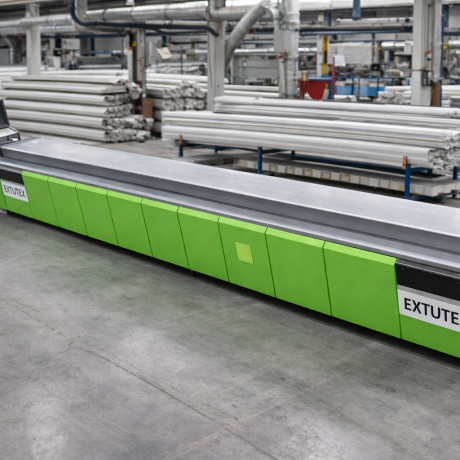
The haul-off system pulls the formed tile through the downstream equipment at a controlled speed. Stable haul-off is important because fluctuations in pulling force or line speed can affect dimensions, forming stability, and cutting accuracy.
The haul-off arrangement should be selected according to the tile width, profile geometry, material stiffness, production speed, and contact surfaces. The pulling mechanism must provide adequate traction without causing unacceptable marking or deformation.
The cutting system separates the continuous tile profile into the required product lengths. A track cutter can be configured to travel with the moving product during the cutting cycle, depending on the line design. The cutting method must be matched to the tile thickness, profile geometry, material behavior, and target cutting accuracy.
The reference concept includes a blade-sinking arrangement and an enclosed chip-collection chamber. These features can help contain cutting debris and reduce the spread of PVC particles around the production area when correctly designed and maintained.
Dust and chip collection should be designed for the actual cutting process and local workplace requirements. Enclosures do not eliminate the need for suitable guarding, operator training, cleaning procedures, and appropriate ventilation where required.
After cutting, the finished tiles can be transferred to a stacking or collection system. Handling equipment should support the curved profile without creating scratches, cracks, excessive bending, or permanent deformation.
The appropriate stacking solution depends on tile length, weight, stiffness, production speed, packaging method, and available factory space. Manual collection may be suitable for some production arrangements, while automated handling can be considered for higher-throughput operations.
PVC colonial roof tile performance depends on the relationship between the material formulation and the production process. EXTRUTEX can provide process-oriented formulation guidance and raw material selection support as part of a project, subject to the customer's requirements and the agreed scope of technical service.
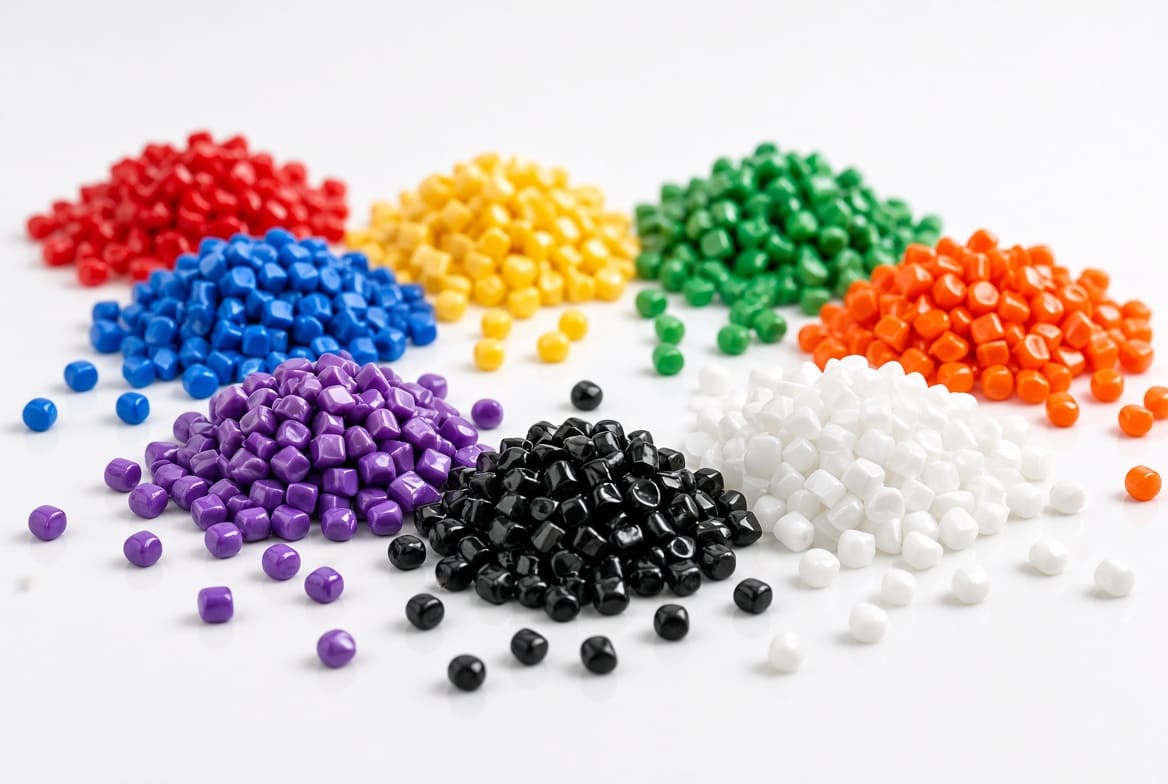
A typical rigid PVC compound may contain PVC resin, heat stabilizers, processing aids, impact modifiers, lubricants, pigments, fillers, and other additives. The exact formulation depends on the intended tile design, local material availability, performance requirements, and production economics.
Material substitutions should not be made solely on the basis of purchase price. Changes in resin grade, stabilizer type, filler content, lubricant balance, or impact modifier can affect fusion, melt strength, forming behavior, surface quality, and finished-tile performance.
Consistent production requires coordinated control of extrusion, forming, cooling, haul-off, and cutting. A stable machine setup helps reduce variations in tile thickness, width, profile, surface appearance, and cut length.
Quality acceptance criteria should be defined before commissioning. Any statements concerning fire resistance, weathering life, color retention, or other performance characteristics should be supported by suitable testing of the actual finished product.
The economics of PVC colonial roof tile production depend on more than the extruder's nominal capacity. Material consumption, product thickness, formulation, scrap rate, energy use, labor, tooling, maintenance, and downstream handling all influence the cost per finished tile.
EXTRUTEX can help evaluate the production configuration against the customer's target output and product requirements. The objective is to select a practical line arrangement that balances output, quality, operating stability, and manufacturing cost.
Any cost comparison should use the same product dimensions, formulation assumptions, quality requirements, and production conditions. A nominally higher-output machine does not necessarily provide the lowest cost per accepted tile if downstream equipment or product quality becomes the limiting factor.
Installation planning should cover the complete production line, not only the main extruder. Factory layout, material storage, electrical supply, ventilation, cooling utilities, lifting access, finished-product handling, and maintenance space should be reviewed before equipment installation.
Commissioning should include mechanical inspection, electrical checks, heating-system verification, control-system checks, trial extrusion, forming adjustments, cutting synchronization, and evaluation of the finished tiles. Final acceptance criteria and responsibilities should be agreed upon in the project contract.
EXTRUTEX PVC Spanish colonial roof tile lines can be configured around the product specification and factory requirements. Customization should be defined through technical documentation rather than relying only on a general machine description.
To prepare a suitable equipment configuration, customers should provide as much of the following information as possible:
These details allow the extrusion system, die, forming mould, cooling arrangement, haul-off, cutter, and handling equipment to be considered as one coordinated production line.
EXTRUTEX focuses on extrusion and downstream equipment for polymer processing applications. For PVC Spanish colonial roof tile projects, the production line is engineered around the intended product structure, profile geometry, material requirements, and factory operating conditions.
It is an extrusion and forming system designed to manufacture PVC roofing tiles with a curved Spanish or colonial-style profile. A complete line typically includes extrusion, a die, forming equipment, cooling, haul-off, cutting, and product collection.
The supplied reference configurations list tile widths from 710 to 1220 mm. The actual usable width and profile dimensions depend on the selected die, forming mould, and tile design and should be confirmed during engineering.
The reference data lists 0.8–3.0 mm for single-layer tiles and 2.5–3.0 mm for the listed multilayer configurations. The feasible range for a particular colonial profile must be verified against the product design, material formulation, and machine configuration.
Ridge tile production can be included in the project scope. Because ridge components may require different geometry and forming conditions from the main tiles, the required tooling and production arrangement should be specified separately.
Yes. The reference configurations include double-layer and three-layer arrangements. The appropriate extruders, die, and process conditions depend on the selected layer structure and material compatibility.
A three-layer foamed-core configuration is included in the reference table. The foam formulation, equipment settings, die, and cooling conditions must be developed and validated for the target tile design.
These properties depend on the formulation, pigments, additives, product construction, and testing method. Any fire classification, weathering performance, or color-retention claim should be confirmed through appropriate tests on the finished tile.
Yes. EXTRUTEX can evaluate customized profiles using technical drawings, dimensions, or physical samples. The die and forming mould must be designed for the approved profile.
Contact EXTRUTEX with your target tile profile, width, thickness, layer structure, required capacity, material information, and destination market. Our team can review the application and recommend a suitable extrusion and downstream configuration for your PVC Spanish colonial roof tile project.
EXTRUTEX — Extrusion and Downstream Equipment for PVC Roofing Products.
There are no reviews yet.
By submitting your email, you agree to our company’s terms and conditions.
We are not looking to sell; we are here to provide you with the best support and service.
Contact available 24/7
Please do not contact us for advertising or sales inquiries
All rights of this website are reserved for EXTRUTEX Austria and its partner companies, © 2026
-
(0 customer reviews)