EXTRUTEX MABS and Transparent ABS Resin Pellets
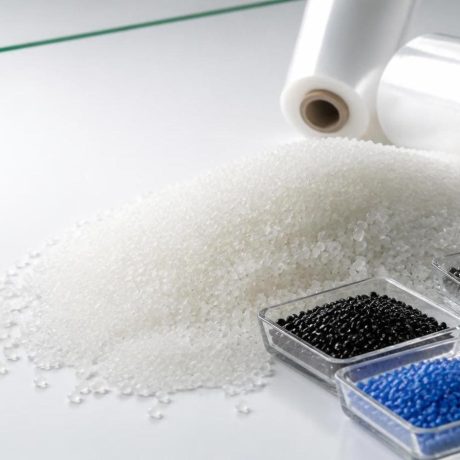
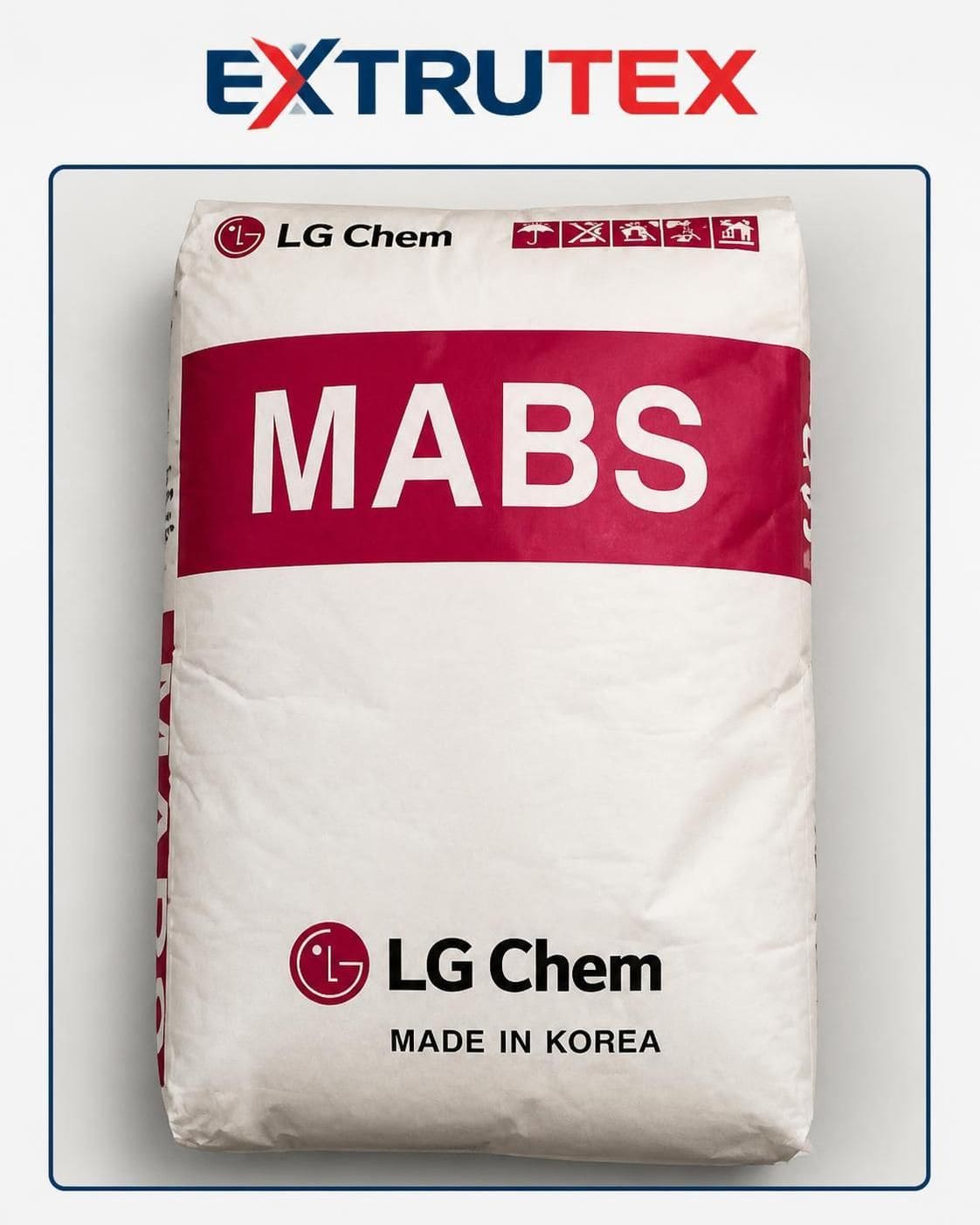
EXTRUTEX supports the sourcing and supply of MABS (methyl methacrylate acrylonitrile butadiene styrene) and transparent ABS resin pellets for injection molding and other suitable thermoplastic processing applications. We help customers compare polymer grades according to transparency, impact performance, melt flow, chemical resistance, processing requirements, and intended end use.
Whether you are developing transparent appliance housings, cosmetic packaging, consumer electronics components, protective covers, or other clear plastic products, selecting the right resin grade is essential for achieving the required optical appearance and mechanical performance.
MABS is a transparent or translucent engineering thermoplastic that combines characteristics associated with styrenic polymers and modified acrylic chemistry. Depending on its formulation and grade, it can provide an attractive balance of optical clarity, toughness, stiffness, surface quality, chemical resistance, and processing convenience.
The term transparent ABS is also widely used commercially. However, transparent ABS and MABS are not necessarily interchangeable descriptions for every grade. The exact polymer family, formulation, and properties should always be confirmed using the manufacturer's technical data sheet.
1. What Is MABS Plastic?
MABS stands for methyl methacrylate acrylonitrile butadiene styrene. It belongs to a family of modified styrenic thermoplastics developed to provide transparency while retaining useful mechanical properties. Depending on the formulation, MABS can offer a combination of light transmission, impact resistance, rigidity, chemical resistance, and good molded surface appearance.
Conventional ABS is widely used in engineering plastics because it provides a useful balance of strength, impact resistance, dimensional stability, and processability. Standard ABS is generally opaque because its multiphase morphology scatters visible light. MABS formulations are designed to reduce light scattering while preserving useful mechanical characteristics.
The optical behavior of MABS depends on the polymer composition, the structure and size of dispersed phases, the refractive-index relationship between those phases, additives, colorants, and processing conditions. Consequently, transparency is a property of the complete formulation and molded component rather than simply the result of adding one ingredient.
Typical Characteristics of MABS
- Transparency: Suitable grades can provide clear or translucent molded components with an attractive surface appearance.
- Impact performance: Formulations can combine optical clarity with useful resistance to mechanical impact.
- Rigidity: Appropriate grades can maintain component shape and provide structural support for housings and covers.
- Chemical resistance: Resistance depends on the specific formulation and the chemicals, concentration, temperature, and exposure duration involved.
- Processing flexibility: Many MABS grades are suitable for injection molding, while certain grades can also be used in other processes according to the manufacturer's recommendations.
- Appearance options: Depending on the grade, products can be manufactured in natural transparent, tinted, or specially colored versions.
- Surface quality: Suitable molding conditions can help produce smooth surfaces and consistent appearance.
EXTRUTEX material selection principle: Do not select MABS using transparency alone. Compare the required optical performance with impact strength, heat resistance, chemical exposure, dimensional requirements, processing method, and regulatory obligations.
2. MABS vs. Clear ABS: What Is the Difference?
MABS and clear ABS are closely related terms in commercial polymer sourcing, but they do not always describe exactly the same material. MABS identifies a particular polymer family, while transparent ABS is a broader market description that may be used for different transparent ABS-type formulations.
| Comparison |
MABS |
Transparent ABS / Clear ABS |
| Meaning |
A modified styrenic polymer family incorporating methyl methacrylate-related chemistry. |
A commercial description for transparent or translucent ABS-type materials. |
| Composition |
Defined by the manufacturer's MABS formulation. |
Depends on the manufacturer's transparent ABS technology and product designation. |
| Transparency |
Designed to provide transparency or translucency, depending on grade and thickness. |
Designed to reduce light scattering and improve optical appearance compared with conventional opaque ABS. |
| Impact resistance |
Grade-dependent; compare the applicable impact test data. |
Grade-dependent; transparency does not establish impact performance. |
| Processing |
Injection molding is common; other processes may be possible for suitable grades. |
Injection molding and, for selected grades, extrusion or other processes. |
| Product selection |
Use the exact MABS grade and its technical documentation. |
Confirm the generic polymer family and whether the supplier is offering MABS or another transparent ABS formulation. |
For procurement, the safest approach is to request the manufacturer's exact grade designation and technical data sheet. If a customer specification states “clear ABS,” ask whether a particular MABS grade is acceptable before proposing a substitution.
3. How Does Transparent ABS Achieve Clarity?
Conventional ABS contains a combination of polymer phases that provide its useful mechanical properties. Differences in refractive index between phases can scatter visible light and make the material appear opaque. Transparent ABS technologies modify the formulation and polymer morphology to reduce this scattering.
Depending on the product family, manufacturers may adjust polymer composition, phase morphology, rubber characteristics, and refractive-index relationships. MABS is one established approach to producing transparent styrenic materials.
The optical result also depends on the finished part. Mold surface quality, wall thickness, flow marks, weld lines, residual stress, contamination, colorants, and processing conditions can all influence the apparent clarity of a molded component.
Important factors affecting transparency
- Resin formulation: Different grades can have different light-transmission and haze characteristics.
- Part thickness: A material may appear clearer in a thin specimen than in a thick component.
- Mold design: Gate location, venting, cooling uniformity, and flow paths influence surface appearance.
- Processing temperature: The manufacturer's recommended melt-temperature range should be followed.
- Moisture and contamination: Inappropriate material handling can contribute to appearance defects.
- Color and additives: Pigments, dyes, stabilizers, and other additives may change light transmission or haze.
- Residual stress: Uneven filling or cooling can affect part quality and, in some circumstances, optical appearance.
MABS and transparent ABS are generally amorphous thermoplastics. Their clarity is not primarily achieved by preventing crystallization. The key factors are the polymer's composition and morphology, light scattering, and the conditions used to manufacture the final part.
4. EXTRUTEX MABS and Transparent ABS Grade Selection
EXTRUTEX helps buyers identify candidate resin grades according to the application, required appearance, processing method, and target mechanical performance. The grades listed below are a starting point for supplier discussions and material comparisons.
The supplied grade information includes MABS grades and grades marketed as transparent ABS. Some commercial designations may also vary by manufacturer, region, or product generation. Always confirm the exact grade identity and current availability before placing an order.
| Manufacturer / Brand |
Grade |
Material identification |
Supplier-provided melt-flow value |
Supplier-provided notched Izod value |
Reported application / selection note |
| LG Chem |
TR557 |
Transparent ABS |
21 g/10 min |
16.5 kJ/m² |
Electrical and electronic components |
| LG Chem |
TR558 |
Transparent ABS; verify exact suffix |
25 g/10 min |
12.5 kJ/m² |
General-purpose and electronic components |
| LG Chem |
TR580 |
Transparent ABS; verify grade data |
2.5 g/10 min |
8 kJ/m² |
Electrical, electronic, and daily-use products |
| LG Chem |
TR556 |
Transparent ABS extrusion grade |
5 g/10 min |
19.5 kJ/m² |
Transparent sheets and other extrusion products |
| LOTTE Chemical |
BF-0370 |
Verify transparent ABS designation |
15 g/10 min |
11 kJ/m² |
General-purpose electrical appliances |
| LOTTE Chemical |
BF-0670T |
Verify exact material family |
24 g/10 min |
7.4 kJ/m² |
Electrical and electronic components |
| LOTTE Chemical |
BF-0677HF |
Verify exact material family |
19 g/10 min |
10 kJ/m² |
Electrical appliances and electronic components |
| LOTTE Chemical |
TX-0550K |
Confirm polymer family and test method |
27 g/10 min |
0.0167, as supplied; unit and method require verification |
Home appliances; confirm grade suitability |
| CHIMEI / POLYLAC |
PA-758R |
MABS |
2.2 g/10 min, as supplied |
16 kJ/m², as supplied |
Transparent, chemical-resistant components |
| CHIMEI / POLYLAC |
PA-726M |
Verify exact polymer family and grade |
21 g/10 min |
20 kJ/m² |
Medical or healthcare applications only if the grade's regulatory documentation supports the intended use |
| TOYOLAC |
920 555 U |
Verify exact designation and material family |
21 g/10 min |
9 kJ/m² |
Consumer electronics; confirm heat resistance |
| TOYOLAC |
900 X88 |
Verify exact designation and material family |
26 g/10 min |
12 kJ/m² |
Household appliances; confirm grade data |
| CHIMEI / POLYLAC |
PA-758 |
MABS |
3 g/10 min, as supplied |
16 kJ/m², as supplied |
Transparent molded housings and appliance components |
| INEOS Styrolution / TERLUX |
TERLUX 2802 |
MABS |
2 g/10 min, as supplied |
120 kJ/m², as supplied; test type must be checked |
Standard injection molding, homeware, cosmetic packaging, and housings |
| INEOS Styrolution / TERLUX |
TERLUX 2812 |
MABS |
8 g/10 min, as supplied |
110 kJ/m², as supplied; test type must be checked |
Higher-flow injection molding applications |
| INEOS Styrolution / TERLUX |
TERLUX 2802 TR Q434 |
MABS; confirm color designation |
2.16 g/10 min, as supplied |
Not provided |
Decorative and molded components; verify color and grade suffix |
| INEOS Styrolution / TERLUX |
TERLUX 2812 Q434 |
MABS; confirm color designation |
6 g/10 min, as supplied |
150 kJ/m², as supplied; test type must be checked |
Confirm appearance, impact data, and intended application |
| INEOS Styrolution / TERLUX |
TERLUX HD 2802 |
MABS; healthcare-oriented product family |
2 g/10 min, as supplied |
120 kJ/m², as supplied; test type must be checked |
Equipment housings and applications requiring review of healthcare documentation |
| INEOS Styrolution / TERLUX |
TERLUX HD 2812 |
MABS; healthcare-oriented product family |
8 g/10 min, as supplied |
110 kJ/m², as supplied; test type must be checked |
Higher-flow molded components; confirm regulatory suitability |
Data verification notice: The figures in this table reproduce the supplied preliminary grade list, not a unified set of verified specifications. Test temperatures, loads, specimen dimensions, conditioning, and test methods may differ. For example, melt flow values should not be compared directly when the temperature or load differs, and Izod and Charpy impact results are not interchangeable. Confirm all values against the latest original manufacturer technical data sheet.
5. Recommended MABS Grade Families
CHIMEI POLYLAC MABS
CHIMEI's POLYLAC MABS portfolio includes transparent grades such as PA-758 and PA-758R. The manufacturer's product information describes PA-758 as offering good transparency and flowability, while PA-758R is associated with transparency, a blue tint, rigidity, and chemical resistance.
These characteristics make the grades potential candidates for transparent appliance panels, electronic housings, cosmetic containers, and other molded products where appearance and practical mechanical performance are both important. The actual suitability of each grade depends on the component design, chemical environment, and required optical specification.
INEOS Styrolution TERLUX MABS
TERLUX 2802 is a standard injection molding MABS grade, while TERLUX 2812 is an easier-flowing grade. The manufacturer also lists TERLUX HD grades and other variants. Published technical information for TERLUX 2802 includes optical and mechanical properties measured under defined test conditions.
The standard grade may be considered where a balance of clarity, stiffness, and toughness is required. The higher-flow grade may be worth evaluating for mold designs with longer flow paths or more complex geometries. However, flow behavior alone does not determine suitability; gate design, wall thickness, mold temperature, and the desired surface appearance also matter.
LG Chem Transparent ABS
LG Chem has a transparent ABS product family that includes grades identified in its product literature as TR557 and TR558, as well as extrusion-oriented TR556. These products should be described accurately as transparent ABS unless the current manufacturer documentation explicitly identifies a specific grade as MABS.
TR556 may be a candidate for transparent sheet extrusion, subject to confirmation of its current status and processing recommendations. TR557 and TR558 can be assessed for suitable molded components using the relevant manufacturer's data.
Brand names and grade designations belong to their respective manufacturers. Their inclusion is intended to help customers identify potential materials for comparison; it does not imply that EXTRUTEX manufactures these resins or that every grade is available in every market.
6. Applications of MABS and Transparent ABS
Electrical and Electronic Housings
Transparent or translucent MABS can be evaluated for housings, covers, display surrounds, decorative panels, and selected consumer-electronics components. Its combination of optical appearance and mechanical properties can be useful when a designer needs visibility or a distinctive surface finish without using a fully opaque material.
For electronic components, evaluate dimensional stability, impact requirements, heat exposure, cleaning chemicals, flame-retardancy requirements, and electrical safety specifications. A transparent appearance alone does not establish compliance with an electrical product standard.
Household Appliances
Potential applications include appliance covers, control panels, transparent decorative parts, vacuum-cleaner components, washing-machine details, and other visible molded parts. The best grade depends on whether the component requires high flow, chemical resistance, impact strength, or a particular appearance.
Before selecting a material for appliance use, test compatibility with detergents, oils, cleaning agents, and other chemicals that may contact the finished part. Consider stress cracking and discoloration under realistic service conditions.
Cosmetic and Personal-Care Packaging
MABS grades may be considered for cosmetic packaging components where visual presentation, surface quality, and toughness are important. Possible designs include decorative containers, caps, covers, and non-contact packaging components.
The resin must be evaluated against the actual formulation being packaged. Fragrances, alcohols, oils, surfactants, and other ingredients may interact differently with different polymer grades. Food-contact or cosmetic-packaging suitability should never be assumed solely from the generic polymer name.
Medical and Healthcare Components
Selected MABS grades may be used in healthcare-related equipment and components. However, the suitability of a resin for a medical application depends on the specific grade, intended contact, sterilization method, manufacturing controls, and applicable regulatory requirements.
A medical-device project may require documented biocompatibility, chemical characterization, traceability, sterilization validation, and change-control arrangements. A grade described as healthcare-oriented is not automatically approved for every medical device or direct-contact application.
Transparent Sheets and Extruded Components
Some transparent ABS grades are designed for extrusion and may be suitable for sheet or profile applications. The selected grade must have the appropriate rheological properties and processing window for the extrusion equipment and final geometry.
For sheet extrusion, consider melt strength, thickness uniformity, surface quality, optical transmission, haze, and downstream forming requirements. A grade intended primarily for injection molding should not be substituted for an extrusion grade without technical evaluation.
7. Injection Molding and Processing Considerations
MABS and transparent ABS are thermoplastics that can be processed using suitable equipment. Injection molding is common for MABS, but the correct conditions depend on the exact grade and part design.
Material preparation
Follow the manufacturer's recommendations for packaging, storage, and drying. Some grades may absorb moisture during storage, and inadequate preparation can contribute to silver streaks, surface defects, or inconsistent appearance. Do not apply a generic drying schedule without checking the applicable technical data sheet.
Melt temperature
Use the recommended melt-temperature range for the selected grade. An excessively low temperature can cause poor filling, visible flow marks, or an unsatisfactory surface. Excessive temperature or residence time may cause degradation, discoloration, or other defects.
Mold temperature and cooling
Uniform mold temperature and controlled cooling can help improve surface appearance, dimensional consistency, and weld-line quality. The appropriate settings depend on the grade, part thickness, mold construction, and production cycle.
Injection speed and pressure
Injection speed and pressure should be optimized through controlled trials. Fast filling may improve the appearance of some parts, but inappropriate settings can produce jetting, trapped gas, residual stress, or other defects. Use the resin manufacturer's guidance as the starting point.
Optical quality control
Where transparency is a critical requirement, define acceptance criteria before production. Depending on the application, useful measurements include light transmission, haze, color, gloss, dimensional tolerance, and visible defect limits.
- Use consistent specimen or component thickness when comparing optical properties.
- Specify the test method and measurement conditions.
- Inspect for bubbles, black specks, flow marks, weld lines, and contamination.
- Check dimensional stability and appearance after conditioning.
- Conduct chemical-resistance tests when the finished product will contact cleaning agents, oils, cosmetics, or other chemicals.
- Validate production performance using the actual mold and equipment.
8. MABS Compared with Other Transparent Plastics
MABS is one of several plastics used to manufacture transparent or translucent components. The right choice depends on the balance of optical requirements, impact strength, temperature resistance, chemical exposure, processing needs, and cost targets. These materials are not direct substitutes in every application.
| Material |
General characteristics |
Potential advantages |
Important selection considerations |
| MABS |
Transparent or translucent modified styrenic thermoplastic |
Can combine clarity, stiffness, toughness, and practical moldability |
Grade-dependent chemical resistance, heat performance, and impact behavior |
| Transparent ABS |
Commercial category of transparent ABS-type formulations |
Useful balance of appearance, processing, and mechanical properties in suitable grades |
Confirm exact polymer family and grade rather than relying on the generic description |
| Polycarbonate (PC) |
Transparent engineering thermoplastic |
High impact performance and good heat resistance in suitable grades |
Chemical compatibility, stress cracking, drying, and processing requirements |
| PMMA (acrylic) |
Transparent thermoplastic with strong optical performance |
High clarity and attractive surface appearance |
Impact behavior, notch sensitivity, and chemical compatibility |
| PETG |
Transparent copolyester |
Useful transparency and thermoforming characteristics in appropriate grades |
Temperature resistance, chemical exposure, and forming requirements |
| SAN |
Transparent styrenic copolymer |
Clarity, stiffness, and surface appearance in suitable grades |
Impact requirements and application-specific durability |
For a transparent housing that may be exposed to impact, MABS may be worth evaluating against SAN or PMMA. For applications requiring higher impact performance or heat resistance, PC may be a candidate. For sheet forming or packaging, PETG or another suitable transparent thermoplastic may be more appropriate. These are initial screening suggestions, not universal material rankings.
9. How to Select the Right MABS Grade
A well-defined material specification helps avoid purchasing a resin that appears suitable on paper but fails during production or service. EXTRUTEX recommends reviewing the following factors before confirming a grade.
- Define the application: Identify the final product, its function, and the conditions under which it will be used.
- Set optical requirements: Specify whether the component must be fully transparent, translucent, tinted, or simply visually clear enough for its intended purpose.
- Confirm mechanical properties: Review impact strength, tensile properties, stiffness, and the required durability of the finished component.
- Check heat exposure: Identify the maximum service temperature and any short-term thermal exposure.
- Review chemical contact: List cleaning agents, oils, detergents, cosmetics, solvents, and other substances that may contact the part.
- Match the processing method: Confirm whether the resin is intended for injection molding, extrusion, or another process.
- Compare melt-flow data correctly: Ensure the test temperature, load, and method are comparable before ranking grades by flow.
- Check compliance requirements: Obtain the applicable declarations and test reports for food contact, medical use, electrical safety, or other regulated applications.
- Validate with a production trial: Test the selected resin using the actual mold, machine, processing conditions, and quality criteria.
10. EXTRUTEX MABS Resin Supply and Sourcing Support
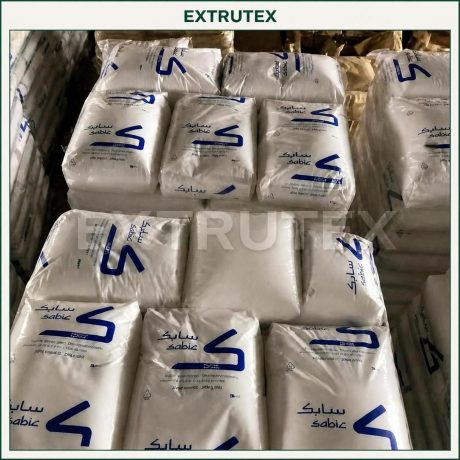
EXTRUTEX supports industrial buyers seeking MABS and transparent ABS resin grades for manufacturing projects. Our role is to help customers define their material requirements, identify suitable candidate grades, and coordinate sourcing discussions with relevant suppliers.
The available grade, manufacturer, packaging, documentation, and shipment arrangements depend on the product and destination market. Availability should be confirmed before an order is finalized.
Information to include in your inquiry
- Required grade number and manufacturer, if specified.
- Application and finished-product description.
- Processing method, such as injection molding or extrusion.
- Required transparency, color, haze, or light-transmission target.
- Impact-strength, heat-resistance, and chemical-resistance requirements.
- Applicable regulatory or certification requirements.
- Estimated quantity and delivery destination.
- Whether a technical data sheet, safety data sheet, sample, or compliance document is required.
Providing these details makes it easier to distinguish between MABS and other transparent ABS-type materials, narrow down candidate grades, and identify the technical documentation needed for evaluation.
11. Frequently Asked Questions
Is MABS the same as clear ABS?
Not always. MABS is a defined polymer family, while clear ABS is a broader commercial description that may cover different transparent ABS-type formulations. Check the exact material designation and manufacturer's technical data sheet.
Is MABS transparent?
MABS grades are developed to provide transparency or translucency. Actual clarity depends on the grade, color, wall thickness, mold quality, and processing conditions.
Is MABS stronger than standard ABS?
There is no universal answer. MABS and standard ABS grades can differ in impact strength, stiffness, tensile properties, and heat resistance. Compare the specific grades using equivalent test methods.
Can MABS be injection molded?
Yes. Injection molding is a common processing method for MABS. Use the manufacturer's recommended material preparation, melt temperature, mold temperature, and molding conditions for the exact grade.
Can MABS be used for transparent sheets?
Some transparent ABS grades are specifically designed for extrusion. Confirm that the selected resin is suitable for the required sheet or profile process rather than assuming that an injection molding grade will perform identically.
Is MABS suitable for medical products?
Selected grades may be suitable for specific healthcare-related applications, but suitability must be confirmed against the intended use, applicable regulations, chemical exposure, sterilization method, and required biocompatibility documentation.
Can MABS be used for cosmetic packaging?
Some MABS grades are used in cosmetic packaging and related components. The resin must be evaluated against the actual formulation, contact conditions, and relevant regulatory requirements.
What is the difference between MABS and polycarbonate?
Both can be transparent, but their mechanical, thermal, chemical, and processing properties differ. Polycarbonate is often considered where high impact performance is important, while suitable MABS grades may offer a useful balance of clarity, stiffness, toughness, and moldability. The best choice depends on the application.
How do I choose the correct melt-flow grade?
Start with the manufacturer's processing recommendations and compare melt-flow values measured under the same test temperature, load, and method. Then validate the material using the intended mold or extrusion equipment.
Does EXTRUTEX manufacture MABS resin?
EXTRUTEX provides material sourcing and supply support. The actual resin manufacturer and grade should be identified in the quotation and supporting documentation. Manufacturer trademarks and grade names remain the property of their respective owners.
Request MABS or Transparent ABS Grade Information
Looking for transparent MABS pellets or a suitable clear ABS alternative for injection molding, extrusion, consumer products, appliance housings, or packaging components?
Contact EXTRUTEX with your target grade, application, processing method, required quantity, and destination. We can help you define the material requirements and review suitable sourcing options.
Contact EXTRUTEX









-
(0 customer reviews)