$0.00
All rights of this website are reserved for EXTRUTEX Austria and its partner companies, © 2025
Laboratory Equipements
Injection, Blow, Roto Molding Machines
Window & Door Assembling Machines
Raw Materials & Additives
Laboratory Equipements
Injection, Blow, Roto Molding Machines
Window & Door Assembling Machines
Raw Materials & Additives
Single Screw Extruder 45
In the fast-growing field of polymer processing, extrusion technology continues to evolve as manufacturers demand higher efficiency, greater precision, and enhanced product quality. Nowhere is this more evident than in the production of polyolefin pipes—including HDPE, LDPE, PP, PPR, and PEX—which form the backbone of modern infrastructure, water supply, sewage, gas distribution, and heating/cooling systems.
At the heart of these production lines stands the extruder—the machine responsible for melting, homogenizing, and delivering polymer melt with the precision required for continuous pipe extrusion. For decades, single-screw extruders have been the standard solution in this sector due to their robust design, relatively simple operation, and cost-effectiveness. However, as the demands of industry rise, traditional single-screw systems are no longer sufficient.
EXTRUTEX Austria has responded to this challenge by developing a new generation of single-screw extrudersequipped with grooved feed bush technology and the innovative “HELIFEED” screw geometry. This breakthrough design has dramatically increased throughput, reduced torque demand, improved melt homogeneity, lowered melt temperatures, and enhanced the physical properties of the final pipe. The result is not only superior product quality but also a significant reduction in energy consumption—a decisive factor in today’s competitive and sustainability-driven markets.
Before diving into the innovations introduced by EXTRUTEX, it is important to understand the fundamental role of a single-screw extruder in the pipe extrusion process.
A single-screw extruder is essentially a polymer processing engine. It performs three primary functions:
Feeding and Conveying: Solid polymer granules (pellets) are introduced into the extruder’s feed zone and transported forward.
Melting and Homogenization: As the screw rotates, mechanical energy and heater bands convert the solid polymer into a homogeneous melt.
Metering and Pumping: The extruder delivers a consistent flow of molten polymer under stable pressure to the die head, where the pipe profile is shaped.
For polyolefins like HDPE and PP, which are semi-crystalline thermoplastics, the control of melting and mixing is critical. Poor homogenization results in pipe defects, dimensional instability, weak weldability, and reduced lifetime performance.
Traditional single-screw extruders, while reliable, face several limitations in processing modern polyolefins:
Throughput vs. Energy Trade-off: Higher outputs often require higher torque and energy, leading to increased operational costs.
Inconsistent Melting: Non-uniform melt leads to flow instabilities, wall thickness variation, and surface defects in pipes.
High Melt Temperature: Excessive thermal exposure can degrade polyolefins, reducing mechanical properties and long-term performance.
Limited Material Flexibility: Standard screws may struggle to handle diverse resin grades (HDPE vs. PPR vs. PEX) without performance losses.
Operator and Maintenance Burden: Inefficient designs consume more power, require more cooling, and demand frequent servicing.
To address these limitations, EXTRUTEX engineers reimagined the design of the single-screw extruder from the ground up.
The new generation of EXTRUTEX extruders introduces two decisive innovations:
Grooved Feed Bush (Feed Liner):
Located at the feeding zone of the extruder, the grooved bush significantly improves the frictional grip between polymer granules and the screw flight.
This prevents slippage, stabilizes solid conveying, and increases the pressure build-up capacity.
The result is a much higher feeding efficiency, even when processing low bulk-density materials like LDPE.
HELIFEED Screw Geometry:
This proprietary screw design optimizes the geometry of flights, channels, and compression ratios.
The HELIFEED system ensures faster melting, gentle homogenization, and more uniform temperature distribution across the melt.
By lowering torque demand, the extruder requires less drive power, further reducing energy consumption.
When the grooved feed bush and HELIFEED screw are combined, the results are dramatic:
Higher Output: Production rates increase without requiring larger extruders.
Lower Torque: Mechanical load on the gearbox and motor is reduced.
Improved Melt Quality: Homogeneous melt ensures smooth surfaces, uniform wall thickness, and enhanced weldability.
Reduced Melt Temperature: Gentle processing prevents thermal degradation, preserving mechanical strength and elongation properties.
Energy Savings: Lower torque and reduced thermal load lead to substantial electricity savings.
In conventional single-screw extruders, output often plateaus due to inefficient feeding and limited melting capacity. With grooved feed technology, EXTRUTEX extruders achieve a 20–40% increase in throughput compared to older designs.
Torque is a critical parameter in extruder operation. High torque strains the gearbox, bearings, and motor, leading to higher wear and maintenance costs. The HELIFEED design reduces torque demand by up to 25%, ensuring longer equipment life and lower operating costs.
A uniform melt ensures that every meter of pipe has consistent mechanical properties. Melt homogeneity is crucial for:
Pressure-rated HDPE water pipes
Gas distribution pipes requiring leak-proof weldability
PEX and PPR pipes where dimensional accuracy is vital
EXTRUTEX extruders achieve a homogeneity index far superior to conventional screws, verified through rheological and ultrasonic testing.
Excessive melt temperature can lead to:
Oxidative degradation of PE and PP
Reduced long-term hydrostatic strength of pipes
Higher cooling demand downstream
By improving mixing and melting efficiency, EXTRUTEX extruders lower melt temperatures by 10–20°C, preserving polymer integrity.
Perhaps the most significant advantage is energy savings. In some installations, EXTRUTEX extruders have reduced specific energy consumption (kWh/kg) by up to 30%. This directly reduces production costs and carbon footprint.
The versatility of EXTRUTEX single-screw extruders makes them suitable for a broad spectrum of polyolefin pipes:
HDPE Pipes: Water distribution, sewage, and gas pipelines (up to large diameters).
PP/PPR Pipes: Hot and cold water systems, industrial wastewater, push-fit connections.
PEX & PERT Pipes: Underfloor heating and cooling systems.
LDPE Pipes: Irrigation and cable conduits.
Each application benefits uniquely from the improved melt quality, energy efficiency, and higher throughput of EXTRUTEX extruders.
| Parameter | Traditional Extruder | EXTRUTEX Extruder |
|---|---|---|
| Throughput | Standard | +20–40% higher |
| Torque Demand | High | Up to 25% lower |
| Melt Temperature | Elevated | Reduced by 10–20°C |
| Melt Homogeneity | Moderate | Excellent |
| Energy Consumption | High (kWh/kg) | 20–30% lower |
| Product Physical Properties | Variable | Enhanced & stable |
Cost Savings: Lower energy bills, reduced maintenance, and higher output all contribute to lower cost per meter of pipe produced.
Sustainability: Energy-efficient design reduces carbon emissions and supports green manufacturing initiatives.
Long-Term Investment Value: With reduced mechanical stress and optimized operation, equipment life is extended, ensuring a better return on investment.
A mid-sized pipe producer in Eastern Europe upgraded from a conventional 90 mm single-screw extruder to a new EXTRUTEX HELIFEED-equipped model:
Before:
Output: 450 kg/h HDPE
Energy consumption: 0.35 kWh/kg
Melt temperature: 225°C
After Upgrade:
Output: 620 kg/h HDPE (+37%)
Energy consumption: 0.24 kWh/kg (−31%)
Melt temperature: 208°C
Pipe quality: Smoother surface, improved ovality, fewer defects
This resulted in annual savings exceeding €80,000 in energy costs alone, with a payback period of less than 18 months.
As markets demand larger diameter pipes, higher production speeds, and environmentally sustainable solutions, extrusion technology must continue to evolve. EXTRUTEX is already working on:
Digital Twin Integration: Real-time monitoring and simulation of screw performance.
AI-Driven Process Control: Automated adjustments to optimize energy use and melt quality.
Hybrid Heating Systems: Combining electric and induction heating for further efficiency gains.
Circular Economy Readiness: Enhanced ability to process recycled polyolefins without compromising product quality.
The EXTRUTEX single-screw extruder represents a milestone in polyolefin pipe production. By integrating grooved feed bush technology with the advanced HELIFEED screw geometry, EXTRUTEX has overcome the traditional limitations of single-screw extrusion. The outcome is:
Higher throughput
Lower torque and energy consumption
Improved melt quality and pipe properties
Longer equipment life and reduced operating costs
For manufacturers seeking a competitive edge in today’s demanding markets, EXTRUTEX extruders are not just machines—they are strategic investments in efficiency, quality, and sustainability.

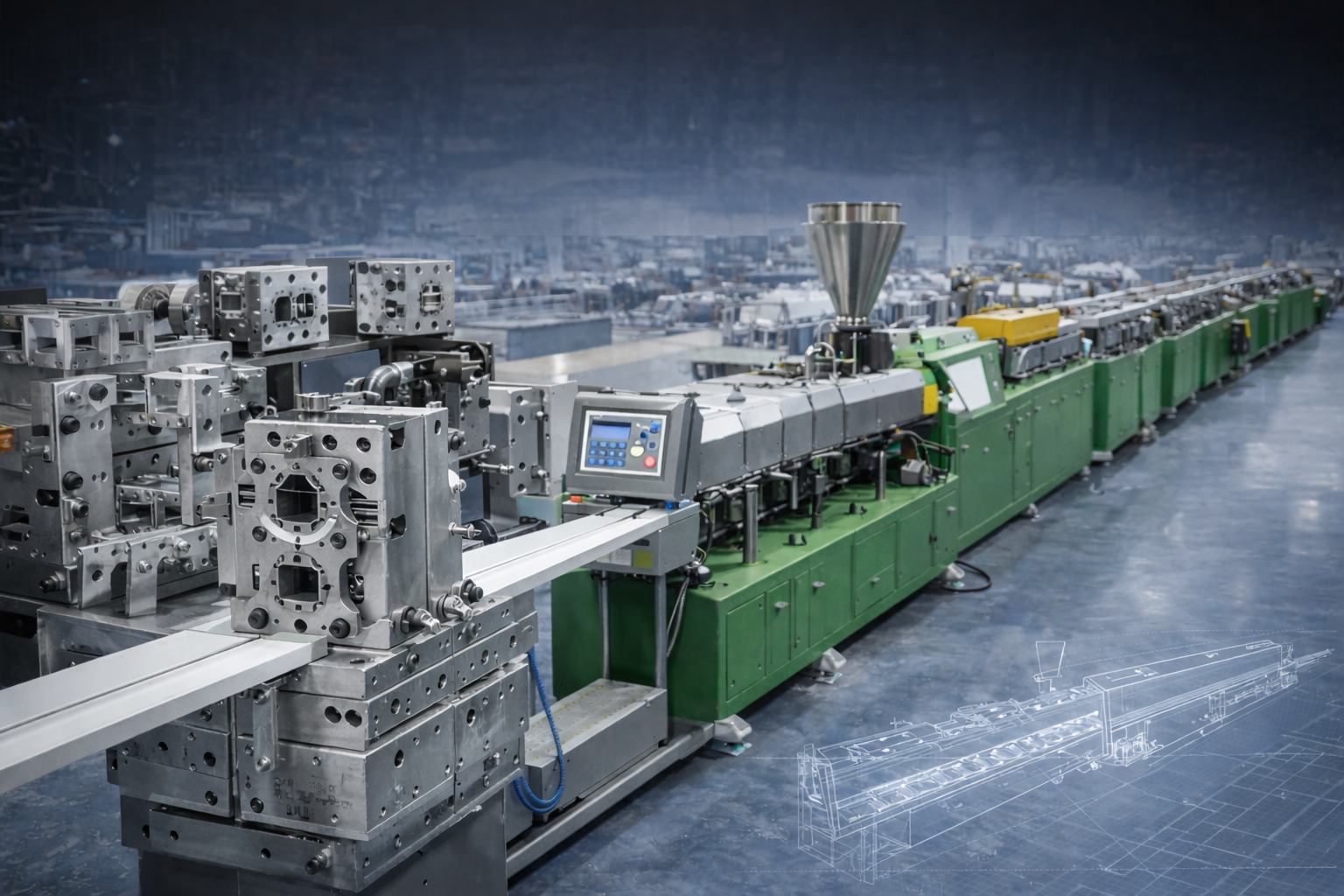
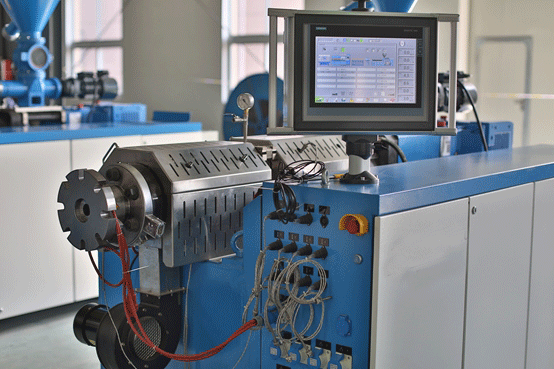
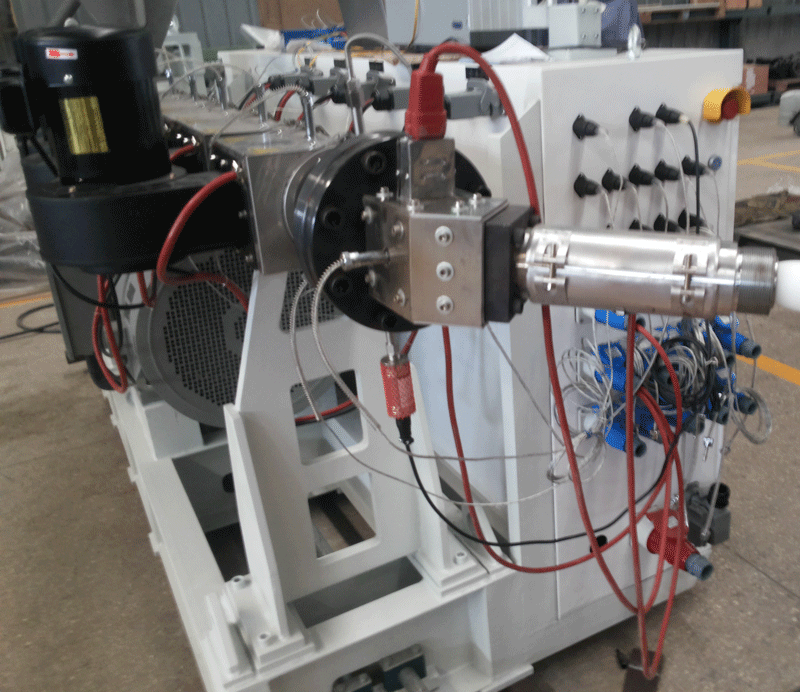
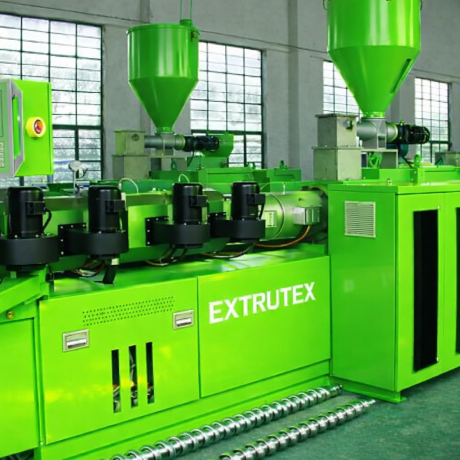
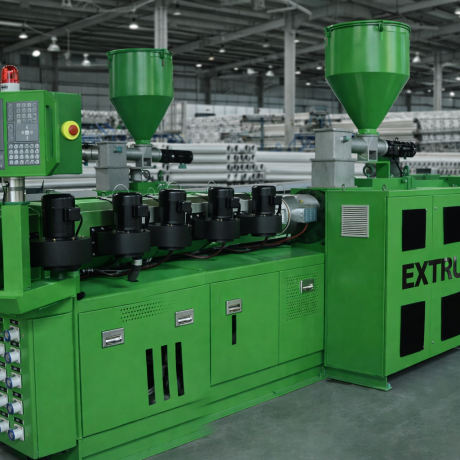
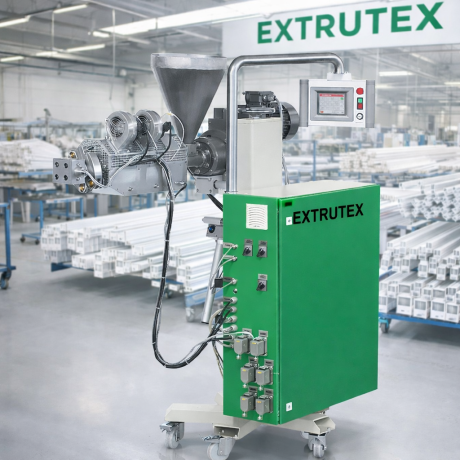
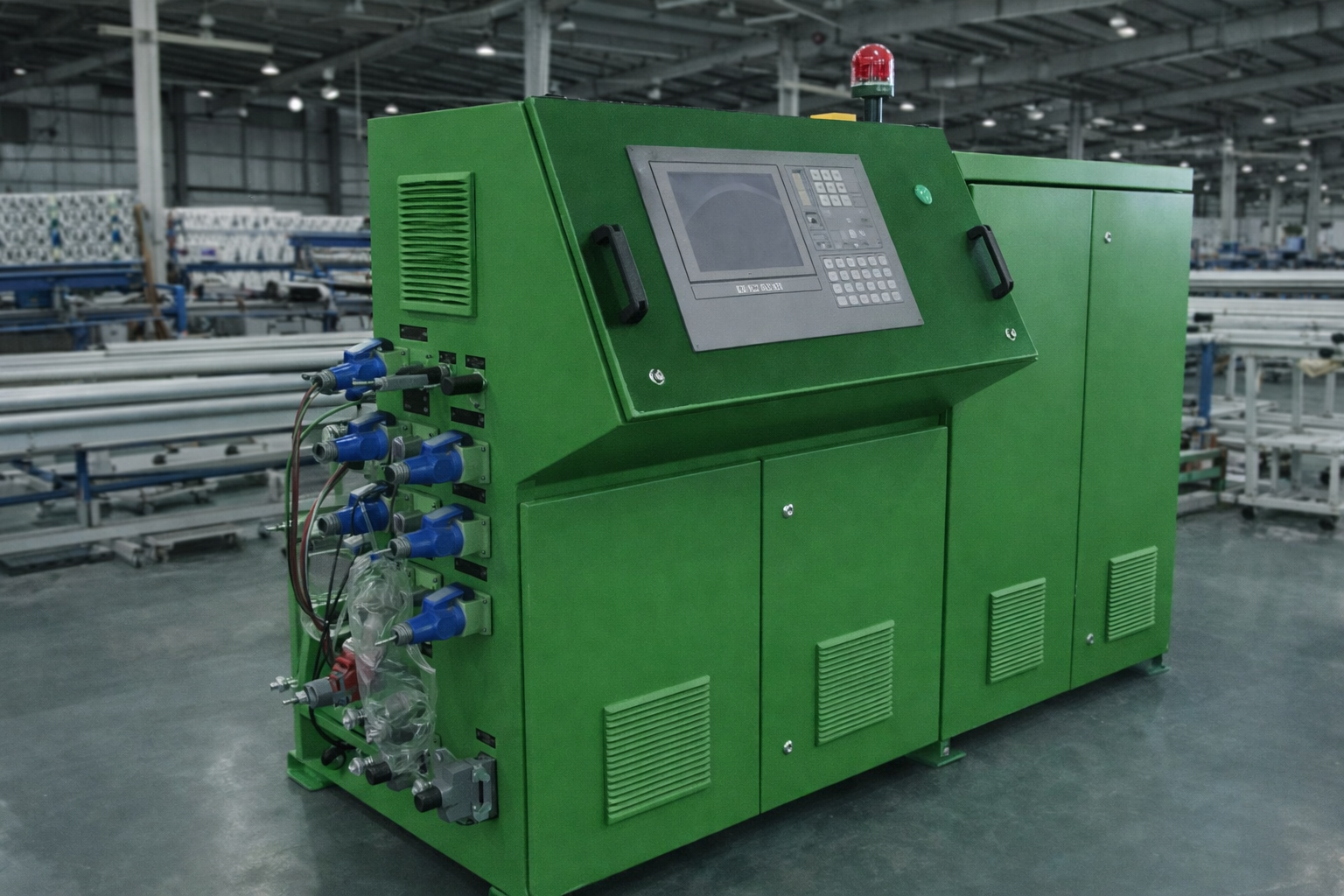
The EXTRUTEX 45/40 single screw extruder is a compact yet high-performance extrusion system designed for small-to-medium output requirements in polymer pipe production. With a screw diameter of 45 mm and an L/D ratio of 40, this extruder ensures optimized plasticization, stable melt quality, and energy-efficient operation.
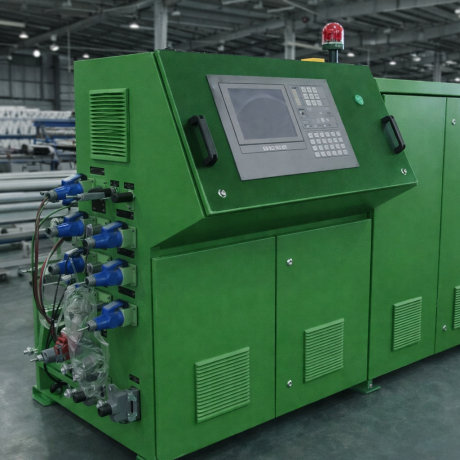
The machine is equipped with a grooved feed section, advanced HELIFEED screw geometry, and a high-torque gearbox, resulting in consistent throughput and superior melt homogenization. It is ideal for the extrusion of polyolefin pipes (HDPE, LDPE, MDPE, PPR, PP) as well as specialty small-diameter pipes.
This extruder is widely used in applications such as water supply pipes, heating pipes, conduit pipes, drip irrigation pipes, and protective casing pipes. Its compact design, ease of operation, and reliability make it a preferred choice for both standalone production lines and co-extrusion setups (e.g., as a color strip extruder or for multilayer pipes).
| Parameter | Specification |
|---|---|
| Model | Single Screw Extruder 45/40 |
| Screw Diameter | 45 mm |
| L/D Ratio | 40:1 |
| Output Capacity | 160 – 240 kg/h (material dependent: HDPE, LDPE, PPR, PP, PE-X) |
| Screw Design | Grooved feed, HELIFEED geometry, nitrided or bimetallic screw option |
| Barrel Heating Zones | 4–6 zones, ceramic or cast-aluminum heaters |
| Cooling System | Forced air cooling with axial fans |
| Drive Motor Power | 55 – 75 kW (AC motor or energy-efficient servo motor with vector control) |
| Gearbox | High-torque, low-noise gearbox with forced lubrication |
| Melt Temperature Control | PID control system with thermocouples |
| Control System | PLC + HMI (Siemens, B&R, or equivalent) |
| Feeding System | Automatic hopper loader + gravimetric dosing (optional) |
| Material Compatibility | HDPE, MDPE, LDPE, PPR, PP, PE-X |
| Applications | Drinking water pipes, hot & cold water pipes, conduit pipes, drip irrigation, protective casing |
| Energy Efficiency | Optimized screw geometry reduces melt temperature and power consumption |
| Output Quality | Uniform melt flow, low shear, superior mechanical properties |
| Machine Dimensions | ~6.0 m length × 1.5 m width × 2.0 m height (approx., depending on configuration) |
| Weight | ~4.5 – 5.5 tons (depending on options) |
| Optional Features | Gravimetric dosing, melt pressure sensor, ultrasonic wall thickness control, co-extrusion adapter |
⚙️ Key Advantages of Extruder 45/40
Stable output of 160–240 kg/h, suitable for small-to-medium scale production.
HELIFEED screw design ensures efficient plasticizing at lower melt temperatures.
Lower power consumption compared to conventional 45 mm extruders.
Compact size makes it ideal for co-extrusion and lab-scale applications.
Flexible configuration with multiple downstream line compatibilities.
There are no reviews yet.
In the fast-growing field of polymer processing, extrusion technology continues to evolve as manufacturers demand higher efficiency, greater precision, and enhanced product quality. Nowhere is this more evident than in the production of polyolefin pipes—including HDPE, LDPE, PP, PPR, and PEX—which form the backbone of modern infrastructure, water supply, sewage, gas distribution, and heating/cooling systems.
At the heart of these production lines stands the extruder—the machine responsible for melting, homogenizing, and delivering polymer melt with the precision required for continuous pipe extrusion. For decades, single-screw extruders have been the standard solution in this sector due to their robust design, relatively simple operation, and cost-effectiveness. However, as the demands of industry rise, traditional single-screw systems are no longer sufficient.
EXTRUTEX Austria has responded to this challenge by developing a new generation of single-screw extrudersequipped with grooved feed bush technology and the innovative “HELIFEED” screw geometry. This breakthrough design has dramatically increased throughput, reduced torque demand, improved melt homogeneity, lowered melt temperatures, and enhanced the physical properties of the final pipe. The result is not only superior product quality but also a significant reduction in energy consumption—a decisive factor in today’s competitive and sustainability-driven markets.
Before diving into the innovations introduced by EXTRUTEX, it is important to understand the fundamental role of a single-screw extruder in the pipe extrusion process.
A single-screw extruder is essentially a polymer processing engine. It performs three primary functions:
Feeding and Conveying: Solid polymer granules (pellets) are introduced into the extruder’s feed zone and transported forward.
Melting and Homogenization: As the screw rotates, mechanical energy and heater bands convert the solid polymer into a homogeneous melt.
Metering and Pumping: The extruder delivers a consistent flow of molten polymer under stable pressure to the die head, where the pipe profile is shaped.
For polyolefins like HDPE and PP, which are semi-crystalline thermoplastics, the control of melting and mixing is critical. Poor homogenization results in pipe defects, dimensional instability, weak weldability, and reduced lifetime performance.
Traditional single-screw extruders, while reliable, face several limitations in processing modern polyolefins:
Throughput vs. Energy Trade-off: Higher outputs often require higher torque and energy, leading to increased operational costs.
Inconsistent Melting: Non-uniform melt leads to flow instabilities, wall thickness variation, and surface defects in pipes.
High Melt Temperature: Excessive thermal exposure can degrade polyolefins, reducing mechanical properties and long-term performance.
Limited Material Flexibility: Standard screws may struggle to handle diverse resin grades (HDPE vs. PPR vs. PEX) without performance losses.
Operator and Maintenance Burden: Inefficient designs consume more power, require more cooling, and demand frequent servicing.
To address these limitations, EXTRUTEX engineers reimagined the design of the single-screw extruder from the ground up.
The new generation of EXTRUTEX extruders introduces two decisive innovations:
Grooved Feed Bush (Feed Liner):
Located at the feeding zone of the extruder, the grooved bush significantly improves the frictional grip between polymer granules and the screw flight.
This prevents slippage, stabilizes solid conveying, and increases the pressure build-up capacity.
The result is a much higher feeding efficiency, even when processing low bulk-density materials like LDPE.
HELIFEED Screw Geometry:
This proprietary screw design optimizes the geometry of flights, channels, and compression ratios.
The HELIFEED system ensures faster melting, gentle homogenization, and more uniform temperature distribution across the melt.
By lowering torque demand, the extruder requires less drive power, further reducing energy consumption.
When the grooved feed bush and HELIFEED screw are combined, the results are dramatic:
Higher Output: Production rates increase without requiring larger extruders.
Lower Torque: Mechanical load on the gearbox and motor is reduced.
Improved Melt Quality: Homogeneous melt ensures smooth surfaces, uniform wall thickness, and enhanced weldability.
Reduced Melt Temperature: Gentle processing prevents thermal degradation, preserving mechanical strength and elongation properties.
Energy Savings: Lower torque and reduced thermal load lead to substantial electricity savings.
In conventional single-screw extruders, output often plateaus due to inefficient feeding and limited melting capacity. With grooved feed technology, EXTRUTEX extruders achieve a 20–40% increase in throughput compared to older designs.
Torque is a critical parameter in extruder operation. High torque strains the gearbox, bearings, and motor, leading to higher wear and maintenance costs. The HELIFEED design reduces torque demand by up to 25%, ensuring longer equipment life and lower operating costs.
A uniform melt ensures that every meter of pipe has consistent mechanical properties. Melt homogeneity is crucial for:
Pressure-rated HDPE water pipes
Gas distribution pipes requiring leak-proof weldability
PEX and PPR pipes where dimensional accuracy is vital
EXTRUTEX extruders achieve a homogeneity index far superior to conventional screws, verified through rheological and ultrasonic testing.
Excessive melt temperature can lead to:
Oxidative degradation of PE and PP
Reduced long-term hydrostatic strength of pipes
Higher cooling demand downstream
By improving mixing and melting efficiency, EXTRUTEX extruders lower melt temperatures by 10–20°C, preserving polymer integrity.
Perhaps the most significant advantage is energy savings. In some installations, EXTRUTEX extruders have reduced specific energy consumption (kWh/kg) by up to 30%. This directly reduces production costs and carbon footprint.
The versatility of EXTRUTEX single-screw extruders makes them suitable for a broad spectrum of polyolefin pipes:
HDPE Pipes: Water distribution, sewage, and gas pipelines (up to large diameters).
PP/PPR Pipes: Hot and cold water systems, industrial wastewater, push-fit connections.
PEX & PERT Pipes: Underfloor heating and cooling systems.
LDPE Pipes: Irrigation and cable conduits.
Each application benefits uniquely from the improved melt quality, energy efficiency, and higher throughput of EXTRUTEX extruders.
| Parameter | Traditional Extruder | EXTRUTEX Extruder |
|---|---|---|
| Throughput | Standard | +20–40% higher |
| Torque Demand | High | Up to 25% lower |
| Melt Temperature | Elevated | Reduced by 10–20°C |
| Melt Homogeneity | Moderate | Excellent |
| Energy Consumption | High (kWh/kg) | 20–30% lower |
| Product Physical Properties | Variable | Enhanced & stable |
Cost Savings: Lower energy bills, reduced maintenance, and higher output all contribute to lower cost per meter of pipe produced.
Sustainability: Energy-efficient design reduces carbon emissions and supports green manufacturing initiatives.
Long-Term Investment Value: With reduced mechanical stress and optimized operation, equipment life is extended, ensuring a better return on investment.
A mid-sized pipe producer in Eastern Europe upgraded from a conventional 90 mm single-screw extruder to a new EXTRUTEX HELIFEED-equipped model:
Before:
Output: 450 kg/h HDPE
Energy consumption: 0.35 kWh/kg
Melt temperature: 225°C
After Upgrade:
Output: 620 kg/h HDPE (+37%)
Energy consumption: 0.24 kWh/kg (−31%)
Melt temperature: 208°C
Pipe quality: Smoother surface, improved ovality, fewer defects
This resulted in annual savings exceeding €80,000 in energy costs alone, with a payback period of less than 18 months.
As markets demand larger diameter pipes, higher production speeds, and environmentally sustainable solutions, extrusion technology must continue to evolve. EXTRUTEX is already working on:
Digital Twin Integration: Real-time monitoring and simulation of screw performance.
AI-Driven Process Control: Automated adjustments to optimize energy use and melt quality.
Hybrid Heating Systems: Combining electric and induction heating for further efficiency gains.
Circular Economy Readiness: Enhanced ability to process recycled polyolefins without compromising product quality.
The EXTRUTEX single-screw extruder represents a milestone in polyolefin pipe production. By integrating grooved feed bush technology with the advanced HELIFEED screw geometry, EXTRUTEX has overcome the traditional limitations of single-screw extrusion. The outcome is:
Higher throughput
Lower torque and energy consumption
Improved melt quality and pipe properties
Longer equipment life and reduced operating costs
For manufacturers seeking a competitive edge in today’s demanding markets, EXTRUTEX extruders are not just machines—they are strategic investments in efficiency, quality, and sustainability.
The EXTRUTEX 45/40 single screw extruder is a compact yet high-performance extrusion system designed for small-to-medium output requirements in polymer pipe production. With a screw diameter of 45 mm and an L/D ratio of 40, this extruder ensures optimized plasticization, stable melt quality, and energy-efficient operation.
The machine is equipped with a grooved feed section, advanced HELIFEED screw geometry, and a high-torque gearbox, resulting in consistent throughput and superior melt homogenization. It is ideal for the extrusion of polyolefin pipes (HDPE, LDPE, MDPE, PPR, PP) as well as specialty small-diameter pipes.
This extruder is widely used in applications such as water supply pipes, heating pipes, conduit pipes, drip irrigation pipes, and protective casing pipes. Its compact design, ease of operation, and reliability make it a preferred choice for both standalone production lines and co-extrusion setups (e.g., as a color strip extruder or for multilayer pipes).
| Parameter | Specification |
|---|---|
| Model | Single Screw Extruder 45/40 |
| Screw Diameter | 45 mm |
| L/D Ratio | 40:1 |
| Output Capacity | 160 – 240 kg/h (material dependent: HDPE, LDPE, PPR, PP, PE-X) |
| Screw Design | Grooved feed, HELIFEED geometry, nitrided or bimetallic screw option |
| Barrel Heating Zones | 4–6 zones, ceramic or cast-aluminum heaters |
| Cooling System | Forced air cooling with axial fans |
| Drive Motor Power | 55 – 75 kW (AC motor or energy-efficient servo motor with vector control) |
| Gearbox | High-torque, low-noise gearbox with forced lubrication |
| Melt Temperature Control | PID control system with thermocouples |
| Control System | PLC + HMI (Siemens, B&R, or equivalent) |
| Feeding System | Automatic hopper loader + gravimetric dosing (optional) |
| Material Compatibility | HDPE, MDPE, LDPE, PPR, PP, PE-X |
| Applications | Drinking water pipes, hot & cold water pipes, conduit pipes, drip irrigation, protective casing |
| Energy Efficiency | Optimized screw geometry reduces melt temperature and power consumption |
| Output Quality | Uniform melt flow, low shear, superior mechanical properties |
| Machine Dimensions | ~6.0 m length × 1.5 m width × 2.0 m height (approx., depending on configuration) |
| Weight | ~4.5 – 5.5 tons (depending on options) |
| Optional Features | Gravimetric dosing, melt pressure sensor, ultrasonic wall thickness control, co-extrusion adapter |
⚙️ Key Advantages of Extruder 45/40
Stable output of 160–240 kg/h, suitable for small-to-medium scale production.
HELIFEED screw design ensures efficient plasticizing at lower melt temperatures.
Lower power consumption compared to conventional 45 mm extruders.
Compact size makes it ideal for co-extrusion and lab-scale applications.
Flexible configuration with multiple downstream line compatibilities.
By submitting your email, you agree to our company’s terms and conditions.
We are not looking to sell; we are here to provide you with the best support and service.
Contact available 24/7
Please do not contact us for advertising or sales inquiries
All rights of this website are reserved for EXTRUTEX Austria and its partner companies, © 2025
-
(0 customer reviews)