No products in the cart.

All rights of this website are reserved for EXTRUTEX Austria and its partner companies, © 2026

Multiple Payment Methods

Discount for advance payments over 50%

Free Shipping Coordination Services
Payment methods:


Advanced Reinforced Thermoplastic Pipe and Thermoplastic Composite Pipe Manufacturing Equipment
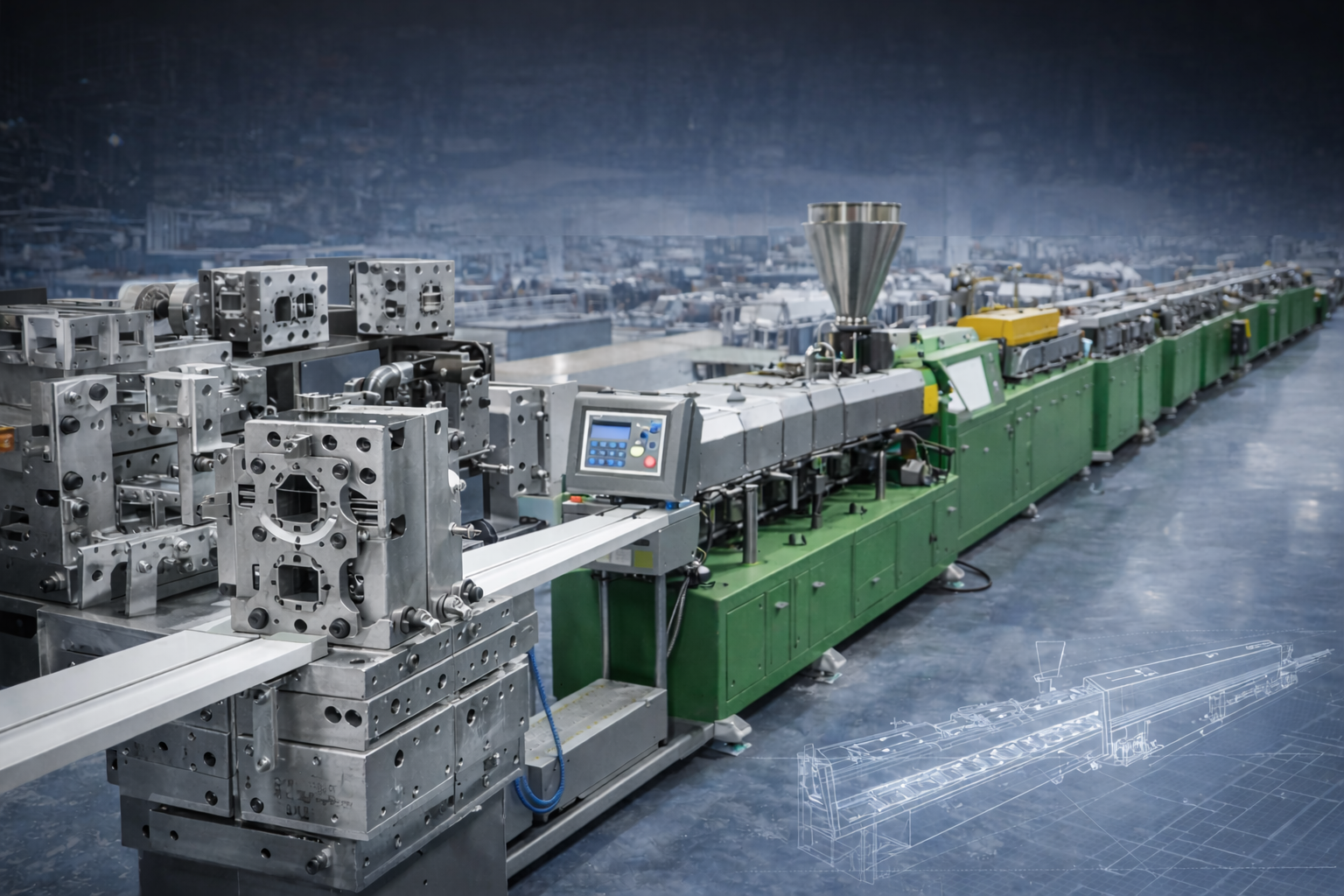
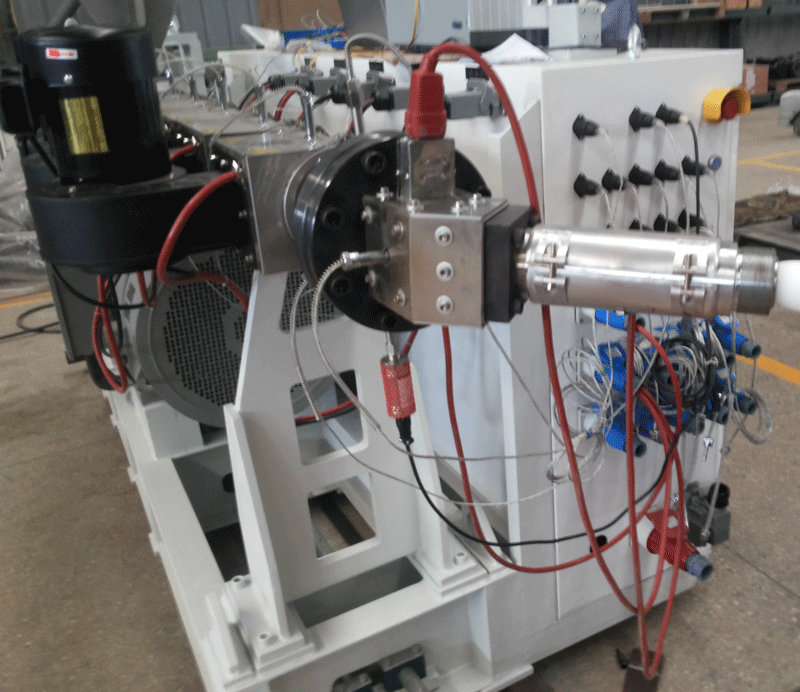
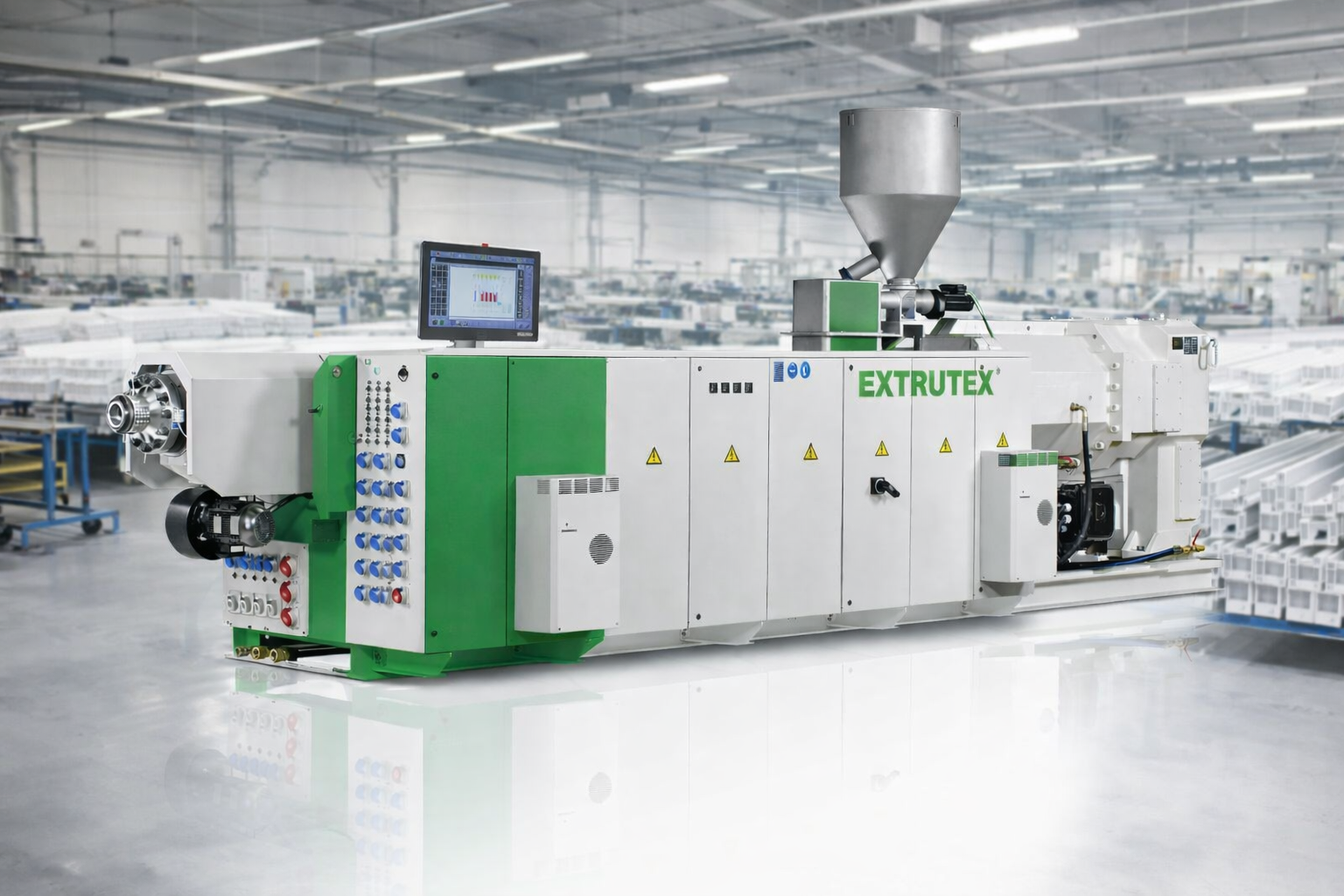
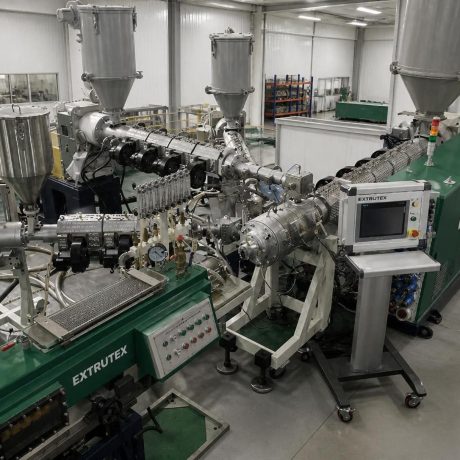
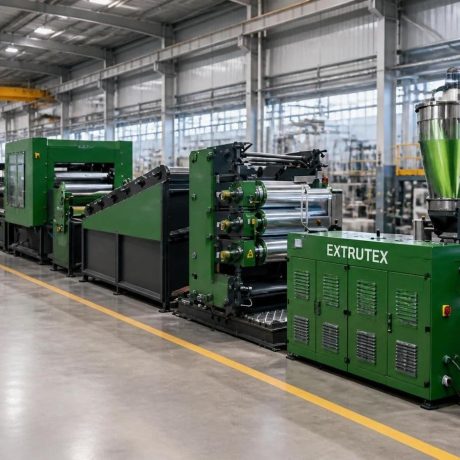
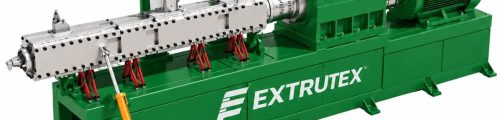
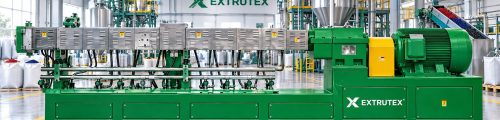
EXTRUTEX manufactures TP/TCP pipe production lines for the production of high-performance reinforced thermoplastic pipes with outside diameters from Ø50 mm to Ø630 mm. Designed for industrial applications requiring pressure resistance, flexibility and reliable long-term performance, the production system integrates thermoplastic pipe extrusion, reinforcement tape winding, synchronized drive control and downstream processing.
With configurable reinforcement systems and automated winding technology, EXTRUTEX provides production solutions for oil and gas transportation, industrial fluid handling, water infrastructure and other demanding pipeline applications.
Reinforced thermoplastic pipe technology combines the chemical resistance and corrosion-resistant properties of thermoplastic materials with the mechanical strength of a reinforcing layer. The resulting composite pipe can offer a practical alternative to conventional metallic pipelines in applications where installation flexibility, reduced corrosion risk and efficient transportation are important considerations.
EXTRUTEX TP/TCP pipe production equipment is engineered to manufacture reinforced pipes by combining an extruded thermoplastic pressure-bearing layer with a controlled reinforcement winding process and, where required, an outer protective thermoplastic layer.
The production line can be configured according to the intended pipe construction, raw materials, reinforcement design, dimensional requirements and target operating conditions. Depending on the selected process, reinforcement may be applied using continuous tapes or other compatible reinforcement formats.
RTP stands for Reinforced Thermoplastic Pipe. An RTP structure generally consists of a thermoplastic liner, a reinforcing layer and, depending on the design, an external protective jacket. The liner provides the fluid-contact surface and contributes to pressure containment, while the reinforcement carries a substantial portion of the mechanical load.
Reinforcement may be applied in one or more layers. The reinforcement material, winding angle, number of layers, tape characteristics and bonding or consolidation method influence the mechanical performance of the finished pipe.
TCP stands for Thermoplastic Composite Pipe. TCP is designed as a composite pipe in which thermoplastic materials and structural reinforcement work together to provide the required performance. Depending on the product design, the liner, reinforcement and outer jacket may use compatible thermoplastic materials, with the reinforcement incorporated through a controlled manufacturing process.
RTP and TCP terminology can overlap across manufacturers and industry applications. The exact construction should therefore be defined by the intended pipe standard, material system, design pressure, temperature requirements and qualification procedure rather than by the product name alone.
Reinforced thermoplastic pipes are developed for applications that require a combination of pressure capability, corrosion resistance, manageable installation and dependable fluid transportation. The suitability of a particular pipe depends on its complete construction and verified performance rating.
Reinforced thermoplastic pipes can be used in qualified oilfield and gas-field applications, including selected production-fluid, water-injection and other industrial service lines. Material selection must account for pressure, temperature, hydrocarbons, chemical exposure, permeation and the applicable project requirements.
Depending on the selected liner and reinforcement system, composite thermoplastic pipes may be suitable for transporting industrial liquids and process fluids. Compatibility with the transported medium, operating temperature and cleaning chemicals must be confirmed before production.
Qualified RTP/TCP pipe designs may be considered for water transportation, industrial water distribution and selected water-management applications. The required pressure class, water-contact requirements and relevant local standards must be established for each project.
Composite thermoplastic pipe concepts can be considered for selected thermal-fluid and district-energy applications when the liner, reinforcement, jacket and connection system are designed for the operating temperature, pressure, thermal cycling and required service life.
EXTRUTEX can configure the production system around the target application and required pipe structure. The finished pipe must be qualified for its intended service before commercial installation.
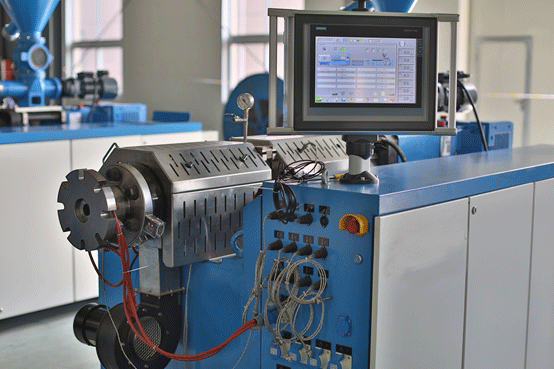
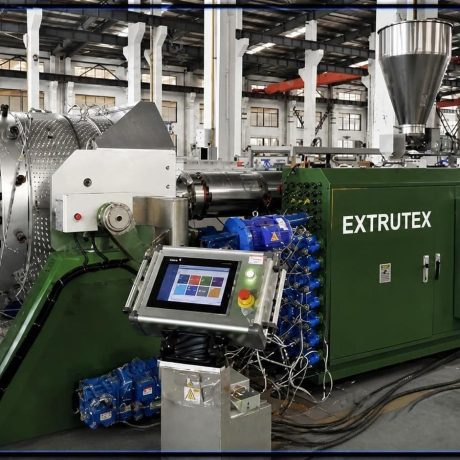
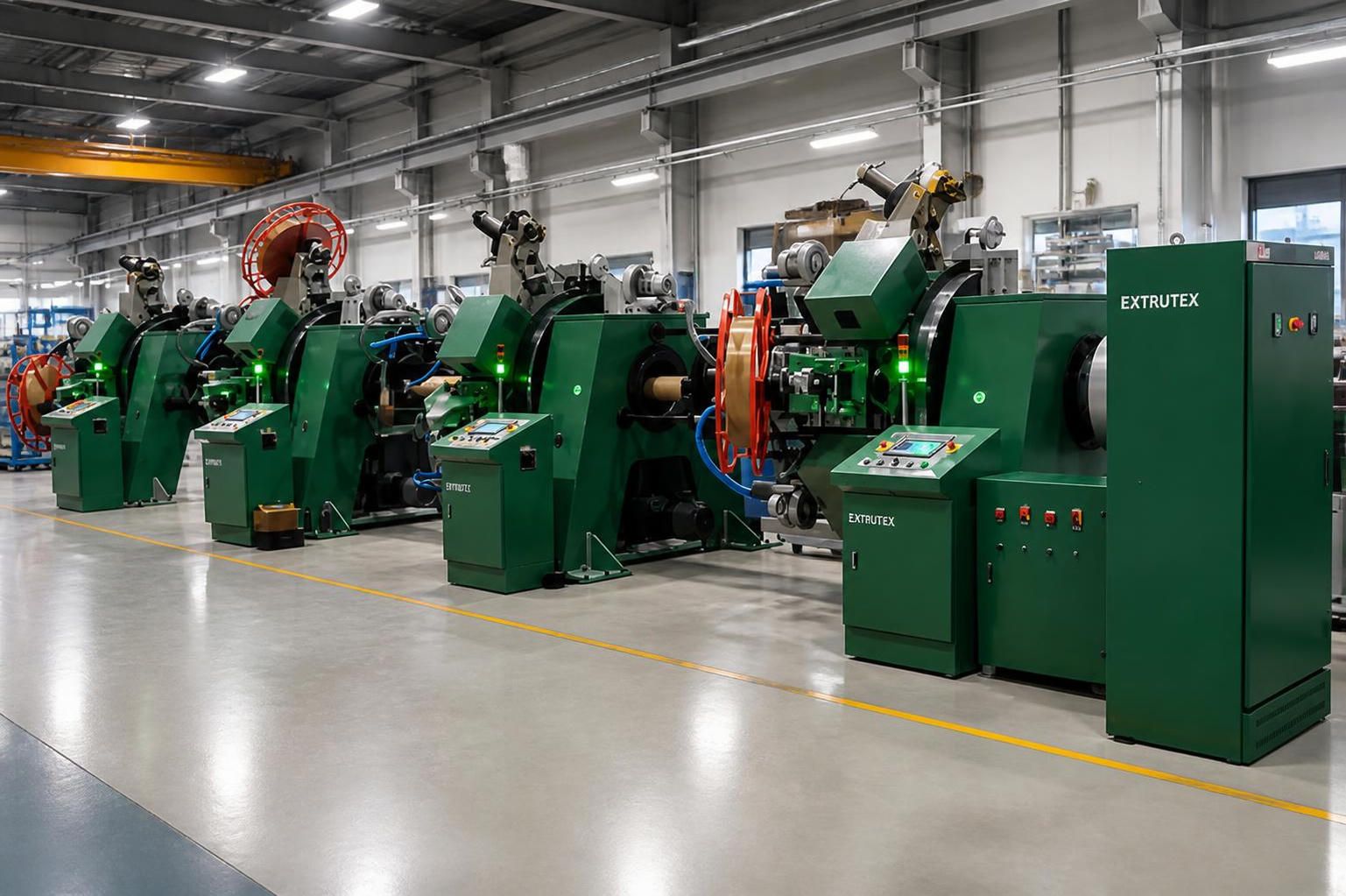
The production line uses programmable logic controller technology to coordinate the main production functions. Depending on the final configuration, the control system can integrate extrusion parameters, line speed, winding-machine operation, drive synchronization, tension control and operating alarms.
Centralized operation helps operators monitor production conditions, coordinate individual machine sections and maintain consistent process settings. Appropriate control interlocks and alarm functions can help identify deviations before they lead to excessive material waste or interruptions.
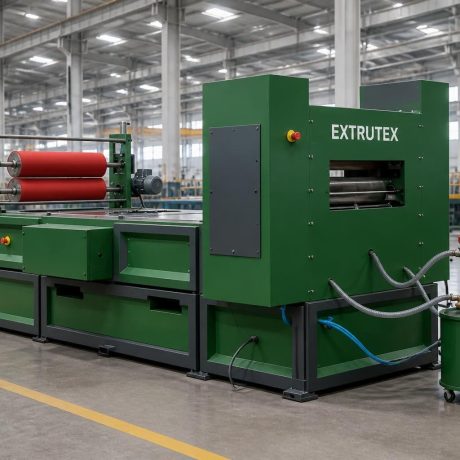
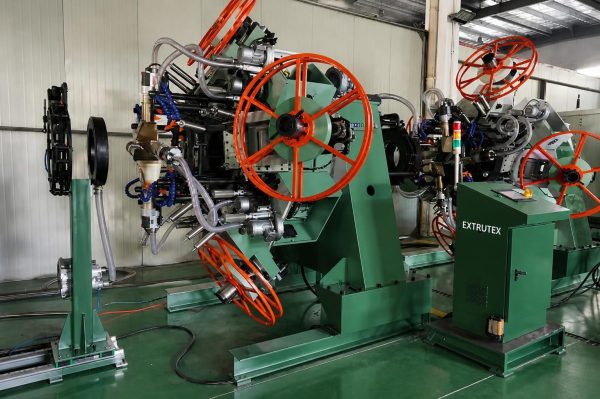
The automatic winding system applies reinforcement around the thermoplastic pipe in a controlled and repeatable pattern. Accurate tape positioning is essential because gaps, excessive overlap, uneven coverage or inconsistent winding angles can affect reinforcement distribution and the mechanical performance of the finished pipe.
The winding equipment is configured for the selected reinforcement format, tape width, winding pattern and required number of reinforcement layers. The mechanical layout and control settings are selected according to the pipe construction and production requirements.
Servo-driven winding equipment provides precise control of rotational movement and coordinated motion. This allows the winding system to adjust its operation to the production line's operating speed and maintain the required reinforcement placement.
Depending on the selected configuration, servo control can support repeatable winding patterns, controlled acceleration and deceleration, and coordinated operation between the pipe movement and winding mechanism.
The winding speed must correspond to the actual pipe travel speed to achieve the intended winding angle and reinforcement distribution. If the pipe speed changes while the winding system remains at an unsuitable setting, the reinforcement pattern can deviate from the specified design.
EXTRUTEX line control can coordinate winding speed with the production line's operating speed. This synchronization helps maintain consistent reinforcement geometry during normal production and controlled speed adjustments.
Consistent reinforcement tension is important for stable tape placement. Excessive tension may stretch or damage the reinforcement or affect the underlying pipe, while insufficient tension can contribute to loose winding, irregular coverage or unstable tape positioning.
A closed-loop tension-control arrangement uses feedback from the selected sensing system to regulate the winding process. The control strategy can be adapted to the characteristics of glass-fiber tape, aramid tape, steel-wire reinforcement or other approved reinforcement materials.
The number of winding stations is determined by the pipe construction, reinforcement material, required reinforcement layers and target production performance. Different pressure classes may require different reinforcement quantities and winding arrangements.
EXTRUTEX can configure the number and arrangement of winding stations according to the customer's product design. The final station count should be established during technical engineering rather than selected solely according to pipe diameter.
Different product designs require different manufacturing sequences. A one-step configuration integrates the applicable production stages into a coordinated manufacturing process. A two-step configuration separates selected operations into successive production stages, allowing greater flexibility in process planning where appropriate.
The most suitable arrangement depends on the liner construction, reinforcement material, bonding or consolidation requirements, outer-layer process and required output. EXTRUTEX can assess the proposed pipe structure before recommending the appropriate equipment configuration.
Reinforcement selection is one of the most important decisions in RTP/TCP pipe engineering. Each reinforcement material has different mechanical, thermal, processing and chemical characteristics. The reinforcement must work together with the thermoplastic layers to achieve the specified pipe performance.
| Reinforcement Material | General Characteristics | Important Engineering Considerations |
|---|---|---|
| Glass-Fiber Tape | Provides structural reinforcement with a high strength-to-weight potential. | Fiber architecture, resin or matrix compatibility, bending behavior, consolidation and interface bonding. |
| Aramid Tape | High tensile-strength potential and low density. | Fiber grade, temperature limits, moisture and chemical exposure, tape tension and bonding requirements. |
| Steel-Wire Reinforcement | Provides a metallic reinforcement option for suitable composite pipe constructions. | Wire geometry, corrosion protection, interface design, winding tension and fatigue performance. |
The availability of a particular reinforcement material depends on the machine configuration and the customer's approved pipe design. Not every reinforcement material is interchangeable, and each requires suitable feeding, winding, tension-control and material-handling arrangements.
The inner layer is selected primarily according to the transported medium, operating pressure, temperature and required chemical resistance. Candidate thermoplastic materials may include polyethylene and other engineering or commodity thermoplastics suitable for the specific application.
The selected liner must meet the dimensional, surface-quality and material requirements of the finished pipe. Its compatibility with the reinforcement and any intermediate bonding layer must also be considered.
The reinforcement layer is designed to provide the required structural contribution under internal pressure and other service loads. Its design depends on the reinforcement properties, winding angle, number of layers, layer arrangement and interaction with the surrounding thermoplastic materials.
Where required, an external thermoplastic jacket protects the reinforcement structure from environmental exposure, handling damage and other external influences. Jacket material, thickness and processing conditions depend on the final product specification and intended service environment.
The following table presents the principal model specifications for the EXTRUTEX reinforced thermoplastic pipe production line. The stated pipe ranges and line speeds are the supplied nominal specifications. Actual production output depends on the pipe structure, material properties, reinforcement requirements and process configuration.
| Technical Parameter | EXTRUTEX RTP250 | EXTRUTEX RTP315 | EXTRUTEX RTP630 |
|---|---|---|---|
| Applicable Pipe Range | Ø50–250 mm | Ø110–315 mm | Ø250–630 mm |
| Nominal Line Speed | 0.8–3.0 m/min | 0.5–2.5 m/min | 0.2–1.5 m/min |
| Control System | PLC control | PLC control | PLC control |
| Winding Drive | Servo-driven, according to configuration | Servo-driven, according to configuration | Servo-driven, according to configuration |
| Winding-Speed Control | Synchronized with line speed | Synchronized with line speed | Synchronized with line speed |
| Tape-Tension Control | Closed-loop control, according to configuration | Closed-loop control, according to configuration | Closed-loop control, according to configuration |
| Reinforcement Options | Glass-fiber tape, aramid tape and steel-wire tape, subject to machine configuration and pipe design | ||
| Production Configuration | One-step or two-step configuration, subject to the selected manufacturing process | ||
| Winding Station Quantity | Engineered according to reinforcement design, required layers and target pressure rating | ||
| Final Configuration | Customized according to pipe specifications, material system and customer requirements | ||
When selecting a model, manufacturers should consider the complete production range, expected pipe-wall construction, reinforcement system, target output and future product development plans. If several diameters or pipe structures will be manufactured on the same line, the required changeover equipment and operating range should be confirmed in advance.
The production sequence is established according to the selected pipe design and manufacturing configuration. A typical line may incorporate the following stages.
The exact sequence may differ between integrated one-step lines and two-step manufacturing arrangements. Equipment selection should therefore be based on the intended manufacturing method instead of assuming that every RTP/TCP pipe uses an identical process.
Producing consistent reinforced thermoplastic pipes requires coordinated control of the extrusion process, pipe movement and reinforcement application. Changes in any of these areas can affect dimensional stability, winding geometry and the quality of the final composite structure.
Stable extrusion conditions help maintain the specified pipe dimensions and provide a consistent foundation for reinforcement winding. Material temperature, screw operation, melt stability, calibration and cooling must be controlled according to the selected polymer and pipe design.
The winding system must place the reinforcement consistently along the pipe. Appropriate control of tape tension, winding angle, tape overlap and station synchronization helps reduce variations in reinforcement coverage.
The liner, reinforcement, bonding materials and outer jacket must be compatible with one another and with the intended service environment. When the design relies on adhesion or thermoplastic consolidation, the interface quality must be verified using suitable procedures.
Production monitoring can record important operating variables, identify process deviations and support repeatable manufacturing. Depending on the selected control system, relevant parameters may include extrusion conditions, line speed, winding speed, tension readings, alarms and production records.
Machine automation supports process consistency, but it does not replace finished-pipe testing. The manufacturer's quality plan should include the inspections and qualification tests required for the target application and applicable standards.
PLC-based coordination and synchronized drives help operators manage extrusion and reinforcement operations from an integrated control platform.
Servo-driven motion and appropriate tension control help maintain the required reinforcement pattern and support consistent production.
Winding stations, reinforcement arrangements and production sequences can be engineered around the target pipe structure and manufacturing objectives.
The RTP250, RTP315 and RTP630 model families cover nominal pipe-diameter ranges from Ø50 mm through Ø630 mm, depending on the selected model.
One-step and two-step production configurations provide alternatives for different pipe constructions, reinforcement processes and factory layouts.
Equipment selection can be based on the target polymer, reinforcement material, dimensional requirements, pressure class and intended operating environment.
The actual production benefits depend on the selected configuration, raw material characteristics, operator training, maintenance practices and the requirements of the finished pipe.
EXTRUTEX develops TP/TCP pipe production solutions around the customer's intended product range and manufacturing process. A technically appropriate configuration begins with a clear definition of the pipe structure and the operating conditions that the finished product must withstand.
Before equipment selection, the customer should provide as much of the following information as possible:
This information allows EXTRUTEX to evaluate the extrusion system, reinforcement-winding arrangement, drive configuration and downstream equipment needed for the proposed manufacturing process.
For projects involving several reinforcement materials or a wide range of pipe sizes, the configuration should also account for changeover time, material handling, tooling requirements and production planning.
Reliable production depends on more than the machine itself. Proper installation, commissioning, operator training and preventive maintenance are important for maintaining process stability and protecting the equipment over its service life.
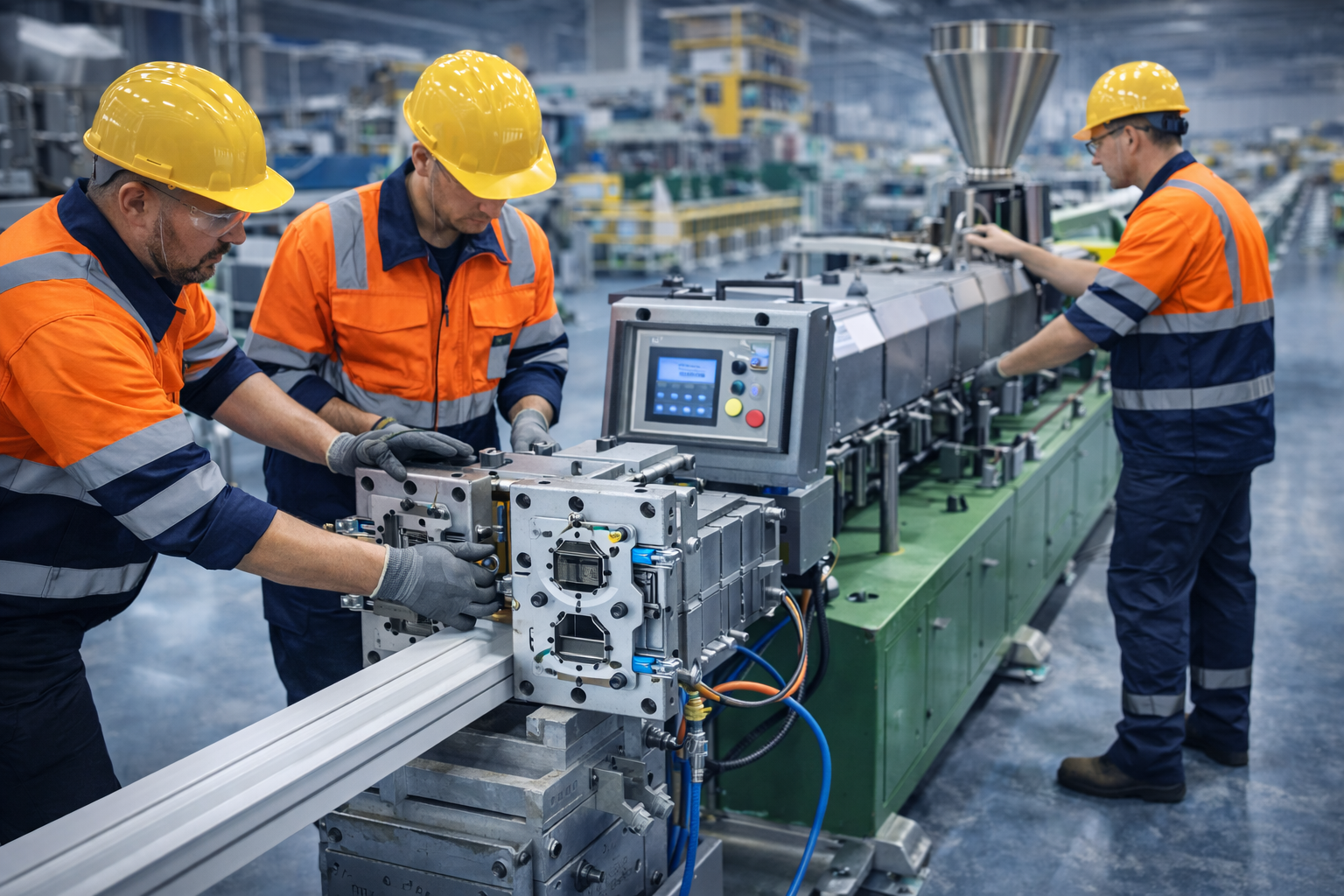
The factory layout should provide adequate space for the extrusion system, winding stations, material handling, downstream equipment and safe access for maintenance. Electrical installation, grounding, cooling services and other utilities should comply with the machine documentation and applicable local regulations.
During commissioning, the production team should verify drive synchronization, safety interlocks, control functions, tape feeding, tension regulation and the coordination of individual line sections. Initial production trials should follow an approved procedure for the selected pipe construction.
EXTRUTEX can define the appropriate maintenance requirements and recommended spare parts according to the final machine configuration. Operators should follow the supplied technical documentation and applicable safety procedures.
RTP/TCP pipes intended for pressure service must be designed, manufactured and qualified for their specified operating conditions. The applicable standards and testing requirements depend on the application, market, pipe construction and regulatory environment.
Important verification areas may include dimensional tolerances, tensile properties, pressure resistance, long-term performance, temperature capability, chemical compatibility, reinforcement integrity, interface bonding and connection-system performance.
For oil and gas applications, the project specification may identify industry-specific qualification requirements. Water and district-energy projects may have different material, pressure, temperature and installation requirements. The relevant standards should be identified during product engineering rather than assumed to be identical for all RTP/TCP pipes.
EXTRUTEX production equipment is intended to support the controlled manufacture of the specified pipe construction. Machine automation alone does not establish a finished pipe's pressure rating, service life or regulatory compliance. These properties must be demonstrated through appropriate engineering, testing and product qualification.
The EXTRUTEX model range covers Ø50–250 mm for RTP250, Ø110–315 mm for RTP315 and Ø250–630 mm for RTP630. The available range for a specific product depends on the selected model and its tooling and configuration.
RTP generally refers to reinforced thermoplastic pipe, while TCP refers to thermoplastic composite pipe. Both combine thermoplastic materials with structural reinforcement, but their layer construction, material architecture and manufacturing methods may differ. The intended product design determines the appropriate process.
The specified equipment can be configured for glass-fiber tape, aramid tape and steel-wire tape, subject to the selected winding system and pipe construction. Material compatibility and handling requirements must be confirmed during engineering.
Yes. The line can use coordinated control to synchronize winding operation with pipe travel speed. This helps maintain the required winding pattern when production speed changes within the approved operating range.
Consistent tape tension helps maintain stable reinforcement placement. Incorrect tension can contribute to loose winding, irregular coverage or reinforcement damage. The appropriate tension depends on the reinforcement material and pipe design.
Yes. The production line can be configured around the intended pipe diameters, thermoplastic materials, reinforcement architecture, winding requirements, production targets and downstream equipment. The final configuration is established through technical review.
No. The production machine model and pipe diameter range do not independently determine the finished pipe's pressure rating. Pressure capability depends on the complete pipe design, materials, reinforcement structure, manufacturing quality and successful qualification testing.
Selection should consider the full diameter range, wall construction, reinforcement material, number of reinforcement layers, required output and intended service conditions. EXTRUTEX can use these requirements to assess the appropriate model and production configuration.
EXTRUTEX manufactures TP/TCP pipe production lines for industrial customers developing reinforced thermoplastic pipe products for demanding applications. The RTP250, RTP315 and RTP630 models provide different nominal diameter ranges, while configurable winding stations, servo-driven motion and PLC-based coordination support the controlled application of reinforcement.
From thermoplastic liner extrusion and reinforcement winding to outer-jacket processing and downstream handling, the production system can be engineered around the customer's pipe construction and manufacturing objectives. Selecting the correct reinforcement architecture, process sequence and control configuration is essential for achieving consistent production and meeting the finished product's performance requirements.
Whether the target application involves oilfield pipelines, industrial fluid transportation, water infrastructure or other qualified pressure-pipe applications, EXTRUTEX can evaluate the required equipment configuration based on pipe dimensions, materials, operating conditions and production targets.
Planning to manufacture reinforced thermoplastic pipes from Ø50 mm to Ø630 mm? Contact EXTRUTEX with your target pipe diameters, liner material, reinforcement type, pressure requirements and expected production capacity.
Our team can assess the appropriate production-line model, winding configuration and auxiliary equipment for your project.
Contact EXTRUTEX 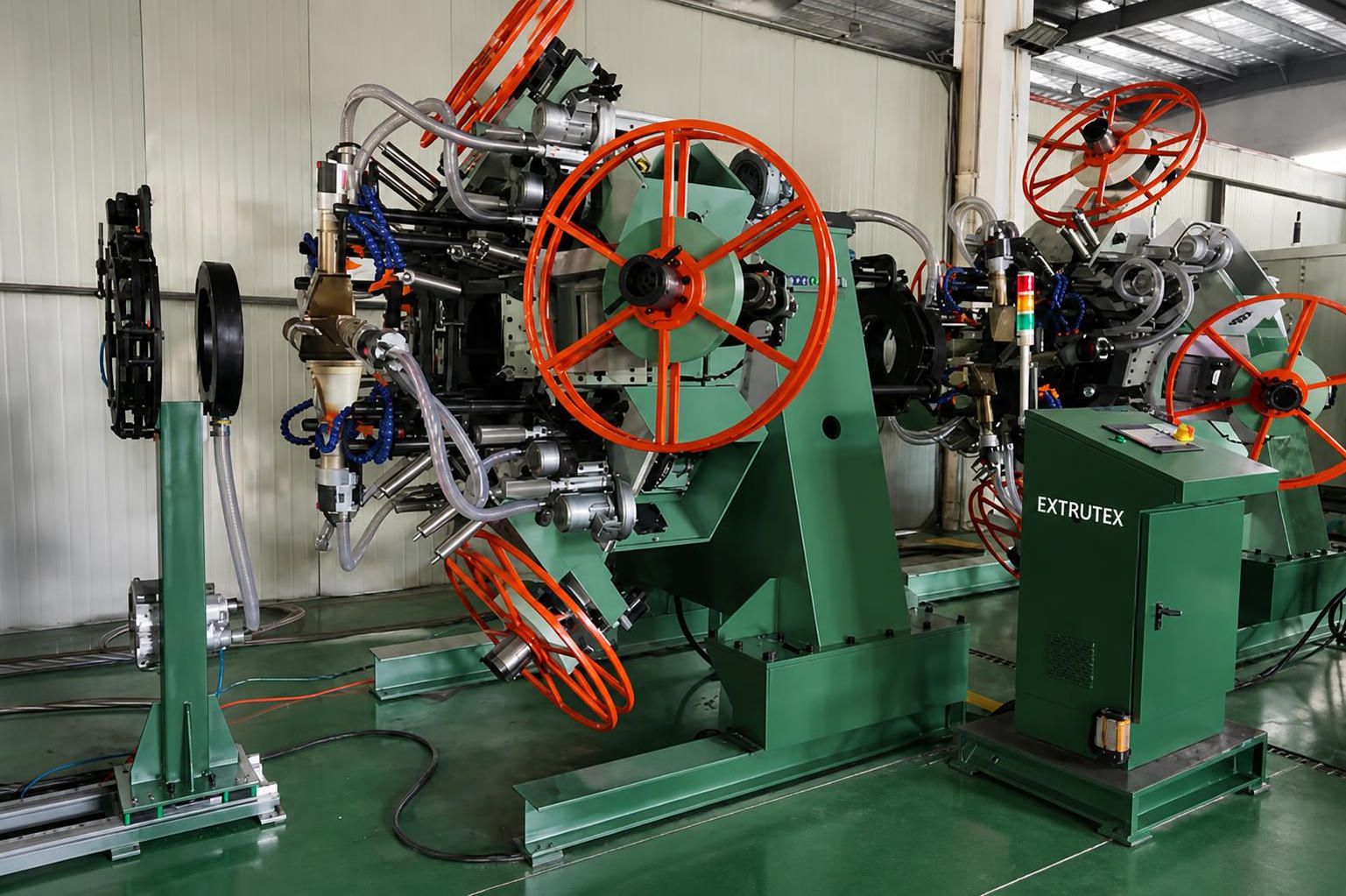
There are no reviews yet.
By submitting your email, you agree to our company’s terms and conditions.
We are not looking to sell; we are here to provide you with the best support and service.
Contact available 24/7
Please do not contact us for advertising or sales inquiries
All rights of this website are reserved for EXTRUTEX Austria and its partner companies, © 2026
-
(0 customer reviews)