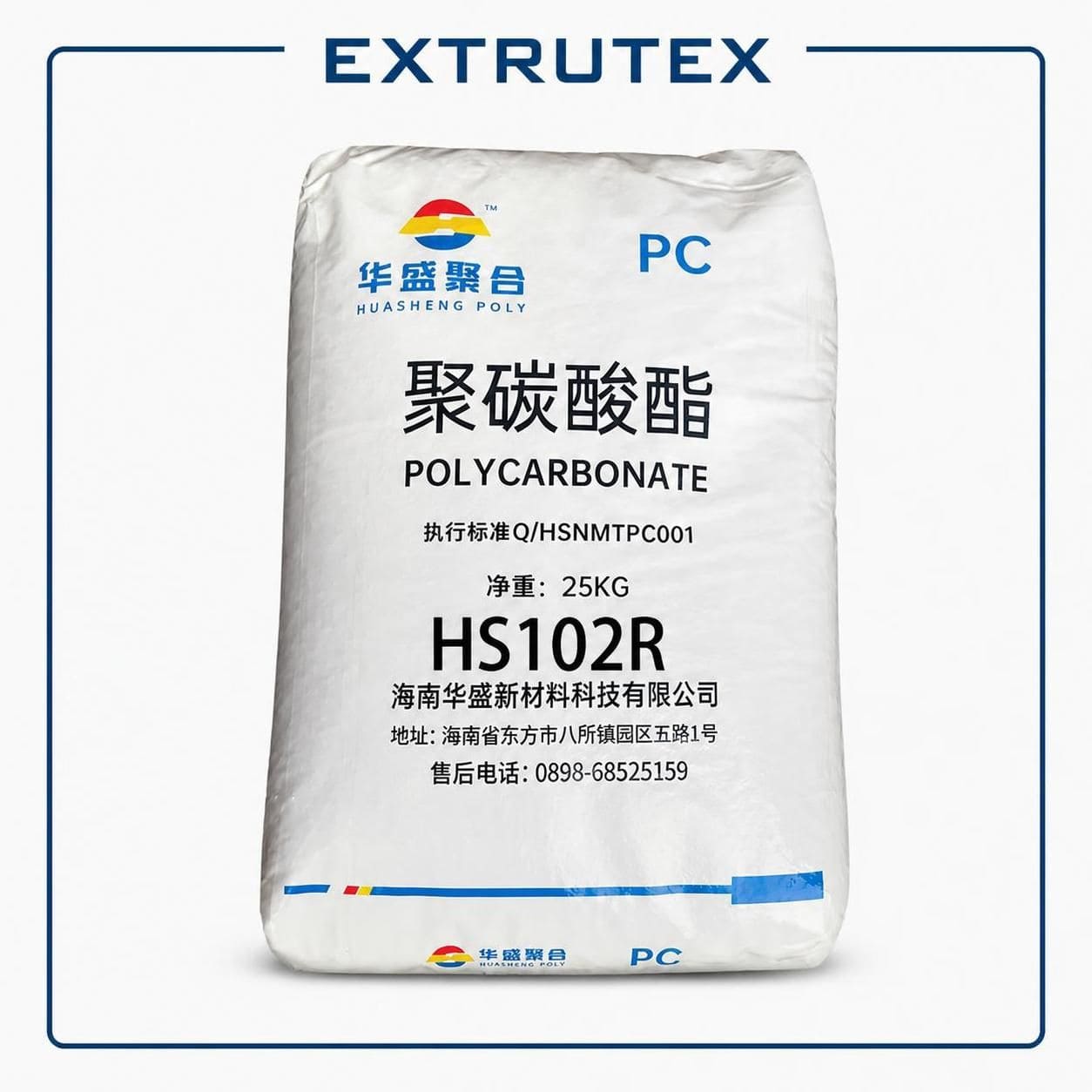
EXTRUTEX Polycarbonate (PC Resin) Pellets
High-performance thermoplastic resin for transparent products, durable injection-moulded components, electrical housings, optical applications and engineering parts.
EXTRUTEX supplies polycarbonate resin grades for manufacturers seeking a balance of impact resistance, transparency, dimensional stability and heat performance. Available options can include general-purpose injection moulding grades, high-flow materials, extrusion grades and selected specialty formulations, subject to grade availability and technical verification.
Contact EXTRUTEX with your product design, processing method and performance requirements to help identify a suitable PC resin grade.
MaterialPolycarbonate (PC)
AppearanceNaturally transparent; also available in coloured grades
Typical DensityApproximately 1.20 g/cm³
CAS Number25037-45-0
HS Code39074000 — verify according to customs jurisdiction and product form
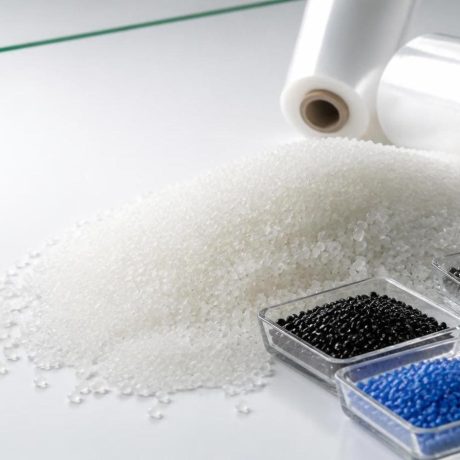
Supply FormThermoplastic resin pellets
1. What Is Polycarbonate (PC)?
Polycarbonate, commonly abbreviated as PC, is an engineering thermoplastic valued for its combination of high impact resistance, optical clarity, stiffness and heat resistance. It is widely used where conventional general-purpose plastics may not provide the required balance of mechanical performance and transparency.
Uncoloured PC resin can produce clear moulded components with a glass-like appearance. Depending on the grade and processing conditions, manufacturers can also produce translucent, opaque, tinted or custom-coloured products. Special grades may be formulated for extrusion, optical components, improved flow, flame-retardant performance, outdoor applications or other defined requirements.
Polycarbonate is an amorphous polymer. It does not have a single, sharp crystalline melting point in the same way that a semi-crystalline thermoplastic does. Its glass-transition temperature and processing window are more useful when evaluating thermal behaviour and moulding conditions. The actual processing requirements depend on the resin grade, equipment, mould design and finished-part specifications.
For industrial buyers, selecting PC should begin with the final product's requirements rather than the polymer name alone. Transparency, impact performance, heat exposure, chemical contact, dimensional tolerances, surface quality and regulatory requirements can all influence grade selection.
2. Polycarbonate Resin Identification and General Properties
| Property | Information |
|---|
| Material name | Polycarbonate |
| Common abbreviation | PC |
| Other name | Bisphenol A polycarbonate, for common BPA-based PC types |
| CAS number | 25037-45-0 |
| Molecular formula | (C₁₆H₁₄O₃)ₙ for common bisphenol-A-based polycarbonate |
| Appearance | Typically clear or transparent in natural form; colour depends on formulation |
| Typical density | Approximately 1.20 g/cm³; confirm the individual grade TDS |
| Thermal behaviour | Amorphous thermoplastic; glass-transition temperature and heat-deflection performance are more informative than a single melting point |
| Common processing methods | Injection moulding, sheet extrusion, profile extrusion and other grade-specific processes |
| HS code supplied | 39074000; final classification depends on applicable customs rules |
Important: The frequently quoted 220–230°C figure should not be treated as a universal melting point for polycarbonate. PC is amorphous. Consult the current grade data sheet for glass-transition temperature, heat-deflection temperature, recommended melt temperature and other thermal characteristics.
3. Key Advantages of PC Resin
High impact resistance
Polycarbonate is selected for parts that need to withstand mechanical impact and everyday handling. Actual impact performance depends on the grade, wall thickness, notch geometry, processing quality, temperature and conditioning. The grade-specific Izod or Charpy test result should be checked when impact resistance is a critical design requirement.
Transparency and optical potential
Natural PC can provide high transparency and is used in covers, lenses, light-transmitting components and clear housings. Optical quality depends on resin grade, contamination control, mould or die condition, drying, processing temperature and surface finish. Not every general-purpose PC grade is suitable for precision optical applications.
Heat performance
Many PC grades retain useful stiffness and dimensional performance at temperatures that would challenge some commodity plastics. Nevertheless, continuous-use temperature, heat-deflection temperature and resistance to thermal ageing are separate properties. The correct values must be selected from the grade's technical data sheet.
Dimensional stability and stiffness
PC can be used for engineering components that require a combination of stiffness, strength and dimensional control. Mould design, gate position, cooling, residual stress and part geometry still affect the final dimensions.
Versatile processing options
Depending on the grade, polycarbonate can be processed by injection moulding or extrusion. High-flow grades may support complex or thin-walled parts, while extrusion grades are designed for sheet, profile or multi-wall panel production. A grade suitable for injection moulding should not automatically be assumed suitable for extrusion.
4. Main Types of Polycarbonate Grades
General-purpose injection moulding PC
General-purpose grades are used for housings, covers, appliance components, durable consumer products and a variety of industrial mouldings. Selection depends on flow, impact performance, transparency, dimensional requirements and cycle-time targets.
High-flow PC
High-flow materials can be considered for intricate components, thin-wall designs or moulds with long flow paths. Melt-flow index alone does not predict finished-part performance. Confirm the test conditions and evaluate the grade against the actual mould design.
PC for sheet and profile extrusion
Extrusion grades are designed for processing through a suitable extruder and die. Applications may include solid sheet, multi-wall panels, lighting components and other extruded products. Melt strength, optical quality, dimensional control and processing stability should be reviewed when choosing an extrusion grade.
Optical and lighting grades
Selected PC grades are designed for lenses, reflectors, light guides and other optical or lighting components. Depending on the application, light transmission, colour stability, haze, surface quality and resistance to long-term heat exposure may be important.
Flame-retardant PC
Specialty grades may be available for electrical and electronic parts requiring defined flame-retardant performance. Requirements must be verified against the exact grade, part thickness, colour and relevant test standard. Do not assume that every PC grade is flame-retardant or meets a particular UL rating.
Specialty grades for regulated applications
Some manufacturers offer grades intended for selected medical, pharmaceutical, food-contact or drinking-water applications. These uses require confirmation of the exact grade, applicable regulatory documentation, intended conditions of use and market-specific requirements. A general-purpose resin should not be treated as approved for a regulated application without supporting documentation.
5. Polycarbonate Resin Grade Selection
EXTRUTEX can help buyers compare available grades according to the manufacturing process and target performance. The grade names below are provided as a reference list based on the supplied information. They are not a guarantee of current production status, stock availability or suitability for a particular application.
Chi Mei — Wonderlite grades
| Grade | Reported melt flow (g/10 min) | Application supplied |
|---|
| PC-110 | 10 | General injection-moulded parts |
| PC-110L | 10 | Automotive headlamp parts |
| PC-110U | 10 | Outdoor product components |
| PC-110V | 10 | Electrical appliance parts |
| PC-115 | 15 | Small injection-moulded products |
| PC-115U | 15 | Outdoor signage and products |
| PC-122 | 22 | Thin-wall injection products |
| PC-122U | 22 | Outdoor equipment components |
| PC-175 | 65 | Optical-disc manufacturing, as listed in supplied data |
| PC-6600 | 10 | Electrical appliance components |
Covestro — Makrolon grades
| Grade | Reported melt flow (g/10 min) | Reported notched Izod impact (kJ/m²) | Application supplied |
|---|
| 2800 | 10 | 85 | General injection-moulded items |
| 2400 | 20 | 75 | Transparent products |
| 2405 | 20 | 65 | General-purpose injection parts |
| 2407 | 20 | N/A | General-purpose outdoor parts |
| 2456 | 20 | 65 | Food-contact applications, subject to compliance verification |
| 2458 | 20 | 65 | Medical-device components, subject to grade verification |
| 2805 | 10 | 70 | General injection-moulded products |
| 2807 | 10 | 70 | General-purpose outdoor products |
| 2856 | 10 | 70 | Food-contact applications, subject to compliance verification |
| 2858 | 10 | 70 | Medical applications, subject to grade verification |
| ET 3113 | 7 | 70 | Extruded sheet production |
| ET3117 | 7 | 70 | Multi-wall sheet extrusion |
Idemitsu Kosan — TARFLON grades
| Grade | Reported melt flow (g/10 min) | Application supplied |
|---|
| RY2200 | 14 | Transparent household items |
| URZ2500 | 54 | Reflective and shielding parts |
| LC1402 | 150 | LED lighting components |
| URC2500 | 36 | LCD backlight reflectors |
| 1700 | 32 | General injection-moulded parts |
| 1900 | 23 | High-flow injection products |
| AC1050 | 32 | Mobile-device components |
| G1910 | N/A | Mechanical parts in electronics |
| G1920 | N/A | High-strength structural parts |
| LC1500 | 78 | LCD backlight and daytime-running-light components |
Mitsubishi — Iupilon grades
| Grade | Reported melt flow (g/10 min) | Application supplied |
|---|
| ELV 2030 | 9 | Sports and medical equipment parts |
| H2001R | 23 | General-purpose injection parts |
| H3000UR | 30 | General-purpose moulded products |
| LSH 2030 | 9 | Wear-resistant industrial parts |
| S2000UR | 10 | General-purpose injection parts |
| S2001R | 10 | General-purpose moulded items |
| S3000R | 17 | General-purpose injection products |
| S3000UR | 17 | General-purpose moulded parts |
| S3001R | 17 | General-purpose injection items |
SABIC — LEXAN grades
| Grade | Reported melt flow (g/10 min) | Application supplied |
|---|
| 101 | 7 | Parts for thicker sections |
| 103 | 7 | Outdoor and lighting parts |
| 104 | 7 | General plastic products |
| 123R | 17.5 | Small, intricate parts |
| 124R | 17.5 | Small, intricate parts |
| 141R | 11 | General-purpose injection parts |
| 143R | 11 | Outdoor-exposed products |
| EM3110 | 20 | Automotive interior components |
| EX1332T | 3 | Multi-wall sheet extrusion |
| EX1632T | 6 | Multi-wall sheet extrusion |
| FR 505RU | 7 | Injection-moulded flame-retardant parts |
| FR 945U | 10 | Injection-moulded flame-retardant parts |
| FR 955 | 7 | Injection-moulded flame-retardant parts |
| FR 945 | 10 | Flame-retardant electrical parts, as listed in supplied data |
| FR 3412ECR | 7 | Flame-retardant structural parts |
| FR1723 | 25 | Injection-moulded parts with mould release |
| HF4010SR | 40 | Large or thin-wall moulded parts |
| HP1HF | 36 | Medical-device components, subject to grade verification |
| HPS4 | 10 | Medical and pharmaceutical parts, subject to grade verification |
| IR2240 | 9 | Injection-moulded parts with mould release |
| LS1 | 17.5 | Automotive lens parts |
| LS2 | 11 | Automotive lens parts |
| LUX1619 | 7.5 | Extruded parts requiring high light reflectance |
| LUX2289 | 16 | Injection-moulded parts requiring high light reflectance |
| ML3729R | 36 | Injection-moulded parts with mould release |
| OQ3420 | 10.5 | Ophthalmic lens manufacturing |
| OQ4320R | 12.5 | Sunglass and sunvisor parts |
| PK2870 | 2 | Water-bottle manufacturing, subject to compliance verification |
| VR2220 | 9 | Injection-moulded parts with mould release |
| XLS1110 | 35 | Optical parts manufacturing |
| HFR1724 | 25 | Food-contact applications, subject to compliance verification |
| HP2 | 16 | Medical-device components, subject to grade verification |
| PC1000R | 9 | General-purpose moulding |
| PC2200R | 21 | High-flow injection products |
Grade data and availability: The values above reproduce the supplied grade information and should be considered preliminary selection data, not guaranteed specifications. Melt-flow test conditions are not consistent across all supplied records. Confirm each grade's manufacturer, current TDS, test method, impact units, processing recommendations and availability before ordering. Brand names are used only to identify the requested grades; EXTRUTEX is not claiming ownership of those brands.
6. Typical Applications of PC Resin
- Electrical and electronic products: housings, protective covers, connectors and selected components, subject to electrical and flame-performance requirements.
- Automotive components: interior parts, lighting-related components, lenses and durable mouldings, subject to the relevant automotive specifications.
- Optical and lighting products: lenses, light guides, reflectors and transparent covers made with suitable optical grades.
- Construction and glazing: solid sheet, multi-wall panels, protective screens and selected building components.
- Consumer products: appliance housings, equipment covers, durable household products and transparent components.
- Industrial equipment: machine guards, inspection windows, protective housings and engineering components where the selected grade meets the design requirements.
- Medical and laboratory equipment: selected housings and components only when the grade and finished product meet the required regulatory and performance criteria.
7. Processing Considerations
Injection moulding
Injection moulding is widely used for PC parts with complex geometry, dimensional requirements and a high-quality surface finish. The processor should follow the grade supplier's recommendations for drying, melt temperature, mould temperature, injection speed, holding pressure and cooling. Excessive moisture can contribute to hydrolytic degradation and reduced properties during processing.
Extrusion
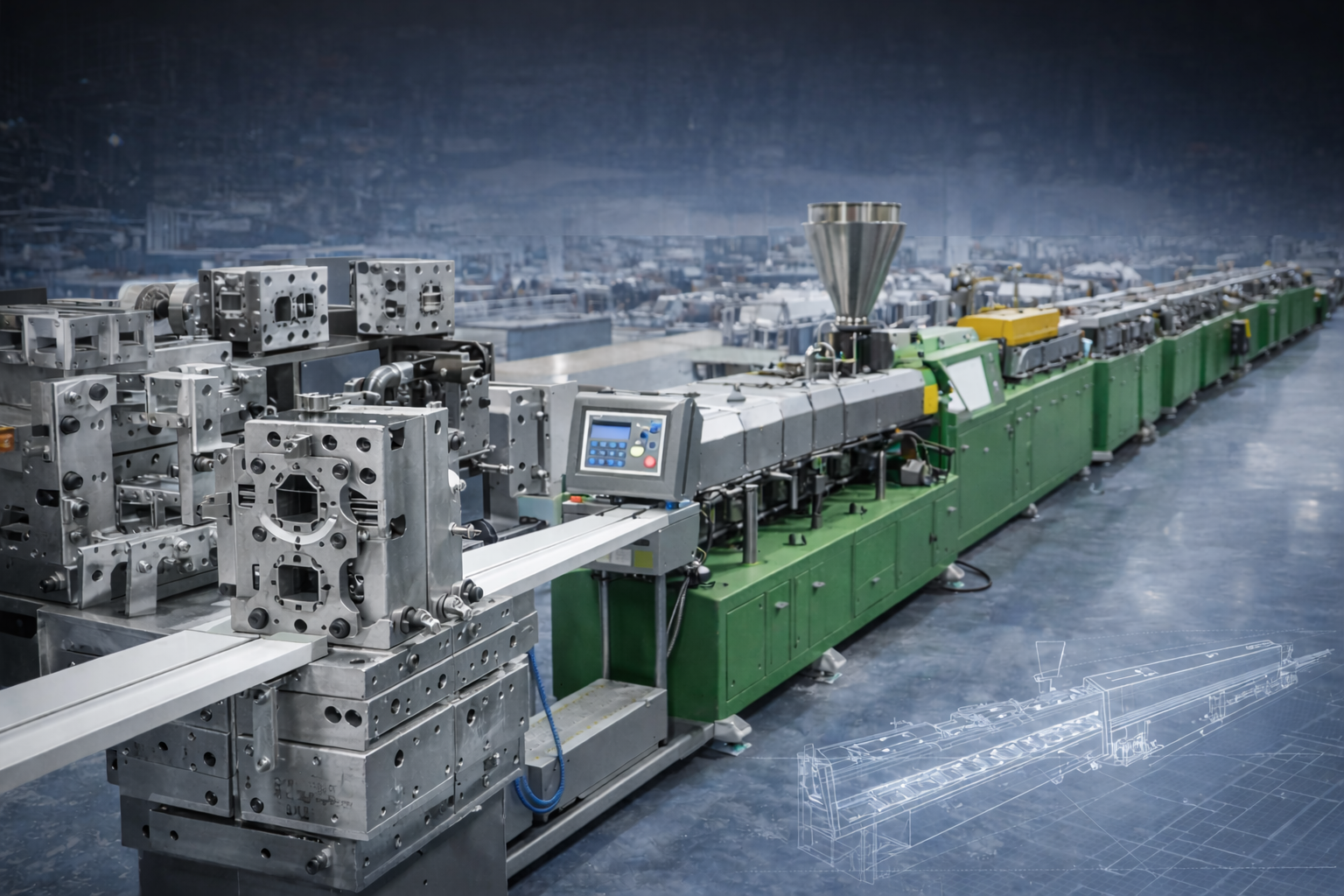
PC extrusion grades can be used for solid sheet, multi-wall sheet and selected profiles. Stable melt conditions, suitable screw and die design, temperature control and consistent cooling are important. Optical products may require additional attention to contamination, surface quality and residual stress.
Colouring and compounding
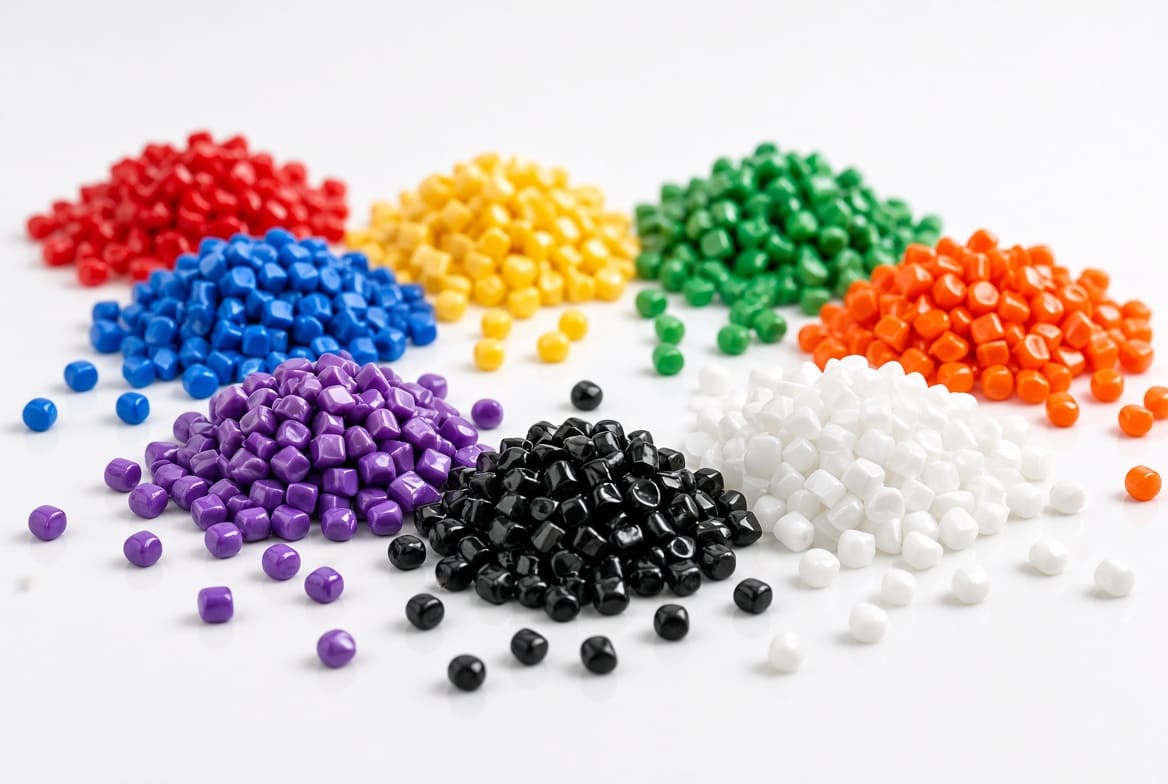
Natural PC may be compounded or supplied in selected colours, depending on grade and supplier capability. Colourants and additives should be compatible with the polymer and intended processing conditions. For transparent parts, pigments and additives can change clarity, light transmission, colour stability and mechanical properties.
Drying and material handling
PC is sensitive to moisture during melt processing. Use the resin manufacturer's drying recommendations rather than a universal time or temperature. Store pellets in clean, sealed packaging and prevent reabsorption of moisture after drying. Regrind, recycled content and blended materials should be evaluated carefully when optical quality or safety-related performance is required.
8. How to Choose the Right PC Grade
- Define the process: identify whether the product will be injection moulded, sheet-extruded or profile-extruded.
- Set the mechanical requirements: determine impact strength, stiffness, dimensional tolerance and expected service conditions.
- Confirm optical needs: specify transparency, haze, colour, light transmission and surface-finish requirements when relevant.
- Check heat exposure: consider continuous operating temperature, short-term heat exposure and thermal ageing.
- Evaluate chemical contact: review exposure to cleaners, oils, solvents, stress-cracking agents and other chemicals relevant to the application.
- Verify compliance: obtain the exact documents required for food contact, medical use, flame performance, drinking water or other regulated applications.
- Review processing data: compare melt-flow values only when test conditions are known and comparable.
- Request a grade-specific TDS: confirm current specifications and availability before production approval.
9. Why Source PC Resin Through EXTRUTEX?
EXTRUTEX supports industrial buyers who need to identify and source polymer materials for specific manufacturing requirements. Rather than selecting a resin by name alone, buyers can provide details about their finished part, processing equipment and performance targets so the available options can be reviewed more efficiently.
- Support with identifying candidate PC grades for injection moulding and extrusion.
- Comparison of available grade data and processing requirements.
- Assistance with sourcing natural and selected coloured materials, subject to availability.
- Review of application requirements before a grade is shortlisted.
- Coordination of technical documentation and supply details where available.
Brand and grade availability may vary by country, distributor, production status and order requirements. Final grade selection should be approved by the buyer's technical team using current manufacturer documentation and, where necessary, production trials.
10. Frequently Asked Questions
Is polycarbonate transparent?
Natural PC is commonly transparent, but available grades can also be translucent, opaque or coloured. The clarity of the finished part depends on the grade, processing conditions, thickness and surface quality.
What is the density of PC resin?
A typical reference value is approximately 1.20 g/cm³. Use the current TDS for the selected grade when density is needed for engineering calculations or purchasing specifications.
What is the melting point of polycarbonate?
PC is an amorphous thermoplastic and does not have a single sharp crystalline melting point. Its glass-transition temperature and recommended processing window are more useful for material selection.
Can PC resin be used for injection moulding?
Yes. Many PC grades are intended for injection moulding. Confirm the grade's flow properties, drying requirements, moulding window and final-part performance.
Are all PC grades suitable for outdoor use?
No. Outdoor suitability depends on weathering performance, UV resistance, colour stability, stress, design and service conditions. Select a grade specifically supported for the intended exposure.
Can polycarbonate be used in food-contact or medical applications?
Only when the exact grade and finished product meet the applicable requirements for the intended use and market. Request current compliance documentation and verify the conditions covered by that documentation.
What is the difference between PC injection grades and extrusion grades?
They are designed for different processing conditions and performance needs. Injection grades are formulated for mould filling and part production, while extrusion grades are selected for stable output through a die and the requirements of sheet or profile production.
How can I request a PC grade recommendation?
Send EXTRUTEX the target application, manufacturing process, colour, required mechanical and thermal properties, destination country and preferred grade or manufacturer. This information helps narrow the selection and identify which technical documents should be checked.
Request Polycarbonate Resin from EXTRUTEX
Looking for PC pellets for transparent products, engineering components, sheet extrusion or electrical and electronic applications?
Send us your grade requirements, application details and expected order specifications so we can review suitable sourcing options.
Contact EXTRUTEX









-
(0 customer reviews)