No products in the cart.


All rights of this website are reserved for EXTRUTEX Austria and its partner companies, © 2026

Multiple Payment Methods

Discount for advance payments over 50%

Free Shipping Coordination Services
Payment methods:


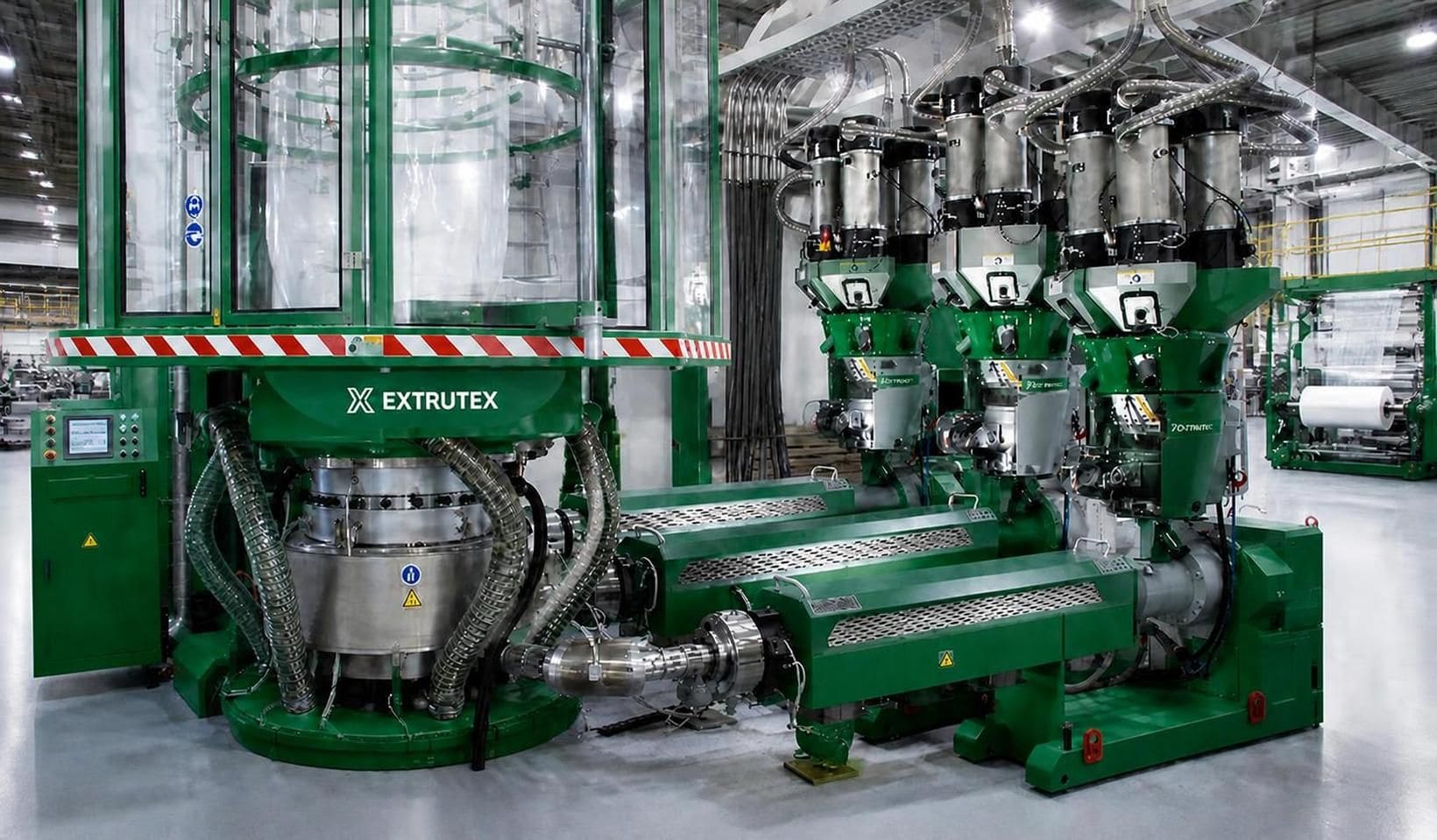
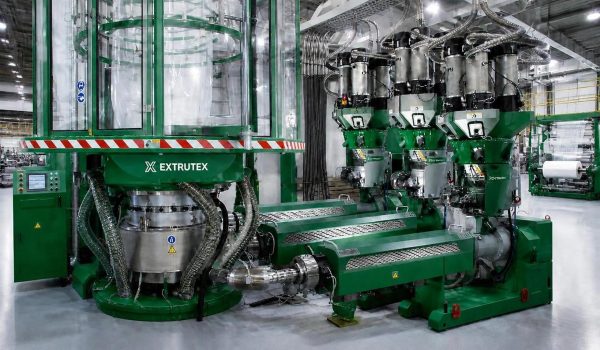
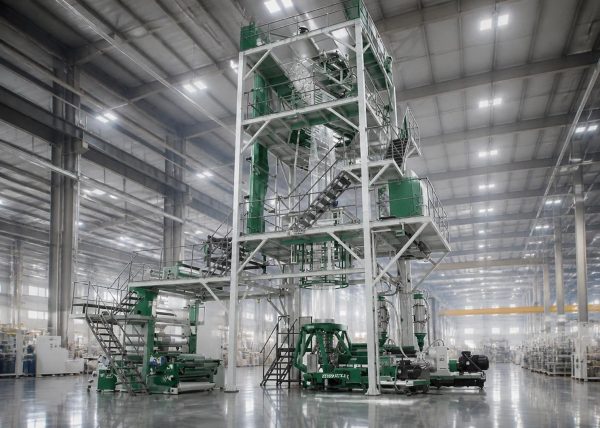
The EXTRUTEX EX3CX Series Multilayer Co-extrusion Blown Film Line is designed for manufacturers that require flexible, reliable, and high-capacity plastic film production. Available in two-layer, three-layer, and five-layer configurations, the system combines multiple extruders with a multilayer co-extrusion die and downstream film-handling equipment to produce films for packaging, agriculture, industry, and other applications.
Multilayer co-extrusion allows different polymer materials or formulations to be combined within one film structure. Each layer can contribute specific characteristics, such as mechanical strength, sealing performance, flexibility, stiffness, or barrier performance, depending on the materials selected and the design of the layer structure.
EXTRUTEX provides blown film line solutions based on customer requirements, including film width, thickness, material combination, production capacity, and intended application. The EX3CX Series includes standard three-layer reference models, while two-layer and five-layer configurations are engineered according to individual project specifications.
Blown film extrusion is a continuous manufacturing process in which thermoplastic material is melted in an extruder, conveyed through a circular die, and formed into a tubular film bubble. Air introduced into the bubble expands the molten tube to the required diameter. The film is cooled, stabilized, collapsed, and wound into rolls for further processing or direct use.
In multilayer co-extrusion, two or more extruders supply molten polymers to a common co-extrusion die. The melt streams are combined into a layered structure before the film bubble is formed. This enables manufacturers to select material combinations that meet the performance and cost requirements of the finished film.
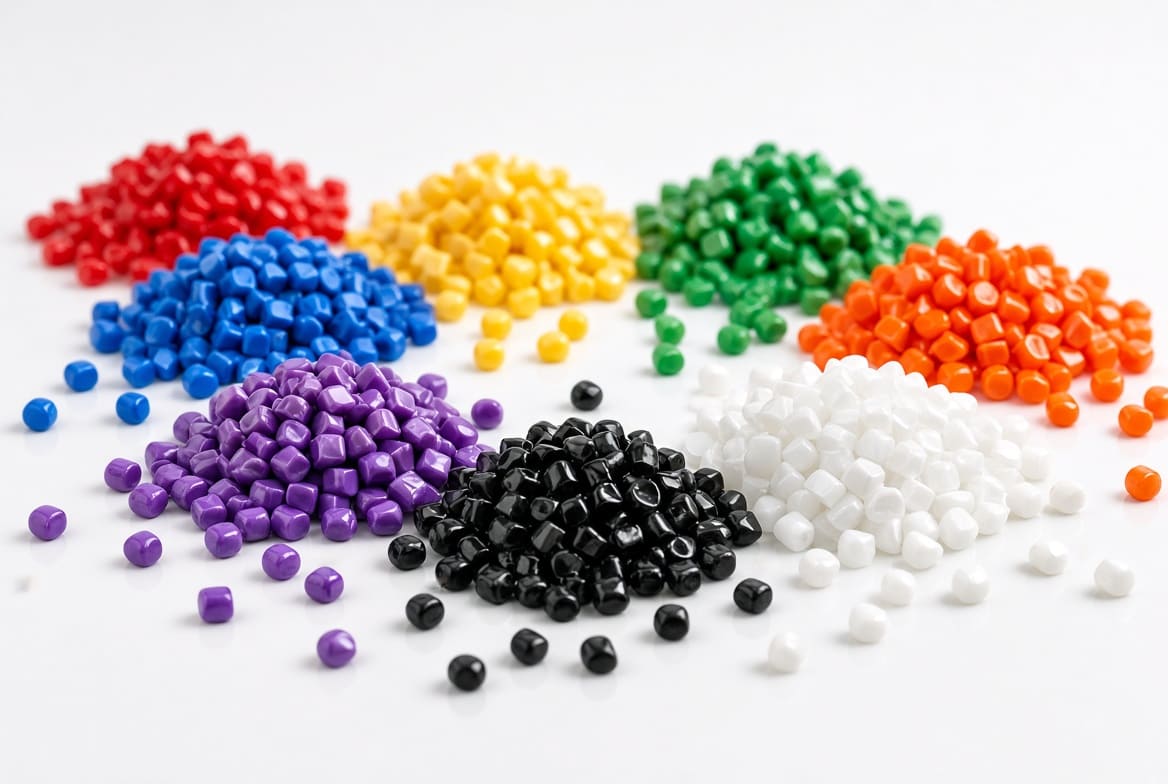
The EXTRUTEX EX3CX Series is designed for processing suitable grades of LDPE, LLDPE, MDPE, HDPE, PP, and EVA, subject to the selected machine configuration, die design, and material compatibility. The appropriate layer arrangement depends on the product specification and the function required from each layer.
A two-layer blown film line combines two polymer layers in a single film structure. This configuration can be suitable when a manufacturer needs to combine different material characteristics, such as a functional surface layer and a supporting layer, or when different formulations are required on opposite sides of the film.
Two-layer structures can be considered for selected packaging films, agricultural films, industrial liners, and other applications where a two-material construction meets the product requirements. The actual layer arrangement depends on the polymers, required adhesion, processing window, and final performance targets.
EXTRUTEX two-layer configurations are customized according to the required film width, output, material combination, and downstream equipment.
Three-layer co-extrusion is a versatile solution for manufacturers that need to balance material performance and production cost. A common structure is A/B/C, where the outer layers and core layer may use different grades, formulations, or recycled-content strategies when technically appropriate.
Depending on the application, the layers may be designed to contribute surface quality, sealing behavior, strength, stiffness, or other properties. The exact function of each layer should be established through material selection and film testing rather than assumed from the layer count alone.
The EXTRUTEX EX3CX standard reference models are based on three-layer blown film production. The technical data in the model table represents these standard three-layer arrangements.
Five-layer co-extrusion offers additional flexibility when a film requires several distinct functional layers. Depending on the selected polymers and compatible tie-layer materials, the structure may combine mechanical layers with sealing, adhesive, or barrier layers.
Five-layer configurations may be considered for demanding packaging structures and selected technical films. However, the number of layers alone does not guarantee a particular barrier level or food-contact suitability. Those properties depend on the actual materials, layer thicknesses, process control, and applicable regulatory requirements.
EXTRUTEX five-layer lines are customized according to the customer's target film structure, raw materials, output, and quality specifications.
The EX3CX Series can be configured for suitable grades of the following thermoplastics:
Not every grade can be combined in every layer arrangement. Material compatibility, melt temperature, viscosity, die design, and interlayer adhesion must be considered when specifying a multilayer structure. If dissimilar polymers are used, an appropriate tie layer or other bonding strategy may be necessary.
The following table presents the supplied reference specifications for the standard three-layer blown film line configurations.
| Model | Co-extrusion Layers | Applicable Materials | Screw Diameters (mm) | Film Layflat Width (mm) | Film Thickness (mm) | Extrusion Capacity (kg/h) |
|---|---|---|---|---|---|---|
| EX3CX1100 | 2 / 3 / 5* | LDPE / LLDPE / MDPE / HDPE / PP / EVA | 50 / 55 / 50 | 1,000 | 0.025–0.25 | 220 |
| EX3CX1500 | 2 / 3 / 5* | LDPE / LLDPE / MDPE / HDPE / PP / EVA | 55 / 65 / 55 | 1,400 | 0.025–0.25 | 320 |
| EX3CX1800 | 2 / 3 / 5* | LDPE / LLDPE / MDPE / HDPE / PP / EVA | 65 / 75 / 65 | 1,700 | 0.025–0.25 | 450 |
| EX3CX2300 | 2 / 3 / 5* | LDPE / LLDPE / MDPE / HDPE / PP / EVA | 75 / 90 / 75 | 2,200 | 0.025–0.25 | 550 |
Technical note: The listed screw diameters, layflat widths, thicknesses, and extrusion capacities are reference data for the standard three-layer configuration. Two-layer and five-layer machines require customized arrangements. Actual output and achievable film dimensions depend on the selected materials, film structure, operating conditions, and equipment configuration. Confirm the final specifications with EXTRUTEX before ordering.
Film width and thickness are important quality parameters in blown film production. Layflat width is influenced by the die diameter, bubble expansion ratio, material behavior, and process settings. Film thickness depends on output, line speed, die gap, drawdown, bubble stability, and the characteristics of the polymer.
The EXTRUTEX line should be configured around the customer's required width and thickness range. Stable extrusion, suitable cooling, controlled haul-off, and consistent winding help maintain product uniformity during production.
For applications with demanding tolerances, manufacturers should define the required dimensional variation and inspection method before the line is specified. Optional measurement and control systems can be considered according to the desired level of automation.
Each layer is supplied by a corresponding extrusion unit. The extruder size and drive system are selected according to material requirements, target output, and the intended proportion of each layer. Feeding and dosing arrangements can be adapted to the selected raw materials and additives.
The co-extrusion die combines the melt streams into a layered tubular structure. Its design is central to layer distribution, flow stability, and the quality of the finished film. Die configuration must match the required number of layers, polymer combination, output, and film width.
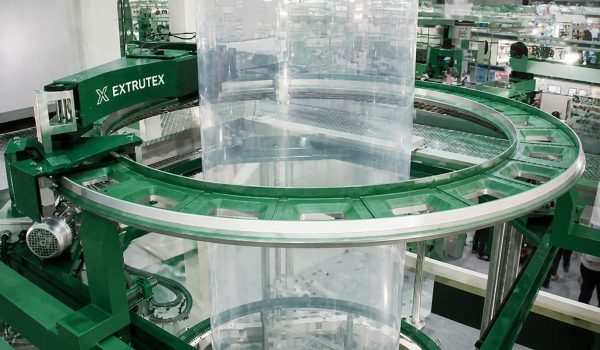
Cooling equipment removes heat from the expanding film bubble and helps stabilize the film during production. The cooling arrangement should be selected according to output, film width, polymer type, and the required operating window.
The haul-off unit draws the film upward and supports consistent film transport. The collapsing frame guides the tubular film into a flat structure before it enters the winding system. Correct alignment and tension control help reduce wrinkles and handling defects.
The winder collects the finished film into rolls suitable for storage, converting, printing, or packaging operations. Winding requirements depend on roll diameter, roll width, tension, changeover method, and the customer's downstream processes.
Blown film lines can produce suitable films for agricultural applications, including selected crop covers, greenhouse films, and other agricultural uses. UV resistance, service life, transparency, and mechanical performance depend on the formulation and film design.
Industrial film applications include protective wrapping, liners, covers, and films used for handling or storing products. The required stiffness, toughness, thickness, and environmental resistance depend on the application.
Suitable polymer formulations can be used for selected shrink film applications. Shrink performance depends on material selection, orientation, film structure, and the intended heating conditions.
Multilayer co-extrusion can support barrier film structures when suitable barrier resins and compatible layer arrangements are selected. The listed standard materials do not by themselves guarantee high oxygen or moisture barrier performance. Specific barrier requirements must be confirmed through material selection and testing.
Blown film is widely used to manufacture mailing bags, courier bags, liners, and other packaging products. Layer structure, thickness, sealing performance, printability, and puncture resistance should be selected according to the finished product requirements.
Before installation, the customer should prepare the required factory space, electrical supply, ventilation, cooling utilities, raw material storage, and access for maintenance. Utility requirements depend on the final line configuration.
During commissioning, the operating team should verify the direction of rotation, temperature control, extrusion stability, cooling performance, bubble stability, haul-off synchronization, and winding tension. Initial trials should be carried out with the intended materials and target film specifications.
Routine maintenance may include inspecting screws and barrels, heaters, thermocouples, gearboxes, die surfaces, cooling components, rollers, belts, and winding equipment. Cleaning and material changes should follow approved procedures to reduce contamination and avoid damage to processing components.
Operators should be trained in safe start-up and shutdown, handling hot polymer, monitoring process conditions, identifying film defects, and following machine safety procedures.
To select a suitable EXTRUTEX EX3CX configuration, manufacturers should define:
Providing a target film sample, material specification, or existing product data can help EXTRUTEX assess the required configuration more accurately.
The series can be engineered for these layer configurations. The supplied standard reference specifications apply to the three-layer line; two-layer and five-layer configurations are customized to order.
Suitable grades of LDPE, LLDPE, MDPE, HDPE, PP, and EVA can be considered. The final material range depends on the extruder, die design, and compatibility of the selected polymers.
It may be configured for suitable packaging applications, but food-contact suitability depends on the complete material formulation, additives, processing conditions, and applicable regulations. Confirm the intended use and compliance requirements during project planning.
Multilayer blown film technology can produce barrier structures when suitable barrier materials and layer arrangements are used. Specific barrier performance must be defined and verified; it cannot be guaranteed by layer count alone.
Output depends on the extruder configuration, polymer grade, film thickness and width, layer ratios, cooling capacity, line speed, and operating conditions. The final capacity should be confirmed for the intended film product.
EXTRUTEX provides customized multilayer blown film co-extrusion solutions for packaging, agriculture, industrial film, and other applications. From standard three-layer configurations to specially engineered two-layer and five-layer systems, each project can be evaluated according to material requirements, film dimensions, capacity targets, and factory conditions.
Contact EXTRUTEX to discuss your film specifications, raw materials, target output, and preferred layer structure. Our team can help assess the appropriate blown film extrusion configuration for your manufacturing project.
EXTRUTEX – Multilayer Extrusion Technology for Flexible Film Manufacturing.
There are no reviews yet.
By submitting your email, you agree to our company’s terms and conditions.
We are not looking to sell; we are here to provide you with the best support and service.
Contact available 24/7
Please do not contact us for advertising or sales inquiries
All rights of this website are reserved for EXTRUTEX Austria and its partner companies, © 2026
-
(0 customer reviews)