No products in the cart.




All rights of this website are reserved for EXTRUTEX Austria and its partner companies, © 2026

Multiple Payment Methods

Discount for advance payments over 50%

Free Shipping Coordination Services
Payment methods:


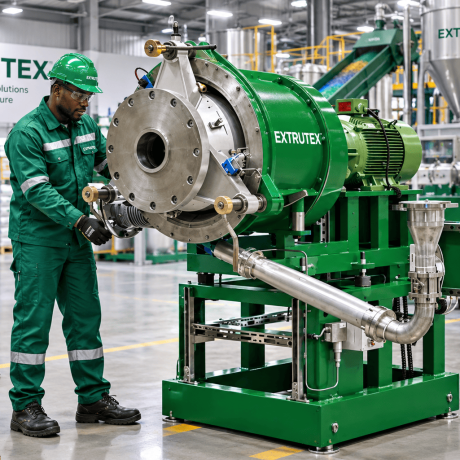
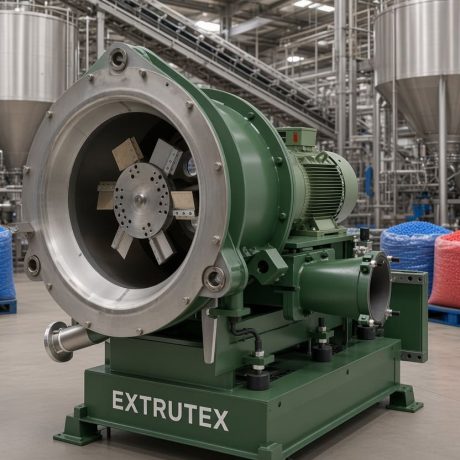
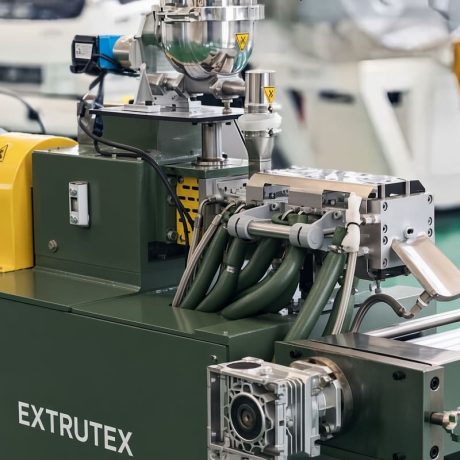
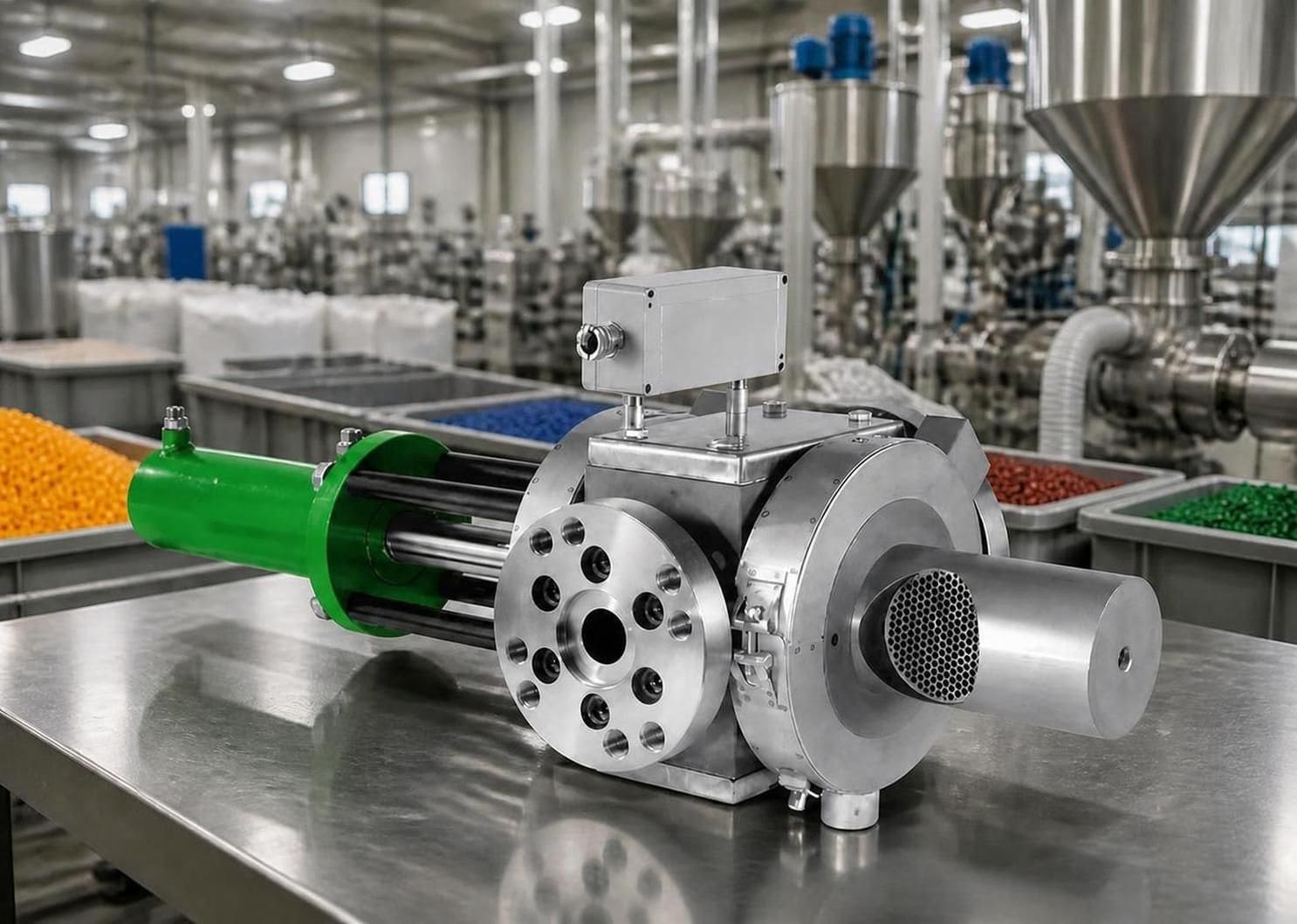
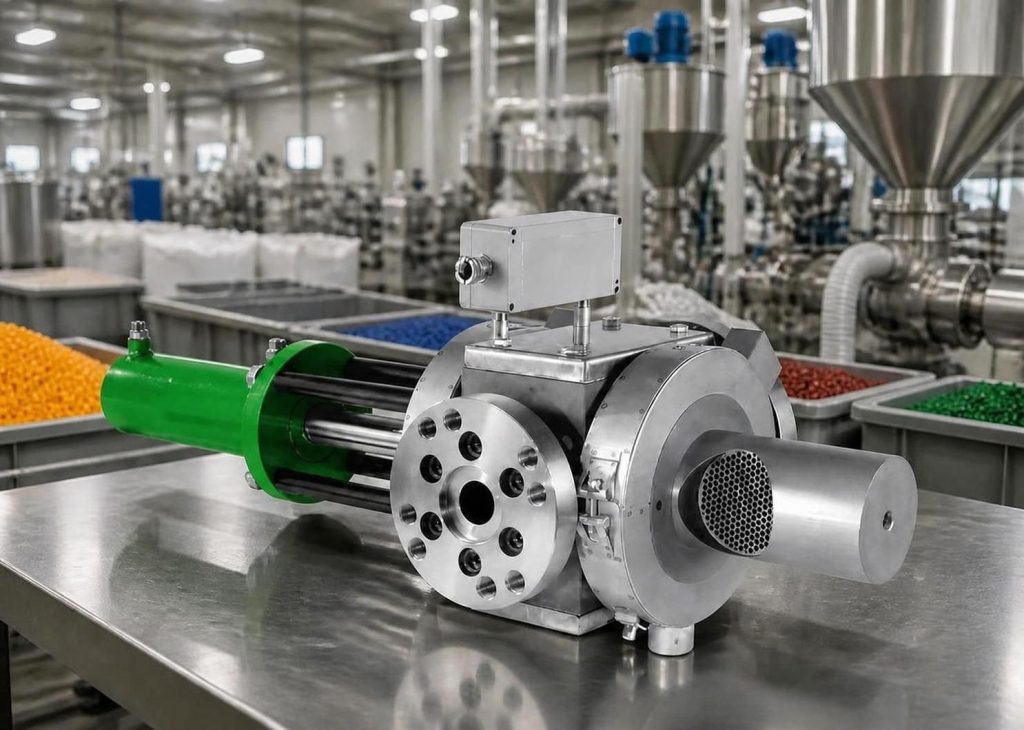
The EXTRUTEX EXDC Discontinuous Screen Changer is designed for plastic extrusion and polymer processing applications that require efficient melt filtration, reliable contaminant removal, and consistent production quality. Using a hydraulically operated piston system, the EXDC allows the filter screen to be replaced after the extrusion process has been stopped. Its practical construction makes it suitable for a broad range of polymer processing lines, from smaller production systems to high-output industrial extrusion plants.
During plastic processing, raw materials and recycled polymers may contain foreign particles, unmelted material, gels, or other impurities. These contaminants can affect product appearance, cause surface defects, obstruct extrusion dies, and reduce the stability of the production process. A properly selected screen changer helps retain unwanted particles before the polymer melt reaches the downstream equipment.
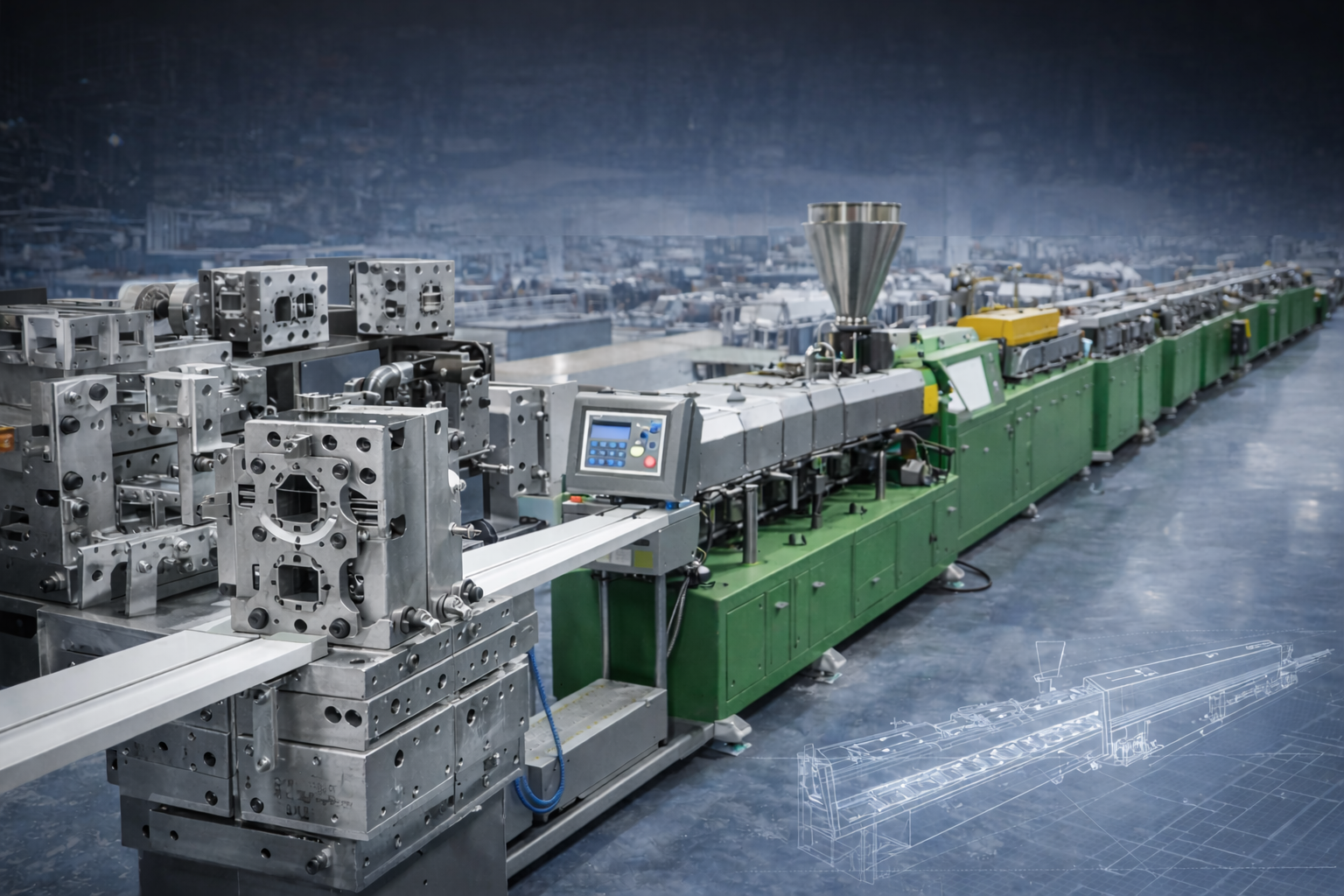
EXTRUTEX manufactures the EXDC series for integration into customized extrusion and recycling systems. The equipment is designed around a flow-conscious melt channel, a replaceable screen pack, and a hydraulic piston mechanism. Depending on the polymer, filtration requirements, operating conditions, and machine configuration, the EXDC can be specified for different production capacities.
The EXDC is a discontinuous, or non-continuous, screen changer. Unlike a continuous screen-changing system that is designed to maintain filtration while changing screens, the EXDC requires the extrusion process to be stopped before the filter screen is replaced.
When a screen change is necessary, the piston assembly carrying the screen pack is moved out of its operating position by the hydraulic system. The used screen can then be removed and replaced with a clean screen. After the screen assembly has been correctly reinstalled, the system can return to operation according to the machine's approved operating procedure.
This straightforward working principle makes the EXDC a practical filtration solution for production lines where planned stops for screen replacement are acceptable. Its application can include virgin polymer processing, compound production, profile extrusion, pipe extrusion, and selected plastic recycling processes.
The molten polymer flows from the extruder into the EXDC screen changer. The incoming melt passes through the filtration section, where the screen pack captures particles and contaminants according to the selected screen specification.
As the melt passes through the filter mesh, unwanted solid particles are held back. The filtered polymer continues toward the die or the next processing unit. The appropriate mesh size must be selected according to the polymer type, contamination level, required product quality, and acceptable pressure drop.
Because the EXDC is a discontinuous system, screen replacement requires the extrusion process to be stopped. The machine must be brought to a safe condition in accordance with the operating instructions before the screen assembly is removed.
The hydraulic mechanism moves the piston carrying the filter screen out of its working position. This provides access to the screen pack for inspection and replacement.
The used filter screen is removed and a suitable clean screen is installed. Operators should verify the correct screen arrangement, sealing condition, and assembly position before returning the equipment to service.
After the screen changer has been reassembled and checked, the line can be restarted according to the approved procedure. The melt flow and operating pressure should be monitored to confirm that the filtration system is functioning correctly.
The EXTRUTEX EXDC design provides an effective screen area of approximately 65% of the relevant screen area, depending on the selected model and its construction. A suitably sized filtration area helps distribute the polymer flow across the screen and supports the required production throughput.
The actual filtration performance depends on several factors, including the screen opening, screen pack structure, polymer viscosity, melt temperature, contamination level, and pressure limits. EXTRUTEX can select a suitable configuration according to the customer's material and production requirements.
The internal melt passages are designed to guide the polymer through the filtration zone with attention to flow distribution and resistance. An appropriately engineered flow path can help limit unnecessary pressure losses and support stable material delivery to the downstream process.
Pressure behavior is influenced by the complete extrusion system, not only by the screen changer. The extruder output, polymer rheology, filtration fineness, screen condition, and downstream equipment must all be considered when determining the final operating parameters.
The EXDC is designed to limit unnecessary pressure build-up within the filtration section. Managing pressure is important because excessive resistance can increase the load on the extrusion system, affect output stability, and place additional stress on the filter screen.
As contaminants accumulate, the screen's resistance to flow normally increases. Operators should monitor the melt pressure and replace the screen when required by the process specification. Actual pressure drop and allowable operating pressure must be confirmed for the selected EXDC model and application.
The piston mechanism is operated hydraulically to move the screen-carrying assembly. This arrangement supports controlled movement during maintenance and provides a practical way to access the replaceable filter screen.
The hydraulic system should be operated only within its specified pressure and temperature limits. Routine inspection of hydraulic components, seals, hoses, and connections helps maintain dependable operation.
Material retention inside extrusion equipment can create difficulties when changing from one polymer, formulation, or color to another. The EXDC design emphasizes streamlined melt passages and reduced material-retention areas to help support efficient material changes.
In practice, the time required for a material change depends on the polymer family, color difference, degradation sensitivity, residence time, operating temperature, and cleaning procedure. A screen changer alone cannot guarantee complete removal of previous material. The entire melt path, including the extruder, adapters, die, and downstream equipment, must be considered when planning rapid changeovers.
The EXTRUTEX EXDC can be considered for a wide variety of thermoplastic melt filtration applications. Final suitability must be checked against the polymer's processing temperature, melt viscosity, chemical characteristics, required filtration level, and the construction materials used in the selected machine.
PE processing may include film, sheet, pipe, profile, and recycling applications. Screen filtration can help remove foreign particles and other contaminants from the melt before it reaches the die.
PP extrusion and compounding processes may require filtration to support consistent product appearance and reduce contamination-related defects. The screen specification should match the material formulation and process requirements.
Selected PVC extrusion processes may benefit from filtration when the equipment, temperature control, and material formulation are suitable. PVC requires particular attention to thermal stability and residence time, so compatibility should be confirmed for each application.
Depending on the machine specification, screen changers may be used in processes involving engineering thermoplastics. These materials can have demanding temperature and pressure requirements, so the filtration system must be selected for the actual processing conditions.
Recycling and compounding lines often encounter variable levels of contamination. The EXDC may be integrated into a suitable recycling or compounding line to retain solid impurities during melt processing. Screen life and replacement frequency will vary with the cleanliness and consistency of the incoming material.
Some polymer melts, including certain PET and polyamide (PA) processing applications, may have relatively low viscosity under specific operating conditions. In these applications, leakage control around moving components and sealing interfaces can become particularly important.
For suitable low-viscosity applications, EXTRUTEX can evaluate a specialized ETS thermo-sealing screen changer configuration. The referenced concept incorporates air cooling at the end of the pistons to help manage the sealing area and reduce the risk of melt leakage.
The ETS configuration is intended for applications where the sealing behavior of a conventional screen changer may not be sufficient. Whether it is required depends on the polymer, melt temperature, viscosity, operating pressure, and machine layout. Customers processing PET, PA, or other low-viscosity melts should provide their material and process details so that EXTRUTEX can assess the appropriate design.
The ETS option should not be assumed to be included in every EXDC model. The screen changer type, sealing arrangement, cooling requirements, and compatibility with the intended polymer should be confirmed in the technical quotation.
Discontinuous and continuous screen changers serve similar filtration purposes, but they differ in how the filter screen is replaced. Selecting the right type requires consideration of production continuity, contamination level, material behavior, labor, and overall line economics.
| Feature | EXTRUTEX EXDC Discontinuous | Continuous Screen Changer |
|---|---|---|
| Screen replacement | Requires the extrusion process to be stopped | Designed to change screens while maintaining melt flow, depending on design |
| Operating principle | Hydraulically moved screen-carrying piston | Depends on the selected continuous-change mechanism |
| Production continuity | Includes a planned interruption for screen changes | Can reduce or avoid production interruptions during screen replacement |
| System complexity | Generally suited to a straightforward screen-change procedure | Varies with the continuous filtration design and control system |
| Selection considerations | Suitable where stopping for screen replacement is acceptable | May be preferred where continuous operation is a priority |
The discontinuous EXDC may be a practical choice for lines where screen changes can be scheduled during production stops. For processes with frequent contamination, long operating campaigns, or strict uninterrupted-output requirements, a continuous system may deserve consideration. EXTRUTEX can help assess the most suitable configuration based on the production target and process conditions.
The EXTRUTEX EXDC family is intended to cover a broad range of production requirements, from small-capacity extrusion systems to larger industrial lines. The indicative range can extend from a few kilograms per hour to approximately 2,500 kg/h, subject to model selection and operating conditions.
Throughput is not determined by screen-changer size alone. The final capacity depends on the polymer's melt viscosity, operating temperature, screen mesh, contamination loading, allowable pressure drop, extruder output, and downstream equipment.
| Parameter | EXTRUTEX EXDC |
|---|---|
| Equipment category | Discontinuous screen changer |
| Screen movement | Hydraulic piston |
| Screen replacement procedure | Extrusion process must be stopped |
| Approximate effective screen area | About 65%, depending on model design |
| Indicative throughput | From a few kg/h up to approximately 2,500 kg/h |
| Low-viscosity melt option | ETS thermo-sealing configuration, subject to confirmation |
| Screen mesh and pack | Selected according to material and filtration requirements |
| Final dimensions and connections | Confirmed for the selected model |
Note: This is an indicative product overview, not a model-specific technical datasheet. Exact dimensions, operating pressure, temperature limits, hydraulic specifications, screen dimensions, motor or hydraulic power, and model-by-model capacity should be confirmed with EXTRUTEX before ordering.
The EXDC should be installed in a suitable position between the extruder and the downstream processing equipment. The mounting arrangement must account for melt flow direction, connection dimensions, operating temperature, pressure rating, maintenance access, and the weight of the assembled unit.
Before commissioning, the installation team should confirm that the screen changer matches the extruder output and polymer processing conditions. Electrical and hydraulic systems must be connected according to the approved machine documentation. The operating team should also be trained in screen replacement, pressure monitoring, isolation procedures, and safe handling of hot polymer components.
For a complete extrusion line, EXTRUTEX can evaluate the screen changer alongside the extruder, adapter, die, pelletizing equipment, and other downstream units. Considering these components together helps ensure that the filtration system is correctly matched to the overall process.
Maintenance intervals should be based on the machine manual, operating hours, material conditions, and observed wear. The system must be depressurized and brought to a safe condition before any work is performed on hot melt or hydraulic components.
It is a melt filtration device that uses a replaceable filter screen to retain contaminants. Screen replacement requires the extrusion process to be stopped.
A hydraulic mechanism moves the piston carrying the screen pack out of its operating position. The screen can then be replaced before the assembly is returned to service.
The indicative range extends from a few kilograms per hour to approximately 2,500 kg/h. The achievable throughput depends on the selected model, polymer, screen specification, contamination level, and operating conditions.
It can be evaluated for suitable recycling applications where melt filtration is required. The design must be matched to the recycled material's contamination level, viscosity, and processing conditions.
Suitability depends on the exact polymer grade and operating conditions. For low-viscosity melts, EXTRUTEX can evaluate the ETS thermo-sealing configuration, which incorporates air cooling at the piston ends to help reduce leakage risk.
No. The EXDC is a discontinuous system, so the extrusion process must be stopped for screen replacement. A continuous screen changer should be considered if uninterrupted screen changing is a key requirement.
The screen pack should be selected for the material and filtration target. Mesh specifications and compatible screen arrangements should be confirmed when the equipment is configured.
Provide EXTRUTEX with the polymer type, required output in kg/h, melt temperature, operating pressure, contamination level, desired filtration grade, extruder model, and downstream connection details. This information helps determine a suitable model and configuration.
EXTRUTEX supplies extrusion and polymer processing equipment for applications requiring reliable melt filtration and production-line integration. The EXDC discontinuous screen changer is designed for customers who can schedule screen replacement during a planned process stop and need a practical hydraulic filtration solution.
To receive a configuration recommendation, please share your material type, production capacity, extrusion process, operating conditions, and required screen specification. For PET, PA, or other low-viscosity melts, identify the material grade and processing conditions so that the need for an ETS thermo-sealing configuration can be evaluated.
Contact EXTRUTEX to discuss the EXDC discontinuous screen changer for your extrusion, compounding, or recycling line.
There are no reviews yet.
By submitting your email, you agree to our company’s terms and conditions.
We are not looking to sell; we are here to provide you with the best support and service.
Contact available 24/7
Please do not contact us for advertising or sales inquiries
All rights of this website are reserved for EXTRUTEX Austria and its partner companies, © 2026
-
(0 customer reviews)