
No products in the cart.




All rights of this website are reserved for EXTRUTEX Austria and its partner companies, © 2026


Multiple Payment Methods

Discount for advance payments over 50%

Free Shipping Coordination Services
Payment methods:


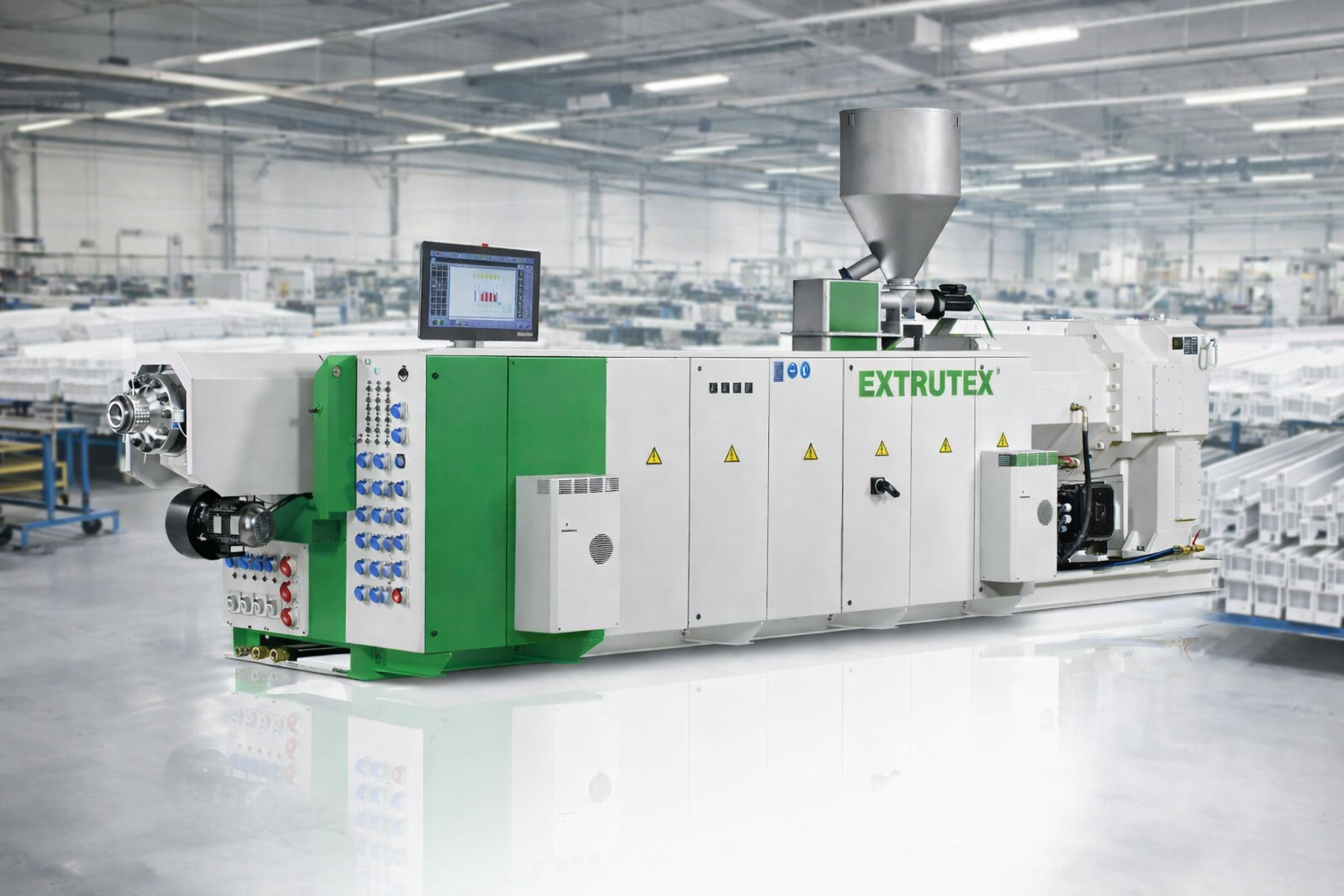
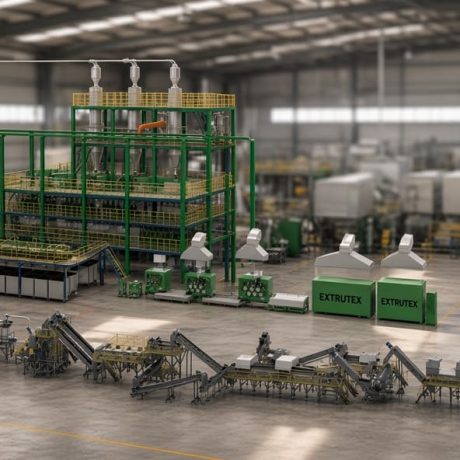
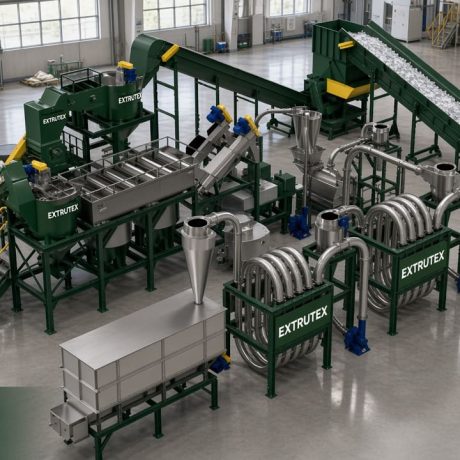
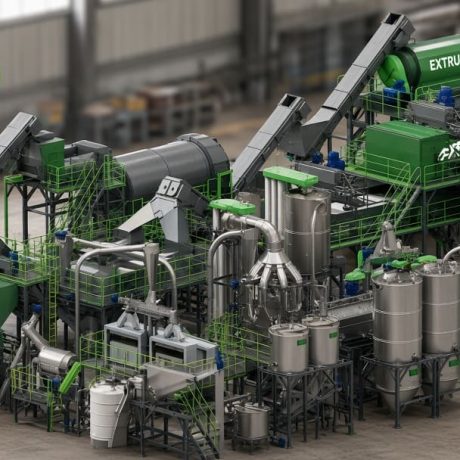
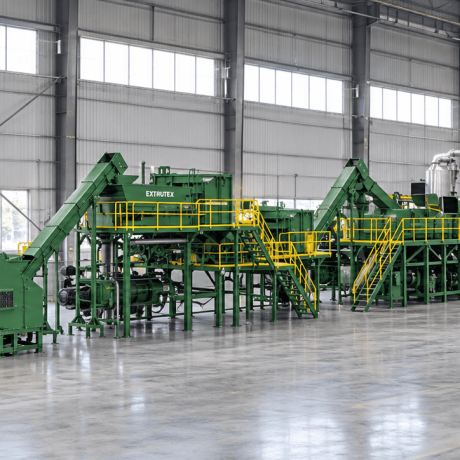
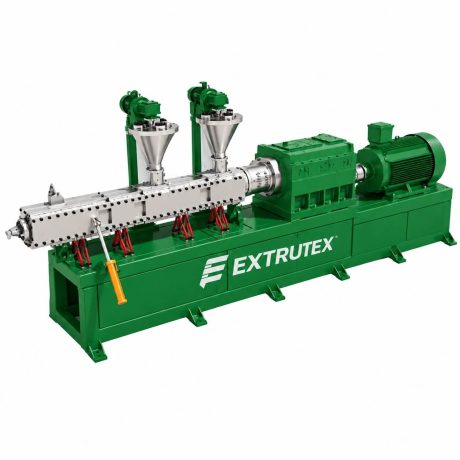
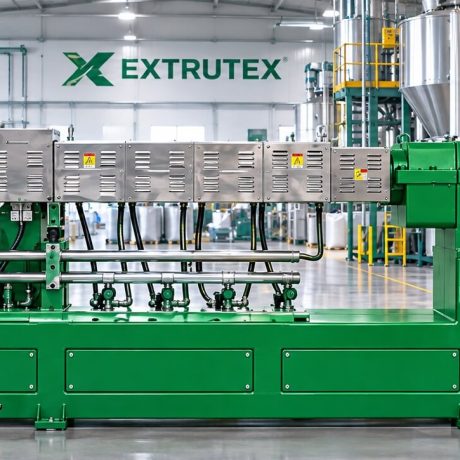
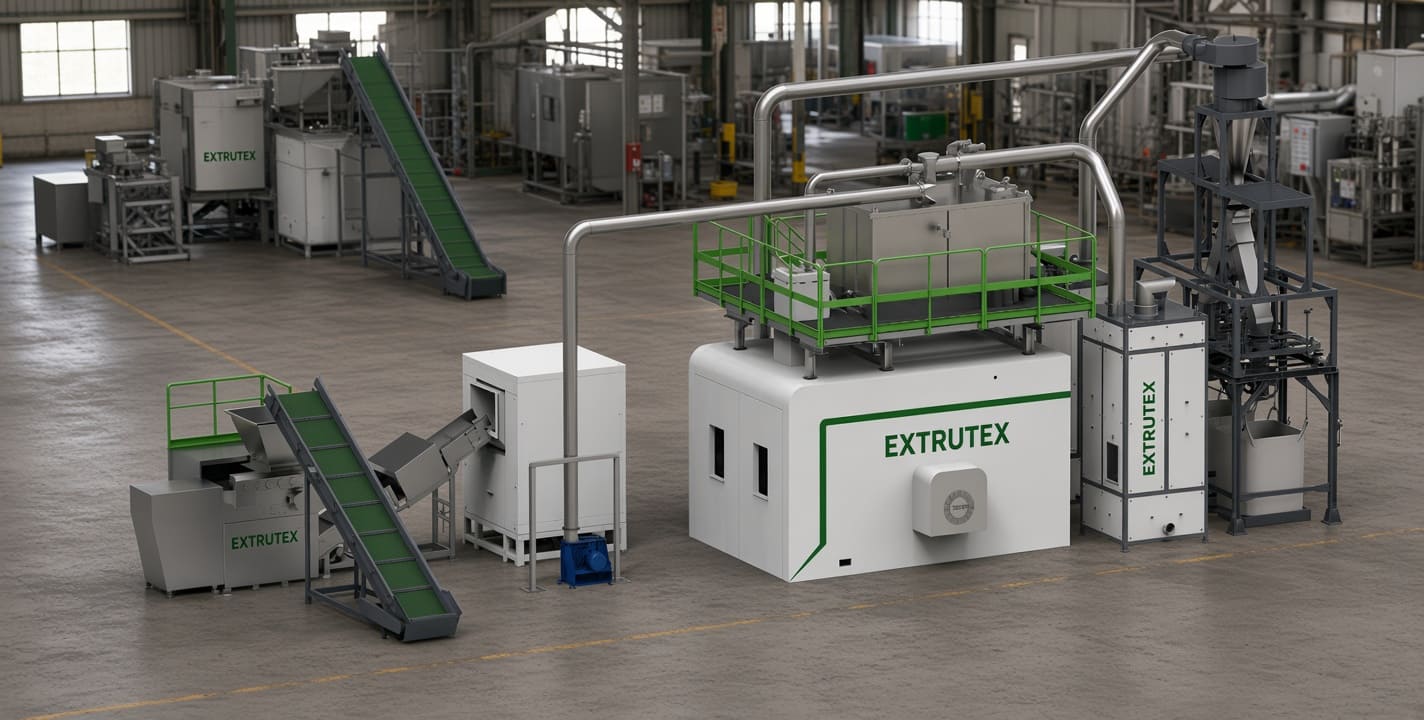
The EXTRUTEX FRS300 is a compact, fully automated fiber waste recycling system designed to convert polyester production waste directly into high-quality PET powder for closed-loop polymer production. With a processing capacity of approximately 300 kg/h, the system provides an efficient way for synthetic fiber manufacturers to recover valuable polyester waste directly at the production site.
The system combines shredding, metal separation, pelletizing, fine grinding, dust removal and packing into one integrated recycling solution. Its low-temperature processing concept is designed to minimize thermal damage, helping preserve the intrinsic properties of polyester waste while avoiding the wastewater generation and gas emissions commonly associated with conventional recycling routes.
Polyester fiber production inevitably generates process waste. Start-up material, off-specification fiber, spinning waste, trimming residues, damaged material and other polyester by-products can accumulate rapidly when there is no efficient internal recycling solution. Traditionally, this material may be collected, transported and processed through external recycling channels, often resulting in additional logistics costs, material degradation and lower-value applications.
The FRS300 is designed around a different concept: recycle the polyester waste where it is generated and return it to the polymer production cycle. Instead of treating production waste as a disposal problem, the system transforms it into controlled PET powder that can be used as a recovered raw material in an appropriate PET polymerization process.
The complete system operates as an integrated production unit. Polyester waste is continuously fed into the recycling process, reduced in size, prepared through pelletizing and then finely ground. The final PET powder can achieve a typical particle size of approximately 0.3–1.0 mm, depending on the material and process configuration.
In a modern polyester fiber factory, even a relatively small percentage of production waste can represent a significant quantity of valuable polymer. When annual production reaches tens or hundreds of thousands of tons, a waste rate of only 1% can represent thousands of tons of recoverable material.
Internal recycling allows manufacturers to reduce the amount of material leaving the factory while recovering part of the polymer value that would otherwise be lost. The economic benefit becomes particularly important for large-scale fiber production because the recovered material can be incorporated into an established manufacturing cycle instead of being treated as ordinary waste.
The FRS300 also reduces dependence on external waste handling. Material can be processed close to the spinning or fiber production area, reducing transportation, storage and intermediate handling. This creates a more controlled material flow and gives the producer greater visibility over the quality and quantity of recycled material.
Each stage is designed to prepare the polyester material for the following operation. The system uses controlled mechanical processing rather than a conventional wash-and-flake route, making it especially suitable for relatively clean internal polyester production waste.
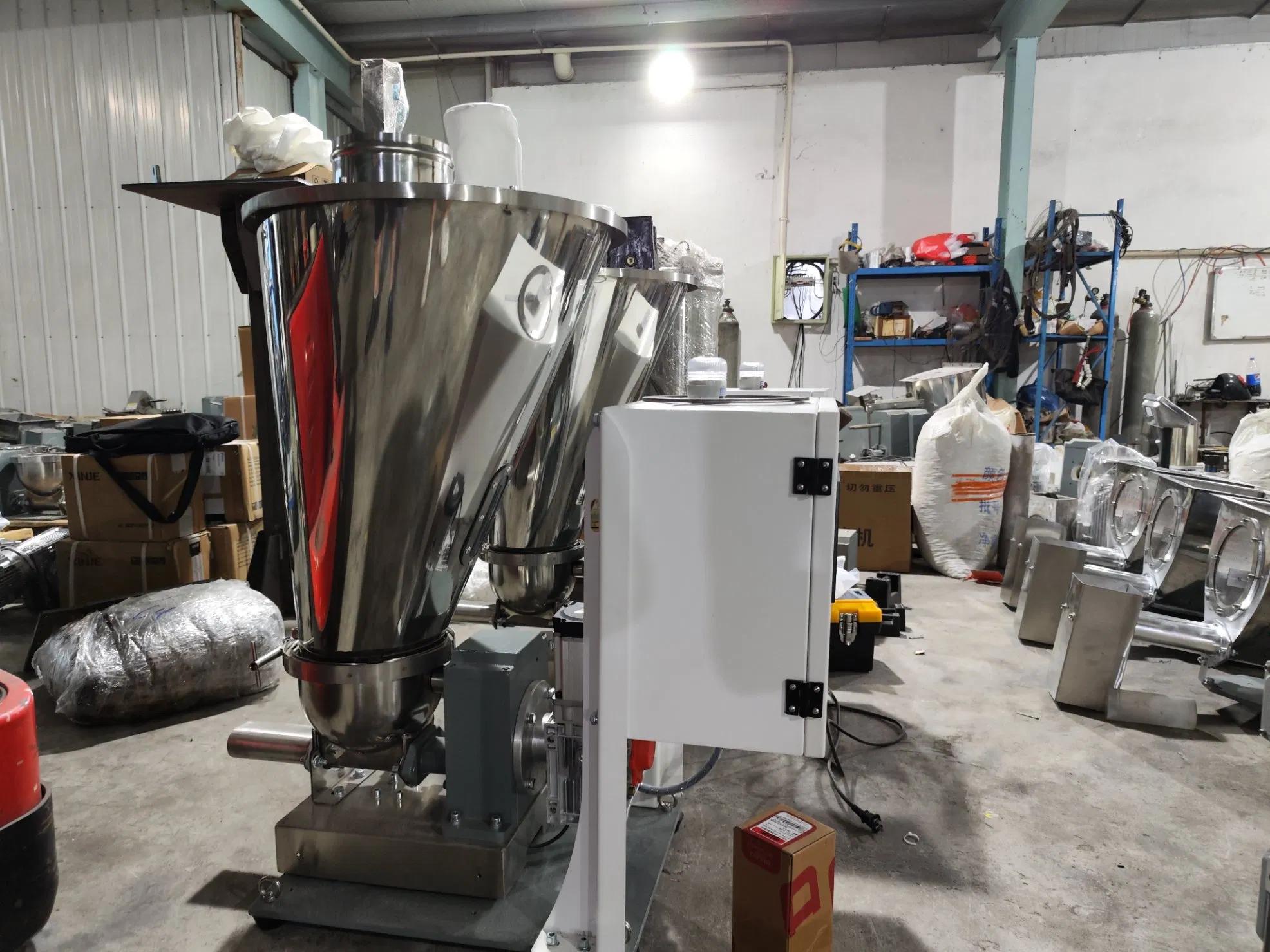
The recycling process begins with controlled feeding of polyester fiber waste into the FRS300. Suitable feedstock may include production residues, off-specification fiber, spinning waste, start-up material and other compatible polyester waste generated within the factory.
Stable feeding is important because the downstream shredding and pelletizing equipment must receive a consistent material flow. The feeding section is therefore designed to support continuous operation and reduce sudden fluctuations in material loading.
Depending on the waste characteristics, the feeding arrangement can be configured to accommodate different forms of fiber waste. The objective is to establish a reliable and controlled input stream before the material enters the size-reduction stage.
Polyester fiber waste can have a low bulk density and may arrive in long, tangled or compacted forms. Direct processing of these materials is difficult because their physical structure is not uniform. The shredding stage breaks the waste into smaller and more manageable pieces.
The shredder prepares the material for subsequent pelletizing by reducing its size and improving bulk consistency. Controlled mechanical size reduction also helps prevent oversized pieces from entering the downstream equipment and improves feeding stability.
The shredding process is an important preparation stage because the quality and consistency of the material entering the pelletizing section directly influence the stability of the complete recycling process.
Even production waste that appears clean can occasionally contain metallic contaminants originating from equipment, handling systems, cutting components, packaging or maintenance activities. These contaminants can create serious problems in high-speed processing equipment.
The metal removal stage is therefore used to protect the pelletizing and grinding equipment. Removing metallic particles before they reach sensitive components helps reduce mechanical wear, unexpected interruptions and potential damage to processing components.
Effective contamination control also contributes to more stable operation of the complete system and helps maintain a cleaner recycled PET powder output.
After shredding and metal removal, the prepared polyester material enters the pelletizing stage. The purpose of this operation is to transform irregular fiber waste into a more controlled intermediate form that can be efficiently processed by the fine grinding system.
Controlled pelletizing improves material uniformity and creates a stable feedstock for subsequent size reduction. The system is designed around a low-temperature processing philosophy so that unnecessary thermal exposure can be minimized.
This is particularly important for polyester recycling. Excessive heat history can negatively affect polymer properties and may contribute to discoloration or degradation. By controlling the processing conditions, the FRS300 aims to preserve the usable value of the recovered polyester.
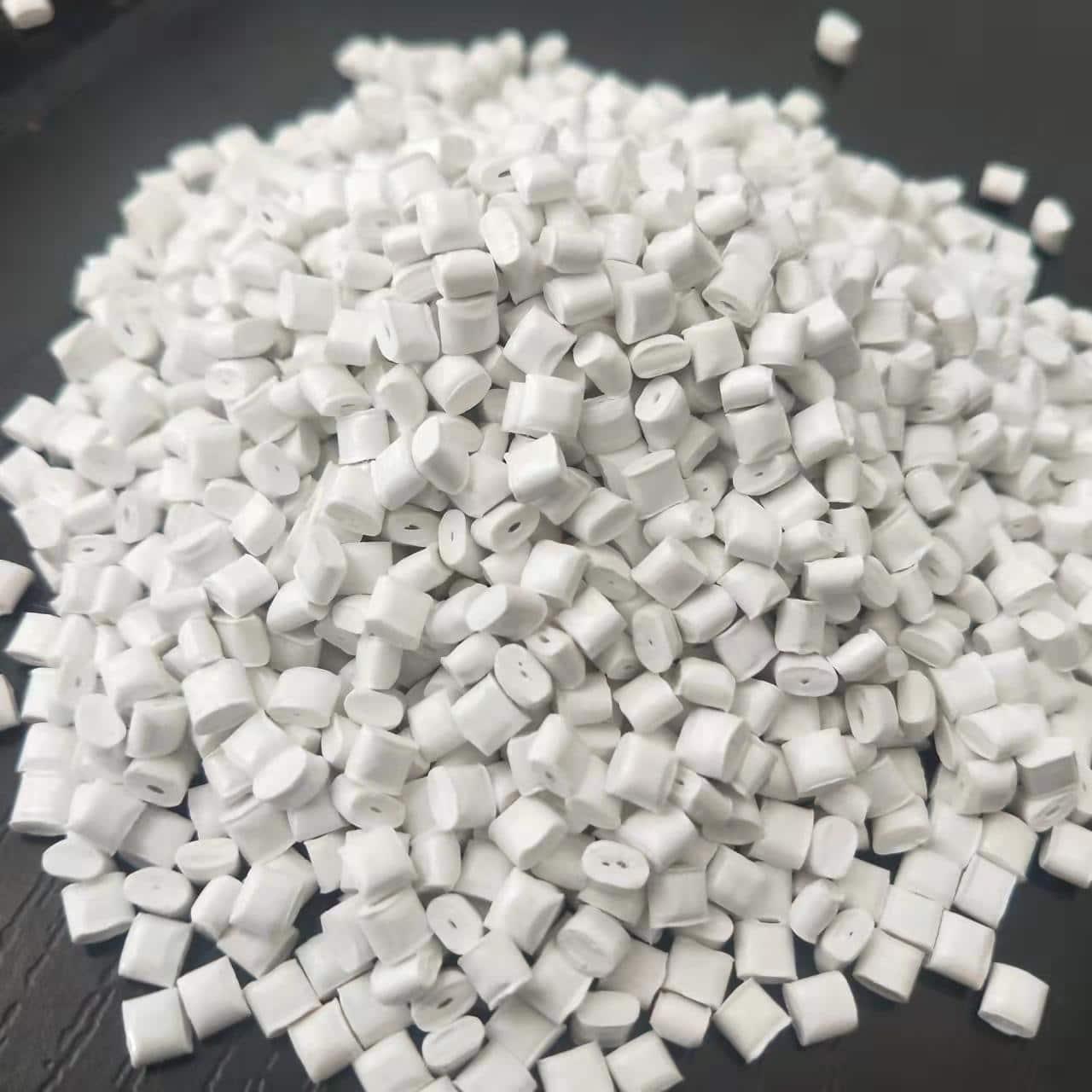
The pelletized material is transferred to the fine grinding section, where it is reduced into a controlled PET powder. The target particle size is typically approximately 0.3–1.0 mm, subject to the specific feedstock and final process requirements.
Fine grinding is one of the key stages of the FRS300 because the resulting powder must have suitable physical characteristics for controlled reintroduction into the appropriate polymer production process.
Consistent particle size helps improve material handling, dosing and blending. It also supports more uniform distribution of recycled PET material when it is combined with other polymer raw materials during downstream processing.
Fine grinding naturally produces a controlled quantity of fine particles and dust. The dust removal stage separates unwanted airborne fines from the usable PET powder and helps maintain a cleaner working environment.
Effective dust management is particularly important in an industrial recycling installation because it supports cleaner equipment operation, better material handling and improved working conditions around the processing system.
The recovered powder can then be transferred to the collection and packing section in a controlled manner.
After fine grinding and dust separation, the finished PET powder is collected and prepared for storage, transfer or direct use in the customer's polymerization process.
The packing arrangement can be selected according to the factory's material-handling requirements. The objective is to keep the recycled powder protected from contamination while providing a practical interface with the next stage of production.
For integrated plants, the recovered material can be transferred into a controlled raw-material handling system instead of being treated as an external waste product.
The principal advantage of the FRS300 is that it is designed as part of a closed-loop polyester recycling concept. The recovered PET powder is not simply converted into a lower-grade recycled product. Instead, it can be evaluated for controlled reintroduction into an appropriate PET polymerization process.
In a suitable integrated polyester manufacturing operation, the recycled PET powder can be blended with PTA-based raw materials and introduced into the polymerization process. The polymerization route may include esterification, pre-polycondensation and final polycondensation stages.
The objective is to recover the polyester polymer value and return it to the production cycle, allowing manufacturers to reduce the amount of production waste that leaves the factory.
Traditional polyester waste recycling routes may involve several stages that can increase the material's thermal and mechanical history. For fiber manufacturers, avoiding unnecessary degradation is important because recycled polymer quality directly influences spinning stability and final fiber performance.
The FRS300 uses a low-temperature mechanical processing concept to prepare polyester waste as PET powder. By reducing unnecessary thermal exposure during waste preparation, the system is designed to help preserve the useful characteristics of the recovered polymer.
The approach also avoids the washing stage normally associated with many post-consumer plastic recycling systems. For relatively clean production waste, this can eliminate wastewater generation from the recycling process and reduce the need for wastewater treatment infrastructure.
Because the FRS300 is intended primarily for controlled polyester production waste, the process does not require conventional water-based washing as part of the core recycling route. This means there is no process wastewater generated from washing within the standard recycling sequence.
The system is also designed to avoid the unnecessary use of high-temperature treatment during material preparation. Together with controlled dust management, this creates a recycling concept focused on low resource consumption and cleaner operation.
These characteristics can be particularly valuable for factories working toward stronger environmental performance, reduced waste generation and more efficient internal material utilization.
The FRS300 is primarily designed for controlled polyester production waste. Typical feedstock may include:
Feedstock evaluation is recommended before final system configuration. Material composition, moisture, contamination, additives, color, polymer type and physical form can influence recycling performance and the final recycled powder characteristics.
The economic concept behind the FRS300 is straightforward: material that would otherwise become production waste can be converted into a usable recovered raw material.
For a large polyester fiber manufacturing facility, even a 1% internal waste rate can represent a substantial annual quantity of polymer. Recovering this material can reduce waste disposal, external recycling costs and the purchase requirement for part of the virgin raw-material input.
The system also provides value through reduced material handling. Instead of transporting production waste to an external recycler, manufacturers can process suitable waste directly inside the factory and maintain greater control over the recycling route.
The result is a more efficient material cycle in which waste becomes a controlled raw-material stream rather than an unavoidable production loss.
Polyester producers are increasingly looking for practical methods to reduce waste, improve resource efficiency and increase recycled content without compromising production performance. The FRS300 supports this objective by integrating waste recovery directly into the manufacturing environment.
The system can contribute to a circular production strategy by reducing the quantity of polyester waste leaving the factory and increasing the internal utilization of recovered polymer.
Its wastewater-free processing concept, low-temperature approach and reduced dependence on external waste handling make it suitable for manufacturers developing more resource-efficient and environmentally responsible production systems.
The FRS300 is designed as an integrated automated system rather than a collection of independent machines. Coordinated operation between feeding, shredding, metal separation, pelletizing, grinding and collection helps maintain a stable material flow throughout the recycling process.
Automation reduces the need for continuous manual intervention and allows operators to focus on process supervision, material quality and routine maintenance. Depending on the final project configuration, monitoring and control functions can be integrated into the factory's wider production management system.
This approach is particularly useful for polyester manufacturers operating continuous production lines where recycling must operate reliably alongside the main manufacturing process.
| Parameter | FRS300 Specification |
|---|---|
| System Model | FRS300 |
| Application | Polyester fiber and compatible PET production waste recycling |
| Input Capacity | Approximately 300 kg/h |
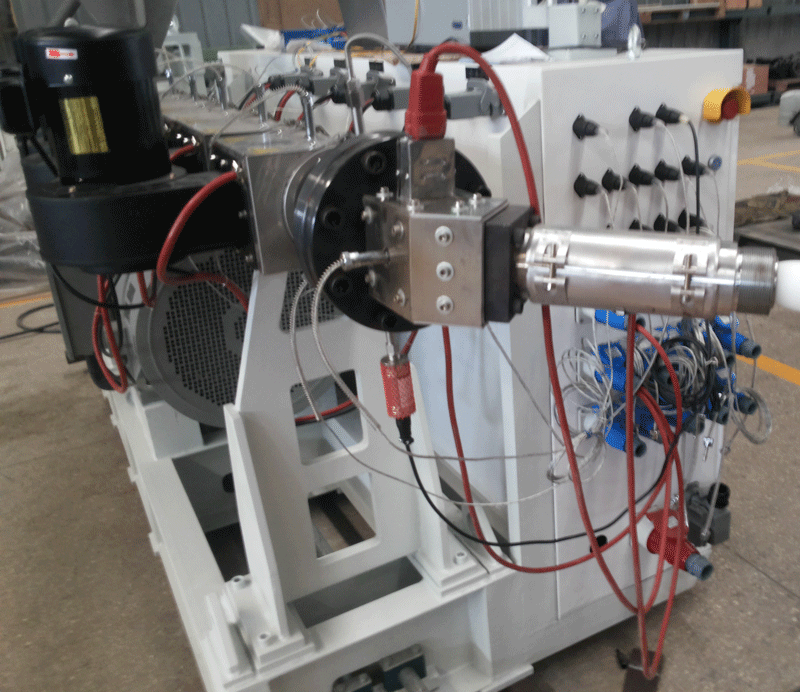
| Processing Method | Shredding, metal removal, pelletizing and fine grinding |
| Finished Product | Recycled PET powder |
| Typical Powder Size | Approximately 0.3–1.0 mm |
| Washing | Not required in the standard production-waste recycling process |
| Wastewater | No process wastewater from standard washing-free operation |
| Technology | Low-temperature mechanical recycling |
| Automation | Integrated automated process control |
| Research & Laboratory | EXTRUTEX Austria |
| Manufacturing | China |
The FRS300 is particularly suitable for polyester fiber manufacturers that generate consistent internal PET waste and want to establish an integrated recycling route. Typical applications include:
EXTRUTEX develops recycling and polymer processing solutions with a focus on practical industrial operation, material recovery and integration into existing production environments.
The FRS300 combines mechanical recycling, controlled material handling and fine grinding technology into a compact system designed for polyester production waste. The equipment is manufactured in China, while EXTRUTEX research and laboratory activities are based in Austria.
Before final engineering, EXTRUTEX can evaluate the customer's waste material, required throughput, existing production process and target recycled-material application. This approach helps determine the appropriate equipment configuration and integration strategy.
The FRS300 represents a shift from conventional waste disposal toward integrated circular manufacturing. Instead of allowing polyester production waste to accumulate or leave the factory, suitable waste can be collected, processed and transformed into a controlled PET powder.
The recovered material can then be evaluated for reintroduction into an appropriate polymer production route. When correctly engineered and validated, this creates a practical cycle in which the polymer remains within the manufacturing system for longer and the amount of material classified as waste is significantly reduced.
For polyester manufacturers seeking to improve resource efficiency, reduce production losses and develop a more circular manufacturing model, the EXTRUTEX FRS300 provides a compact and industrially focused solution for internal fiber waste recycling.
Build a more efficient polyester production cycle with the EXTRUTEX FRS300. With approximately 300 kg/h input capacity, low-temperature processing, fine PET powder production and integrated automated operation, the system provides a practical route for converting suitable polyester production waste back into valuable raw material.
Contact EXTRUTEX for feedstock evaluation, process configuration, capacity planning and integration with your polyester production system.
There are no reviews yet.
By submitting your email, you agree to our company’s terms and conditions.
We are not looking to sell; we are here to provide you with the best support and service.
Contact available 24/7
Please do not contact us for advertising or sales inquiries
All rights of this website are reserved for EXTRUTEX Austria and its partner companies, © 2026
-
(0 customer reviews)