Description

1. Introduction to PVC Pipe Dies

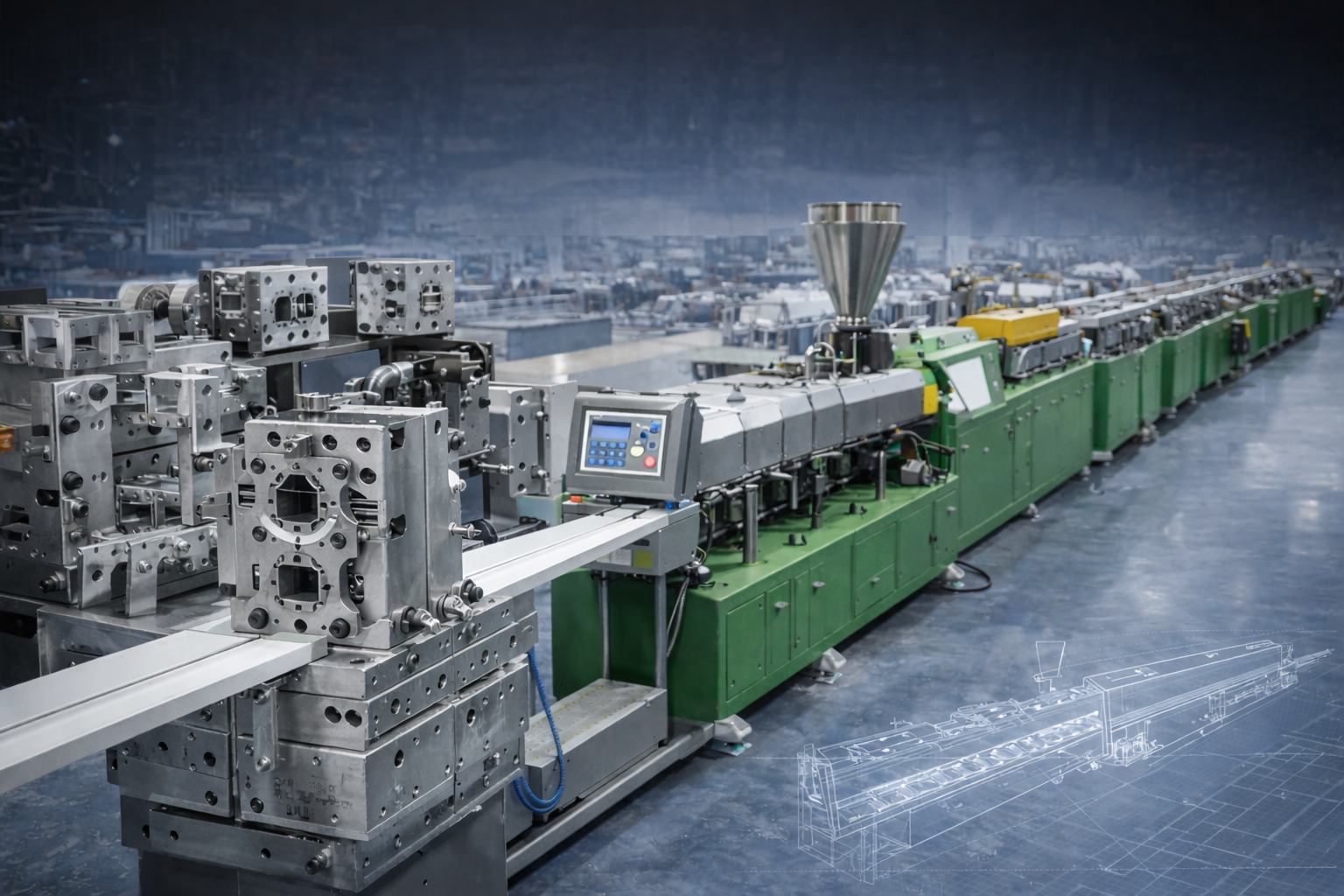
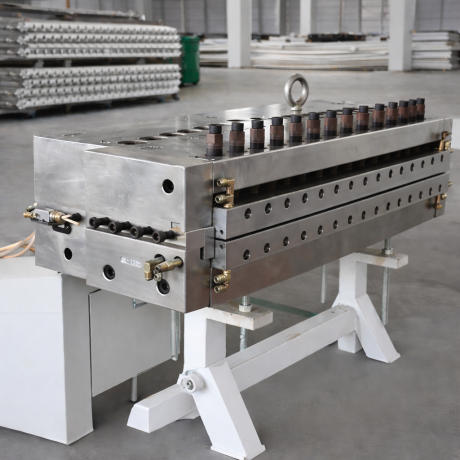
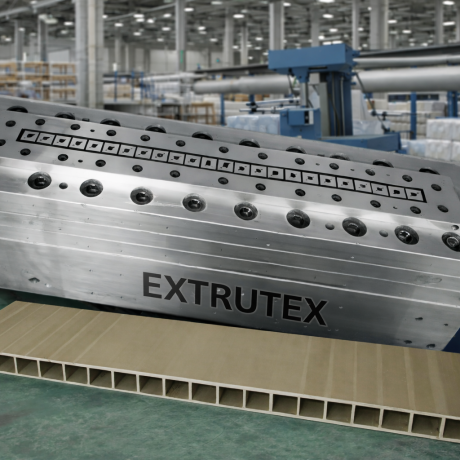
Dies (or molds) for PVC pipes are an essential component in the production line of PVC pipes. With precise and well-engineered design, they help manufacture high-quality products. These dies can be single-wall or triple-wall (soundproof pipes) and are used in producing various types of PVC pipes such as UPVC (Unplasticized Polyvinyl Chloride), CPVC (Chlorinated Polyvinyl Chloride), and OPVC (Oriented PVC).

The design of the dies must ensure accurate control of melt pressure and temperature so that pipes with high consistency and quality are produced. Precision in calibration, material homogeneity, and uniform heat distribution play a crucial role in this process.


2. Technical Features and Advantages of Single-Wall and Triple-Wall Dies

Single-Wall Dies
These dies are used for producing standard PVC pipes, widely applied in water supply, sewage, and industrial systems. Their main features include:

  • Simple and functional structure: Single-wall dies are less complex than triple-wall types, resulting in lower production costs.

  • Reduced production costs: Due to simpler design, both initial and maintenance expenses are lower.

  • Flexibility: These dies can easily be adjusted to produce pipes of various diameters.

Triple-Wall Dies (Soundproof Pipes)
Triple-wall dies are specifically designed for producing soundproof and noise-insulated pipes, commonly used in sewage systems and building plumbing. Key features include:

  • High sound insulation: The three-layer structure effectively reduces noise transmission.

  • Better environmental protection: Multi-layer pipes retain internal temperature more effectively, reducing energy loss.

  • Reduced vibration: Thanks to their layered structure, these pipes have higher resistance against pressure and vibration.


3. Technologies Used in Dies and Molds

In PVC pipe die and mold design, fluid mechanics and thermal engineering play a critical role. These technologies ensure uniform heat and pressure distribution in the molten material. Notable systems include:

  • Advanced heating systems: Designed to regulate temperature and prevent uneven melting of materials.

  • High-precision calibration: Ensures that produced pipes meet exact dimensional standards.

  • Spiral design: Enables uniform distribution of heat and pressure within the dies.


4. Applications and Advantages of PVC Pipe Dies

PVC pipe dies support a wide range of applications, each with specific benefits:

  • Water supply and sewage systems: PVC pipes offer excellent resistance to pressure and corrosion, making them ideal for these uses.

  • Electrical industry: PVC pipes serve as protective conduits in electrical installations.

  • Ventilation and HVAC systems: Thanks to their antibacterial properties and moisture resistance, PVC pipes are highly suitable for ventilation applications.


5. Pressure Specifications of PVC Pipes

The table below illustrates the pressure ratings of different PVC pipes based on type and application:

Pipe TypeDiameter (mm)Pressure (bar)Application
UPVC Pipe16–3210Water supply
UPVC Pipe50–1106Sewage
CPVC Pipe25–6316Hot water
OPVC Pipe40–16012Ventilation systems
Triple-wall63–2008Sewage and sound insulation

This table highlights how pipes vary in pressure ratings depending on their material type (UPVC, CPVC, OPVC) and their specific application.

 

PVC Pipe Pressure Specifications (Diameters 10–715 mm, Pressure Ratings 1.6–16 bar)

Pipe Diameter (mm)1.6 bar2.5 bar4 bar6 bar8 bar10 bar12 bar16 bar
100.751.11.752.63.54.45.26.9
201.42.13.45.16.88.510.213.6
251.752.6468101216
322.33.55.68.411.21416.822.4
402.94.4710.413.817.320.727.6
503.65.48.612.917.221.525.834.4
634.66.91116.52227.53344
755.58.213.119.52632.53952
906.69.915.823.731.539.44762.8
11081218.627.937.246.555.874.4
1259.113.720.630.84151.261.481.9
14010.315.423.334.946.558.169.792.9
16012.118.12740.55467.581108
18013.520.230.345.560.775.891121.4
2001522.533.650.467.284100.8134.4
250182740.861.281.6102122163.2
31522.533.850.876.3101.7127152.4203
400284263.294.8126.4158189.6252
5003552.578.6117156195234312
630446699.4149198247296396
71049.574.3111166.5222277.5333444
7155075112.5168224280336448

Notes

  • Pipe Diameter (mm): Refers to the outer diameter of the PVC pipes, measured in millimeters.

  • Pressure (bar): Indicates the maximum operational pressure rating for the pipe.

  • Applications: The table covers a full range of diameters (10–715 mm) and working pressures (1.6–16 bar), making it a practical reference for engineers, designers, and manufacturers to determine suitable pressure classes in PVC pipe production.


Pipe Heads for Twin-Screw Extruders (UPVC, CPVC, OPVC)

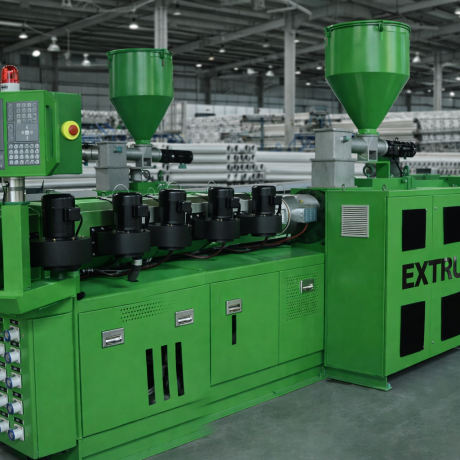
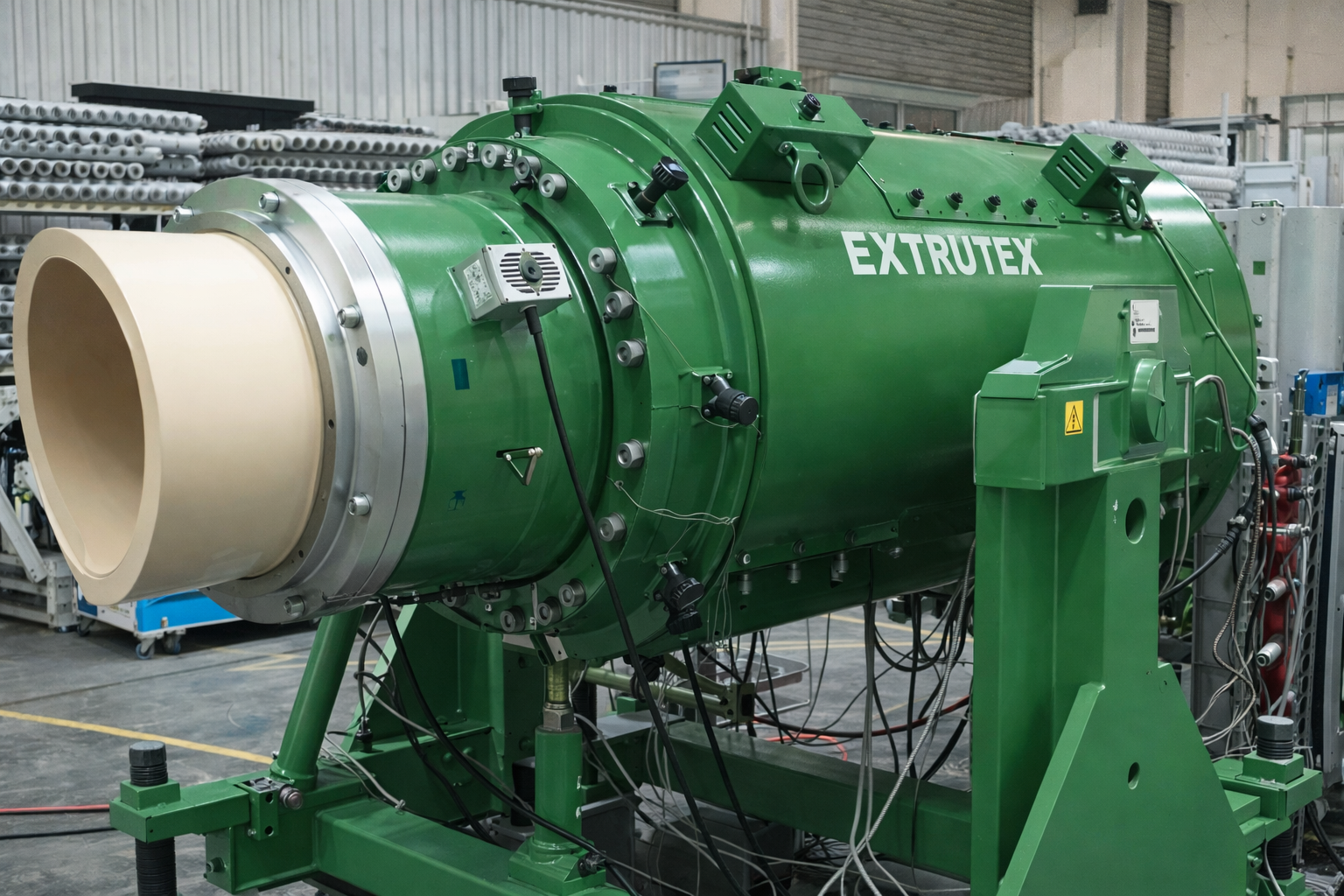
For twin-screw extruders specifically designed to process powder materials such as UPVC, CPVC, and OPVC, the pipe heads (dies) must be engineered to match the characteristics of these materials and the production requirements. Below are the types of heads suitable for different pipe applications:


1. UPVC Pipe Head (Single-Layer Head)

  • Extruder Capacity: 400–600 kg/h

  • Features:

    • Simple and efficient design for single-layer UPVC pipe production.

    • Suitable for medium-pressure pipes used in water supply and sewage systems.

    • Equipped with precise temperature control to prevent UPVC degradation and maintain product quality.

    • Efficient feeding and mixing system to achieve uniform melt and superior surface finish.

  • Application: Production of standard UPVC pipes for general use such as sewage and irrigation systems.


2. CPVC Pipe Head (Single-Layer or Multi-Layer Head)

  • Extruder Capacity: 500–800 kg/h

  • Features:

    • Designed for CPVC pipes with high heat resistance, suitable for hot water systems.

    • Advanced temperature control system for higher processing temperatures.

    • Capable of producing both single-layer and multi-layer pipes depending on specific requirements.

    • Constructed with heat-resistant materials to prevent degradation at elevated temperatures.

  • Application: Production of CPVC pipes for hot water systems, fire-fighting lines, and chemical industry pipelines.


3. OPVC Pipe Head (Single-Layer or Multi-Layer Head)

  • Extruder Capacity: 600–1000 kg/h

  • Features:

    • Suitable for producing OPVC pipes designed for high-pressure applications.

    • Accurate feeding and process control for uniform melt and superior pressure resistance.

    • Multi-layer design possible, adding layers resistant to pressure, corrosion, and environmental factors.

    • Advanced heating systems ensure consistent material temperature.

  • Application: High-pressure OPVC pipes for gas, water, and sewage transmission systems.


4. Multi-Layer Pipe Head for UPVC/CPVC/OPVC (Composite Layer Head)

  • Extruder Capacity: 800–1100 kg/h

  • Features:

    • Specially designed for multi-layer pipe production combining UPVC, CPVC, and OPVC.

    • Enables pipes with special properties such as soundproofing, corrosion resistance, or resistance to high pressure and temperature.

    • Allows combination of different materials in inner and outer layers for enhanced mechanical and chemical performance.

    • Precise temperature and pressure control for each layer to ensure consistent quality during production.

  • Application: UPVC pipes with UV-resistant outer layers, CPVC pipes for heating systems, and OPVC pipes for gas and water transportation.


5. Large Diameter Pipe Head

  • Extruder Capacity: 700–1100 kg/h

  • Features:

    • Suitable for pipes with diameters greater than 250 mm.

    • Special design for producing pressure-resistant pipes from UPVC, CPVC, and OPVC.

    • Advanced hydraulic and mechanical systems for precise wall thickness and surface quality control.

    • Adjustable process pressure and temperature for manufacturing heavy-duty pressure pipes.

  • Application: Large-diameter water and sewage pipes, fire-fighting systems, and high-pressure pipelines for gas and oil industries.


6. Special Materials Pipe Head

  • Extruder Capacity: 400–1000 kg/h

  • Features:

    • Designed for producing pipes from specialized UPVC, CPVC, and OPVC materials.

    • Adjustable temperature, pressure, and speed for sensitive materials requiring precise conditions.

    • Advanced systems for producing pipes with antibacterial, corrosion-resistant, or UV-resistant properties.

    • Capable of manufacturing pipes with unique mechanical and chemical features.

  • Application: UV-resistant pipes, antibacterial pipes for hygienic industries, and advanced irrigation systems.


Conclusion

Selecting the right pipe head for a twin-screw extruder depends on the material type (UPVC, CPVC, OPVC) and production requirements (large diameter, multi-layer, or high-pressure pipes). For temperature-sensitive materials such as CPVC and OPVC, it is essential to use heads with precise temperature and pressure control. Multi-layer heads can further enhance pipe performance by adding UV resistance, antibacterial properties, or soundproofing.

Pipe Diameter (mm) Pressure 1.6 bar Pressure 2.5 bar Pressure 4 bar Pressure 6 bar Pressure 8 bar Pressure 10 bar Pressure 12 bar Pressure 16 bar
10 0.75 1.1 1.75 2.6 3.5 4.4 5.2 6.9
20 1.4 2.1 3.4 5.1 6.8 8.5 10.2 13.6
25 1.75 2.6 4 6 8 10 12 16
32 2.3 3.5 5.6 8.4 11.2 14 16.8 22.4
40 2.9 4.4 7 10.4 13.8 17.3 20.7 27.6
50 3.6 5.4 8.6 12.9 17.2 21.5 25.8 34.4
63 4.6 6.9 11 16.5 22 27.5 33 44
75 5.5 8.2 13.1 19.5 26 32.5 39 52
90 6.6 9.9 15.8 23.7 31.5 39.4 47 62.8
110 8 12 18.6 27.9 37.2 46.5 55.8 74.4

technical data

Applications:

Reviews (0)

Be the first to review “PVC Pipe Die Head”

Your email address will not be published. Required fields are marked *


Reviews

There are no reviews yet.

1. Introduction to PVC Pipe Dies

Dies (or molds) for PVC pipes are an essential component in the production line of PVC pipes. With precise and well-engineered design, they help manufacture high-quality products. These dies can be single-wall or triple-wall (soundproof pipes) and are used in producing various types of PVC pipes such as UPVC (Unplasticized Polyvinyl Chloride), CPVC (Chlorinated Polyvinyl Chloride), and OPVC (Oriented PVC).

The design of the dies must ensure accurate control of melt pressure and temperature so that pipes with high consistency and quality are produced. Precision in calibration, material homogeneity, and uniform heat distribution play a crucial role in this process.


2. Technical Features and Advantages of Single-Wall and Triple-Wall Dies

Single-Wall Dies
These dies are used for producing standard PVC pipes, widely applied in water supply, sewage, and industrial systems. Their main features include:

  • Simple and functional structure: Single-wall dies are less complex than triple-wall types, resulting in lower production costs.

  • Reduced production costs: Due to simpler design, both initial and maintenance expenses are lower.

  • Flexibility: These dies can easily be adjusted to produce pipes of various diameters.

Triple-Wall Dies (Soundproof Pipes)
Triple-wall dies are specifically designed for producing soundproof and noise-insulated pipes, commonly used in sewage systems and building plumbing. Key features include:

  • High sound insulation: The three-layer structure effectively reduces noise transmission.

  • Better environmental protection: Multi-layer pipes retain internal temperature more effectively, reducing energy loss.

  • Reduced vibration: Thanks to their layered structure, these pipes have higher resistance against pressure and vibration.


3. Technologies Used in Dies and Molds

In PVC pipe die and mold design, fluid mechanics and thermal engineering play a critical role. These technologies ensure uniform heat and pressure distribution in the molten material. Notable systems include:

  • Advanced heating systems: Designed to regulate temperature and prevent uneven melting of materials.

  • High-precision calibration: Ensures that produced pipes meet exact dimensional standards.

  • Spiral design: Enables uniform distribution of heat and pressure within the dies.


4. Applications and Advantages of PVC Pipe Dies

PVC pipe dies support a wide range of applications, each with specific benefits:

  • Water supply and sewage systems: PVC pipes offer excellent resistance to pressure and corrosion, making them ideal for these uses.

  • Electrical industry: PVC pipes serve as protective conduits in electrical installations.

  • Ventilation and HVAC systems: Thanks to their antibacterial properties and moisture resistance, PVC pipes are highly suitable for ventilation applications.


5. Pressure Specifications of PVC Pipes

The table below illustrates the pressure ratings of different PVC pipes based on type and application:

Pipe TypeDiameter (mm)Pressure (bar)Application
UPVC Pipe16–3210Water supply
UPVC Pipe50–1106Sewage
CPVC Pipe25–6316Hot water
OPVC Pipe40–16012Ventilation systems
Triple-wall63–2008Sewage and sound insulation

This table highlights how pipes vary in pressure ratings depending on their material type (UPVC, CPVC, OPVC) and their specific application.
 

PVC Pipe Pressure Specifications (Diameters 10–715 mm, Pressure Ratings 1.6–16 bar)

Pipe Diameter (mm)1.6 bar2.5 bar4 bar6 bar8 bar10 bar12 bar16 bar
100.751.11.752.63.54.45.26.9
201.42.13.45.16.88.510.213.6
251.752.6468101216
322.33.55.68.411.21416.822.4
402.94.4710.413.817.320.727.6
503.65.48.612.917.221.525.834.4
634.66.91116.52227.53344
755.58.213.119.52632.53952
906.69.915.823.731.539.44762.8
11081218.627.937.246.555.874.4
1259.113.720.630.84151.261.481.9
14010.315.423.334.946.558.169.792.9
16012.118.12740.55467.581108
18013.520.230.345.560.775.891121.4
2001522.533.650.467.284100.8134.4
250182740.861.281.6102122163.2
31522.533.850.876.3101.7127152.4203
400284263.294.8126.4158189.6252
5003552.578.6117156195234312
630446699.4149198247296396
71049.574.3111166.5222277.5333444
7155075112.5168224280336448

Notes

  • Pipe Diameter (mm): Refers to the outer diameter of the PVC pipes, measured in millimeters.

  • Pressure (bar): Indicates the maximum operational pressure rating for the pipe.

  • Applications: The table covers a full range of diameters (10–715 mm) and working pressures (1.6–16 bar), making it a practical reference for engineers, designers, and manufacturers to determine suitable pressure classes in PVC pipe production.


Pipe Heads for Twin-Screw Extruders (UPVC, CPVC, OPVC)

For twin-screw extruders specifically designed to process powder materials such as UPVC, CPVC, and OPVC, the pipe heads (dies) must be engineered to match the characteristics of these materials and the production requirements. Below are the types of heads suitable for different pipe applications:


1. UPVC Pipe Head (Single-Layer Head)

  • Extruder Capacity: 400–600 kg/h

  • Features:

    • Simple and efficient design for single-layer UPVC pipe production.

    • Suitable for medium-pressure pipes used in water supply and sewage systems.

    • Equipped with precise temperature control to prevent UPVC degradation and maintain product quality.

    • Efficient feeding and mixing system to achieve uniform melt and superior surface finish.

  • Application: Production of standard UPVC pipes for general use such as sewage and irrigation systems.


2. CPVC Pipe Head (Single-Layer or Multi-Layer Head)

  • Extruder Capacity: 500–800 kg/h

  • Features:

    • Designed for CPVC pipes with high heat resistance, suitable for hot water systems.

    • Advanced temperature control system for higher processing temperatures.

    • Capable of producing both single-layer and multi-layer pipes depending on specific requirements.

    • Constructed with heat-resistant materials to prevent degradation at elevated temperatures.

  • Application: Production of CPVC pipes for hot water systems, fire-fighting lines, and chemical industry pipelines.


3. OPVC Pipe Head (Single-Layer or Multi-Layer Head)

  • Extruder Capacity: 600–1000 kg/h

  • Features:

    • Suitable for producing OPVC pipes designed for high-pressure applications.

    • Accurate feeding and process control for uniform melt and superior pressure resistance.

    • Multi-layer design possible, adding layers resistant to pressure, corrosion, and environmental factors.

    • Advanced heating systems ensure consistent material temperature.

  • Application: High-pressure OPVC pipes for gas, water, and sewage transmission systems.


4. Multi-Layer Pipe Head for UPVC/CPVC/OPVC (Composite Layer Head)

  • Extruder Capacity: 800–1100 kg/h

  • Features:

    • Specially designed for multi-layer pipe production combining UPVC, CPVC, and OPVC.

    • Enables pipes with special properties such as soundproofing, corrosion resistance, or resistance to high pressure and temperature.

    • Allows combination of different materials in inner and outer layers for enhanced mechanical and chemical performance.

    • Precise temperature and pressure control for each layer to ensure consistent quality during production.

  • Application: UPVC pipes with UV-resistant outer layers, CPVC pipes for heating systems, and OPVC pipes for gas and water transportation.


5. Large Diameter Pipe Head

  • Extruder Capacity: 700–1100 kg/h

  • Features:

    • Suitable for pipes with diameters greater than 250 mm.

    • Special design for producing pressure-resistant pipes from UPVC, CPVC, and OPVC.

    • Advanced hydraulic and mechanical systems for precise wall thickness and surface quality control.

    • Adjustable process pressure and temperature for manufacturing heavy-duty pressure pipes.

  • Application: Large-diameter water and sewage pipes, fire-fighting systems, and high-pressure pipelines for gas and oil industries.


6. Special Materials Pipe Head

  • Extruder Capacity: 400–1000 kg/h

  • Features:

    • Designed for producing pipes from specialized UPVC, CPVC, and OPVC materials.

    • Adjustable temperature, pressure, and speed for sensitive materials requiring precise conditions.

    • Advanced systems for producing pipes with antibacterial, corrosion-resistant, or UV-resistant properties.

    • Capable of manufacturing pipes with unique mechanical and chemical features.

  • Application: UV-resistant pipes, antibacterial pipes for hygienic industries, and advanced irrigation systems.


Conclusion

Selecting the right pipe head for a twin-screw extruder depends on the material type (UPVC, CPVC, OPVC) and production requirements (large diameter, multi-layer, or high-pressure pipes). For temperature-sensitive materials such as CPVC and OPVC, it is essential to use heads with precise temperature and pressure control. Multi-layer heads can further enhance pipe performance by adding UV resistance, antibacterial properties, or soundproofing.

Pipe Diameter (mm) Pressure 1.6 bar Pressure 2.5 bar Pressure 4 bar Pressure 6 bar Pressure 8 bar Pressure 10 bar Pressure 12 bar Pressure 16 bar
10 0.75 1.1 1.75 2.6 3.5 4.4 5.2 6.9
20 1.4 2.1 3.4 5.1 6.8 8.5 10.2 13.6
25 1.75 2.6 4 6 8 10 12 16
32 2.3 3.5 5.6 8.4 11.2 14 16.8 22.4
40 2.9 4.4 7 10.4 13.8 17.3 20.7 27.6
50 3.6 5.4 8.6 12.9 17.2 21.5 25.8 34.4
63 4.6 6.9 11 16.5 22 27.5 33 44
75 5.5 8.2 13.1 19.5 26 32.5 39 52
90 6.6 9.9 15.8 23.7 31.5 39.4 47 62.8
110 8 12 18.6 27.9 37.2 46.5 55.8 74.4

technical data

Applications:

Product was successfully added to your cart!