No products in the cart.

All rights of this website are reserved for EXTRUTEX Austria and its partner companies, © 2026

Multiple Payment Methods

Discount for advance payments over 50%

Free Shipping Coordination Services
Payment methods:


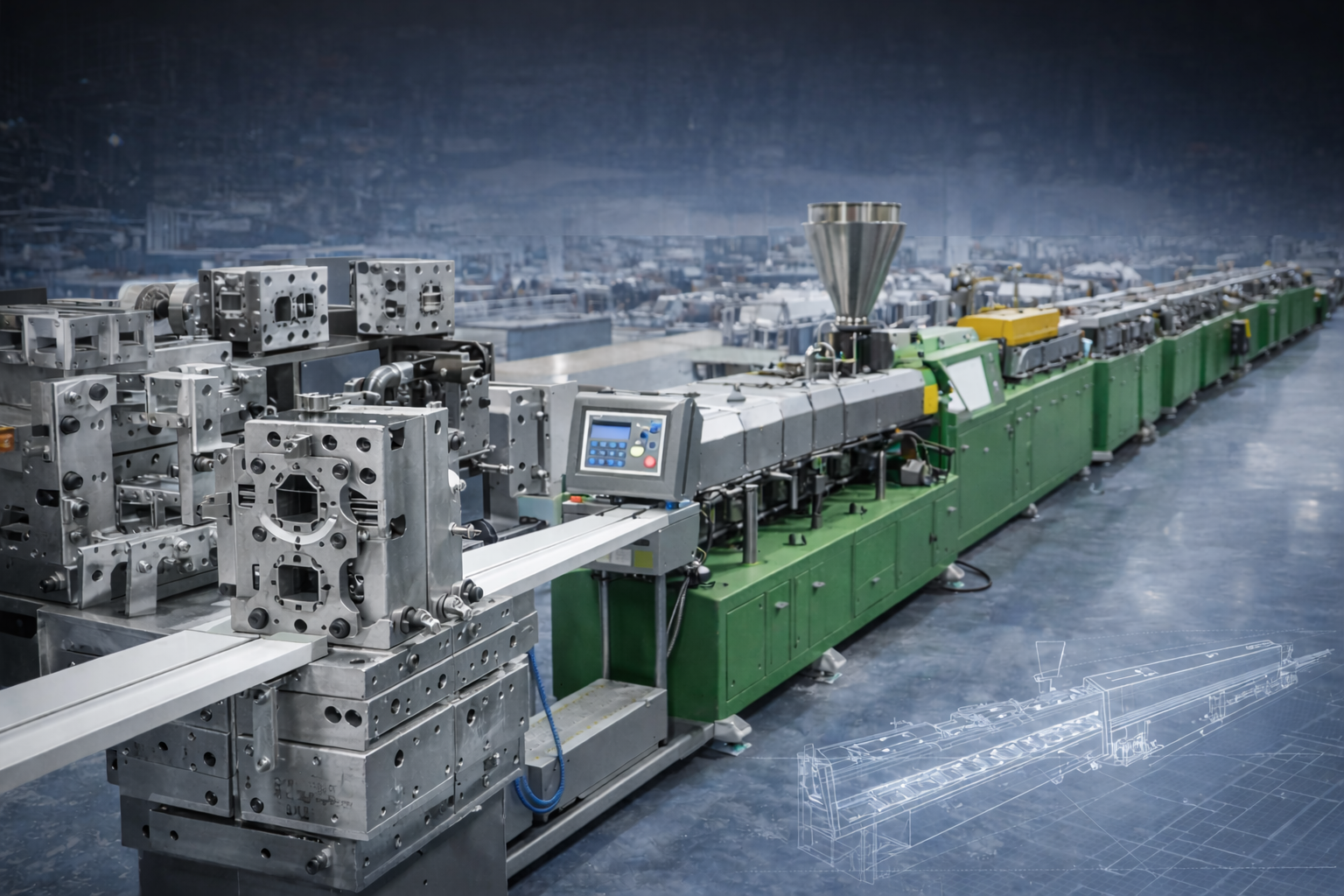
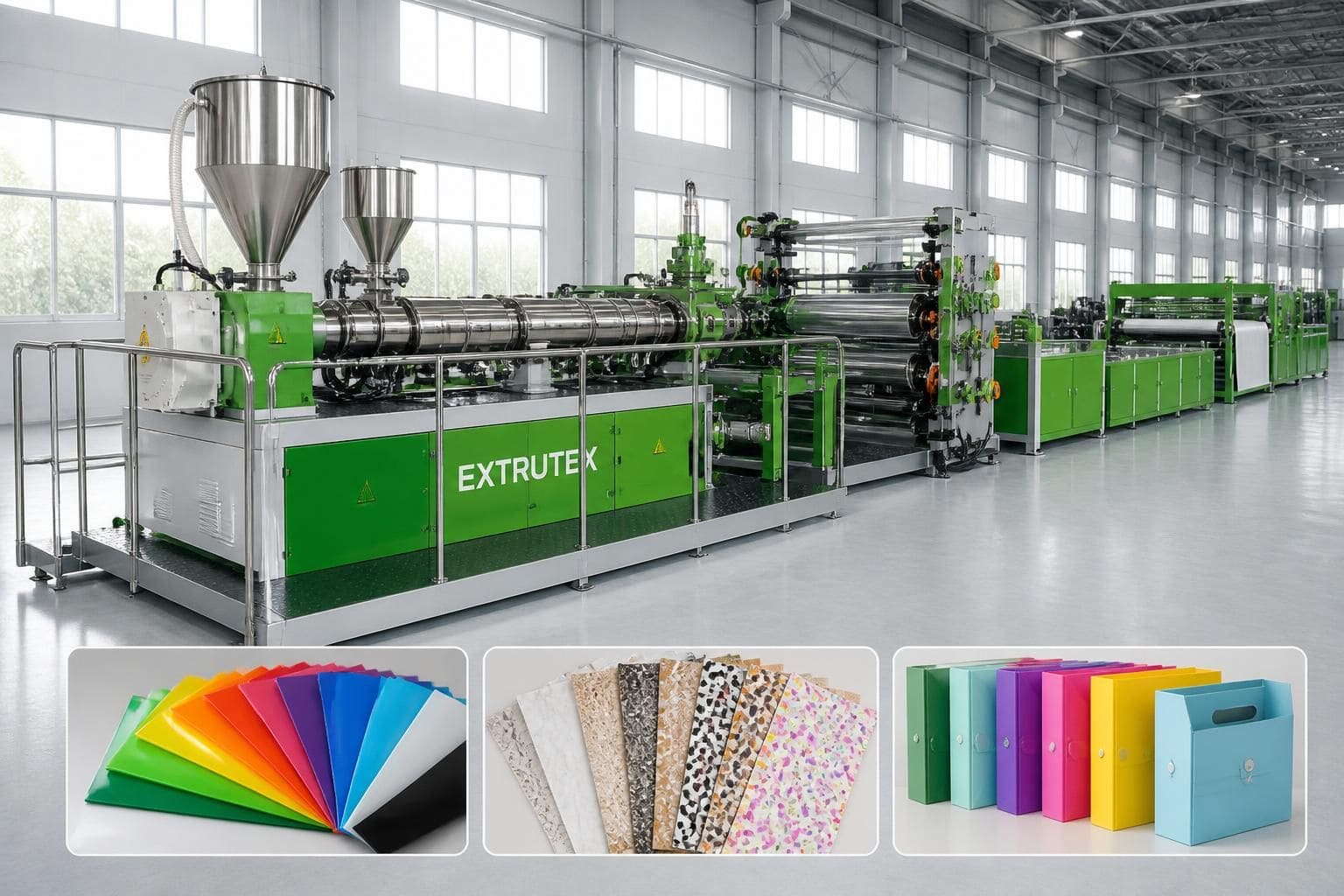
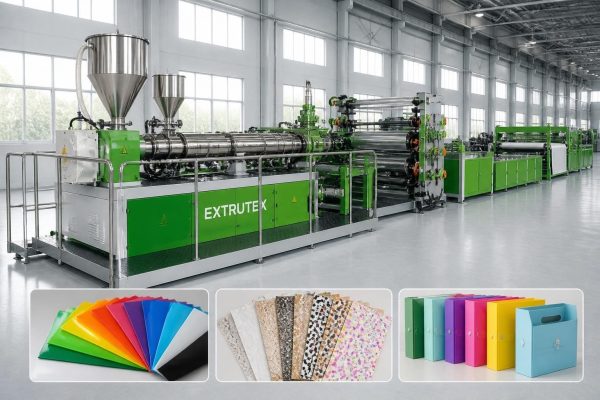
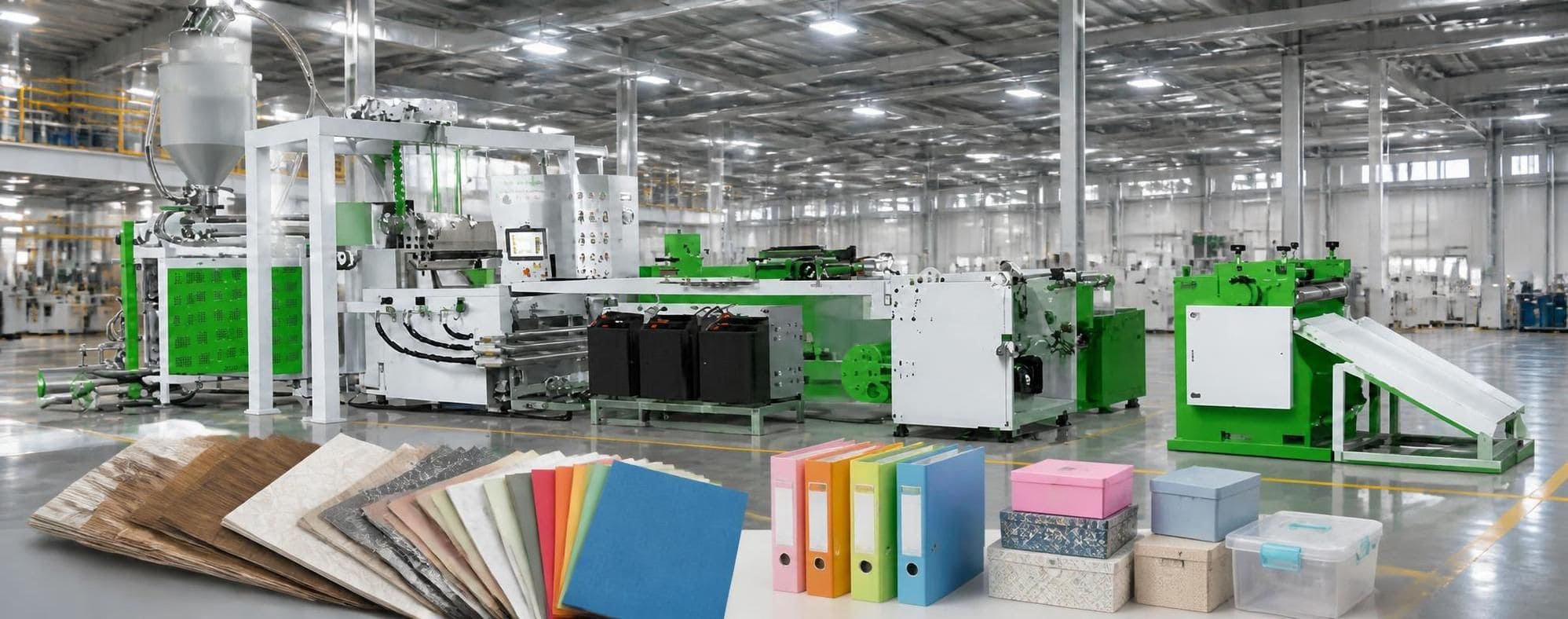
The EXTRUTEX PP Stationery & Decorative Sheet Extrusion Line is designed for the continuous production of thin plastic sheets used in stationery, document organization, decorative packaging, printing, and selected industrial applications. The line can be configured for suitable grades of polypropylene (PP), polyethylene (PE), ethylene-vinyl acetate (EVA), and PP fabric-laminated sheet structures, subject to material compatibility and the selected equipment configuration.
Developed around practical sheet-processing requirements, the EXTRUTEX extrusion system combines controlled plasticizing, flat-die extrusion, precision calendering, cooling, surface finishing, and downstream cutting or winding. It is intended for manufacturers that require consistent sheet thickness, smooth or patterned surfaces, reliable dimensional stability, and flexibility across different product formats.
EXTRUTEX combines Austrian design, laboratory, and R&D expertise with manufacturing in China. Each production line can be evaluated according to the customer's material, target width, thickness range, output, surface finish, and downstream handling requirements.
Thin plastic sheet extrusion converts thermoplastic raw material into a continuous flat sheet with controlled dimensions and surface characteristics. The material is fed into the extruder, processed by the screw and barrel, and conveyed through a flat T-die. The hot sheet then enters a forming, calendering, or cooling section before being cut into individual sheets or wound into rolls where the material permits.
For stationery and decorative products, thickness consistency and surface appearance are especially important. A small thickness variation can affect folding, punching, binding, printing, lamination, and the feel of the finished product. The calendering system, die settings, temperature profile, and haul-off speed therefore need to operate as a coordinated process.
The line can be designed for conventional thin sheets and, with a suitable configuration, certain ultra-thin products. Air-knife technology may support selected thin-sheet applications, while roll-touch calendering can help control thickness and surface finish across thicker operating ranges. The applicable production range must be confirmed for the chosen resin, width, and line design.
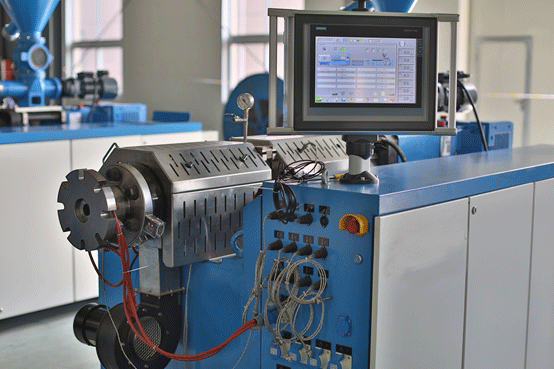
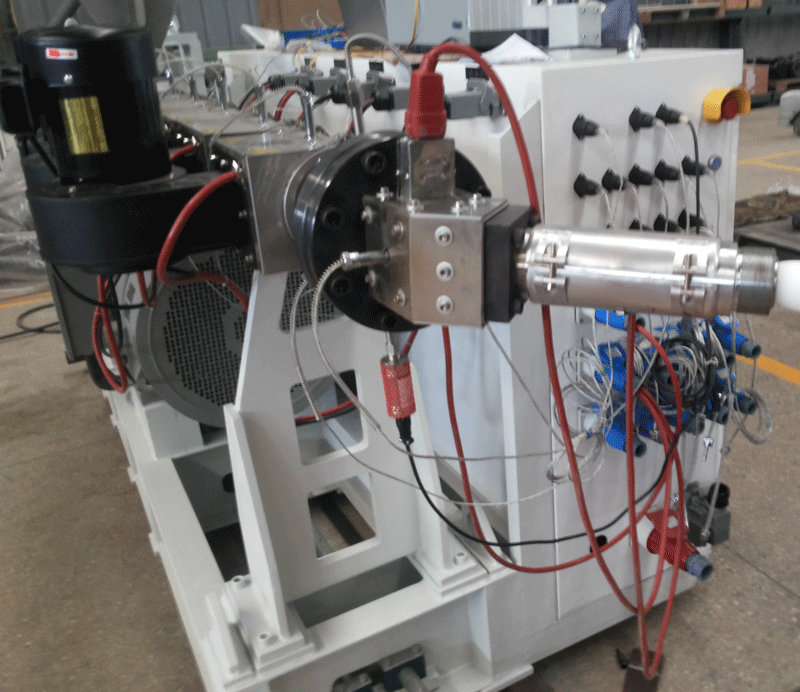
The screw and barrel are selected to match the thermoplastic material, formulation, melt-flow characteristics, output target, and required sheet quality. Their design affects conveying, melting, mixing, melt pressure, and temperature stability.
PP, PE, and EVA have different processing characteristics. A PP fabric-laminated product may also require a suitable bonding or lamination strategy. EXTRUTEX can evaluate whether a common line configuration is appropriate or whether material-specific components and process adjustments are needed.
The flat T-die distributes molten polymer across the working width. Uniform flow distribution helps produce a consistent sheet profile and reduces the amount of downstream adjustment required.
Die selection should consider the resin, melt viscosity, working width, target thickness, production output, and required surface quality. Die-lip adjustment and suitable thermal management can help operators fine-tune the sheet profile during setup.
A horizontal calendering unit guides the hot sheet through a controlled roller arrangement. The rollers help establish thickness, improve flatness, and stabilize the sheet as it cools.
Roller diameter, surface finish, alignment, temperature, and adjustment range should be selected according to the material and product. Correct synchronization between the extruder, calendering unit, and haul-off is essential for stable production.
Thickness control depends on several interacting factors, including die-lip settings, melt output, roller positioning, roller temperature, and line speed. An adjustment system along the X-axis can help operators correct the sheet profile across its width where supported by the selected machine design.
For applications requiring thin sheets, process stability is particularly important. The achievable thickness tolerance should be agreed after considering the material grade, sheet width, operating range, and inspection method.
An air-knife system may be used in suitable configurations to help control very thin sheet material. The source specification identifies an intended ultra-thin range of approximately 0.10–0.20 mm for this technology. Actual capability depends on the resin, sheet width, line speed, die design, airflow arrangement, and other process variables.
Ultra-thin production requires careful control of melt stability, sheet handling, cooling, and tension. A target thickness of 0.10 mm should therefore be confirmed during technical review rather than assumed for every material or model.
Embossing rollers can create decorative textures or patterned surfaces. Depending on the roller design, products may have matte, linear, cross-line, or other specified surface effects.
Patterned surfaces can support premium packaging and stationery applications, but the finished appearance depends on the material, roller pattern, temperature, contact conditions, and process settings. Custom patterns should be evaluated against sample requirements and the intended printing or packaging process.
Corona treatment can increase the surface energy of suitable plastic sheets to improve their compatibility with printing inks, coatings, adhesives, or laminating processes. It is often considered where untreated polymer surfaces do not provide sufficient adhesion.
The appropriate treatment level depends on the polymer, ink or adhesive system, storage conditions, and final application. Surface treatment should be validated with the customer's actual printing or lamination process.
A shear cutter can cut continuous sheet into specified lengths for stacking and further processing. For products intended to remain in roll form, an automatic winder may be considered where the material's thickness, stiffness, and bending characteristics are suitable.
Winding control should account for roll diameter, tension, torque, sheet alignment, and surface protection. Rigid or heavily embossed products may require a different collection method from flexible, smooth sheet.
| Material or Structure | Potential Product Types | Key Considerations |
|---|---|---|
| Polypropylene (PP) | Stationery covers, folders, decorative sheets, packaging sheets | Grade selection, melt flow, shrinkage, stiffness, and surface treatment |
| Polyethylene (PE) | Selected flexible sheets, protective sheets, and packaging products | Density, melt strength, cooling, shrinkage, and downstream handling |
| Ethylene-vinyl acetate (EVA) | Selected flexible sheet products and specialty structures | EVA grade, vinyl acetate content, softness, melt behavior, and compatibility with other layers |
| PP fabric-laminated sheet | Composite stationery or packaging sheet products | Fabric compatibility, bonding method, layer structure, and lamination conditions |
Not every material or composite structure can be processed on the same unchanged configuration. EVA formulation, PP and PE grades, fabric type, and the required bonding method may influence the extruder, die, lamination arrangement, roller configuration, and downstream equipment. EXTRUTEX recommends confirming the material structure before finalizing the line design.
PP sheet is widely used for document covers, presentation folders, envelope folders, and other stationery products. Depending on the selected grade and thickness, the sheet can provide a balance of flexibility, stiffness, low weight, and resistance to everyday handling.
Sheet thickness and surface finish should be chosen according to the final product. Printing, punching, folding, binding, and welding or assembly processes may each impose different requirements on the material.
Suitable PP sheets can be used for front and back covers in spiral-bound notebooks, reports, manuals, and presentation documents. Consistent thickness and flatness help support clean punching and reliable binding.
Clear, translucent, opaque, colored, matte, or textured finishes may be considered according to the application and material grade. Printing compatibility should be verified where graphics or branding will be applied.
Plastic sheet can be used in folders and document organizers for administrative and selected medical-record applications. Material choice should reflect the intended cleaning, handling, labeling, and durability requirements.
The use of a plastic sheet in a medical or healthcare environment does not by itself establish medical-device suitability or sterilization compatibility. Any special regulatory or hygiene requirements must be reviewed separately.
Other possible stationery applications include divider sheets, document wallets, file inserts, report covers, and organizers. These products may require specific stiffness, color, surface texture, or printability.
Embossed PP sheets can be used in decorative packaging where surface texture and appearance contribute to the perceived quality of the finished product. Matte white sheets and patterned surfaces may be suitable for selected garment boxes, gift packaging, apparel packaging, and display products.
Packaging performance depends on the complete converting process, including printing, folding, cutting, creasing, and bonding. The sheet should be tested with the intended packaging design before commercial production.
Clear or translucent sheets with cross-line and other embossed patterns can be used for selected gift packaging, apparel packaging, covers, and display applications. The embossing pattern, transparency, and surface finish can be customized according to the roller and material configuration.
Where optical clarity is important, the resin grade, extrusion conditions, roller condition, and surface cleanliness should be controlled carefully. Embossing can change the appearance and light transmission of the finished sheet.
Plastic sheets can be prepared for selected printing and decorative processes. Corona treatment may improve ink adhesion on suitable materials, while embossing rollers can create tactile or visual effects.
Printing results depend on ink chemistry, treatment level, storage conditions, surface contamination, and the selected polymer. Customers should confirm printability with their actual printing equipment and consumables.
Selected PP and PE sheet grades can be used for protective panels, covers, liners, and other general-purpose industrial applications. The suitability of a sheet depends on its thickness, stiffness, impact performance, chemical exposure, temperature, and mechanical loading.
Agricultural and poultry-related sheet applications may include protective surfaces, partitions, liners, and other components where a cleanable or moisture-resistant plastic surface is useful. The exact material and product design must be chosen according to the operating environment, exposure conditions, and applicable requirements.
EXTRUTEX can review the application and material specification to determine whether a thin-sheet extrusion configuration is appropriate or whether a thicker-board or alternative processing system would be more suitable.
The following table reproduces the principal model data supplied for this line family. These figures should be treated as reference specifications pending confirmation of the final EXTRUTEX configuration, material, and operating conditions.
| Parameter | Unit | 65/30-800 | 75/30-1000 | 90/30-1400 | 100/30-1600 |
|---|---|---|---|---|---|
| Reference material thickness range | mm | 0.2–1.5 | 0.2–1.5 | 0.3–1.5 | 0.3–1.5 |
| Nominal sheet width | mm | 700 | 900 | 1300 | 1500 |
| Main motor power | kW | 22 | 37 | 75 | 90 |
| Reference output | kg/h | 100 | 150 | 200 | 250 |
Technical note: The supplied source labels the first specification row as “Material,” but its values are thickness ranges in millimeters; this table therefore labels it as reference material thickness range. The model suffixes should not be treated as guaranteed finished-sheet widths without confirmation. Actual output depends on material grade, thickness, width, screw and barrel configuration, die design, line speed, and process stability. The stated output and minimum thickness may not be achievable simultaneously for every product.
| Module | Purpose | Selection Factors |
|---|---|---|
| Horizontal calendering unit | Supports sheet forming, thickness control, and flatness | Sheet width, thickness, roller arrangement, and surface requirements |
| Air-knife system | Supports selected ultra-thin sheet applications | Material, target thickness, width, airflow control, and line speed |
| Embossing rollers | Produces textured or patterned surfaces | Pattern design, roller surface, material behavior, and required finish |
| Corona treatment unit | Improves surface energy for selected printing or bonding processes | Polymer type, ink or adhesive system, and treatment target |
| Shear cutter | Cuts sheet into specified lengths | Sheet thickness, width, cutting frequency, and length accuracy |
| Automatic winder | Collects suitable flexible sheet into rolls | Sheet flexibility, roll diameter, tension, and surface protection |
| Edge-trimming system | Removes irregular edges where required | Finished width, trim allowance, and edge quality |
| Control and monitoring system | Coordinates production settings and equipment operation | Automation level, drive synchronization, alarms, and process monitoring |
Sheet thickness uniformity is influenced by the stability of the extruder output, melt distribution across the die, die-lip settings, calender roller positioning, cooling conditions, and haul-off speed. The line should be commissioned with the target resin and sheet dimensions to establish a stable operating window.
Flatness depends on uniform cooling, correct roller alignment, consistent tension, and appropriate material handling. Uneven cooling or excessive tension can cause distortion or changes in sheet dimensions. For thin sheet products, small process variations can have a noticeable effect on the final appearance and handling characteristics.
Surface quality should be assessed against the intended use. Stationery covers may require a smooth, clean finish, while decorative packaging may require a controlled embossed pattern. Printing and lamination applications may require surface treatment and additional compatibility testing.
A well-configured control system helps operators coordinate extrusion, calendering, cooling, surface treatment, cutting, and winding. Depending on the selected configuration, the system may monitor temperature zones, drive speed, line synchronization, and alarms.
During production setup, operators should verify:
Consistent operation requires a defined material specification, stable process settings, regular inspection, and trained operators. Automation can improve repeatability but does not eliminate the need for material validation and quality checks.
Preventive maintenance helps preserve sheet quality and reduce unexpected interruptions. Maintenance intervals should follow the equipment documentation and reflect the material being processed, production hours, and plant conditions.
Quality inspection may include thickness measurement, width and length checks, flatness inspection, visual surface examination, color consistency, and application-specific printability or bonding tests.
EXTRUTEX develops extrusion machinery for industrial plastic processing, combining Austrian design, laboratory, and R&D expertise with manufacturing in China. Equipment selection is based on the intended material, product dimensions, production target, and finishing requirements.
The line can be evaluated for suitable PP, PE, and EVA grades, as well as selected PP fabric-laminated structures. Final compatibility depends on the material formulation, layer structure, and equipment configuration.
The reference design describes air-knife technology for selected ultra-thin applications down to approximately 0.10 mm. This capability must be confirmed for the target resin, working width, line speed, and required quality level.
The calendering unit supports sheet forming, thickness adjustment, flatness, and surface quality. Correct roller settings and synchronization with the extruder are essential for consistent results.
Yes, suitable embossing or patterned rollers can produce selected surface textures. Pattern options should be confirmed according to the product design and required finish.
Corona treatment can improve the surface energy of suitable plastic sheets and support ink, coating, or adhesive adhesion. The correct treatment level should be validated with the actual converting process.
The collection arrangement depends on the product. A shear cutter and stacking system suit cut-sheet products, while an automatic winder may be used for suitable flexible sheet material. Both options can be evaluated during line design.
Model selection depends on the target sheet width, thickness, material, output, surface finish, and downstream process. EXTRUTEX should confirm the final configuration and performance against the customer's product requirements.
The EXTRUTEX PP Stationery & Decorative Sheet Extrusion Line can be configured for stationery covers, document folders, decorative packaging sheets, selected industrial products, and other thin-sheet applications. Optional calendering, air-knife technology, embossing rollers, corona treatment, cutting, and winding can be considered according to the target product.
For a technical proposal, provide the material grade, sheet width, thickness range, target output, surface finish, intended application, and whether the finished product will be stacked or wound. For fabric-laminated or multilayer products, please also provide the layer structure and bonding requirements.
EXTRUTEX — Austrian design, laboratory and R&D, with manufacturing in China.
There are no reviews yet.
By submitting your email, you agree to our company’s terms and conditions.
We are not looking to sell; we are here to provide you with the best support and service.
Contact available 24/7
Please do not contact us for advertising or sales inquiries
All rights of this website are reserved for EXTRUTEX Austria and its partner companies, © 2026
-
(0 customer reviews)