No products in the cart.



All rights of this website are reserved for EXTRUTEX Austria and its partner companies, © 2026

Multiple Payment Methods

Discount for advance payments over 50%

Free Shipping Coordination Services
Payment methods:


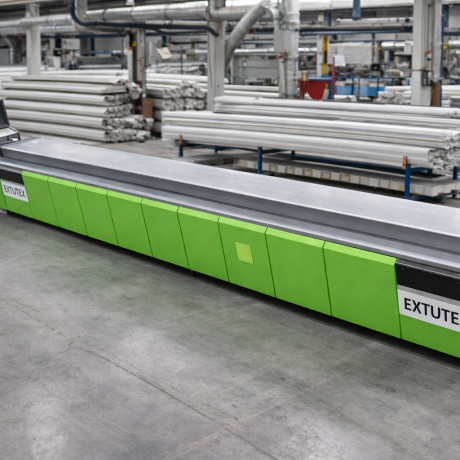
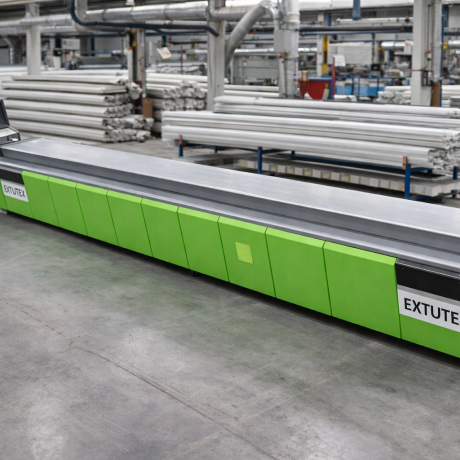
The EXTRUTEX PP PE PS ABS Sheet Extrusion Line is designed for the continuous production of thermoplastic sheets and boards for packaging, construction, industrial manufacturing, stationery, automotive components, household products, and many other applications. Depending on the selected extruder, screw design, die, calibration system, cooling configuration, and downstream equipment, the line can be configured for different polymer materials, sheet widths, thicknesses, surface requirements, and production capacities.
EXTRUTEX provides extrusion equipment solutions for polypropylene (PP), polyethylene (PE), polystyrene (PS), acrylonitrile butadiene styrene (ABS), and other compatible thermoplastics. The line configuration is selected according to the material's rheological properties, required output, product dimensions, and intended application. Sheet thickness can generally be configured within a broad range, from approximately 0.5 mm to 30 mm, while sheet widths can reach up to 3000 mm with a suitable extrusion and downstream configuration. The actual operating range depends on the selected model and product specification.
EXTRUTEX combines Austrian design, laboratory, and R&D expertise with manufacturing in China to develop practical extrusion solutions for industrial sheet production. Each line can be configured according to the customer's raw material, product drawings, factory layout, production targets, and automation requirements.
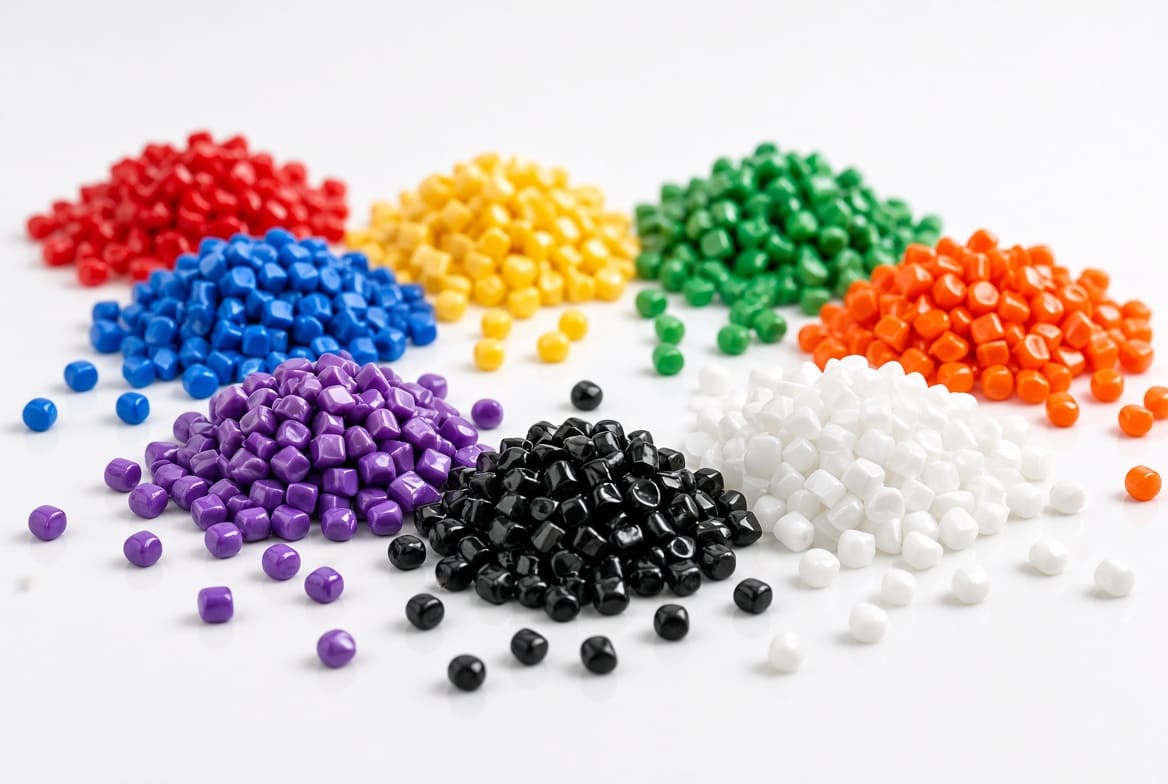
Sheet extrusion converts thermoplastic pellets, granules, or approved reprocessed material into a continuous flat sheet. The material is fed into the extruder, heated, melted, mixed, and homogenized by the screw and barrel. The molten polymer then passes through a sheet die, where it is distributed across the required width and shaped into a flat melt curtain. Downstream rollers control the sheet's thickness, surface finish, cooling, and dimensional stability before the finished material is trimmed, cut, wound, or stacked.
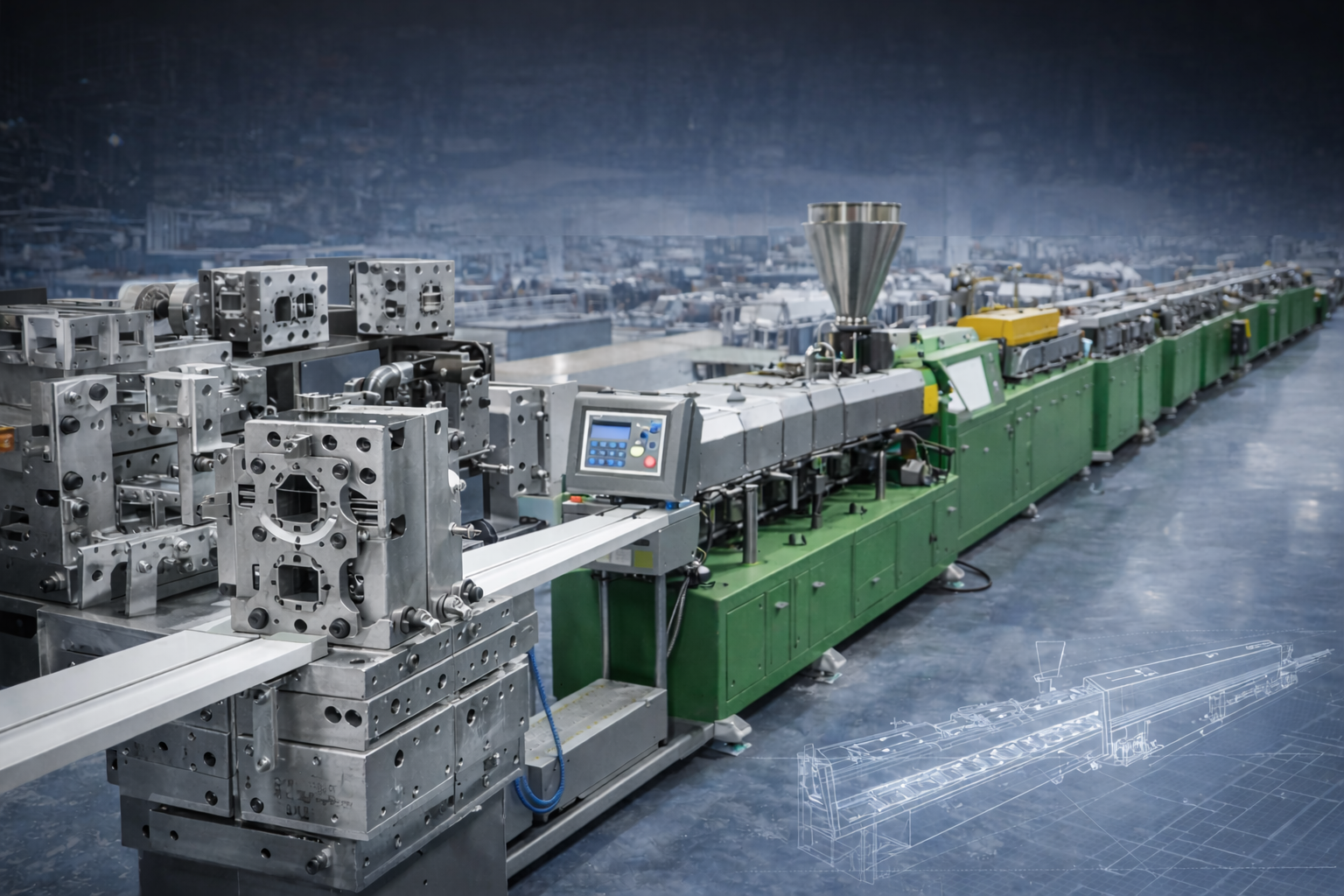
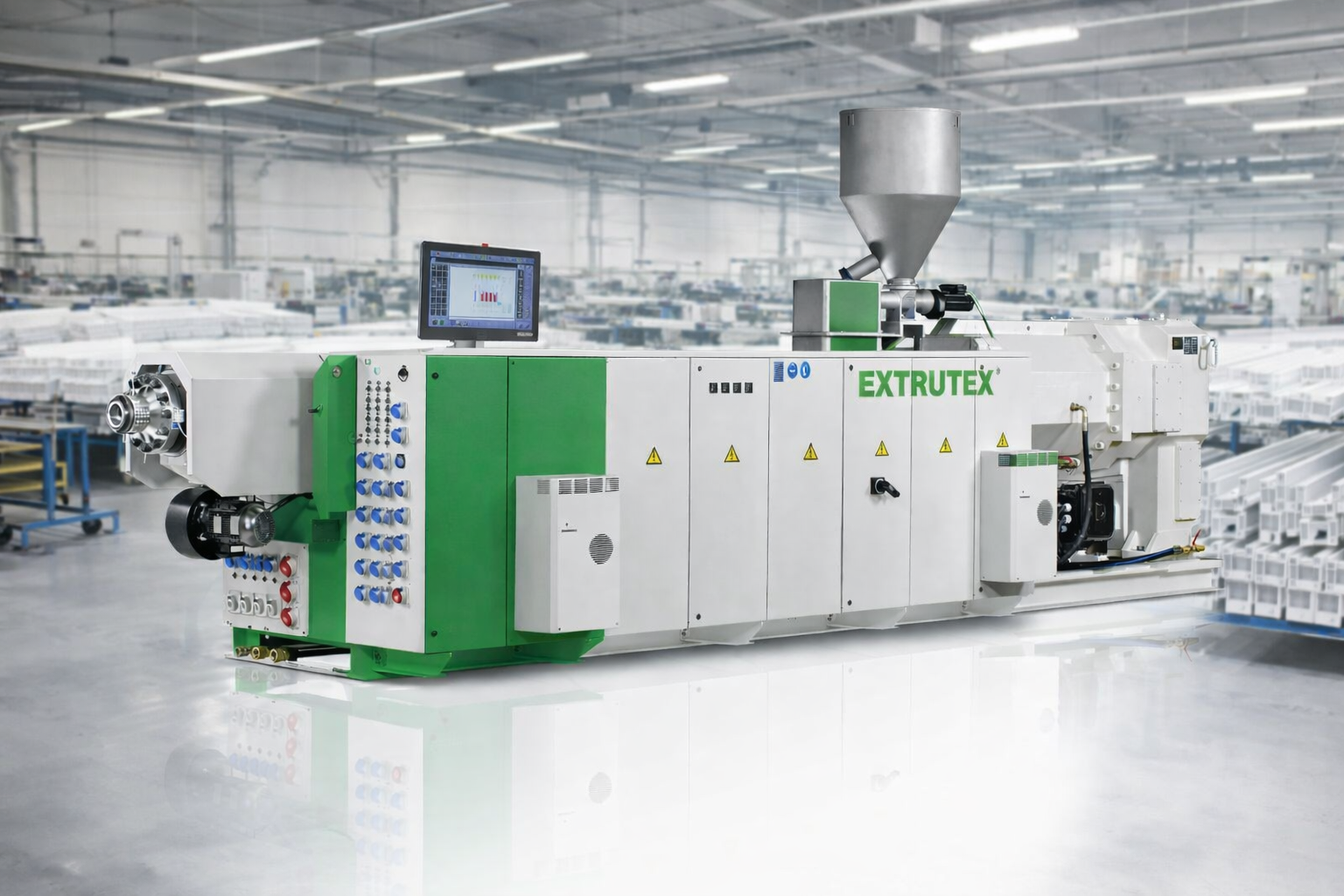
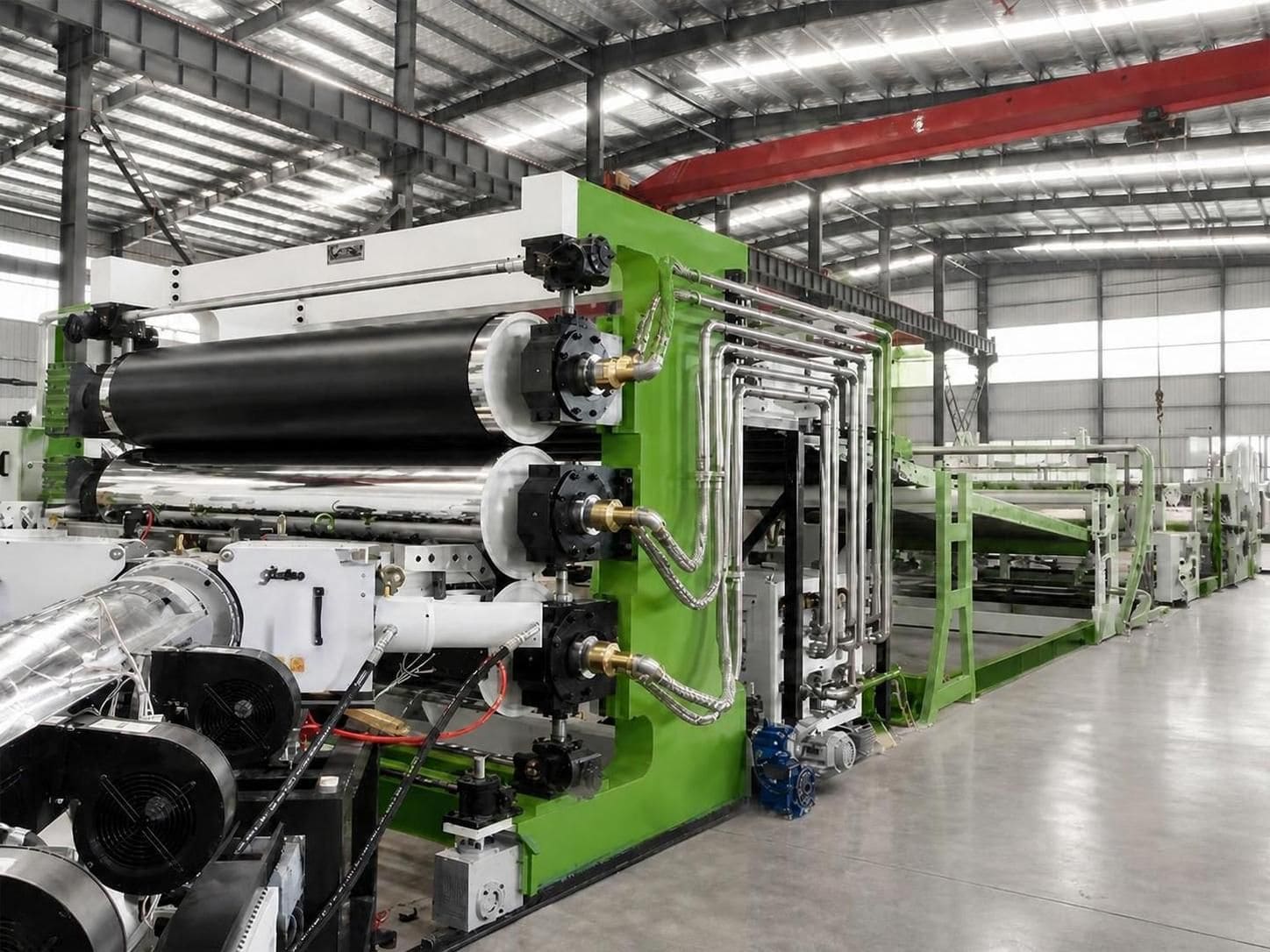
The EXTRUTEX system integrates the main extrusion unit with the sheet die, forming and cooling rollers, temperature-control equipment, haul-off or conveying equipment, cutting equipment, and optional winding or stacking systems. A coordinated configuration helps maintain stable production and reduce variation in sheet thickness, width, surface appearance, and flatness.
The extrusion line can be configured for PP, PE, PS, ABS, and selected additional thermoplastics such as PA or EVA when the appropriate screw design, barrel configuration, processing temperature, die, and downstream equipment are specified. PVC requires a dedicated configuration and suitable material-handling and thermal-control design; it should not be assumed that a standard PP/PE/PS/ABS configuration is automatically suitable for PVC.
Because different polymers have different melt viscosities, processing windows, thermal sensitivities, and cooling characteristics, EXTRUTEX selects the screw and barrel and processing components according to the intended material. This approach supports stable plasticization and helps maintain consistent melt quality.
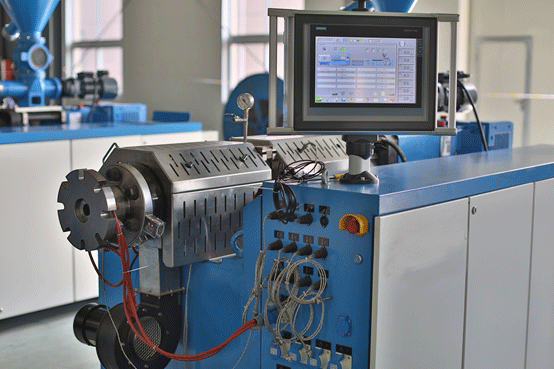
The line can be equipped with a Siemens PLC-based control system, subject to the selected configuration. The control interface can coordinate key operating parameters, including extruder speed, heating zones, roller temperature, haul-off speed, cutting operation, and winding functions. Temperature monitoring and alarms help operators identify process deviations and respond before they lead to significant product variation.
The control architecture can be configured for centralized operation, with the main extrusion unit and downstream equipment coordinated through the operator interface. Available automation functions depend on the selected electrical package and machine configuration.
The screw and barrel are central to the extrusion process. A suitable screw design supports feeding, melting, mixing, homogenization, and controlled melt delivery. Screw geometry, compression characteristics, mixing elements, and L/D ratio should be matched to the selected polymer and production target.
For materials that require improved color dispersion or additive distribution, an appropriate mixing section can help improve melt uniformity. Screw design must balance mixing performance, output, melt temperature, shear, and residence time. Excessive shear or temperature can degrade heat-sensitive materials, while insufficient melting or mixing can cause surface defects and inconsistent sheet properties.
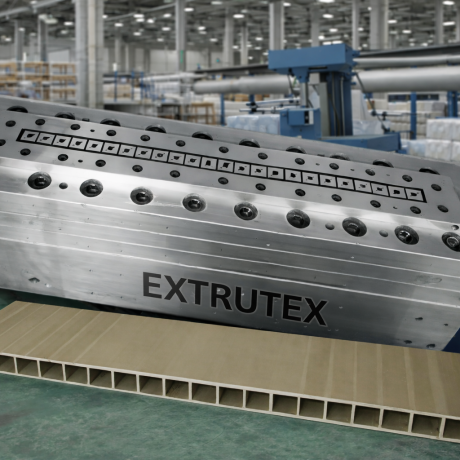
The sheet die distributes the molten polymer across the product width and forms the initial sheet profile. A specially designed T-die with an appropriate internal flow channel and adjustable die lip helps control the melt distribution across the width. Depending on the die design, flow adjustment can compensate for differences in edge and center flow and support more uniform sheet thickness.
Die selection is based on polymer type, melt flow characteristics, sheet width, thickness range, output, and the required surface quality. Die temperature stability, correct installation, cleaning, and maintenance are also important to consistent operation.
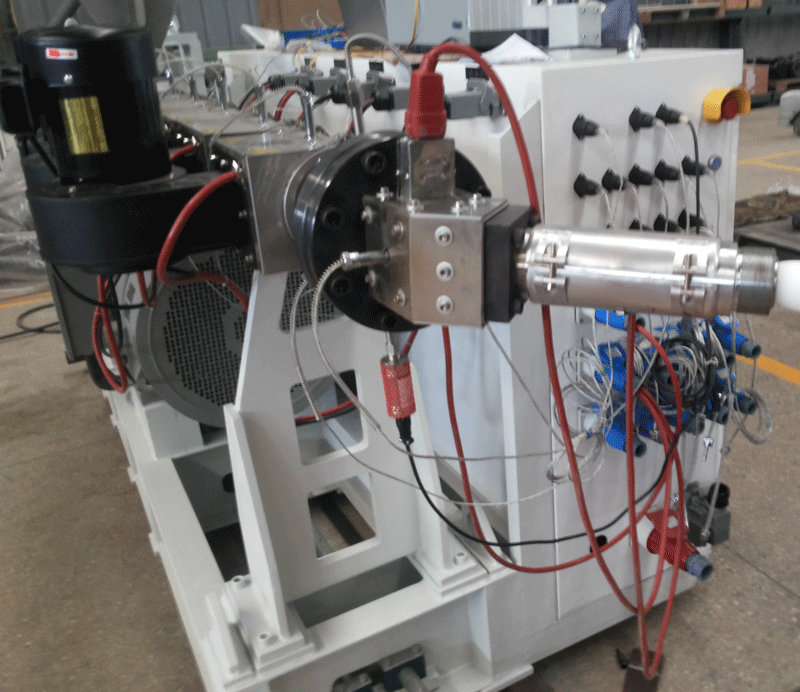
Temperature control is essential for stable extrusion. The EXTRUTEX line can use independent heating and temperature-monitoring zones for the extruder, adapter, die, and other temperature-sensitive sections. The stated temperature-control precision of approximately ±1°C is a design target for suitable control zones under specified operating conditions; actual accuracy and stability depend on sensor placement, heater sizing, calibration, ambient conditions, and the selected equipment.
Correct temperature management supports consistent melt viscosity and helps reduce defects caused by uneven melting, overheating, or unstable flow. The process recipe should be developed for each material grade rather than applying one temperature profile to all polymers.
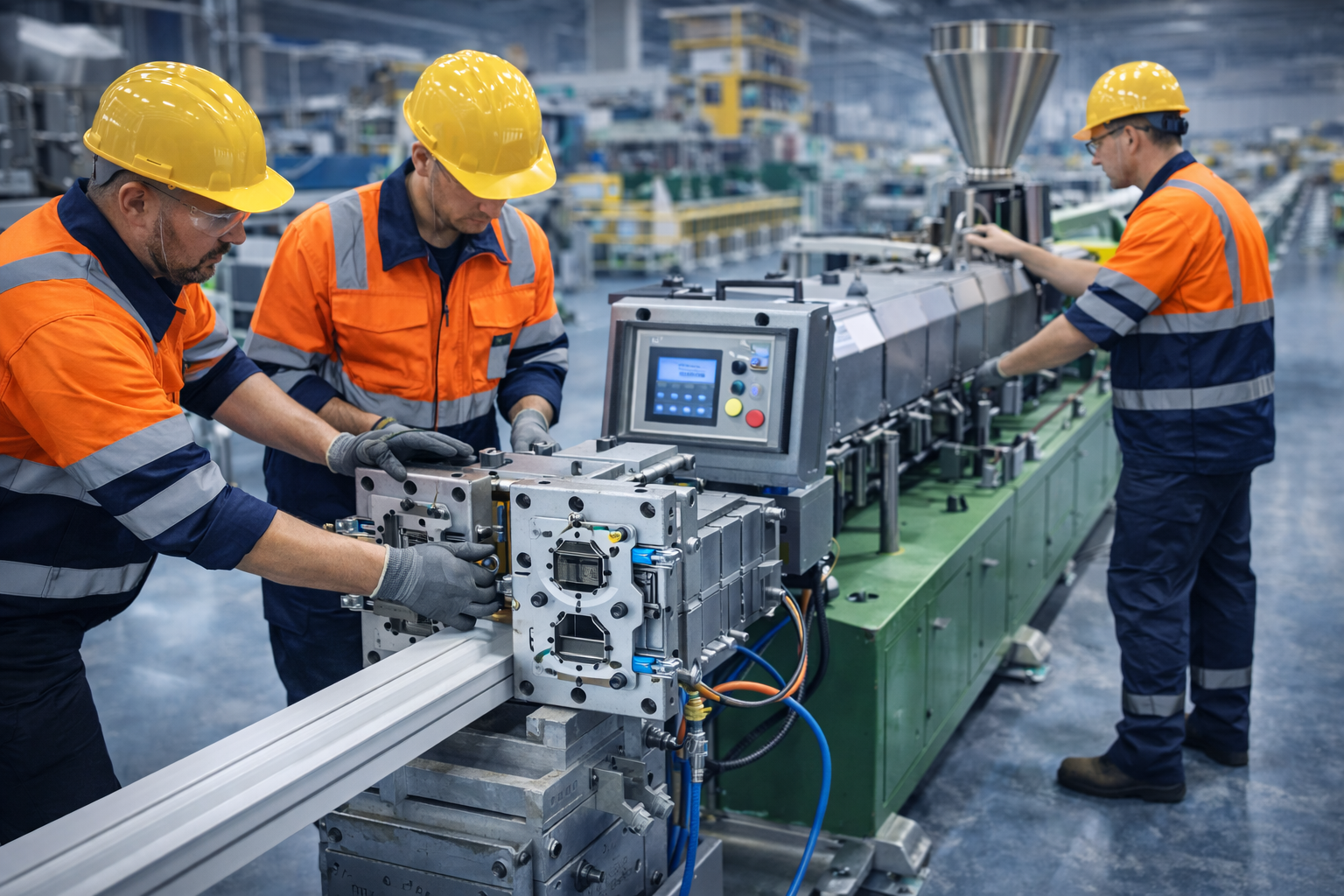
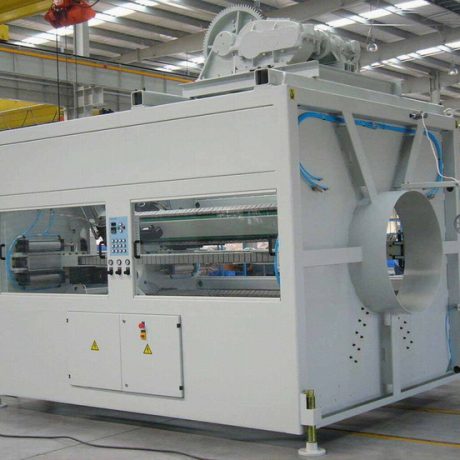
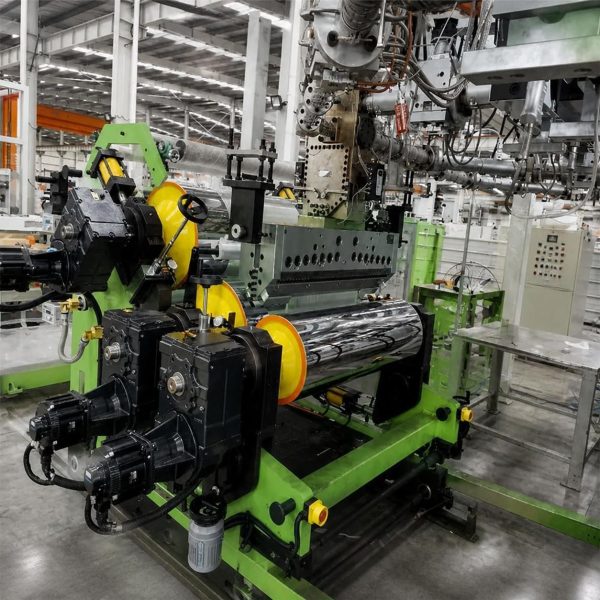
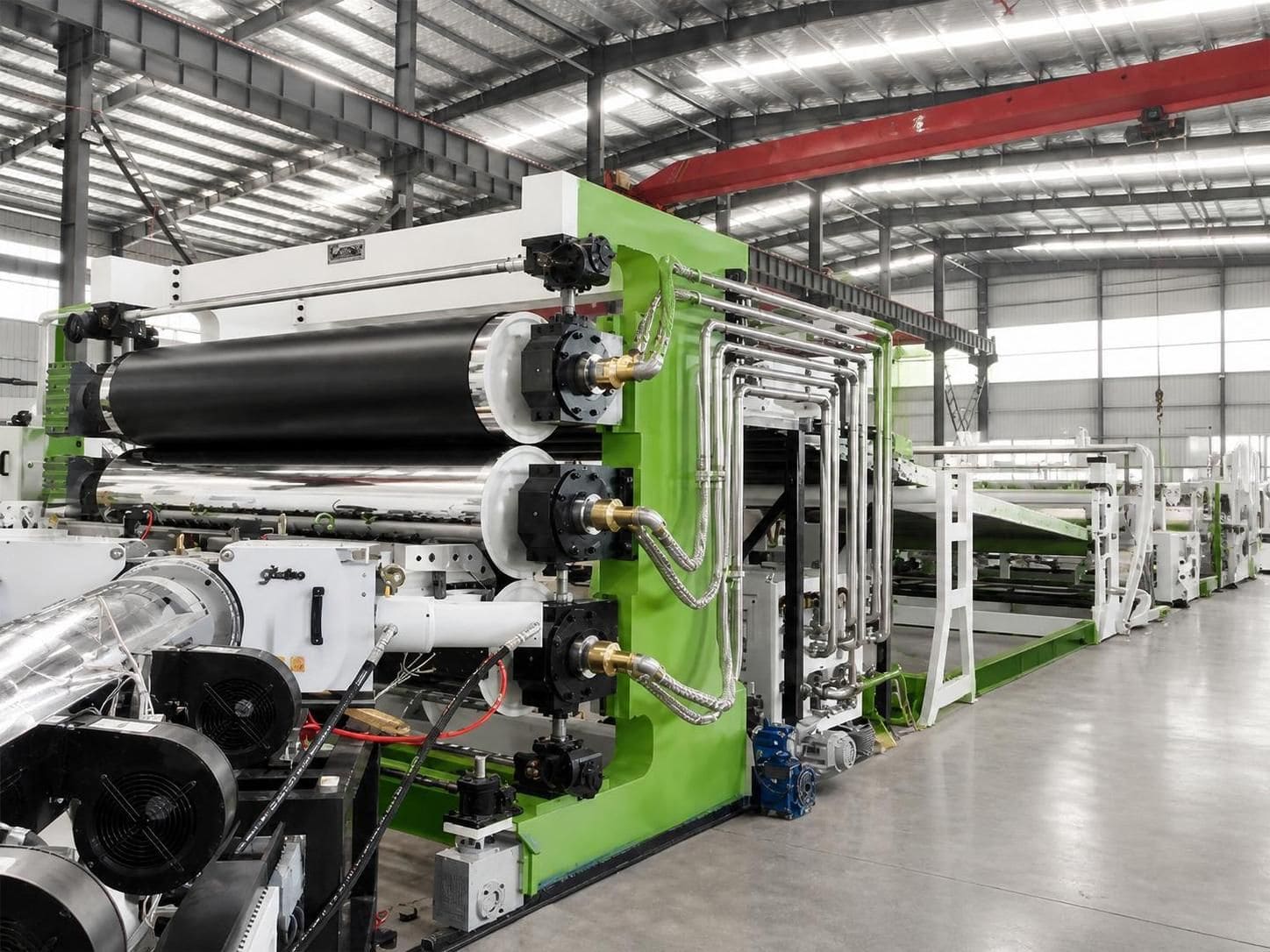
The forming roller platform can be designed with a vertical or inclined arrangement, including approximately 45-degree configurations where appropriate. The roller platform can be adjusted to accommodate different sheet thicknesses and production requirements. A suitable roller arrangement supports sheet calibration, cooling, thickness control, and surface finishing.
For thick boards, the line may require a different roller gap, cooling strategy, and conveying arrangement from those used for thin sheet production. Selecting the appropriate roller diameter, surface finish, spacing, and adjustment mechanism helps match the line to the intended product range.
A roller-loop cooling system removes heat from the extruded sheet and helps stabilize its dimensions. The system can be combined with a mold or roller temperature controller to regulate cooling conditions. Uniform cooling is important because uneven temperature reduction may lead to internal stress, warpage, surface marks, or variations in final dimensions.
Cooling capacity should be matched to the polymer, sheet thickness, production speed, roller contact, and ambient conditions. Thick boards generally require more time and carefully managed cooling than thin sheets. The cooling system should therefore be specified according to the intended production range.
Depending on the product format, the line can include a precision shear or cutter for cutting sheets to a required length. Cutting parameters should be matched to sheet thickness, stiffness, temperature, and conveying speed to help produce clean edges and repeatable dimensions.
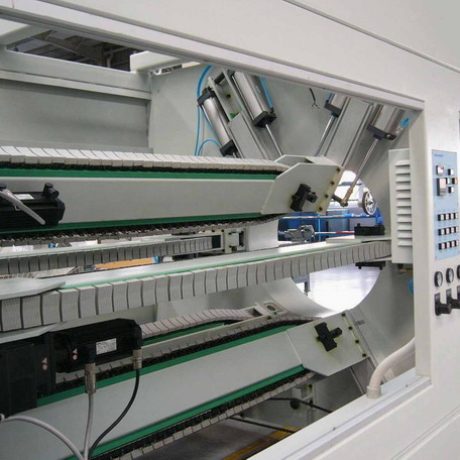
For thin sheet supplied in rolls, an optional winding system can use a torque motor and automatic tension control. A four-axis tension-control arrangement may be specified where the selected winder design supports it. Coordinated tension control helps maintain an even roll surface and reduces loose winding, telescoping, wrinkles, or excessive stretching. A slitting device can divide the web into narrower widths, while an automatic meter counter can track the required roll length.
| Material | Typical product formats | Configuration considerations |
|---|---|---|
| PP – Polypropylene | Flat sheets, boards, packaging sheets, fabricated components | Screw design, melt strength, cooling, and sheet stiffness |
| PE – Polyethylene | Sheets, liners, protective boards, industrial panels | Grade-specific flow behavior, cooling, shrinkage, and dimensional control |
| PS – Polystyrene | Thin sheets, packaging sheets, display and thermoforming materials | Temperature control, melt stability, sheet uniformity, and intended forming process |
| ABS | Technical sheets, equipment panels, automotive and appliance components | Suitable drying where required, stable melting, surface quality, and cooling |
| PA – Polyamide | Selected technical sheet applications | Moisture control and a dedicated material-specific processing setup |
| EVA – Ethylene Vinyl Acetate | Selected flexible sheet applications | Grade-dependent temperature, melt strength, additives, and cooling requirements |
The materials above are examples of possible applications, not a guarantee that one machine configuration can process all of them without changes. A material-specific review is recommended before selecting the extruder, screw and barrel, die, cooling system, and downstream equipment.
The following table provides a general configuration guide based on the requested product range. It is not a fixed model-by-model specification. Final machine models, output, screw diameter, motor power, and auxiliary equipment should be confirmed after reviewing the required material, sheet dimensions, and production target.
| Parameter | General configuration range |
|---|---|
| Applicable materials | PP, PE, PS, ABS; selected PA, EVA, and other compatible materials subject to configuration |
| Sheet thickness | Approximately 0.5–30 mm, depending on material and line configuration |
| Maximum sheet width | Up to approximately 3000 mm with a suitable extruder, die, roller platform, and downstream system |
| Extrusion method | Continuous thermoplastic sheet extrusion |
| Extruder type | Selected single-screw extruder or other suitable configuration according to material and output |
| Sheet die | T-die with a flow channel and die-lip adjustment suitable for the target width and thickness |
| Temperature control | Multi-zone heating and monitoring; approximately ±1°C may be targeted in suitable controlled zones |
| Forming roller platform | Vertical or inclined arrangement, selected according to product thickness and line layout |
| Cooling | Roller-loop cooling system with temperature-control equipment as specified |
| Cutting | Precision shear or other suitable sheet-cutting unit |
| Winding | Optional automatic winder with tension control and meter counter for suitable thin-sheet products |
| Slitting | Optional slitting device for producing narrower rolls |
| Control system | PLC-based digital control; Siemens PLC available subject to the selected package |
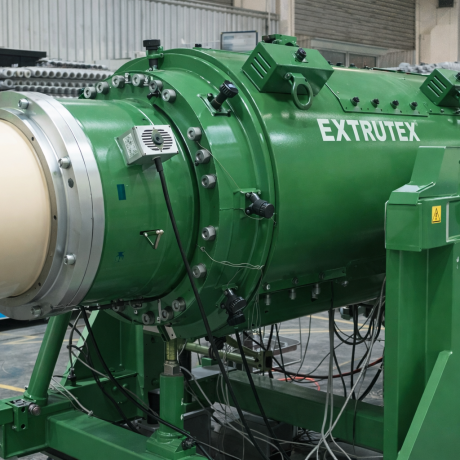
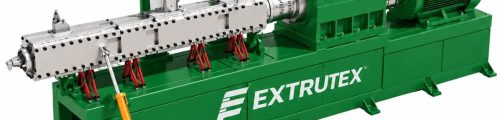
The extruder melts and homogenizes the polymer before delivering it to the die. Its selection affects output, energy consumption, melt quality, and the range of materials that can be processed reliably. EXTRUTEX configures the screw diameter, screw geometry, drive system, heating zones, and barrel design according to the production target and the material's processing characteristics.
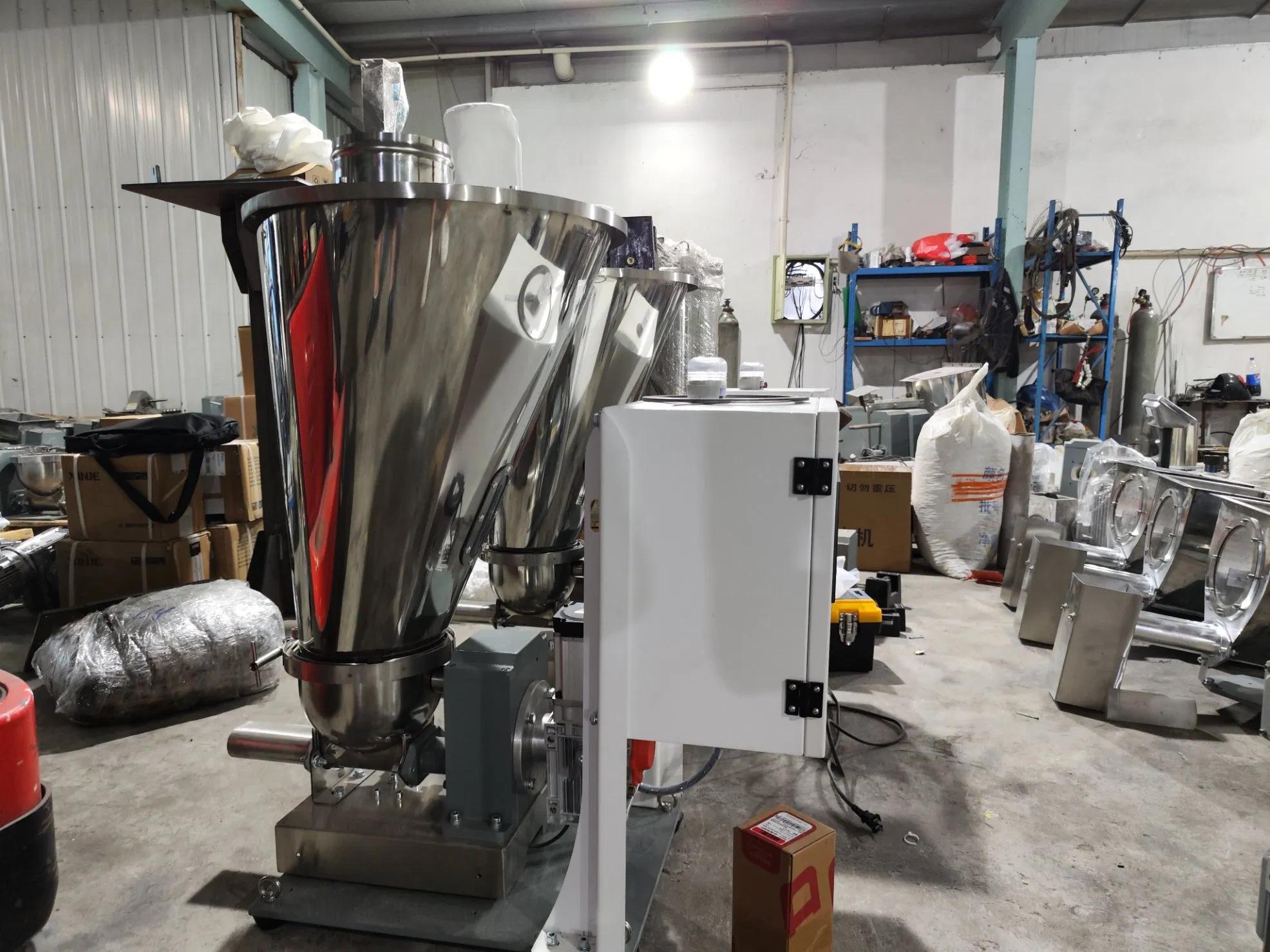
Stable feeding is necessary for consistent output. The feeding arrangement can be configured for the selected pellet or granule type and may include a hopper, material loader, dosing equipment, or gravimetric feeding system where required. Additives, color masterbatch, and recycled material should be selected and dosed according to the intended sheet properties and processing limits.
Where a material is moisture-sensitive, suitable drying and material storage procedures may be required. The exact drying requirements depend on the polymer grade and supplier recommendations. Material preparation helps reduce processing instability and surface defects associated with unsuitable feedstock conditions.
As the material travels through the heated barrel, the screw transports, compresses, melts, and mixes it. A properly selected screw supports a stable melt with suitable temperature and viscosity. The correct design depends on whether the line is intended for high-volume commodity sheet production, technical sheet production, thick boards, or thin sheet for winding.
The extruder drive should provide sufficient torque and speed control for the required output. Extrusion output must be coordinated with die flow, roller speed, cooling capacity, and cutting or winding speed. An increase in extruder output without corresponding downstream adjustments can cause thickness variation, poor calibration, or unstable winding.
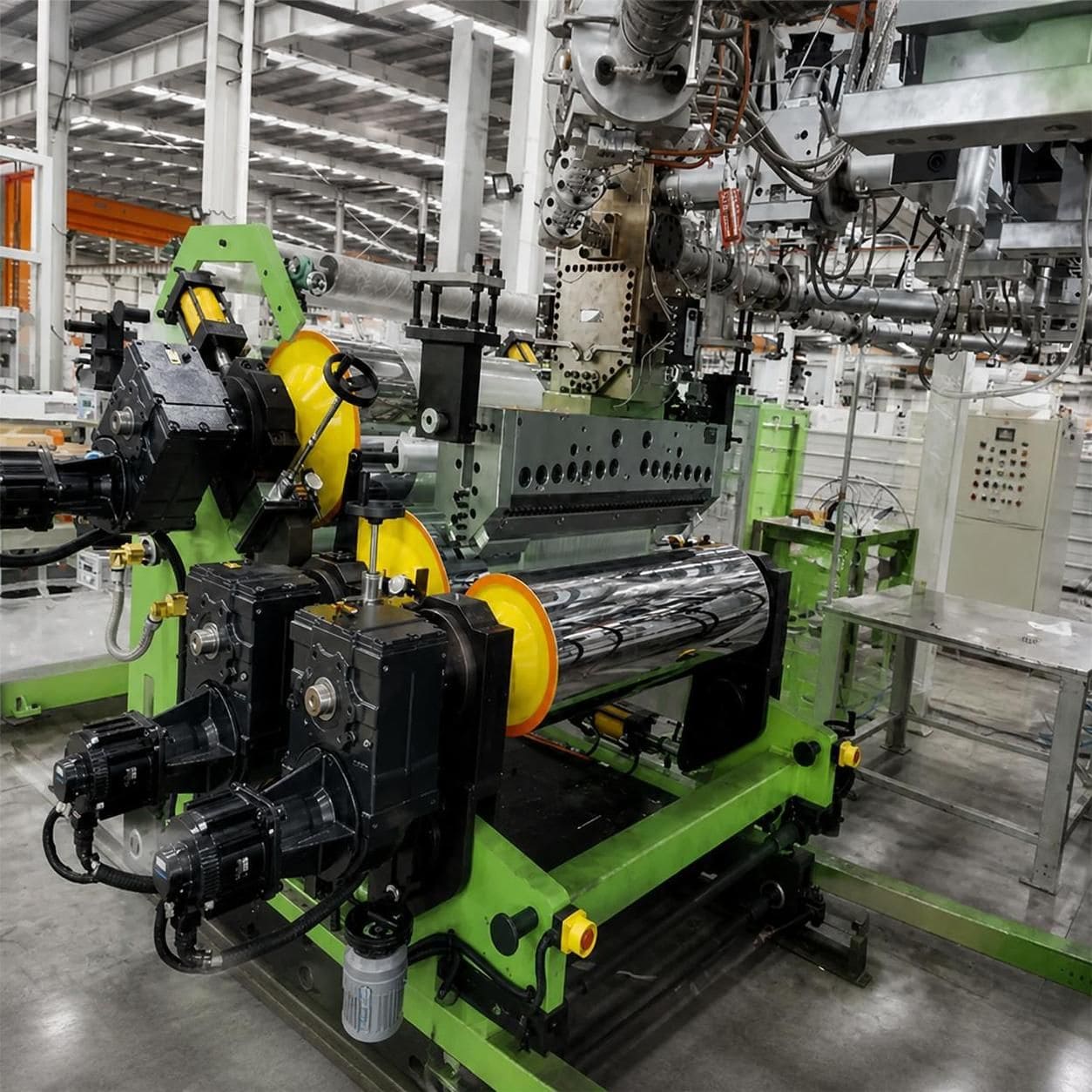
The T-die is a key component in sheet extrusion because it determines how the molten polymer is distributed across the full width of the sheet. Its flow channel and adjustable die lip are designed according to the polymer, sheet width, thickness, and output target.
A suitable die design aims to provide balanced flow from the center to the edges. Die-lip adjustment allows operators or technicians to correct cross-web thickness differences within the limits of the die design. Uniform melt delivery is only one part of thickness control; roller alignment, temperature, haul-off speed, and material consistency also affect the final result.
Stable die temperature helps maintain predictable melt flow. The die should be installed and heated according to the recommended procedure, and cleaning should be carried out using methods suitable for the material and die construction. Incorrect cleaning tools or uncontrolled overheating can damage the die lip and affect sheet quality.
Die width and the usable sheet width should be selected according to the final product dimensions and trimming allowance. A maximum width of 3000 mm requires a correspondingly designed die, roller platform, frame, drive system, and handling arrangement. It should be confirmed as a complete line specification rather than treated as a universal capacity across all machine models.
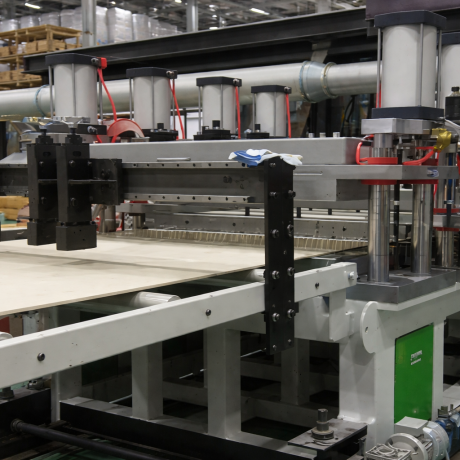
The forming roller platform receives the hot sheet from the die and helps establish its final thickness, surface finish, and dimensions. Roller gap, alignment, temperature, surface condition, and line speed must be coordinated to achieve consistent production.
A vertical or inclined roller platform can be selected according to the line layout and product range. An adjustable platform provides flexibility when producing sheets of different thicknesses, but the usable range depends on the mechanical design, roller spacing, and calibration system.
Sheet thickness depends on the melt output, die opening, roller gap, haul-off speed, cooling conditions, and polymer shrinkage. The production recipe should establish a stable relationship between these parameters. Thickness measurements across the sheet width and along the production direction can help operators identify process variation and make controlled adjustments.
Roller surface condition affects the appearance of the finished sheet. Depending on the application, the rollers may be specified for a particular surface finish. Clean rollers, correct temperature settings, and stable sheet contact help reduce marks, uneven gloss, and other visible defects.
Cooling stabilizes the extruded sheet after it leaves the die. The roller-loop cooling system can be configured to circulate cooling water or another specified heat-transfer medium through the appropriate components. Temperature controllers help regulate the process, while flow and temperature monitoring support repeatable operation.
Cooling must be matched to sheet thickness and production speed. Thin sheets can generally cool more quickly than thick boards, while large sheet widths require suitable temperature uniformity across the working area. The correct cooling design helps reduce warpage, dimensional changes, and residual stress.
A shear or other suitable cutting unit can cut continuous sheet into defined lengths. The cutting method should be selected according to sheet thickness, stiffness, temperature, and the required edge quality. Accurate coordination between the conveying system and cutter helps improve cut-length consistency and production efficiency.
For thin sheet that is suitable for roll packaging, an automatic winding system can collect the finished web into rolls. A torque motor and tension-control arrangement can help maintain consistent winding tension. The appropriate control method depends on the material's stiffness, thickness, width, and tendency to stretch or wrinkle.
A four-axis automatic tension-control arrangement may be included in configurations designed for this function. By coordinating the relevant drives and tension settings, the system can help maintain a uniform roll profile. The actual control architecture depends on the selected winder design.
An optional slitting device allows the operator to divide a wide sheet into narrower rolls. Slitting positions should be configured according to the customer's required widths and edge-trimming allowance. An automatic meter counter can monitor roll length and support repeatable production batches.
For rigid sheets and thick boards that are not wound, a stacking or collection system may be selected. The stacking method depends on sheet dimensions, product weight, required batch size, and the factory's material-handling process.
Consistent sheet quality requires coordination between raw material, extrusion, die flow, roller calibration, cooling, and downstream handling. The machine should be commissioned with the intended production material and a clearly defined product specification.
| Observed issue | Possible causes | Typical checks |
|---|---|---|
| Uneven thickness across the width | Die flow imbalance, die-lip setting, temperature variation, roller alignment | Check die adjustment, temperature profile, and roller parallelism |
| Thickness variation along the sheet | Unstable feeding, fluctuating output, inconsistent haul-off speed | Check feeding consistency, drive settings, and process coordination |
| Surface streaks or marks | Contamination, die deposits, damaged rollers, unsuitable processing conditions | Inspect material cleanliness, die condition, and roller surfaces |
| Warping or curling | Uneven cooling, residual stress, unsuitable roller temperatures | Review cooling balance, sheet temperature, and line speed |
| Bubbles or surface defects | Moisture, contamination, unsuitable material conditions, or degradation | Verify material handling, drying requirements, and melt temperature |
| Uneven winding | Incorrect tension, poor alignment, inconsistent web thickness | Adjust winding tension and inspect web tracking and thickness |
These checks are general troubleshooting guidance. The correct corrective action depends on the polymer grade, line design, process data, and observed defect.
EXTRUTEX can configure the line according to the customer's product drawings, target output, raw material, available factory space, and automation requirements. Options may include:
Before confirming a configuration, customers should provide the intended polymer grades, sheet width, minimum and maximum thickness, required output, product tolerances, roll or sheet format, and any special surface or mechanical requirements. This information allows the extrusion and downstream equipment to be selected as a coordinated production system.
Correct installation and commissioning help the line achieve stable performance. The equipment should be installed on a suitable foundation with adequate access for operation, maintenance, material supply, cooling utilities, and finished-product handling. Electrical supply, cooling-water connections, ventilation, and other site services should be prepared according to the final machine layout and technical documentation.
Regular inspection should cover the screw and barrel, heaters, temperature sensors, drive components, die, rollers, cooling circuit, cutter, winder, and control system. Maintenance intervals depend on operating hours, material type, additives, and production conditions. Any inspection or service involving hot, rotating, or electrically powered components should be performed under the appropriate isolation and safety procedures.
EXTRUTEX focuses on practical extrusion technology for industrial polymer processing. Austrian design, laboratory, and R&D work supports equipment development, while manufacturing in China supports the construction of complete production systems. The objective is to match the extrusion unit, die, calibration equipment, cooling system, and downstream machinery to the customer's product requirements rather than treating each component as an isolated machine.
For PP, PE, PS, ABS, and other compatible sheet materials, the correct solution depends on the intended product, material grade, production capacity, sheet dimensions, and finishing method. EXTRUTEX can review these requirements and propose a suitable line configuration for continuous production.
The line can be configured for PP, PE, PS, and ABS. Selected additional polymers, including PA or EVA, may be possible with the appropriate material-specific configuration. Compatibility should be confirmed before ordering.
The general target range is approximately 0.5–30 mm. The achievable range depends on the material, extruder, die, roller arrangement, cooling system, and required production speed.
A configuration with a suitable die, roller platform, frame, and downstream equipment can be designed for widths up to approximately 3000 mm. The usable width should be confirmed against the required product specification and selected machine model.
A suitably designed line may cover multiple thickness ranges, but the production range is limited by the roller platform, cooling capacity, die, drive system, and handling equipment. Customers should confirm the required minimum and maximum thickness before selecting the configuration.
Yes. An optional winding system can be configured for suitable thin-sheet products, with tension control, slitting, and length measurement where required. Thick or rigid sheets are generally handled using a cutting and stacking arrangement instead.
A Siemens PLC-based control system can be specified, subject to the final electrical package. The available functions depend on the selected configuration.
Thickness is influenced by die flow, die-lip adjustment, roller gap, melt output, haul-off speed, cooling conditions, and material behavior. Stable production requires these parameters to be coordinated and verified through product measurements.
Useful information includes polymer type and grade, sheet width, thickness range, required output, finished-product format, tolerance requirements, factory utilities, and any special surface or downstream-processing needs. These details help determine the appropriate extruder, die, roller platform, cooling system, and finishing equipment.
The EXTRUTEX PP PE PS ABS Sheet Extrusion Line is a configurable solution for manufacturers requiring consistent thermoplastic sheet or board production. With material-specific screw and barrel design, a suitable T-die, controlled forming rollers, coordinated cooling, and appropriate cutting or winding equipment, the line can be tailored to a broad range of industrial sheet applications.
Contact EXTRUTEX with your material grade, sheet width, thickness, output target, and finished-product requirements to identify a suitable extrusion and downstream configuration.
There are no reviews yet.
By submitting your email, you agree to our company’s terms and conditions.
We are not looking to sell; we are here to provide you with the best support and service.
Contact available 24/7
Please do not contact us for advertising or sales inquiries
All rights of this website are reserved for EXTRUTEX Austria and its partner companies, © 2026
-
(0 customer reviews)