

No products in the cart.



All rights of this website are reserved for EXTRUTEX Austria and its partner companies, © 2026


Multiple Payment Methods

Discount for advance payments over 50%

Free Shipping Coordination Services
Payment methods:


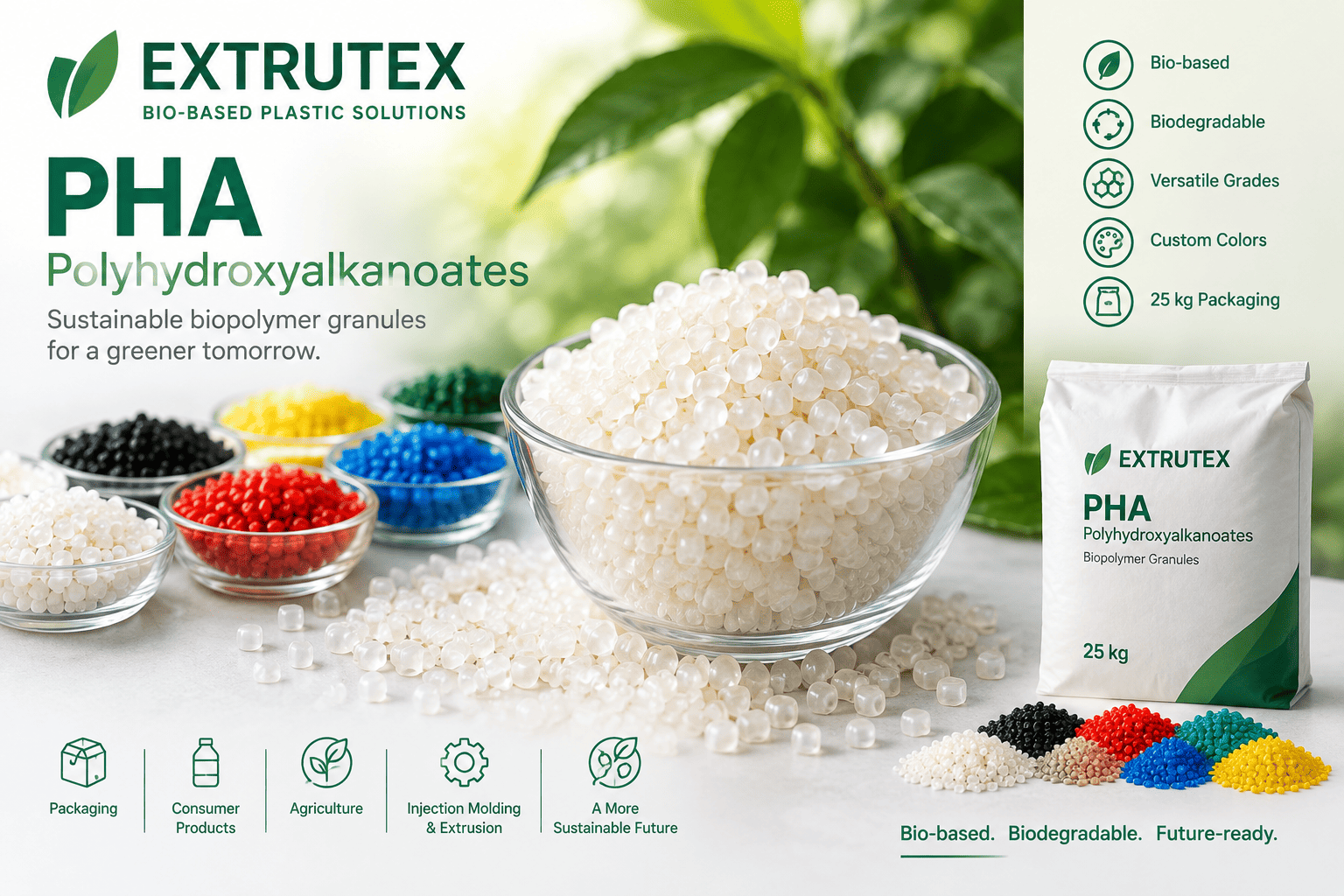
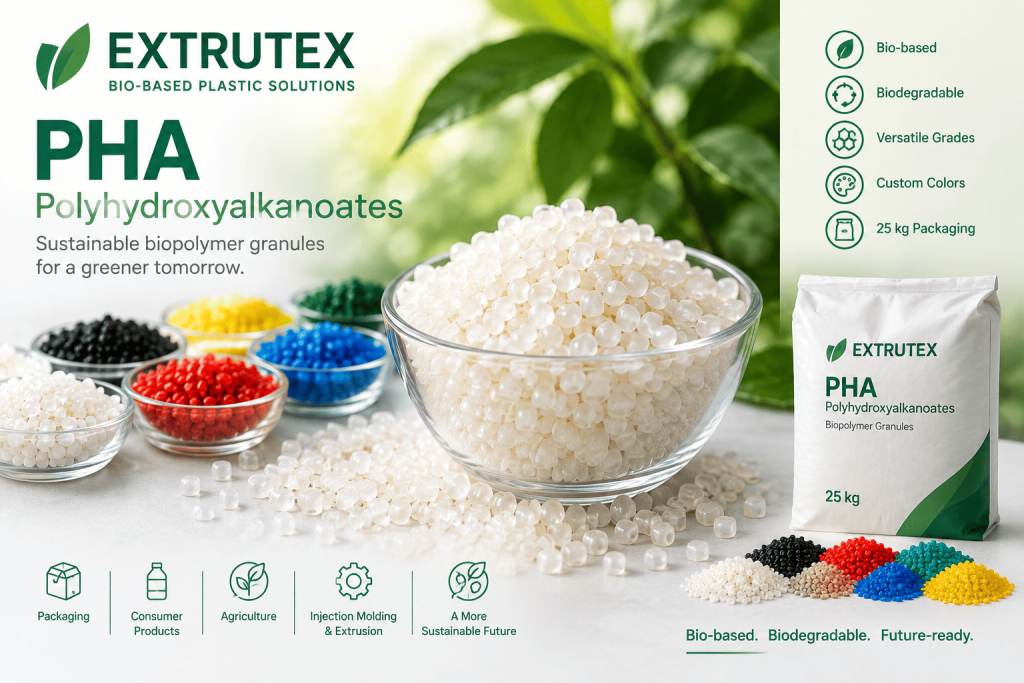
EXTRUTEX Polyhydroxyalkanoates (PHA) represent an advanced category of bio-based polyesters developed for manufacturers exploring alternative polymer materials for packaging, consumer products, agricultural applications, and other industrial uses. PHA materials are produced by microorganisms through biological processes and are attracting increasing interest in the development of biodegradable plastic products.
PHA is not a single polymer but a family of materials with different chemical structures and performance characteristics. Depending on the selected composition and formulation, PHA-based materials can offer a useful balance of flexibility, stiffness, toughness, processability, and biodegradation behavior.
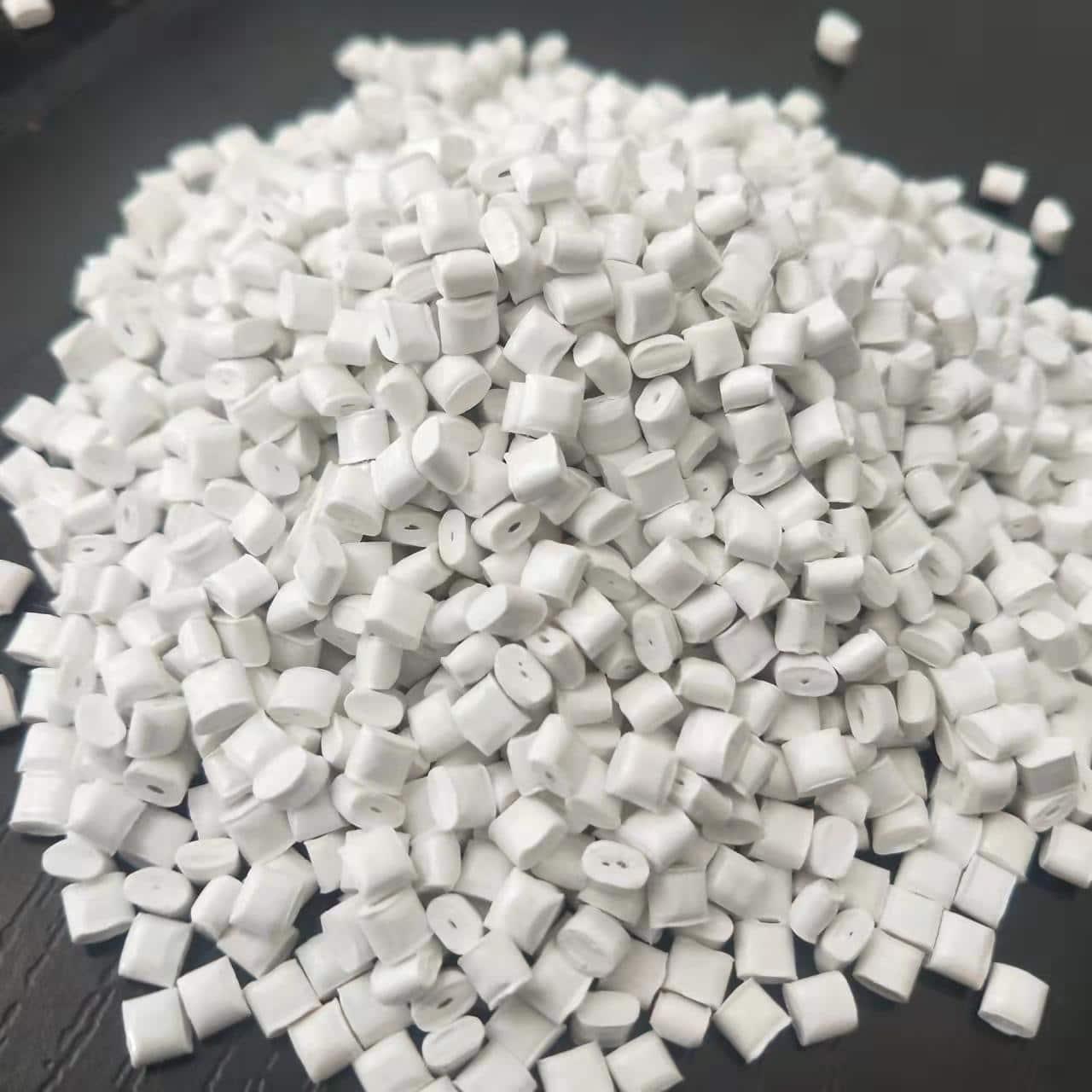
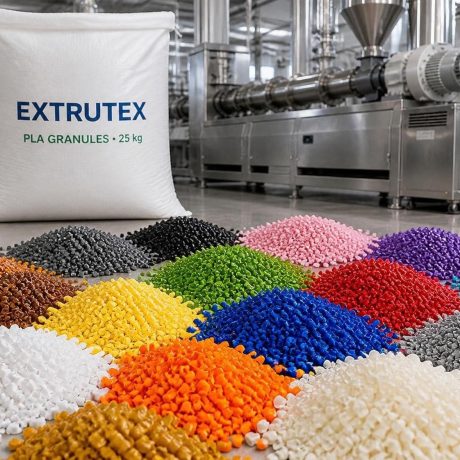
EXTRUTEX provides a platform for discussing PHA material solutions according to customer requirements, including the intended manufacturing process, finished-product properties, and color preferences. The material can be supplied in granule or pellet form, with 25 kg packaging and different color options to be confirmed according to the selected grade and order requirements.
Whether you are developing biodegradable packaging, molded components, agricultural products, or new bio-based plastic applications, choosing the appropriate PHA grade is essential to achieving reliable processing and finished-product performance.
Polyhydroxyalkanoates, commonly abbreviated as PHA, are a family of polyesters synthesized by microorganisms. These polymers can accumulate within microbial cells under particular growth conditions and can subsequently be recovered and processed into materials for various applications.
Unlike conventional plastics derived entirely from fossil resources, many PHA production routes use renewable carbon sources. The actual feedstock, manufacturing process, and renewable content depend on the specific producer and grade.
One of the main characteristics attracting attention to PHA is its potential to biodegrade under suitable environmental conditions. However, biodegradation rates depend on polymer chemistry, product dimensions, temperature, moisture, microbial activity, and the surrounding environment. The performance of an individual grade must therefore be evaluated against its technical documentation and intended end-of-life conditions.
PHA materials can be considered for injection molding, extrusion, film production, and other thermoplastic processing methods when the selected grade is designed for the corresponding application. Some formulations may be blended with other polymers or modified with additives to achieve specific mechanical, thermal, processing, or appearance requirements.
EXTRUTEX focuses on helping industrial customers identify material options suitable for their production objectives. By defining the target application and required performance before ordering, manufacturers can make a more informed decision about the appropriate PHA formulation.
PHA includes multiple polymer structures, each with its own material characteristics. Poly(3-hydroxybutyrate), or PHB, is one well-known member of the PHA family. Other copolymers, including PHBV, can exhibit different balances of crystallinity, flexibility, toughness, and processing behavior.
These differences are important when selecting materials for industrial production. A formulation intended for rigid injection-molded parts may not provide the flexibility required for a film or flexible packaging application.
Many PHA polymers can biodegrade through biological activity under suitable conditions. Their degradation behavior depends on the polymer composition and the environment in which the material is placed.
Manufacturers should distinguish between biodegradability, compostability, and bio-based content. These terms describe different properties. A bio-based material is not automatically compostable, and a biodegradable resin does not guarantee that every finished product will meet a specific compostability standard.
The PHA family provides opportunities to develop materials with different mechanical and thermal properties. Polymer composition, molecular structure, crystallinity, additives, and blending strategies can influence the performance of the final formulation.
The correct choice depends on the intended product, required service life, processing equipment, and applicable regulatory requirements.
Depending on the grade, PHA materials can be processed using compatible thermoplastic manufacturing equipment. Injection molding, extrusion, and film production may be possible where the material's melt behavior and thermal stability match the process.
PHA grades should not be treated as interchangeable. The material supplier's processing instructions must be followed to reduce the risk of degradation, inconsistent flow, dimensional variation, or poor finished-product quality.
The following table provides a general overview of the EXTRUTEX PHA product category. Specific values should be established using the technical data sheet for the actual material grade.
| Parameter | Description |
|---|---|
| Product Name | EXTRUTEX Polyhydroxyalkanoates (PHA) |
| Abbreviation | PHA |
| Material Family | Polyhydroxyalkanoate polyesters |
| Material Origin | Microbial production; feedstock depends on the specific grade and manufacturer |
| Material Form | Plastic granules or pellets |
| PHA Type | To be confirmed for the selected grade, for example PHB or PHBV |
| Available Colors | Different color options, subject to grade and formulation availability |
| Packaging | 25 kg per package, subject to confirmation for the selected product |
| Processing Methods | Injection molding, extrusion, or other compatible processes depending on grade |
| Mechanical Properties | Dependent on polymer composition, additives, and formulation |
| Thermal Properties | Grade-specific; refer to the technical data sheet |
| Biodegradation Behavior | Dependent on material formulation and environmental conditions |
| Technical Documentation | To be confirmed for the selected material grade |
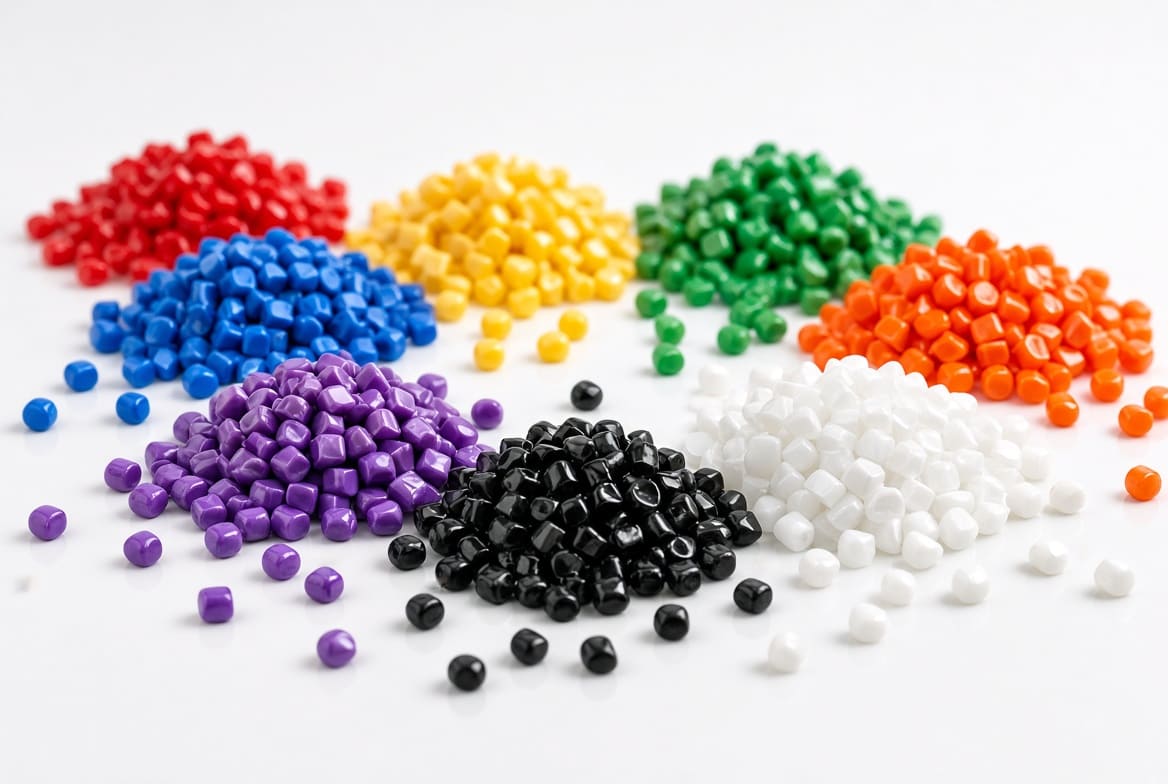
Color is an important factor in plastic product development, particularly for consumer goods, packaging, agricultural products, and branded components. EXTRUTEX can discuss color requirements for PHA materials according to the available grade, formulation, and production capabilities.
Natural PHA granules may be suitable for applications where a natural material appearance is acceptable or where the formulation will undergo further processing. Actual pellet color and transparency depend on the polymer composition, additives, and manufacturing process.
White and black formulations may be considered for products requiring a defined visual appearance. Their suitability depends on the compatibility of the colorants with the polymer and the performance requirements of the finished product.
Red, blue, green, yellow, and other colors may be evaluated for applications requiring product differentiation or specific branding. The availability of these colors must be confirmed for the selected grade.
Customers with specific color requirements can provide a physical sample, color reference, or other agreed specification. Color matching should account for the final product's thickness, surface finish, processing conditions, and lighting during inspection.
It is also important to verify that the colorant system is compatible with the selected PHA formulation and does not compromise the required mechanical performance, processing stability, biodegradation behavior, or certification status.
| Color Category | Potential Options | Considerations |
|---|---|---|
| Natural | Natural material shades | Pellet appearance and final product color |
| Basic Colors | White and black | Color consistency and formulation compatibility |
| Bright Colors | Red, blue, green, yellow | Colorant compatibility and appearance |
| Custom Colors | Other agreed colors | Sample approval, availability, and order quantity |
Suitable PHA formulations may be evaluated for selected packaging applications, including molded containers, packaging components, and other products designed around specific end-of-life requirements.
Packaging performance depends on mechanical strength, moisture sensitivity, thermal stability, product-contact requirements, and storage conditions. The final product must be tested to establish whether it meets its intended service requirements.
Selected PHA grades can be used for injection-molded components when their melt flow, thermal behavior, shrinkage, and mechanical properties are suitable for the mold and application.
Potential applications may include household items, consumer accessories, packaging components, and other molded products. The final material choice should be based on the component's dimensions, expected loads, service temperature, and required durability.
Certain PHA formulations may be suitable for extrusion and film production. These applications require careful consideration of melt strength, processing stability, cooling behavior, and the mechanical properties of the finished film.
Material selection should be confirmed through technical documentation and production trials using the intended extrusion equipment.
PHA is being investigated and used in selected agricultural applications where biodegradation may be a relevant design consideration. Potential product categories can include certain agricultural films and other purpose-designed components.
For agricultural products, degradation timing is especially important. A material must remain functional for the required service period and then behave appropriately under the intended end-of-life conditions. Any claimed degradation rate or soil-biodegradability performance must be supported by relevant testing and documentation.
PHA-based materials may be considered for selected consumer products where their physical properties and processing behavior meet the product design requirements.
The final suitability of the material depends on factors such as impact resistance, rigidity, heat exposure, appearance, expected lifetime, and cost targets.
PHA can be used in selected polymer formulations that combine different ingredients to achieve particular material properties. Depending on the intended use, a compound may be designed to modify flexibility, stiffness, impact behavior, melt flow, or other characteristics.
Any blending or compounding strategy should be evaluated for material compatibility and its effect on the final product's performance and environmental claims.
PHA processing conditions depend strongly on polymer type, molecular structure, additives, and the manufacturing method. A processing window suitable for one grade may not be appropriate for another.
Moisture can affect the processing behavior of many polyester materials, including PHA. Depending on the specific grade, excess moisture may contribute to molecular degradation during melt processing.
Follow the material supplier's requirements for moisture control, storage, and drying. The appropriate dryer type, temperature, drying time, and target moisture content must be established using the grade-specific technical documentation.
Processing temperature should be selected according to the material's thermal characteristics and the requirements of the equipment. Excessive heat exposure or prolonged residence time may cause degradation and affect melt stability, color, and finished-product properties.
Manufacturers should avoid applying generic processing temperatures to all PHA grades. Follow the recommended processing window and verify performance during initial trials.
Screw geometry, feeding behavior, mixing intensity, and residence time can influence the processing results of PHA materials. Equipment suitability should be evaluated against the requirements of the selected grade.
For extrusion, check melt stability and output consistency. For injection molding, evaluate filling behavior, mold temperature, cooling, shrinkage, and demolding performance.
Cooling conditions can influence crystallization, dimensional stability, surface appearance, and mechanical performance. The appropriate cooling strategy depends on the polymer composition, part design, and manufacturing process.
Production trials should assess the finished product rather than relying exclusively on pellet specifications. Dimensional checks, visual inspection, and relevant mechanical tests can help establish suitable processing conditions.
Reliable industrial production requires clear material specifications and suitable quality-control procedures. PHA should be selected and evaluated according to the properties that matter most for the intended application.
Depending on the grade and application, relevant evaluation parameters may include:
Customers should request the relevant technical data sheet, safety documentation, and available compliance certificates for the specific grade. Testing methods and acceptance limits should be defined according to the material specification and application.
EXTRUTEX PHA material can be discussed in granule form for industrial handling and processing. The commercial packaging specification for the selected product should be confirmed before an order is placed.
Where 25 kg packaging is available for the selected grade, this format provides a practical unit for purchasing, warehouse organization, and production planning.
Packaging construction, pallet configuration, and shipping arrangements can be confirmed according to the selected material, order quantity, and destination.
PHA is recognized as a family of polymers with significant potential for biodegradation under suitable conditions. Nevertheless, environmental performance depends on the specific polymer, formulation, finished-product design, and disposal environment.
Industrial composting, home composting, soil, freshwater, and marine environments have different conditions. A PHA grade that demonstrates biodegradation under one set of conditions should not automatically be described as biodegradable at the same rate in every other environment.
Similarly, the biodegradation characteristics of the base polymer may differ from those of a finished product containing colorants, fillers, coatings, adhesives, or other polymers. The complete product must meet the applicable requirements before a corresponding environmental claim is made.
Where compostability certification, soil biodegradability, marine biodegradation, or another specific environmental requirement is necessary, customers should identify the target standard and application before material selection.
Any environmental claim should be supported by appropriate test reports or certification applicable to the actual material and finished product. PHA should not be presented as automatically certified compostable or as harmless in every disposal environment.
Selecting a biopolymer is not simply a matter of choosing a material described as biodegradable. Manufacturers must consider processing requirements, product performance, intended service life, and end-of-life conditions.
EXTRUTEX encourages customers to define these requirements at the beginning of the purchasing process so that the proposed material can be evaluated against the actual application.
Different products require different visual and technical characteristics. Color options and formulation requirements can be discussed according to the selected grade and the availability of compatible materials.
Where color customization is required, an agreed sample and specification can help establish the target appearance for production.
Industrial buyers need clear information about packaging, order quantities, technical documentation, and delivery arrangements. These requirements should be confirmed before the commercial order is finalized.
For grades available in 25 kg packages, customers can plan purchases around their production schedules and warehouse requirements.
The technical data sheet is an essential part of material selection. It allows manufacturers to evaluate the material's melt behavior, thermal properties, mechanical characteristics, and processing requirements.
For applications with strict environmental or regulatory requirements, customers should also request supporting documentation relevant to the intended market and finished product.
Before purchasing PHA granules, manufacturers should establish a clear list of requirements for their application.
A structured selection process helps reduce material mismatches and supports more reliable production planning.
PHA granules are plastic pellets made from polyhydroxyalkanoate polymers. PHA is a family of polyesters produced through microbial processes and used in selected bio-based and biodegradable plastic applications.
PHA is a family of polyesters produced by microorganisms, while PLA is a polyester generally produced from lactic acid derived from renewable or other suitable feedstocks. Both are used in bio-based plastic applications, but their mechanical properties, processing behavior, and biodegradation characteristics differ by grade and environment.
Different colors may be available depending on the selected PHA grade, formulation, and production capabilities. Standard and custom color requirements should be confirmed before ordering.
The packaging specification should be confirmed for the actual product. Where 25 kg packaging is available, it provides a practical format for industrial handling and purchasing.
Selected PHA grades are suitable for injection molding. The appropriate material must match the mold design, processing conditions, required mechanical properties, and intended service environment.
Certain PHA grades can be processed by extrusion. Suitability depends on melt behavior, thermal stability, melt strength, equipment configuration, and the final product requirements.
Many PHA polymers can biodegrade under suitable conditions. The rate and extent depend on the polymer composition, formulation, product dimensions, and environment. Specific environmental claims should be supported by relevant test data.
Certain PHA materials may be suitable for compostable packaging applications. The exact formulation and finished product must meet the relevant compostability requirements, and the required certification should be confirmed before making a claim.
PHA can be considered as an alternative for selected applications, but it is not a universal replacement for conventional plastics. Suitability depends on mechanical performance, thermal resistance, processing requirements, cost, and end-of-life conditions.
Request the grade-specific technical data sheet, recommended processing conditions, mechanical and thermal properties, moisture requirements, and relevant compliance documents. If biodegradability or compostability is important, request supporting evidence for the exact grade and intended application.
Are you looking for PHA biopolymer granules for your next industrial manufacturing project? EXTRUTEX welcomes inquiries from plastic processors, packaging manufacturers, product developers, distributors, and companies exploring bio-based material solutions.
To help evaluate a suitable material option, please provide:
This information helps establish the appropriate material requirements and clarify the available grade options, packaging specifications, and commercial terms.
Explore polyhydroxyalkanoate materials for selected bio-based plastic applications. EXTRUTEX can discuss PHA granule options according to your manufacturing process, finished-product requirements, color preferences, and supply needs.
Contact EXTRUTEX today to request material information, confirm available colors and packaging, and discuss a quotation for your PHA project.
There are no reviews yet.
By submitting your email, you agree to our company’s terms and conditions.
We are not looking to sell; we are here to provide you with the best support and service.
Contact available 24/7
Please do not contact us for advertising or sales inquiries
All rights of this website are reserved for EXTRUTEX Austria and its partner companies, © 2026
-
(0 customer reviews)