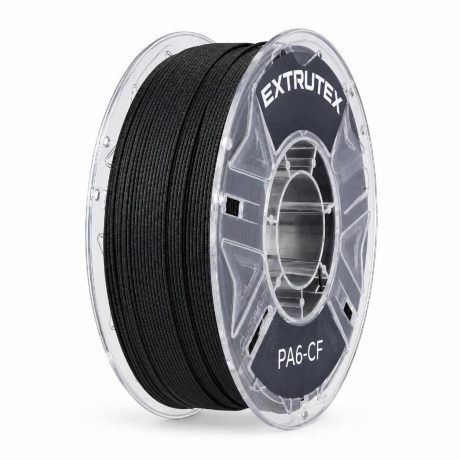
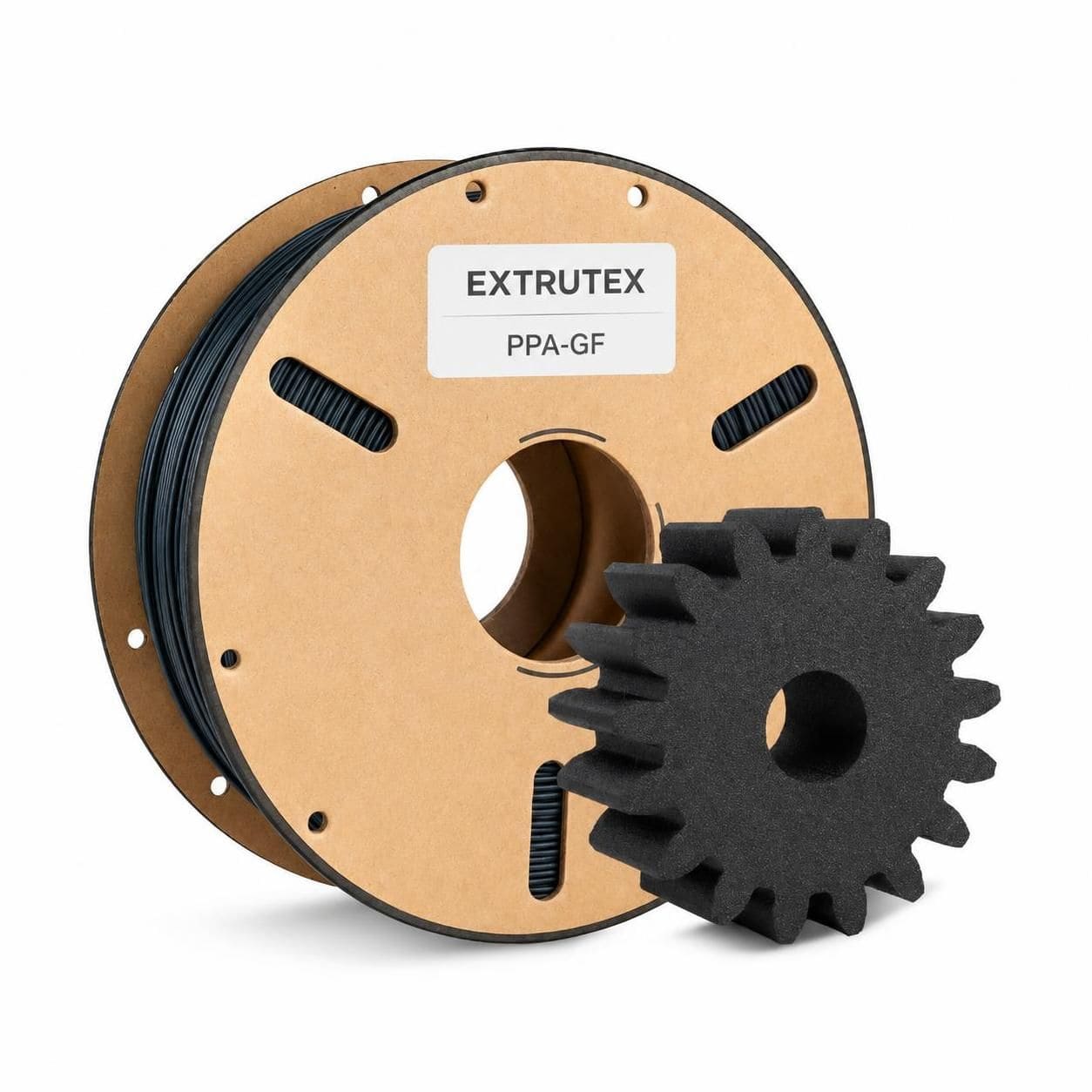
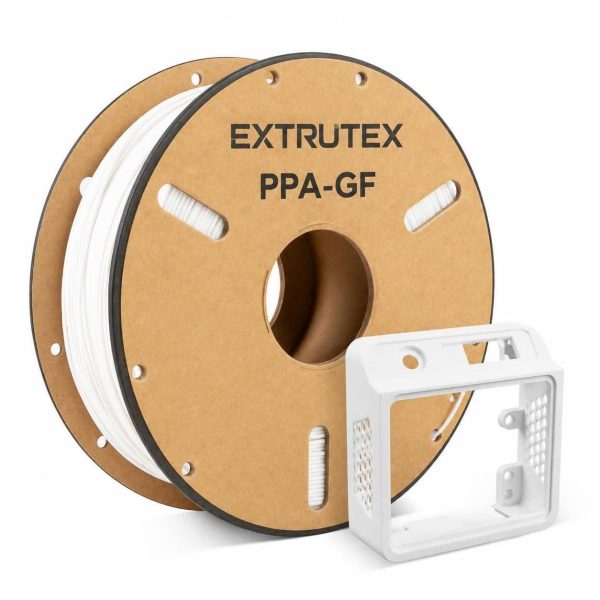
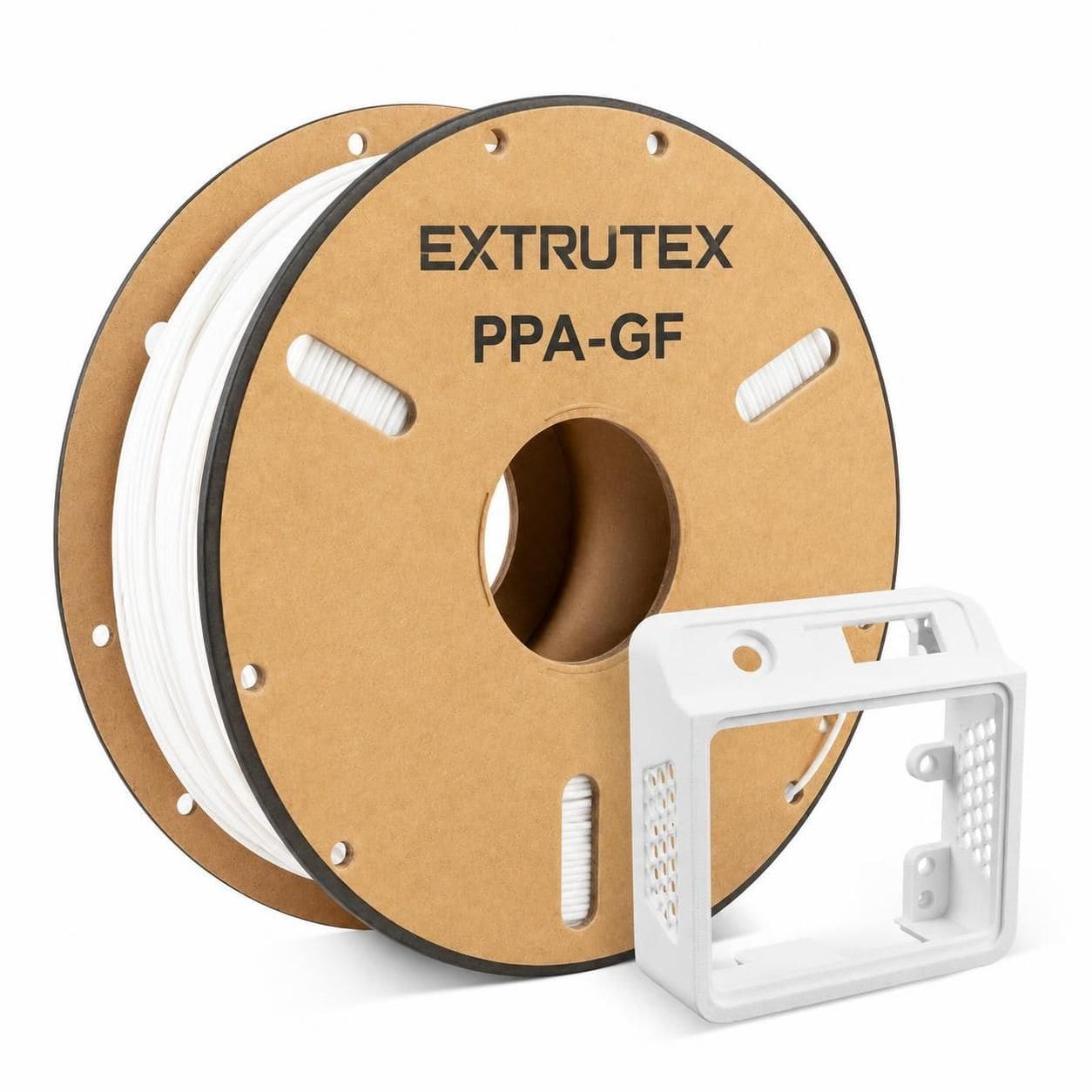
EXTRUTEX PPA-GF Glass Fiber Reinforced PPA Filament
EXTRUTEX PPA-GF is a high-performance engineering filament made from polyphthalamide (PPA) reinforced with 15% glass fiber. Designed for demanding functional applications, it combines high stiffness, low moisture absorption, excellent dimensional stability and strong thermal performance.
When standard PLA, PETG or conventional nylon materials cannot provide the required performance, PPA-GF offers an advanced material option for functional prototypes, industrial fixtures, brackets, housings, tooling and mechanical components.
Key Features of EXTRUTEX PPA-GF
15% Glass Fiber ReinforcementGlass fiber reinforcement improves stiffness and supports the production of rigid engineering components.
Ultra-Low Moisture AbsorptionLow moisture uptake helps maintain more consistent material behavior and dimensional stability.
High Heat ResistanceHeat deflection performance is specified at approximately 190°C or higher, subject to the test conditions.
Strong and Rigid ComponentsSuitable for functional parts that require structural stiffness and reliable performance.
Chemical ResistanceThe PPA material family offers resistance to many industrial chemicals. Suitability depends on the specific chemical and exposure conditions.
Dimensional StabilityGlass fiber reinforcement helps reduce deformation and warping compared with unreinforced nylon grades.
Engineering ApplicationsDeveloped for tooling, fixtures, brackets, housings and other demanding functional components.
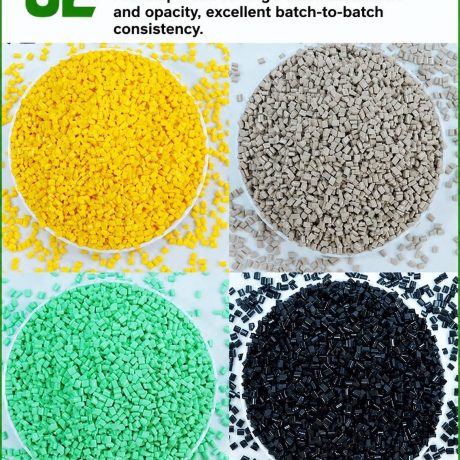
Color OptionsAvailable in black, white and customized colors, subject to material and production requirements.
Industrial PPA Nylon Reinforced with 15% Glass Fiber
PPA, or polyphthalamide, is a high-performance semi-aromatic polyamide used in demanding engineering applications. Compared with many conventional nylon materials, PPA grades are selected for their thermal performance, mechanical properties and resistance to challenging operating environments.
EXTRUTEX PPA-GF combines a PPA polymer base with 15% glass fiber reinforcement. The glass fibers improve the rigidity of the printed material and help limit dimensional changes. The result is a composite filament intended for components where stiffness, dimensional accuracy and thermal performance are important.
This combination makes PPA-GF suitable for users who need more than the general-purpose performance of standard desktop 3D printing materials.
Low Moisture Absorption for Consistent Printing
Moisture management is an important consideration when processing engineering polymers. Many nylon materials absorb moisture from the surrounding environment, which can influence printing consistency, surface quality and the dimensions of finished components.
PPA-GF is designed with very low moisture absorption. This characteristic helps the material maintain more predictable behavior during printing and supports the dimensional stability of finished parts.
Low moisture uptake does not mean that filament handling can be ignored. Proper storage and appropriate material preparation remain important, particularly when the filament has been exposed to humid conditions or stored outside its original packaging.
- Helps maintain consistent material behavior.
- Supports dimensional stability in functional components.
- Reduces the moisture-related processing challenges associated with many conventional nylons.
- Suitable for engineering applications where predictable dimensions matter.
High Heat Resistance and Thermal Performance
Thermal performance is one of the main reasons to consider PPA-based engineering materials. EXTRUTEX PPA-GF has a stated heat deflection temperature (HDT) of approximately 190°C or higher, making it a candidate for components exposed to elevated temperatures.
HDT describes the temperature at which a material reaches a specified deflection under a defined test load. It is not the same as a continuous operating temperature. Actual performance in service depends on the component design, applied load, exposure duration, temperature and testing method.
For applications involving sustained heat or mechanical loading, the finished component should be evaluated under representative operating conditions before full-scale use.
Strength, Stiffness and Dimensional Stability
The addition of 15% glass fiber gives PPA-GF a reinforced composite structure. Glass fibers help increase stiffness and support dimensional stability, making the material suitable for components that need to maintain their shape under mechanical use.
These characteristics are valuable when producing mounting brackets, equipment housings, tooling components, jigs and fixtures. They can also help reduce unwanted deformation in parts with demanding geometries.
As with other fiber-reinforced filaments, final mechanical performance depends on printing orientation, layer bonding, wall thickness, infill, geometry and processing conditions. Application-specific testing is recommended for safety-critical or highly loaded parts.
Chemical Resistance for Industrial Environments
PPA materials are used in engineering applications where resistance to chemical exposure is important. PPA-GF can be considered for components operating around industrial fluids, oils and other chemical substances, depending on the exact formulation and exposure conditions.
Chemical resistance is not universal. Concentration, temperature, exposure time and mechanical stress can all affect the behavior of a polymer component. Before using PPA-GF in direct contact with a specific chemical, verify compatibility with the relevant chemical-resistance data or conduct an application test.
Technical Specifications
| Product Name | EXTRUTEX PPA-GF |
|---|
| Material | Polyphthalamide (PPA) |
|---|
| Reinforcement | Glass fiber |
|---|
| Glass Fiber Content | 15% |
|---|
| Filament Type | Engineering-grade composite 3D printing filament |
|---|
| Moisture Absorption | Very low, as specified for this grade |
|---|
| Heat Deflection Temperature | Approximately 190°C or higher; test conditions to be confirmed |
|---|
| Dimensional Stability | Improved through glass fiber reinforcement |
|---|
| Chemical Resistance | Good resistance; compatibility depends on chemical and exposure conditions |
|---|
| Standard Colors | Black and white |
|---|
| Custom Colors | Available upon request, subject to feasibility |
|---|
| Filament Diameter | To be confirmed |
|---|
| Spool Weight | To be confirmed |
|---|
Technical note: The stated HDT of approximately 190°C+ should be checked against the supplier's test method and load conditions. Filament diameter, tolerance, spool weight and recommended printing parameters should be confirmed for the selected production grade.
Recommended Applications
EXTRUTEX PPA-GF is intended for functional engineering parts where stiffness, dimensional stability and thermal performance are more important than simple decorative appearance.
Industrial Jigs and Fixtures
Produce positioning tools, assembly fixtures, inspection aids and manufacturing supports that require rigidity and dimensional consistency.
Brackets and Mounting Components
Print equipment brackets, mounting supports, connectors and structural accessories designed for demanding working environments.
Equipment Housings
Develop rigid housings, protective covers and internal equipment components where heat resistance and dimensional stability are important.
Automotive and Transportation Components
Explore suitable non-safety-critical automotive prototypes, mounting components, brackets and functional tooling. Final suitability depends on operating temperature, loading and regulatory requirements.
Drone and Mechanical Components
Use the material for selected structural supports, equipment mounts and mechanical parts where stiffness and low moisture uptake are useful.
Functional Prototypes and Low-Volume Production
PPA-GF can help engineers produce functional prototypes and small batches of specialized components before committing to other manufacturing processes.
Printing and Processing Considerations
PPA-GF is an advanced engineering filament. It should be processed on a 3D printer capable of handling the temperature and material requirements of the selected PPA grade.
- Printer capability: Confirm that the hotend, heated build plate and surrounding printer components support the manufacturer's recommended processing conditions.
- Nozzle selection: Glass fiber is abrasive. A hardened or otherwise wear-resistant nozzle is recommended to reduce nozzle wear.
- Material preparation: Follow the grade-specific drying and preparation instructions supplied with the filament.
- Storage: Keep filament sealed and protected from moisture when not in use.
- Print profile: Use validated temperature, speed, cooling and build-surface settings for the specific PPA-GF formulation.
- Part validation: Test representative parts under actual operating conditions before production deployment.
Exact nozzle temperature, bed temperature, drying temperature, drying duration, printing speed and chamber requirements have not been specified here. EXTRUTEX can provide grade-specific processing guidance when the relevant technical data is available.
Why Choose PPA-GF Instead of Standard Nylon?
Standard nylon filaments are useful engineering materials, but moisture absorption and dimensional changes can create challenges in certain applications. PPA-GF combines a high-performance PPA base with glass fiber reinforcement to address applications that require greater stiffness, thermal performance and dimensional stability.
| Material Characteristic | Standard Unreinforced Nylon | EXTRUTEX PPA-GF |
|---|
| Material Structure | Unreinforced polyamide | PPA with 15% glass fiber |
| Moisture Behavior | Varies by nylon grade; moisture uptake can be significant | Very low moisture absorption as specified for this grade |
| Stiffness | Depends on the nylon grade | Improved through glass fiber reinforcement |
| Thermal Performance | Depends on the specific grade | HDT approximately 190°C+ |
| Dimensional Stability | Can be affected by moisture and processing | Supported by PPA formulation and glass fiber reinforcement |
| Typical Use | General engineering components | More demanding functional and industrial components |
This is a general material comparison, not a substitute for testing individual grades under identical conditions.
Color Options and Customization
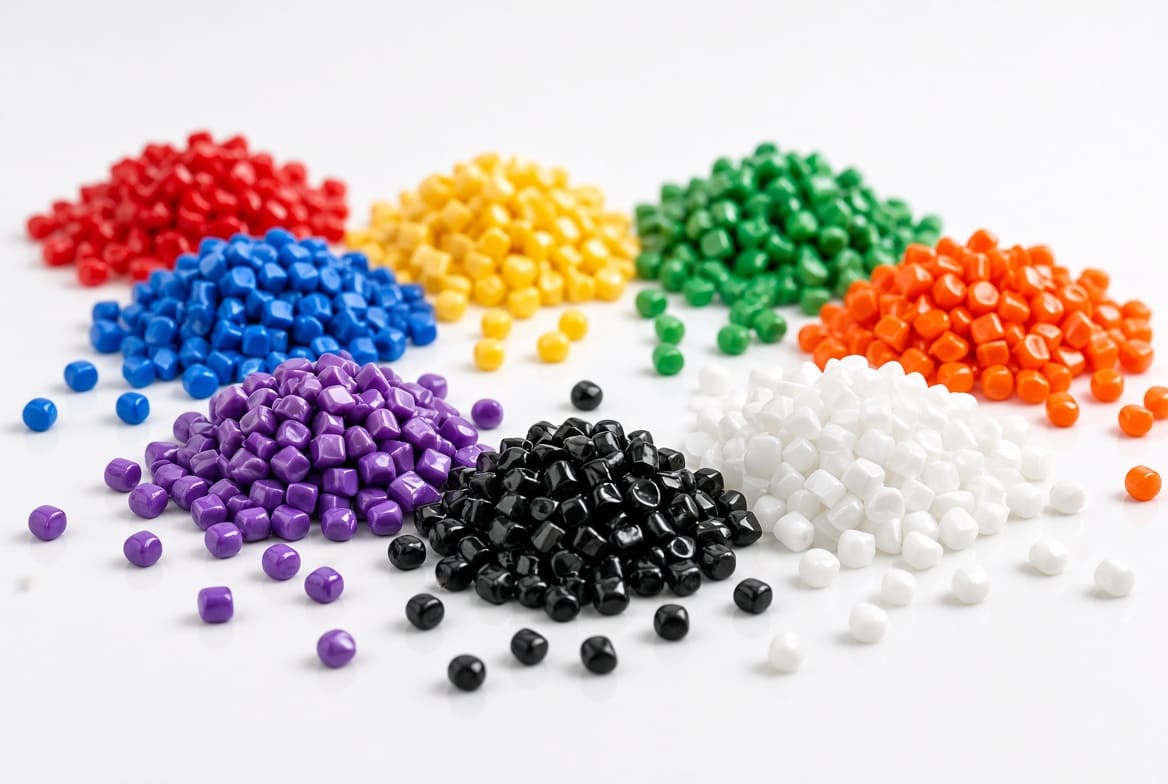
EXTRUTEX PPA-GF is available in black and white. Customized colors may also be possible depending on the polymer formulation, glass fiber reinforcement, color requirements and production conditions.
For customized requirements, provide the intended application, preferred color, printer specifications and expected material performance. This helps determine whether the requested formulation is suitable for development and production.
Storage and Material Handling
Although PPA-GF is designed for very low moisture absorption, proper storage remains important for maintaining filament quality. Keep the spool in its original moisture-protective packaging until required. After opening, store it in a sealed container or suitable dry storage system.
- Keep filament away from direct water contact and humid storage conditions.
- Reseal opened packaging when the material is not in use.
- Use a suitable filament dryer when required by the grade-specific processing instructions.
- Avoid contamination from dust, oils and other materials.
- Follow the product technical data sheet for storage life and drying recommendations.
EXTRUTEX Engineering Filaments
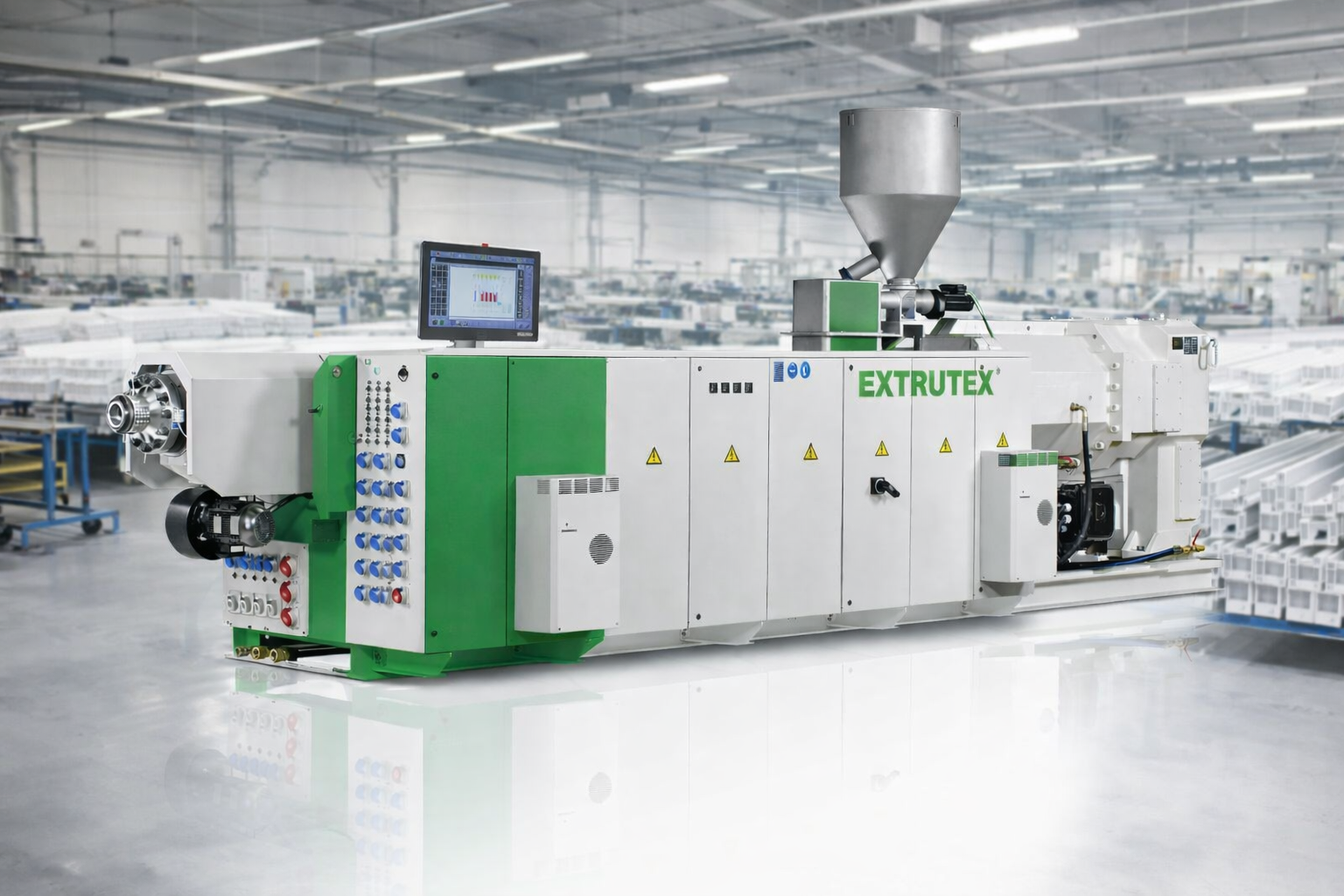
EXTRUTEX develops and supplies engineering materials for professional 3D printing, polymer processing and industrial applications. Our product range covers reinforced polymer filaments and specialized materials designed for functional prototypes, technical components and production requirements.
EXTRUTEX combines design, laboratory and R&D capabilities in Austria with manufacturing in China. This structure supports product development, material customization and manufacturing coordination for customers in different markets.
Whether you need standard engineering filament or a customized material solution, our team can discuss the application requirements and help identify a suitable grade.
Frequently Asked Questions
1. What is PPA-GF filament?
PPA-GF is a glass fiber reinforced polyphthalamide filament for 3D printing. The EXTRUTEX grade described here contains 15% glass fiber and is designed for functional engineering components requiring stiffness, dimensional stability and thermal performance.
2. What does PPA stand for?
PPA stands for polyphthalamide. It is a high-performance polyamide family used in demanding engineering applications. PPA grades are selected for properties such as thermal performance, mechanical strength and chemical resistance.
3. What does GF mean in PPA-GF?
GF means glass fiber. It identifies a polymer composite reinforced with glass fibers. In this product, the stated glass fiber content is 15%.
4. How much glass fiber does EXTRUTEX PPA-GF contain?
The supplied product specification states 15% glass fiber reinforcement. The percentage basis should be confirmed in the final technical data sheet if it is required for engineering calculations or material comparisons.
5. What is the heat resistance of PPA-GF?
The stated heat deflection temperature is approximately 190°C or higher. HDT is a laboratory measurement under defined load and test conditions. It should not be interpreted as a guaranteed continuous operating temperature.
6. Does PPA-GF absorb moisture?
PPA-GF is specified as having very low moisture absorption compared with many conventional nylon materials. This helps support stable processing and dimensional consistency, although proper storage and material preparation are still recommended.
7. Is PPA-GF suitable for industrial applications?
Yes. Its combination of glass fiber reinforcement, stiffness, dimensional stability and thermal performance makes it a candidate for industrial fixtures, brackets, housings, tooling and other functional parts. Application testing is recommended before production use.
8. Is PPA-GF stronger than standard nylon?
Glass fiber reinforcement generally increases stiffness and can improve the mechanical performance of a nylon composite compared with its unreinforced base polymer. Actual strength depends on the formulation, printing conditions, part orientation and test method.
9. Is PPA-GF suitable for load-bearing components?
It can be considered for selected load-bearing functional components where its stiffness and thermal performance are appropriate. The design must account for print orientation, layer adhesion, geometry, loading and service conditions. Critical components should be validated through testing.
10. Is PPA-GF chemically resistant?
PPA materials can offer good resistance to many industrial chemicals. However, compatibility varies depending on the chemical, concentration, temperature and exposure duration. Verify compatibility with the specific substance before use.
11. Can PPA-GF be used for automotive parts?
It may be suitable for selected automotive prototypes, brackets, housings and functional tooling. Components used in safety-critical systems or regulated applications require additional material validation and compliance checks.
12. Can PPA-GF be used for jigs and fixtures?
Yes. Jigs and fixtures are among the potential applications for this material. Its stiffness and dimensional stability can be useful for positioning tools, assembly aids, inspection fixtures and other manufacturing accessories.
13. Which nozzle should be used for PPA-GF?
Because glass fibers are abrasive, a hardened or otherwise wear-resistant nozzle is recommended. The appropriate nozzle diameter and printer configuration should be selected according to the filament manufacturer's processing guidance.
14. What printing temperature is required?
The exact nozzle and bed temperatures have not been supplied for this EXTRUTEX grade. PPA is a high-temperature engineering polymer, so the printer must be capable of meeting the recommended processing conditions provided in the product technical data sheet.
15. Does PPA-GF need to be dried before printing?
Follow the material-specific drying instructions. Although this grade is described as having very low moisture absorption, filament handling and storage still matter. Do not apply arbitrary drying temperatures or durations without confirming the recommended conditions.
16. Does glass fiber reduce warping?
Glass fiber reinforcement can help improve dimensional stability and reduce deformation compared with an unreinforced polymer. Actual warping behavior also depends on part geometry, print settings, build-surface adhesion and the printer environment.
17. What colors are available?
The standard colors specified are black and white. Customized colors may be available depending on the requested shade, formulation requirements and production feasibility.
18. Is PPA-GF suitable for outdoor use?
It may be suitable for selected outdoor engineering applications, but suitability depends on temperature variation, moisture, UV exposure, chemical contact and mechanical loading. Validate the finished component in its intended environment.
19. Can PPA-GF be used for gears and mechanical parts?
It can be evaluated for selected gears, mechanical supports and functional components. Design requirements such as friction, wear, impact, dimensional tolerances and fatigue life should be assessed before choosing the material.
20. Can EXTRUTEX provide customized PPA-GF filament?
EXTRUTEX can discuss customized color and material requirements. Feasibility depends on the desired formulation, performance targets and production conditions. Share your application details so the requirements can be evaluated.
21. Is PPA-GF suitable for functional prototypes?
Yes. PPA-GF can be considered for functional prototypes that need greater stiffness, thermal performance and dimensional stability than general-purpose printing materials can provide.
22. Is the HDT value the same as continuous service temperature?
No. Heat deflection temperature is measured under a specified test load and procedure. Continuous service temperature describes long-term performance under operating conditions. The two values are not interchangeable.
23. Can PPA-GF replace metal components?
In some applications, a glass fiber reinforced polymer component may provide a lighter alternative to a metal part. However, replacement depends on load, stiffness, temperature, wear, fatigue, safety and service-life requirements. Engineering validation is essential.
24. How should PPA-GF filament be stored?
Keep the filament in sealed moisture-protective packaging or a suitable dry storage container. Protect it from contamination and follow the grade-specific handling recommendations after opening.
25. What information should I provide when requesting a quotation?
Provide your required filament diameter, spool weight, color, estimated quantity, printer model and intended application. If you have specific mechanical or thermal requirements, include those as well so the correct material grade can be evaluated.
Looking for High-Performance PPA-GF Filament?
Contact EXTRUTEX to discuss PPA-GF glass fiber reinforced filament, customized colors and engineering material requirements for your 3D printing applications.
Contact EXTRUTEX or visit extruder.co to explore our engineering materials.




-
(0 customer reviews)