Engineering Plastic Compound
Ready-to-use compounded materials for demanding industrial and technical applications.
EXTRUTEX Engineering Plastic Compound solutions are developed for manufacturers who require more than a standard polymer resin. By combining a selected base resin with colorants, mineral fillers, reinforcing materials and functional additives, plastic compounding can deliver a material formulation designed around the performance and processing requirements of a particular product.
Instead of purchasing multiple raw materials and carrying out formulation and mixing at the production facility, manufacturers can use pre-compounded materials supplied in a ready-to-process form. This can simplify material handling, reduce the number of production preparation steps and support more consistent manufacturing conditions.
EXTRUTEX supports the supply and development of plastic compound solutions for different polymer families and processing technologies. Material selection is based on the intended application, processing method, product design and required properties.
EXTRUTEX engineering approach:
We focus on matching the compound formulation to the finished product. Resin selection, additive packages, reinforcement, color, processing behavior and application requirements should be considered together rather than treated as separate decisions.
What Is Plastic Compounding?
Plastic compounding is the process of combining a base polymer with selected ingredients to create a formulated plastic material with specific characteristics. The ingredients may include pigments, stabilizers, processing aids, impact modifiers, flame-retardant additives, mineral fillers, glass fibers and other functional components.
The formulation is selected according to the intended end use. A compound designed for an injection-molded electrical enclosure, for example, may require different mechanical, thermal and electrical properties from a compound used for an extruded pipe, flexible film or thermoformed packaging product.
Compounding can also be used to modify the processing characteristics of a resin. Depending on the formulation, it may help improve flow behavior, dimensional stability, surface appearance, stiffness, impact performance, weather resistance or other measurable properties.
Typical Ingredients Used in Plastic Compounds
| Ingredient | Purpose in the Formulation |
|---|
| Base polymer resin | Provides the main polymer structure and determines the fundamental processing and performance characteristics. |
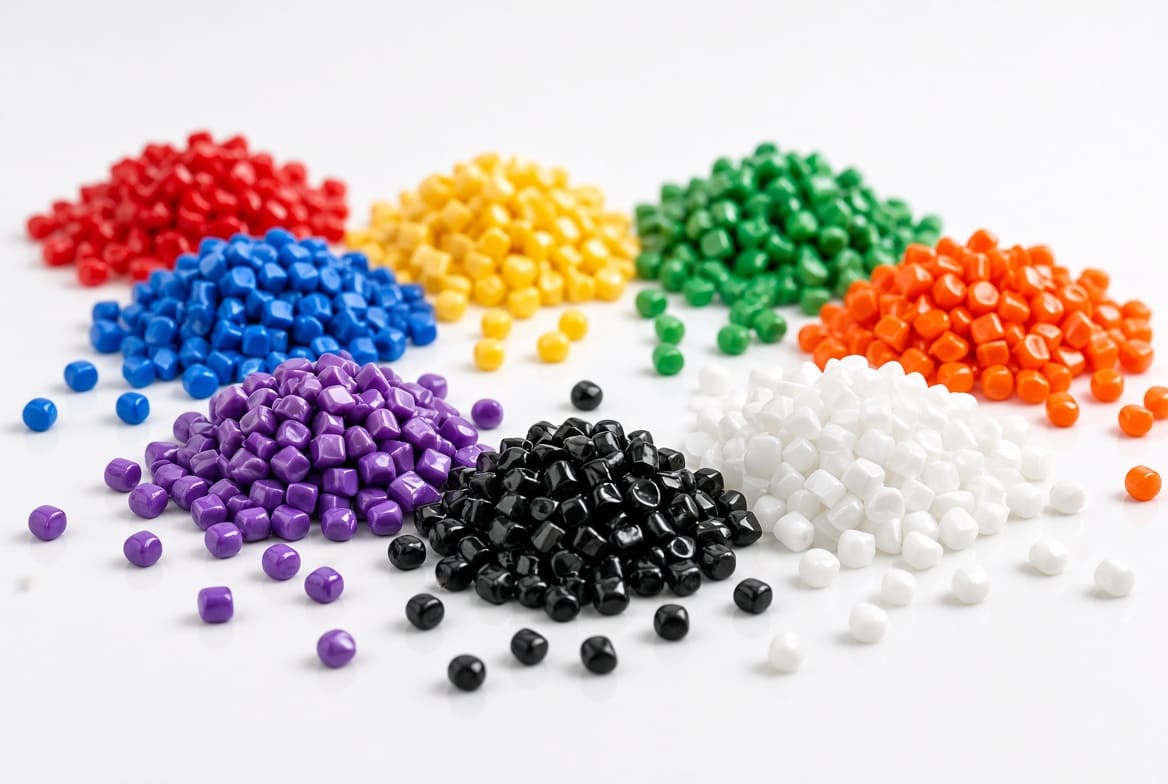
| Colorants and pigments | Provide the required color, opacity and visual appearance. |
| Mineral fillers | Can modify stiffness, dimensional behavior, density, cost and other formulation characteristics. |
| Glass fibers and reinforcement | Can improve stiffness, strength and dimensional performance in suitable polymer systems. |
| Impact modifiers | Can improve impact performance and toughness, depending on resin compatibility and formulation. |
| Stabilizers | Help protect the polymer against selected forms of thermal, oxidative or weather-related degradation. |
| Processing aids | Support processing behavior, flow, dispersion or surface characteristics. |
| Functional additives | Provide application-specific properties such as flame retardancy, antistatic behavior or UV resistance. |
The exact ingredient selection and loading level depend on the polymer, processing conditions, product specification and applicable regulatory requirements. Not every additive is suitable for every resin system.
Why Choose EXTRUTEX Plastic Compounds?
Ready-to-Use Materials
Use pre-compounded material instead of separately measuring and mixing multiple ingredients at the production site. This can simplify material preparation and factory operations.
Application-Based Formulation
Compound selection can be based on the base resin, manufacturing process, finished-product design and required performance characteristics.
Consistent Material Preparation
Controlled compounding and material specifications can help reduce variation associated with inconsistent in-house weighing, blending and dispersion.
Integrated Material Properties
Color, fillers, reinforcement and functional additives can be incorporated into a single formulated material where technically appropriate.
Technical Consultation
EXTRUTEX can help evaluate the application requirements and identify relevant resin families and compound characteristics for further testing.
Sample Evaluation
Sample testing can help manufacturers assess processability, product appearance and performance before moving toward regular production.
When Should You Use Pre-Compounded Materials?
Pre-compounded materials can be a practical choice when a manufacturer wants to simplify raw-material preparation or achieve more controlled material properties. They are particularly relevant when a production process requires a combination of polymer, color and functional ingredients that would otherwise need to be prepared separately.
- When the factory wants to reduce separate material weighing and mixing operations.
- When color and additive dispersion need to be controlled more consistently.
- When a product requires specific stiffness, toughness or dimensional characteristics.
- When mineral fillers or reinforcing materials are required in the polymer formulation.
- When the manufacturer wants to simplify material storage, handling and production preparation.
- When a standard resin does not provide the required combination of properties.
- When a production line needs a material formulation developed around a defined processing method.
Engineering Plastic Compound Resin Families
Different polymers offer different combinations of mechanical, thermal, chemical and processing characteristics. The following resin families represent potential compound platforms. Actual availability, formulation and suitability must be confirmed according to the required grade and application.
| Resin Family | Typical Compound Applications | Important Selection Considerations |
|---|
| PE – Polyethylene | Films, bags, pipes, cable sheathing, caps, containers and molded products. | Density, flexibility, impact behavior, environmental stress-cracking requirements and processing method. |
| PP – Polypropylene | Automotive components, household products, boxes, containers, fibers and industrial parts. | Impact strength, stiffness, melt flow, heat performance and filler or reinforcement compatibility. |
| ABS | Equipment housings, appliance parts, technical components and consumer products. | Impact resistance, surface finish, dimensional stability and heat requirements. |
| ASA | Outdoor components, exterior profiles, housings and weather-exposed products. | Weatherability, color stability, surface quality and compatibility with the processing method. |
| SAN | Rigid housings, transparent or semi-transparent products and consumer applications. | Transparency, stiffness, chemical compatibility and formulation requirements. |
| PS / HIPS | Packaging, trays, housings, refrigerator components and consumer products. | Impact performance, rigidity, surface appearance and thermoforming behavior. |
| PC – Polycarbonate | Technical housings, electrical components, protective parts and impact-resistant products. | Impact performance, heat resistance, transparency and moisture management during processing. |
| PMMA – Acrylic | Lighting components, display products, transparent sheets and decorative applications. | Optical clarity, surface quality, UV performance and contamination control. |
| PA6 / PA66 – Polyamide | Gears, mechanical parts, brackets, automotive components and electrical applications. | Moisture absorption, reinforcement level, thermal performance and dimensional behavior. |
| PBT – Polybutylene Terephthalate | Electrical connectors, electronic components and precision technical parts. | Dimensional stability, electrical requirements, heat performance and moisture control. |
| POM – Polyoxymethylene | Gears, bearings, clips, precision components and sliding parts. | Wear behavior, dimensional accuracy, friction requirements and processing conditions. |
Typical Plastic Compound Groups
PE Compound
Polyethylene compounds can be formulated for film extrusion, bags, cable sheathing, pipes, bottles, caps and other products. Depending on the base resin and formulation, ingredients may be selected to adjust flexibility, stiffness, color, processing behavior or other application-specific characteristics.
PP Compound
Polypropylene compounds are used across injection molding, extrusion, fiber production and woven or nonwoven applications. Formulations may include pigments, mineral fillers, impact modifiers, stabilizers or reinforcing materials. The appropriate formulation depends on whether the finished product requires higher stiffness, improved impact performance, surface quality or other properties.
ABS, ASA and SAN Compound
Styrenic engineering materials are used in housings, appliances, consumer products and technical components. ABS compounds can be developed around impact and surface requirements, while ASA is often considered for applications requiring improved outdoor weatherability. SAN-based formulations may be selected for applications where rigidity and appearance are important.
PS and HIPS Compound
Polystyrene and high-impact polystyrene compounds are used in packaging, trays, housings and consumer products. Material selection should consider impact requirements, stiffness, forming behavior, surface appearance and the intended production process.
PC and PMMA Compound
Polycarbonate and PMMA are used in applications where appearance, transparency or specific mechanical properties are important. These materials require careful formulation and processing control. For transparent products, pigment selection, additive compatibility and contamination management are particularly important.
PA6 and PA66 Compound
Polyamide compounds are widely considered for technical parts such as gears, brackets, mechanical components and electrical applications. Glass-fiber reinforcement and other formulation options can be used to modify stiffness, strength and dimensional behavior. Moisture conditioning and drying requirements must also be considered.
PBT and POM Compound
PBT and POM are engineering polymers used in precision and functional components. PBT is common in electrical and electronic parts, while POM is often selected for components requiring dimensional accuracy, sliding behavior or wear performance. Compound selection should be based on the actual operating conditions and design requirements.
Applications Across Different Industries
Injection Molding
Compounds can be used for household products, appliance components, electrical housings, automotive parts, technical fittings and industrial components. Formulation selection may focus on flow behavior, impact performance, stiffness, color and surface finish.
Pipe and Profile Extrusion
Suitable compound formulations may be developed for selected pipe, profile and technical extrusion applications. Resin compatibility, melt strength, dimensional stability, thermal behavior and long-term service requirements must be evaluated for each product.
Thermoforming
Compounded materials can be considered for trays, containers, rigid packaging and formed plastic components. Sheet quality, heating behavior, forming characteristics and final product stiffness are important selection factors.
Consumer Products
Color, appearance, dimensional stability and mechanical performance are important in household goods, storage products, appliance parts and other consumer applications.
Industrial Applications
Industrial containers, pallets, equipment components and technical parts may require compounds formulated around load, impact, stiffness, environmental exposure and production conditions.
Transportation
Plastic components used in transportation applications may require a balance of weight, mechanical performance, heat resistance, dimensional stability and durability.
Electrical and Telecommunications
Equipment housings, cable-related components, enclosures and technical parts may require selected electrical, thermal, flame-retardant or mechanical properties. The exact requirements should be defined by the product specification and applicable standards.
Custom Technical Applications
For products with unusual performance or processing requirements, a compound can be evaluated around the polymer family, production technology and target properties.
Functional and Reinforced Compound Options
In addition to selecting a base polymer, manufacturers may require compounds with specific functional characteristics. The following are common formulation directions in the plastics industry. Their suitability depends on the resin system, additive compatibility and applicable product requirements.
| Compound Type | Purpose | Potential Applications |
|---|
| Glass-Fiber Reinforced Compound | Increase stiffness and strength in suitable thermoplastic systems. | Automotive parts, mechanical components, brackets and technical housings. |
| Mineral-Filled Compound | Modify stiffness, dimensional behavior, density and formulation economics. | Household products, automotive parts, profiles and industrial components. |
| Impact-Modified Compound | Improve impact performance and toughness where the base resin requires modification. | Housings, containers, consumer products and technical components. |
| Flame-Retardant Compound | Support specified fire-performance requirements when tested to the relevant standard. | Electrical enclosures, electronic components and selected industrial products. |
| UV-Stabilized Compound | Improve resistance to ultraviolet exposure in suitable outdoor applications. | Outdoor profiles, agricultural products, containers and exterior components. |
| Antistatic Compound | Modify surface or volume electrical behavior to meet defined antistatic requirements. | Packaging, industrial handling products and selected electronic applications. |
| Conductive Compound | Provide a specified level of electrical conductivity using compatible conductive ingredients. | Specialized electronic, industrial and ESD-related components. |
| Color Compound | Provide a controlled color formulation for the finished product. | Consumer products, packaging, profiles and molded components. |
Important: A compound described as flame-retardant, UV-stabilized, antistatic or conductive should only be specified against measured performance and relevant test standards. These properties must not be assumed from the ingredient list alone.
How to Select the Right Engineering Plastic Compound
Choosing a suitable compound requires a clear understanding of the finished product and its operating environment. A formulation that performs well in one application may not be suitable for another, even when both products use the same base polymer.
1. Define the Finished Product
Identify the product type, dimensions, wall thickness, design features, operating environment and expected service life. These details help establish the basic material requirements.
2. Select the Base Resin
Choose a polymer family that is compatible with the product's mechanical, thermal, chemical and processing requirements. The resin family is the foundation of the compound formulation.
3. Identify Required Properties
Specify the important performance characteristics. These may include tensile strength, flexural modulus, impact strength, heat resistance, dimensional stability, color, surface appearance, weatherability or electrical behavior.
4. Confirm the Processing Technology
Injection molding, pipe extrusion, profile extrusion, sheet extrusion and thermoforming place different demands on the material. Melt flow, melt strength, thermal stability and processing temperature should be considered for the selected equipment.
5. Evaluate Samples
Before adopting a new compound for regular production, carry out processing trials and evaluate the finished product. Testing should reflect the actual machine, mold or die, production conditions and applicable product standards.
Technical Information for Compound Development
To evaluate a compound requirement efficiently, manufacturers should provide as much of the following information as possible:
| Information Required | Why It Matters |
|---|
| Base resin or existing material grade | Helps establish polymer compatibility and identify a suitable starting formulation. |
| Finished product and application | Defines the intended use and required performance. |
| Processing method | Identifies whether the material will be injection molded, extruded or thermoformed. |
| Required mechanical properties | Helps determine whether fillers, reinforcement or impact modification may be appropriate. |
| Color and surface requirements | Defines pigment selection, appearance and visual consistency targets. |
| Operating temperature and environment | Helps evaluate heat resistance, weatherability and chemical exposure requirements. |
| Applicable standards | Identifies required test methods, certifications and regulatory conditions. |
| Current production problems | Helps identify whether the compound should address processing instability, product defects or material variation. |
Quality Control and Material Evaluation
Plastic compound quality should be assessed against a defined material specification. Depending on the polymer and application, testing may include the following parameters:
- Melt flow rate or melt volume rate: Helps characterize flow behavior under specified test conditions.
- Tensile properties: Evaluates strength and elongation under tensile loading.
- Flexural properties: Measures stiffness and behavior under bending loads.
- Impact strength: Evaluates resistance to impact using the selected test method.
- Density: Helps verify material consistency and formulation characteristics.
- Moisture content: Important for moisture-sensitive polymers such as polyamides and certain other engineering plastics.
- Color consistency: Evaluates color against an agreed reference or tolerance.
- Thermal properties: May include heat-deflection temperature or other application-relevant measurements.
- Dimensional stability: Assesses changes in dimensions under defined conditions.
Not every test is necessary for every compound. The appropriate quality-control plan should be based on the polymer family, product requirements and customer specification. Test values and acceptance limits should be confirmed in the relevant technical datasheet or agreed material specification.
EXTRUTEX Plastic Material Solutions
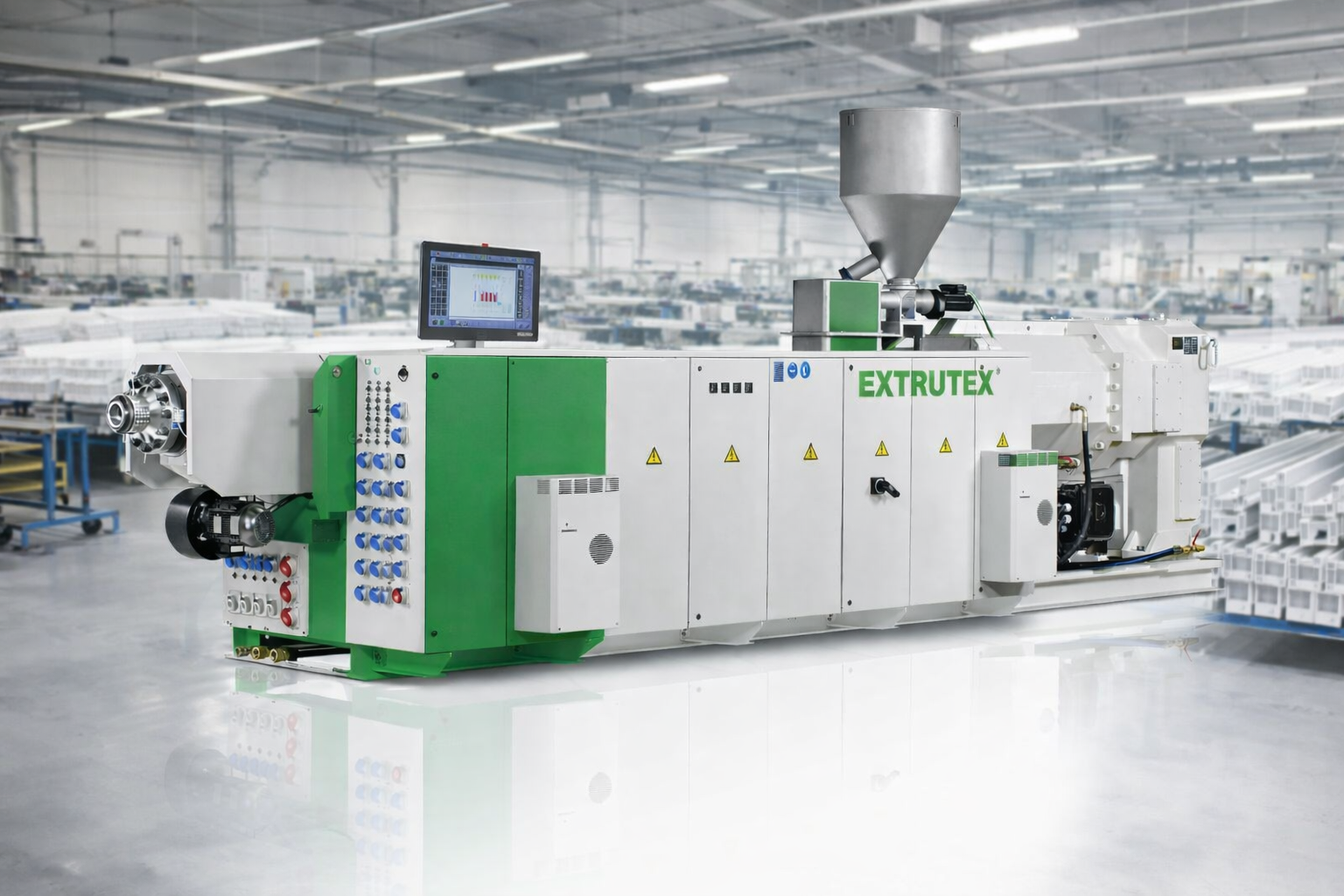
EXTRUTEX works across plastic processing machinery, polymer materials and application-related solutions. Our approach connects material selection with the manufacturing process, helping customers consider the relationship between resin formulation, processing equipment and finished-product requirements.
For compound applications, this means evaluating more than the polymer name. The correct material should be suitable for the intended production technology and provide the properties required by the final product.
EXTRUTEX is committed to practical technical cooperation, material evaluation and application-based solutions. Manufacturing is carried out in China, with design, laboratory and R&D activities based in Austria.
Frequently Asked Questions About Engineering Plastic Compounds
What is the difference between plastic resin and plastic compound?
Plastic resin is the base polymer material. A plastic compound combines the base resin with selected ingredients such as pigments, fillers, reinforcement and functional additives to achieve a defined formulation and performance profile.
Are plastic compounds ready for direct processing?
Pre-compounded materials are generally supplied in a form intended for processing using suitable equipment. However, the material may still require correct drying, storage, temperature settings and machine parameter adjustments according to its technical datasheet.
Can EXTRUTEX supply custom-colored compounds?
Color can be included as part of a compound formulation, subject to the resin system, pigment compatibility, required color and application conditions. Color targets and tolerances should be agreed before production.
Can glass fiber be added to engineering plastic compounds?
Glass-fiber reinforcement is commonly used with compatible thermoplastic resins, including selected PA, PBT, PP and other polymer systems. The appropriate fiber content and formulation depend on the required mechanical properties, processing method and finished-product design.
Can one compound be used for injection molding and extrusion?
Not necessarily. Injection molding and extrusion have different processing requirements. A formulation designed for one process may not provide suitable flow, melt strength or dimensional behavior for another. The processing method should be specified during material selection.
Which engineering plastics can be compounded?
Common engineering polymer platforms include ABS, ASA, PC, PA6, PA66, PBT and POM. Other polymer families, including PE, PP, PS, HIPS, SAN and PMMA, can also be used as compound bases. Availability and formulation suitability must be confirmed for the specific requirement.
Can compounds improve impact resistance?
Impact performance can sometimes be improved through suitable impact modifiers, resin selection or formulation changes. The final result depends on the polymer, additive compatibility, loading level, processing conditions and product design. Testing is necessary to verify performance.
What information is needed to request a compound?
Provide the base resin, product application, processing method, target properties, color requirements, operating environment and any relevant technical standards. An existing material datasheet or product sample can also help clarify the requirement.
Request an Engineering Plastic Compound Solution
Whether you need a standard compound family or a material formulation for a specific industrial application, EXTRUTEX can help evaluate your requirements and discuss suitable material options.
Send us your base resin, processing method, product application and target performance requirements. Our team can review the information and advise on the next steps for material selection and sample evaluation.
Discuss Your Compound Requirements with EXTRUTEX
Contact our team for engineering plastic compounds, polymer formulation enquiries and application-based material solutions.
Email: [email protected]
Contact: Contact EXTRUTEX







-
(0 customer reviews)