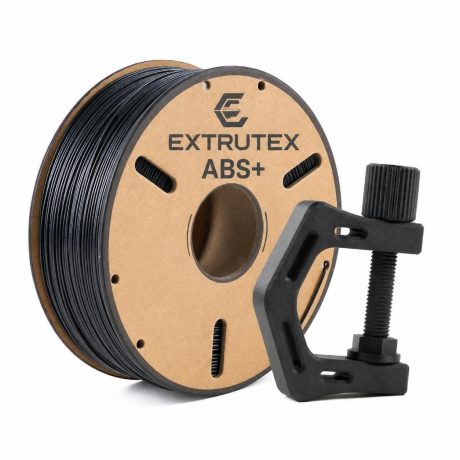
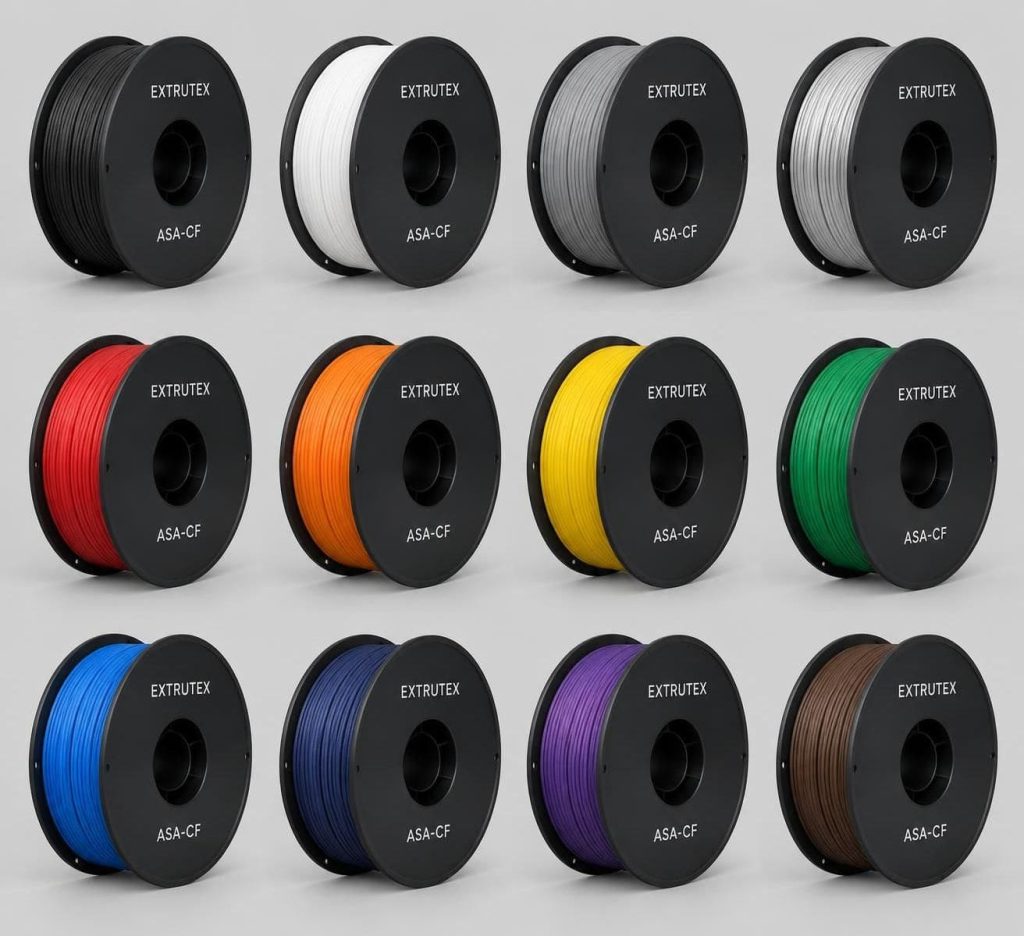
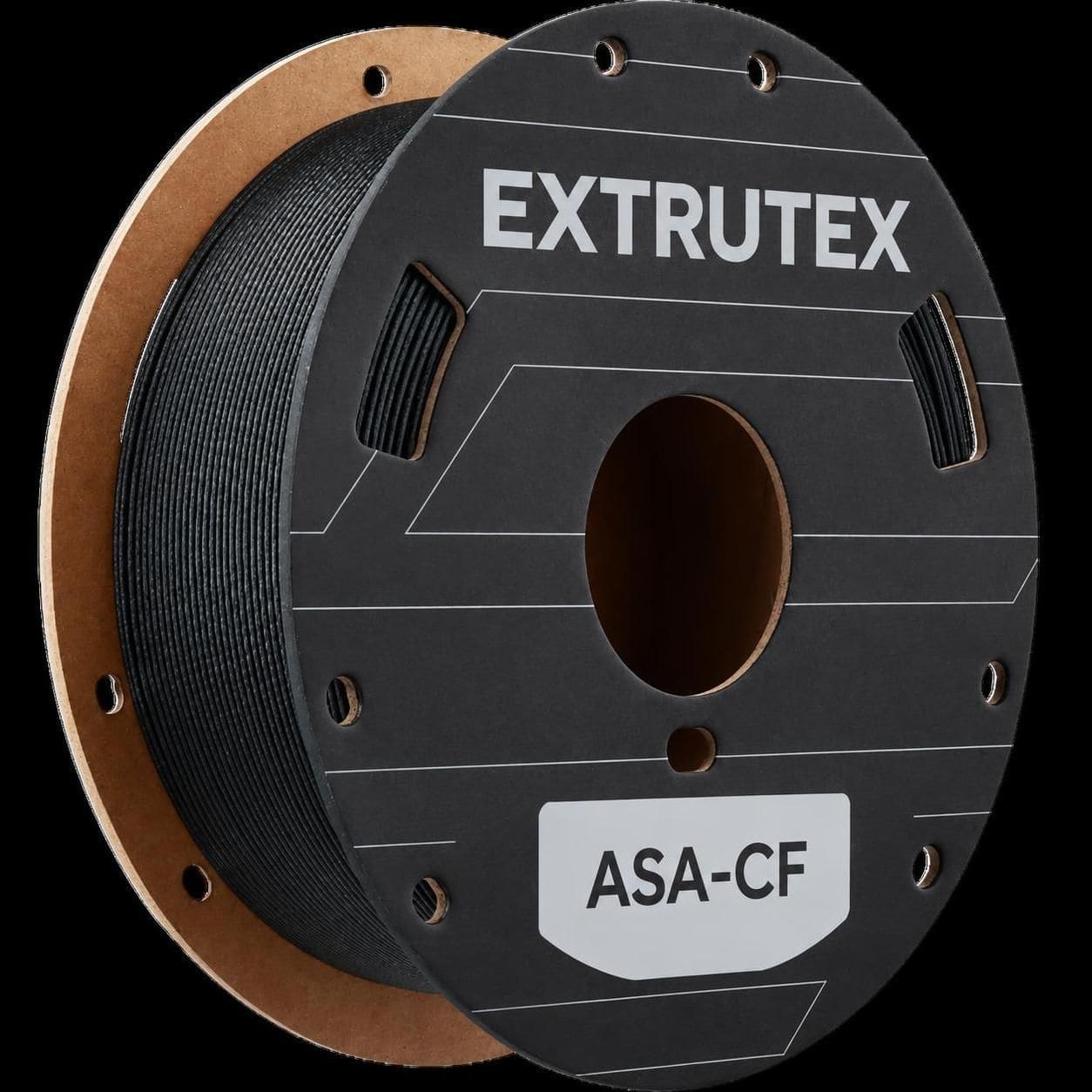
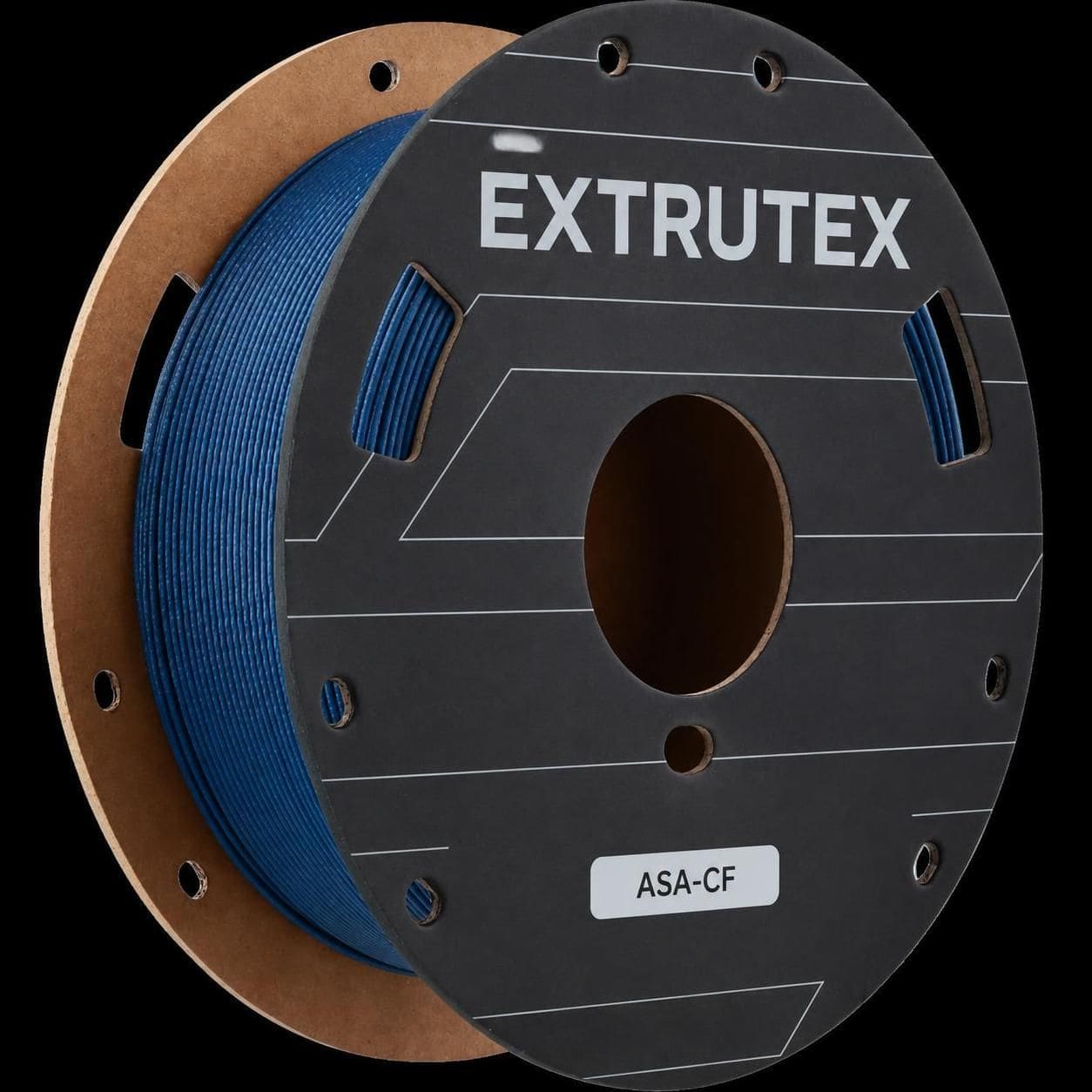
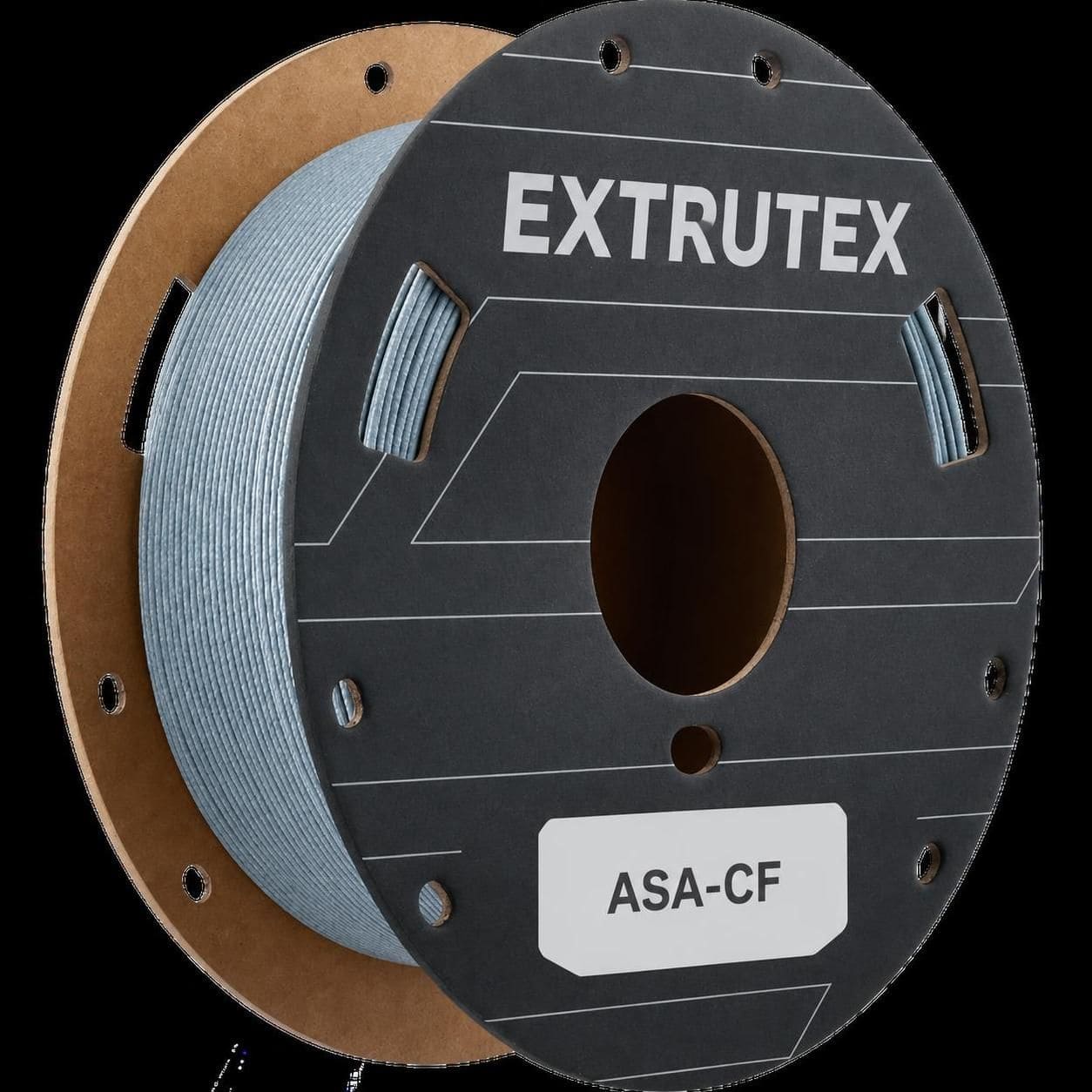
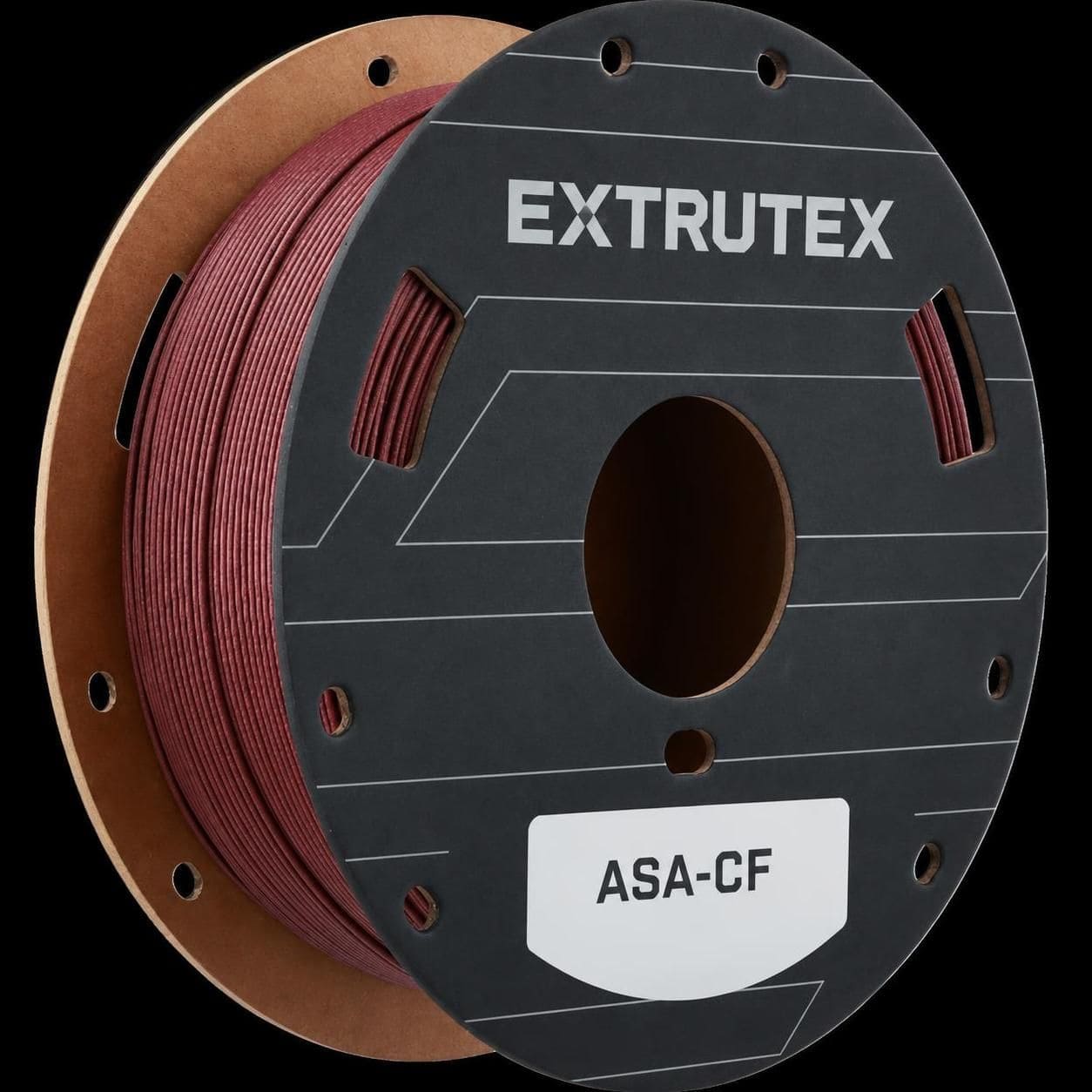
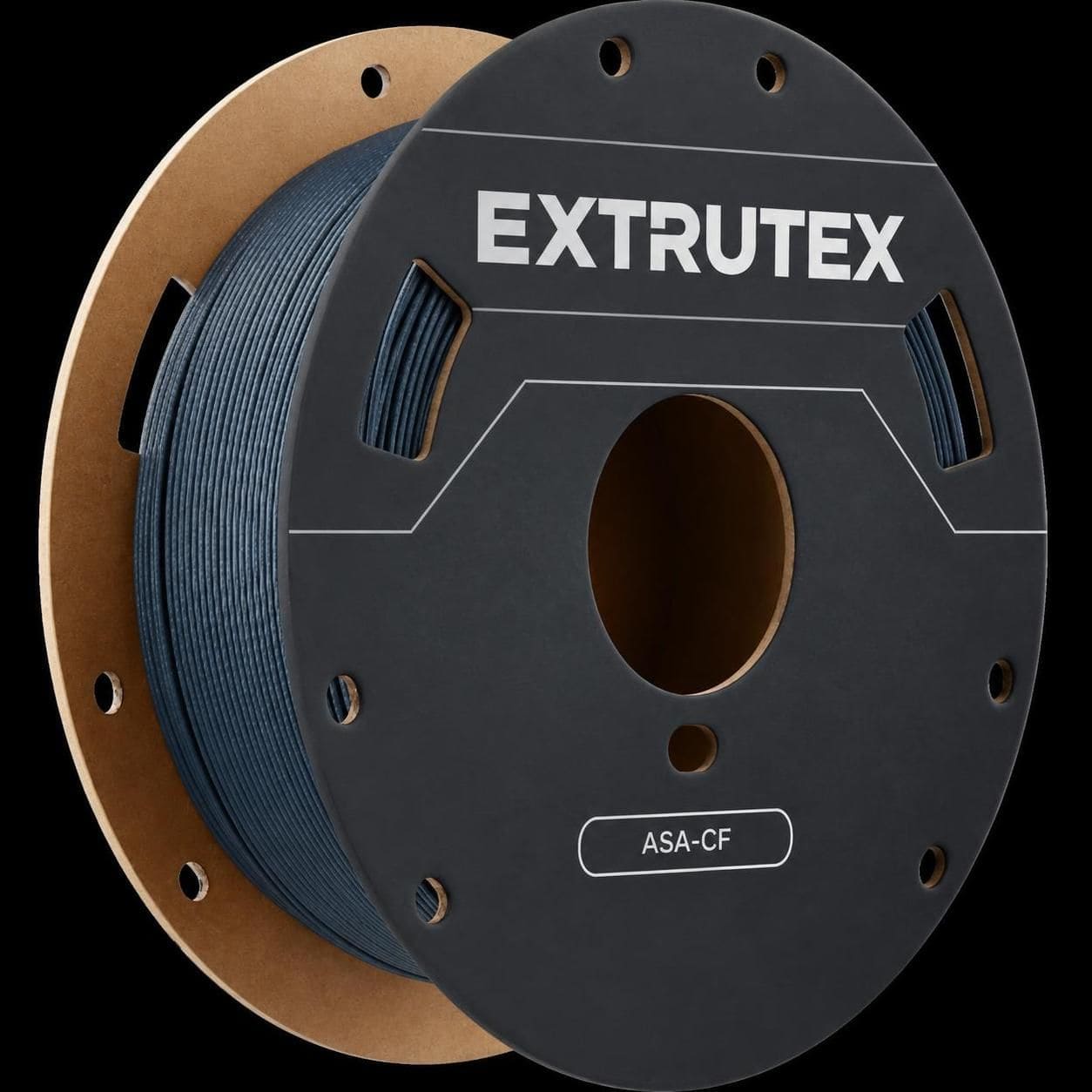
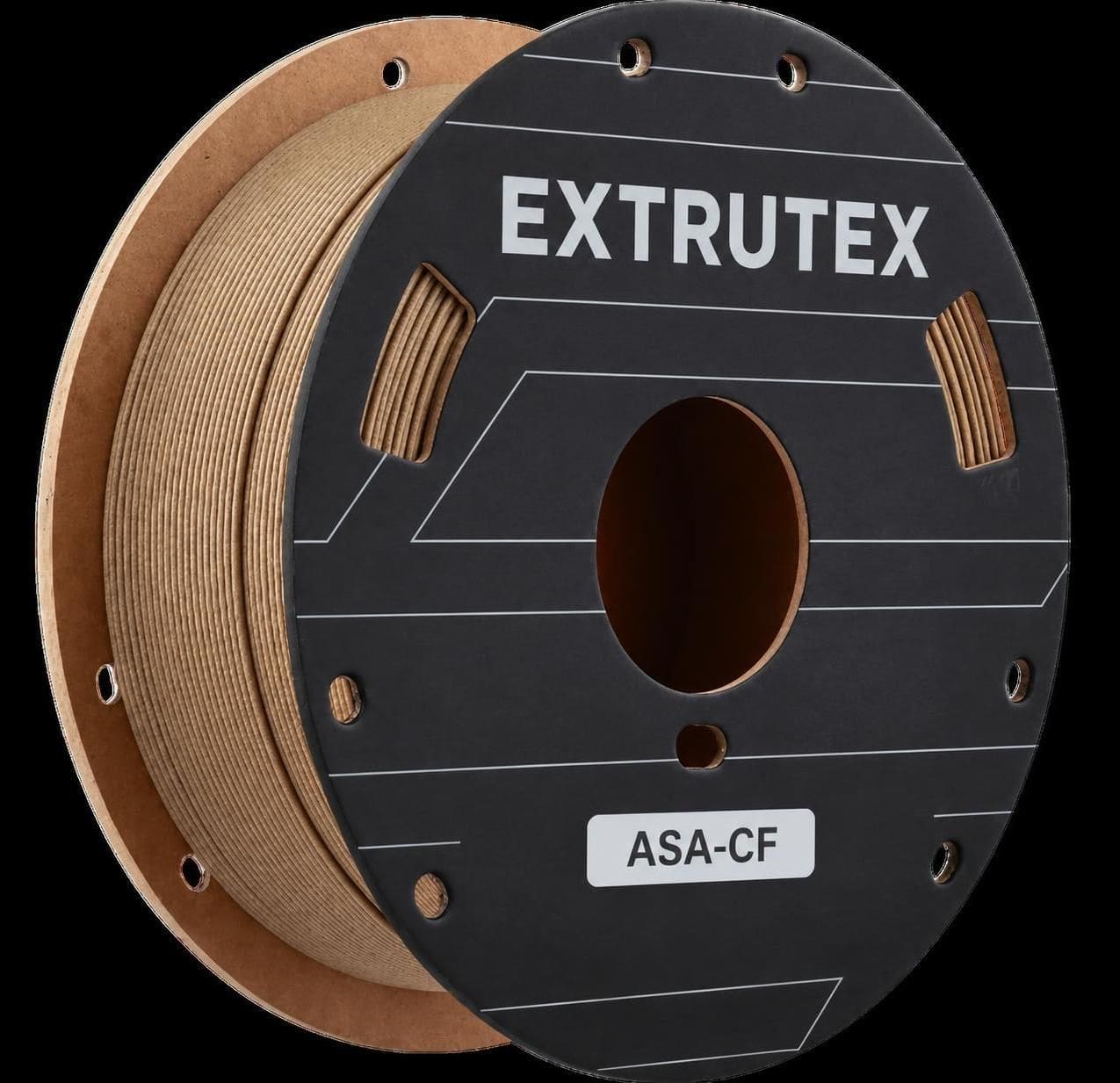
EXTRUTEX ASA-CF Carbon Fiber Reinforced ASA Filament
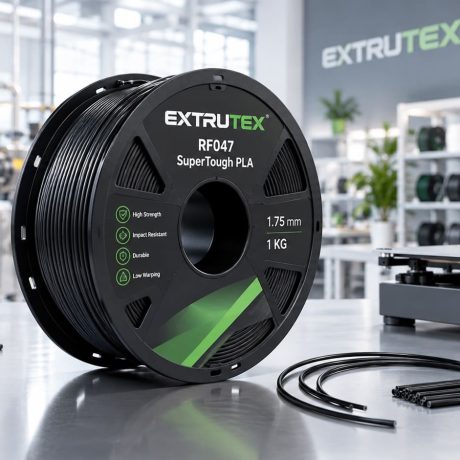
EXTRUTEX ASA-CF is a carbon fiber reinforced ASA filament developed for functional 3D printed components that require stiffness, dimensional stability, UV resistance and dependable outdoor performance. Combining an ASA polymer base with 8% carbon fiber reinforcement, this engineering filament delivers a distinctive matte surface and balanced mechanical properties for demanding applications.
Designed for outdoor components, automotive applications, industrial fixtures and functional prototypes, ASA-CF combines the weather-resistant characteristics of ASA with the increased rigidity provided by carbon fiber. Available in 1.75 mm diameter and multiple spool sizes, it offers flexibility for different printing requirements.
Key Features of EXTRUTEX ASA-CF Filament
8% Carbon Fiber ReinforcementCarbon fiber reinforcement increases stiffness and helps printed components maintain their shape under mechanical loads.
UV and Weather ResistanceThe ASA polymer base is suitable for parts exposed to sunlight and changing outdoor weather conditions.
Professional Matte FinishProduces a refined, low-gloss surface appearance suitable for functional and professional-looking components.
Heat ResistanceReported heat resistance is up to approximately 103°C. Actual performance depends on the test method and printed part design.
Balanced Mechanical PropertiesCombines flexural strength, stiffness and impact toughness for functional printed components.
Engineering Printing MaterialDesigned for demanding applications when used with appropriate printer hardware and temperature control.
Technical Specifications
| Product Name | EXTRUTEX ASA-CF Carbon Fiber Reinforced ASA Filament |
|---|
| Material | ASA (Acrylonitrile Styrene Acrylate) |
|---|
| Reinforcement | 8% carbon fiber |
|---|
| Filament Diameter | 1.75 mm |
|---|
| Available Spool Weights | 500 g, 1 kg, 3 kg |
|---|
| Recommended Printing Temperature | 260–280°C |
|---|
| Recommended Bed Temperature | 90–100°C |
|---|
| Heat Resistance | Up to approximately 103°C |
|---|
| Surface Finish | Matte |
|---|
| UV Resistance | Suitable for outdoor applications |
|---|
| Recommended Nozzle | Hardened steel or another wear-resistant nozzle |
|---|
| Recommended Printer Setup | Enclosed 3D printer recommended |
|---|
Note: The stated heat resistance is an approximate product value. Confirm the applicable test method and conditions when comparing materials for critical engineering applications.
What Is ASA-CF Carbon Fiber Filament?
ASA-CF is an engineering-grade 3D printing filament based on acrylonitrile styrene acrylate (ASA), reinforced with carbon fiber. ASA is valued for its resistance to ultraviolet radiation, weathering and outdoor aging. These characteristics make it an alternative to conventional ABS for many applications where printed parts must remain functional in outdoor environments.
The addition of 8% carbon fiber changes the mechanical behavior of the material. Carbon fiber reinforcement increases rigidity and helps improve dimensional stability, making it useful for components that need to maintain their geometry during service. The reinforcement also contributes to the characteristic matte surface finish associated with carbon fiber composite filaments.
ASA-CF is intended for functional parts rather than decorative printing alone. It is particularly relevant when a project requires a combination of outdoor durability, stiffness, heat performance and a professional surface appearance.
Strong, Stiff and Dimensionally Stable Printed Parts
One of the main advantages of carbon fiber reinforced ASA is its increased stiffness compared with unreinforced ASA. The 8% carbon fiber content helps printed parts resist deformation and maintain their intended shape in suitable applications.
This makes EXTRUTEX ASA-CF a practical material for brackets, equipment housings, mounting components, protective covers, fixtures and other functional parts. Its mechanical performance is influenced by printing orientation, infill, wall thickness, layer adhesion, cooling conditions and the geometry of the finished component.
For engineering applications, the material should be evaluated using representative printed samples. A part's actual load-bearing capacity cannot be determined from filament composition alone.
UV Resistance and Outdoor Weather Performance
Outdoor 3D printed parts can be exposed to direct sunlight, temperature changes, moisture and environmental stress. ASA is commonly selected for outdoor applications because of its resistance to UV exposure and weather-related aging.
EXTRUTEX ASA-CF combines this ASA foundation with carbon fiber reinforcement. It is suitable for outdoor components where stiffness and weather resistance are both important, including equipment covers, mounting brackets, enclosures, outdoor accessories and selected automotive components.
UV resistance does not mean that a printed component is completely unaffected by long-term outdoor exposure. Service life depends on the part's design, printing quality, environmental conditions, temperature cycles and mechanical loading. Testing under the intended operating conditions is recommended for critical applications.
Heat and Mechanical Performance
EXTRUTEX ASA-CF offers a reported heat resistance of up to approximately 103°C. This makes it a candidate for components that may encounter elevated temperatures during use. The carbon fiber reinforcement also contributes to stiffness, helping parts retain their shape under suitable operating conditions.
Its combination of flexural strength and impact toughness makes the material useful for functional prototypes, housings, brackets and mechanical accessories. However, stiffness and toughness are different properties: a stiffer material does not necessarily absorb impact better in every design or loading condition.
For parts exposed to sustained heat, repeated impacts or significant mechanical loads, prototype testing is important. Consider the complete application, including wall thickness, infill, layer direction, fastening points and operating environment.
Printing Recommendations and Setup
ASA-CF is designed to print at relatively high temperatures. Correct printer setup is important for consistent extrusion, good layer bonding and reduced risk of cracking or warping during cooling.
Recommended Printing Parameters
- Nozzle temperature: 260–280°C.
- Build plate temperature: 90–100°C.
- Filament diameter: 1.75 mm.
- Printer enclosure: An enclosed printer is recommended to help maintain a stable printing environment.
- Nozzle material: Use a hardened steel nozzle or another wear-resistant nozzle suitable for abrasive composites.
These values are starting points. The ideal settings may vary depending on the printer, nozzle design, build plate surface, slicer settings, part geometry and ambient conditions. Follow the printer manufacturer's operating limits and conduct calibration prints before producing large or critical components.
Why Use a Hardened Nozzle?
Carbon fiber is abrasive and can wear ordinary brass nozzles during repeated printing. Nozzle wear can gradually change the effective nozzle opening and affect extrusion consistency, dimensional accuracy and surface quality.
A hardened steel nozzle or another suitable wear-resistant nozzle is strongly recommended for regular ASA-CF printing. Check that the selected nozzle is compatible with the printer's hotend and can operate safely at the required printing temperature.
Why Is an Enclosed Printer Recommended?
ASA-based materials can be sensitive to uneven cooling, particularly when printing large parts or components with substantial solid sections. Temperature differences between the printed layers and surrounding air can contribute to warping, internal stress or cracking.
An enclosed printer helps reduce temperature fluctuations around the printed object. Maintaining a stable environment can improve printing consistency and reduce cooling-related problems. Avoid sudden drafts and excessive cooling, and adjust part cooling according to the printer and model requirements.
Printing Quality Tips
- Make sure the build plate is clean and properly prepared before printing.
- Use a suitable first-layer height and verify consistent bed adhesion.
- Keep the printer enclosure stable during printing.
- Use a hardened nozzle to reduce abrasive wear.
- Calibrate extrusion and flow settings for the specific printer and filament.
- Inspect printed samples for layer separation, warping and surface defects before production.
- Allow printed components to cool in a controlled environment rather than exposing them to sudden temperature changes.
Suitable Applications
EXTRUTEX ASA-CF is suitable for functional components that need a combination of stiffness, outdoor resistance and a matte carbon fiber appearance. Typical applications include:
- Outdoor equipment: Protective covers, brackets, housings and mounting accessories exposed to sunlight and changing weather.
- Automotive components: Selected interior and exterior accessories, fixtures, brackets and functional prototypes requiring rigidity.
- Industrial equipment: Machine covers, enclosures, mounting parts and custom equipment components.
- Engineering prototypes: Functional models used to evaluate fit, geometry, assembly and mechanical design.
- Jigs and fixtures: Custom production aids, positioning fixtures and workholding components.
- Electronic enclosures: Housings and protective structures for selected equipment applications.
- Custom mechanical parts: Low-volume components designed for specific equipment or operating environments.
ASA-CF Compared with Standard ASA
Both materials use ASA as their polymer base, but carbon fiber reinforcement changes the properties and printing requirements of the composite material.
| Property | Standard ASA | EXTRUTEX ASA-CF |
|---|
| Base Polymer | ASA | ASA |
| Carbon Fiber | Not reinforced | 8% carbon fiber |
| Stiffness | Standard ASA characteristics | Increased rigidity from reinforcement |
| Surface Appearance | Typically conventional ASA finish | Distinctive matte finish |
| Outdoor Suitability | Suitable for many outdoor applications | ASA-based outdoor suitability with added reinforcement |
| Nozzle Requirement | Standard compatible nozzle | Hardened, wear-resistant nozzle recommended |
| Printing Setup | Temperature control recommended | Enclosed printer recommended |
The best material depends on the final part requirements. Standard ASA may be appropriate when carbon fiber reinforcement is unnecessary. ASA-CF is worth considering when greater rigidity, dimensional stability and a matte composite finish are priorities.
Spool Sizes and Filament Handling
EXTRUTEX ASA-CF is available in 1.75 mm filament diameter with three spool weight options. Different spool sizes allow users to select a quantity suited to their printing workload.
- 500 g spool: Suitable for sample printing, smaller projects and material evaluation.
- 1 kg spool: A practical option for regular prototyping and general engineering use.
- 3 kg spool: Suitable for longer printing jobs and users with higher material consumption, provided the spool format is compatible with the printer setup.
Store filament in a dry, sealed environment when it is not in use. Moisture exposure can affect printing consistency and surface quality. If the material has absorbed moisture, follow an appropriate drying procedure confirmed for the filament and spool before printing.
Safe Use and Workspace Ventilation
ASA printing may release small amounts of styrene and other emissions during heating. Carbon fiber reinforced ASA should therefore be printed with appropriate attention to workspace ventilation and air quality.
- Use the printer in a well-ventilated area.
- Consider suitable air filtration or an extraction system designed for 3D printing emissions.
- Avoid placing the printer in an occupied, poorly ventilated room for extended printing sessions.
- Follow the safety recommendations provided by the printer and material manufacturers.
- Allow the printer and printed parts to cool before handling or removing components.
Safety reminder: Good ventilation or appropriate air filtration is recommended when printing ASA-based materials. Do not assume that an enclosed printer alone removes printing emissions from the workspace.
Frequently Asked Questions
1. What is EXTRUTEX ASA-CF filament?
EXTRUTEX ASA-CF is an ASA-based 3D printing filament reinforced with 8% carbon fiber. It is designed for applications requiring stiffness, dimensional stability, UV resistance and a matte surface finish.
2. What does CF mean in ASA-CF?
CF stands for carbon fiber. In ASA-CF, carbon fiber is added to the ASA polymer to increase rigidity and improve dimensional stability compared with unreinforced material.
3. What is the carbon fiber content?
The stated carbon fiber content is 8%. This reinforcement contributes to the material's stiffness and distinctive composite surface appearance.
4. Is ASA-CF suitable for outdoor use?
Yes. The ASA polymer base provides UV and weather resistance, making the filament suitable for many outdoor applications. Actual service life depends on exposure conditions, part design and printing quality.
5. Is ASA-CF stronger than standard ASA?
Carbon fiber reinforcement increases stiffness and can improve dimensional stability. However, strength and impact performance depend on the specific property being measured, print orientation and part design. It is best to compare test data for the intended application.
6. What surface finish does ASA-CF produce?
ASA-CF produces a characteristic matte finish. This low-gloss appearance is often preferred for functional components, equipment housings and professional-looking printed parts.
7. What is the recommended nozzle temperature?
The recommended nozzle temperature is 260–280°C. Start within this range and adjust according to the printer, nozzle, extrusion behavior and print quality.
8. What bed temperature should I use?
The recommended build plate temperature is 90–100°C. Proper bed preparation and first-layer calibration are also important for reliable adhesion.
9. Do I need an enclosed 3D printer?
An enclosed printer is recommended. A stable printing environment helps reduce uneven cooling and the risk of warping or cracking, especially when producing larger parts.
10. Can I print ASA-CF with a brass nozzle?
It is not recommended for regular printing. Carbon fiber is abrasive and can wear ordinary brass nozzles. A hardened steel or other wear-resistant nozzle is strongly advised.
11. Is ASA-CF suitable for automotive parts?
It can be used for selected automotive accessories, brackets, housings and prototypes where its stiffness and outdoor resistance are useful. Parts used in safety-critical or high-temperature automotive applications require appropriate testing and validation.
12. Can ASA-CF be used for industrial fixtures?
Yes. It is suitable for selected jigs, fixtures, mounting components and custom production aids. The design should account for loading direction, layer adhesion and the operating environment.
13. What is the heat resistance of ASA-CF?
The stated heat resistance is up to approximately 103°C. This figure should be treated as an approximate product value unless the specific test method and conditions are provided. Real-world performance also depends on load and part geometry.
14. Is ASA-CF impact resistant?
The material is described as having balanced flexural strength and impact toughness. Actual impact resistance depends on printing parameters, layer orientation, wall thickness and component design.
15. What filament diameter is available?
EXTRUTEX ASA-CF is available in 1.75 mm diameter. Check that your printer and filament feeding system support this diameter.
16. What spool sizes are available?
The available spool weights are 500 g, 1 kg and 3 kg. Choose a spool size based on material consumption and printer compatibility.
17. Can ASA-CF be used for large prints?
It can be used for larger components, but large ASA-based prints require careful temperature management. An enclosed printer, suitable bed adhesion and controlled cooling can help reduce warping and cracking.
18. Does ASA-CF need special storage?
Like other engineering filaments, ASA-CF should be stored in a dry, sealed environment when not in use. Protecting the filament from moisture helps maintain consistent extrusion and surface quality.
19. Is ventilation necessary when printing ASA-CF?
Yes. ASA printing may release styrene and other emissions. Use good ventilation or suitable air filtration, and follow the safety guidance for your printer and material.
20. Who should consider using EXTRUTEX ASA-CF?
It is suitable for professional 3D printing users, engineers, product developers, automotive accessory manufacturers and industrial users who need a carbon fiber reinforced ASA material for functional prototypes and selected end-use components.
Why Choose EXTRUTEX 3D Printing Materials?
EXTRUTEX supplies materials and solutions for the plastics processing and 3D printing industries. Our product development approach combines Austrian design, laboratory and R&D capabilities with manufacturing in China. This structure supports the development and supply of materials for different industrial requirements and customer applications.
We focus on practical material selection, consistent product information and technical communication. Whether you are evaluating ASA-CF for outdoor components, functional prototypes, industrial fixtures or custom mechanical parts, selecting the right filament is an important step toward achieving reliable printing results.
Request Information About EXTRUTEX ASA-CF Filament
Looking for a carbon fiber reinforced ASA filament for outdoor 3D printing, engineering prototypes or industrial applications? Contact EXTRUTEX to discuss ASA-CF, available spool sizes and material requirements.
Website: www.extruder.co
Contact our team for product information and assistance with material selection.




-
(0 customer reviews)