No products in the cart.


All rights of this website are reserved for EXTRUTEX Austria and its partner companies, © 2026


Multiple Payment Methods

Discount for advance payments over 50%

Free Shipping Coordination Services
Payment methods:


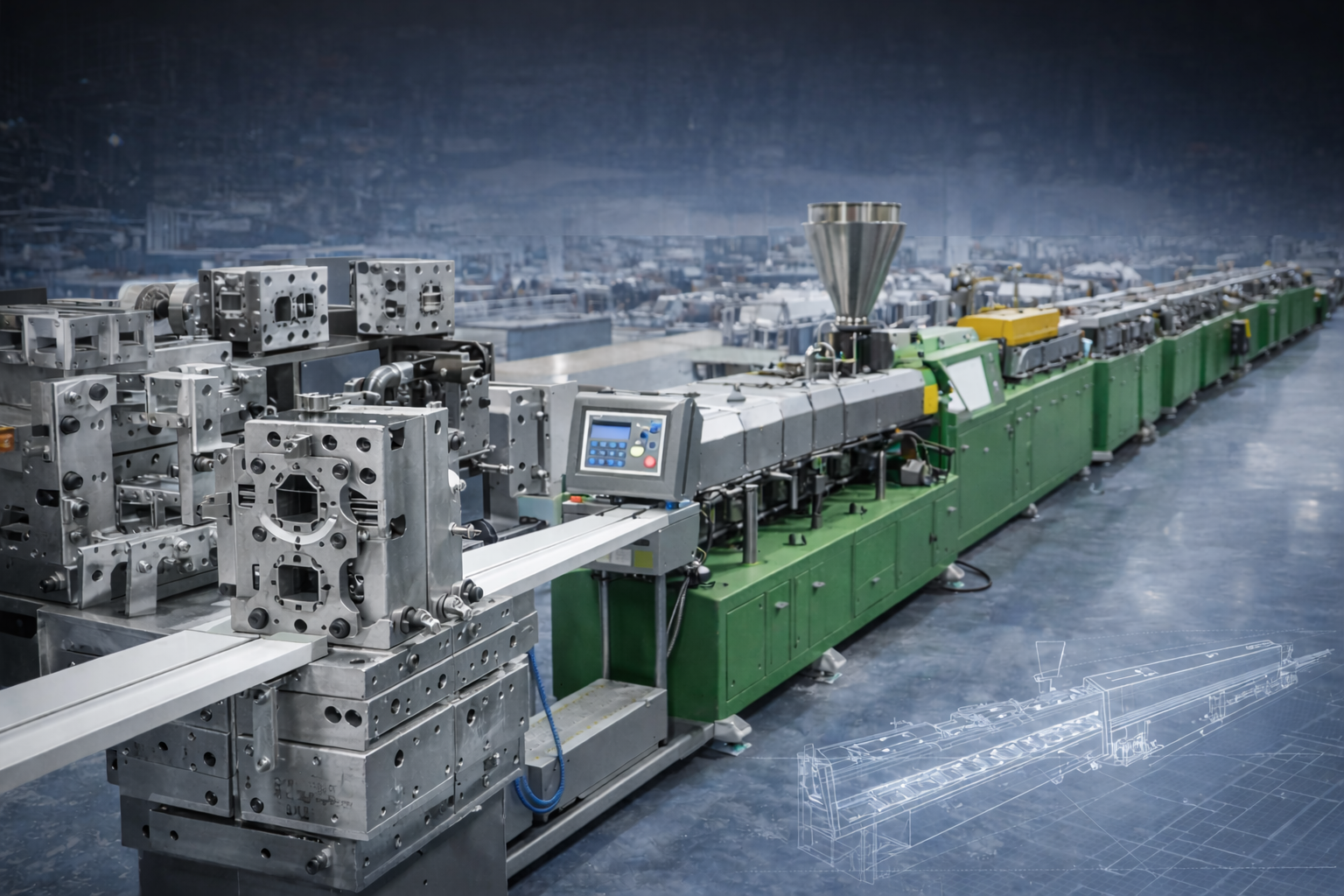
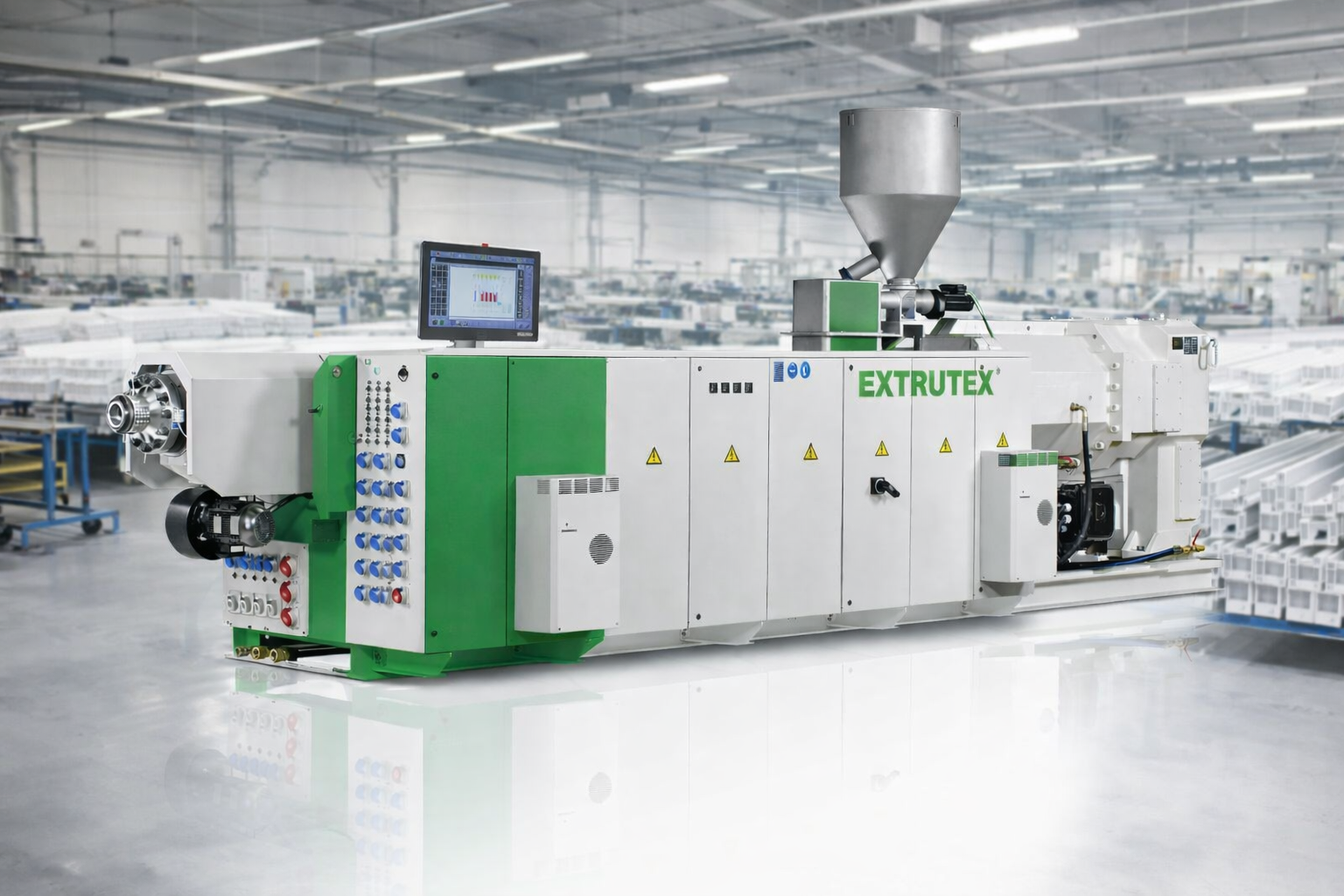
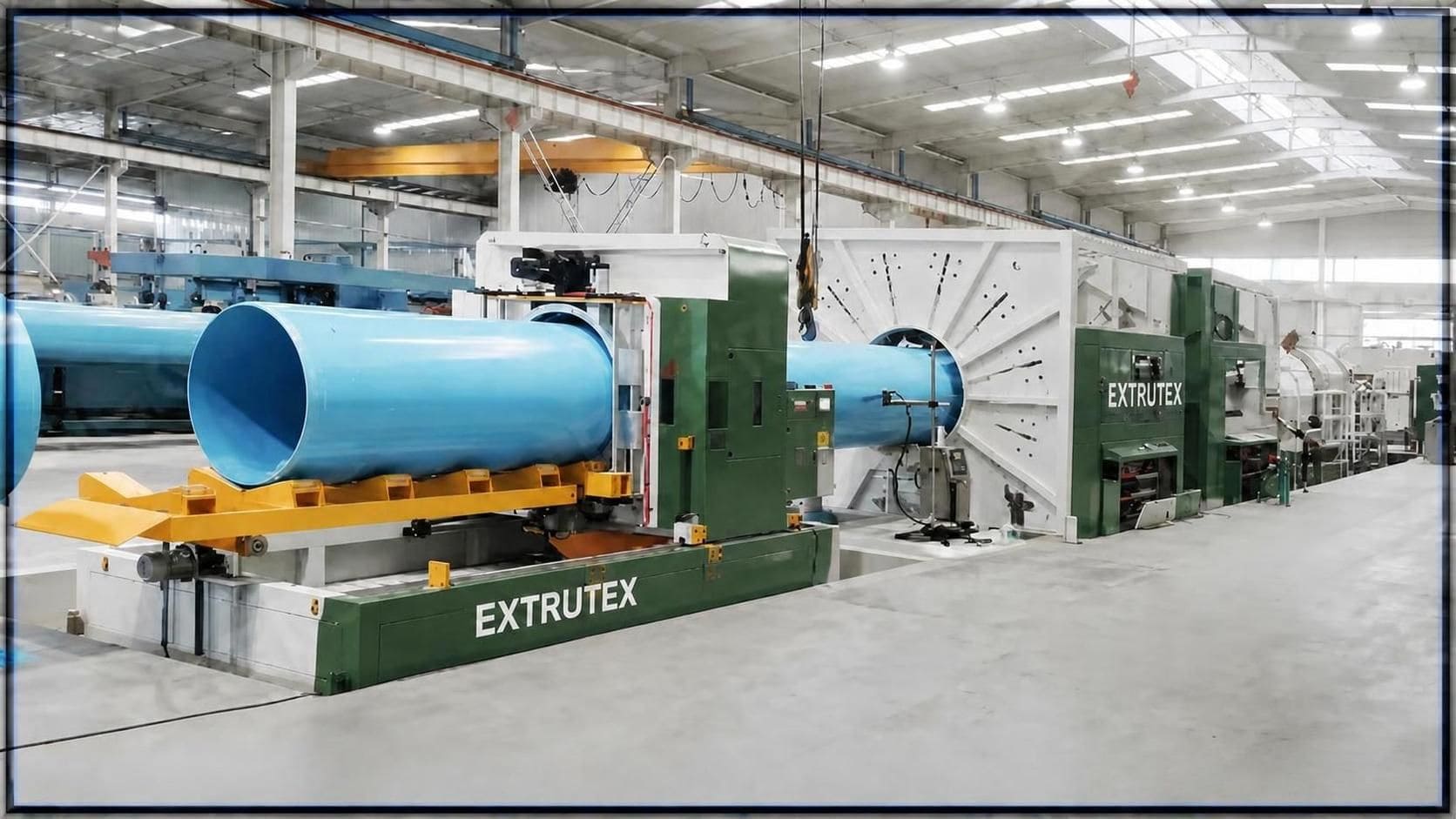
EXTRUTEX PVC-O Pipe Extrusion Line is an integrated production solution for manufacturing molecularly oriented polyvinyl chloride pipes for pressurized water supply and other demanding piping applications. The system combines PVC material preparation, twin-screw extrusion, pipe die technology, temperature control, calibration, cooling, haul-off, cutting, and pipe handling with a process-specific orientation stage.
EXTRUTEX develops extrusion technology with design, laboratory work, and R&D in Austria and manufacturing in China. Each PVC-O project can be configured according to the pipe diameter range, wall thickness, material formulation, required output, orientation process, factory layout, and applicable standards.
The EXTRUTEX PVC-O series described here covers nominal pipe diameter ranges from Ø90 mm to Ø630 mm. Available configurations include PVC-O160, PVC-O200, PVC-O400, PVC-O500, and PVC-O630. Final equipment selection depends on the complete production process, including the orientation technology used after initial pipe extrusion.
PVC-O stands for oriented polyvinyl chloride. Unlike conventional unplasticized PVC (UPVC) pipe, PVC-O pipe undergoes a controlled molecular-orientation process. Under carefully controlled temperature and mechanical conditions, the polymer structure is oriented to improve selected mechanical properties.
Depending on the formulation, pipe design, orientation ratio, and manufacturing process, PVC-O pipes can provide a combination of high impact resistance, improved resistance to crack propagation, and efficient pressure-bearing performance. These properties make PVC-O an important material option for modern water distribution infrastructure.
Producing PVC-O pipe requires more than a conventional PVC extrusion line. The initial pipe must be extruded with stable dimensions and suitable material characteristics, then processed through a controlled orientation stage. The complete line therefore needs coordinated extrusion, temperature regulation, dimensional control, orientation, and inspection systems.
The EXTRUTEX PVC-O series is designed around five pipe diameter ranges. The equipment arrangement can be adapted to the customer's product specifications and selected orientation process. The figures below reproduce the reference values supplied for this series; the meaning and measurement basis of the repeated value “500” should be confirmed before it is published as an output or speed specification.
| Model | Pipe Diameter Range | Reference Value Supplied | Specified Motor Power | Proposed Extruder Configuration |
|---|---|---|---|---|
| EXTRUTEX PVC-O160 | Ø90–160 mm | 500 | 37 kW | Compact PVC twin-screw extrusion system; screw configuration to be confirmed |
| EXTRUTEX PVC-O200 | Ø110–200 mm | 500 | 45 kW | Medium-capacity PVC twin-screw extrusion system; screw configuration to be confirmed |
| EXTRUTEX PVC-O400 | Ø200–400 mm | 500 | 75 kW | Large-capacity PVC twin-screw extrusion system; screw configuration to be confirmed |
| EXTRUTEX PVC-O500 | Ø250–500 mm | 500 | 90 kW | Large-diameter PVC twin-screw extrusion system; screw configuration to be confirmed |
| EXTRUTEX PVC-O630 | Ø315–630 mm | 500 | 110 kW | High-capacity PVC twin-screw extrusion system; screw configuration to be confirmed |
Engineering clarification: The motor powers above are the supplied reference figures and are not automatically equivalent to the motor ratings of any previously discussed standard extruder model. The final screw diameter, L/D ratio, drive rating, screw geometry, output, and downstream arrangement must be selected together for the intended PVC-O process.
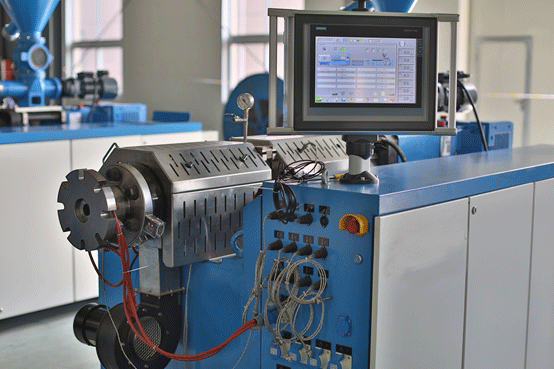
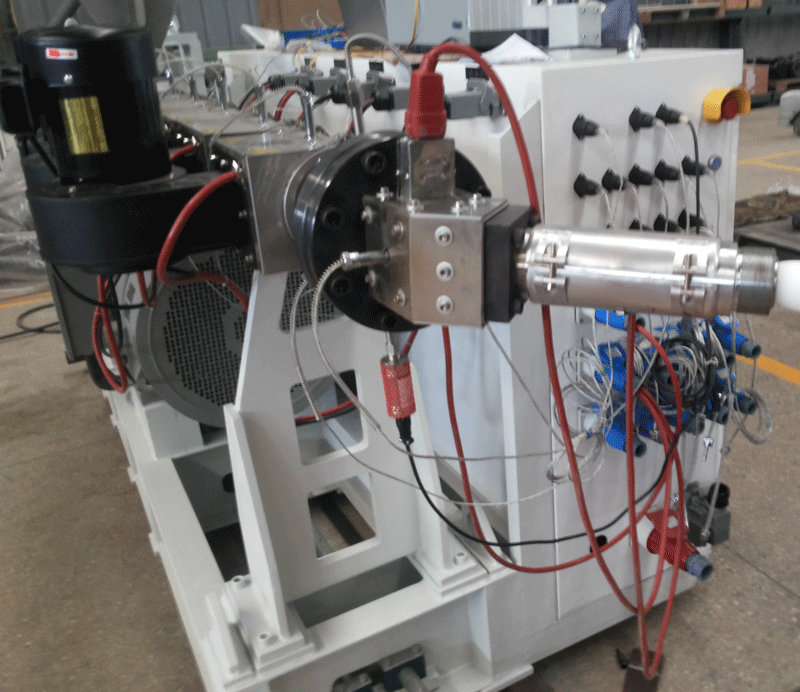
The extrusion section prepares the PVC compound and forms the initial pipe with the dimensional stability and material consistency required by the downstream orientation process. PVC processing requires careful control of melt temperature, residence time, shear, and thermal stability. EXTRUTEX can engineer the extrusion package around a suitable counter-rotating conical or parallel twin-screw configuration according to the compound, output target, and process requirements.
For PVC-U processing, counter-rotating twin-screw extruders are widely used because they can provide controlled conveying, effective melting, and a suitable processing environment for heat-sensitive PVC formulations. Screw geometry, barrel design, venting, feeding, and temperature-control settings should be selected for the specific formulation rather than copied from a general-purpose polyolefin extruder.
The following models are part of the previously discussed EXTRUTEX twin-screw equipment references. They provide starting points for engineering discussions, but they are not automatically assigned to the five PVC-O lines because the supplied motor ratings and the process-specific requirements need to be reconciled.
| Reference Model | Reference Drive Power | Previously Supplied Output Information | Potential Engineering Use |
|---|---|---|---|
| EXTRUTEX 75/26R | 50 kW | Approximately 190–450 kg/h | Reference platform for compact or medium PVC extrusion studies, subject to validation |
| EXTRUTEX 90/26R | 67 kW | Approximately 280–650 kg/h | Reference platform for higher-throughput extrusion studies, subject to validation |
| EXTRUTEX 114/36R | 110 kW | Approximately 480–1,050 kg/h | Reference platform for larger-throughput process evaluation, subject to validation |
| EXTRUTEX 130/26R | 150 kW | Output to be confirmed for the PVC-O formulation and application | Reference for evaluating higher-capacity extrusion requirements |
The model designations and ratings above are reference data from earlier equipment discussions, not verified PVC-O line specifications. A 75/26R or 90/26R model should not be represented as a confirmed match to the supplied 37 kW, 45 kW, 75 kW, or 90 kW ratings without a formal engineering selection. The 114/36R reference has a previously supplied 110 kW rating, but its suitability still depends on the actual material, screw design, output, and process layout.
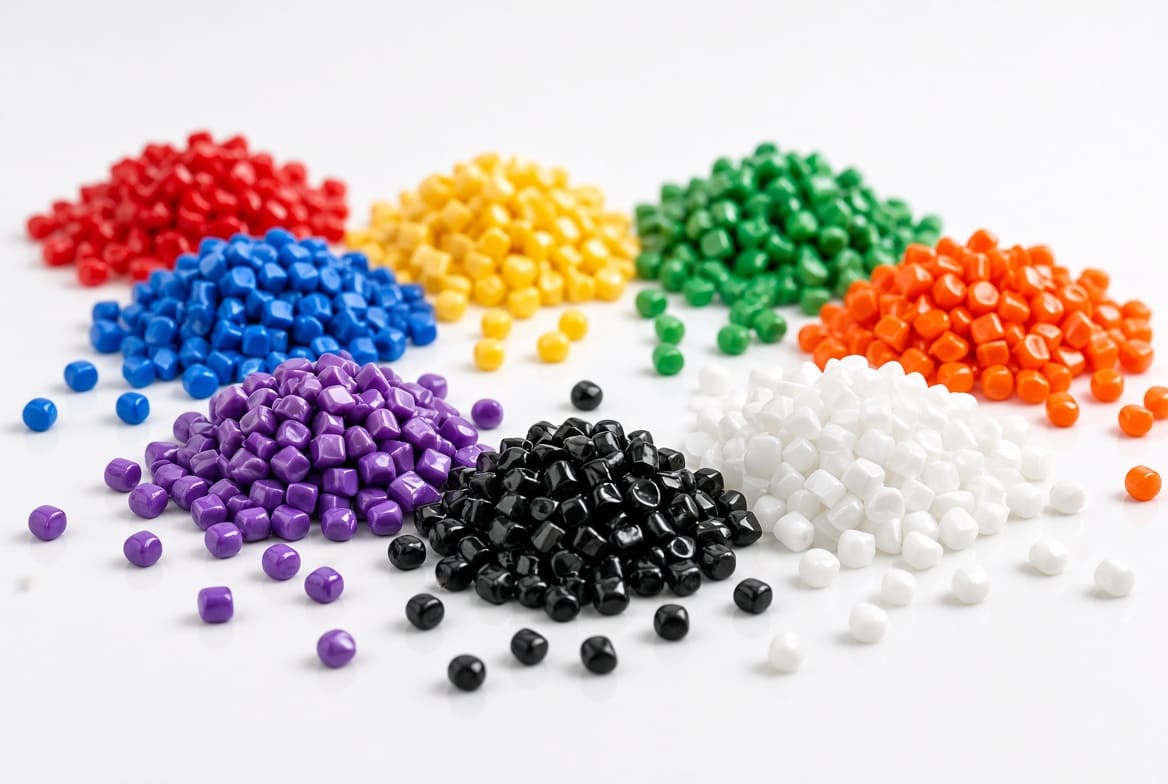
Consistent compound preparation is essential for stable PVC-O pipe extrusion. PVC resin, stabilizers, processing aids, lubricants, impact modifiers, and other formulation components must be dosed and mixed according to the approved recipe. The formulation must be designed for the intended orientation process and finished-pipe performance.
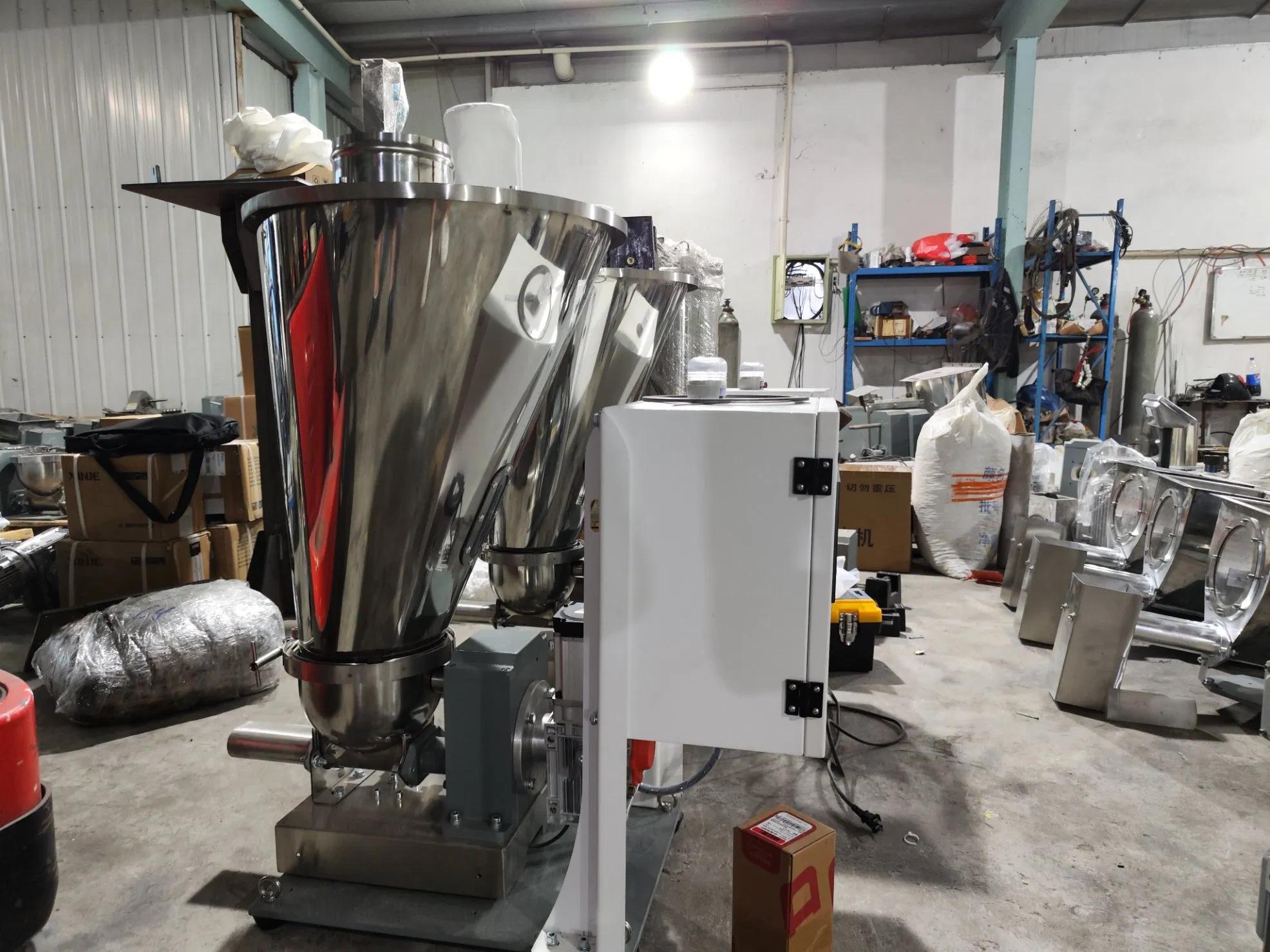
The material preparation section can be configured with a high-speed hot mixer, a cooling mixer, weighing and dosing equipment, storage bins, conveying equipment, and a controlled extruder feeding system. The exact arrangement depends on whether the customer purchases a prepared compound or mixes raw materials in-house.
Formulation design should account for thermal stability, fusion behavior, melt strength, and the mechanical properties required after orientation. Any material changes should be validated against the complete process and finished-pipe testing requirements.
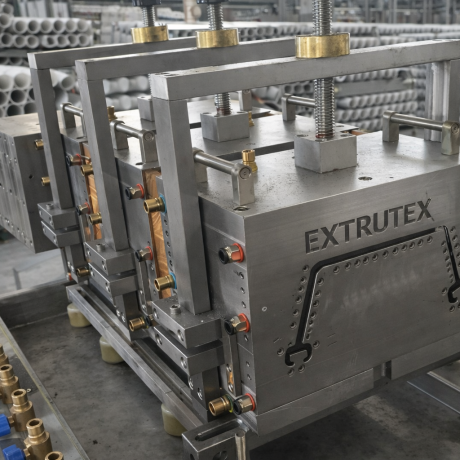
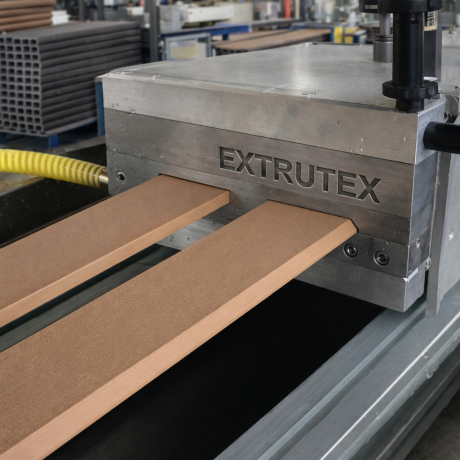
The die head forms the initial pipe geometry before the pipe enters the calibration, cooling, and orientation stages. The die, mandrel, flow channels, and temperature-control system must be engineered for the selected diameter range and PVC formulation.
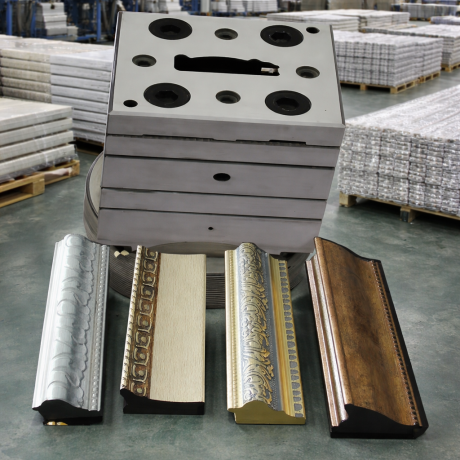
EXTRUTEX can develop pipe tooling according to the required outside diameter, wall thickness, dimensional tolerances, production rate, and process arrangement. Tooling selection should consider melt distribution, pressure stability, surface quality, thermal uniformity, and the stability of the initial pipe dimensions.
Because PVC-O relies on a subsequent orientation stage, the initial extruded pipe is not the final product. The dimensions and material characteristics of this intermediate pipe must be suitable for the specific orientation technology. Die tooling should therefore be designed as part of the complete process, not as an isolated component.
After leaving the die, the initial pipe enters a controlled calibration and cooling section. Depending on the selected technology, this section may include a vacuum calibration tank, calibration sleeves or sizing devices, spray cooling, and temperature-controlled water circulation.
Stable initial dimensions are important for downstream handling and orientation. Excessive temperature variation, uneven cooling, or unstable sizing can lead to dimensional inconsistencies that affect later processing. The calibration and cooling equipment should therefore be selected in accordance with the pipe diameter, wall thickness, material formulation, and production speed.
A spray cooling tank can provide additional cooling after the initial calibration stage. Spray nozzles distribute cooling water around the pipe, while circulation and drainage arrangements support continuous operation. Tank length, cooling capacity, nozzle arrangement, and pipe support must be calculated for the required process conditions.
For PVC-O applications, cooling conditions must be coordinated with the complete orientation process. The objective is not simply to cool the pipe as quickly as possible, but to establish the appropriate temperature and dimensional conditions for subsequent operations.
The orientation stage is the defining part of PVC-O manufacturing. The initial PVC pipe undergoes controlled deformation under specified thermal and mechanical conditions, aligning the polymer structure to achieve the required oriented properties.
Orientation technology varies by manufacturer and production concept. The process may use specialized heating, stretching, expansion, sizing, pressure, or mechanical systems. The equipment architecture and process sequence must be selected according to the required pipe diameter, wall thickness, orientation ratio, cycle time, and product standard.
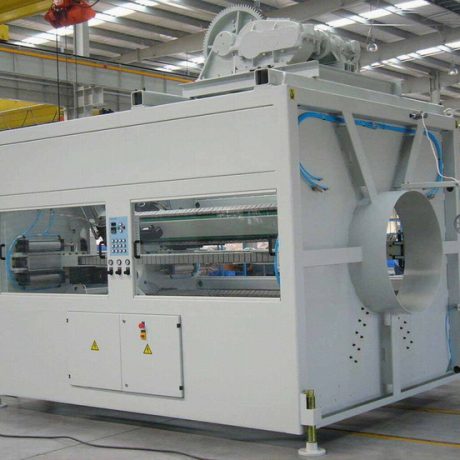
The orientation unit is a dedicated process section and must be specified separately when defining the complete line. A conventional PVC extrusion line with a vacuum tank and haul-off is not, by itself, a complete PVC-O production system. EXTRUTEX project engineering should establish whether the customer requires extrusion equipment only, an extrusion line integrated with a customer-supplied orientation unit, or a coordinated turnkey production solution.
The haul-off system moves the initial pipe or finished pipe through the relevant production stages at a controlled speed. The traction arrangement must provide stable movement without causing surface damage, unwanted deformation, or process instability.
Depending on the pipe diameter and production concept, the line can use a suitable belt-type or caterpillar-type haul-off. The contact surface, clamping force, drive control, and traction capacity must be selected for the pipe dimensions and the condition of the material at that point in the process.
In a PVC-O production system, haul-off speed is not an independent setting. It must be coordinated with extrusion output, the intermediate pipe dimensions, orientation speed, and the final cutting or handling process. The required arrangement depends on whether orientation occurs continuously, in batches, or in a separate downstream station.
The cutting section produces pipe lengths according to the customer's product requirements. Depending on the pipe dimensions and the manufacturing sequence, the line may use a planetary saw, circular cutting system, or another suitable cutting arrangement.
Large-diameter pipes require careful support and cutting-force management. The selected machine must accommodate the pipe outside diameter, wall thickness, material condition, cutting tolerance, and production speed. Dust extraction or chip management should also be considered where relevant to the cutting technology.
The cutting method must be compatible with the condition of the pipe at the point of cutting. If cutting occurs before orientation, the line requires a different handling arrangement from a configuration that cuts only after orientation and final dimensional stabilization.
The pipe handling section transfers cut pipes from the production line to an inspection area, collection table, or storage arrangement. For medium and large PVC-O pipes, handling equipment must support the pipe weight and dimensions while minimizing impact, surface damage, and unwanted deformation.
Depending on the final layout, EXTRUTEX can configure powered or passive collection tables, discharge supports, lifting interfaces, and customized pipe stacking equipment. Large-diameter pipes may require dedicated handling arrangements designed around the factory floor, available space, and lifting equipment.
The handling design should be reviewed together with the cutting and orientation sections. Pipe length, stiffness, temperature, weight, and allowable contact pressure affect the required support arrangement.
Depending on the pipe connection system, the finished pipe may require socketing or other end-finishing operations. A belling machine can be considered when the selected PVC-O pipe design and joining method require a formed socket.
Socketing equipment for PVC-O should not be assumed to be identical to a conventional UPVC belling machine. The heating, forming, cooling, dimensional control, and tooling must be compatible with the specific oriented pipe structure and approved product design. Some PVC-O systems use different joint designs or dedicated forming methods.
Before selecting socketing equipment, confirm the pipe connection type, socket geometry, sealing system, product standard, and whether forming is performed before or after the orientation process. The final machine configuration should be engineered around these requirements.
A PVC-O line needs coordinated control across the extrusion, temperature-management, calibration, orientation, haul-off, cutting, and handling sections. The control architecture can be designed according to the selected equipment scope and automation level.
Depending on the project, the system can include a central operator interface, temperature controllers, variable-frequency drives or servo drives, safety circuits, alarms, and production monitoring. Integration with third-party orientation equipment requires agreement on communication protocols, signal exchange, control responsibility, and safety interfaces.
Available functions depend on the supplied hardware and project specification. The final control system should define which equipment is controlled centrally and which remains under the control of an independent orientation or auxiliary-machine system.
Quality assurance is essential for pressure-rated PVC-O pipes. Finished-pipe properties depend on the resin and formulation, initial extrusion conditions, orientation process, cooling, dimensional stabilization, and quality-control procedures.
The inspection plan should be developed around the target product standard and intended market. Applicable requirements may cover dimensions, wall thickness, ovality, pressure performance, impact behavior, resistance to crack propagation, joint integrity, and other relevant product characteristics.
Testing requirements vary by product design, pipe class, standard, and target market. No certification or compliance claim should be made solely on the basis of the extrusion machine configuration; the finished pipe and manufacturing process must meet the applicable requirements.
| Characteristic | PVC-O | Conventional UPVC | CPVC |
|---|---|---|---|
| Material type | Molecularly oriented PVC | Unplasticized PVC | Chlorinated PVC |
| Production process | Extrusion plus a dedicated orientation process | Extrusion, calibration, and cooling | Extrusion using a formulation and process designed for CPVC |
| Primary process consideration | Uniform initial pipe and controlled orientation | Stable melt processing and dimensional control | Thermal stability and formulation-specific processing conditions |
| Common applications | Pressure water distribution and infrastructure | Water, drainage, and other suitable piping applications | Selected hot-water and industrial applications where suitable |
| Special equipment requirement | Dedicated orientation technology and process integration | Conventional PVC pipe extrusion equipment | CPVC-compatible extrusion tooling and processing setup |
PVC-O, UPVC, and CPVC should not be treated as interchangeable production processes. A PVC-O line requires an orientation stage, while CPVC requires suitable material-specific processing and thermal management. Equipment, tooling, recipes, and finished-pipe qualification should be selected for the intended material and application.
EXTRUTEX PVC-O lines cover five reference size ranges. The appropriate configuration depends not only on the maximum diameter, but also on the minimum diameter, wall thickness, product pressure class, required output, pipe length, and orientation technology.
These ranges describe the stated product diameter coverage, not a guarantee that every diameter can be produced with the same tooling, output, or process settings. Changeover equipment, die sets, calibration tooling, orientation fixtures, and downstream capacity should be confirmed during technical planning.
Planning a PVC-O line requires adequate space for the extruder, die head, calibration and cooling equipment, orientation section, haul-off, cutting station, and pipe handling. The layout should allow for operator access, tooling changes, maintenance, material supply, finished-pipe movement, and safe lifting operations.
Utility requirements depend on the final machine configuration. The engineering review should establish the electrical supply, installed power, cooling-water demand, compressed-air requirements, extraction provisions, drainage, and any special utilities required by the orientation system.
EXTRUTEX can develop a PVC-O extrusion project around the customer's pipe specification, material formulation, target capacity, factory layout, and automation requirements. Design, laboratory work, and R&D are based in Austria, with manufacturing in China.
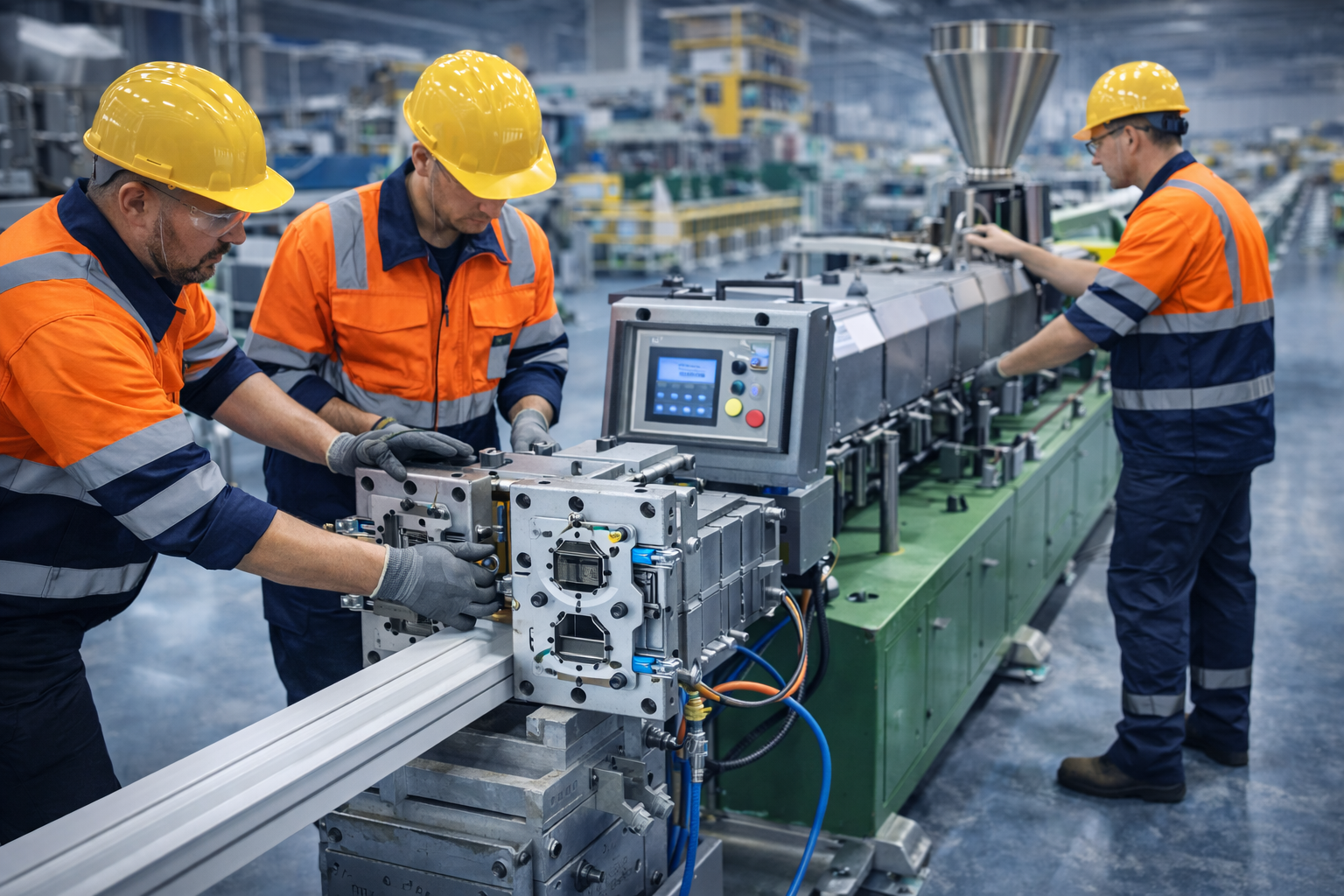
The final configuration can include a twin-screw extruder, PVC-O pipe die head, vacuum calibration tank, spray cooling tank, haul-off, cutting system, pipe collection equipment, and interfaces to the selected orientation system. Auxiliary material preparation, quality-control equipment, socketing, and automation can be considered according to the project scope.
To prepare a reliable technical proposal, customers should provide the required diameter range, wall-thickness schedule, pressure class, target production capacity, pipe length, applicable product standard, compound information, and preferred orientation technology. These details allow the extrusion and downstream equipment to be selected as one coordinated manufacturing system.
For an EXTRUTEX PVC-O pipe production project, specify the required model range—PVC-O160, PVC-O200, PVC-O400, PVC-O500, or PVC-O630—together with the pipe dimensions, wall thickness, pressure class, output target, and intended application.
Please also confirm whether the project requires extrusion equipment only, integration with an existing orientation unit, or a complete line including the orientation process. This distinction is important because the orientation stage determines the process architecture and affects the selection of the extruder, tooling, cooling equipment, haul-off, cutting, and handling systems.
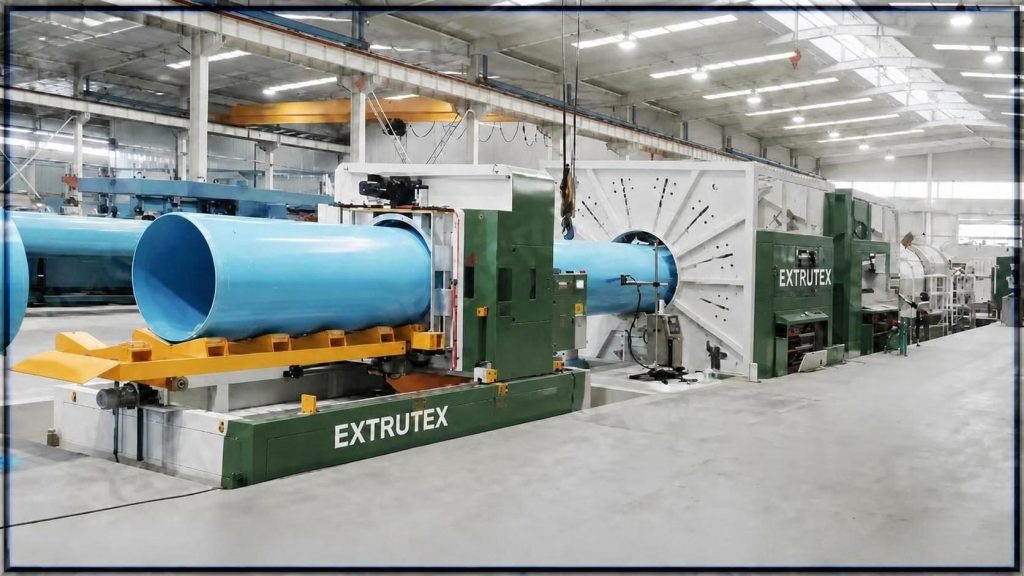
EXTRUTEX PVC-O Pipe Extrusion Line: a project-engineered solution for producing oriented PVC pipes, with extrusion and downstream equipment selected to match the complete manufacturing process.
```
There are no reviews yet.
By submitting your email, you agree to our company’s terms and conditions.
We are not looking to sell; we are here to provide you with the best support and service.
Contact available 24/7
Please do not contact us for advertising or sales inquiries
All rights of this website are reserved for EXTRUTEX Austria and its partner companies, © 2026
-
(0 customer reviews)