No products in the cart.



All rights of this website are reserved for EXTRUTEX Austria and its partner companies, © 2026


Multiple Payment Methods

Discount for advance payments over 50%

Free Shipping Coordination Services
Payment methods:


Thermoplastic Starch Materials for Biodegradable Plastics and Sustainable Polymer Applications
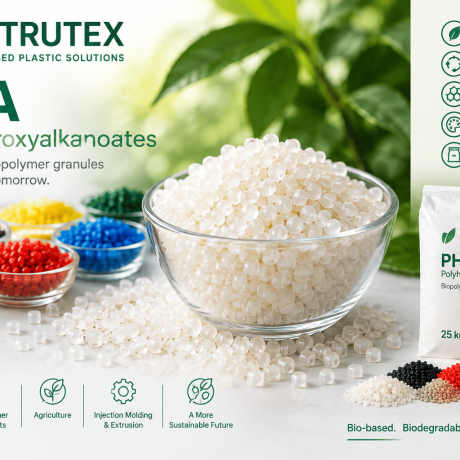
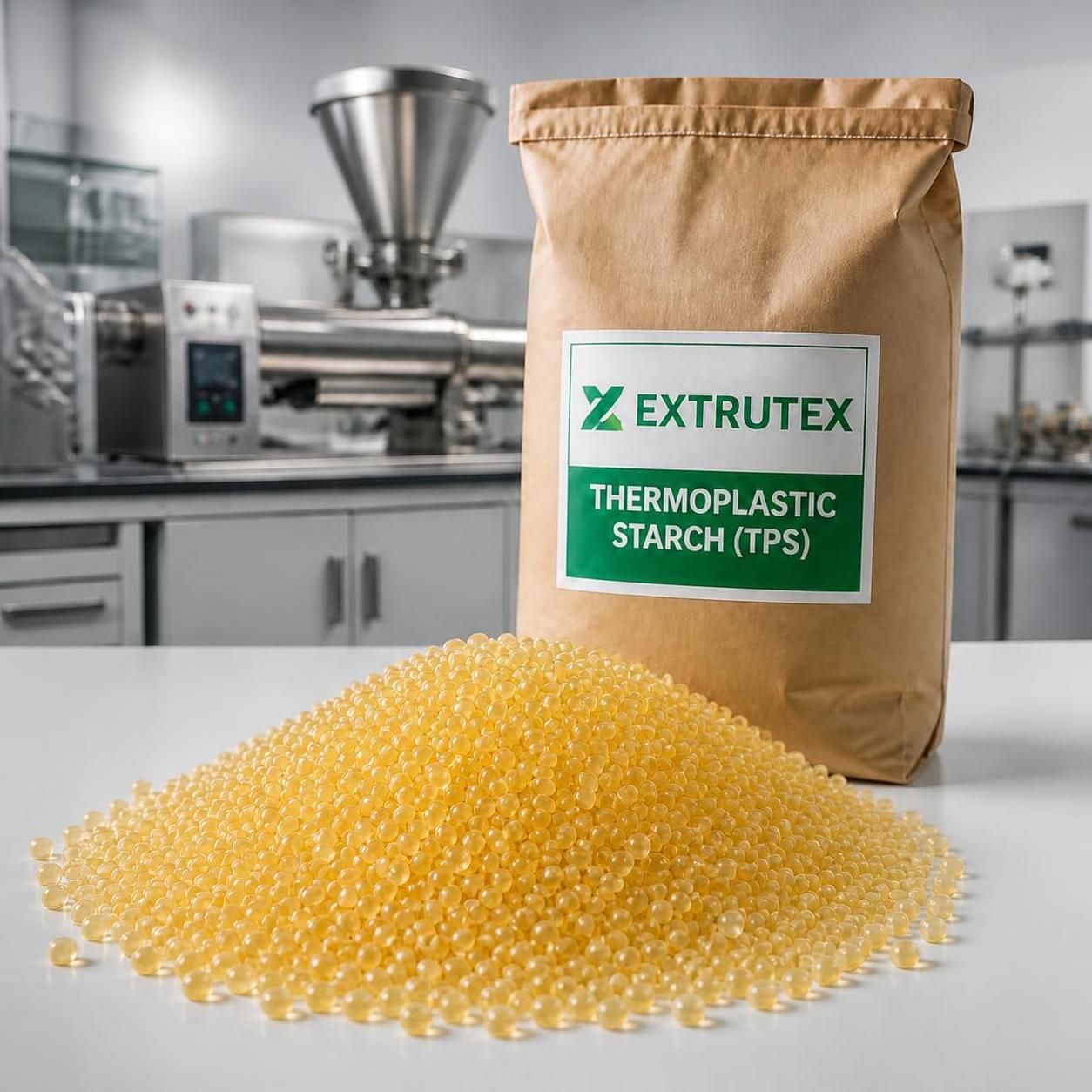
EXTRUTEX Thermoplastic Starch (TPS) is developed for manufacturers seeking starch-based polymer materials for biodegradable and compostable plastic applications. Produced by converting suitable starch into a processable thermoplastic material through controlled heat, shear, moisture management and plasticization, TPS provides an alternative material platform for selected applications traditionally served by conventional plastics.
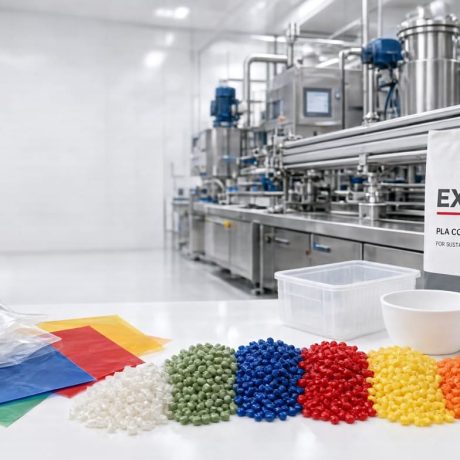
Designed for industrial polymer processing, TPS can be formulated for film extrusion, blown film, sheet production, injection moulding, extrusion coating and blending with compatible biodegradable polymers. Its processability and final performance depend on the starch source, plasticizer system, moisture content, additives and intended application.
EXTRUTEX supports industrial customers exploring starch-based materials, customized polymer formulations and equipment solutions for the development of more resource-conscious plastic products.
Thermoplastic starch is a starch-based polymer material processed to behave more like a conventional thermoplastic. Native starch, commonly obtained from renewable agricultural sources such as corn, potato, tapioca or wheat, does not generally possess the melt-processing characteristics required for direct use in ordinary plastic extrusion equipment.
To produce TPS, starch is processed with suitable plasticizers, commonly including glycerol, sorbitol or other formulation-specific components. Under appropriate temperature, pressure and mechanical shear, the native granular structure is disrupted and transformed into a more continuous thermoplastic phase.
The resulting material can be processed using appropriately configured extrusion and moulding systems. Depending on the formulation, TPS may be used as a principal material, a component in a biodegradable polymer blend, or a functional starch-based phase within a compound designed for a specific end use.
TPS is not a single standardized formulation. Its mechanical properties, melt behaviour, flexibility, moisture sensitivity and degradation characteristics vary considerably with composition and processing history. Selecting the right formulation is therefore essential to achieving reliable manufacturing performance.
EXTRUTEX TPS is intended for industrial customers developing starch-based materials and plastic products. Material selection can be based on the required processing method, finished-product performance, starch content, flexibility, compatibility with other polymers and applicable end-of-life requirements.
| Product Parameter | Description |
|---|---|
| Product name | EXTRUTEX Thermoplastic Starch (TPS) |
| Material type | Thermoplastic starch-based polymer material |
| Base material | Starch from a suitable agricultural source |
| Plasticization | Formulation-dependent plasticizer system |
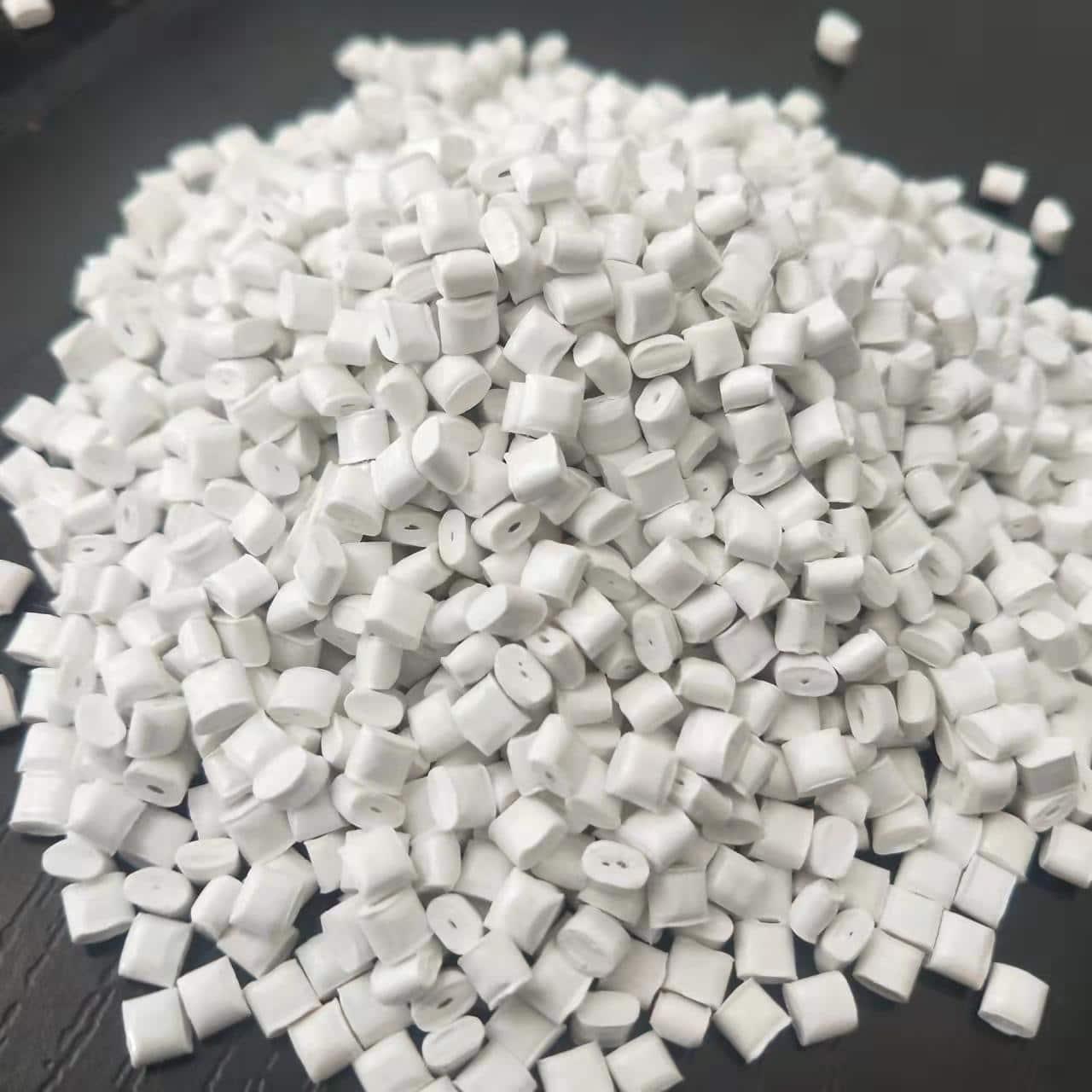
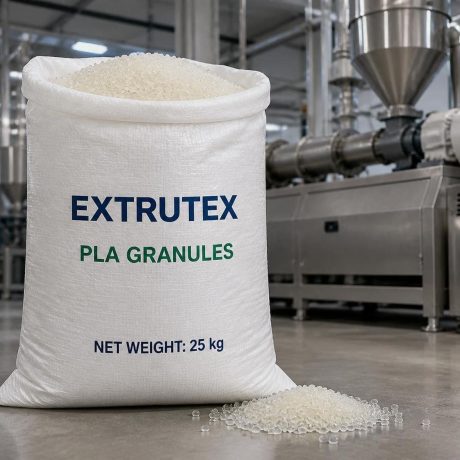
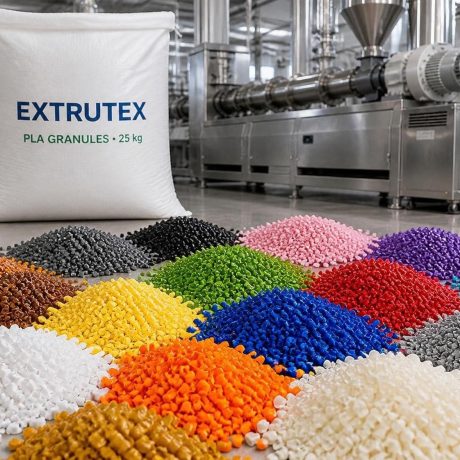
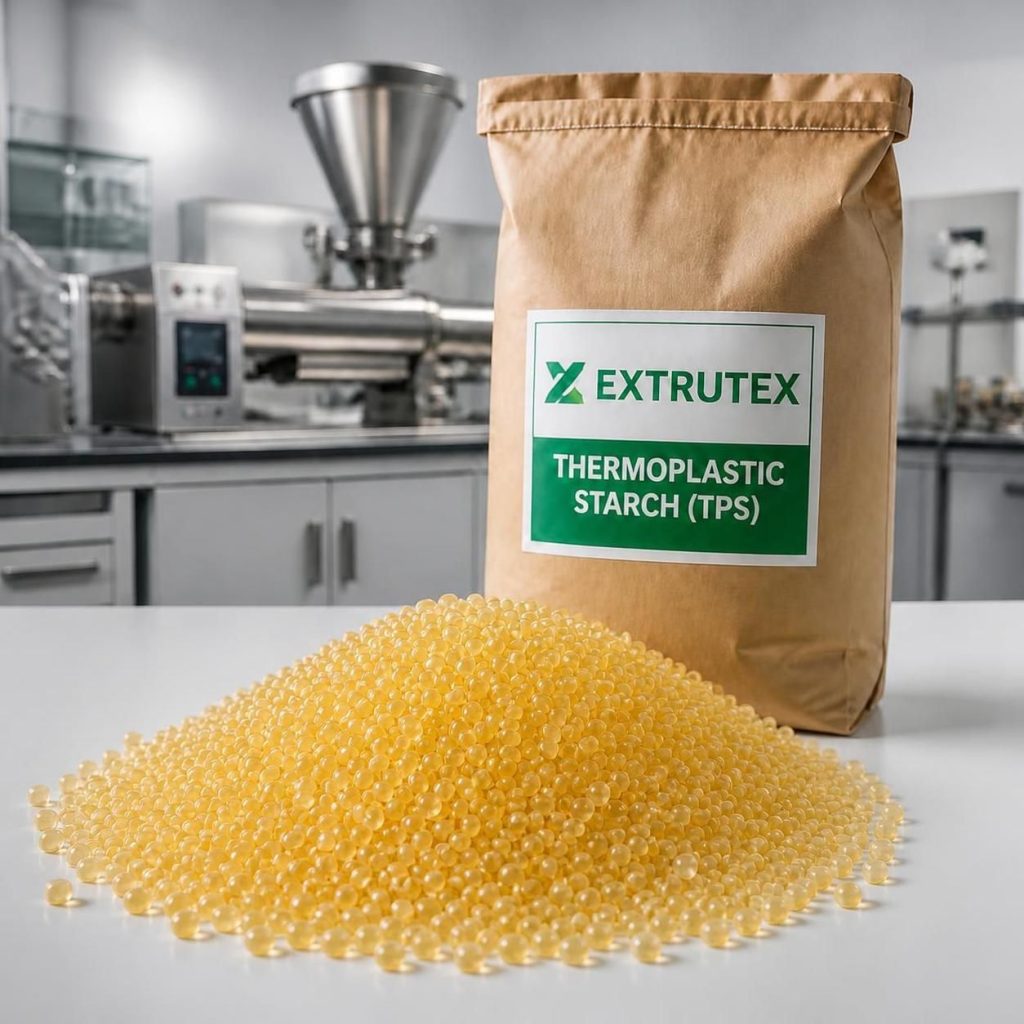
| Material format | Pellets or granules, subject to the selected product specification |
| Processing methods | Extrusion, film blowing, sheet extrusion, injection moulding and compounding, subject to grade suitability |
| Potential applications | Packaging, bags, agricultural products, disposable items and biodegradable polymer blends |
| Customization | Formulation and processing requirements can be discussed for specific projects |
| Technical documentation | Request the relevant grade specification, processing guidance and supporting test documents |
Important: The table describes the product family and possible configurations. Exact composition, starch content, pellet dimensions, moisture limits, mechanical properties, processing temperatures and certifications must be confirmed for the specific EXTRUTEX TPS grade supplied.
Starch can be sourced from renewable agricultural feedstocks. This makes TPS an attractive material for manufacturers investigating alternatives to fully fossil-derived polymer systems. The environmental profile of a finished product depends on agricultural practices, raw-material sourcing, formulation, manufacturing energy, transport and waste-management conditions.
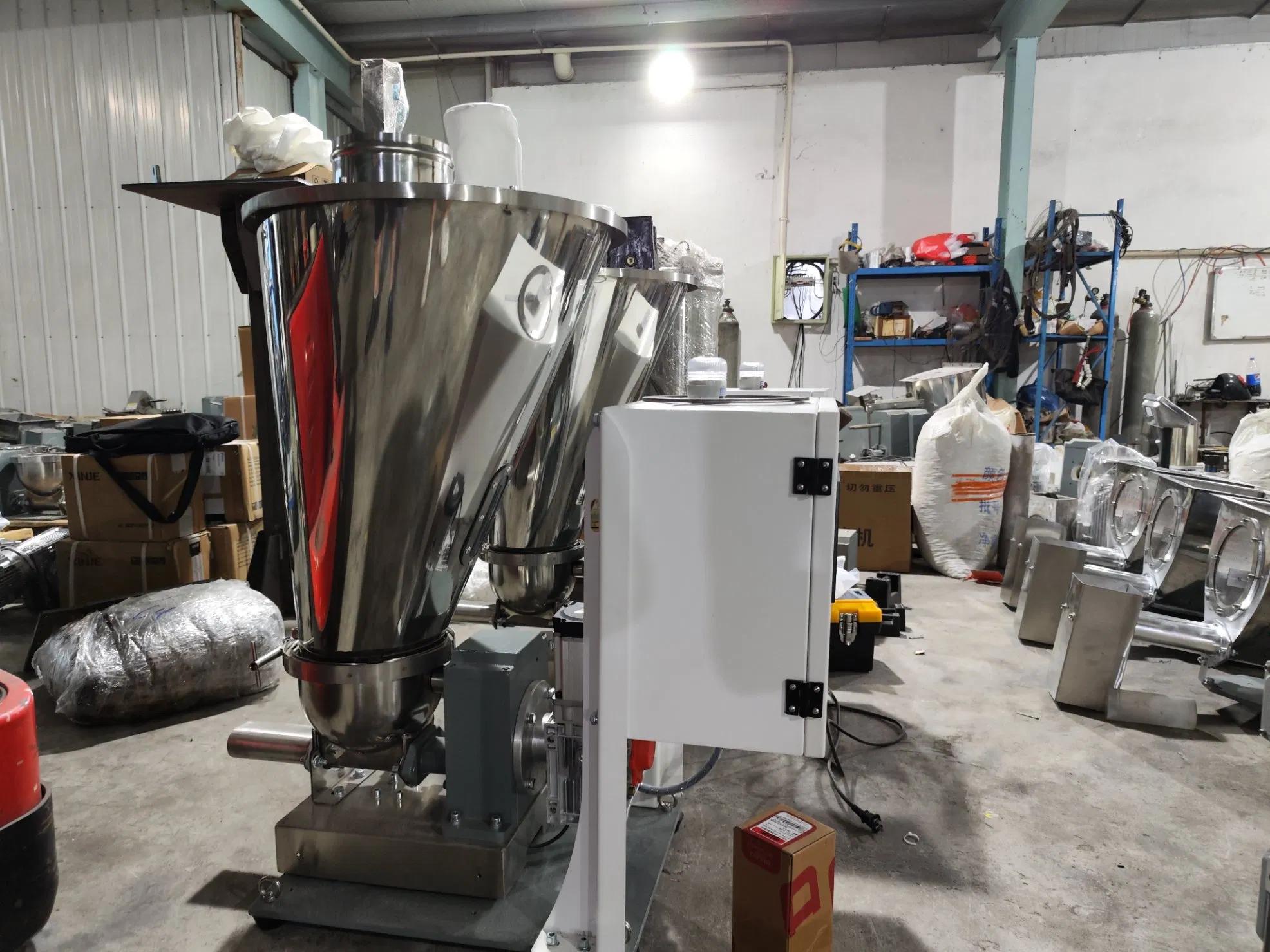
When correctly formulated, TPS can be processed using suitable thermoplastic manufacturing equipment. Pelletized material can be fed into compatible extruders or moulding machines, allowing industrial processors to develop products through established polymer-conversion methods.
TPS processing requires attention to moisture, thermal history, screw configuration, residence time and material flow. Excessive heat or unsuitable processing conditions may cause degradation, inconsistent melt behaviour or reduced finished-product quality.
The flexibility and stiffness of TPS can be influenced by the starch source, plasticizer content and other formulation components. Different formulations may be developed for flexible film, relatively rigid moulded parts or intermediate applications. Increasing flexibility does not automatically improve strength, barrier performance or dimensional stability, so formulation trade-offs must be evaluated.
TPS can be combined with selected biodegradable polymers, including certain PLA, PBAT and other compatible materials, where the formulation and processing conditions permit. Blending may help balance flexibility, stiffness, processability, cost and end-use requirements.
Compatibility, dispersion, phase morphology and moisture management are important when designing these blends. A blend containing starch is not automatically biodegradable or compostable under every condition; the complete formulation and finished article must be assessed against the relevant requirements.
TPS formulations can be designed around the target product and conversion process. Relevant development parameters include plasticizer selection, starch content, compatibilizers, processing aids, stabilizers, mineral fillers and the inclusion of other polymers where appropriate.
Changes to any ingredient may affect mechanical properties, water sensitivity, processing stability and product cost. A controlled formulation and testing programme is recommended before commercial production.
TPS is used in the development of starch-based packaging materials, including flexible packaging and selected disposable products. Depending on the grade and formulation, it may be processed alone or blended with other polymers to obtain the necessary balance of flexibility, strength and processability.
Potential projects include packaging films, carrier bags, liners, protective packaging components and selected short-service-life products. Finished-product performance should be validated under the expected humidity, temperature, storage and handling conditions.
Selected TPS formulations can be investigated for blown-film extrusion. Film quality depends on melt strength, bubble stability, draw ratio, cooling conditions, thickness uniformity and the formulation's response to moisture.
For film applications, manufacturers should evaluate tensile properties, elongation, puncture resistance, tear behaviour, sealing performance and water-vapour transmission where relevant. Blends may be required to achieve the target film performance.
TPS-based blends may be suitable for developing shopping bags, refuse bags, organic-waste bags and other flexible products, subject to the grade and applicable regulations. Bag performance depends on thickness, load requirements, seam integrity, elongation and resistance to moisture during storage and use.
Products marketed as compostable must meet the requirements of the intended market and disposal route. A starch-based composition alone is not proof of certification.
Appropriately designed TPS compounds can be evaluated for injection moulding of selected disposable items, accessories and non-structural components. The compound must provide suitable melt flow, filling behaviour, cooling characteristics and dimensional stability for the selected mould.
Particular attention should be given to shrinkage, brittleness, moisture uptake and the mechanical requirements of the finished component. Tooling trials and material testing are recommended before production scale-up.
TPS-containing compounds may be considered for sheet extrusion and selected thermoforming projects when the formulation offers sufficient melt strength and thermal stability. Sheet uniformity, forming temperature, draw depth, cooling and demoulding behaviour should be assessed during process development.
For demanding thermoforming applications, a TPS blend may be more appropriate than an unmodified starch-based formulation.
Potential development areas include agricultural films, horticultural accessories, plant-related products and other items for which a starch-based material may offer functional or end-of-life advantages. Suitability depends on outdoor weathering, ultraviolet exposure, moisture, mechanical loads and the intended service period.
Products designed to biodegrade in soil or outdoor environments require application-specific testing. Industrial compostability should not be interpreted as proof of biodegradation in soil, freshwater or marine environments.
TPS can serve as a starch-rich component in customized polymer compounds. Twin-screw compounding can help distribute ingredients and develop a controlled material morphology when the formulation, screw design and operating conditions are appropriately selected.
Compounding trials can evaluate dispersion, torque, melt pressure, material stability, pellet quality and the mechanical performance of test specimens. The objective is to develop a material that satisfies the requirements of the downstream conversion process.
Thermoplastic starch is one option within a wider group of bio-based and biodegradable materials. It is important to distinguish the origin of a polymer from its end-of-life properties: bio-based does not automatically mean biodegradable, and biodegradable does not necessarily mean compostable in every environment.
| Material | General Characteristics | Important Considerations |
|---|---|---|
| TPS | Starch-based and formulation-dependent; can be flexible or relatively stiff | Moisture sensitivity, plasticizer migration and mechanical performance require evaluation |
| PLA | Bio-based grades are available; offers useful stiffness and clarity in selected applications | Heat resistance, toughness and compostability depend on grade and processing conditions |
| PBAT | Flexible polymer used in certain biodegradable film formulations | Generally fossil-derived unless specifically sourced otherwise; verify finished-product certification |
| TPS/PLA blend | Can combine starch-based content with selected PLA properties | Compatibility, moisture behaviour and brittleness depend on the formulation |
| TPS/PBAT blend | Can be developed for selected flexible-film applications | Mechanical properties and compostability must be tested for the complete formulation |
| Conventional PE | Widely used for flexible packaging with established processing characteristics | Conventional PE is not ordinarily biodegradable in the same sense as certified compostable materials |
TPS processing requires a controlled balance between heat, mechanical energy, plasticization and moisture. The optimal conditions depend on the exact material grade and manufacturing equipment. Process settings developed for conventional polyethylene or polypropylene should not be transferred directly to TPS without validation.
Extrusion parameters should be selected according to the TPS formulation, screw geometry, throughput and target product. Barrel temperature profiles, screw speed, melt pressure and residence time need to be optimized together. Excessive thermal or mechanical energy can damage the material, while inadequate processing may result in poor dispersion or unstable flow.
Venting, feeding stability and moisture management may be particularly important. Equipment configuration should be reviewed before production trials, especially when switching from conventional resin to a starch-based compound.
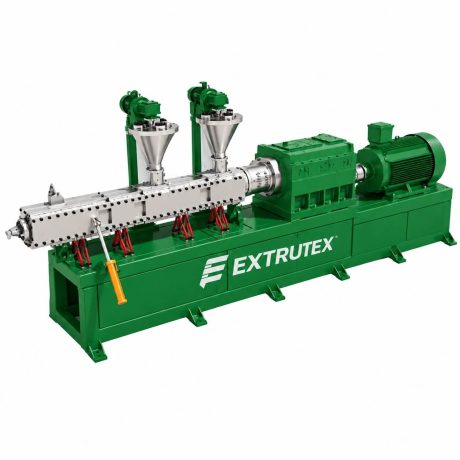
Co-rotating twin-screw extruders are commonly used for developing polymer blends and compounds. Their modular screw elements can provide conveying, mixing and dispersive functions suited to the formulation. Feed strategy, screw speed, temperature profile and venting configuration should be established through technical trials.
For TPS blends, the goal is to obtain consistent ingredient distribution while avoiding excessive degradation and moisture-related instability. Pelletizing and subsequent storage must also be designed around the material's moisture sensitivity.
Recommended quality-control checks may include moisture content, melt flow or rheological behaviour, bulk density, pellet appearance, mechanical properties and dimensional consistency. For film products, testing can additionally cover thickness variation, tensile strength, elongation, tear resistance and sealing performance.
Testing should use appropriate methods for the intended material and application. Comparisons between grades are meaningful only when sample preparation, conditioning and test procedures are consistent.
TPS properties vary significantly with the starch source, plasticizer content, additives and manufacturing history. EXTRUTEX customers should request the technical data sheet for the specific grade rather than relying on generic TPS values.
| Property | Why It Matters | Recommended Verification |
|---|---|---|
| Starch content | Defines the proportion of starch-based material in the formulation | Supplier specification or suitable analytical method |
| Moisture content | Affects feeding, melt behaviour, stability and finished-product consistency | Moisture analysis using an appropriate method |
| Melt flow or rheology | Influences processing stability, filling and extrusion behaviour | Grade-appropriate rheological or flow testing |
| Tensile strength | Indicates resistance to tensile loading | Testing under a suitable standardized method |
| Elongation at break | Helps assess flexibility and deformation before failure | Tensile testing with controlled specimen conditioning |
| Water sensitivity | Important for storage, packaging and product service life | Application-relevant moisture uptake and conditioning tests |
| Thermal behaviour | Helps establish processing and service-temperature limits | Appropriate thermal analysis and processing trials |
| Biodegradation or compostability | Supports claims about a defined disposal environment | Testing of the complete formulation or finished product to the applicable standard |
One of the main reasons manufacturers investigate TPS is its potential role in biodegradable material systems. However, biodegradation is a process governed by the material's composition and the surrounding environment. Temperature, humidity, oxygen availability, microbial activity, material thickness and the disposal system can all influence the outcome.
Industrial compostability, home compostability, biodegradation in soil and biodegradation in aquatic environments are different claims with different testing requirements. A material suitable for industrial composting is not necessarily suitable for home composting or direct disposal in nature.
For products intended for commercial sale, manufacturers should verify the relevant standards, certification scope, permitted claims and local packaging regulations. Depending on the target market, relevant frameworks may include EN 13432 for packaging recoverable through composting and biodegradation, or ASTM D6400 for plastics intended for municipal or industrial aerobic composting facilities.
Certification should be confirmed for the actual material formulation and, where required, the finished product. Pigments, inks, adhesives, fillers and other additives can affect compliance. EXTRUTEX customers should request supporting documents for the specific grade and application.
Actual commercial benefits depend on material price, production efficiency, formulation performance, regulatory requirements and end-of-life infrastructure. Representative production trials and a total-cost assessment are recommended before changing an established resin system.
EXTRUTEX serves industrial customers looking for polymer materials and processing solutions for specialized manufacturing applications. Thermoplastic starch projects often require coordination between raw-material selection, compounding, downstream conversion and finished-product testing.
EXTRUTEX brings an Austria-led design, laboratory and research-and-development approach together with manufacturing in China. For TPS-related projects, customers can discuss the intended application, material formulation requirements and suitable processing technology with the team.
Whether the objective is developing flexible packaging, investigating a starch-based compound or evaluating a new extrusion process, clear technical requirements help establish the most appropriate development route.
Before choosing a thermoplastic starch material, manufacturers should define the finished product and its working environment. A film used for dry goods packaging, for example, may require different properties from a bag exposed to humid conditions or a moulded part that must retain its shape during storage.
TPS stands for Thermoplastic Starch. It is a starch-based material that has been formulated and processed to enable thermoplastic conversion methods such as extrusion or moulding.
TPS is generally investigated for biodegradable material applications, but actual biodegradation depends on its complete formulation and the environment. A finished product should be tested against the appropriate standard before making a specific biodegradability or compostability claim.
Yes, selected TPS grades and blends can be developed for blown film. Bubble stability, melt strength, moisture management and mechanical properties should be confirmed through trials with the intended equipment.
TPS can be compounded with selected PLA, PBAT and other compatible polymers. The best blend depends on the required flexibility, strength, processing characteristics and applicable end-of-life criteria.
Selected TPS formulations can be evaluated for injection moulding. Melt flow, cooling behaviour, shrinkage, moisture sensitivity and the mechanical requirements of the finished part must be considered.
TPS is generally more sensitive to moisture than many conventional commodity plastics. The degree of moisture sensitivity depends on its composition, plasticizer system and processing history. Appropriate storage, packaging and application testing are important.
TPS can be considered as an alternative or blend component in selected applications, but it is not a universal drop-in replacement for polyethylene or polypropylene. Material performance, processing settings, service conditions and disposal requirements must be evaluated for each product.
Packaging format and net weight should be confirmed with EXTRUTEX for the selected grade and order quantity. Please request the current packaging specification before placing an order.
Customers can discuss their target product, processing method and performance requirements with EXTRUTEX to determine suitable material and equipment-development options.
If your company is developing biodegradable packaging, starch-based polymer compounds, flexible films or other thermoplastic products, contact EXTRUTEX to discuss TPS material selection and processing requirements.
To help identify a suitable solution, please provide the intended application, processing equipment, target product properties, estimated annual consumption and any certification requirements. This information helps determine which material specifications and development trials are appropriate for your project.
Explore starch-based material solutions for industrial polymer processing and biodegradable product development.
Contact EXTRUTEX for grade specifications, technical data, samples and project discussions.
Ask our team about TPS formulations, biodegradable polymer blends, extrusion processing and compounding technology.
There are no reviews yet.
By submitting your email, you agree to our company’s terms and conditions.
We are not looking to sell; we are here to provide you with the best support and service.
Contact available 24/7
Please do not contact us for advertising or sales inquiries
All rights of this website are reserved for EXTRUTEX Austria and its partner companies, © 2026
-
(0 customer reviews)