EXTRUTEX PA6-GF Glass Fiber Reinforced Nylon Filament
EXTRUTEX PA6-GF is an engineering-grade 3D printing filament made from polyamide 6 (PA6), commonly known as Nylon 6, reinforced with glass fibers. Designed for demanding functional applications, this composite material combines the engineering characteristics of nylon with the reinforcement and dimensional-stability benefits of glass fiber.
Compared with standard unfilled PA6 filament, glass fiber reinforcement can improve stiffness, dimensional stability and resistance to deformation. These characteristics make PA6-GF a practical material option for functional prototypes, mechanical components, industrial fixtures, equipment parts and selected automotive applications.
PA6-GF also offers a balance between performance and material cost. For users who need a reinforced engineering filament without moving to more expensive high-performance polymer systems, it can provide an attractive solution for a wide range of technical printing requirements.
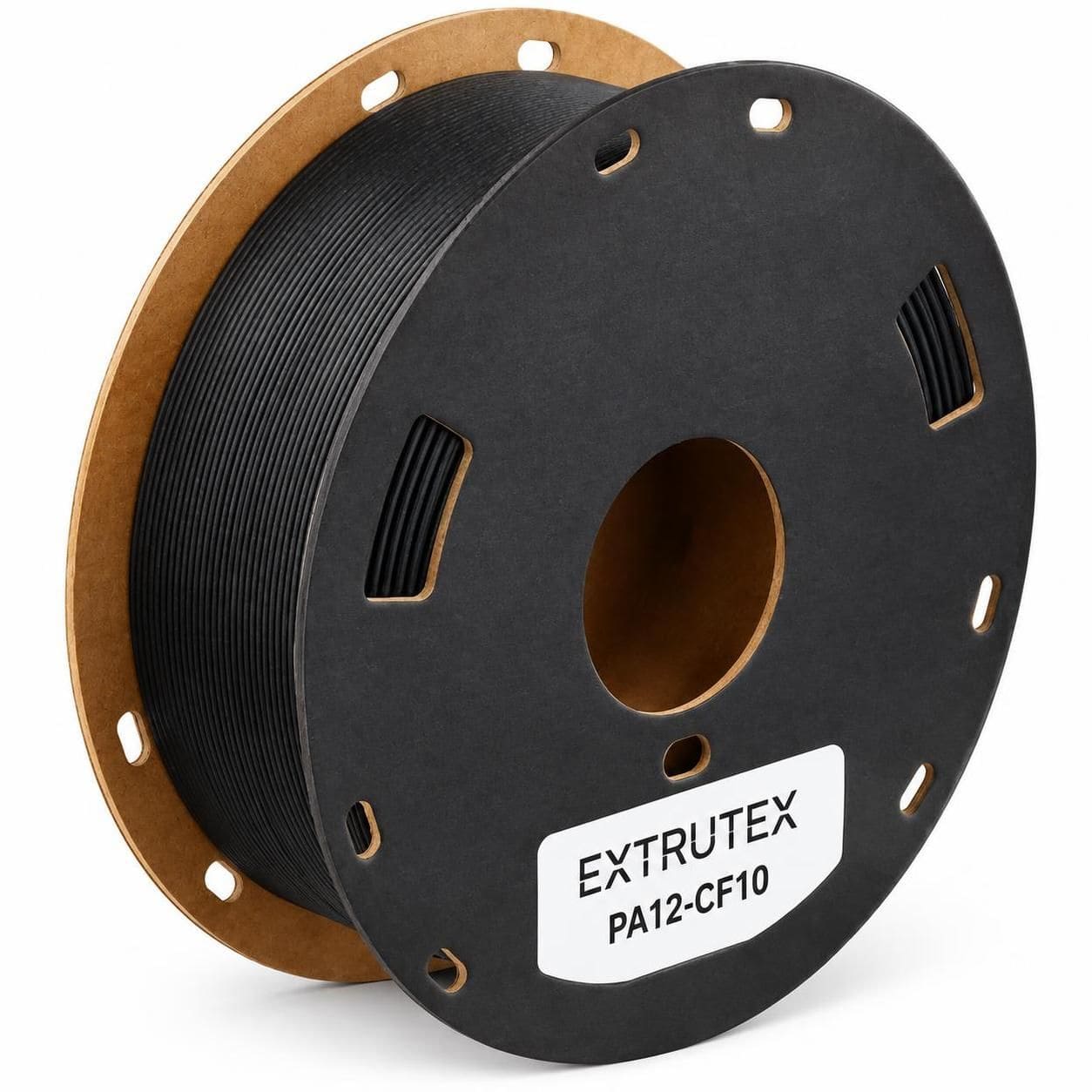
Material overview: PA6-GF combines Nylon 6 with glass fiber reinforcement to support strong, durable and dimensionally stable 3D printed components. Available in 1.75 mm diameter and 1 kg spools, with several standard color options.
Key Features and Advantages
Strong and DurableGlass fiber reinforcement improves stiffness and supports the production of durable functional components.
Dimensional StabilityReinforcement helps reduce warping and dimensional changes compared with unfilled PA6.
Thermal PerformanceThe material is designed for engineering applications where components may experience elevated temperatures.
Chemical ResistanceThe PA6 material family offers resistance to various oils, chemicals and other industrial substances, depending on exposure conditions.
Distinctive Surface FinishThe reinforced material can produce a characteristic surface texture that helps make printed layer lines less visually prominent.
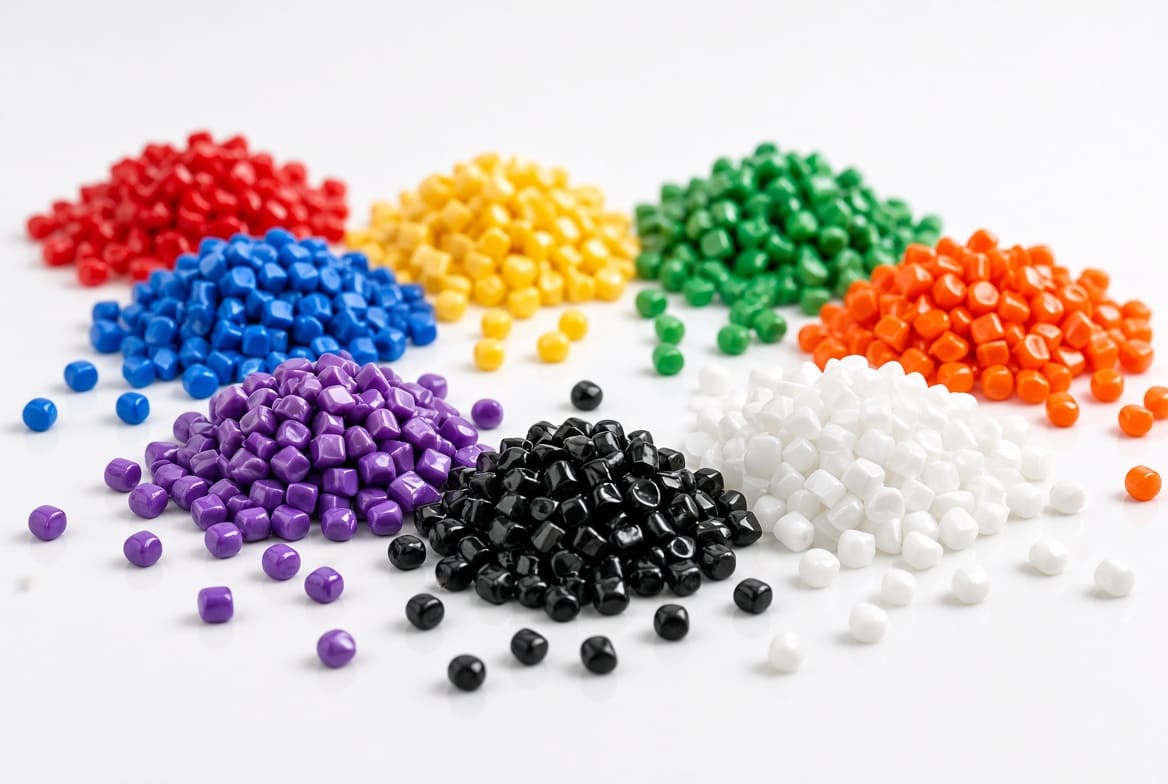
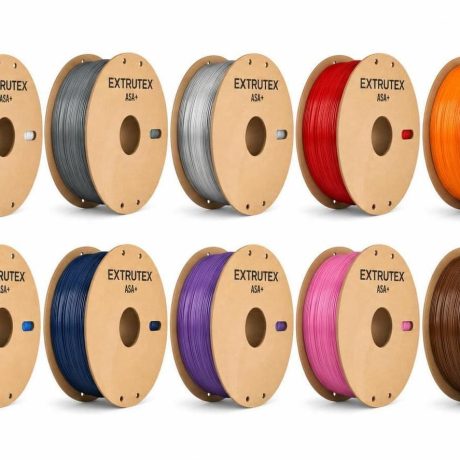
Multiple Color OptionsAvailable in blue, white, grey and orange, with customized colors available upon request.
What Is PA6-GF?
PA6-GF stands for glass fiber reinforced polyamide 6. PA6, also known as Nylon 6, is an engineering thermoplastic widely used in industrial components because of its mechanical performance, toughness and versatility. By incorporating glass fibers into the polymer matrix, the material can achieve higher stiffness and improved dimensional stability compared with unreinforced PA6.
Glass fibers act as reinforcement within the polymer structure. They help limit deformation under load and can reduce dimensional changes associated with processing and temperature variations. The resulting composite is suitable for applications where a conventional unfilled nylon filament may not provide sufficient rigidity.
The final performance of PA6-GF depends on the glass fiber content, fiber distribution, polymer formulation, printing parameters and component geometry. For this reason, engineering selection should be based on the technical data sheet and testing of representative printed parts.
Technical Specifications
| Property | Specification |
|---|
| Product Name | EXTRUTEX PA6-GF |
| Material Type | Glass fiber reinforced polyamide filament |
| Base Polymer | PA6 (Nylon 6) |
| Reinforcement | Glass fiber |
| Filament Diameter | 1.75 mm |
| Spool Weight | 1 kg |
| Available Colors | Blue, white, grey and orange |
| Customized Colors | Available upon request |
| Mechanical Characteristics | Reinforced engineering material designed for strength and stiffness |
| Dimensional Stability | Improved through glass fiber reinforcement compared with unfilled PA6 |
| Thermal Characteristics | Designed for engineering applications involving elevated temperatures |
| Chemical Resistance | Resistance to various chemicals and oils; depends on the specific chemical and exposure conditions |
| Printer Compatibility | Suitable FDM/FFF printers configured for glass fiber reinforced nylon |
| Nozzle Recommendation | Wear-resistant or hardened nozzle recommended |
The supplied product information does not specify glass fiber percentage, filament diameter tolerance, tensile strength, flexural modulus, heat deflection temperature, nozzle temperature, bed temperature or drying cycle. Please request the latest technical data sheet for detailed engineering values and processing parameters.
Strong and Durable Engineering Components
Strength and durability are important considerations when selecting a filament for functional 3D printed components. Standard unfilled nylon can be suitable for many applications, but some designs require greater rigidity and reduced deformation under load.
Glass fiber reinforcement helps improve the stiffness of the PA6 matrix. This makes PA6-GF a useful option for components that need to retain their shape during normal operation and repeated handling.
Potential applications include brackets, housings, mounting components, support structures, equipment accessories and custom mechanical parts. The material should be evaluated under the actual loads and operating conditions expected in service.
Dimensional Stability and Reduced Warping
Dimensional accuracy is particularly important when producing functional parts that must fit into assemblies, connect with other components or maintain specific geometries.
Glass fiber reinforcement helps reduce dimensional changes and warping compared with conventional unfilled PA6. The fibers influence the behavior of the polymer during cooling and can help limit deformation in printed components.
However, reinforced nylon still requires appropriate printing conditions. Part geometry, print orientation, build-plate preparation, cooling behavior, enclosure conditions and material moisture can all influence the final result.
For parts with tight dimensional requirements, users should evaluate shrinkage and dimensional variation through test prints before starting production.
Thermal Performance for Technical Applications
PA6-GF is intended for engineering applications where thermal performance is an important selection factor. Glass fiber reinforcement can help improve stiffness retention and dimensional stability under elevated-temperature conditions compared with unreinforced PA6.
This makes the material worth considering for selected industrial, mechanical and automotive components that may be exposed to heat during operation.
Actual thermal performance depends on the specific formulation and test method. Heat deflection temperature, continuous service temperature and short-term temperature resistance are different properties and should not be treated as interchangeable. For components operating near their thermal limits, consult the technical data sheet and conduct application-specific testing.
Chemical and Oil Resistance
Polyamide 6 is used in many industrial applications where resistance to oils, fuels, lubricants and selected chemicals is required. PA6-GF retains the general chemical-resistance characteristics of its PA6 matrix, although the exact behavior depends on the chemical substance, concentration, temperature and exposure duration.
Glass fiber reinforcement does not make the material universally resistant to chemicals or solvents. Certain substances may cause swelling, surface changes or degradation over time.
Before using PA6-GF in contact with chemicals, cleaning agents, lubricants or industrial fluids, verify compatibility under the intended operating conditions. Testing printed samples is recommended for critical applications.
Surface Finish and Color Options
PA6-GF offers a distinctive surface appearance associated with glass fiber reinforced materials. Its surface texture can help make visible layer lines less prominent, creating a more uniform-looking finish on some printed geometries.
The actual surface quality depends on layer height, nozzle condition, extrusion consistency, print orientation and slicing parameters. It should not be assumed that every geometry will produce a completely smooth or layer-free surface.
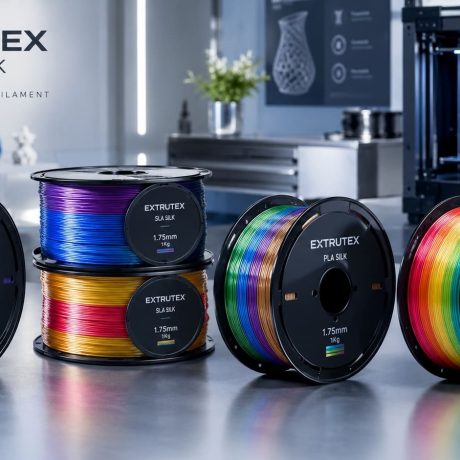
EXTRUTEX PA6-GF is available in several color options for different product designs and identification requirements.
| Color | Availability |
|---|
| Blue | Available |
| White | Available |
| Grey | Available |
| Orange | Available |
| Customized Colors | Available upon request, subject to production feasibility |
Cost-Effective Engineering Filament
High-performance engineering filaments can involve significant material costs, particularly when specialized polymers or complex composite formulations are required. PA6-GF provides another option for users seeking reinforced nylon properties for functional components.
By combining a widely used engineering polymer with glass fiber reinforcement, PA6-GF can offer a practical balance of material performance and cost. It may be suitable for applications where the additional stiffness and dimensional stability of a reinforced material are beneficial, without necessarily requiring a more specialized polymer system.
The best material choice should consider the full application requirements, including mechanical loading, temperature, chemical exposure, production volume and part lifespan, rather than material price alone.
Printer Compatibility and Processing Requirements
PA6-GF is an engineering-grade reinforced nylon filament. It requires a 3D printer capable of handling the thermal and material requirements of PA6 and abrasive glass fiber composites.
Wear-Resistant Nozzle
Glass fibers can cause abrasion during extrusion. A standard brass nozzle may wear over time, potentially affecting extrusion consistency and dimensional accuracy. A hardened steel or other suitable wear-resistant nozzle is recommended.
Hotend and Temperature Control
The printer should have a hotend suitable for the processing requirements of the specific PA6-GF grade. Stable temperature control is important for consistent extrusion and layer bonding. The exact nozzle temperature should be obtained from the manufacturer's printing guidelines.
Build Surface and Warping Control
Use a suitable build surface and follow the printer manufacturer's recommendations for nylon-based materials. Good first-layer adhesion and appropriate thermal management can help reduce warping and improve dimensional consistency.
Filament Drying
PA6 is moisture-sensitive. Filament that has absorbed moisture may produce inconsistent extrusion, surface defects or other printing problems. Drying before printing and moisture-controlled storage are important for reliable results.
Printer Preparation Checklist
- Use an FDM/FFF printer suitable for engineering nylon materials.
- Use a wear-resistant or hardened nozzle for glass fiber reinforced filament.
- Confirm that the hotend can meet the grade-specific processing temperature.
- Dry the filament according to the manufacturer's recommended procedure.
- Use suitable build-plate preparation and adhesion settings.
- Keep unused filament protected from ambient moisture.
- Test dimensional accuracy before producing critical components.
Typical Applications of PA6-GF Filament
Industrial Machinery Components
PA6-GF can be considered for selected machinery components, equipment covers, mounting brackets, support structures and custom accessories where rigidity and dimensional stability are important.
Automotive Development
The material may be suitable for prototyping and selected non-safety-critical automotive development components. Its reinforced structure can be useful for brackets, housings, fixtures and functional test parts. Final use must be validated against automotive operating requirements.
Jigs and Fixtures
Manufacturing facilities use custom jigs and fixtures to position, hold, align and inspect components. PA6-GF can be evaluated for these applications where a rigid, durable printed structure is required.
Mechanical Parts and Assemblies
Engineers can use PA6-GF to manufacture custom mechanical parts, brackets, connectors and assembly components. The material's reinforced structure can be advantageous when compared with unfilled nylon for applications requiring greater stiffness.
Functional Prototypes
PA6-GF supports the development of functional prototypes that need to demonstrate fit, assembly behavior and selected mechanical characteristics before a final production material or manufacturing process is chosen.
Industrial Tooling and Production Aids
Custom tooling, handling devices, positioning components and production aids are potential applications for reinforced nylon filament. Material selection should take into account the expected load, temperature, wear and service life.
PA6-GF Compared with Standard PA6
Both materials use PA6 as their polymer base, but glass fiber reinforcement changes the mechanical and dimensional behavior of the composite.
| Characteristic | Standard PA6 | PA6-GF |
|---|
| Polymer Base | Polyamide 6 | Polyamide 6 |
| Reinforcement | Unfilled or non-glass-fiber grade | Glass fiber |
| Stiffness | Typical nylon stiffness | Designed for increased stiffness |
| Dimensional Stability | More sensitive to shrinkage and deformation | Reinforcement helps improve dimensional stability |
| Warpage | Can require careful warping control | Glass fiber reinforcement can help reduce warping |
| Surface Appearance | Depends on grade and printing conditions | Distinctive reinforced surface texture |
| Nozzle Wear | Generally less abrasive than glass-filled grades | Wear-resistant nozzle recommended |
| Applications | General engineering nylon components | Reinforced functional and industrial components |
This is a general material comparison. Actual properties vary according to formulation, glass fiber loading, printing conditions and test methods.
Storage and Material Handling
Moisture management is essential when working with nylon-based filaments. PA6 can absorb moisture from the surrounding air, and excessive moisture can affect printing quality.
- Keep filament in its original moisture-protective packaging until use.
- Store opened spools in sealed, moisture-resistant containers.
- Use suitable desiccants during storage.
- Dry the filament before printing according to the manufacturer's instructions.
- Avoid prolonged exposure to humid workshop environments.
- Protect the filament from contamination, dust and direct heat.
- Return unused material to controlled storage after printing.
Available Product Configuration
| Configuration | Details |
|---|
| Product | EXTRUTEX PA6-GF |
| Diameter | 1.75 mm |
| Spool Weight | 1 kg |
| Standard Colors | Blue, white, grey and orange |
| Customized Colors | Available upon request |
For customized color requirements, larger-volume orders or technical evaluation, contact EXTRUTEX with your preferred color, application and material requirements.
Why Choose EXTRUTEX PA6-GF?
EXTRUTEX supplies engineering polymers, reinforced 3D printing filaments and industrial plastic materials for professional and manufacturing applications. Our material portfolio is developed to support customers working with functional prototypes, technical components and specialized polymer applications.
EXTRUTEX products are manufactured in China, supported by design, laboratory and R&D capabilities in Austria. This structure combines manufacturing capabilities with material development and technical evaluation.
Whether you are developing industrial fixtures, machinery components, automotive prototypes or custom engineering parts, EXTRUTEX can help you evaluate a suitable reinforced polymer filament for your application.
Frequently Asked Questions
1. What is PA6-GF 3D printing filament?
PA6-GF is glass fiber reinforced polyamide 6 filament, also known as glass fiber reinforced Nylon 6. It combines a PA6 polymer matrix with glass fiber reinforcement to improve stiffness and dimensional stability compared with unfilled PA6. It is used for functional prototypes, industrial components, fixtures and other engineering applications.
2. What does PA6-GF stand for?
PA6 stands for polyamide 6, commonly known as Nylon 6. GF stands for glass fiber. The name therefore describes a Nylon 6 material reinforced with glass fibers. The exact glass fiber content depends on the grade and should be confirmed in the product technical data sheet.
3. What are the main advantages of PA6-GF?
The main advantages include increased stiffness, improved dimensional stability and suitability for demanding functional applications. Glass fiber reinforcement can also help reduce warping compared with unfilled PA6. The material offers a useful balance of engineering performance and cost for selected industrial printing requirements.
4. Is PA6-GF stronger than standard PA6?
Glass fiber reinforcement generally increases stiffness and can improve certain mechanical properties compared with unfilled PA6. However, strength depends on the direction of loading, fiber content, print orientation and layer adhesion. For critical components, compare technical data and test representative printed parts.
5. Does PA6-GF reduce warping?
Glass fiber reinforcement can help reduce warping and dimensional changes compared with standard unfilled PA6. It improves dimensional stability in many applications, although warping can still occur. Proper drying, build-plate preparation, thermal management and printer calibration remain important.
6. Is PA6-GF suitable for industrial applications?
Yes. PA6-GF is intended for engineering applications and can be evaluated for industrial fixtures, machinery accessories, mechanical parts, tooling and functional prototypes. The final suitability depends on the mechanical loads, temperature, chemical exposure and service-life requirements of the component.
7. Is PA6-GF heat resistant?
PA6-GF is designed for engineering applications where thermal performance matters. Glass fiber reinforcement can help improve stiffness retention and dimensional stability under elevated temperatures. However, the exact heat deflection temperature and continuous operating temperature must be confirmed from the grade-specific technical data sheet.
8. Is PA6-GF chemically resistant?
PA6 generally offers resistance to various oils, lubricants and selected chemicals. However, compatibility depends on the chemical, concentration, temperature and exposure duration. PA6-GF should not be assumed to resist every solvent or industrial chemical. Test the material under actual operating conditions before critical use.
9. What colors are available for EXTRUTEX PA6-GF?
The stated standard colors are blue, white, grey and orange. Customized colors may also be available upon request, depending on formulation and production feasibility. Contact EXTRUTEX with your preferred color reference and order requirements.
10. What filament diameter is available?
EXTRUTEX PA6-GF is supplied in a nominal diameter of 1.75 mm. The printer's feeding system must support this filament size. The precise diameter tolerance should be confirmed through the current technical data sheet.
11. What is the spool weight?
The stated spool weight is 1 kg. This format is suitable for professional users, engineering development and functional printing applications. Confirm spool dimensions and holder compatibility with your printer before use.
12. Does PA6-GF require a hardened nozzle?
A hardened or otherwise wear-resistant nozzle is recommended. Glass fibers are abrasive and can accelerate wear in standard brass nozzles. Using a suitable nozzle helps maintain consistent extrusion and reduce changes in nozzle geometry during extended printing.
13. Can PA6-GF be printed with a standard desktop 3D printer?
Not every standard desktop printer is suitable. The printer must support the processing temperature of the specific PA6-GF grade and should use a wear-resistant nozzle. Users should also have appropriate filament drying and build-plate preparation capabilities. Check the printer and material specifications before printing.
14. Does PA6-GF need to be dried before printing?
Yes, moisture management is important. PA6 is moisture-sensitive, and absorbed water can affect extrusion quality and printed surface appearance. Dry the filament according to the manufacturer's recommended temperature and duration, and store it in a moisture-controlled environment.
15. What drying temperature should I use?
The exact drying temperature and duration have not been specified in the supplied product information. Follow the grade-specific technical data sheet rather than applying an assumed nylon drying cycle. The drying equipment and spool material must also be suitable for the selected temperature.
16. Does glass fiber make PA6-GF abrasive?
Yes. Glass fibers can cause abrasion as the filament passes through the nozzle. This is why a hardened steel or other wear-resistant nozzle is recommended. Users should also inspect nozzle condition when printing reinforced materials regularly.
17. Does PA6-GF have a smooth surface finish?
PA6-GF can produce a distinctive surface texture that may make visible layer lines less prominent. The final finish depends on the filament formulation, nozzle condition, layer height, extrusion consistency and print orientation. Surface appearance should be evaluated on the intended part geometry.
18. Can PA6-GF be used for automotive components?
It can be evaluated for selected automotive prototypes, fixtures, housings and non-safety-critical components. Its reinforced structure may be useful where stiffness and dimensional stability are required. Any final automotive application must be validated against the relevant temperature, mechanical, chemical and safety requirements.
19. Is PA6-GF suitable for jigs and fixtures?
Yes. PA6-GF can be considered for positioning fixtures, assembly aids, inspection tools and production-support components. Its stiffness and dimensional stability can be useful in manufacturing environments. The part should be designed and tested for its expected loads, contact conditions and service life.
20. Can PA6-GF replace metal components?
In some applications, a reinforced polymer component may replace a metal part when the required mechanical, thermal and environmental performance can be achieved. However, PA6-GF is not a universal metal replacement. Load capacity, fatigue, wear, temperature and safety factors must be carefully evaluated before substitution.
21. Is PA6-GF more cost-effective than other engineering filaments?
PA6-GF can offer an attractive balance between material cost and reinforced engineering performance. It may be a practical alternative when a component requires increased stiffness and dimensional stability but does not need a more specialized high-performance polymer. The best choice depends on the actual application and total production cost.
22. Can PA6-GF be used for functional prototypes?
Yes. PA6-GF is suitable for evaluating functional designs that require a reinforced nylon material. It can be used to produce prototype brackets, housings, supports, mechanical assemblies and other technical components. Testing should reflect the intended final application and operating environment.
23. Is PA6-GF suitable for large 3D printed parts?
Glass fiber reinforcement can help improve dimensional stability, which may be useful for larger parts. However, large components can still experience warping, shrinkage and thermal stress. Printer enclosure conditions, build-plate adhesion, part geometry and material dryness should be carefully controlled.
24. Can PA6-GF be used for outdoor applications?
Outdoor suitability depends on exposure to moisture, ultraviolet radiation, temperature changes and environmental chemicals. PA6-GF should not be assumed to have a specific level of UV or weather resistance without supporting test data. Evaluate the material under the actual outdoor conditions before use.
25. How should PA6-GF filament be stored?
Keep the filament in its original protective packaging until use. After opening, store it in a sealed moisture-resistant container with suitable desiccant. Avoid prolonged exposure to humid air and dry the material before printing when necessary. Proper storage helps maintain more consistent printing performance.
26. Is PA6-GF compatible with multi-color printing systems?
Compatibility depends on the specific printer and material-feeding system. A multi-material system must support the filament's diameter, spool dimensions, material stiffness and processing requirements. Do not assume compatibility with a particular automatic material system unless the printer manufacturer confirms it for this grade.
27. Does EXTRUTEX PA6-GF support RFID-based automatic printing?
RFID-based material recognition is not specified as a confirmed feature of this EXTRUTEX product. Printing parameters should be entered or selected according to the printer and the official PA6-GF technical data sheet. Contact EXTRUTEX if you require information about printer-specific material identification.
28. Can EXTRUTEX provide customized PA6-GF colors?
Customized colors may be available depending on the required shade, formulation and production feasibility. Provide your preferred color reference, estimated quantity and application requirements so EXTRUTEX can review the request.
29. What information should I check before selecting PA6-GF?
Review the glass fiber content, tensile and flexural properties, heat deflection temperature, impact behavior, moisture sensitivity, filament tolerance and recommended printing conditions. Also consider the final part's geometry, load direction, chemical exposure and operating temperature. These details help determine whether the material is suitable for the application.
30. Where are EXTRUTEX PA6-GF products manufactured?
EXTRUTEX products are manufactured in China, supported by design, laboratory and R&D capabilities in Austria. This structure supports product development, material evaluation and customization for customers in different industrial markets.
Request PA6-GF Technical Information
Looking for a glass fiber reinforced nylon filament for industrial 3D printing, mechanical components or functional prototypes? Contact EXTRUTEX to discuss PA6-GF specifications, color options, technical documentation and application requirements.
Visit EXTRUTEX to explore our engineering polymers, 3D printing materials and industrial plastic solutions.



-
(0 customer reviews)