No products in the cart.



All rights of this website are reserved for EXTRUTEX Austria and its partner companies, © 2025

Laboratory Equipements
Injection, Blow, Roto Molding Machines
Window & Door Assembling Machines
Raw Materials & Additives


Laboratory Equipements
Injection, Blow, Roto Molding Machines
Window & Door Assembling Machines
Raw Materials & Additives
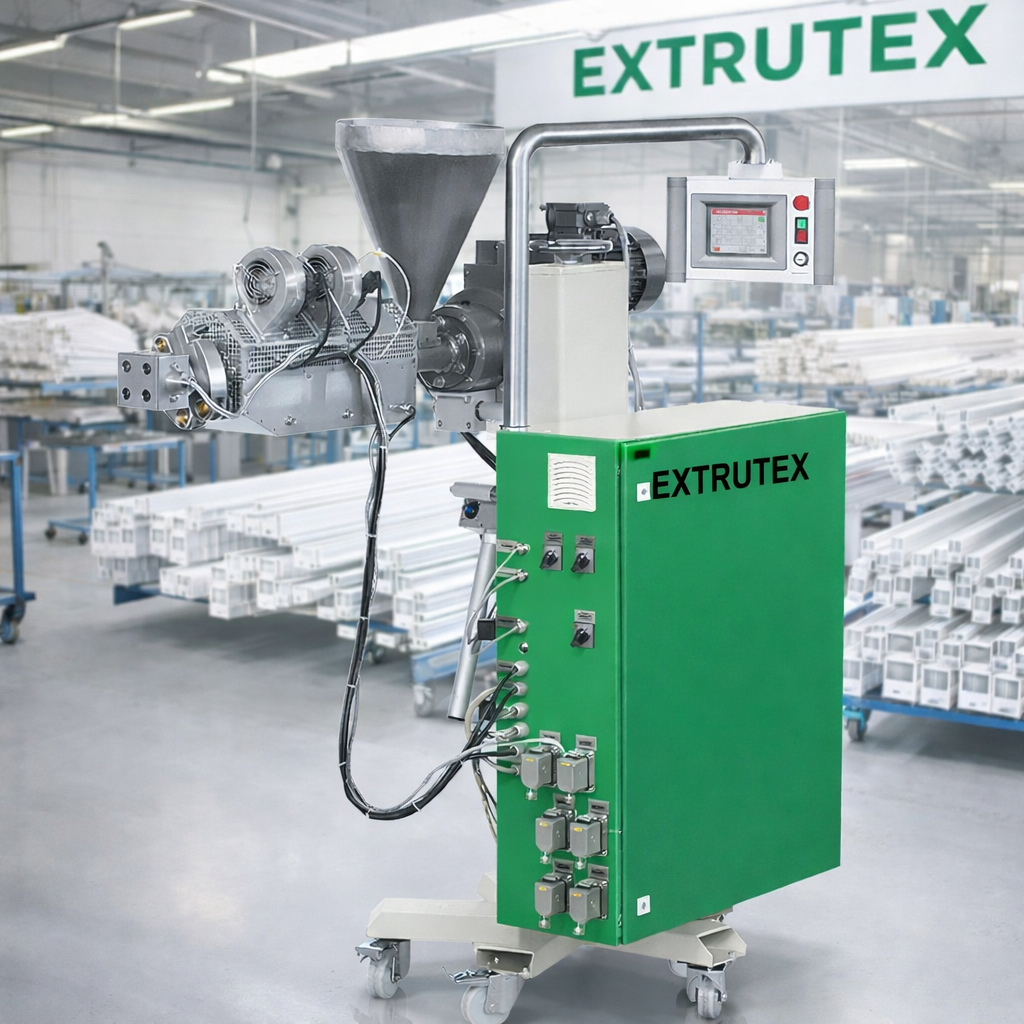
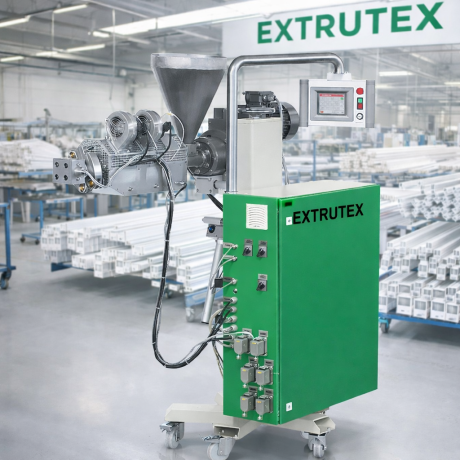
Co-Extruder 30 (single)

Multiple Payment Methods

Discount for advance payments over 50%

Free Shipping Coordination Services
Payment methods:


Precision. Power. Performance.
In the world of polymer processing, co-extrusion stands as both an art and a science. It is the discipline of merging multiple materials, often of different chemistries, viscosities, and colors, into a single unified profile or product. From architectural profiles that demand UV protection and aesthetic finish, to automotive components that require layered functionality, co-extrusion provides the answer.
At its core, co-extrusion is about synergy: blending the strengths of multiple polymers into one product, achieving performance levels unattainable with single-layer extrusion. The co-extruder is therefore not a secondary machine, but a critical companion to the main extruder, feeding precision layers that determine the strength, beauty, and lifespan of the final product.
It is in this demanding and highly specialized field that EXTRUTEX Austria, a pioneer of European extrusion technology, introduces its next-generation APX Series Co-Extruders. These machines are not simply add-ons — they are engineered as integral systems designed to elevate the entire extrusion line to higher standards of efficiency, precision, and versatility.
Austria has long been synonymous with precision engineering, and EXTRUTEX carries this tradition forward with pride. For decades, EXTRUTEX has been designing and manufacturing advanced extrusion systems that serve industries across Europe, Asia, the Middle East, and beyond.
The company’s reputation rests on three pillars:
Innovation through Research and Development – Every extruder and co-extruder is the product of continuous R&D, backed by laboratory trials, field testing, and feedback from global customers.
European Engineering Standards – Manufactured with strict adherence to EU quality norms, EXTRUTEX machines embody reliability, durability, and consistent performance under heavy industrial loads.
Global Perspective – With customers ranging from large industrial plants to specialized niche producers, EXTRUTEX understands diverse production needs. The APX series is thus tailored to meet the expectations of both international mass producers and regional specialty manufacturers.
This background ensures that the APX co-extruders are not simply machines, but strategic tools for modern polymer production.
The APX Series is the culmination of years of innovation in co-extrusion technology. Specifically designed for S-PVC, R-PVC, polyolefins (PE, PP), and PMMA, these co-extruders integrate seamlessly into diverse extrusion lines.
Where older models often treated co-extruders as secondary, auxiliary machines, the APX series embodies a new philosophy: co-extruders as precision engines of value. Every feature, from its control system to its swiveling frame, has been re-engineered to provide:
Uncompromising precision in feeding and layering
Unmatched adaptability to different production setups
Operational ease for operators of varying skill levels
Long-term durability under continuous industrial workloads
The result is a machine that does more than deliver polymer: it delivers consistency, efficiency, and confidence.
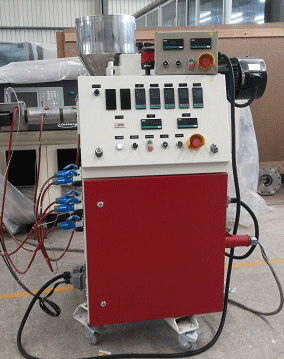
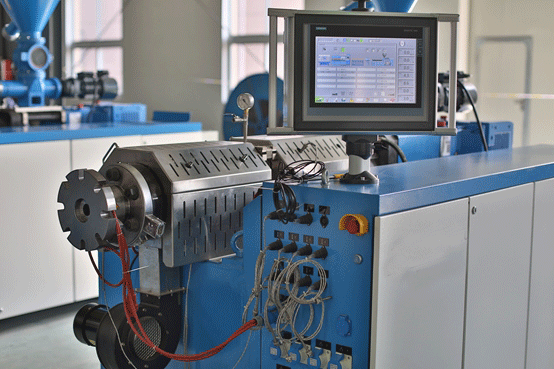
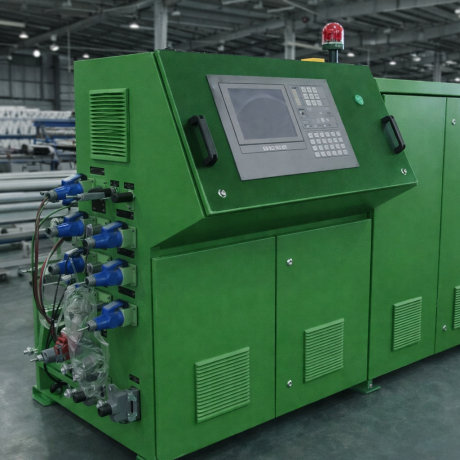
The brain of the APX co-extruder is its B&R PLC control unit, coupled with a 6-inch multilingual touch screen. This is not just a control panel — it is a central command system designed to give operators full confidence over every stage of co-extrusion.
Key capabilities include:
Precise temperature control in multiple barrel zones.
Speed adjustment of the screw with real-time feedback.
Monitoring of material pressure, ensuring uniform feeding.
Logging, saving, and reloading of production recipes.
Instant error detection, with on-screen diagnostics and alerts.
The multilingual interface (English, German, Russian, French — others available on request) makes the APX globally accessible. In multinational factories where operators come from different backgrounds, this reduces training time, minimizes errors, and ensures smooth transitions between shifts.
In essence, the PLC transforms the co-extruder into a smart, adaptive partner in production.
Behind the precision lies power. The APX series integrates a high-performance AC motor, engineered for energy efficiency yet capable of sustaining demanding workloads. Coupled with a reducer gearbox, it ensures:
Uniform torque transmission to the screw.
Stable back pressure, which directly translates into smoother, more homogeneous polymer flow.
Reduced energy loss, keeping operational costs low.
For manufacturers, this means that every meter of profile produced carries the same surface finish, dimensional accuracy, and internal consistency. Downtime is minimized, and costly material wastage due to inconsistent extrusion is eliminated.
Modern production lines are rarely static. Products change, dies are swapped, and configurations are adjusted. The APX acknowledges this reality by incorporating dual-axis swiveling capability:
Horizontal swivel up to 180°.
Vertical adjustment of +/-15°.
This flexibility allows operators to reposition the co-extruder quickly relative to the die head, saving both time and labor costs during changeovers. For factories running multiple extrusion lines, this is a game-changer: one co-extruder can adapt across different setups without requiring extensive mechanical intervention.
To ensure perfect alignment with the main extruder, the APX co-extruder is mounted on a height-adjustable shaft system. Fine-tuned mechanical locks ensure that once the height is set, it remains stable even during prolonged operation.
This is critical for multi-layer co-extrusion, where even minor misalignments can lead to defects such as uneven wall thickness, surface ripples, or bonding issues between layers.
The APX body rests on a reinforced steel frame, engineered for rigidity and vibration resistance. The frame is mounted on industrial lockable casters, giving operators the perfect balance between mobility and stability.
The integrated electrical cabinet is housed within the frame, sealed against dust, heat, and moisture. This design not only extends the lifespan of sensitive electronic components but also ensures compliance with international safety standards.
Each APX unit comes with a 15-meter detachable power cable, providing exceptional installation flexibility. Whether the co-extruder needs to be stationed close to or far from the main line, this design gives operators the freedom to configure layouts without compromise.
Temperature control is the lifeline of extrusion. The APX comes with three standard heating zones along the barrel, powered by precision resistance heaters. These zones ensure that material reaches optimal melting conditions with minimal thermal variation.
For specialized applications, up to three additional cooling zones can be integrated. Whether through air fans or water cooling jackets, these zones give unparalleled control over viscosity and flow, particularly critical when layering sensitive materials such as PMMA.
This modular system allows manufacturers to customize thermal profiles for different materials, enhancing the machine’s versatility.
The APX Series is not limited to one market — it is engineered to serve diverse industries where layered performance is key. Applications include:
Window and Door Profiles – Combining structural PVC with UV-resistant or color layers.
Decorative Profiles – For interior design, furniture, and cladding systems.
Edge Banding – Providing durable, colored finishes for furniture boards.
Electrical Conduits and Cable Channels – Adding protective or flame-retardant outer layers.
Automotive Components – Blending PMMA’s surface aesthetics with polyolefin durability.
Protective Compounds – UV-blocking or anti-scratch coatings.
In every case, the APX ensures that each layer bonds seamlessly, guaranteeing product longevity and customer satisfaction.
The APX co-extruders distinguish themselves with:
European engineering and build quality
Durability for heavy, continuous workloads
Energy-efficient operation with reduced running costs
Customizability for specific industrial needs
Ease of operator training with intuitive control systems
Seamless integration into new or existing lines
For producers seeking higher precision and productivity without higher costs, the APX delivers unmatched ROI.
Reduced Downtime – Quick die changes and easy repositioning.
Lower Scrap Rates – Stable temperature and pressure mean fewer defects.
Operator Comfort – Multilingual PLC, easy mobility, ergonomic adjustment.
Safety – Reinforced frame and sealed electrical cabinet protect both operator and machine.
Scalability – From single-line workshops to multi-plant operations, the APX scales effortlessly.
Every production line is unique. EXTRUTEX offers:
Additional heating/cooling zones.
Alternative screw geometries for specific polymers.
Integration with automated feeders and gravimetric dosing systems.
Tailored software modules for Industry 4.0 connectivity.
In today’s eco-conscious industry, energy efficiency is as important as output. The APX series is designed to minimize waste and optimize power consumption. Advanced motor technology, efficient heaters, and smart cooling systems together create a machine that supports both profitability and sustainability.
Compared to older co-extruders, the APX delivers:
Higher precision through advanced PLC control.
Greater adaptability with dual-axis swiveling and height adjustment.
Extended service life with reinforced frames and industrial components.
Lower operational costs thanks to energy-efficient systems.
In short: it is not an upgrade; it is a redefinition.
Every APX co-extruder is backed by EXTRUTEX’s global service network:
On-site installation and training.
Technical hotlines for troubleshooting.
Fast delivery of spare parts.
Preventive maintenance packages.
This ensures that the machine is not just purchased — it is partnered with for years to come.
For manufacturers who aim to stay ahead in a competitive market, the choice is clear. The APX Series Co-Extrudersfrom EXTRUTEX Austria embody the very best of European engineering: precise, durable, adaptable, and efficient.
They are more than machines — they are strategic enablers of growth, empowering producers to deliver products with higher quality, greater consistency, and superior functionality.
If your ambition is to elevate your production line to world-class standards, the APX co-extruder is your gateway.
Contact EXTRUTEX today for detailed catalogs, technical consultations, and tailored quotations.
Like a quietly confident scalpel at the edge of an artist’s bench, the APX 30/25 measures, meters and lays down polymer layers with surgical precision. Below is a ready-to-print technical table followed by focused technical details, options, utilities and application guidance — everything a production engineer, buyer or line manager needs to evaluate and order.
| Item | Specification / Range |
|---|---|
| Model | APX 30/25 |
| Screw diameter (D) | 30 mm |
| L / D ratio | 25 : 1 |
| Screw type (standard) | Single-screw, nitrided 41CrAlMo7 (option: bimetallic / wear-resistant) |
| Screw geometry (std) | General-purpose metering with modest compression (CR 2.6–3.2) |
| Optional screw tips | Barrier, Maddock mixing, Maddock + barrier, wear-resistant tip |
| Nominal throughput (S-PVC, rigid) | 12 – 40 kg/h (process dependent) |
| Nominal throughput (PE/PP) | 10 – 35 kg/h (grade and melt index dependent) |
| Nominal throughput (PMMA) | 8 – 30 kg/h (grade dependent; sensitive to melt temp control) |
| Drive motor (std) | AC vector motor 7.5 kW (range supplied 7.5 – 11 kW by duty) |
| Gearbox | Helical reducer, high torque, splash lubrication |
| Screw speed | 0 – 120 rpm (typical operational 20–90 rpm) |
| Barrel heating zones | 3 standard (resistance heaters, PID control) |
| Cooling | Axial fans standard; optional water jacket(s) on feed/mid zones |
| Feed throat | Water-cooled feed bush (recommended for PVC/PMMA) |
| Melt pressure monitoring | Port provided; pressure transducer optional |
| Melt temperature monitoring | Thermocouple port near die adaptor; probe optional |
| Control system | B&R PLC with 6″ HMI; recipe manager, alarm & trend logging |
| HMI languages | EN / DE / RU / FR (additional on request) |
| Swivel (horizontal) | 0 – 180° |
| Vertical tilt | ±15° |
| Height adjustment | Precision mechanical spindle with fine lock and scale |
| Frame | Reinforced steel frame with lockable industrial casters |
| Electrical cabinet | Integrated, sealed against dust and moisture; CE wiring |
| Power cable | 15 m detachable industrial-grade (included) |
| Power supply (std) | 400 V, 3Φ, 50 Hz (other voltages/frequencies on request) |
| Installed power (approx.) | 12 – 16 kVA (depends on heaters & motor) |
| Compressed air | 6–8 bar dry (for pneumatics, if fitted) |
| Process water | 0.1–0.3 m³/h @ 2–3 bar (if water cooling selected) |
| Footprint (approx.) | L × W × H ≈ 1.6 × 0.65 × 1.5 m (orientation dependent) |
| Weight (approx.) | 420 – 560 kg (configuration dependent) |
| Materials processed | S-PVC, R-PVC, PE, PP, PMMA (others on request) |
| Applications | Cap/skin layers, color stripes, edge banding, decorative skins, functional layers |
| Compliance & safety | CE; E-stops; interlocked guards; zone over-temp cutouts |
The APX 30/25 is designed as a precision metering co-extruder — not to bulk-plastify, but to meter, stabilize, and deliver thin, uniform layers consistently onto a main profile. The 30 mm diameter gives a balanced window: enough throughput for medium-capacity lines while maintaining tight control over layer thickness and thermal history. The 25:1 L/D provides extended residence length for improved melt homogenization, making the unit more forgiving with polyolefins and PMMA while still excellent with rigid PVC.
Screw metallurgy: Standard nitrided alloy (41CrAlMo7) for durability and corrosion resistance. Bimetallic barrels and wear-resistant screws are available for highly filled compounds or recycled-content streams.
Geometry: General-purpose metering profile (modest compression ratio ~2.6–3.2). Optional barrier or mixing tips improve melt homogeneity for PO/PMMA or when superior gloss/clarity is required.
Performance note: L/D 25 increases effective kneading and melting length compared to L/D 20, improving stability at higher screw speeds or with higher-viscosity polymers.
Motor & gearbox: AC vector drive provides precise torque control and fast dynamic response; helical reducer ensures quiet, efficient torque transmission with a service factor for continuous industrial use.
Screw speed control: 0–120 rpm with tach feedback keeps layer ratio stable across operating regimes.
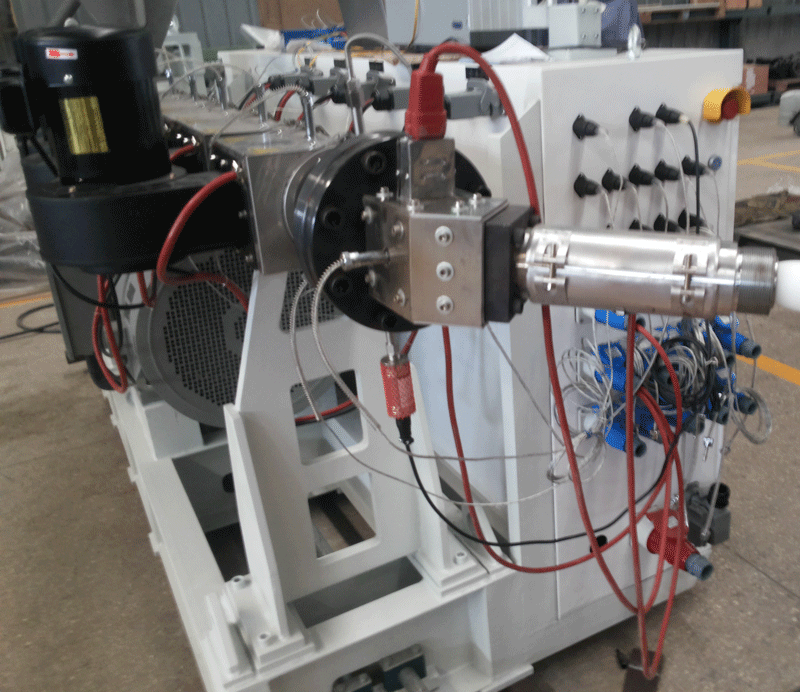
Swivel & height mechanics: 180° horizontal swivel and ±15° vertical tilt allow rapid physical alignment to dies; the height spindle locks to maintain perfect alignment during long runs.
Heating: 3-band zone heating with PID control yields tight thermal uniformity. Insulated jackets reduce heat loss.
Cooling: Standard fan cooling works for many PVC runs; water jackets (feed and optional mid zones) are recommended for PMMA and sensitive PO runs to control residence heat and prevent thermal degradation.
Feed bush: Water-cooled feed bush is strongly recommended for PVC and PMMA runs to avoid pre-melting and scorching at the throat.
B&R PLC + 6″ HMI is the standard brain — recipe management lets operators store full process setups (zone temps, rpm profiles, start-up ramps). Alarm lists, trends and basic historical logging help with traceability and continuous improvement.
Optional I/O for gravimetric feeders, line sync or Industry 4.0 gateways available on request.
Melt pressure & temperature: Ports are standard; transducers and probes are optional add-ons that integrate into the HMI for live monitoring and alarm generation. These allow real-time detection of flow disturbances and help prevent off-spec layers.
Optional line sync: Speed-following mode or master-slave to the main extruder allows proportional layer control at varying line speeds.
S-PVC / R-PVC: Melt temp 170–190 °C; output 12–40 kg/h. Use feed cooling and keep residence time moderate to prevent thermal degradation.
PP / PE: Melt temp 190–220 °C; output 10–35 kg/h. Barrier/mixing tip recommended for clarity and dispersion when needed.
PMMA: Melt temp 220–240 °C; output 8–30 kg/h. Tight temp control and water-cooled feed advised to maintain gloss/avoid burns.
Electrical: 400 V 3ϕ 50 Hz typical. Installed power budget ~12–16 kVA depending on heater package and motor.
Air: Dry compressed air 6–8 bar for optional pneumatic functions.
Water: If cooling selected, supply 0.1–0.3 m³/h at 2–3 bar; return and filtration recommended.
Space & mounting: Compact footprint eases integration; lockable casters allow repositioning for changeovers. Ensure floor can support min. 600 kg concentrated load plus vibration isolation if required.
APX 30/25 main body with standard screw & barrel
B&R PLC + 6″ HMI with recipe manager
3 heating zones, fan cooling, insulated covers
Swivel and height adjustment base
Integrated electrical cabinet and 15 m detachable power cable
Die adaptor (standard flange), basic tool kit, manuals
Bimetallic barrel / wear-resistant screws
Barrier / Maddock mixing tip(s)
Melt pressure & temperature kit (sensors + HMI integration)
Gravimetric feeder interface or full gravimetric dosing system
Additional cooling zones (air/water)
Line synchronization module (master-slave or speed-follow)
Industry 4.0 gateway (MODBUS/Profinet/OPC-UA on request)
Alternate voltages (380/415/460 V; 50/60 Hz)
HMI language packs and extended logging
Machine supplied to CE requirements (electrical, guarding, E-stop).
Interlock guards on moving parts; safe torque off on drives as standard where applicable.
Per-zone over-temperature cutouts and PLC-integrated alarm chains.
Daily: clean hopper/feed throat; check oil sight on gearbox; verify no debris in cooling fans.
Weekly: inspect heater bands and thermocouple connections; check belt/drive coupling condition.
Monthly: greasing of mechanical adjustment points; inspect screw/barrel for wear.
Spare parts: recommend stocking one auxiliary screw and a set of heater bands for continuous lines. EXTRUTEX offers preventive maintenance contracts and remote diagnostics packages.
APX-30/25 – M8.5 – GP-PVC – B&R-6 – FAN – WCO-FEED – EU-400/50
(Interpretation: APX 30/25, 8.5 kW motor, general-purpose screw for PVC, B&R 6″ HMI, fan cooling, water-cooled feed, Europe 400V/50Hz)
Choose 30/25 if you need:
greater melt homogenization than L/D 20 provides;
flexibility to run PMMA / PO reliably as well as PVC;
smoother output at higher line speeds or slightly higher throughputs;
a co-extruder that will tolerate a wider range of formulations and operator variability.
If your world is strictly low-output PVC stripes or simple cap-layers and minimal polymer variety, a 30/20 will save footprint and cost. But if you want calm lines, fewer rejects and future-proof flexibility, 30/25 is the pragmatic, grown-up choice.
There are no reviews yet.
Precision. Power. Performance.
In the world of polymer processing, co-extrusion stands as both an art and a science. It is the discipline of merging multiple materials, often of different chemistries, viscosities, and colors, into a single unified profile or product. From architectural profiles that demand UV protection and aesthetic finish, to automotive components that require layered functionality, co-extrusion provides the answer.
At its core, co-extrusion is about synergy: blending the strengths of multiple polymers into one product, achieving performance levels unattainable with single-layer extrusion. The co-extruder is therefore not a secondary machine, but a critical companion to the main extruder, feeding precision layers that determine the strength, beauty, and lifespan of the final product.
It is in this demanding and highly specialized field that EXTRUTEX Austria, a pioneer of European extrusion technology, introduces its next-generation APX Series Co-Extruders. These machines are not simply add-ons — they are engineered as integral systems designed to elevate the entire extrusion line to higher standards of efficiency, precision, and versatility.
Austria has long been synonymous with precision engineering, and EXTRUTEX carries this tradition forward with pride. For decades, EXTRUTEX has been designing and manufacturing advanced extrusion systems that serve industries across Europe, Asia, the Middle East, and beyond.
The company’s reputation rests on three pillars:
Innovation through Research and Development – Every extruder and co-extruder is the product of continuous R&D, backed by laboratory trials, field testing, and feedback from global customers.
European Engineering Standards – Manufactured with strict adherence to EU quality norms, EXTRUTEX machines embody reliability, durability, and consistent performance under heavy industrial loads.
Global Perspective – With customers ranging from large industrial plants to specialized niche producers, EXTRUTEX understands diverse production needs. The APX series is thus tailored to meet the expectations of both international mass producers and regional specialty manufacturers.
This background ensures that the APX co-extruders are not simply machines, but strategic tools for modern polymer production.
The APX Series is the culmination of years of innovation in co-extrusion technology. Specifically designed for S-PVC, R-PVC, polyolefins (PE, PP), and PMMA, these co-extruders integrate seamlessly into diverse extrusion lines.
Where older models often treated co-extruders as secondary, auxiliary machines, the APX series embodies a new philosophy: co-extruders as precision engines of value. Every feature, from its control system to its swiveling frame, has been re-engineered to provide:
Uncompromising precision in feeding and layering
Unmatched adaptability to different production setups
Operational ease for operators of varying skill levels
Long-term durability under continuous industrial workloads
The result is a machine that does more than deliver polymer: it delivers consistency, efficiency, and confidence.
The brain of the APX co-extruder is its B&R PLC control unit, coupled with a 6-inch multilingual touch screen. This is not just a control panel — it is a central command system designed to give operators full confidence over every stage of co-extrusion.
Key capabilities include:
Precise temperature control in multiple barrel zones.
Speed adjustment of the screw with real-time feedback.
Monitoring of material pressure, ensuring uniform feeding.
Logging, saving, and reloading of production recipes.
Instant error detection, with on-screen diagnostics and alerts.
The multilingual interface (English, German, Russian, French — others available on request) makes the APX globally accessible. In multinational factories where operators come from different backgrounds, this reduces training time, minimizes errors, and ensures smooth transitions between shifts.
In essence, the PLC transforms the co-extruder into a smart, adaptive partner in production.
Behind the precision lies power. The APX series integrates a high-performance AC motor, engineered for energy efficiency yet capable of sustaining demanding workloads. Coupled with a reducer gearbox, it ensures:
Uniform torque transmission to the screw.
Stable back pressure, which directly translates into smoother, more homogeneous polymer flow.
Reduced energy loss, keeping operational costs low.
For manufacturers, this means that every meter of profile produced carries the same surface finish, dimensional accuracy, and internal consistency. Downtime is minimized, and costly material wastage due to inconsistent extrusion is eliminated.
Modern production lines are rarely static. Products change, dies are swapped, and configurations are adjusted. The APX acknowledges this reality by incorporating dual-axis swiveling capability:
Horizontal swivel up to 180°.
Vertical adjustment of +/-15°.
This flexibility allows operators to reposition the co-extruder quickly relative to the die head, saving both time and labor costs during changeovers. For factories running multiple extrusion lines, this is a game-changer: one co-extruder can adapt across different setups without requiring extensive mechanical intervention.
To ensure perfect alignment with the main extruder, the APX co-extruder is mounted on a height-adjustable shaft system. Fine-tuned mechanical locks ensure that once the height is set, it remains stable even during prolonged operation.
This is critical for multi-layer co-extrusion, where even minor misalignments can lead to defects such as uneven wall thickness, surface ripples, or bonding issues between layers.
The APX body rests on a reinforced steel frame, engineered for rigidity and vibration resistance. The frame is mounted on industrial lockable casters, giving operators the perfect balance between mobility and stability.
The integrated electrical cabinet is housed within the frame, sealed against dust, heat, and moisture. This design not only extends the lifespan of sensitive electronic components but also ensures compliance with international safety standards.
Each APX unit comes with a 15-meter detachable power cable, providing exceptional installation flexibility. Whether the co-extruder needs to be stationed close to or far from the main line, this design gives operators the freedom to configure layouts without compromise.
Temperature control is the lifeline of extrusion. The APX comes with three standard heating zones along the barrel, powered by precision resistance heaters. These zones ensure that material reaches optimal melting conditions with minimal thermal variation.
For specialized applications, up to three additional cooling zones can be integrated. Whether through air fans or water cooling jackets, these zones give unparalleled control over viscosity and flow, particularly critical when layering sensitive materials such as PMMA.
This modular system allows manufacturers to customize thermal profiles for different materials, enhancing the machine’s versatility.
The APX Series is not limited to one market — it is engineered to serve diverse industries where layered performance is key. Applications include:
Window and Door Profiles – Combining structural PVC with UV-resistant or color layers.
Decorative Profiles – For interior design, furniture, and cladding systems.
Edge Banding – Providing durable, colored finishes for furniture boards.
Electrical Conduits and Cable Channels – Adding protective or flame-retardant outer layers.
Automotive Components – Blending PMMA’s surface aesthetics with polyolefin durability.
Protective Compounds – UV-blocking or anti-scratch coatings.
In every case, the APX ensures that each layer bonds seamlessly, guaranteeing product longevity and customer satisfaction.
The APX co-extruders distinguish themselves with:
European engineering and build quality
Durability for heavy, continuous workloads
Energy-efficient operation with reduced running costs
Customizability for specific industrial needs
Ease of operator training with intuitive control systems
Seamless integration into new or existing lines
For producers seeking higher precision and productivity without higher costs, the APX delivers unmatched ROI.
Reduced Downtime – Quick die changes and easy repositioning.
Lower Scrap Rates – Stable temperature and pressure mean fewer defects.
Operator Comfort – Multilingual PLC, easy mobility, ergonomic adjustment.
Safety – Reinforced frame and sealed electrical cabinet protect both operator and machine.
Scalability – From single-line workshops to multi-plant operations, the APX scales effortlessly.
Every production line is unique. EXTRUTEX offers:
Additional heating/cooling zones.
Alternative screw geometries for specific polymers.
Integration with automated feeders and gravimetric dosing systems.
Tailored software modules for Industry 4.0 connectivity.
In today’s eco-conscious industry, energy efficiency is as important as output. The APX series is designed to minimize waste and optimize power consumption. Advanced motor technology, efficient heaters, and smart cooling systems together create a machine that supports both profitability and sustainability.
Compared to older co-extruders, the APX delivers:
Higher precision through advanced PLC control.
Greater adaptability with dual-axis swiveling and height adjustment.
Extended service life with reinforced frames and industrial components.
Lower operational costs thanks to energy-efficient systems.
In short: it is not an upgrade; it is a redefinition.
Every APX co-extruder is backed by EXTRUTEX’s global service network:
On-site installation and training.
Technical hotlines for troubleshooting.
Fast delivery of spare parts.
Preventive maintenance packages.
This ensures that the machine is not just purchased — it is partnered with for years to come.
For manufacturers who aim to stay ahead in a competitive market, the choice is clear. The APX Series Co-Extrudersfrom EXTRUTEX Austria embody the very best of European engineering: precise, durable, adaptable, and efficient.
They are more than machines — they are strategic enablers of growth, empowering producers to deliver products with higher quality, greater consistency, and superior functionality.
If your ambition is to elevate your production line to world-class standards, the APX co-extruder is your gateway.
Contact EXTRUTEX today for detailed catalogs, technical consultations, and tailored quotations.
Like a quietly confident scalpel at the edge of an artist’s bench, the APX 30/25 measures, meters and lays down polymer layers with surgical precision. Below is a ready-to-print technical table followed by focused technical details, options, utilities and application guidance — everything a production engineer, buyer or line manager needs to evaluate and order.
| Item | Specification / Range |
|---|---|
| Model | APX 30/25 |
| Screw diameter (D) | 30 mm |
| L / D ratio | 25 : 1 |
| Screw type (standard) | Single-screw, nitrided 41CrAlMo7 (option: bimetallic / wear-resistant) |
| Screw geometry (std) | General-purpose metering with modest compression (CR 2.6–3.2) |
| Optional screw tips | Barrier, Maddock mixing, Maddock + barrier, wear-resistant tip |
| Nominal throughput (S-PVC, rigid) | 12 – 40 kg/h (process dependent) |
| Nominal throughput (PE/PP) | 10 – 35 kg/h (grade and melt index dependent) |
| Nominal throughput (PMMA) | 8 – 30 kg/h (grade dependent; sensitive to melt temp control) |
| Drive motor (std) | AC vector motor 7.5 kW (range supplied 7.5 – 11 kW by duty) |
| Gearbox | Helical reducer, high torque, splash lubrication |
| Screw speed | 0 – 120 rpm (typical operational 20–90 rpm) |
| Barrel heating zones | 3 standard (resistance heaters, PID control) |
| Cooling | Axial fans standard; optional water jacket(s) on feed/mid zones |
| Feed throat | Water-cooled feed bush (recommended for PVC/PMMA) |
| Melt pressure monitoring | Port provided; pressure transducer optional |
| Melt temperature monitoring | Thermocouple port near die adaptor; probe optional |
| Control system | B&R PLC with 6″ HMI; recipe manager, alarm & trend logging |
| HMI languages | EN / DE / RU / FR (additional on request) |
| Swivel (horizontal) | 0 – 180° |
| Vertical tilt | ±15° |
| Height adjustment | Precision mechanical spindle with fine lock and scale |
| Frame | Reinforced steel frame with lockable industrial casters |
| Electrical cabinet | Integrated, sealed against dust and moisture; CE wiring |
| Power cable | 15 m detachable industrial-grade (included) |
| Power supply (std) | 400 V, 3Φ, 50 Hz (other voltages/frequencies on request) |
| Installed power (approx.) | 12 – 16 kVA (depends on heaters & motor) |
| Compressed air | 6–8 bar dry (for pneumatics, if fitted) |
| Process water | 0.1–0.3 m³/h @ 2–3 bar (if water cooling selected) |
| Footprint (approx.) | L × W × H ≈ 1.6 × 0.65 × 1.5 m (orientation dependent) |
| Weight (approx.) | 420 – 560 kg (configuration dependent) |
| Materials processed | S-PVC, R-PVC, PE, PP, PMMA (others on request) |
| Applications | Cap/skin layers, color stripes, edge banding, decorative skins, functional layers |
| Compliance & safety | CE; E-stops; interlocked guards; zone over-temp cutouts |
The APX 30/25 is designed as a precision metering co-extruder — not to bulk-plastify, but to meter, stabilize, and deliver thin, uniform layers consistently onto a main profile. The 30 mm diameter gives a balanced window: enough throughput for medium-capacity lines while maintaining tight control over layer thickness and thermal history. The 25:1 L/D provides extended residence length for improved melt homogenization, making the unit more forgiving with polyolefins and PMMA while still excellent with rigid PVC.
Screw metallurgy: Standard nitrided alloy (41CrAlMo7) for durability and corrosion resistance. Bimetallic barrels and wear-resistant screws are available for highly filled compounds or recycled-content streams.
Geometry: General-purpose metering profile (modest compression ratio ~2.6–3.2). Optional barrier or mixing tips improve melt homogeneity for PO/PMMA or when superior gloss/clarity is required.
Performance note: L/D 25 increases effective kneading and melting length compared to L/D 20, improving stability at higher screw speeds or with higher-viscosity polymers.
Motor & gearbox: AC vector drive provides precise torque control and fast dynamic response; helical reducer ensures quiet, efficient torque transmission with a service factor for continuous industrial use.
Screw speed control: 0–120 rpm with tach feedback keeps layer ratio stable across operating regimes.
Swivel & height mechanics: 180° horizontal swivel and ±15° vertical tilt allow rapid physical alignment to dies; the height spindle locks to maintain perfect alignment during long runs.
Heating: 3-band zone heating with PID control yields tight thermal uniformity. Insulated jackets reduce heat loss.
Cooling: Standard fan cooling works for many PVC runs; water jackets (feed and optional mid zones) are recommended for PMMA and sensitive PO runs to control residence heat and prevent thermal degradation.
Feed bush: Water-cooled feed bush is strongly recommended for PVC and PMMA runs to avoid pre-melting and scorching at the throat.
B&R PLC + 6″ HMI is the standard brain — recipe management lets operators store full process setups (zone temps, rpm profiles, start-up ramps). Alarm lists, trends and basic historical logging help with traceability and continuous improvement.
Optional I/O for gravimetric feeders, line sync or Industry 4.0 gateways available on request.
Melt pressure & temperature: Ports are standard; transducers and probes are optional add-ons that integrate into the HMI for live monitoring and alarm generation. These allow real-time detection of flow disturbances and help prevent off-spec layers.
Optional line sync: Speed-following mode or master-slave to the main extruder allows proportional layer control at varying line speeds.
S-PVC / R-PVC: Melt temp 170–190 °C; output 12–40 kg/h. Use feed cooling and keep residence time moderate to prevent thermal degradation.
PP / PE: Melt temp 190–220 °C; output 10–35 kg/h. Barrier/mixing tip recommended for clarity and dispersion when needed.
PMMA: Melt temp 220–240 °C; output 8–30 kg/h. Tight temp control and water-cooled feed advised to maintain gloss/avoid burns.
Electrical: 400 V 3ϕ 50 Hz typical. Installed power budget ~12–16 kVA depending on heater package and motor.
Air: Dry compressed air 6–8 bar for optional pneumatic functions.
Water: If cooling selected, supply 0.1–0.3 m³/h at 2–3 bar; return and filtration recommended.
Space & mounting: Compact footprint eases integration; lockable casters allow repositioning for changeovers. Ensure floor can support min. 600 kg concentrated load plus vibration isolation if required.
APX 30/25 main body with standard screw & barrel
B&R PLC + 6″ HMI with recipe manager
3 heating zones, fan cooling, insulated covers
Swivel and height adjustment base
Integrated electrical cabinet and 15 m detachable power cable
Die adaptor (standard flange), basic tool kit, manuals
Bimetallic barrel / wear-resistant screws
Barrier / Maddock mixing tip(s)
Melt pressure & temperature kit (sensors + HMI integration)
Gravimetric feeder interface or full gravimetric dosing system
Additional cooling zones (air/water)
Line synchronization module (master-slave or speed-follow)
Industry 4.0 gateway (MODBUS/Profinet/OPC-UA on request)
Alternate voltages (380/415/460 V; 50/60 Hz)
HMI language packs and extended logging
Machine supplied to CE requirements (electrical, guarding, E-stop).
Interlock guards on moving parts; safe torque off on drives as standard where applicable.
Per-zone over-temperature cutouts and PLC-integrated alarm chains.
Daily: clean hopper/feed throat; check oil sight on gearbox; verify no debris in cooling fans.
Weekly: inspect heater bands and thermocouple connections; check belt/drive coupling condition.
Monthly: greasing of mechanical adjustment points; inspect screw/barrel for wear.
Spare parts: recommend stocking one auxiliary screw and a set of heater bands for continuous lines. EXTRUTEX offers preventive maintenance contracts and remote diagnostics packages.
APX-30/25 – M8.5 – GP-PVC – B&R-6 – FAN – WCO-FEED – EU-400/50
(Interpretation: APX 30/25, 8.5 kW motor, general-purpose screw for PVC, B&R 6″ HMI, fan cooling, water-cooled feed, Europe 400V/50Hz)
Choose 30/25 if you need:
greater melt homogenization than L/D 20 provides;
flexibility to run PMMA / PO reliably as well as PVC;
smoother output at higher line speeds or slightly higher throughputs;
a co-extruder that will tolerate a wider range of formulations and operator variability.
If your world is strictly low-output PVC stripes or simple cap-layers and minimal polymer variety, a 30/20 will save footprint and cost. But if you want calm lines, fewer rejects and future-proof flexibility, 30/25 is the pragmatic, grown-up choice.
By submitting your email, you agree to our company’s terms and conditions.
We are not looking to sell; we are here to provide you with the best support and service.
Contact available 24/7
Please do not contact us for advertising or sales inquiries
All rights of this website are reserved for EXTRUTEX Austria and its partner companies, © 2025
-
(0 customer reviews)