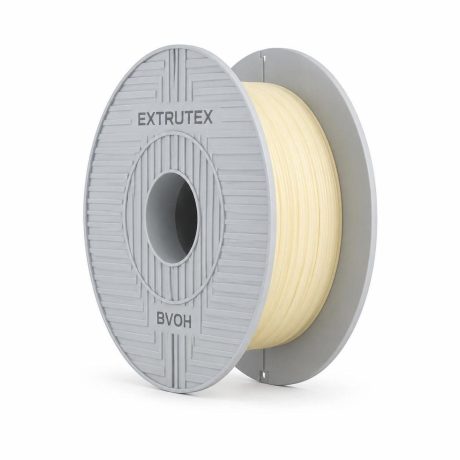
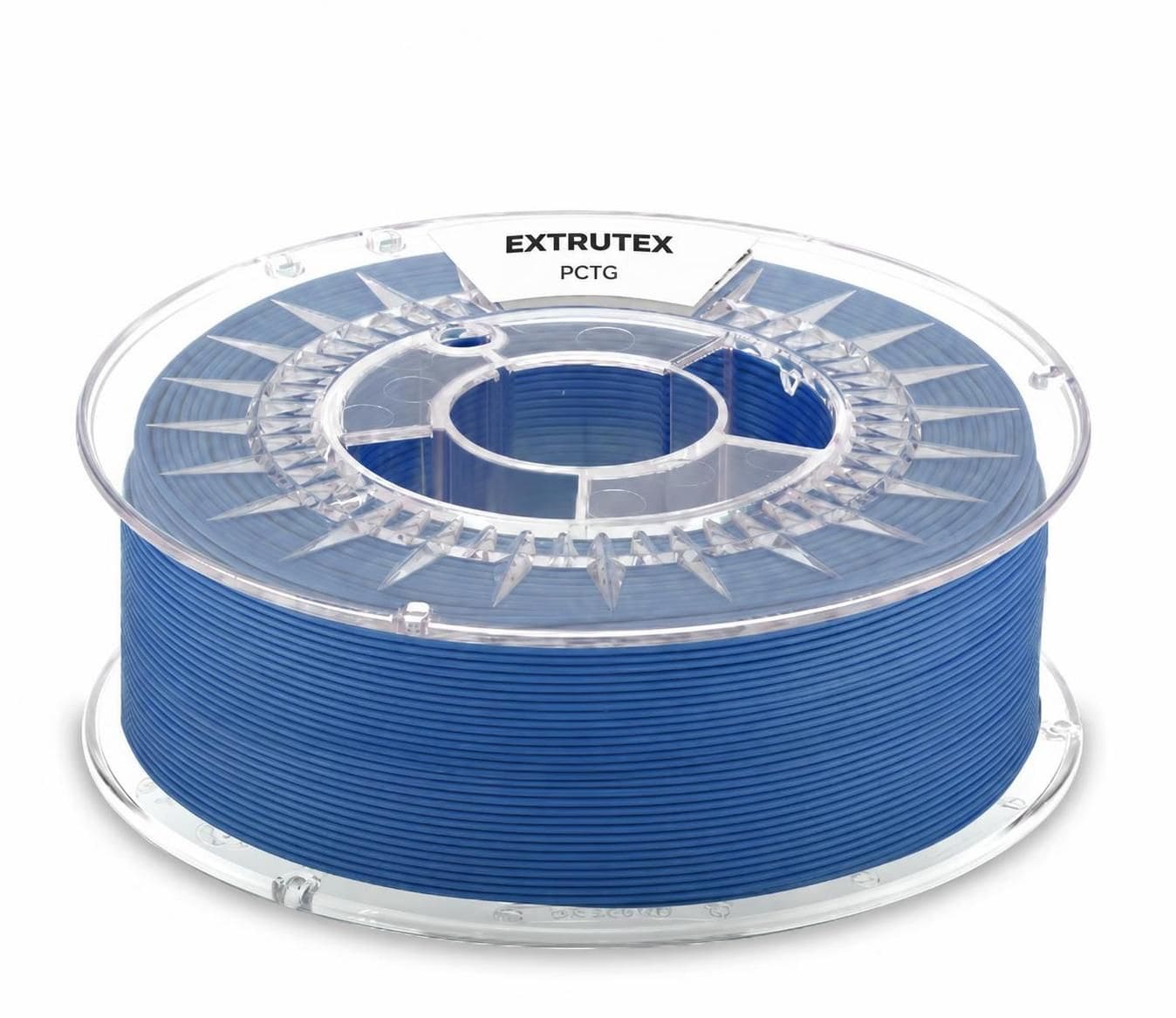
EXTRUTEX PCTG 3D Printer Filament
EXTRUTEX PCTG is a modified copolyester 3D printing material developed for parts that need a combination of mechanical toughness, impact resistance, chemical resistance and attractive surface appearance. It is designed for functional components that must withstand everyday handling and repeated use rather than simply look good as display models.
With excellent transparency and optical clarity, PCTG is also suitable for applications where the appearance of the finished component matters. Its combination of toughness, flexibility, surface quality and resistance to impact makes it a versatile option for functional prototypes, protective housings, consumer products and technical components.
What Is PCTG Filament?
PCTG is a modified copolyester used in additive manufacturing. It offers a useful balance of toughness, impact performance, transparency and chemical resistance. Compared with materials selected mainly for visual appearance, PCTG is intended for functional parts that may experience knocks, bending, handling and repeated mechanical stress.
Its high elongation at break is one of its important characteristics. The supplied test data reports an elongation at break of 220%, indicating substantial deformation capability under the specified test conditions. This can make PCTG an interesting material for clips, covers, housings and other components where resistance to brittle failure is important.
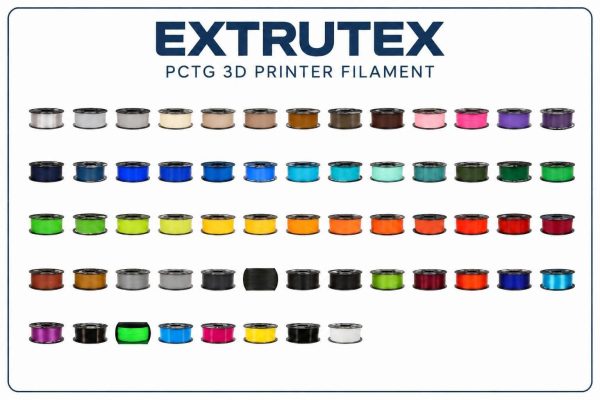
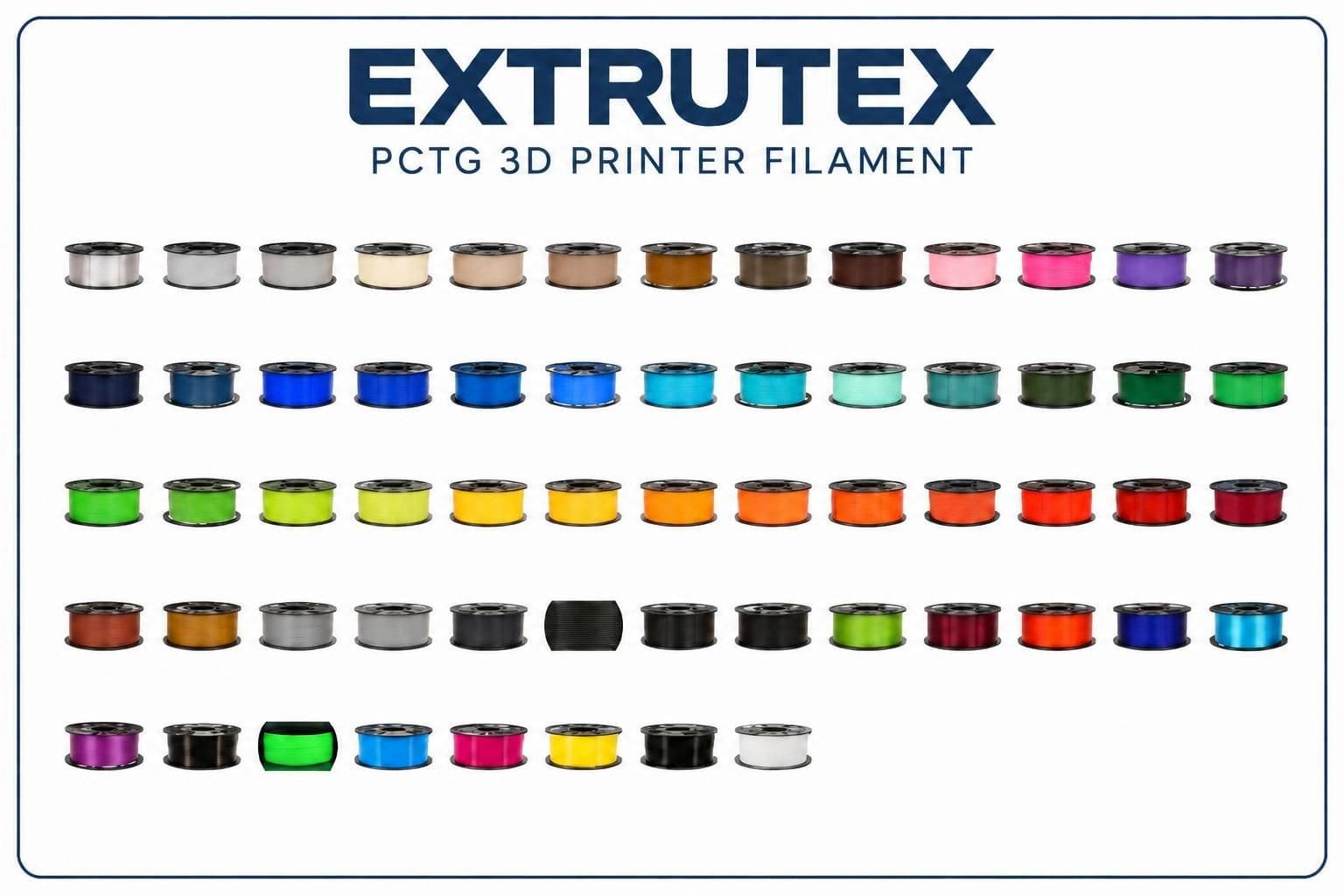
PCTG is available in transparent and colored formulations, depending on the selected grade. Its optical properties can make it suitable for parts where visibility, light transmission or a clean appearance is required.
Key PCTG Filament Highlights
High Impact Resistance
Designed to withstand knocks and mechanical stress. The supplied Charpy notched impact data is approximately 100 kJ/m² at +23°C and 50 kJ/m² at -30°C.
Excellent Transparency
Offers optical clarity and a bright appearance for applications where the visibility and appearance of the printed component are important.
Flame Retardant Grade
The supplied product information identifies a UL 94 V-2 flame-retardant classification. Confirm the exact grade, test report and specimen thickness before specifying it for a regulated application.
Chemical Resistance
Very good chemical resistance according to the supplied material information, making it suitable for evaluating in applications involving contact with selected chemicals.
Scratch Resistance
Designed to help maintain a clean surface appearance during normal handling and use. Actual scratch performance depends on the printed surface and application conditions.
High Elongation
The supplied test data reports 220% elongation at break, supporting applications where toughness and deformation capability are important.
Recommended Applications
Protective Housings and Enclosures
Functional covers, equipment housings, protective cases and transparent enclosures that require a combination of impact resistance and attractive appearance.
Snap-Fit Clips and Living Hinges
Clips, flexible connection features and functional prototypes that may experience repeated bending or mechanical movement. Final suitability should be confirmed through application testing.
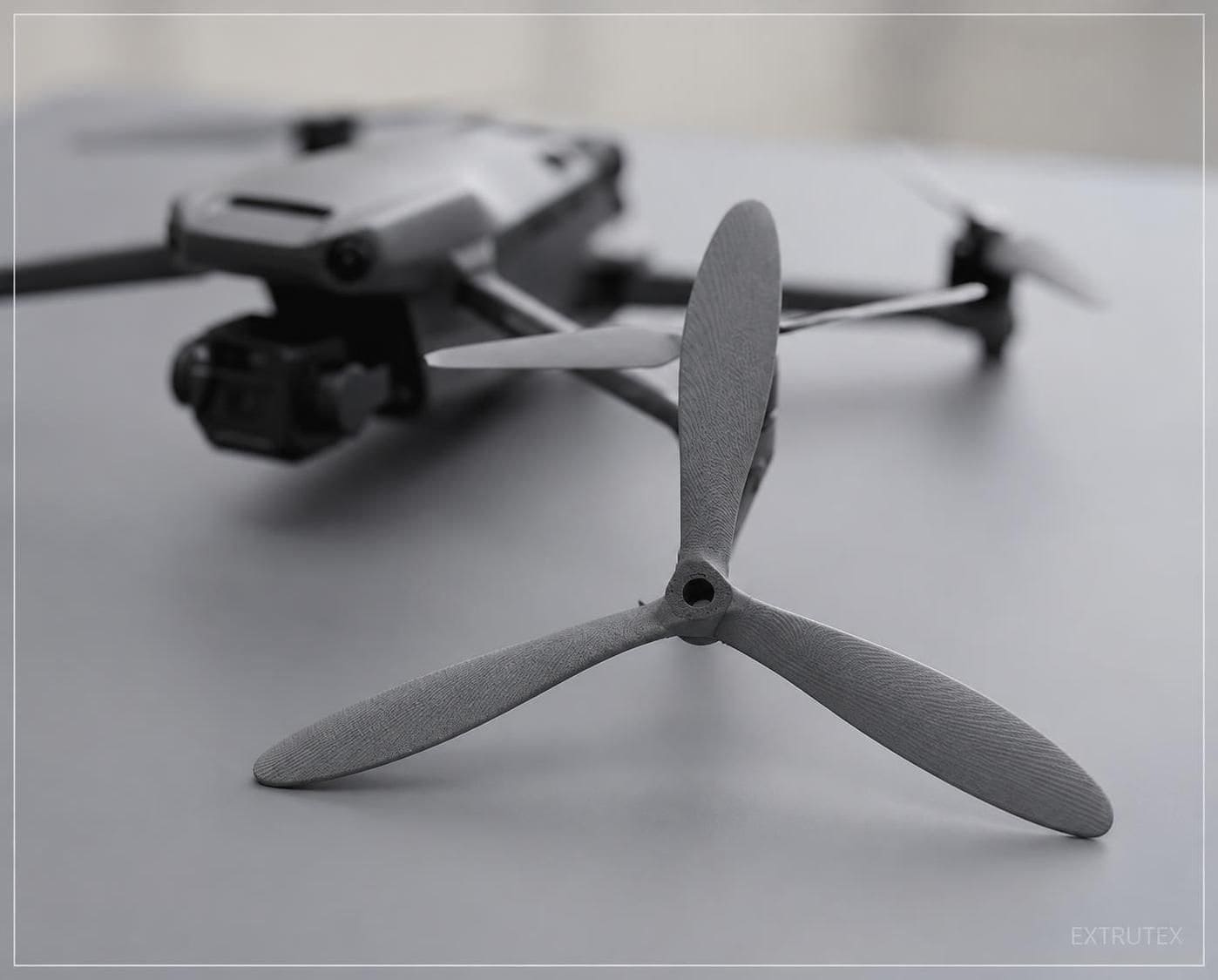
Drone and RC Components
Selected drone accessories, remote-control vehicle parts, protective covers and lightweight functional prototypes exposed to everyday handling and impact.
Cosmetics and Consumer Packaging
Prototypes, display components, packaging concepts and consumer-product housings where transparency, surface appearance and durability are important.
Functional Prototypes
Engineering prototypes, mechanical covers, fixtures and product-development components that require more toughness than many general-purpose display materials.
Transparent Technical Parts
Selected guards, inspection covers and visual components where optical clarity and impact resistance are useful. Optical performance depends on print settings and geometry.
Technical Specifications – Mechanical Properties
The following values are taken from the supplied material test information. Results may vary with the material batch, specimen preparation, conditioning and test conditions.
| Mechanical Property | Test Method | Value | Reported Rating |
|---|
| Tensile modulus (Young's modulus) | ISO 527-1 | 1700 MPa | Excellent |
| Tensile strength at yield | ISO 527-1 | 44 MPa | Typical |
| Tensile stress at break | ISO 527-1 | 46 MPa | Very Good |
| Elongation at break | ISO 527-1 | 220% | Excellent |
| Flexural modulus | ISO 178 | 1600 MPa | Excellent |
| Flexural strength | ISO 178 | 60 MPa | Good |
| Charpy notched impact strength (+23°C) | ISO 179-1eA | Approximately 100 kJ/m² | Outstanding |
| Charpy notched impact strength (-30°C) | ISO 179-1eA | 50 kJ/m² | Outstanding |
| Charpy unnotched impact strength (+23°C) | ISO 179-1eU | No Break (NB) | Not rated |
Technical Specifications – Thermal Properties
| Thermal Property | Test Method | Value | Reported Rating |
|---|
| Heat deflection temperature (HDT/B) – 0.45 MPa | ISO 75-1 | 76°C | Typical |
| Heat deflection temperature (HDT/A) – 1.8 MPa | ISO 75-1 | 64°C | Typical |
| Vicat softening temperature (VST/B50) | ISO 306 | Approximately 84°C | Good |
| Melting point (Tm) | ISO 3146-C | Amorphous – no defined melting point | Not rated |
| Glass transition temperature (Tg) | ISO 11357-1 (DSC) | Approximately 85°C | Very Good |
| Thermal decomposition temperature | Not specified | 370°C | Outstanding |
Technical Specifications – Physical Properties
| Physical Property | Test Method | Value |
|---|
| Density | ISO 1183-1 | 1.23 g/cm³ |
| Water absorption (saturation, 23°C) | Not specified | Approximately 0.5% |
| Mould shrinkage | ISO 294-4 | 0.2–0.5% |
Special Properties
| Property | Reported Performance |
|---|
| UV resistance | Good |
| Chemical resistance | Very Good |
Flame Retardancy and Material Certifications
The supplied product information identifies a UL 94 V-2 flame-retardant classification. UL 94 classifications describe the burning behaviour of a material under defined laboratory test conditions. V-2 is not the same classification as V-0, and it does not mean that a printed component is fireproof.
The raw material is also reported to meet or have approvals relating to cosmetics applications, FDA requirements, REACH and RoHS. The exact scope of each approval or compliance statement depends on the raw-material grade, formulation, intended use and applicable documentation.
Important compliance note: Raw-material compliance does not automatically certify every printed part or its intended use. For food contact, cosmetics packaging, electrical equipment or regulated applications, request the relevant declarations and test documents for the exact grade and verify the finished part against the applicable requirements.
Printing Compatibility
EXTRUTEX PCTG is intended for FDM/FFF 3D printing systems. It can be considered for standard filament-based printers and selected multi-material workflows, provided the filament dimensions, feeding path, spool format and printer material settings are compatible.
- Suitable for evaluating on compatible FDM/FFF 3D printers.
- Can be considered for multi-material systems after checking feeder and spool compatibility.
- Use a clean, properly prepared build surface suitable for the selected PCTG grade.
- Optimize cooling, layer height and print speed through test prints.
- For transparent parts, print orientation, wall thickness, layer bonding and surface settings can strongly affect optical appearance.
Exact nozzle temperature, bed temperature, printing speed, cooling settings, drying temperature and recommended build surfaces should be confirmed against the technical data sheet for the supplied filament grade. These settings have not been specified in the current product information.
Why Choose EXTRUTEX PCTG Filament?
EXTRUTEX supplies polymer materials and extrusion solutions for industrial customers, product developers and plastics manufacturers. Our approach combines material selection with practical knowledge of polymer processing, product requirements and manufacturing applications.
EXTRUTEX products are manufactured in China, with design, laboratory and research and development activities in Austria. This combination supports material development, technical evaluation and cooperation with customers seeking suitable polymer solutions for specific applications.
- Technical material selection for functional 3D printing applications.
- Support for evaluating material properties against application requirements.
- Options for discussing customized colors and material requirements, subject to grade availability.
- Access to EXTRUTEX's wider polymer materials and plastics technology portfolio.
Frequently Asked Questions About PCTG Filament
1. What is PCTG 3D printer filament?
PCTG is a modified copolyester filament used in FDM and FFF 3D printing. It is selected for its combination of impact resistance, toughness, transparency and chemical resistance. It can be used to produce functional components such as protective housings, clips, prototypes and consumer-product parts. Its performance depends on the specific formulation and printing conditions.
2. What are the main advantages of PCTG over general-purpose filament?
PCTG is designed to offer a useful balance of mechanical toughness, impact performance and visual clarity. The supplied data reports high elongation at break and strong Charpy impact performance. These characteristics can make it suitable for functional parts that may be dropped, handled or exposed to repeated stress. The best material choice still depends on the required temperature resistance, stiffness, chemical exposure and operating environment.
3. Is PCTG impact resistant?
Yes. Impact resistance is one of the highlighted properties of this PCTG grade. The supplied test information reports Charpy notched impact strength of approximately 100 kJ/m² at +23°C and 50 kJ/m² at -30°C. These are material test results under defined laboratory conditions, not guaranteed impact values for every printed object. Part geometry, layer direction, print quality and environmental conditions all influence actual performance.
4. Is PCTG filament transparent?
PCTG can provide excellent transparency and optical appearance. It is therefore worth considering for transparent housings, covers, packaging prototypes and other components where visibility matters. The final printed result is affected by layer lines, nozzle condition, print temperature, wall thickness, infill, cooling and print orientation. A transparent filament does not automatically produce a completely glass-clear part without suitable design and process optimization.
5. Is PCTG suitable for protective housings?
Yes. Its combination of toughness, impact resistance and surface appearance makes PCTG a candidate for protective covers and equipment enclosures. Transparent grades can also be useful where users need to see internal components or indicators. Before using a printed housing in a demanding environment, test the complete part for impact, temperature, chemical exposure, fastening loads and long-term durability.
6. Can PCTG be used for snap-fit clips?
PCTG may be suitable for certain snap-fit designs because the supplied material data reports 220% elongation at break. This indicates substantial elongation in the specified tensile test. However, snap-fit performance depends on clip geometry, wall thickness, print orientation, layer bonding and the number of operating cycles. Prototype testing is recommended before using a printed clip in a production or safety-critical assembly.
7. Is PCTG suitable for living hinges?
PCTG can be evaluated for flexible features and living-hinge prototypes, but hinge performance must be verified through repeated-cycle testing. A living hinge experiences concentrated bending stress, and printed layer interfaces can influence its fatigue life. Design the hinge carefully, orient the part to support the hinge region and test the intended movement range. Do not assume that a high elongation value alone guarantees long-term hinge durability.
8. Does PCTG have good chemical resistance?
The supplied product information rates its chemical resistance as very good. Actual resistance depends on the chemical, its concentration, exposure time, temperature and mechanical stress. Some chemicals can cause swelling, softening, discoloration or stress cracking even in materials with generally good chemical resistance. Always test the exact PCTG grade against the substances it will encounter in its intended application.
9. Is PCTG flame retardant?
The supplied information identifies this grade as UL 94 V-2 flame retardant. This classification describes performance in a specific standardized vertical burning test. It does not mean the material cannot burn, and it should not be confused with UL 94 V-0. Confirm the exact grade, specimen thickness and supporting test documentation before specifying it for an application where flame performance is required.
10. Does UL 94 V-2 mean a printed part is fireproof?
No. UL 94 V-2 is a material flammability classification under defined test conditions, not a fireproof rating. A printed component can behave differently depending on wall thickness, geometry, print orientation, infill, layer bonding and manufacturing quality. The classification should not be used as a substitute for testing or certification of the finished product where fire safety requirements apply.
11. What is the heat deflection temperature of this PCTG?
The supplied data reports an HDT/B value of 76°C at 0.45 MPa and an HDT/A value of 64°C at 1.8 MPa, measured according to ISO 75-1. These values describe deformation under specified laboratory loading conditions. They are not direct guarantees of continuous service temperature. Actual part performance depends on load, geometry, print quality and duration of exposure.
12. What is the glass transition temperature of PCTG?
The supplied technical data reports a glass transition temperature of approximately 85°C according to ISO 11357-1 using DSC. The glass transition temperature indicates a change in the polymer's behaviour as it is heated. It should not be treated as a recommended operating temperature. For real components, use the HDT data and application-specific testing to assess performance under load and heat.
13. Does PCTG have a melting point?
The supplied data identifies the material as amorphous and lists no defined melting point. Amorphous polymers do not have the same sharp crystalline melting transition found in semi-crystalline plastics. Instead, they soften over a temperature range around their glass transition region. This distinction is relevant when selecting processing conditions and evaluating how a printed part responds to heat.
14. What is the density of EXTRUTEX PCTG?
The supplied density value is 1.23 g/cm³, measured according to ISO 1183-1. Density can be used to estimate material consumption and compare the mass of components made from different materials. The actual weight of a printed object also depends on its dimensions, infill percentage, wall count, support structures and print settings.
15. How much water does PCTG absorb?
The supplied information reports approximately 0.5% water absorption at saturation and 23°C. Moisture behaviour can influence filament processing and printed surface quality. Store filament in a suitable dry environment and follow the drying recommendations for the exact grade. Since a specific drying temperature and duration were not included in the supplied data, these should be confirmed with the material supplier.
16. Is PCTG suitable for drone and RC parts?
PCTG can be evaluated for selected drone accessories, RC vehicle covers, protective housings and functional prototypes. Its impact resistance and toughness may be useful in parts exposed to handling or occasional knocks. However, flight-critical components, structural parts and components exposed to sustained vibration or high loads require careful engineering and testing. Material properties alone do not establish suitability for flight safety.
17. Can PCTG be used for cosmetics packaging?
The supplied raw-material information refers to cosmetics-related approval. This may make the grade relevant for evaluating cosmetic packaging prototypes and consumer-product components. However, approval scope must be checked for the exact formulation and intended contact conditions. A raw-material statement does not automatically certify a printed package, container or finished product for commercial cosmetics use.
18. Is this PCTG FDA compliant?
The supplied information states that the raw material meets FDA-related requirements. The exact regulation, grade, color, processing conditions and intended contact application must be confirmed from the relevant documentation. FDA-related raw-material compliance does not automatically mean that every printed object is approved for food or medical use. Request the applicable declaration before using the material in a regulated application.
19. Does the material comply with REACH and RoHS?
The supplied product information lists REACH and RoHS among the material's compliance credentials. These requirements address different regulatory concerns, and their applicability depends on the product, formulation and market. Buyers should request current declarations for the exact grade and color being purchased. Compliance statements should be supported by documents rather than assumed from a general product description.
20. Can PCTG be used in multi-material printing systems?
PCTG may be usable in selected multi-material systems if the printer's feeder, spool format, filament path and material settings are compatible. Compatibility is not guaranteed for every automated material system. Check the manufacturer's recommendations and test feeding reliability before starting a long print. Also consider whether the other materials in a multi-material build have compatible processing temperatures and bonding behaviour.
21. Can PCTG be printed on a standard FDM printer?
PCTG is intended for FDM/FFF filament-based printing, but the printer must support the processing requirements of the specific grade. The hotend, heated bed, build surface and filament-feeding system should be suitable. Because exact nozzle and bed temperatures were not included in the supplied information, obtain the recommended settings before production printing and begin with controlled test parts.
22. What nozzle temperature should I use for PCTG?
The nozzle temperature depends on the formulation, filament diameter, printer design, nozzle type and print speed. No verified temperature range was supplied for this EXTRUTEX PCTG grade, so a numerical setting should not be assumed. Follow the grade-specific technical data sheet. If a recommended range is provided, test within that range and assess layer adhesion, stringing, surface finish and dimensional accuracy.
23. What bed temperature is recommended for PCTG?
The correct bed temperature depends on the filament formulation and build surface. The supplied product information does not include a verified bed-temperature range. Use the technical data sheet for the exact grade and follow the printer and build-surface manufacturer's instructions. A small calibration print can help evaluate first-layer adhesion and warping before committing to a larger component.
24. Does PCTG need a heated chamber?
No specific chamber requirement was provided for this grade. Whether a heated or enclosed chamber is necessary depends on part size, geometry, printer configuration and the selected processing conditions. Start with the material supplier's recommended setup and evaluate dimensional stability and layer bonding. Do not apply chamber temperatures based on another polymer's settings without checking compatibility.
25. Should PCTG filament be dried before printing?
Moisture management is important for consistent filament processing. The supplied information reports approximately 0.5% water absorption at saturation, but it does not provide a confirmed drying temperature or duration. Follow the grade-specific drying instructions. Avoid excessive heat during drying and use a suitable dry storage system after drying to reduce moisture reabsorption.
26. Does PCTG resist scratches?
The product information highlights added scratch resistance to help maintain a clean surface appearance. Scratch performance still depends on the printed surface, layer lines, color, finish, contact material and applied force. For components exposed to frequent abrasion, test the finished part under realistic conditions rather than relying only on a general material description.
27. Is PCTG suitable for outdoor applications?
The supplied data rates UV resistance as good, which may make the material worth evaluating for selected outdoor components. However, outdoor durability depends on sunlight intensity, exposure time, temperature changes, moisture, color and mechanical loading. For long-term outdoor use, request supporting weathering data and test the finished part under conditions representative of its intended environment.
28. Is PCTG stronger than PETG?
The answer depends on the specific PCTG and PETG grades and on which property is being compared. PCTG is often selected for its impact performance and toughness, but one material cannot be declared universally stronger based on the polymer name alone. Compare tensile, flexural, impact and thermal test data measured using equivalent methods and specimen conditions before choosing a material.
29. Can PCTG replace polycarbonate filament?
PCTG may replace polycarbonate in selected applications where impact resistance, transparency and chemical resistance are important and where the operating temperature requirements are compatible with PCTG's properties. It is not a universal substitute. Compare the relevant HDT, tensile, impact, chemical resistance and flame performance data, then test the actual component under its expected loads and environmental conditions.
30. How should PCTG filament be stored?
Store filament in its original packaging or another sealed moisture-resistant container when it is not being used. Keep it away from direct sunlight, excessive heat, dust and humid environments. A suitable dry box or sealed storage container with an appropriate desiccant can help maintain consistent processing quality. Follow the supplier's handling and drying instructions for the exact grade.
Technical data clarification: The supplied product introduction states a notched impact strength of 94 kJ/m², while the technical table reports approximately 100 kJ/m² at +23°C under ISO 179-1eA. The table also reports 50 kJ/m² at -30°C. Confirm the final published room-temperature value against the original test report. The supplied CLTE value was not included because its stated unit (cm/cm/°C) appears questionable and should be verified before publication.
Request EXTRUTEX PCTG Filament Information
Looking for a tough, transparent and chemically resistant filament for functional 3D printing? Contact EXTRUTEX to discuss PCTG availability, technical documentation, color options and application requirements.
Contact EXTRUTEX | Explore EXTRUTEX










-
(0 customer reviews)