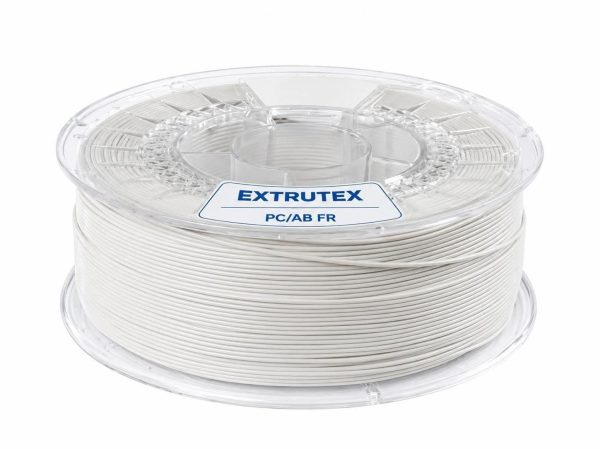
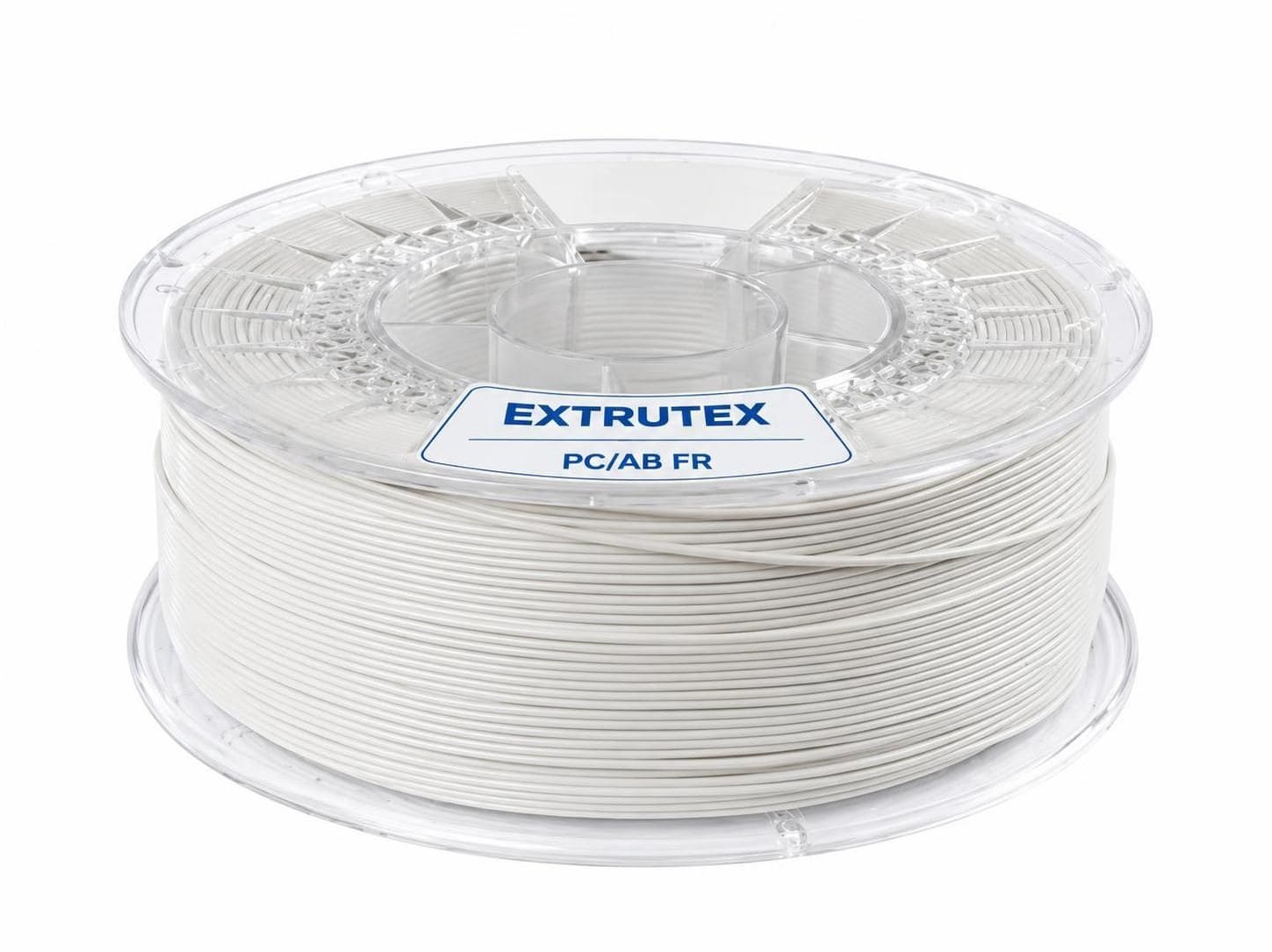
PC/ABS Polycarbonate ABS 3D Printer Filament
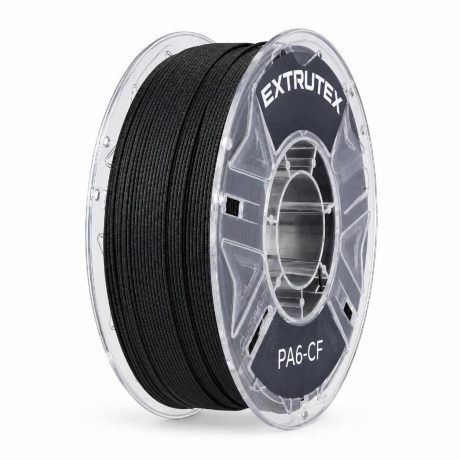
EXTRUTEX PC/ABS is an engineering-grade 3D printer filament made from a blend of polycarbonate (PC) and acrylonitrile butadiene styrene (ABS). Combining the toughness and heat resistance associated with polycarbonate with the processing and surface characteristics of ABS, this material is designed for demanding functional parts, technical prototypes and industrial applications.
PC/ABS offers high toughness, good thermal performance and an attractive surface finish. It also provides good compatibility with metal-plating processes, making it an interesting material choice for components that require a decorative or functional metallic surface after printing.
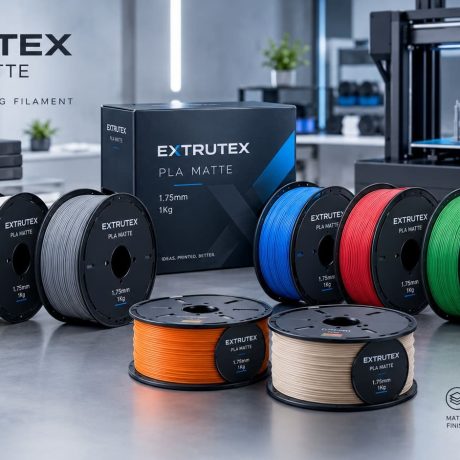
Available in 1.75 mm and 2.85 mm diameters, with a standard 1 kg spool, EXTRUTEX PC/ABS is suitable for users looking for a versatile engineering filament for advanced FDM and FFF printing.
A versatile engineering polymer for functional 3D printing
PC/ABS combines toughness, heat resistance, surface quality and potential metal-plating compatibility. It is suitable for technical components, durable housings, automotive prototypes, industrial fixtures and customized product development.
Key Features of EXTRUTEX PC/ABS
High ToughnessDesigned to produce durable parts that can withstand mechanical stress and demanding handling.
High Heat ResistanceOffers improved thermal performance compared with general-purpose ABS materials, depending on the grade and application.
Excellent Surface FinishProvides a good surface texture for functional and visible components.
Metal-Plating CompatibilitySuitable for applications where printed parts may undergo additional metal-plating processes.
PC/ABS Polymer BlendCombines the complementary characteristics of polycarbonate and ABS.
Engineering ApplicationsDesigned for technical prototypes, functional components and industrial 3D printing.
Multiple Diameter OptionsAvailable in 1.75 mm and 2.85 mm filament diameters.
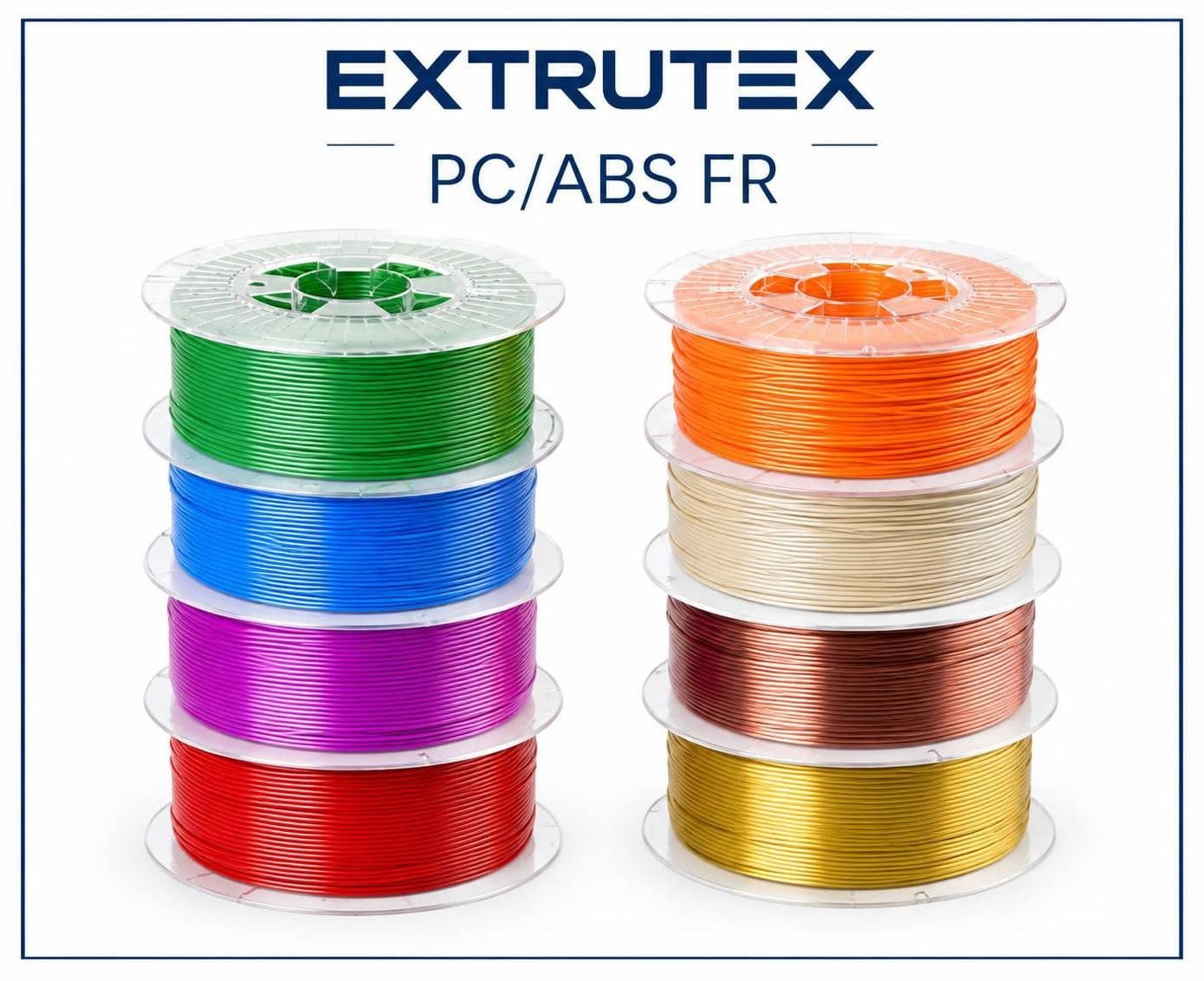
Customized ColorsAvailable in black, white and customized colors, subject to production confirmation.
What Is PC/ABS Filament?
PC/ABS is a thermoplastic polymer blend combining polycarbonate and acrylonitrile butadiene styrene. These two engineering plastics are widely used in automotive, electrical, electronics and industrial applications.
Polycarbonate contributes toughness and thermal performance, while ABS contributes useful processing characteristics and surface quality. The combination creates a material designed to balance mechanical performance, heat resistance and manufacturability.
In 3D printing, PC/ABS is used when standard PLA or ABS materials do not provide the required combination of durability and thermal performance. It is particularly relevant for functional components that need to withstand mechanical stress and elevated operating temperatures.
High Toughness for Functional Components
Toughness is an important property for components exposed to impact, vibration, repeated handling or mechanical loading. A material with good toughness can absorb energy before failure, making it useful for demanding engineering applications.
EXTRUTEX PC/ABS is designed for durable printed parts where mechanical performance is important. Its polycarbonate-ABS composition makes it suitable for equipment housings, brackets, covers, mounting components and functional prototypes.
As with other FDM and FFF materials, the strength of a finished part depends on its geometry, wall thickness, infill, layer adhesion and build orientation. For load-bearing applications, printed samples should be tested under realistic conditions.
Heat Resistance for Engineering Applications
PC/ABS is selected for applications where improved thermal performance is needed compared with many general-purpose printing materials. Its polycarbonate component contributes to the blend's heat-resistance characteristics.
This makes PC/ABS a useful candidate for selected automotive components, electrical housings, industrial equipment covers and technical parts that may be exposed to elevated temperatures.
Actual thermal performance depends on the specific formulation and printed-part design. For applications with defined temperature requirements, request the grade-specific heat-deflection temperature and other relevant thermal test data.
Surface Finish and Metal-Plating Compatibility
One of the useful characteristics of PC/ABS is its surface quality. The material is designed to provide a good surface texture for technical components and visible product housings.
PC/ABS also offers good compatibility with metal-plating processes. This can make it suitable for applications where a printed polymer component is subsequently finished with a metallic layer for appearance or functional purposes.
Metal plating requires appropriate surface preparation and a compatible plating process. The quality of the final finish depends on the printed surface, part geometry, pretreatment, plating chemistry and process controls. Users should validate the complete finishing process on representative printed samples.
Typical Applications of PC/ABS Filament
- Automotive components: Selected interior components, covers, brackets and development prototypes.
- Electrical housings: Enclosures and protective covers for electrical equipment.
- Electronic products: Device housings, mounting parts and technical accessories.
- Industrial machinery: Equipment covers, holders, guides and selected machine accessories.
- Functional prototypes: Engineering prototypes requiring toughness and improved thermal performance.
- Metal-plated components: Printed parts intended for compatible decorative or functional metal-plating processes.
- Product development: Customized housings, product shells and design-validation components.
- Industrial fixtures: Selected jigs, positioning tools and manufacturing support components.
PC/ABS Compared with Other Common 3D Printing Materials
Choosing the right filament depends on the mechanical, thermal and surface requirements of the finished component. PC/ABS is positioned as an engineering material for applications where toughness, heat resistance and surface quality are important.
| Material | General Characteristics | Typical Positioning |
|---|
| PLA | Easy to print, good detail and dimensional stability | Concept models and general-purpose prototypes |
| ABS | Engineering thermoplastic with useful toughness and processing characteristics | Functional housings and general engineering parts |
| PC | High-performance thermoplastic known for strength and thermal properties | Demanding engineering components |
| PC/ABS | Polycarbonate-ABS blend combining toughness, heat resistance and good surface quality | Functional parts, technical housings and metal-plating applications |
This is a general material comparison. Actual properties depend on the specific grade, formulation, printing process and test conditions.
Technical Specifications
| Specification | Details |
|---|
| Product Name | EXTRUTEX PC/ABS 3D Printer Filament |
| Material | Polycarbonate / Acrylonitrile Butadiene Styrene blend |
| Filament Diameter | 1.75 mm / 2.85 mm |
| Spool Weight | 1 kg |
| Available Colors | Black, white and customized colors |
| Toughness | High toughness |
| Thermal Performance | High heat resistance; confirm grade-specific thermal data for application requirements |
| Surface Finish | Good surface texture |
| Metal-Plating Compatibility | Good compatibility with metal-plating processes, subject to process validation |
| Printing Technology | FDM / FFF |
Recommended 3D Printing Settings
PC/ABS is an engineering filament that benefits from controlled printing conditions. A heated chamber is recommended to help maintain a stable printing environment and reduce residual stress in printed components.
| Printing Parameter | Recommended Setting |
|---|
| Nozzle Temperature | 250–270°C |
| Printing Speed | 30–50 mm/s |
| Bed Temperature | 90–105°C |
| Chamber Temperature | 90–100°C |
| Build Surface | Compatible surface with a thin coat of suitable PC adhesion solution |
| Cooling Fan | OFF |
| Recommended Chamber | Heated chamber |
Nozzle Temperature
The recommended nozzle temperature is 250–270°C. The ideal setting depends on the printer, hotend, nozzle and extrusion speed. Check that extrusion remains consistent and that layers bond properly.
Bed Temperature and Surface Adhesion
A bed temperature of 90–105°C is recommended. A suitable build surface with a thin coat of PC-compatible adhesion solution can help improve first-layer adhesion and reduce the risk of warping.
The original supplier's printing recommendation references MAGIGOO PC. This is an optional third-party adhesion product, not an EXTRUTEX product. Always follow the adhesive manufacturer's application instructions and verify compatibility with your build surface.
Chamber Temperature
A heated chamber at 90–100°C is the supplied recommendation. Use a printer specifically designed to operate safely at the required chamber temperature. Check the temperature limits of the printer's electronics, motors, wiring, build surface and other components before operating at elevated chamber temperatures.
Cooling Fan
The recommended cooling fan setting is OFF. Excessive cooling can increase temperature gradients and residual stress in demanding engineering materials. Follow the material supplier's guidance and validate settings for the geometry being printed.
Why a Heated Chamber Matters
PC/ABS can develop residual internal stress during printing because the deposited material cools and contracts. This can contribute to warping, dimensional changes and stress within the finished component.
A heated chamber helps maintain a more consistent temperature around the printed part. This reduces sudden temperature differences between newly deposited layers and previously printed material, helping improve dimensional stability and layer bonding.
For demanding PC/ABS applications, a properly configured heated chamber is the preferred printing environment. Ensure that the printer is designed for the required chamber temperature and that all internal components are rated for those conditions.
Annealing When a Heated Chamber Is Not Available
If a heated chamber is not used, the supplied recommendation is to anneal the printed part immediately after printing to help release residual internal stress.
Supplied annealing recommendation
- Annealing temperature: 90°C
- Annealing duration: 2 hours
- Timing: After the printing process
Annealing can change the dimensions of a printed component. Before treating production parts, test a representative sample and check dimensional accuracy after cooling. The actual result depends on part geometry, wall thickness, print orientation and the material formulation.
Metal Plating of PC/ABS Printed Parts
PC/ABS is a useful material option for printed components that may require a metallic surface finish. Metal plating can be used to create a metallic appearance or add surface functionality, depending on the selected plating process.
Before plating, printed components generally require surface preparation. The preparation method must be compatible with the polymer blend and the selected plating chemistry. Surface defects, layer lines, porosity and contamination can influence the quality and uniformity of the final finish.
For best results, evaluate the complete printing and plating workflow using representative samples. Confirm the suitability of the selected PC/ABS grade with the plating service provider before moving to production.
Quality and Material Consistency
Consistent filament quality is important for repeatable industrial 3D printing. Diameter consistency, raw material selection, extrusion control and color stability can all influence the final printing result.
EXTRUTEX focuses on engineering polymer materials and application-oriented solutions. Our approach combines Austrian design, laboratory and R&D capabilities with manufacturing in China.
We work with customers to identify suitable polymer materials and printing solutions for functional prototypes, technical products and industrial applications.
Frequently Asked Questions
1. What is PC/ABS 3D printer filament?
PC/ABS is an engineering filament made from a blend of polycarbonate and acrylonitrile butadiene styrene. It combines the characteristics of two widely used engineering thermoplastics to provide a balance of toughness, heat resistance and surface quality. It is used for functional components, technical prototypes and industrial 3D printing applications.
2. What does PC/ABS stand for?
PC stands for polycarbonate, while ABS stands for acrylonitrile butadiene styrene. PC/ABS refers to a polymer blend combining these two thermoplastic materials. The exact balance of properties depends on the formulation and grade.
3. What are the main advantages of PC/ABS filament?
The main stated advantages of EXTRUTEX PC/ABS are high toughness, high heat resistance, good surface texture and compatibility with metal-plating processes. These characteristics make it suitable for engineering parts and functional prototypes that require more than general-purpose printing performance.
4. Is PC/ABS stronger than ABS?
PC/ABS is designed to provide a different balance of properties from standard ABS, particularly through the contribution of polycarbonate. It can offer improved toughness and thermal performance depending on the grade. A direct strength comparison requires the technical data sheets and test results of the specific materials.
5. Is PC/ABS heat resistant?
Yes. PC/ABS is selected for applications requiring improved heat resistance compared with many general-purpose printing materials. However, the exact heat-deflection temperature and continuous-use temperature depend on the material grade. Request the technical data sheet when a specific operating temperature is required.
6. What is the difference between PC and PC/ABS?
PC is polycarbonate, a high-performance thermoplastic known for toughness and thermal properties. PC/ABS is a blend of polycarbonate and ABS, designed to balance mechanical performance, processing behavior and surface characteristics. The best choice depends on the requirements of the finished component.
7. Is PC/ABS suitable for industrial 3D printing?
Yes. PC/ABS is an engineering material suitable for selected industrial applications, including technical housings, equipment components, functional prototypes and manufacturing accessories. A compatible printer with controlled temperature conditions is important for consistent results.
8. Is PC/ABS suitable for automotive applications?
PC/ABS is used in automotive-related engineering applications and can be considered for selected printed prototypes, covers, brackets and interior development components. Any final automotive application should be validated for temperature, mechanical loads, environmental exposure and applicable safety requirements.
9. Can PC/ABS be metal plated?
PC/ABS has good compatibility with metal-plating processes according to the supplied product description. The actual plating result depends on the selected grade, printed surface quality, pretreatment and plating chemistry. Always validate the process with representative samples before production.
10. What is the recommended nozzle temperature?
The recommended nozzle temperature is 250–270°C. The appropriate setting depends on the printer, hotend, nozzle and extrusion speed. Follow the printer and filament supplier's instructions and check the quality of layer bonding.
11. What bed temperature is recommended?
The recommended bed temperature is 90–105°C. Use a compatible build surface and suitable adhesion solution. Correct bed preparation is important for first-layer adhesion and dimensional stability.
12. What is the recommended chamber temperature?
The supplied recommendation is 90–100°C. A heated chamber helps maintain stable printing conditions and reduce residual stress. Only use this setting on a printer specifically designed and rated for such chamber temperatures.
13. Should the cooling fan be turned on?
The supplied recommendation is to keep the cooling fan OFF. Reduced cooling helps limit temperature gradients during printing. The best setting can still depend on the printer and component geometry, so validate the result with test prints.
14. What printing speed should I use?
The recommended printing speed is 30–50 mm/s. Start within this range and adjust according to extrusion consistency, layer bonding and surface quality. Avoid increasing speed beyond the printer's ability to maintain stable material flow.
15. Does PC/ABS require a heated chamber?
A heated chamber is recommended for PC/ABS printing. It helps maintain a stable temperature around the part and can reduce warping and residual stress. For demanding parts, a printer with controlled chamber heating is preferable.
16. Can PC/ABS be printed without a heated chamber?
Printing without a heated chamber may be possible depending on the printer and part geometry, but the risk of residual stress and warping can increase. The supplied guidance recommends annealing the printed part immediately after printing when a heated chamber is not used.
17. What are the annealing settings for PC/ABS?
The supplied annealing recommendation is 90°C for two hours. Annealing is intended to help release residual internal stress in parts printed without a heated chamber. Test the process on a sample first because annealing can affect dimensional accuracy.
18. What filament diameters are available?
EXTRUTEX PC/ABS is specified in two filament diameters: 1.75 mm and 2.85 mm. Select the diameter compatible with your printer's extruder and filament feeding system.
19. What is the spool weight?
The supplied standard spool weight is 1 kg. Confirm packaging and availability when placing an order.
20. What colors are available?
The stated color options are black and white, with customized colors also available subject to production feasibility and order requirements.
21. Is PC/ABS suitable for electronic housings?
Yes. PC/ABS can be considered for electronic housings, equipment covers and technical enclosures where toughness, thermal performance and surface quality are important. Confirm the exact material properties required by the final application.
22. Can PC/ABS be used for functional prototypes?
Yes. PC/ABS is suitable for functional prototypes that need a balance of toughness and heat resistance. It can help engineers evaluate component geometry, assembly, handling and selected operating conditions before further product development.
23. Is PC/ABS suitable for large printed components?
Large PC/ABS parts can be challenging because of thermal contraction and residual stress. A heated chamber, appropriate bed temperature and stable first-layer adhesion can help. Part geometry and printer build volume should also be considered.
24. What build surface should be used?
The supplied recommendation is to use a suitable build surface with a thin coat of MAGIGOO PC. This is an optional third-party adhesion product. Follow the adhesive manufacturer's instructions and confirm compatibility with the printer's build surface.
25. Why is bed adhesion important for PC/ABS?
Good bed adhesion helps prevent the part from lifting during printing. When a component separates from the build surface, it can warp or lose dimensional accuracy. Correct bed temperature, surface preparation and suitable adhesion products help improve printing reliability.
26. Does PC/ABS have a good surface finish?
Yes. Good surface texture is one of the stated characteristics of this PC/ABS filament. Final surface quality depends on nozzle condition, layer height, extrusion calibration, printing speed and the geometry of the component.
27. Can PC/ABS be used for decorative parts?
Yes. Its surface quality and compatibility with metal-plating processes make it suitable for selected decorative components and visible product housings. The final appearance depends on the printing and finishing process.
28. Is PC/ABS suitable for machine components?
It can be considered for selected machine covers, brackets, holders, guides and equipment accessories. Evaluate the expected loads, operating temperature, wear conditions and environmental exposure before using it in a functional machine assembly.
29. How do I choose between 1.75 mm and 2.85 mm PC/ABS?
Choose the filament diameter supported by your printer's extruder and hotend. The two diameters are not interchangeable without compatible feeding and extrusion hardware. Check the printer manufacturer's specifications before ordering.
30. How can I order customized PC/ABS filament?
Contact EXTRUTEX with your required filament diameter, color, spool weight, estimated quantity and application details. Our team can review the requirements and confirm available options, production feasibility and relevant technical information.
Request EXTRUTEX PC/ABS Filament Information
Looking for a tough, heat-resistant PC/ABS filament for engineering prototypes, industrial components or metal-plating applications? Contact EXTRUTEX for availability, customized colors, diameter options and technical support.
Visit EXTRUTEX to explore our engineering filaments and polymer material solutions.




-
(0 customer reviews)