EXTRUTEX PC-FR Flame-Retardant Polycarbonate Filament
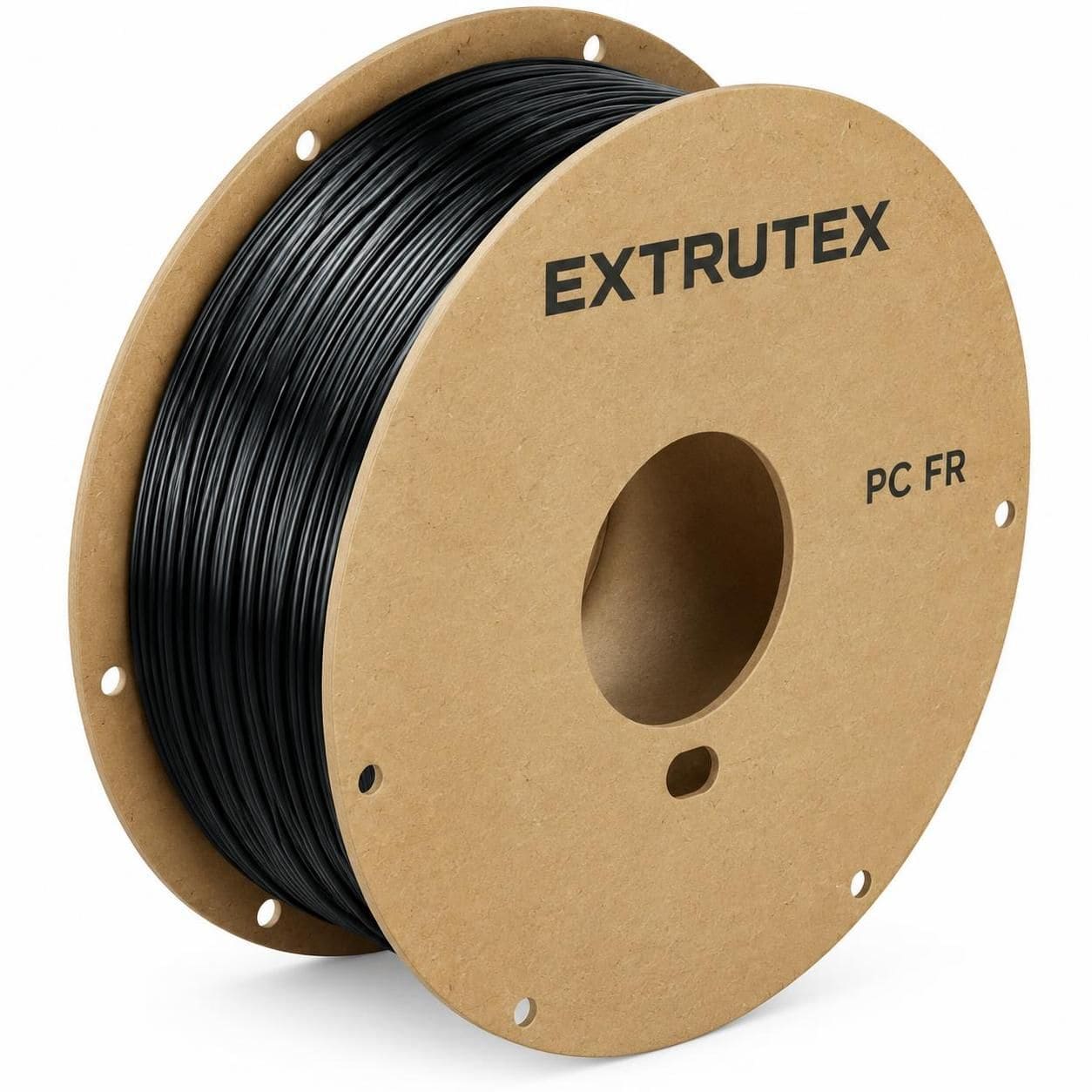
EXTRUTEX PC-FR is a high-performance flame-retardant polycarbonate filament developed for demanding 3D printing applications where fire performance, impact resistance, mechanical strength and thermal stability are important.
Based on engineering-grade polycarbonate, PC-FR combines the mechanical characteristics of PC with flame-retardant performance specified to UL 94-2023 V-0. It is designed for functional components, protective housings, electrical and electronic enclosures, automotive prototypes and industrial applications that require a higher level of material performance than general-purpose 3D printing filaments.
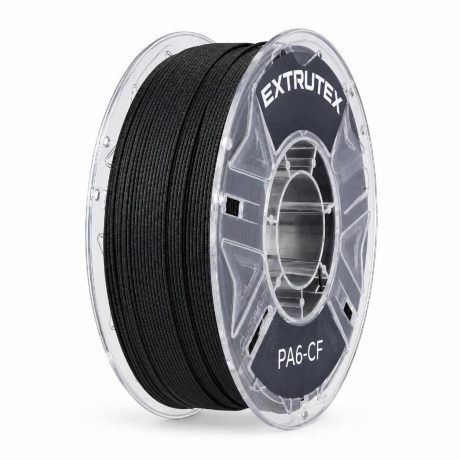
Available in 1.75 mm diameter and 1 kg spools, EXTRUTEX PC-FR is offered in white, grey and black, with customized colors available upon request.
Key Features of EXTRUTEX PC-FR
UL 94-2023 V-0 PerformanceSpecified flame-retardant performance for applications requiring controlled burning behavior under the UL 94 vertical burning test.
Engineering-Grade PolycarbonatePC-based material designed for demanding functional and industrial 3D printing applications.
High Impact ResistanceDesigned to withstand mechanical impact and demanding handling conditions.
Mechanical Strength and StiffnessSuitable for rigid functional components and protective structures.
Thermal StabilityDeveloped for applications where resistance to elevated temperatures is important.
Moisture-Sensitive MaterialRequires drying before printing to help maintain consistent extrusion and print quality.
Wide Color SelectionAvailable in white, grey and black, with customized colors subject to feasibility.
Professional 3D Printing Format1.75 mm filament diameter and 1 kg spool configuration.
Flame-Retardant Polycarbonate for Engineering Applications
Polycarbonate is a high-performance thermoplastic known for its impact resistance, strength and thermal properties. It is widely used in engineering applications where ordinary plastics may not provide sufficient durability or mechanical performance.
EXTRUTEX PC-FR combines a polycarbonate base with flame-retardant formulation technology. This makes it suitable for applications where the material must provide mechanical functionality while also meeting a specified flame-retardancy classification.
Flame-retardant materials are particularly relevant in electrical and electronic equipment, industrial machinery, automotive systems and protective enclosures. In these applications, material selection can be an important part of the overall product safety strategy.
PC-FR is intended for functional components rather than purely decorative printing. Its combination of flame-retardant performance and engineering-grade mechanical properties makes it a specialized material for professional users.
UL 94-2023 V-0 Flame Retardancy
One of the defining characteristics of EXTRUTEX PC-FR is its stated UL 94-2023 V-0 flame-retardancy classification.
UL 94 is a widely used standard for evaluating the flammability of plastic materials under controlled laboratory conditions. The V-0 classification is associated with the vertical burning test. Under the applicable test procedure, afterflame time for each specimen is limited, the total afterflame time is controlled, and flaming particles must not ignite the cotton indicator below the specimen.
The V-0 classification is a material test result under defined laboratory conditions. It does not mean that a printed component is fireproof, non-combustible or guaranteed to prevent fire. Actual performance can be affected by printed wall thickness, part geometry, build orientation, processing conditions and the exact material formulation.
For regulated products or safety-critical applications, customers should verify that the applicable certification or test report covers the exact filament grade, color, specimen thickness and production formulation being purchased.
Important certification note: The supplied product information identifies PC-FR as UL 94-2023 V-0. Before making a formal compliance claim for a finished printed part, obtain and verify the relevant test report or certification documentation for the exact material grade and specimen thickness.
Mechanical Strength and Impact Resistance
PC-FR is an engineering-grade polycarbonate filament designed for components requiring strength, stiffness and impact resistance. Polycarbonate is valued for its toughness and ability to produce durable functional parts.
These properties make PC-FR a candidate for protective casings, equipment housings, structural supports, mounting components and industrial accessories. Its mechanical performance is especially relevant when parts must withstand handling, vibration or occasional impact.
The source specification describes its mechanical properties as comparable to PAHT-CF. However, direct equivalence between the two materials should not be assumed without comparative test data. PAHT-CF and PC-FR have different polymer structures and reinforcement characteristics, and their performance can vary significantly depending on the specific grade.
For load-bearing or safety-critical applications, evaluate the printed component under the actual operating conditions. Printing orientation, layer adhesion, infill, wall thickness and temperature exposure all influence final performance.
Thermal Stability for Demanding Environments
Polycarbonate is commonly selected for engineering applications where thermal performance is important. PC-FR is intended for components that may experience elevated temperatures during operation.
Thermal behavior depends on the exact formulation and the geometry of the printed part. The supplied specifications do not include a numerical heat deflection temperature, glass transition temperature or continuous service temperature for this grade.
For applications involving prolonged heat exposure, confirm the relevant technical data and test the finished component under representative operating conditions. Do not use the printer's nozzle temperature as an indication of the component's maximum service temperature.
Technical Specifications
| Product Name | EXTRUTEX PC-FR |
|---|
| Material | Flame-retardant polycarbonate (PC) |
|---|
| Material Category | Engineering-grade 3D printing filament |
|---|
| Flame-Retardancy Classification | UL 94-2023 V-0, as specified by supplied product information |
|---|
| Filament Diameter | 1.75 mm |
|---|
| Spool Weight | 1 kg |
|---|
| Standard Colors | White, grey and black |
|---|
| Customized Colors | Available upon request, subject to feasibility |
|---|
| Nozzle Temperature | 260–280°C |
|---|
| Build Plate Temperature | 90–110°C |
|---|
| Recommended Printing Speed | Not exceeding 300 mm/s |
|---|
| Filament Drying | 80°C for 8 hours in a blast drying oven |
|---|
| Alternative Drying Method | 90–100°C for 12 hours on a suitable printer heatbed |
|---|
| Build Surface | Smooth PEI or textured PEI; glue recommended |
|---|
| Typical Applications | Protective housings, electronics enclosures, industrial components and functional prototypes |
|---|
Technical data note: The drying and printing values above reproduce the supplied processing recommendations. Confirm compatibility with the exact filament batch, printer and drying equipment before use. Filament diameter tolerance, HDT, tensile strength, impact test values and the UL 94 specimen thickness have not been supplied.
Recommended Printing Settings
PC-FR is a moisture-sensitive engineering filament. Correct material preparation and suitable printer settings are important for achieving consistent extrusion, good layer bonding and reliable printed components.
Nozzle Temperature: 260–280°C
The recommended nozzle temperature range is 260–280°C. Use a temperature within this range according to the printer, nozzle configuration, part geometry and desired surface quality. Ensure the hotend can maintain a stable temperature during printing.
Build Plate Temperature: 90–110°C
A heated build plate set between 90°C and 110°C is recommended. Proper bed preparation helps improve first-layer adhesion and reduce the risk of warping or lifting during printing.
Printing Speed: Up to 300 mm/s
The supplied recommendation is to keep printing speed at or below 300 mm/s. Actual suitable speed depends on the printer's hotend capacity, extrusion flow, model geometry and layer settings. For larger engineering parts, stable extrusion and consistent bonding should take priority over maximum speed.
Build Surface and Adhesion
Smooth PEI and textured PEI build plates are identified as suitable surface options. Applying an appropriate printing adhesive is recommended to support adhesion and help manage removal after printing.
Use a compatible adhesive and follow the build-plate manufacturer's instructions. Allow the plate and printed part to cool appropriately before removal.
Filament Drying and Moisture Management
Polycarbonate filament can absorb moisture from the surrounding environment. Moisture in the filament may lead to inconsistent extrusion, surface defects, reduced print quality and weaker printed components.
For EXTRUTEX PC-FR, the supplied drying recommendations are:
| Drying Method | Temperature | Duration |
|---|
| Blast drying oven | 80°C | 8 hours |
| Suitable printer heatbed | 90–100°C | 12 hours |
Choose a drying method that is suitable for the spool, filament and equipment. When using a printer heatbed, verify that the spool material and spool construction can safely withstand the specified temperature. Avoid direct contact with heating elements and follow the printer manufacturer's safety instructions.
- Dry filament before printing according to the recommended procedure.
- Keep opened filament in sealed, moisture-protective packaging.
- Use a suitable dry storage container when the spool is not in use.
- Avoid prolonged exposure to humid environments.
- Consider drying again if the filament has been exposed to moisture or print quality becomes inconsistent.
Printer Compatibility and Multi-Material Systems
PC-FR is a 1.75 mm filament intended for compatible FDM and FFF 3D printers capable of meeting its processing requirements. Printer compatibility should be checked before use, particularly for automatic material-feeding systems.
When using a multi-material feeder, confirm that the system supports the filament's material characteristics, spool dimensions, feeding path and required drying conditions. Not every automatic feeder or accessory is suitable for every engineering filament.
For demanding applications, a printer with reliable temperature control, suitable build-plate heating and a stable enclosure environment is recommended. Always check the printer manufacturer's compatibility guidance before loading PC-FR into an automated feeding system.
Applications of PC-FR Flame-Retardant Filament
Electrical and Electronic Enclosures
PC-FR can be evaluated for electronic equipment housings, protective covers, internal supports and enclosure prototypes where flame-retardant material performance is a requirement.
Industrial Equipment Components
Suitable application areas may include equipment covers, protective casings, brackets, mounting structures and functional accessories used in industrial machinery.
Automotive Components
PC-FR can be considered for selected automotive prototypes, interior equipment housings and non-safety-critical functional components. Automotive applications require additional validation for heat, vibration, chemical exposure and relevant industry requirements.
Protective Casings and Covers
The combination of polycarbonate mechanical properties and flame-retardant formulation makes PC-FR a candidate for protective casings, covers and equipment enclosures.
Mechanical Engineering
Engineers can use PC-FR for functional prototypes, mounting components, structural supports and specialized parts that require impact resistance and controlled flame behavior.
Industrial Prototyping
PC-FR enables the production of functional prototypes for evaluating part design, assembly, fit and manufacturing concepts before moving to larger-scale production methods.
PC-FR Compared with Standard Polycarbonate
Standard polycarbonate is valued for impact resistance and mechanical performance. Flame-retardant PC formulations are developed for applications where additional flammability requirements must be considered.
| Characteristic | Standard PC Filament | EXTRUTEX PC-FR |
|---|
| Base Polymer | Polycarbonate | Flame-retardant polycarbonate formulation |
| Flame Performance | Depends on the specific grade | UL 94-2023 V-0 specified |
| Impact Resistance | Generally a key PC characteristic | Designed for high impact resistance |
| Mechanical Properties | Engineering-grade, grade dependent | Engineering-grade performance |
| Moisture Handling | Drying may be required | Drying before printing is recommended |
| Typical Applications | Functional and engineering components | Components requiring flame-retardant performance |
This comparison is a general product-category overview. Actual performance should be verified using the technical data sheets and test reports for the specific grades being compared.
Color Options and Customization
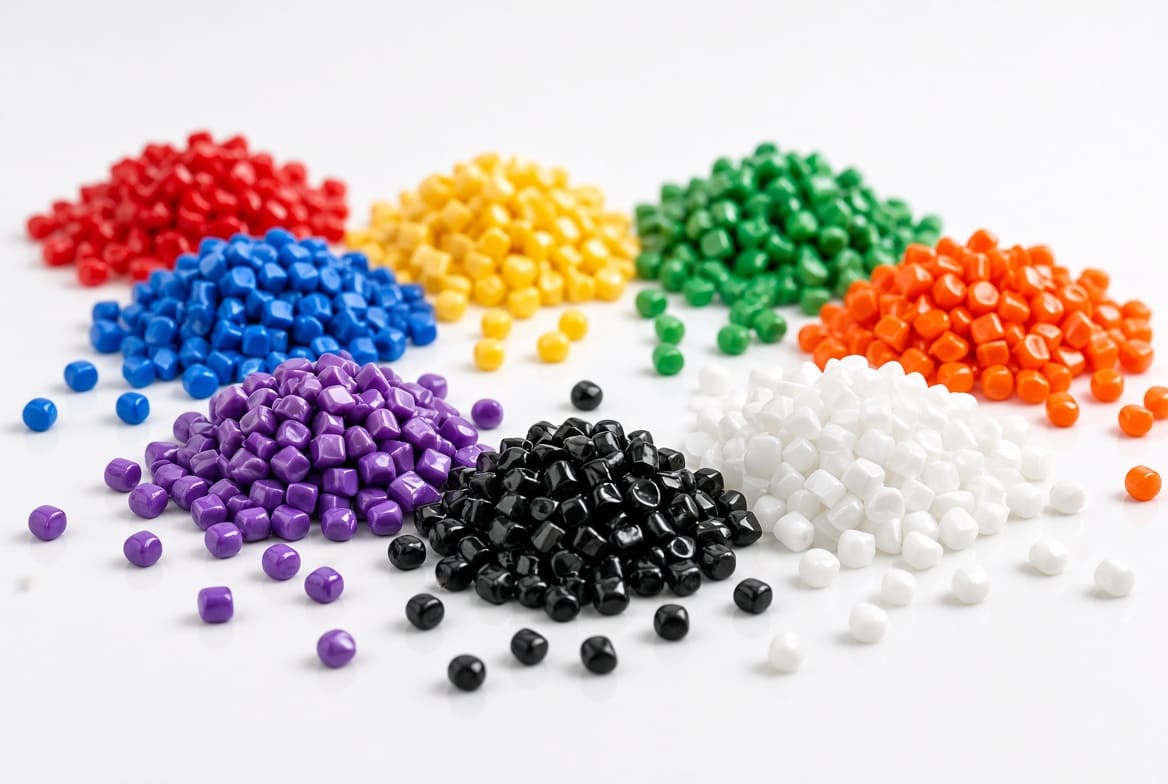
EXTRUTEX PC-FR is available in white, grey and black. Customized colors may also be available for customers with specific product design, branding or application requirements.
Color customization for flame-retardant materials requires careful formulation control. Colorants and additives may influence the final material properties and flame performance. Any customized formulation intended for a regulated application should be independently evaluated against the required flame-retardancy standard.
Storage and Handling
Proper storage is important for maintaining the quality of PC-FR filament. Because polycarbonate is moisture-sensitive, opened spools should be protected from humidity between printing sessions.
- Store unopened filament in its original sealed packaging.
- Keep opened spools in a dry, sealed storage container.
- Dry the material before printing according to the supplied recommendations.
- Protect the filament from dust, oils and other contaminants.
- Check the spool and filament condition before loading the printer.
- Follow the drying equipment manufacturer's safety instructions.
Why Choose EXTRUTEX PC-FR?
EXTRUTEX PC-FR is developed for professional users who need a specialized polycarbonate filament with flame-retardant performance and engineering-grade mechanical characteristics.
Its specified UL 94-2023 V-0 classification, impact resistance and thermal stability make it a candidate for electronic enclosures, industrial protective housings, mechanical components and functional prototypes.
EXTRUTEX combines design, laboratory and R&D capabilities in Austria with manufacturing in China. This structure supports product development, material customization and manufacturing coordination for customers in international markets.
Our engineering material portfolio supports applications across industrial 3D printing, polymer processing and specialized plastic products. EXTRUTEX works with customers to evaluate material requirements and identify suitable product solutions.
Frequently Asked Questions
1. What is PC-FR 3D printer filament?
PC-FR is a flame-retardant polycarbonate filament designed for engineering 3D printing applications. It combines the mechanical characteristics of polycarbonate with a flame-retardant formulation for components that require controlled flammability performance.
2. What does PC-FR stand for?
PC stands for polycarbonate, while FR means flame retardant. PC-FR identifies a polycarbonate material formulated to provide improved flame-retardant performance compared with standard PC grades.
3. Does EXTRUTEX PC-FR meet UL 94 V-0?
The supplied product specification identifies the material as meeting UL 94-2023 V-0. Buyers requiring formal compliance should verify the relevant test report or certification documentation, including the tested material formulation and specimen thickness.
4. What does UL 94 V-0 mean?
UL 94 V-0 is a vertical burning classification for plastic materials. It requires the material to satisfy specified limits for afterflame time and other test conditions, including the requirement that flaming particles do not ignite the cotton indicator below the specimen.
5. Does V-0 mean the material is fireproof?
No. V-0 is a classification based on a controlled laboratory flammability test. It does not mean the material is non-combustible or that a finished printed component cannot catch fire. Actual fire performance depends on the part design, thickness, processing and application conditions.
6. What is the filament diameter?
EXTRUTEX PC-FR is supplied in a 1.75 mm filament diameter. The diameter tolerance should be confirmed in the production technical data sheet.
7. What is the spool weight?
The specified spool weight is 1 kg, suitable for professional prototyping and functional component production.
8. What colors are available?
The standard colors are white, grey and black. Customized colors may also be available depending on the required formulation and production feasibility.
9. What nozzle temperature should I use?
The supplied recommended nozzle temperature range is 260–280°C. The ideal setting depends on the printer, hotend, part geometry and extrusion conditions. Use the validated material profile when available.
10. What bed temperature is recommended?
The recommended build-plate temperature is 90–110°C. A suitable adhesive is also recommended to improve first-layer adhesion and help manage part removal.
11. Does PC-FR need to be dried before printing?
Yes. PC-FR is moisture-sensitive and should be dried before printing. The supplied recommendations are 80°C for 8 hours in a blast drying oven or 90–100°C for 12 hours on a suitable printer heatbed, subject to equipment and spool compatibility.
12. Can PC-FR be printed at 300 mm/s?
The supplied speed recommendation is not to exceed 300 mm/s. Actual suitable speed depends on the printer's extrusion capacity, geometry, temperature stability and desired print quality. Lower speeds may be appropriate for complex engineering parts.
13. Is PC-FR suitable for electronic enclosures?
It can be evaluated for electronic equipment housings and protective enclosures where flame-retardant material performance is required. Verify the relevant certification and test requirements for the finished product before commercial or regulated use.
14. Can PC-FR be used for automotive components?
It may be suitable for selected automotive prototypes and functional components. Automotive applications require validation for temperature, vibration, chemical exposure, mechanical loads and any applicable industry standards.
15. Is PC-FR impact resistant?
Yes. The product is described as offering high impact resistance and durability. Actual impact performance depends on the printed part's design, layer orientation, processing conditions and test method.
16. Is PC-FR a high-temperature filament?
PC-FR is an engineering-grade polycarbonate material intended for applications where thermal stability is important. A numerical heat deflection temperature or continuous service temperature has not been supplied, so these values should be confirmed before selecting it for a specific operating temperature.
17. Can PC-FR replace standard PC filament?
PC-FR may be a suitable alternative when flame-retardant performance is an additional requirement. However, the materials should not be assumed to have identical mechanical, thermal or processing properties. Compare the relevant technical data before substitution.
18. Can PC-FR be used for protective casings?
Yes. Protective casings and equipment housings are potential applications, particularly where impact resistance and flame-retardant performance are important. The finished part must be validated for the intended operating environment.
19. Can PC-FR be used with automatic material feeders?
Compatibility depends on the feeder design, spool dimensions, filament path and material handling requirements. Check the feeder manufacturer's compatibility list before use. Do not assume every automated feeding system supports every PC-FR filament.
20. What build plate is recommended?
Smooth PEI and textured PEI build plates are identified as suitable options. Applying a compatible printing adhesive is recommended to support adhesion and help with part removal.
21. Does PC-FR require a heated build plate?
Yes. The supplied printing recommendation specifies a build-plate temperature of 90–110°C. The printer must be capable of maintaining this temperature consistently.
22. Is PC-FR suitable for industrial machinery components?
It can be considered for selected protective covers, housings, supports and functional components used in industrial equipment. Suitability depends on mechanical loading, temperature, chemical exposure and the required flame-retardancy classification.
23. Does customized color affect flame-retardant performance?
It can. Pigments and other formulation changes may influence the flame behavior of a material. Customized colors intended for applications requiring UL 94 V-0 performance should be tested and documented separately for the relevant formulation and specimen thickness.
24. What information should I request before purchasing PC-FR?
For regulated or demanding applications, request the technical data sheet, flame-retardancy test documentation, specimen thickness, color-specific test information, diameter tolerance and recommended processing conditions. This helps confirm that the filament is suitable for the intended application.
25. Can EXTRUTEX provide customized PC-FR filament?
EXTRUTEX can discuss customized colors and material requirements. Any formulation changes should be evaluated against the intended mechanical and flame-retardancy requirements. Contact our team with your application details for a technical discussion.
Looking for Flame-Retardant PC-FR Filament?
Contact EXTRUTEX for PC-FR polycarbonate filament, technical information, customized color options and engineering material solutions for professional 3D printing.
Contact EXTRUTEX or visit extruder.co to explore our engineering materials.





-
(0 customer reviews)